Welcome to your ultimate guide for creating the perfect room for your daughters. Designing a space that two siblings love can be a fun and rewarding project.
Discover how to turn one room into a magical retreat that both will adore. You will learn smart ways to make the most of your space without losing style.
This guide offers creative bedroom ideas that blend each child’s unique personality. The right setup can help build strong bonds and create happy memories.
We will show you how to design a flexible space that grows with your girls. From childhood to teen years, their room can adapt to their changing needs.
Find solutions for common layout challenges in a sisters’ bedroom. Get ready to build a beautiful sanctuary your daughters will cherish.
Start with a Plan: Key Considerations for Your Shared Room
The foundation of any successful dual-occupancy room begins with strategic planning. Taking time to think through key elements will help you create a space that functions beautifully for both children.
Assessing Your Available Space and Layout
Begin by measuring your room carefully. Note windows, doors, and closet locations that will affect your furniture arrangement.
Consider how natural light enters the room throughout the day. This will help you position beds and activity areas in the best possible way.
Creating a simple floor plan sketch can save you time and effort. Visualizing different options before moving heavy furniture makes the process smoother.
Involving Your Children in the Design Process
When working with older children, include them in planning decisions. This approach helps them feel ownership over their personal space.
If you’ve got older girls, let them be part of the design process for their new bedroom. Including them in the bedroom makeover isn’t just a good idea – it ensures they feel a sense of ownership, making it truly their own room.
Discuss storage needs for clothing, toys, and special treasures. Finding solutions that work for both children prevents future conflicts.
Balancing Individuality with Shared Harmony
Think about how the room will serve different purposes. Sleeping, playing, and studying areas all require thoughtful placement.
Consider age differences between siblings. Their needs might vary significantly, requiring creative solutions.
Plan for future changes as children grow and preferences evolve. Flexible design choices will serve your family longer.
| Planning Consideration | Younger Children | Older Children |
|---|---|---|
| Storage Needs | Easy-access toy storage | Clothing and personal item organization |
| Privacy Requirements | Minimal separation needed | Defined personal spaces important |
| Activity Zones | Open play area essential | Study space becomes priority |
| Future Adaptability | Growth-friendly furniture | Style flexibility for teen years |
Good planning prevents costly mistakes and ensures everyone’s happiness. The effort you put in now will pay off for years to come in your home.
Choosing a Unifying Theme for a Cohesive Look
A great theme ties everything together beautifully. It creates harmony between different elements in your space.
The right concept makes your room feel intentional and polished. It helps blend both personalities into one wonderful environment.
Popular Theme Ideas: Floral, Vintage, Woodland, and More
Floral patterns bring nature inside with soft pinks and greens. These designs create a fresh, cheerful atmosphere.
Vintage themes offer timeless charm with antique-inspired elements. They create a nostalgic feel that never goes out of style.
Woodland concepts feature forest animals and natural textures. They transform spaces into magical forest retreats.
Nautical styles use blues, whites, and sailor accents. They work well for creating crisp, coordinated spaces.
Modern themes focus on clean lines and minimalist decor. They establish calm, organized environments.
How to Blend Your Daughters’ Different Tastes
Start by choosing a theme that incorporates both favorite colors. This creates immediate buy-in from both children.
Use neutral base colors on your wall then add thematic elements through accessories. This approach allows for easy updates later.
Create a mood board together to visualize how everything will come together. Seeing the plan helps everyone get excited.
Remember that themes can be subtle rather than overwhelming. Sometimes less decoration creates more impact.
Select a concept that can grow with your children from little kids to tweens. Flexible themes adapt to changing preferences.
| Theme Type | Primary Colors | Key Elements | Best For Ages |
|---|---|---|---|
| Floral | Soft pink, green, yellow | Flower patterns, nature accents | 5-12 years |
| Vintage | Cream, pastels, muted tones | Antique furniture, lace details | 8-16 years |
| Woodland | Brown, green, soft blue | Animal prints, natural textures | 4-10 years |
| Nautical | Navy, white, red accents | Rope details, sailor elements | 6-14 years |
| Modern | Neutral tones, bold accents | Clean lines, geometric patterns | 10-18 years |
The right theme makes your space feel complete and coordinated. It brings together all the different things in your room.
Your final look should reflect both personalities equally. This creates a space where everyone feels at home.
Brilliant Bed Choices to Maximize Your Floor Plan
Smart bed choices create more floor space while keeping everyone comfortable. The right sleeping arrangement transforms your room into a functional haven.
Your selection impacts daily life and special moments. Consider safety, space, and style when making your decision.
Classic Space-Saving Bunk Beds
Bunk beds remain the ultimate solution for tight spaces. They stack sleeping areas vertically instead of spreading them horizontally.
Many parents choose bunk beds against walls for safety and stability. This popular configuration works beautifully in compact rooms.
Look for sturdy ladders and guard rails on your bunk beds. These features prevent accidents and provide peace of mind.
Consider L-shaped configurations for interesting layout options. This arrangement can create cozy reading nooks underneath.
Versatile Trundle Beds and Daybeds
Trundle beds offer hidden sleeping space that pulls out when needed. They’re perfect for sleepovers and unexpected guests.
A daybed with pull-out trundle works wonders in tiny rooms. It functions as seating by day and transforms for nighttime.
This setup is ideal where space is extremely limited. You get two sleeping areas without sacrificing precious floor space.
Functional and Fun Loft Beds
Loft beds raise sleeping areas to create valuable space below. This area becomes perfect for desks, dressers, or play zones.
These elevated beds work well for creating designated areas within one room. Each child gets their own special territory.
The space underneath can serve multiple purposes throughout the day. It adapts to changing needs as children grow.
Dreamy Canopy Beds for a Princess Touch
Canopy beds add a magical, fairy-tale quality to any space. They create a princess-like atmosphere that feels special.
You can achieve this look with simple fabric drapes over existing beds. This DIY approach makes decorating affordable and fun.
The canopy frame supports beautiful fabric that softens the room’s look. It brings a touch of elegance to your shared space.
Strategic Bed Layouts to Optimize Every Inch
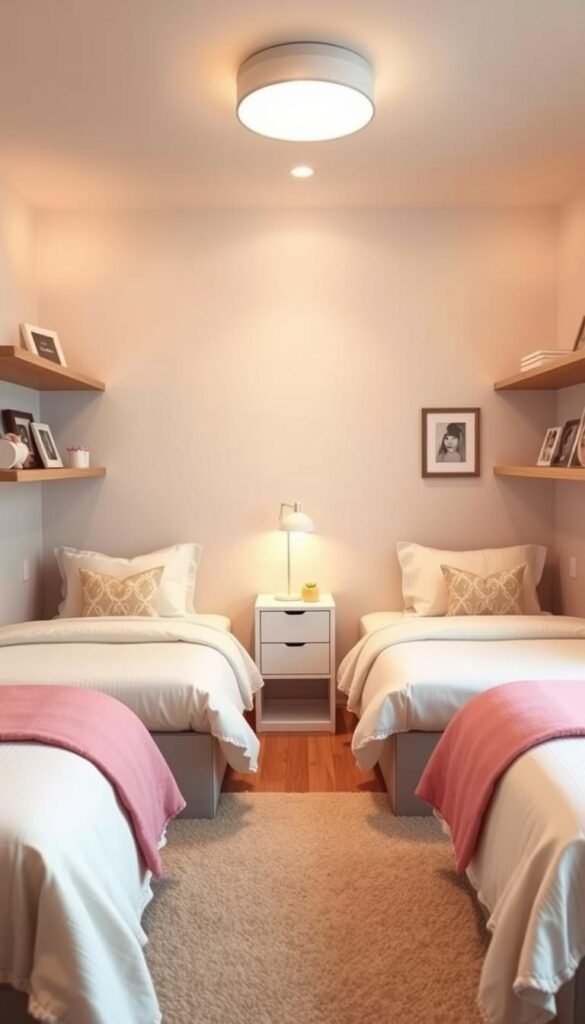
How you arrange sleeping spaces dramatically impacts your room’s functionality. Smart placement creates harmony while maximizing your available square footage.
These clever configurations help you make the most of your space. They balance togetherness with personal territory beautifully.
Side-by-Side Placement for a Symmetrical Feel
Placing beds parallel creates beautiful visual balance. This arrangement works wonderfully when you have a centered window.
Flanking furniture on either side of the window maintains symmetry. Both children enjoy equal access to natural light.
This setup creates a clean, organized look that feels intentional. It’s perfect for creating a calm, balanced environment.
Head-to-Head Layouts with a Dividing Wall
Positioning beds end-to-end along one wall is gaining popularity. This clever arrangement saves valuable floor space.
Adding a partial divider between the headboards offers privacy. Built-in shelves in the divider provide practical storage solutions.
The configuration maintains openness while creating personal territory. It’s an excellent choice for medium-sized rooms.
Utilizing Corners for a Sweet, Unconventional Setup
Corner arrangements make creative use of often-wasted space. Meeting beds in the corner creates intimate sleeping nooks.
This unconventional setup feels cozy and special. It transforms awkward corners into functional, charming areas.
Each child gets their own little retreat within the shared space. The layout works particularly well in square-shaped rooms.
Opposite Ends of the Room for Tween and Teen Privacy
Placing sleeping areas at far ends works perfectly for older children. This arrangement provides maximum separation and privacy.
It’s ideal for long, narrow rooms where space allows distance. Each sister can personalize her area without compromising the overall design.
This setup acknowledges growing needs for personal space. It creates defined territories while maintaining room unity.
| Layout Type | Best Room Shape | Privacy Level | Floor Space Saved |
|---|---|---|---|
| Side-by-Side | Wide rectangular | Medium | Moderate |
| Head-to-Head | Medium rectangular | Medium-High | High |
| Corner Setup | Square | Low-Medium | High |
| Opposite Ends | Long rectangular | High | Low |
Consider traffic patterns and bed access when choosing your arrangement. The right layout makes daily routines smoother and more enjoyable.
Remember that bed placement affects how much open area remains for other activities. Think about play space, study zones, and movement pathways.
With careful planning, you can create a layout that serves everyone’s needs. The perfect arrangement makes your room functional and beautiful.
Smart Storage Solutions to Keep Clutter at Bay
Keeping your space organized becomes easier with clever storage ideas. Smart solutions help maintain order while making the most of your available area.
Good organization creates a peaceful environment where everyone can relax. It transforms chaos into calm with thoughtful planning.
Effective storage systems work quietly in the background. They keep essentials handy while hiding away less-used items.
Maximizing Vertical Space with Wall Shelves
Look upward to find often-overlooked storage opportunities. Walls offer perfect real estate for keeping things organized.
Floating shelves display favorite books and special treasures beautifully. They keep items accessible without consuming floor space.
Consider installing shelves above desks or beds for extra functionality. This approach keeps necessities within easy reach.
Vertical space: Think wall shelves, hooks, or racks for showing off books, toys, or accessories.
Use decorative baskets on shelves for hiding smaller items. This maintains a tidy appearance while providing practical storage.
Utilizing Under-Bed Storage Drawers and Bins
The area beneath sleeping spaces often goes unused. This valuable space can solve many organization challenges.
Roll-out drawers make accessing stored items simple and convenient. They’re perfect for seasonal clothing or extra bedding.
Clear plastic bins let you see contents without opening them. This saves time during busy mornings.
Under-bed storage maximizes every inch of your available area. It’s like adding an extra closet without taking up room.
Investing in Multifunctional Furniture
Choose pieces that serve more than one purpose beautifully. These smart items provide extra value in compact spaces.
An ottoman with hidden storage offers seating and organization. It becomes a versatile part of your room’s design.
Bookshelves with built-in bins keep toys neatly contained. They help maintain order while looking attractive.
Consider a storage bench that provides seating while hiding clutter inside. It’s perfect for keeping the space tidy.
Multifunctional furniture lets your pieces do double duty! Use furniture that has more than one purpose.
| Storage Solution | Best For | Space Saved | Age Appropriateness |
|---|---|---|---|
| Wall Shelves | Books, decorations, accessories | High | All ages |
| Under-Bed Drawers | Clothing, bedding, shoes | Very High | 5+ years |
| Storage Ottomans | Toys, blankets, games | Medium | All ages |
| Modular Systems | Various items, customizable | Medium-High | 8+ years |
| Hanging Organizers | Small items, accessories | High | All ages |
Creative storage solutions become part of the room’s decor. They blend functionality with style seamlessly.
Remember that organization systems should grow with your children. Flexible options adapt to changing needs over time.
The right storage makes daily routines smoother and more enjoyable. It creates a space where everything has its proper place.
Color Schemes and Wall Treatments They’ll Both Love
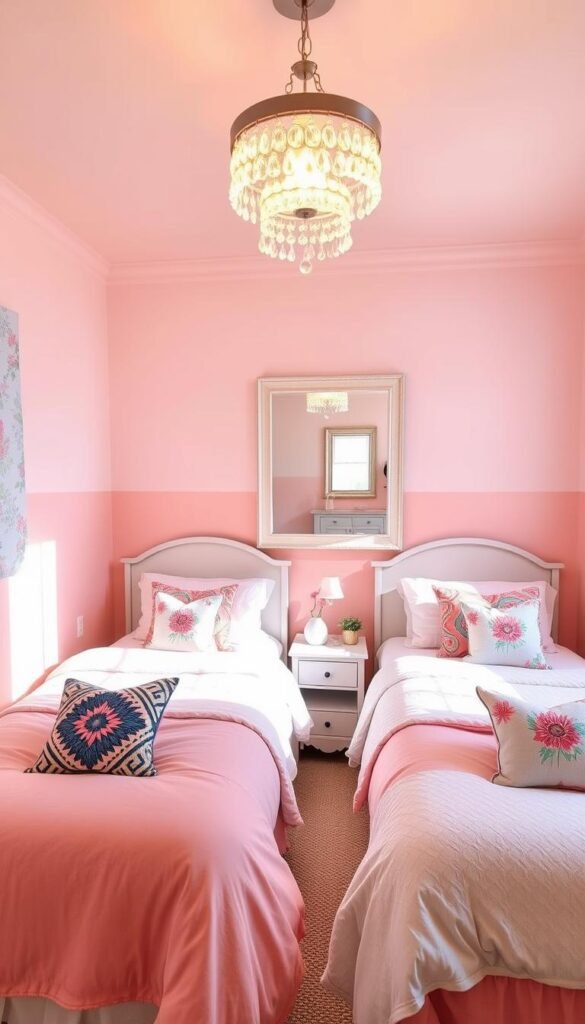
The right color choices can transform your room into a harmonious retreat. They create visual unity while celebrating each personality.
Thoughtful wall treatments make your space feel complete and intentional. They bring everything together with style and purpose.
Choosing a Wall Color that Complements the Theme
Select background colors that work with your overall design concept. Neutral bases allow for colorful accents throughout the room.
Consider how different shades affect the mood of your space. Soft blues create calm, while yellows bring cheerful energy.
Test paint samples on your walls before making final decisions. Natural light changes how colors appear throughout the day.
Lighter tones make compact areas feel more open and airy. They reflect light beautifully, creating a brighter environment.
Creating a Focal Point with an Accent Wall or Wallpaper
An accent wall adds drama without overwhelming the entire room. It becomes an instant conversation piece and design highlight.
Add interest with an accent wall: Create a focal point! It’s the perfect way to bring in a burst of color, patterns, or textures without overwhelming the entire room.
Removable wallpaper offers flexibility for changing tastes over time. You can update the look without major renovation work.
Patterned wallpaper creates visual interest and depth. Geometric designs add modern flair, while florals bring softness.
This project becomes a fun collaboration between siblings. Everyone can contribute ideas for the final design.
Using Color to Zone Different Areas of the Room
Different colors help define separate functional areas within one room. They create visual boundaries without physical dividers.
Use calming tones in sleeping areas for better relaxation. More vibrant shades work well in play or study zones.
Colorful mats can frame special artwork or personal photos. They tie displays into your overall color scheme beautifully.
Let each child select their favorite hue for personal touches. This approach honors individual preferences while maintaining harmony.
| Color Strategy | Best Application | Room Size Benefit | Age Appropriateness |
|---|---|---|---|
| Neutral Base Colors | Main walls, ceiling | Makes small rooms feel larger | All ages |
| Accent Wall | Behind beds or desks | Adds depth without crowding | 5+ years |
| Color Zoning | Defining activity areas | Organizes open floor plans | All ages |
| Removable Wallpaper | Feature walls, alcoves | Easy updates for growing needs | 6+ years |
| Consistent Trim Colors | Doors, windows, baseboards | Creates cohesive look | All ages |
Remember that lighting affects how your colors appear throughout the day. Test your choices under both natural and artificial light.
The right color scheme makes your room feel balanced and beautiful. It creates a space where everyone feels comfortable and happy.
Creating a Sense of Privacy in a Shared Space
Every child deserves their own special spot to relax and recharge. Finding smart ways to carve out personal areas makes sharing more enjoyable for everyone.
Good design balances togetherness with alone time beautifully. It helps siblings respect each other’s needs while maintaining harmony.
Using Bookcases or Shelving Units as Room Dividers
A bookcase serves as a functional and decorative way to create separation. It provides both visual privacy and valuable storage space.
Place taller units between beds or activity zones. This creates natural boundaries without building permanent walls.
Open shelving maintains an airy feel while defining different spaces. You can display favorite items on both sides for double the charm.
Choose units with a mix of open and closed storage. This keeps some items hidden while showcasing special treasures.
Installing Curtains for Flexible Separation
Curtains offer wonderful flexibility for changing privacy needs. You can open or close them depending on the situation.
Install tracks from the ceiling between sleeping areas or desks. This creates soft dividers that feel cozy and inviting.
You can use curtains to separate the beds, the desks, or the closets, depending on where you need some privacy.
Choose lightweight fabrics that filter light without blocking it completely. Sheer materials maintain brightness while providing visual separation.
Consider adding curtain panels around individual beds. This creates private sleeping nooks that feel extra special.
Designating Individual Little Nooks and Corners
Create cozy corners where each child can escape for some alone time. These personal retreats become cherished spots within the shared room.
A reading nook with comfortable seating and personal books works perfectly. Add a small lamp for cozy evening reading sessions.
Designated study areas help maintain focus during homework time. Personal desks with organized supplies make studying more enjoyable.
Small canopies over sitting areas create magical hideaways. They transform ordinary corners into extraordinary retreats.
Remember that these personal spaces can evolve over time. Flexible solutions adapt as your children grow and their needs change.
Must-Have Shared Girls Bedroom Ideas for Sisters
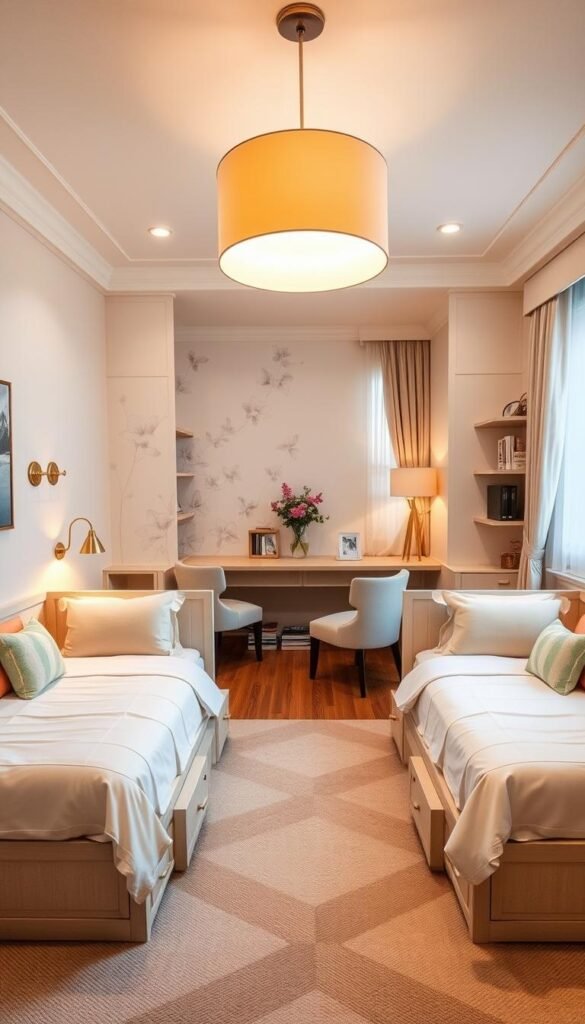
Transform your daughters’ room into a multifunctional haven that supports both play and study. These essential elements create a balanced environment where each child can thrive.
Smart design solutions make the space work harder for your family. You will discover how to create zones that serve different purposes beautifully.
Functional and Stylish Shared Workspace Desks
Every student needs a proper place to focus on homework and projects. Side-by-side workstations give each child their own dedicated study area.
Choose a long desk that provides ample surface space for both. This setup encourages good study habits while keeping supplies organized.
Consider positioning the workspace near natural light sources. Good illumination reduces eye strain during study time.
Personalize each station with individual storage solutions. This helps maintain order and prevents mix-ups between siblings.
A Dedicated Play Area for Imaginative Fun
Creative play spaces spark imagination and encourage cooperative games. Designate an open zone where your children can spread out toys and activities.
Use colorful rugs to define the play territory visually. This creates a clear boundary for messy activities while protecting your flooring.
Include low shelves for easy access to favorite games and toys. Open bins make clean-up simple and encourage responsibility.
Consider adding a play tent or canopy for special adventures. These cozy nooks become magical retreats for imaginative stories.
A Cozy Reading Corner with Floor Cushions
Create an inviting reading nook that beckons for quiet time. This special spot becomes a peaceful retreat within the busy room.
Floor cushions and bean bags offer comfortable seating options. They provide flexible arrangements that can be easily moved around.
Toss in some floor cushions, bean bags, or poufs for cozy and comfortable seating.
Position the reading area near a bookshelf for convenience. Good lighting is essential for evening reading sessions.
Add personal touches like favorite blankets and stuffed animals. These elements make the space feel extra special and inviting.
| Room Zone | Essential Elements | Space Requirements | Age Flexibility |
|---|---|---|---|
| Study Area | Desks, chairs, task lighting, organizers | Moderate floor space | 6-18 years |
| Play Space | Soft rug, toy storage, open area | Generous floor space | 3-12 years |
| Reading Nook | Cushions, bookshelf, ambient lighting | Compact corner space | All ages |
| Display Area | Bulletin board, shelves, photo ledges | Wall space only | 5+ years |
| Craft Station | Storage bins, work surface, supplies | Small table area | 4+ years |
Remember that these functional areas can evolve as your children grow. A play space might transform into a more sophisticated lounge area for teens.
The right combination of zones creates a room that serves multiple purposes beautifully. Your daughters will enjoy a space that supports all their activities.
Personalizing the Space with Unique Decor
Your daughters’ room should reflect their personalities and celebrate their bond. Adding special touches makes the space truly theirs and creates a warm, inviting atmosphere.
These personal elements turn a designed room into a cherished home. They tell the story of your family and the special connection between siblings.
Creating a Gallery Wall of Photos and Artwork
A gallery wall displays your favorite memories in a beautiful arrangement. This collection becomes a focal point that everyone can enjoy.
Mix family photos with special artwork for visual interest. Vary frame styles and sizes to create dynamic energy on your wall.
Include portraits that capture your daughters’ relationship through the years. These images celebrate their growing bond and shared experiences.
Arrange everything on the floor first to find the perfect layout. This prevents unnecessary holes and ensures a balanced look.
Displaying Special Sister Prints, Quotes, and Memories
Sister-themed artwork adds meaningful decoration to your space. These pieces celebrate the unique relationship between your children.
Sister-themed prints are a wonderful way to showcase their sisterhood and friendship.
Choose quotes about sisterhood that resonate with your family. These words create positive affirmations that strengthen their bond.
Incorporate handmade artwork created by your daughters themselves. Their personal creations add authenticity and pride to the room.
Consider creating memory boxes for special mementos and treasures. These collections tell the story of their lives together.
Adding Personal Touches with Their Favorite Things
Let each child select special items that reflect their interests. These personal collections make the space feel uniquely theirs.
Incorporate favorite colors through accessories and textiles. This approach honors individual preferences while maintaining harmony.
Use removable decals for easy updates as tastes change. This flexibility allows the room to grow with your children.
Display treasured collections on shelves or in shadow boxes. These displays become conversation starters and memory keepers.
Personalize bedding with custom names or initials for a special touch. This makes each sleeping area feel distinctly personal.
| Personalization Idea | Materials Needed | Skill Level | Time Commitment |
|---|---|---|---|
| Gallery Wall | Frames, photos, artwork, hanging supplies | Beginner | 2-3 hours |
| Memory Boxes | Shadow boxes, mementos, decorative paper | Beginner | 1-2 hours |
| Custom Bedding | Fabric markers, iron-on letters, plain bedding | Intermediate | 1 hour |
| Removable Wall Art | Decals, washi tape, temporary adhesives | Beginner | 30 minutes |
| Display Shelves | Floating shelves, decorative objects | Intermediate | 1-2 hours |
Balance personal items with your overall design scheme. The right mix creates cohesion while celebrating individuality.
Remember that personalization should be an ongoing process. As your children grow, their room can evolve with them.
Selecting Bedding that is Both Pretty and Practical
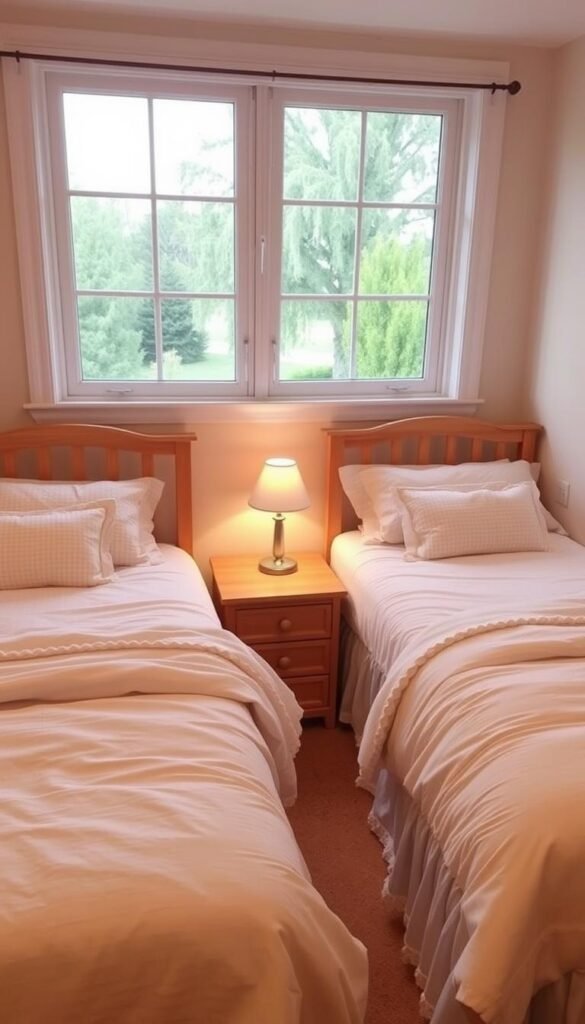
Your choice of bedding can transform the entire feel of the room while making daily routines smoother. The right selection combines comfort, style, and functionality in one beautiful package.
Quality bedding creates a cozy atmosphere where your children will love spending time. It also makes maintenance easier for busy families.
Easy-Make Zip-Up Bedding for Hard-to-Reach Spaces
Zip-up bedding systems revolutionize the chore of making beds. These innovative designs feature zippers that connect all components into one unified piece.
The entire bed can be made perfect in seconds with a simple zip motion. This works wonderfully for tight spaces where traditional tucking becomes challenging.
Because the bedding zips up on both sides, making the bed is a breeze, even for tight spaces.
Many families choose these systems for bunk beds and loft configurations. They eliminate the struggle of reaching difficult corners.
These practical solutions come in various pretty colors and patterns. You can find options that match any room theme beautifully.
Coordinating Colors and Patterns for a Unified Look
Select bedding that complements your overall color scheme. Coordinated pieces create visual harmony throughout the space.
Choose a dominant pattern or color that both children enjoy. Then add accent pieces that reflect each personality.
Consider using the same base color with different pattern variations. This approach maintains unity while honoring individual preferences.
The right combination creates a polished look that feels intentional and designed. It brings together all elements of your room beautifully.
Layering with Blankets and Throw Pillows
Layering adds depth and texture to your sleeping areas. It creates a luxurious feel while providing practical comfort.
Start with a quality mattress protector for hygiene and protection. Add comfortable sheets in your chosen colors and patterns.
Include lightweight blankets for warmer nights and heavier quilts for winter. This versatility ensures comfort throughout changing seasons.
Throw pillows offer both decoration and extra support for reading in bed. They can be easily swapped to refresh the room’s appearance.
Mix textures like cotton, fleece, and knit for visual interest. Different materials create a rich, inviting atmosphere.
| Bedding Element | Practical Consideration | Style Impact | Maintenance Level |
|---|---|---|---|
| Zip-Up Systems | Easy bed-making, space-saving | Clean, unified appearance | Very Easy |
| Sheet Sets | Comfort, durability, breathability | Base layer for color scheme | Regular washing |
| Comforters/Quilts | Warmth, seasonal adaptation | Major pattern statement | Seasonal cleaning |
| Throw Pillows | Extra comfort, reading support | Accent colors, texture mix | Easy to remove and clean |
| Mattress Protectors | Hygiene, allergen protection | Hidden functionality | Monthly cleaning |
Remember that bedding should be both beautiful and functional. Choose materials that withstand daily use while maintaining their appearance.
Involve your children in selecting their preferred textures and patterns. This ensures everyone feels happy with the final choices.
The right bedding creates a welcoming retreat for rest and relaxation. It makes bedtime something everyone looks forward to.
Lighting Ideas to Set the Right Mood
Good lighting transforms any room into a warm and inviting space. It creates the perfect atmosphere for different activities throughout the day.
The right lighting setup makes your room both functional and beautiful. It supports everything from homework to bedtime stories.
Think about how you use your space at various times. A layered approach gives you flexibility for every situation.
From bright task lights to soft ambient glows, each type serves a purpose. Combining them creates a harmonious environment.
Overhead Lighting for General Ambiance
Ceiling fixtures provide the foundation for your lighting plan. They offer broad illumination for the entire area.
Choose fixtures that complement your room’s style and theme. A beautiful overhead light becomes a decorative element too.
Consider installing a dimmer switch for adjustable brightness. This lets you control the mood for different times and activities.
Task Lighting for Desks and Reading Nooks
Every study space needs proper illumination for focused work. A good desk lamp prevents eye strain during homework time.
Position task lights to avoid shadows on your work surface. Adjustable arms offer the best way to direct light exactly where needed.
Reading nooks benefit from dedicated lighting too. A floor lamp or wall-mounted light creates a cozy spot for enjoying books.
I love the minimalist design of the beds below, as well as the book shelf and small round sconce lights for each bunk.
Fun Sconce Lights for Individual Bed Areas
Wall sconces provide personal lighting for each sleeping area. They give every child control over their own space.
These fixtures free up valuable surface space on nightstands. They mount directly to the wall for a clean look.
Choose sconces with fun shapes or colors that match your decor. They add personality while serving an important function.
Small round sconces work perfectly for bunk beds and loft configurations. They provide reading light without taking up space.
Don’t forget about nighttime comfort and safety. Soft night lights offer gentle illumination for those dark hours.
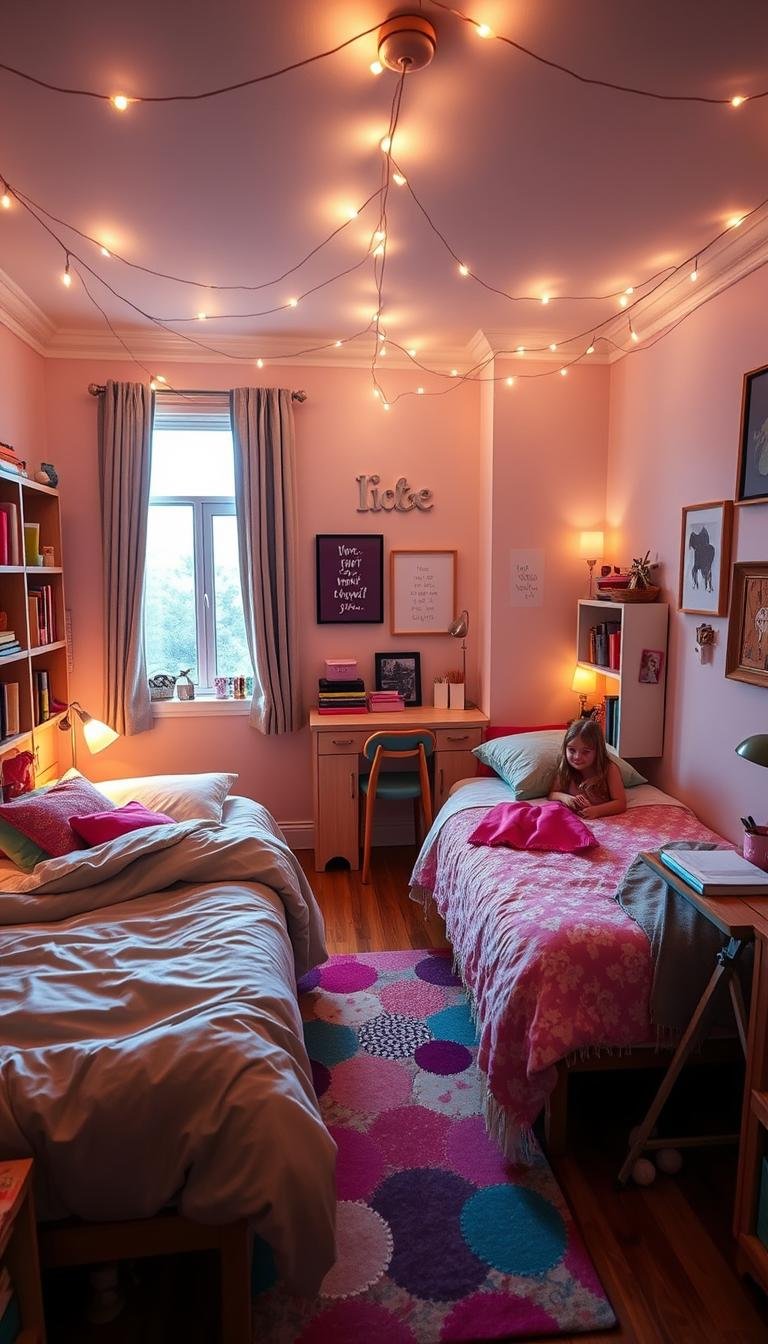
String lights create magical decorative effects above beds or windows. They add a whimsical touch to your room’s atmosphere.
Natural light plays a big part in your overall lighting scheme. Choose window treatments that let you control sunlight throughout the day.
| Lighting Type | Best Location | Function | Control Options |
|---|---|---|---|
| Overhead Fixtures | Ceiling center | General illumination | Dimmer switches |
| Task Lamps | Desks, reading chairs | Focused work light | Adjustable arms |
| Wall Sconces | Above beds, beside chairs | Personal reading light | Individual switches |
| String Lights | Windows, canopy tops | Decorative accent | Plug-in controls |
| Night Lights | Outlet near floor | Safety illumination | Automatic sensors |
The right lighting makes your room adaptable to any situation. It creates a space that works perfectly from morning to night.
Remember that good lighting affects mood and productivity. A well-lit room supports both relaxation and focused activities.
Your lighting choices should grow with your children’s needs. Flexible options ensure your room remains functional for years.
Flooring and Rugs to Define Spaces and Add Comfort
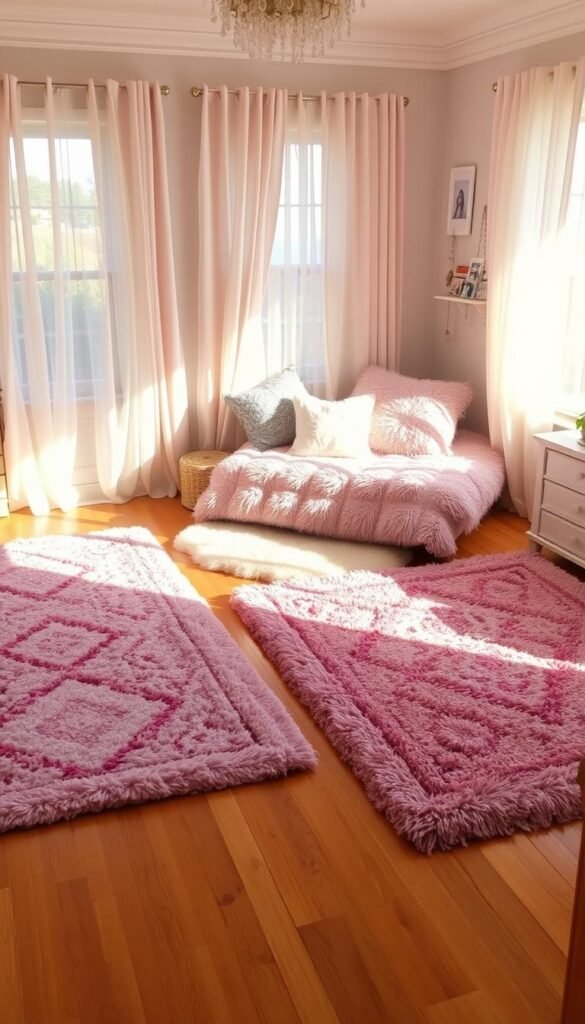
The right floor covering transforms your room into a cozy and organized haven. It adds warmth underfoot while helping to structure your layout beautifully.
Rugs create visual boundaries that make shared living more harmonious. They help each child understand their personal territory within the common area.
Your floor treatment should balance style with practical needs. Choose materials that withstand active play while adding decorative charm.
Using Rugs to Delineate Sleeping, Play, and Study Zones
Area rugs work wonders for defining different functional zones. They create visual separation without building physical walls.
Place a soft rug beside each bed for comfortable morning steps. This creates a cozy sleeping spot that feels personal and inviting.
Use a durable rug to mark the play zone clearly. It provides a comfortable surface for games and activities.
Rugs: Define different areas in the room with rugs. Create a cozy sleeping spot, a chill reading corner, or a playful play zone.
Position a low-pile rug under desks for easy chair movement. This defines the study area while being practical for daily use.
Consider rug sizes that fit your furniture arrangement perfectly. The right dimensions make your space feel intentional and designed.
Choosing Durable and Soft Materials for Play
Select materials that can handle active kids and messy adventures. Stain-resistant fibers make cleanup simple after creative projects.
Soft, plush rugs create comfortable play areas on the floor. They cushion falls and make sitting more enjoyable for little ones.
Natural fibers like wool offer durability and comfort. They withstand heavy use while maintaining their beautiful appearance.
Synthetic options provide excellent stain resistance. Many modern materials feel soft while being incredibly practical.
Consider layering rugs for added texture and visual interest. This approach lets you mix patterns while maximizing comfort.
| Rug Type | Best For | Durability | Maintenance |
|---|---|---|---|
| Wool Rugs | Sleeping areas, general use | Excellent | Professional cleaning |
| Polypropylene | Play zones, high-traffic areas | Very Good | Easy spot cleaning |
| Cotton Dhurries | Study areas, lightweight use | Good | Machine washable |
| Nylon Carpets | Entire room coverage | Excellent | Regular vacuuming |
| Memory Foam | Play areas, comfort focus | Good | Spot clean only |
Always use rug pads for safety and additional cushioning. They prevent slipping and extend the life of your floor coverings.
Choose patterns and colors that complement your room’s design. Your rugs should blend seamlessly with your overall decor scheme.
Non-slip backing is essential for safety around beds. It prevents accidents and gives you peace of mind.
Select easy-to-clean options for practical everyday use. This makes maintenance simple for busy families.
Remember that rugs can be rotated or replaced as styles change. This flexibility lets your room evolve with growing tastes.
Ideas for Growing with Your Girls
Creating a space that evolves with your children saves time and money. Smart design choices today will serve your family for years to come.
Your room should adapt as your children grow and their needs change. This approach creates a lasting environment everyone loves.
Think about how each element can transition from childhood to teen years. Flexible design makes updates simple and affordable.
Choosing Furniture that Adapts to Changing Needs
Convertible furniture grows with your children through different stages. A crib that becomes a toddler bed is just the beginning.
Consider modular pieces that can be rearranged as preferences change. These systems offer endless configuration options.
Look for quality construction that will withstand years of use. Durable materials ensure your investment lasts.
Many parents love loft configurations for their versatility. As one source notes, “A loft bed above a full bed is the new type of bunk to get because it’s the perfect layout to grow with your kids.”
This smart arrangement creates space for studying or playing below. It easily transitions from play area to homework station.
Designing a Room that Transitions from Little Kid to Tween
Start with neutral walls and foundational pieces. This creates a blank canvas for personal expression.
Add personality through easily changed accessories and decor. Swap out bedding, art, and textiles as tastes evolve.
Create storage that works for different age groups. Adjustable shelving accommodates everything from toys to textbooks.
Consider how each zone might serve new purposes over time. A play area might become a comfortable reading nook later.
Lighting should adapt to changing activities and needs. Task lighting becomes more important as study time increases.
| Design Element | Childhood Solution | Tween Adaptation | Transition Ease |
|---|---|---|---|
| Sleeping Area | Bunk beds with safety rails | Separate standard beds | Moderate |
| Storage System | Low bins for toy access | Higher shelves for books | Easy |
| Workspace | Small art table | Proper desk with chair | Moderate |
| Wall Decor | Removable decals | Framed art posters | Very Easy |
| Lighting | Colorful night lights | Study lamps and sconces | Easy |
Your home should be a place that grows with your family. The right choices make this transition smooth and enjoyable.
Remember that children’s preferences will change multiple times. Flexible design accommodates these natural evolutions.
Involve your kids in the process as they grow older. Their input ensures the space continues to meet their needs.
Quality furniture might cost more initially but saves money long-term. It eliminates the need for frequent replacements.
The best room evolves gracefully through different life stages. It remains a comfortable retreat for years to come.
Your Blueprint for a Perfect Shared Sister Sanctuary
You now have all the tools to craft a beautiful shared bedroom for your daughters. This guide has shown how smart design choices create harmony and function.
Remember to balance practical needs with personal expression. Your planning will build a space where bonds grow stronger through shared experiences.
Flexibility ensures the room adapts as your girls mature. Quality furniture and clever storage provide lasting satisfaction.
Most importantly, have fun creating this special sanctuary. Your efforts will result in a cherished space for making memories.