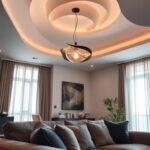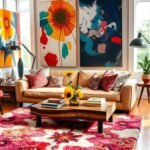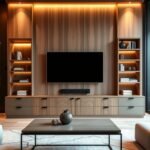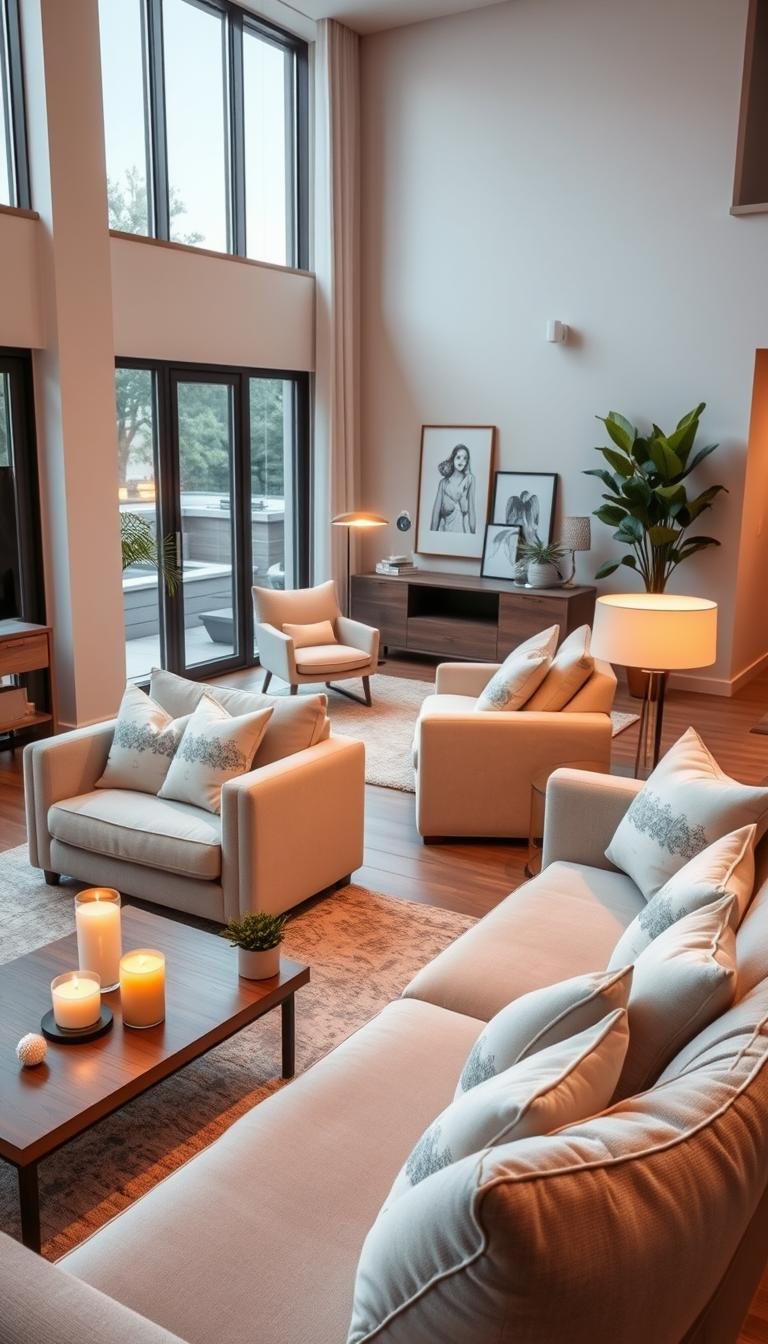
A modern room can feel polished and welcoming at the same time, whether you are relaxing alone or gathering friends. The best living room inspiration modern homes can offer makes everyday routines easier, not just photographs more appealing. Your space should work for reading, conversation, a quiet evening, and the occasional full house.
Layered lighting means combining ambient, task and accent light sources to serve different purposes in one room. That simple approach is one example of how a considered interior can look current while still supporting daily life. Good design begins with how you use your home, then adds style in ways that feel natural.
In the ideas ahead, you will find fresh trend combinations, practical choices for small spaces, and personal touches that keep a room from feeling copied. You can borrow a detail or two from a new style without changing everything you own. Comfort and character can share the same floor plan.
Choose the ideas that support the way you actually live, then adapt the look to your home.
Living Room Inspiration Modern Starts With a Clear Point of View
A modern look is less about matching a single style and more about balancing clean lines, useful furniture and a comfortable mood. Start with a direction that makes sense for your home, then let negative space and natural materials do some of the visual work. A modern living room can feel warm without losing its clear, simple shape.
Choose a few guiding principles before you shop. Warm minimalism favors uncluttered furnishings and a softer, welcoming palette. Midcentury modern design often uses clean lines and purposeful forms. Modern organic style pairs crisp lines with natural wood, houseplants, earthy browns and whites.
Borrow one quality from a style instead of copying a whole room; that keeps your choices flexible and personal.
These principles are not strict rules. You might like the streamlined furniture of midcentury modern design, but prefer the natural textures of a modern organic interior. Functional furnishings should earn their space, and empty areas can make a room feel calmer rather than unfinished.
For more examples of functional layouts and clean-lined furnishings, explore these modern mid-century living room ideas. Notice how a warm wood finish or a sculptural piece can add personality without crowding the view. Keep the choices that feel useful and leave the rest behind.
Pick one guiding quality, such as natural texture or streamlined furniture, to keep later choices coherent.
Make Comfort the Starting Point
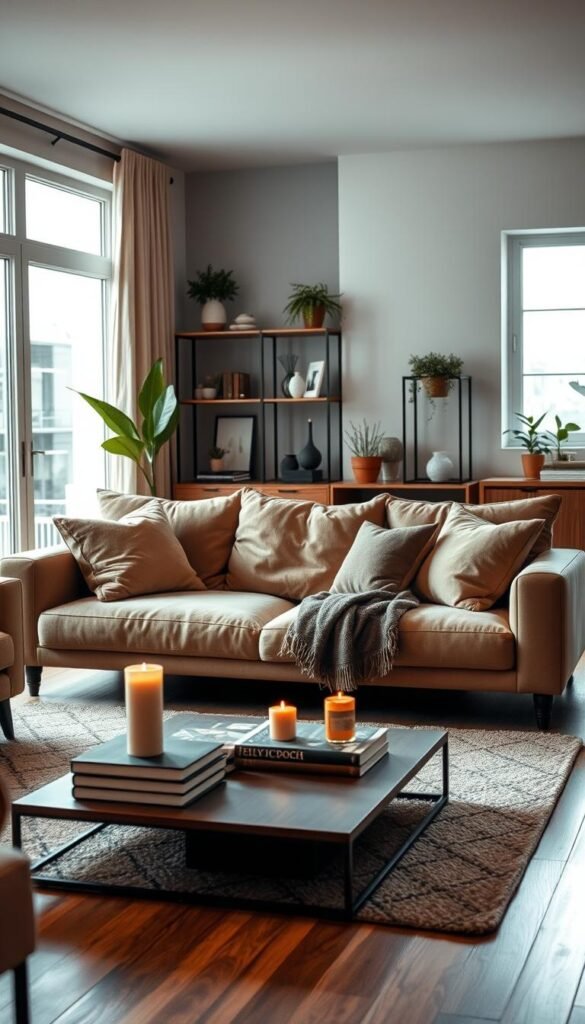
A comfortable room gives you an easy place to unwind on an ordinary evening and enough usable seating when company arrives. Comfort comes first when you choose living room ideas, because the room should feel good in use, not only look finished. A 2025 trend puts comfort at the center of spaces made for relaxing and entertaining.
Choose furnishings around the activities your home repeats most. A sofa and armchairs may suit conversation, while a sofa bed can help when guests stay overnight. A coffee table and side tables give you practical places for drinks, books, or a reading lamp.
Cozy modern living room ideas for everyday use
Cozy modern living room ideas can be simple: comfortable seating, a soft surface underfoot, and a reachable place for a mug or book. Add the things you actually use, such as a throw for cool evenings or a small table beside your favorite chair. These choices make comfort part of the room’s routine instead of an extra layer of decor.
A living room that supports downtime also needs a little breathing room. Keep the seat you use most easy to reach, and avoid filling every surface with objects. If you enjoy reading, make sure the chair and its nearby table work together rather than treating them as separate purchases.
Warm and cozy living room ideas for company
Warm and cozy living room ideas for hosting start with seats arranged to support conversation. Turn chairs toward one another or angle them toward the sofa, so guests can talk without sitting in a formal row. A relaxed arrangement feels more welcoming than furniture lined up like a waiting room.
Consider how a sofa, armchairs, or a sofa bed can support your own mix of family time and guests. A useful side table beside an armchair can make that seat comfortable without taking over the room. For more ways to make comfort and character work together, see these modern cottage living room ideas.
Before buying anything, write down the three activities your living room needs to support most often.
Mix 2025 Styles Without Making the Room Feel Themed
You can make a room feel current by combining a few distinct influences rather than committing to a matching set. Use contrast with care: a modern interior can take inspiration from Art Deco, Modern Cottage, or an antique-modern mix without turning into a period set. One or two strong details are often enough to give a room its own character.
Let one influence lead and keep the rest in supporting roles. An accent, material, or shape can tie different pieces together. The combination feels considered when your furnishings still suit the room’s daily use.
Art Deco warmth and geometric detail
Art Deco-inspired living rooms pair warm, rich tones and geometric patterns with metal accents such as chrome. You can bring in the geometry through a patterned cushion, framed print, or small decorative object. A chrome detail can make the look feel crisp without asking you to replace your main furnishings.
Use the pattern sparingly if your room already has busy artwork or textiles. A geometric detail can repeat in a second small spot, but too many competing motifs can make the room feel like a themed set. Keep large pieces simple so the accent has room to stand out.
Modern Cottage materials and pattern
Modern Cottage combines modern tailoring and lighting with artisanal or locally sourced materials, warm tones, and pattern. A clean-lined sofa can sit comfortably beside a hand-finished object or a patterned textile. The contrast between tailored forms and crafted details gives the room an easy, lived-in feel.
Pick a pattern that carries colors already present in your room. Then let the furniture stay simple enough to balance it. You can use one patterned element as a focal note instead of layering every surface with decoration.
Antiques balanced with contemporary furnishings
An antique can feel intentional beside contemporary furnishings when the pieces share a color, material, or silhouette. A traditional wooden side table, for example, can relate to a modern chair through a similar finish or a repeated curve. The shared detail helps both pieces feel connected.
Mixing antiques with modern furnishings is another 2025 direction, but the pieces need not match. Start with one object that has a clear purpose or personal meaning, then give it space beside more streamlined furniture. For another take on combining vintage objects and contemporary rooms, browse Parisian-inspired living room decor.
| Style direction | Signature elements | A restrained way to use it | Best starting point |
|---|---|---|---|
| Art Deco | Geometric patterns, rich tones, chrome | Add one patterned accent and a metal detail | Framed art or a cushion |
| Modern Cottage | Modern tailoring, artisanal materials, warm patterns | Pair one crafted piece with simple furnishings | Hand-finished decor |
| Antique-modern mix | Older and contemporary pieces with a shared detail | Repeat a color, material, or silhouette | One antique side table |
Let one style lead and use the others as supporting notes, so the room still feels like yours.
Choose Wall Colors That Set the Mood
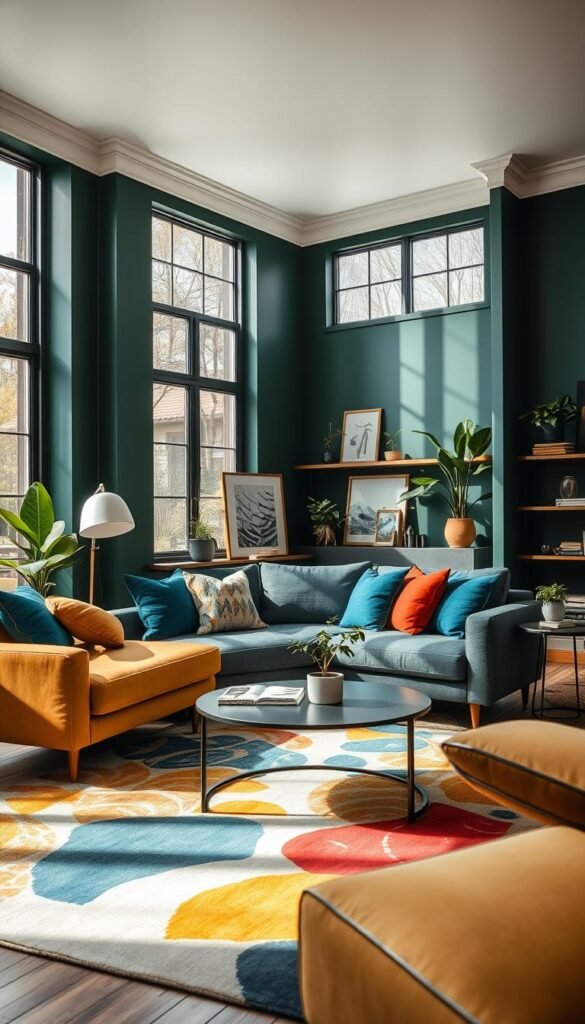
A wall color can either quiet a busy mix or become the room’s main statement. Choose the mood first, then decide whether a light neutral or a deeper shade suits your living rooms and furnishings. Fresh neutrals can make a room feel calm, while saturated color gives the walls more presence.
A deep wall color can anchor colorful furnishings, and a white ceiling can make the ceiling seem higher. Jewel tones such as deep green, purple, and gold support a vibrant, layered look. Dark olive, gray-brown, inky blue, steely green, sage green, ochre, and deep teal are examples to consider, not fixed prescriptions.
Fresh neutrals and saturated color
Fresh neutrals work well when you want the furniture, art, or view outside to draw attention. A dark palette creates a more intimate mood and can give bright furnishings a steady backdrop. The choice depends on what you want the walls to do: recede quietly or contribute an unmistakable color note.
A jewel-tone palette can include layered patterns and mixed textures, but a deep wall color can keep those elements from feeling too busy. If you want an example of a blue-green shade, Hague Blue by Farrow & Ball is shown with white ceilings. Treat it as one point of reference rather than a recommendation for every room.
For more ways to build a personal palette, explore these modern colorful living room ideas. Look at the colors of your larger furnishings before choosing a wall shade. A wall works best when it supports the pieces you plan to keep, rather than competing with them.
Test the shade in the room
Test paint colors in the project space before choosing a shade. Check a sample in the room’s actual light before committing. A color can look different as daylight shifts and as lamps come on, so a small card viewed in a store may not tell the whole story.
Apply samples where you can see them beside the floor and furnishings. Give yourself time to look at them during the day and in the evening. That simple check helps you choose a wall color that fits the room you have, not an imagined version of it.
Look at a paint sample on the wall at different times of day before choosing the final shade.
Bring in Natural and Patinated Materials
Natural and patinated materials give a streamlined room visible texture and a sense of history. Let surfaces do some work, so you can add depth without filling the room with decorative objects. Brushed stone, aged brass, and reclaimed wood bring distinct character to a modern interior.
Repeat a small number of finishes to connect varied textures. Natural wood, stone, wool, and raw linen each feel different under the hand. Smooth contemporary surfaces give those tactile materials a clear contrast, while a repeated finish helps the mix feel planned.
Try a few combinations before adding more materials. Reclaimed wood can bring visible grain beside a smoother stone surface. Aged brass adds a quiet glow against linen, while wool can soften the look of glass without hiding its clean edge.
- Reclaimed wood with stone
- Aged brass with linen
- Wool with glass
- Raw linen with a streamlined metal detail
Keep the number of finishes under control, especially across objects you see together. A natural wood detail might appear in a frame and a small table, while brass repeats in a fixture and a handle. Repetition gives the eye a thread to follow through the room.
These materials need not look perfectly new. A brushed finish, aged surface, or visible grain can make a contemporary room feel less flat. Choose the textures you enjoy touching and seeing in your everyday surroundings.
Repeat one natural finish in at least two places to make mixed materials feel deliberate.
Soften the Room With Curved and Textured Seating
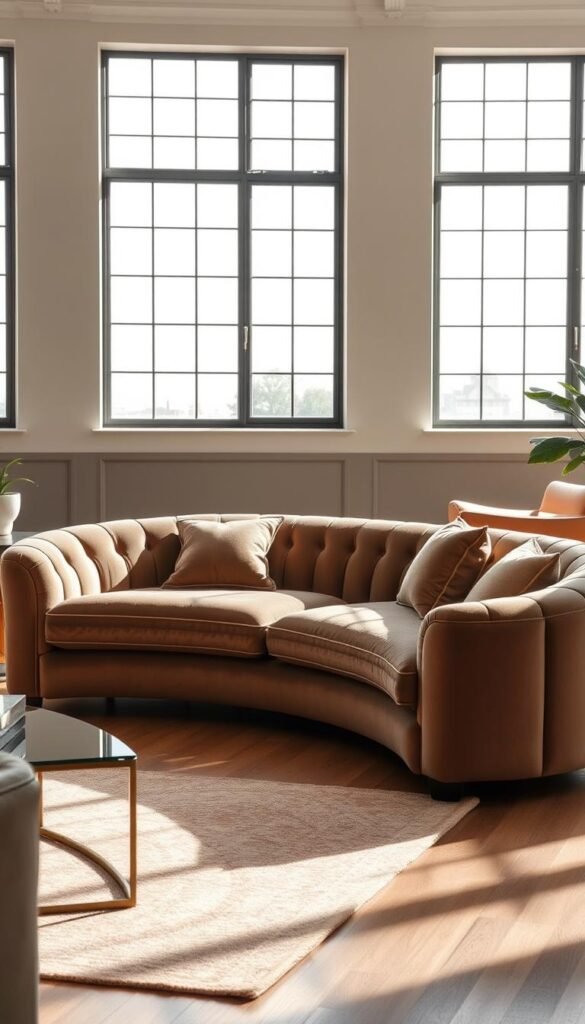
A sofa with a curved outline or tactile upholstery can soften a room built around straight architectural lines. Choose a shape that feels inviting, then make sure it suits how people move around the seating area. A major furniture silhouette has visual weight, so it should feel at home from more than one angle.
Curved and textured seating are options, not rules. Curved sofas are a 2025 trend associated with organic shapes, plants, and earthy colors. Channel-tufted upholstery, with its long vertical stitched ridges, is appearing on both midcentury modern-inspired sofas and contemporary pieces.
Curved sofas and channel-tufted upholstery
A curved sofa softens the room’s outline and can help an arrangement feel more organic. The shape can relate to rounded forms in the room without requiring every furnishing to curve. Plants and earthy accents offer another way to support the look.
Channel-tufted upholstery adds a defined texture that catches the eye even on a streamlined sofa. The stitched ridges bring detail to the seat without relying on a bold pattern. Use the fabric as a focused feature if the rest of the room already has strong visual elements.
Ultra-modern living room furniture with softer edges
Ultra-modern living room furniture does not need to rely on hard edges alone. Pair streamlined forms with tactile upholstery, a plant, or an earthy accent to make the room feel easier to settle into. That balance preserves a crisp design while keeping the seating inviting.
A curved sofa can be a natural fit for an organic style, while a squared profile may suit a more linear room. Both can feel modern when the upholstery and surrounding details add warmth. Let the sofa work with the room instead of forcing a single trend throughout.
Choose the sofa silhouette that fits the room’s circulation as well as its style.
Furnish a Small Room Without Overcrowding It
In a small room, a few well-chosen pieces usually work better than several undersized ones. Think in scale and purpose: modern living room furniture for small spaces should support daily use while keeping open sight lines. A piece that performs more than one job can earn its place without making the room feel crowded.
Choose furniture for useful functions and a light visual footprint. A sleek loveseat or apartment-sized sofa with slender arms and legs can provide seating without overwhelming the room. Modular sofas can be rearranged to fit the layout, and a transparent table can preserve the view across the space.
Modern living room furniture for small spaces
Start with the pieces you need most, then choose their scale carefully. A modular sofa can adapt to changing arrangements, while a lucite coffee table adds structure without the visual heaviness of an opaque one. Mirrors or metallic finishes can bounce light around the room.
Nesting coffee tables tuck together when you need more floor area. An ottoman can work as a coffee table and extra seating, giving you another flexible option. If a sectional is your best fit, two to three smaller pillows can keep it from feeling overwhelmed.
Small living room inspiration in a modern style
Small living room inspiration in a modern style might center on one sculptural anchor, such as a large curved sofa, rather than several pieces competing for attention. Modular seating or a light-looking table can keep the room’s central view open. A compact footprint should still leave room to sit comfortably.
These small modern living room ideas offer more ways to keep a compact interior useful. Consider whether a table needs to stay in place every day or should move when guests arrive. The best choice depends on the tasks you expect it to handle.
| Choice | Space-saving quality | Useful when | Watch for |
|---|---|---|---|
| Apartment-sized loveseat | Slender arms and legs reduce visual bulk | You need everyday seating | Check seat depth before buying |
| Modular sofa | Sections can be rearranged | Your layout may change | Confirm the pieces fit each arrangement |
| Lucite coffee table | Clear material keeps sight lines open | You want a useful central surface | Check that the top suits daily use |
| Nesting tables | Smaller tables tuck together | You need extra surfaces sometimes | Allow room to pull them apart |
Measure the footprint of each large piece and leave enough room to use the furniture comfortably.
Arrange a Very Small Room for Clear Sight Lines
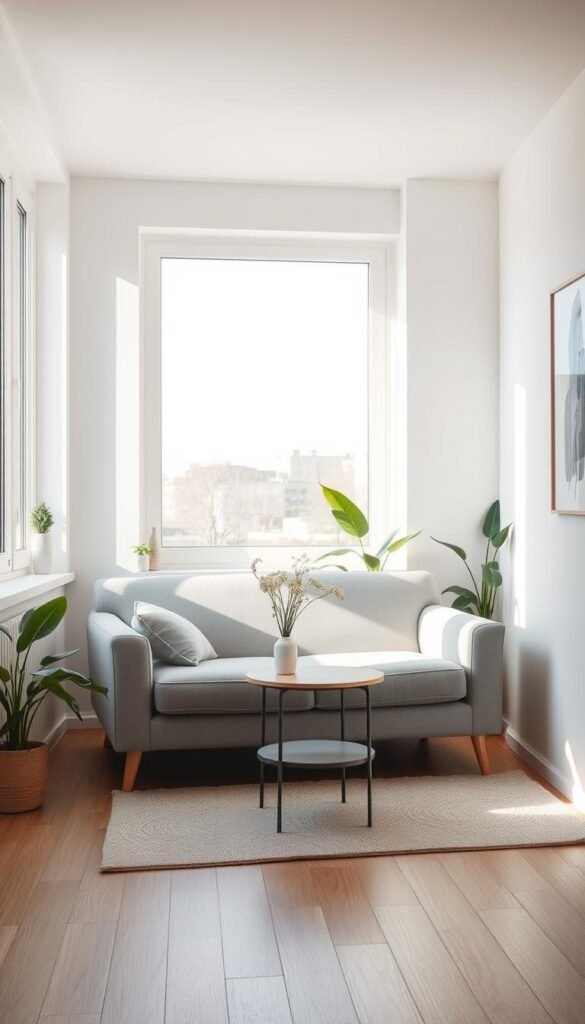
The best layout in a very small room is the one that protects a clear route and does not sacrifice the windows. Keep the view open by placing seating where it supports conversation without cutting off natural light. A low-back sectional can preserve sight lines, and acrylic or glass details help a compact room feel airy.
A sofa against a wall usually creates a clear walkway, while a floating sofa needs usable space behind it. A floating arrangement works only when the gap can serve as a narrow console area or a walkway. One featured sectional measures 10 by 10 feet; that is an example, not a standard size for every small room.
Place the sofa against a wall or float it carefully
A wall-backed sofa can be a straightforward choice when the room is tight. It may free the center for movement, but its placement should not block windows or natural light. Check the room’s openings before deciding which wall will support the seating.
A floating sofa can separate areas, but it needs enough clearance behind it to make the arrangement useful. A narrow console may fit when the gap is modest; a walking route needs more room. If neither can work, keep the sofa against a wall instead of squeezing in a floating layout.
Preserve light and walking routes
Low-profile seating helps keep sight lines open, especially when you can see across the room from the entry. Keep windows easy to reach and avoid positioning a tall piece where it interrupts daylight. The result can make the room feel less boxed in, even when the floor area stays the same.
- Keep a clear route through the room.
- Protect access to windows and natural light.
- Verify the open space behind a floating sofa.
For more small-space layouts, see these midcentury modern apartment living room ideas. Pay attention to how low-profile furniture leaves the view across a compact room less interrupted. The strongest layout is the one people can use without moving around obstacles.
Walk the main route through the room after placing the sofa and move any piece that narrows it.
Pick a Coffee Table That Fits the Room’s Style
A coffee table feels right when it is easy to use from the seating and suits the room’s visual weight. Let the sofa set the scale, then choose a shape that serves the chairs and the way you move through the room. The table should support the seating, not behave like an isolated statement.
A glass surface keeps the view through the center of the room more open. Round or hexagonal coffee tables can suit a small modern room, while a squared-off table supports a classic modern look. The shape changes the room’s rhythm as well as the way people reach the surface.
Finish also affects visual weight. Rustic wood brings a more grounded, casual note, while marble can read as a stronger focal surface. Sleek glass appears lighter because the view continues through it, though the table still needs to be easy to use from nearby seats.
Think about what belongs on the table during an ordinary day. A surface that is too small may not serve the sofa, while a visually heavy one can dominate the center. The right balance comes from how the table looks beside the room’s main furniture.
A round or hexagonal form may feel less rigid than a squared edge, but neither shape is automatically better. Consider the room’s lines and how people reach across the surface. A table can add a deliberate design note while remaining quietly useful.
Check the table from each seat before choosing a shape or finish.
Layer Light for More Than One Mood
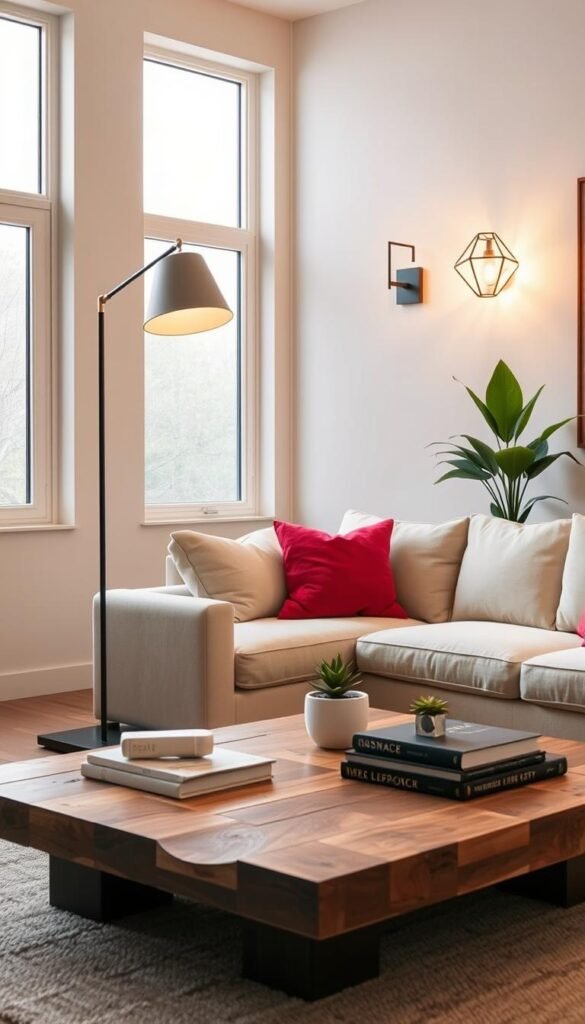
A single overhead fixture rarely gives you the right light for every activity in the room. Use separate sources for general illumination, focused tasks, and details you want to highlight. Layered lighting helps one living room support reading, relaxing, and gathering without asking one fixture to do everything.
Plan for ambient, task, and accent light together. Ambient light provides general illumination; task light focuses on reading or work; accent light draws attention to a feature. Statement sconces, chandeliers, and sculptural floor lamps can add function and visual interest.
| Layer | Purpose | Example fixture | Living-room placement |
|---|---|---|---|
| Ambient | General illumination | Chandelier | Centered above the seating area |
| Task | Focused reading or work light | Floor lamp | Beside a reading chair |
| Accent | Highlight a feature | Statement sconce | Near artwork or a fireplace |
A chandelier can supply ambient light, while a sculptural floor lamp can offer a focused pool beside a chair. A sconce may serve as an accent and also contribute useful light. The fixture’s shape matters, but its location should suit what you do there.
For a warm living-room atmosphere, TCP recommends 2400 K to 3000 K bulbs. Warm light ranges from 2000 K to 3000 K, neutral light from 3100 K to 4500 K, and cool light above 4600 K. The recommended range falls within the warm category, not the neutral or cool ranges.
Daylight also plays a part in how a room feels. The American Institute of Architects’ Design for Well-being framework discusses daylight access alongside glare management. Natural light and electric fixtures can work together, with each serving a different part of the day.
Check bulb temperature on the packaging and keep the living room’s general glow within the recommended warm range.
Give Art, the Fireplace or the Media Area a Focal Role
One clear focal point gives the eye a place to settle when you enter the room. Choose what leads: artwork, a fireplace, or a media area can anchor the view and help other details feel intentional. A focal point does not need to be large, but it should have room to register.
Give the main feature enough space to stand apart. A wall-mounted television can sit with artwork or become part of a streamlined media area. A fireplace surround can use stone, tile, plaster, metal, or wood, depending on the look you want.
Let artwork make a clear statement
One large abstract artwork above a sofa can add visual interest without requiring a wall full of small pieces. Leave space around the art so its shape and color remain clear. If you prefer a gallery arrangement, give the group a deliberate boundary rather than letting it spread without a plan.
Choose art that connects with the room through color, form, or subject. It does not need to match the furnishings exactly. A thoughtful gap between the art and nearby objects keeps the wall from feeling crowded.
Integrate the fireplace and media area
A fireplace can lead the room when its surround and position naturally draw attention. Stone, tile, plaster, metal, and wood each create a different surface around the fire. The fireplace and television can share attention when their placement feels balanced instead of competing for the same space.
A wall-mounted television can blend into the room when its display or surrounding design is considered. You might place artwork nearby or integrate the screen into a streamlined media area. Think about how the wall looks when the television is off as well as during use.
Choose whether you want the fireplace or media area to lead before adding smaller details. That decision gives other objects a clear place in the overall composition. Avoid making every wall compete for attention at once.
Decide which wall deserves attention before adding smaller pieces around it.
Use Rugs and Window Treatments to Add Softness
Textiles make a room feel more inviting while helping its large surfaces feel connected. Use texture and pattern thoughtfully: a rug can soften the floor, while curtains or blinds shape the windows and the room’s sense of scale. Their materials change the mood as much as their colors do.
Choose treatments that suit both natural light and privacy. A sisal rug feels different from a Berber-style rug or a traditional Turkish carpet. Heavy linen or wool curtains add softness, while blinds can give the window a trim, simple finish.
Compare the rug’s texture or pattern with the floor beneath it. A textured rug can add surface interest, while a patterned one brings movement to a plain floor. Think about how much visual detail the rest of the room already holds before choosing between them.
- Sisal: a natural-looking texture for a simple floor treatment.
- Berber-style rug: a patterned option with a distinct surface.
- Traditional Turkish carpet: a patterned choice with a classic feel.
- Heavy linen or wool curtains: soft window coverage with visible texture.
Curtains hung 4-6 inches above the window frame can help the space feel bigger and taller. Measure the window and the wall before fixing the rod, so the fabric can hang where you intend. The right height can make the window treatment feel like part of the room rather than an afterthought.
Blinds offer a cleaner outline when you want less fabric around the window. Curtains can soften the view and support privacy, but their placement should not work against the natural light you want to keep. Choose the treatment based on how the window serves the room.
Measure the window and plan the curtain rod height before ordering or installing treatments.
Curate Shelves With Art, Books and Personal Objects
A shelf feels curated when it balances personal objects with enough open space to see them. Show a few meaningful things instead of filling every inch. Books, framed art, a sculptural object, or a plant can make a display feel connected to your interests.
Leave room around the pieces you want people to notice. Grouping objects or art in threes is a commonly used styling rule, but it is a flexible composition idea, not a requirement. A different number can work when the objects feel balanced together.
- Books that you enjoy reading or want close at hand.
- Framed art sized to suit the shelf or wall.
- A sculptural object with a clear shape.
- A plant that adds a living detail.
Vertical shelving can use wall height to display books, collectibles, and artwork. It can also give smaller personal objects a place without spreading them across every surface. Arrange pieces so they remain visible from the main seating area.
A modern object can sit beside a traditional piece or a vintage find. Their age does not need to match; a related color, scale, or shape can make them feel at ease together. Keep some shelves partly open so the eye has a place to rest.
Choose objects that reflect your home and interests, rather than treating every shelf as storage. A few empty spaces help each item read clearly. If a display looks busy from across the room, the small details may have lost their purpose.
Step back from the display and remove one item if the arrangement feels crowded.
Make One Room Work for Conversation, Dining or Work
A room used for several activities works better when each activity has a recognizable place. Mark zones with furniture, rather than relying on walls to divide an open plan. A sofa back, a rug, or a change in furniture orientation can show where one area ends and another begins.
Keep the arrangement clear enough to support both movement and overlapping routines. In an open-plan room, placing a sofa with its back toward the dining table can distinguish the living area from the dining area. A chair and table can create a small home-working spot.
| Room need | Arrangement | Boundary cue | Main benefit |
|---|---|---|---|
| Conversation | Pull chairs and sofa inward | Seating faces the group | Encourages conversation |
| Dining | Place sofa back toward dining table | Sofa marks the living-area edge | Distinguishes two open-plan zones |
| Home work | Pair a chair with a table | Furniture creates a compact work spot | Provides a place to work at home |
Pulling furniture inward creates a conversation zone that feels separate without a partition. An area rug can help show its boundary, while a shift in furniture direction can define another part of the floor. These cues make the layout readable without interrupting the room.
A chair and table can form a compact work spot in the living room. When the workday ends, the chair can return to its usual place and the table can serve another purpose. Keep the arrangement simple enough to change without moving half the room.
In an open-plan layout, the back of a sofa can work like a low visual boundary. It separates the living area from dining without blocking the sense of one shared space. Arrange the dining table so people can still reach it comfortably.
Keep a clear route between zones so the room remains easy to use when activities overlap.
Edit the Details Until the Room Feels Like Yours
A finished room feels personal when its most visible choices reflect your habits and interests. Keep what has meaning, and judge the rest by whether it helps the room work or supports the look you want. Modern living does not require a showroom finish or a perfect set of matching pieces.
Keep one clear focal point, a connecting color or material, and enough negative space. Those checks can make different furnishings feel coherent without making the room look copied. A one-of-a-kind artwork or a bespoke furnishing can carry personal meaning without making every surface feel busy.
A modern room can balance simple furniture lines with colorful artwork and fresh greenery. The open areas matter, too: they let the pieces you care about stand out. If the space feels too polished to use, bring in something from your everyday life rather than adding more decoration.
Let personal meaning live in one or two visible choices, then give those choices enough space to speak.
A bespoke object can become a focal detail because it has a story that belongs to your home. It might be a piece of furniture made for a specific need or artwork you have chosen for years. The room can remain calm around it.
Look at the space from the doorway and from your favorite seat. Notice what catches your eye first and whether the room still feels easy to use. A display that looks beautiful but interferes with daily routines may need a practical adjustment.
A lived-in home can carry signs of real use without feeling unfinished. Leave the objects that serve a purpose or make you glad to see them. Let go of details that only stay because you feel obliged to keep them.
Remove one detail that does not support the room’s use or the look you want.
Start With One Change You Can Live With
A room does not need a complete makeover to feel more considered and comfortable. Let comfort guide style, and remember that a few coordinated changes can shift the room’s mood. The strongest living room ideas support the way you use your home, rather than asking you to work around a look.
Choose one manageable starting point: a paint sample, a new light source, or a furniture rearrangement. Try that change in your own space before adding another. A small decision can show you what the room needs next.
Build around what feels useful and personal, not what seems necessary for a perfect photograph. Your home can change gradually as your habits and needs change. Pick one change, try it in your own space and build from what works.