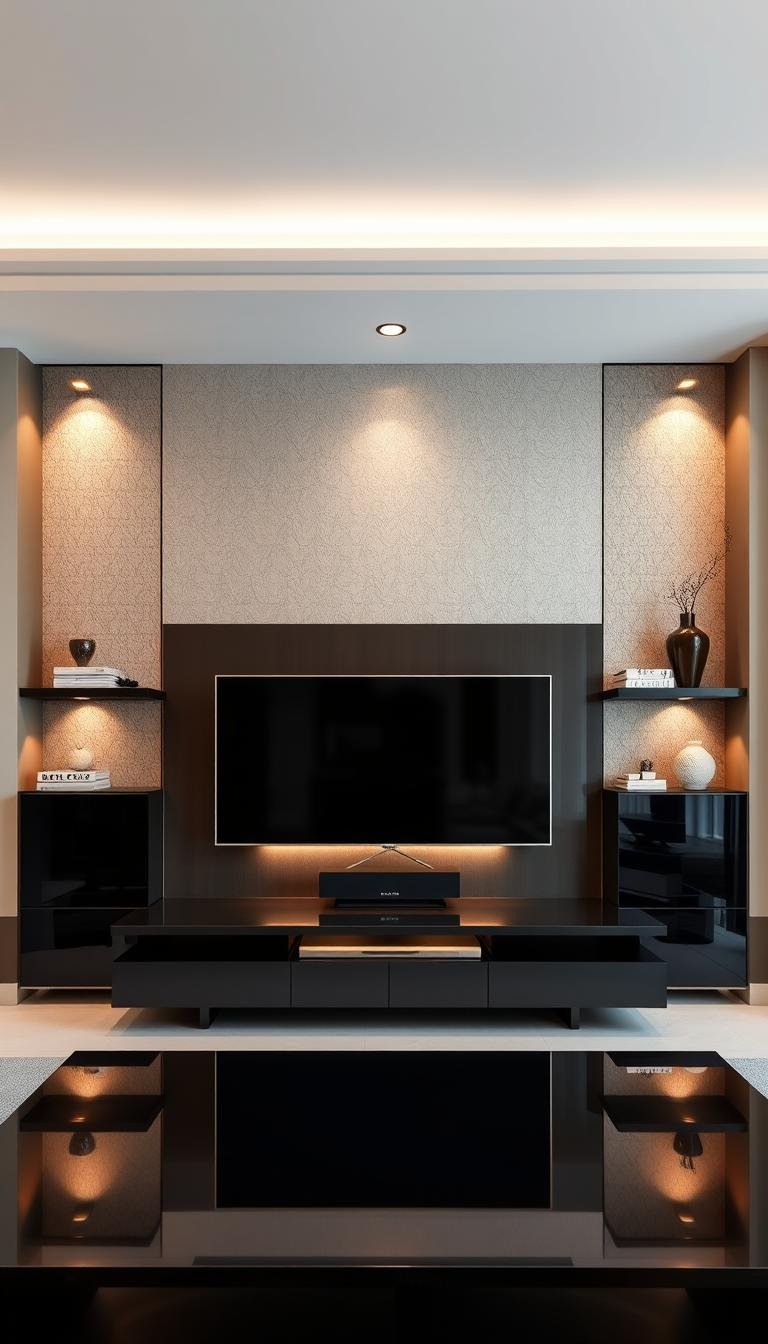
Your television area has become much more than just a place to watch shows. It’s now the heart of your home’s entertainment and style. This space can truly reflect your personal taste and elevate your entire room.
Gone are the days of bulky stands and messy cords. Today’s setups blend technology with beautiful interior decor. You can create a seamless look that feels both functional and fashionable.
From simple paint colors to custom built-in units, the options are endless. Proper planning turns this area into a stunning focal point. It enhances both your room’s appearance and how you use the space.
This guide will show you exciting ways to transform your viewing area. We’ll explore materials, lighting, and clever layout strategies. Get ready to create a gorgeous space you’ll love spending time in!
Why Your TV Wall Should Be the Focal Point of Your Living Room
The way we integrate screens into our homes has undergone a remarkable journey from clunky boxes to seamless design elements. This transformation reflects how technology and aesthetics now work together beautifully.
The Evolution from Functional to Focal Point
Remember those massive wooden consoles that dominated your grandparents’ living room? Those bulky units served one purpose: holding the television. They were purely functional without much thought for style.
Everything changed with flat-screen technology. Suddenly, screens became thin enough to mount directly on the wall. This breakthrough opened up new possibilities for interior design.
Today’s media walls represent the pinnacle of this evolution. They combine entertainment with storage and display capabilities. Your wall becomes a multifunctional centerpiece rather than just a place for your screen.
The psychological impact is significant too. A well-designed focal point creates visual harmony in your space. It gives your eyes a natural resting place and makes the room feel intentional.
How a Well-Designed TV Wall Elevates Your Entire Space
When you mount your screen on the wall, you immediately gain valuable floor space. This is especially beneficial in smaller apartments where every square foot counts. The clean, minimalist look makes your area feel larger and more open.
Eliminating bulky furniture creates a streamlined appearance. Your room feels less cluttered and more sophisticated. The overall effect is a space that breathes better and functions smarter.
Your entertainment area can serve multiple purposes beyond just watching shows. Consider these benefits:
- Integrated storage for media equipment and personal items
- Display shelves for books, art, and decorative pieces
- Concealed wiring that maintains a clean aesthetic
- Custom lighting that enhances both function and mood
A properly designed media wall makes your entire room feel cohesive. It ties together your furniture, color scheme, and personal style. The result is a space that truly reflects your taste and lifestyle.
Most importantly, integrating current technology ensures your design won’t look dated. Thoughtful planning creates a timeless feature that adapts as your needs change. Your wall becomes a dynamic part of your home rather than a static installation.
Making this area a deliberate design choice pays dividends in daily enjoyment. You’ll appreciate the functionality and beauty every time you use the space.
Transforming Your Space: Modern Luxury TV Wall Design Fundamentals
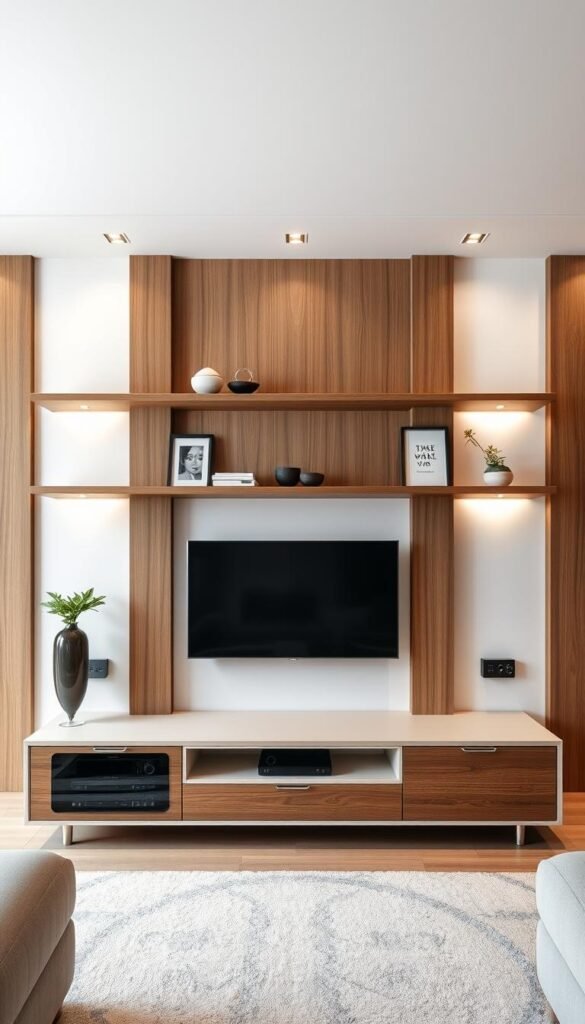
Creating a beautiful media area requires thoughtful planning. You want your screen to feel like part of the room, not just an add-on. The right approach blends technology with your personal style.
Good design makes everything work together. Your viewing area should match your room’s character. This creates a balanced look that feels intentional.
Think about how you use the space every day. Your choices affect both function and appearance. A well-planned unit enhances your entire living area.
Balancing Technology and Aesthetics
Your electronics should complement your interior, not dominate it. Choose sleek equipment that matches your decor. Thin screens and minimalist sound bars work well.
Built-in niches create a seamless look. Recess the screen slightly into the wall. This gives a custom, integrated appearance.
Dark paint colors help technology blend in. They reduce glare and create depth. Your screen becomes part of the wall when not in use.
Consider a media wall with multiple functions. Combining your screen with an electric fireplace adds warmth. This creates a cozy atmosphere for relaxing.
Creating Harmony Between Your TV and Room Design
Placement matters for both viewing and aesthetics. Position your screen at comfortable eye level. This makes watching easier and looks more natural.
Hide cables and wires for a clean look. Use cord management systems inside the wall. This eliminates visual clutter instantly.
Your furniture arrangement should support the design. Arrange seating to face the screen directly. This improves both function and room flow.
Materials and colors help everything blend. Match your media unit with other room elements. This creates a cohesive, designer look.
| Design Element | Technology Integration | Visual Benefit |
|---|---|---|
| Recessed niche | Hides screen depth | Creates flush surface |
| Dark wall color | Reduces screen glare | Enhances contrast |
| Built-in shelving | Hides media equipment | Adds display space |
| Wall-mounted audio | Sleek sound solution | Minimal visual impact |
Traditional rooms can handle modern technology too. Choose equipment with simple lines and neutral colors. This maintains the room’s character while adding function.
Your final design should reflect your personal taste. The best media walls balance form and function perfectly. They become a natural part of your living space.
Choosing the Perfect Color Palette for Your TV Wall
Color transforms your viewing experience more than you might realize. The right shades create harmony between your electronics and decor. They affect both daytime appearance and nighttime entertainment.
Science shows certain colors enhance how we perceive images. Darker backgrounds improve contrast and reduce eye strain. Lighter tones make your area feel more open and airy.
Your color choice sets the mood for your entire space. It can make your screen disappear when not in use. Or it can become a bold statement piece.
Dark Colors for Cinematic Contrast
Deep shades work magic for movie nights and gaming sessions. Black provides the ultimate camouflage for your screen. It creates seamless integration when the power is off.
Navy blue offers a sophisticated alternative to basic black. Charcoal gray brings modern elegance to your setup. Forest green adds natural warmth while maintaining depth.
These rich colors minimize visual distractions around your screen. They help your eyes focus on the content rather than the frame. The effect feels like having your own private theater.
Dark walls make smaller screens appear larger too. The lack of contrast between the bezel and background expands the viewing area. You get more immersive entertainment without buying a bigger display.
Neutral Tones for Versatile Elegance
Light beige creates a soft, welcoming backdrop for your electronics. It reflects natural light beautifully during daytime hours. Your space feels bright and inviting around the clock.
Warm gray serves as an excellent neutral foundation. It coordinates with virtually any furniture style or decor theme. This flexibility makes redecorating much simpler later.
Taupe offers subtle sophistication with its gray-brown undertones. It provides enough depth to support your screen without dominating the room. Neutral backgrounds allow other design elements to shine.
These versatile shades work well in open floor plans too. They create visual continuity between your entertainment area and adjacent spaces. The flow feels natural and unforced.
Bold Accent Walls for Dramatic Statements
Deep red makes a powerful style statement behind your screen. It creates exciting energy for entertaining and social gatherings. This passionate color works best in larger rooms.
Emerald green brings luxurious depth and natural appeal. It pairs beautifully with wood finishes and metallic accents. The rich tone feels both classic and contemporary.
Mustard yellow adds cheerful brightness without overwhelming your space. It creates warm, golden tones that flatter both people and interiors. This unexpected choice shows personal creativity.
Balance bold accent walls with neutral tones elsewhere. Keep other walls and furniture in calming shades. This prevents your space from feeling too busy or overwhelming.
| Color Type | Best For | Lighting Considerations | Room Size Impact |
|---|---|---|---|
| Black/Dark Gray | Home theaters, dedicated media rooms | Works best with controlled lighting | Can make small spaces feel cozy |
| Navy/Forest Green | Traditional and transitional spaces | Needs adequate artificial lighting | Adds depth to medium-sized rooms |
| Beige/Light Gray | Multi-purpose living areas | Enhances natural light reflection | Makes any space feel larger |
| Bold Accent Colors | Contemporary and eclectic styles | Requires careful lighting balance | Best in medium to large rooms |
Test paint samples at different times of day. Natural light changes how colors appear throughout daylight hours. Evening lighting creates completely different effects after sunset.
Consider your existing furniture and flooring tones. Your new wall color should complement rather than clash with them. Cohesive schemes make your entire space feel intentional.
Remember that color affects mood and atmosphere dramatically. Darker shades create intimate, focused environments. Lighter tones promote relaxation and social interaction.
Your final choice should reflect how you use the space most often. Entertainment-focused areas benefit from darker, dramatic backgrounds. Multi-purpose rooms often work better with versatile neutrals.
Floating Shelves and Cabinets: Sleek Storage Solutions
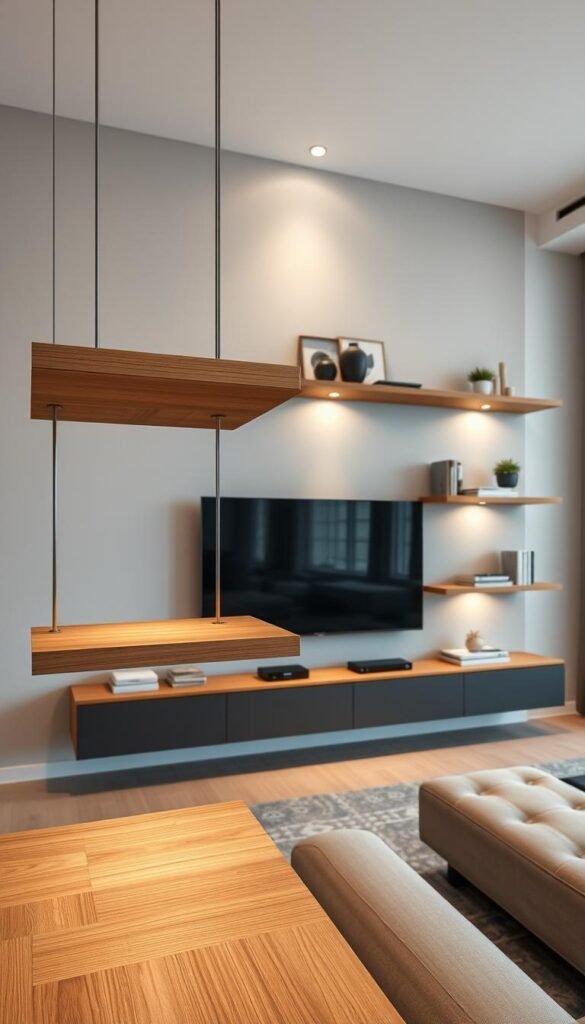
Smart storage solutions transform your viewing area from functional to fabulous. These elements provide both practical organization and aesthetic appeal. They help create a balanced look that feels intentional and polished.
Floating shelves offer incredible versatility for your setup. They appear to magically hang on your wall without visible supports. This creates a clean, contemporary look that enhances your room’s character.
Creating Display Space for Books and Decor
Open shelving gives you perfect spots to showcase personal treasures. You can arrange favorite books, art pieces, or travel mementos. This adds personality and warmth to your entertainment space.
Proper spacing creates visual harmony between items. Leave enough room between objects to prevent a cluttered appearance. Odd numbers of items often create the most pleasing arrangements.
Mix different heights and textures for interest. Combine vertical books with horizontal decorative objects. This variation keeps your display dynamic and engaging.
Consider your viewing experience when arranging items. Position taller pieces toward the ends rather than blocking the screen. This maintains clear sighlines while adding decorative appeal.
Concealing Electronics and Cables Beautifully
Closed cabinets provide elegant hiding spots for equipment and clutter. They keep gaming consoles, routers, and media players out of sight. This maintains your room’s clean aesthetic while keeping everything accessible.
Integrated cable management systems work wonders for organization. Use cord channels, raceways, or in-wall solutions to tame wires. This eliminates the tangled mess behind your entertainment unit.
Choose materials that complement your overall interior design. Wood shelves bring natural warmth, while glass adds modern transparency. Metal accents provide industrial charm that works with various styles.
Your storage solutions should feel cohesive with the rest of your space. Match finishes with other furniture pieces in the room. This creates a unified look that appears professionally designed.
Always consider weight capacity during installation. Heavier items like sound systems need proper wall anchors. Professional installation ensures safety and longevity for your investment.
Incorporating Art and Personal Touches Around Your TV
Your entertainment area transforms into a personal gallery when you surround your screen with meaningful artwork. This approach blends technology with personal expression beautifully. It creates a space that feels uniquely yours rather than just a functional setup.
Thoughtful arrangements make your electronics part of your room’s character. They add warmth and personality to your living area. The result feels more like home than a showroom.
Gallery-Style Wall Arrangements
Creating a gallery wall around your screen requires careful planning. Start by laying out your arrangement on the floor first. This lets you experiment with different compositions before committing to the wall.
Balance is key to successful gallery displays. Mix larger pieces with smaller ones for visual interest. Place your screen as the anchor point, then build outward symmetrically.
Varying frame styles adds depth to your display. Combine thin metal frames with chunky wood ones. Different finishes create texture and movement across your wall.
Proper spacing ensures each piece gets attention. Leave 2-3 inches between frames for breathing room. This prevents your arrangement from feeling crowded or overwhelming.
“The walls we decorate become the stories we tell about ourselves.”
Consider your room’s overall style when selecting artwork. Modern spaces suit abstract pieces and clean lines. Traditional rooms work well with classic landscapes and portraits.
Displaying Your Favorite Art and Photographs
Personal photographs add emotional connection to your space. They transform your entertainment area into a memory wall. Family photos and travel snapshots make your room feel truly personal.
Choose frames that complement your existing decor. Match metal finishes with other hardware in the room. Wood tones should coordinate with your furniture selections.
Lighting enhances your artwork dramatically. Install adjustable spotlights above your display area. This creates museum-quality highlighting for your favorite pieces.
Create color stories through your artwork selections. Pick pieces that share a common color palette. This creates cohesion across your entire wall display.
Mix artwork types for visual interest. Combine paintings with photographs and textile art. Different mediums add texture and depth to your arrangement.
Your personal touches make the space feel authentic. Display items that reflect your hobbies and interests. These elements give your room unique character and charm.
Remember that art should complement rather than compete with your screen. Choose pieces with similar color intensity. This creates harmony between your technology and decor.
Finally, step back and assess your arrangement from different angles. Make adjustments until everything feels balanced. Your finished gallery wall will become a conversation starter.
Textured Backdrops: Adding Depth and Character
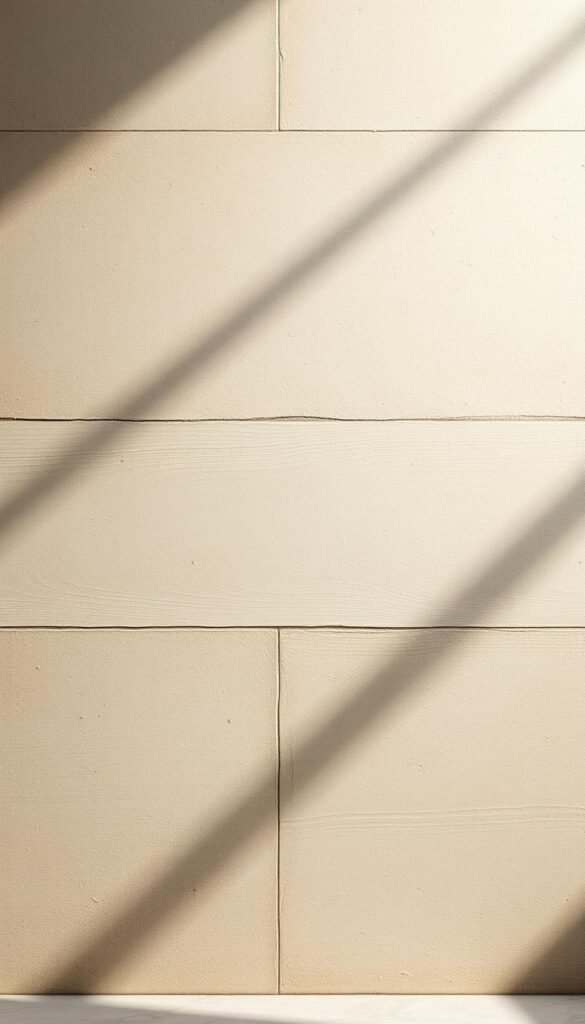
Texture transforms your viewing area into a rich sensory experience. It adds tactile quality that flat paint simply cannot match. Your space gains personality through interesting surfaces and finishes.
These elements create visual interest without overwhelming your room. They provide subtle depth that enhances your electronics. The result feels both sophisticated and inviting.
Natural materials bring organic beauty to your setup. They connect your interior with the outdoors. This creates calming energy in your entertainment space.
Modern alternatives offer similar benefits with easier maintenance. Porcelain tiles mimic natural stone beautifully. Polished concrete provides industrial chic that works in contemporary homes.
Natural Stone and Brick Accents
Stone surfaces create timeless elegance behind your screen. Marble offers luxurious veining that looks unique in every installation. Granite provides durability with natural speckled patterns.
Slate brings dark, moody sophistication to your arrangement. Its textured surface adds rustic charm. Limestone offers lighter tones for airy, spacious feelings.
Brick accents establish distinct atmospheres depending on finish. Whitewashed brick creates farmhouse charm. Exposed red brick delivers urban industrial vibes.
Reclaimed brick adds historical character to new constructions. Its variations tell stories through color and texture. This material works beautifully in traditional and transitional spaces.
Wood Paneling for Warmth and Texture
Wood brings natural warmth to your entertainment area. Its grain patterns create visual movement across your surface. Different species offer unique colors and characteristics.
Reclaimed barn wood adds rustic charm with historical patina. Its weathered appearance tells stories through knots and markings. This material creates cozy, cabin-like atmospheres.
Shiplap paneling provides clean lines with subtle texture. Its horizontal arrangement makes rooms feel wider. Painted shiplap works in coastal and farmhouse styles.
Vertical wood strips add architectural interest to plain walls. They create height illusion in smaller rooms. Stained finishes showcase natural wood beauty beautifully.
| Material Type | Visual Character | Maintenance Level | Best Room Styles |
|---|---|---|---|
| Marble/Granite | Luxurious, elegant veining | High (requires sealing) | Formal, traditional spaces |
| Slate/Limestone | Natural, earthy texture | Medium (regular cleaning) | Rustic, organic designs |
| Brick (various finishes) | Urban industrial or rustic charm | Low (easy cleaning) | Loft, farmhouse, traditional |
| Wood Paneling | Warm, natural grain patterns | Medium (depends on finish) | Most styles except ultra-modern |
| Porcelain Tiles | Mimics natural stone realistically | Low (easy wipe cleaning) | Contemporary, transitional |
| Polished Concrete | Industrial, minimalist sleekness | Low (occasional polishing) | Modern, urban loft spaces |
Combination techniques create unique personalized statements. Mix wood and stone for organic modern appeal. Combine brick with sleek tiles for textural contrast.
Installation considerations vary by material weight. Stone requires proper wall reinforcement. Lighter alternatives like porcelain tiles work on standard drywall.
Maintenance needs differ across materials. Natural stone requires periodic sealing. Wood needs occasional refinishing to maintain beauty.
Your textured backdrop should complement your lifestyle. Choose materials that match your maintenance preferences. The right selection enhances daily enjoyment.
Lighting Techniques to Enhance Your TV Wall
Light transforms your viewing experience from ordinary to extraordinary. The right approach creates atmosphere while improving function. Your setup gains new dimensions through thoughtful illumination.
Strategic placement makes your screen appear to float magically. It reduces harsh contrasts between bright images and dark surroundings. This creates a comfortable environment for extended viewing sessions.
Different activities require varying brightness levels. Dimmable systems adapt to movies, games, or social gatherings. Smart integration lets you control everything with voice commands or apps.
LED Backlighting for Ambient Glow
LED strips create beautiful halo effects behind your screen. They install easily along the edges of your unit. The soft glow makes your display appear to hover against the wall.
This technique reduces eye strain significantly. It minimizes the contrast between bright content and dark backgrounds. Your eyes adjust more comfortably during extended viewing.
Choose warm color temperatures for inviting atmospheres. These tones foster relaxation and cozy feelings. Cooler blues work better for energetic gaming sessions.
Consider these popular placement options:
- Behind the screen for floating illusion effects
- Along shelving edges to highlight displayed items
- Under cabinets to create subtle uplighting
- Around architectural features for dramatic emphasis
Installation requires careful planning for clean results. Hide power supplies and transformers within built-in units. Use remote controls or smart home integration for easy adjustments.
Strategic Spotlights for Highlighting Features
Directional lights emphasize your favorite design elements. They draw attention to artwork, textures, or decorative pieces. This creates visual interest beyond just your screen.
Adjustable fixtures offer maximum flexibility. You can redirect beams to highlight different areas. This works perfectly for changing displays or seasonal decorations.
Position spotlights to avoid screen glare. Angle them away from the viewing surface. This prevents reflections that could disrupt your experience.
Consider energy-efficient LED spotlights for long-term use. They generate less heat than traditional bulbs. This protects your artwork and electronics from temperature damage.
Smart systems integrate with your home automation. Program scenes for different activities or times of day. Voice control adds convenience to your lighting adjustments.
Mirror, Glass and High-Gloss Finishes for Reflective Elegance
Reflective surfaces bring a magical quality to your entertainment area. They play with light in fascinating ways that transform ordinary spaces. These materials create depth and movement throughout your room.
Your setup gains sophistication through strategic reflective elements. They enhance both natural and artificial illumination beautifully. The result feels both expansive and intimately luxurious.
Creating the Illusion of More Space
Mirrors work wonders in smaller rooms by expanding visual boundaries. They reflect light and views to make areas feel larger. This clever trick adds square footage without construction.
Position mirrors opposite windows to maximize natural light. They bounce sunlight deeper into your space. This creates brighter, more inviting atmospheres throughout the day.
Consider these placement strategies for best results:
- Full-height panels beside your screen for vertical expansion
- Overhead strips that reflect ceiling light downward
- Angled installations that capture interesting room views
- Frameless designs for seamless integration
High-gloss finishes create similar space-enhancing effects. Their shiny surfaces reflect light like liquid mirrors. This adds luminosity to your entire arrangement.
Choosing Between Tinted and Clear Glass Options
Clear glass offers perfect transparency for displaying items behind it. It maintains sightlines while providing protection. This option works well for cherished collections.
Frosted glass provides subtle privacy with soft light diffusion. It hides contents while still allowing illumination through. This creates elegant, muted effects.
Tinted options add color personality to your space. Bronze tones bring warm, golden accents. Gray tints offer cool, contemporary sophistication.
Back-painted glass delivers bold color statements. It provides seamless, easy-to-clean surfaces. This option works beautifully as accent panels.
Maintenance matters with reflective surfaces. Use microfiber cloths to avoid scratches. Special cleaners prevent streaking on glass and high-gloss finishes.
Balance reflective elements with matte textures. Too much shine can feel overwhelming. The right combination creates harmonious sophistication.
Your finished space will feel brighter and more open. Reflective materials elevate ordinary rooms into extraordinary environments. They add lasting elegance to your daily experience.
Marble and Porcelain: Timeless Luxury for Your TV Wall
Porcelain tiles offer marble’s beauty with practical durability for daily living. These materials create stunning backdrops that elevate your entire entertainment space. They bring sophistication that works with various interior styles.
Your choice between natural stone and manufactured options affects both aesthetics and maintenance. Each brings unique qualities to your arrangement. Consider your lifestyle and preferences when selecting.
Natural Stone vs. Porcelain Tile Options
Natural marble showcases unique veining patterns that create one-of-a-kind artwork. Each slab features distinctive markings in whites, grays, or dramatic blacks. Some varieties even offer subtle blues, greens, or beiges.
These organic variations make every installation truly special. Your backdrop becomes a conversation piece with natural character. The stone’s texture adds depth and visual interest.
Porcelain tiles replicate marble’s appearance with impressive accuracy. Advanced printing technology captures veining details beautifully. They provide consistent patterning across multiple tiles.
Practical benefits make porcelain appealing for busy households. These tiles resist scratches, stains, and moisture better than natural stone. They require less maintenance while maintaining elegant appeal.
Installation considerations differ between these options. Natural stone needs professional handling and proper sealing. Porcelain tiles offer easier installation with more consistent results.
Complementing Marble with Your Existing Decor
Coordinate your stone selection with room elements for harmonious results. Match veining colors with your existing furniture tones. This creates cohesion throughout your space.
Sleek cabinetry in complementary colors enhances marble’s luxury appeal. Choose neutral tones that let the stone’s patterns shine. Contrast dark cabinets with light stone or vice versa.
Proper lighting highlights marble’s natural beauty effectively. Install adjustable fixtures that emphasize the veining patterns. This creates dramatic shadows and highlights.
Consider these coordination strategies:
- Pull accent colors from the stone’s veining for pillows or art
- Match metal finishes to cool or warm tones in the stone
- Use simple window treatments that don’t compete with the pattern
- Select area rugs that complement rather than match exactly
Budget considerations help guide your final decision. Natural stone typically costs more than porcelain alternatives. Factor in long-term maintenance expenses too.
Your finished look should reflect personal taste while maintaining functionality. The right choice creates a stunning focal point that lasts for years. It becomes the heart of your entertainment space.
Wood Elements: Bringing Modern Warmth to Your Design
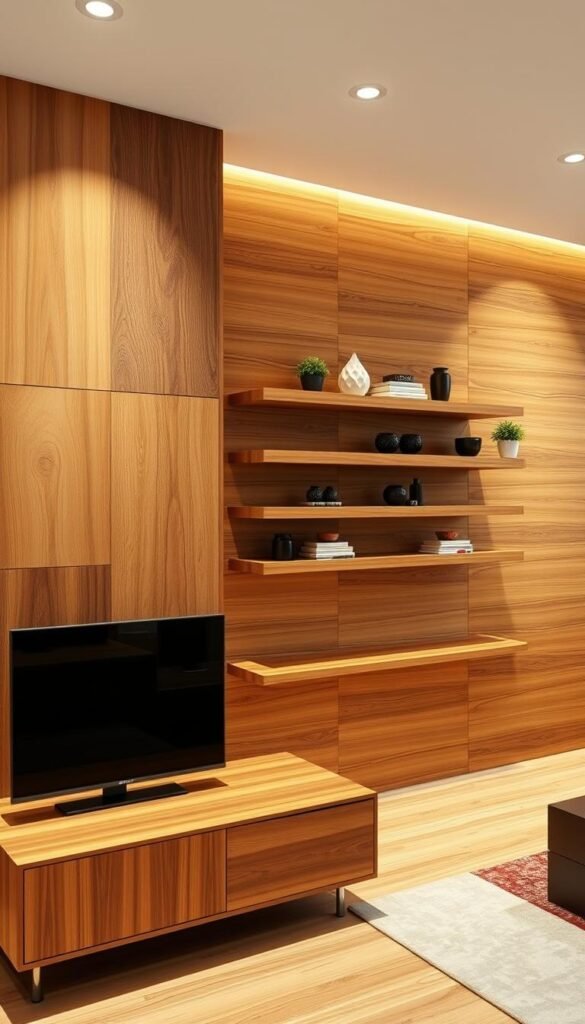
Natural wood brings organic character to your entertainment setup. It adds visual warmth that balances sleek technology beautifully. This combination creates a welcoming atmosphere in your space.
Different species offer unique grains and tones. Each type has its own personality and charm. Your choice affects both appearance and maintenance needs.
Selecting the Right Wood Tone for Your Space
Consider your room’s existing color palette when choosing wood. Lighter tones like maple or ash brighten darker rooms. They create airy, spacious feelings.
Darker woods like walnut or mahogany add rich sophistication. They work well in rooms with ample natural light. These tones create cozy, intimate atmospheres.
Match your wood selection to other room elements. Echo tones from your furniture or flooring. This creates harmony throughout your interior.
Test samples under your actual room lighting. Natural and artificial light change how colors appear. View them at different times of day.
Incorporating Wooden Strips for Architectural Interest
Wood strips create rhythm and movement on your wall. They add depth and dimension to flat surfaces. This technique transforms ordinary walls into feature elements.
Arrange strips vertically to emphasize height. This works well in rooms with lower ceilings. Horizontal placement makes spaces feel wider.
Consider patterned arrangements for visual interest. Herringbone or chevron patterns add dynamic energy. These designs become artistic statements.
Combine wood with other materials for contrast. Metal accents add industrial edge. Glass inserts provide modern transparency.
Finish options affect the final look. Matte finishes offer understated elegance. Satin sheens provide subtle reflection. Glossy surfaces create dramatic shine.
Your wood elements should complement your technology. They soften electronic edges with natural beauty. The balance feels both contemporary and comfortable.
Maintenance varies by wood type and finish. Some species require regular conditioning. Others need only occasional dusting.
Proper care keeps your wood looking beautiful for years. Use appropriate cleaners for your specific finish. Avoid harsh chemicals that could damage the surface.
Your finished design will feel uniquely personal. Wood adds character that synthetic materials cannot match. It brings nature’s beauty into your daily life.
Built-In Units: Custom Solutions for Maximum Impact
Imagine having everything you need for entertainment within easy reach yet beautifully concealed. Built-in units create this perfect balance in your living space. They transform your media area into a seamless part of your room’s design.
These custom solutions address your specific storage and display needs perfectly. You get exactly what works for your lifestyle. The result feels both personal and professionally designed.
Integrating Storage, Shelving and Display Space
Built-in media units house your television, audio equipment, and personal collections beautifully. They keep cables organized and electronics accessible but hidden. This creates a clean, uncluttered look in your room.
Shelving configurations accommodate different item types wonderfully. Adjustable shelves handle various book sizes and decorative pieces. Deep compartments store media equipment while shallow displays showcase art.
Consider these arrangement possibilities:
- Closed cabinets for electronics and game consoles
- Open shelves for frequently used items and decor
- Glass-front sections for protected displays
- Integrated lighting to highlight special collections
Your unit becomes a functional gallery for your interests. It displays what matters to you while keeping necessities handy. The blend of open and closed storage maintains visual balance.
Designing Around Your Specific Needs
Custom built-ins adapt to your room’s dimensions and your usage patterns. They maximize every inch of available space efficiently. This is especially valuable in smaller homes where storage matters most.
Material choices affect both appearance and durability. Solid wood offers warmth and traditional appeal. Laminates provide easy maintenance and contemporary finishes. Painted finishes match your existing color scheme perfectly.
Electrical planning ensures convenient access to power. Built-in outlets and cable management keep cords organized. This attention to detail makes daily use effortless and safe.
Working with designers helps translate ideas into reality. They consider traffic flow, viewing angles, and storage needs. Professional installation ensures everything fits and functions perfectly.
Your finished unit creates a polished, intentional statement. It reflects your personality while serving practical purposes. The investment enhances both your daily experience and your home’s value.
Combining Fireplace and TV Wall for Ultimate Comfort
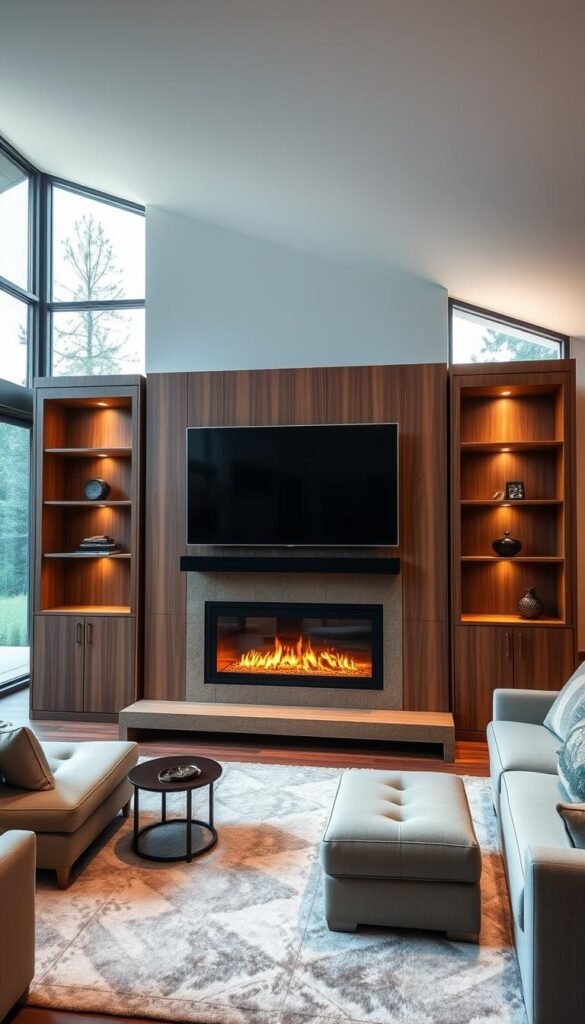
Imagine curling up on your sofa with both entertainment and ambiance at your fingertips. This dream becomes reality when you combine two beloved features into one stunning focal point. The pairing creates an inviting atmosphere that transforms how you experience your home.
This combination brings together the best of function and beauty. You get visual appeal alongside practical warmth. The result feels both luxurious and completely comfortable.
Creating a Cozy Focal Point
Your fireplace and screen work together to anchor your room beautifully. They create a natural gathering spot for family and friends. This arrangement makes your space feel intentionally designed.
Electric fireplaces offer excellent options for integration. Their clean lines and versatile designs blend seamlessly with media setups. Many models provide realistic flame effects without excessive heat output.
Consider these popular fireplace types for media walls:
- Linear electric units with slim profiles
- Wall-mounted models that save floor space
- Insert styles that fit into existing surrounds
- Two-sided designs for open concept areas
Your mantel choices frame both elements beautifully. Wood brings traditional charm while stone offers contemporary elegance. Metal accents add industrial flair to your arrangement.
Lighting enhances the combined features dramatically. Install sconces beside your screen for balanced illumination. Subtle LED strips create magical glow effects around both elements.
Technical Considerations for Dual-Purpose Walls
Heat management remains the most important safety factor. Always maintain proper clearance between your fireplace and screen. Follow manufacturer guidelines for specific distance requirements.
Ventilation needs vary by fireplace type. Electric models typically require less space than gas alternatives. Proper air circulation protects your electronics from heat damage.
Electrical planning ensures convenient operation. Install dedicated outlets for both components. Consider smart home integration for unified control.
Structural support matters for heavier installations. Reinforce your wall if adding stone or masonry elements. Professional assessment prevents future issues.
“The combination of warmth and visual entertainment creates an atmosphere that’s both functional and deeply comforting.”
Installation requirements differ based on your chosen setup. Built-in units need precise measurements and framing. Surface-mounted options offer easier retrofitting possibilities.
Your finished combination will become the heart of your home. It provides both physical warmth and visual entertainment. This thoughtful approach to media wall design creates spaces you’ll love spending time in.
Ergonomics and Viewing Comfort: Placement Essentials
Your neck will thank you for paying attention to placement details. Getting your screen position right makes watching more enjoyable and comfortable.
Good ergonomics prevent strain during long viewing sessions. They create a natural viewing experience that feels effortless.
The right setup blends seamlessly with your room’s design. It maintains visual balance while serving practical needs.
Finding the Perfect Eye-Level Height
Measure from the floor to your seated eye level. This becomes your target center point for the screen.
Most experts recommend the middle of your display sitting at eye level. This position keeps your neck in a neutral, relaxed position.
Consider your primary seating arrangement when planning. Your main sofa or chair determines the ideal height.
Viewing distance relates directly to screen size. Larger displays need more distance for comfortable viewing.
Here’s a simple guide for different room sizes:
| Screen Size | Ideal Viewing Distance | Recommended Height |
|---|---|---|
| 55 inches | 7-9 feet | 42-48 inches |
| 65 inches | 8-10 feet | 44-50 inches |
| 75 inches | 9-12 feet | 46-52 inches |
Multiple seating positions require careful planning. Angle your furniture toward the viewing area.
Tilt and swivel mounts offer flexibility for different seats. They adjust to various viewing angles throughout the room.
Avoiding Common Mounting Mistakes
Many people mount their displays too high. This forces uncomfortable upward viewing that strains your neck.
Always test the height before final installation. Sit in your usual spot and imagine the perfect viewing point.
Secure mounting requires proper wall anchors. Use hardware rated for your display’s weight.
Consider these frequent installation errors:
- Placing above fireplace mantels (often too high)
- Ignoring stud locations for secure mounting
- Forgetting to hide cables during installation
- Not considering sunlight glare from windows
Your media unit should complement the mounted display. It creates a cohesive look in your living space.
Proper ergonomics enhance your entire entertainment experience. They make your room more enjoyable for everyone.
The right choice in placement affects both form and function. It creates harmony in your interior design.
Take time to measure carefully before installing. Your comfort during movie nights depends on these decisions.
Modern Luxury TV Wall Design Ideas for Elegant Living Rooms
Your entertainment center reflects today’s most exciting style movements. Current trends blend technology with personal expression beautifully. They create spaces that feel both sophisticated and uniquely yours.
Contemporary Trends That Define Luxury
Personalization drives today’s most stunning installations. Homeowners want spaces that tell their unique stories. Your setup becomes an artistic expression rather than just functional furniture.
Integrated technology creates seamless experiences. Hidden speakers and invisible wiring maintain clean aesthetics. Everything works together without visual clutter.
Multi-functional designs serve various purposes simultaneously. Your entertainment area might include:
- Concealed storage for media equipment and collections
- Display shelves for rotating art and personal treasures
- Integrated lighting that adjusts for different activities
- Smart home compatibility for voice-controlled operation
Color preferences have shifted toward sophisticated neutrals. Warm grays and soft beiges create versatile backdrops. They allow your screen to blend beautifully when not in use.
Finishes show interesting evolution too. Matte surfaces reduce glare and fingerprints. Satin sheens offer subtle reflection without overwhelming shine.
“True luxury lies in details that serve both beauty and purpose simultaneously.”
Lighting techniques have become more innovative and integrated. LED strips create ambient glows around screens. Adjustable spotlights highlight artwork and textures.
These trends reflect how we live with technology today. Screens have become central to home life yet integrate discreetly. The balance feels both intentional and effortless.
Mixing Materials for Unique Statements
Combining different surfaces creates depth and character. Your wall gains visual interest through thoughtful material mixing. The result feels custom-designed rather than store-bought.
Natural elements bring warmth to technological setups. Wood panels beside sleek screens create appealing contrast. Stone accents add organic texture to smooth surfaces.
Metal details provide contemporary edge to traditional materials. Brass frames around wood shelves add sophistication. Black steel accents create industrial charm.
Consider these popular combinations for inspiration:
- Reclaimed wood with polished concrete for organic modern appeal
- Marble panels with dark stained oak for timeless elegance
- Textured plaster with bronze metal trim for artistic expression
- Glass elements with natural stone for light-reflecting beauty
Your choices should reflect personal style while maintaining function. The right blend creates a focal point that captures attention. It becomes the heart of your living area.
Balance remains crucial when mixing materials. Too many textures can feel busy rather than intentional. Choose two or three main elements with complementary accents.
Professional installation ensures everything works together seamlessly. Experts understand how materials interact visually and structurally. Their guidance helps avoid costly mistakes.
Your finished wall will feel uniquely personal and professionally designed. It represents current trends while reflecting your individual taste. The space becomes somewhere you truly love spending time.
Budget-Friendly Approaches to Luxury TV Walls
Creating a stunning media wall doesn’t have to drain your savings account. With smart planning and creative choices, you can achieve magazine-worthy results at reasonable prices. Your space can feel luxurious without the luxury price tag.
Strategic budgeting lets you focus funds where they matter most. Some elements deserve investment while others work beautifully with affordable alternatives. The right balance creates impressive results within your means.
Where to Splurge and Where to Save
Your mounting system deserves quality investment. A secure, adjustable bracket protects your screen and allows perfect positioning. This hardware ensures safety and viewing comfort for years.
Professional installation often pays off for complex electrical work. Proper wiring and outlet placement require expertise for safety and function. This investment prevents costly repairs later.
Save on decorative elements that you can update easily. Paint colors and accessories change with trends and seasons. These affordable updates keep your look fresh over time.
Consider these smart allocation strategies:
- Invest in core structural elements and mounting systems
- Save on surface materials using clever alternatives
- Splurge on key lighting that enhances the entire setup
- Budget for decorative items that can be changed later
Phased implementation spreads costs over time. Start with essential components first. Add decorative elements as your budget allows.
Affordable Materials That Look Expensive
Porcelain tiles offer magnificent stone appearance at fraction of the cost. These durable surfaces resist scratches and stains beautifully. Their realistic veining creates luxury appeal without the premium price.
Engineered quartz provides another excellent alternative to natural stone. It offers consistent patterning and easy maintenance. This material works beautifully for shelves and accents.
Laminate shelving has evolved dramatically in recent years. Modern options replicate wood grain and stone patterns convincingly. They provide warmth and texture at budget-friendly prices.
Consider these affordable luxury materials:
- Porcelain tiles that mimic marble or granite
- High-quality laminates with realistic wood finishes
- Engineered quartz for consistent beauty and durability
- MDF with professional paint finishes for custom looks
“Great design isn’t about how much you spend—it’s about how smart you spend.”
Paint techniques create sophisticated effects affordably. Faux finishes replicate expensive materials convincingly. Professional painting transforms basic surfaces into designer features.
Refurbished materials add character while saving money. Reclaimed wood offers unique history and patina. Vintage finds bring one-of-a-kind charm to your arrangement.
Strategic lighting elevates affordable materials dramatically. Well-placed spots highlight textures and finishes beautifully. LED strips create expensive-looking glow effects affordably.
Your final look will surprise everyone with its sophistication. Smart choices create the illusion of much higher investment. The result feels both personal and professionally designed.
Bringing Your Dream TV Wall to Life: Final Considerations
Your entertainment space becomes truly special when it reflects your personal vision. A well-planned setup enhances both function and beauty in your home.
Start by measuring carefully before any installation. This ensures everything fits perfectly and works smoothly. Proper planning prevents costly mistakes later.
Balance technology with your room’s character. Choose materials and colors that complement your existing decor. This creates harmony throughout your space.
Consider professional help for complex electrical work. Experts ensure safe wiring and optimal placement. DIY approaches work well for simpler projects.
Your finished media unit should feel uniquely yours. It becomes a stylish focal point that serves your lifestyle beautifully. Enjoy creating a space you’ll love for years!