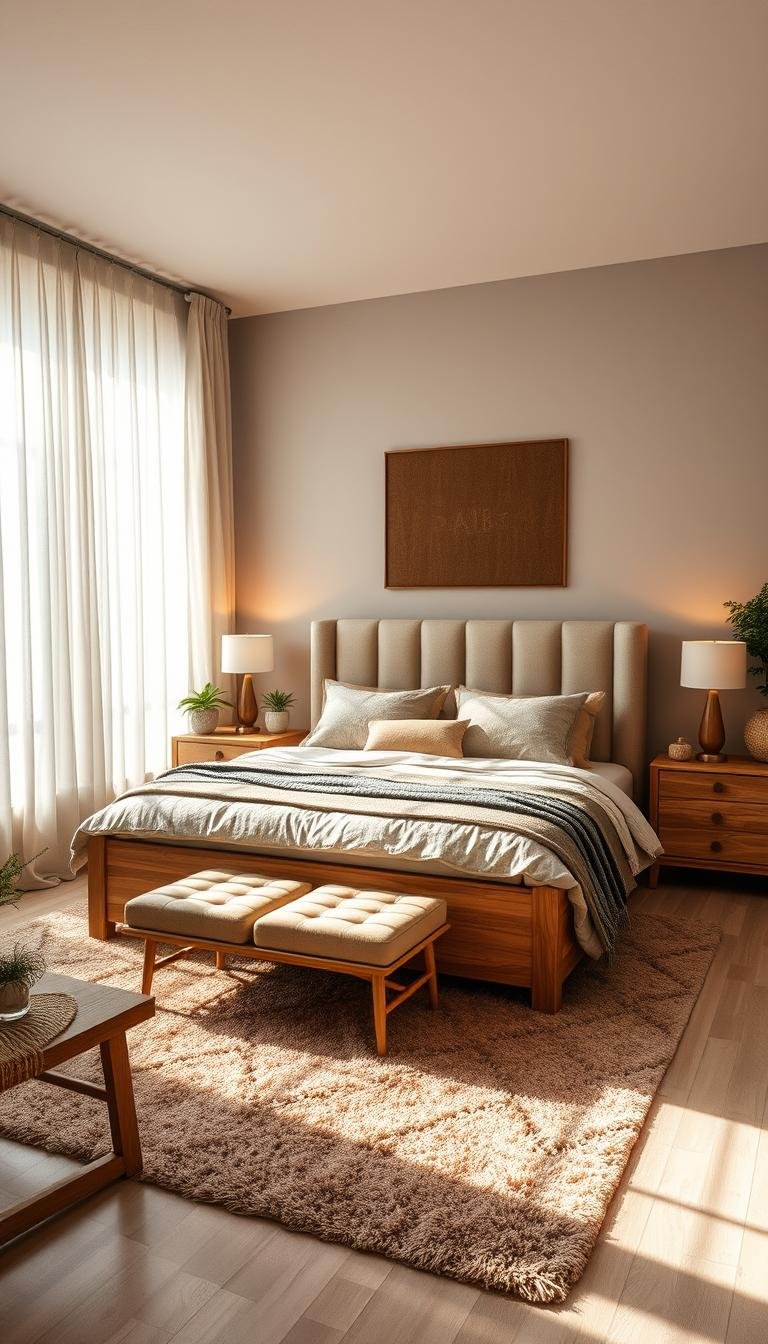
Imagine stepping into a space that wraps you in calm. Your personal retreat should be a cozy escape from daily stress. It’s possible to create this feeling without spending a fortune or weeks on renovations.
One homeowner recently gave their spare room a fresh look in just three days. They used paint, smart accessories, and simple DIY projects. A monochrome wall color called Poised Taupe by Sherwin-Williams set a soothing base.
Natural materials like wood and rattan bring warmth inside. Soft textures and gentle lighting add to the relaxed atmosphere. Even small touches, like a faux olive tree, make a big difference.
This article will show you how to design a room that feels both stylish and restful. You’ll learn about color palettes, furniture choices, and easy upgrades. Let’s turn your space into a sanctuary you love.
Why an Earthy Bedroom is Your Perfect Sanctuary
There’s something special about a room that connects you to the natural world. This connection creates more than just visual appeal—it builds a genuine retreat. Your sleeping space becomes a personal haven where stress melts away.
The Calming Power of Nature-Inspired Design
Biophilia explains our innate attraction to natural elements. This design approach uses organic shapes and materials to reduce stress. It promotes calm through gentle curves and natural patterns.
Wood grains and linen textures evoke grounding sensations. They bring a sense of tranquility that manufactured materials often lack. These elements work together to create a soothing atmosphere.
Natural light plays a crucial role in this design philosophy. Soft morning rays and gentle evening glows enhance sleep quality. They sync with your body’s natural rhythms for better rest.
Creating a Space for Relaxation and Recharge
Your personal retreat should minimize clutter and maximize comfort. This intentional approach aids mental recharge after long days. It transforms your room into a true sanctuary.
Soft textures and warm lighting foster serene environments. Plants and natural materials contribute to this peaceful feel. Even small touches make significant differences in overall atmosphere.
This design approach remains timeless rather than trend-focused. It creates spaces that feel both personal and profoundly peaceful. The result is a room tailored to your unique needs for restoration.
Your bedroom becomes a retreat from daily chaos through these intentional choices. Prioritizing well-being over mere aesthetics makes the difference. This transformation turns your space into the sanctuary you deserve.
Laying the Groundwork: Core Earthy Design Principles
Creating your ideal sanctuary starts with mastering some essential interior design basics. These foundational concepts help you build a space that feels both intentional and inviting. They transform your room into a true personal retreat.
Embracing Warmth and Comfort
Natural materials create instant coziness in your space. Wood grains, wool textiles, and soft linens add tactile comfort. They bring organic warmth that manufactured items often lack.
Layering different textures builds depth without clutter. A chunky knit throw paired with smooth wood surfaces creates visual interest. This balanced approach makes your room feel curated, not crowded.
The right mix of elements creates harmony in your design. Too many competing textures can feel overwhelming. Focus on a few quality pieces that work well together.
The Importance of Intentionality and Minimalism
Every item in your space should serve a purpose or bring joy. This mindful approach prevents unnecessary clutter from accumulating. It keeps your sanctuary feeling peaceful and functional.
Minimalism here means thoughtful curation, not emptiness. You can achieve this look through strategic thrifting and repurposing. Vintage finds often have character that new items lack.
Start with a clear vision for your personal retreat. Nature scenes or favorite landscapes can inspire your color palette. This helps create a cohesive look that reflects your unique style.
Remember that these principles adapt to any room size. Even small spaces can feel spacious with intentional design choices. Your sanctuary should work with your lifestyle, not against it.
Choosing Your Earthy Color Palette
Your color scheme sets the mood for your entire room. It creates the backdrop for all other design choices. Selecting the right palette makes your space feel cohesive and intentional.
Think about how different shades make you feel. Some colors energize, while others calm. Your personal retreat deserves hues that help you unwind.
Beyond Beige: Poised Taupe and Other Winning Shades
Forget boring beige. Modern earth tones offer depth and character. Sherwin-Williams’ Poised Taupe stands out with subtle purple undertones.
This sophisticated shade creates cozy intimacy without feeling dark. It works beautifully in bedrooms where relaxation matters most. Other winning colors include olive green, mustard yellow, and warm terra-cotta.
These shades bring nature indoors in stylish ways. They pair well with natural materials like wood and linen. Your space feels both current and timeless.
Mixing Hues for a Professional Look
Combining colors requires careful balance. You want harmony, not chaos. Professional designers often use a 60-30-10 rule.
Choose one dominant shade for about 60% of the room. Select a secondary color for 30%. Use an accent hue for the remaining 10%.
Try pairing olive green with warm beige. Combine terra-cotta with creamy white. Slate gray looks beautiful with soft white trim.
These combinations create depth and interest. They make your space feel designed rather than random. The result is a polished, put-together look.
The Monochrome Paint Technique for Maximum Impact
Painting everything one color creates stunning simplicity. Walls, trim, and doors all share the same shade. This technique eliminates visual breaks.
Your room feels larger and more unified. The effect is especially powerful in smaller spaces. Poised Taupe works beautifully for monochrome schemes.
Test your chosen color in different lighting first. Natural light changes how shades appear throughout the day. Sample patches help you avoid surprises.
This approach creates a calming, seamless environment. It provides the perfect foundation for layering textures and materials. Your room becomes a true sanctuary.
| Color Combination | Mood Created | Best For |
|---|---|---|
| Poised Taupe (monochrome) | Cozy, intimate | Small bedrooms |
| Olive green + warm beige | Balanced, natural | Medium to large rooms |
| Terra-cotta + cream | Warm, inviting | North-facing rooms |
| Slate gray + soft white | Calm, serene | Modern spaces |
Remember that your palette should reflect your personal style. Earth tones work with both bold accents and subtle neutrals. Trust your instincts when creating combinations.
Your color choices influence every other design decision. They help create the peaceful retreat you deserve. Take time to find shades that truly speak to you.
Incorporating Natural Materials and Textures
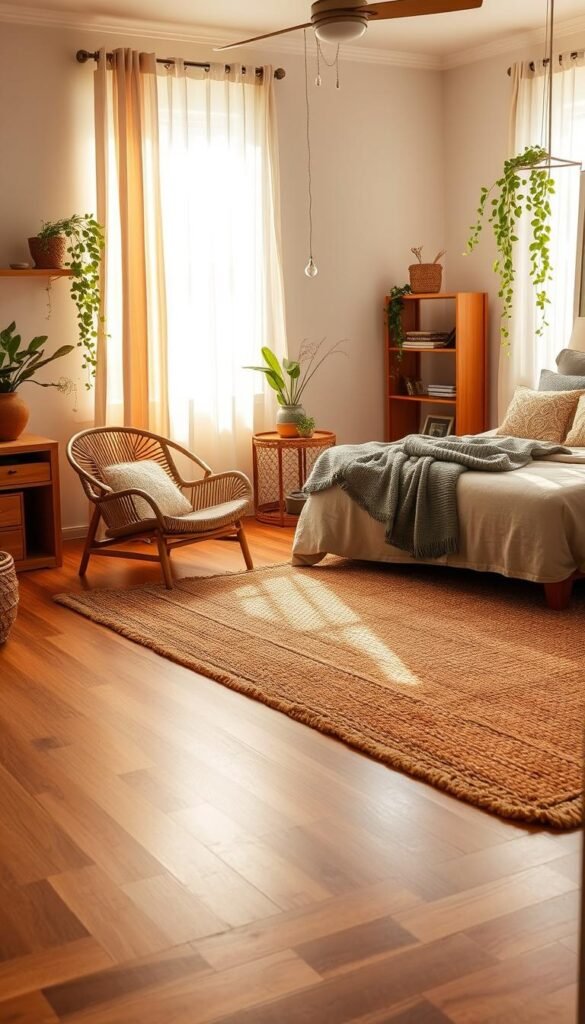
The foundation of your nature-inspired space lies in the materials you choose. These elements bring authenticity and depth to your design. They create a tactile experience that connects you to the natural world.
The Essential Role of Wood Tones
Wood brings instant warmth to any room. Its natural grains and variations add character that manufactured pieces lack. You can find beautiful options at various price points.
Raw, unfinished pieces showcase nature’s beauty. Stained wood offers more color consistency. Thrifted furniture often has unique character you can’t find new.
Wood ages beautifully, developing patina over time. This natural aging process adds to your room’s story. Each scratch and mark becomes part of your space’s history.
Weaving in Rattan and Wicker Elements
Rattan and wicker bring organic texture and lightness. These materials work beautifully as statement pieces or subtle accents. They add visual interest without overwhelming your space.
Consider a rattan pendant light above your bedside. Wicker baskets offer stylish storage solutions. Cane details on furniture pieces add subtle texture.
These elements work particularly well in smaller spaces. Their open weave patterns create airiness while maintaining warmth. They pair beautifully with both light and dark wood tones.
Adding Softness with Wool, Linen, and Faux Fur
Soft textiles complete your cozy retreat. They provide comfort while adding visual depth. Mixing different fabrics creates a layered, inviting look.
Wool throws offer warmth during cooler months. Linen sheets provide breathability for comfortable sleep. Faux fur rugs add luxury underfoot without animal products.
These materials work together to create sensory richness. Your space becomes not just visually appealing but physically comforting too. The right combination makes your room feel like a true sanctuary.
| Material Type | Best Uses | Sustainability Notes |
|---|---|---|
| Solid Wood | Bed frames, nightstands, dressers | Durable, often renewable resource |
| Rattan/Wicker | Accent chairs, light fixtures, baskets | Rapidly renewable plant material |
| Linen | Bedding, curtains, upholstery | Biodegradable, requires less water than cotton |
| Wool | Throws, rugs, pillows | Renewable, biodegradable fiber |
| Faux Fur | Accent rugs, decorative pillows | Animal-free alternative, varies by composition |
Matching different materials creates balance in your design. Try pairing wood with rattan for complementary textures. Combine linen with leather accents for interesting contrast.
Even small additions make a significant impact. A jute rug anchors your space naturally. Wool pillows add comfort and visual interest.
Prioritize quality pieces that feel good and last long. Natural materials often improve with age. They develop character that mass-produced items can’t replicate.
Your choices reflect a commitment to sustainable living. These materials typically have smaller environmental footprints. They create a space that’s both beautiful and responsible.
Transforming Your Bed for an Earthy Feel
Your sleeping area becomes the heart of your personal retreat. It deserves special attention to create that cozy sanctuary vibe. The right approach can transform even basic pieces into something special.
Selecting the Perfect Wood or Upholstered Bed Frame
Choose between wood and upholstered frames based on your desired style. Wood brings natural warmth and rustic charm to your space. Upholstered options offer softness and comfort against your skin.
Both choices work beautifully with nature-inspired designs. Consider painting an existing frame if the color doesn’t fit. One homeowner used Sherwin-Williams’ Alabaster to lighten a dark espresso bed.
This simple change made the piece work with their new palette. The transformation cost little but made a big impact.
DIY Headboard Makeovers with Fabric and Batting
Update an outdated headboard with batting and fabric. This project costs around $50 but completely changes your bed’s look. Choose neutral fabrics that complement your overall scheme.
Bold patterns can add interest without overwhelming the space. The batting creates plush comfort while the fabric refreshes the style. This approach lets you personalize without buying new furniture.
You can achieve a custom look for very little money. The result feels both fresh and uniquely yours.
Creating a Cloud-Like Bed with Layered Textiles
Build your dream bed with carefully chosen layers. Start with breathable linen sheets for comfort. Add a white duvet cover for that calm, breezy feel.
Layer wool throws and chunky knit pillows for texture. These elements work together to create incredible comfort. Even small beds feel luxurious with the right approach.
Your sleeping space becomes a true sanctuary this way. The layered look adds visual interest while promoting restful sleep.
Natural materials like linen help regulate temperature throughout the night. You wake up feeling refreshed and restored.
Earthy Tone Bedroom Ideas That Don’t Feel Boring
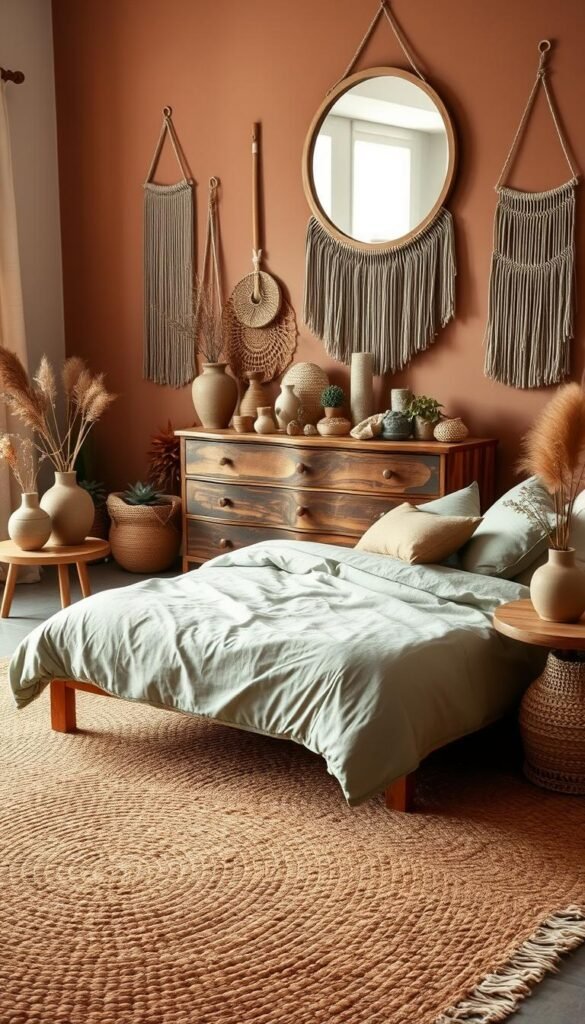
Your personal retreat should reflect who you are. It’s about creating a space that feels both intentional and inviting. The right approach balances personality with peace.
Meaningful pieces make your room uniquely yours. They create a narrative that mass-produced items cannot replicate. This collected approach avoids the generic showroom feel.
Curating a Collected, Not Cluttered, Look
Choose items that speak to your heart and history. Each piece should have purpose or bring genuine joy. This mindful selection prevents random clutter from accumulating.
Vintage finds add character that new items often lack. They bring stories and uniqueness to your space. Thrifted treasures create depth without overwhelming the room.
Edit your decor periodically to maintain freshness. Remove items that no longer serve your vision. This keeps your sanctuary feeling current but not crowded.
“A collected space feels lived-in rather than designed. It’s about layers of life, not layers of stuff.”
Using Bold Patterns in Neutral Ways
Patterns add energy without sacrificing serenity. Choose designs in neutral color palettes for harmony. Botanical prints or organic shapes work beautifully.
One homeowner transformed their space with a patterned headboard. The bold design added interest while staying cohesive. It became the room’s focal point without overwhelming.
Pair patterns with solid colors for balance. Try animal prints with creamy neutrals for refinement. Geometric rugs anchor the space with subtle dynamism.
- Mix modern patterns with rustic wood textures
- Use nature-inspired designs like leaves or organic shapes
- Layer different scales of pattern for visual interest
- Edit patterns as you would other decor items
Your space should feel personal above all else. Even maximalist approaches can work with careful color coordination. The goal is a room that welcomes you home.
Lighting for a Warm and Cozy Atmosphere
The right illumination transforms your space from functional to fabulous. It creates the perfect mood for relaxation and rejuvenation. Your lighting choices set the tone for your entire room.
Ditching Harsh Overhead Lights for Soft Glows
Overhead fixtures often create unflattering shadows and glare. They lack the warmth needed for a soothing environment. Multiple soft sources work much better for creating ambiance.
Think about how different bulbs affect your space. Warm white bulbs (2700K-3000K) enhance natural materials beautifully. They make wood grains richer and textiles more inviting.
This approach makes your room feel like a true sanctuary. It welcomes you with gentle illumination rather than stark brightness.
Choosing Sconces, Lamps, and Rattan Pendants
Wall sconces free up precious surface space on nightstands. They provide perfect reading light right where you need it. Pull-down cord designs offer adjustable functionality.
Table lamps add another layer of soft illumination. They create pools of light that make your space feel intimate. Choose shades that diffuse light gently rather than directing it sharply.
Rattan pendants bring natural texture overhead. Their woven patterns cast beautiful shadows when lit. This organic element complements other natural materials in your room.
One homeowner chose gold sconces that matched their nightstand hardware. This subtle coordination tied the whole color scheme together beautifully.
The Magic of Dimmable Lamps and Fairy Lights
Dimmable options give you complete control over your atmosphere. You can adjust brightness for different activities throughout the day. Reading requires more light than winding down before sleep.
Fairy lights add whimsical charm to any space. They create magical accents without overwhelming the room. Drape them over headboards or inside glass containers for subtle sparkle.
Salt lamps offer both ambient glow and air-purifying benefits. Their warm orange hue creates incredible coziness after dark.
LED bulbs in warm tones provide energy-efficient options. They last longer while maintaining that inviting golden glow.
| Lighting Type | Best Placement | Ambiance Created |
|---|---|---|
| Wall Sconces | Beside bed, reading nooks | Focused task lighting |
| Table Lamps | Nightstands, dressers | Soft ambient glow |
| Rattan Pendants | Over bedside, seating areas | Organic textured light |
| Fairy Lights | Headboards, shelves, windows | Whimsical accent lighting |
| Dimmable Lamps | Throughout room | Adjustable mood lighting |
Layer different sources for balanced illumination. Combine ambient, task, and accent lighting for the best results. This approach ensures your space feels inviting at any hour.
Your lighting choices make your room functional and beautiful. They enhance the natural materials and colors you’ve carefully selected. The right illumination completes your personal sanctuary.
The Power of Plants and Greenery
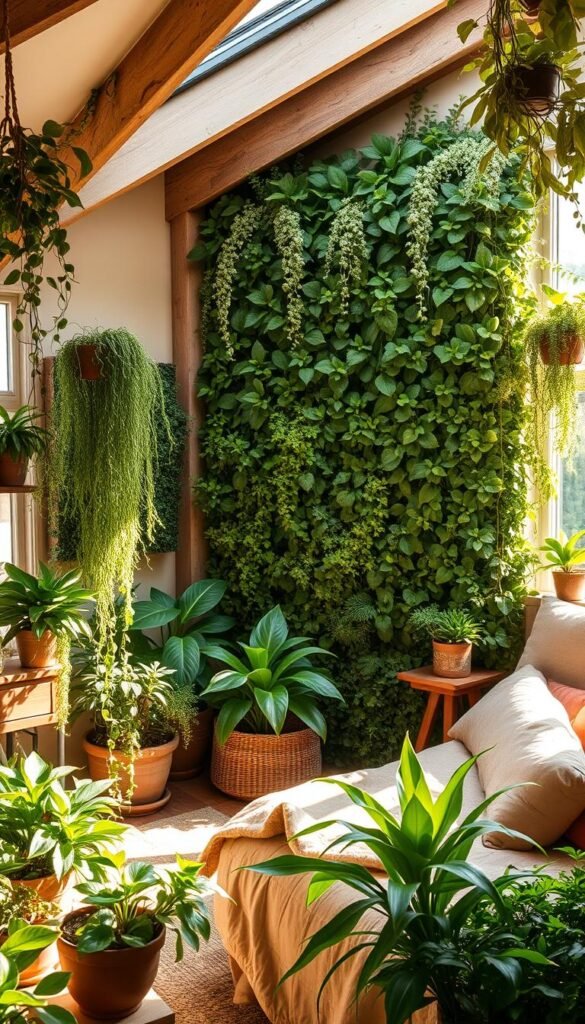
Greenery brings vitality and freshness into your personal space. It connects your room to the natural world outside. This living element adds movement and life that static decor cannot match.
Plants purify air while creating visual interest. They soften hard edges and add organic shapes. Even small green touches make your space feel more alive.
Selecting Low-Maintenance Real and Quality Faux Plants
Choose plants that fit your lifestyle and lighting conditions. Real options like snake plants thrive with minimal care. Succulents need little water and tolerate various light levels.
Quality faux plants offer realism without maintenance. Look for silk or high-grade plastic constructions. They should feature natural color variations and textured leaves.
One homeowner found a faux olive tree that looks authentic. It requires no watering or sunlight. This solution works perfectly for darker rooms.
Mix real and faux varieties for practical beauty. Place live plants near windows where they’ll thrive. Use realistic artificial ones in darker corners.
Creating Mini Forests and Using Dried Florals
Group plants at different heights for lush arrangements. Place taller specimens behind shorter ones. This layering creates depth and visual interest.
Use plant stands and hanging planters for variety. Macrame hangers add bohemian flair while saving space. Terrariums create self-contained ecosystems on tabletops.
Dried florals offer lasting natural beauty. Pampas grass in recycled bottles adds texture. Wheat stalks or dried lavender bring subtle fragrance.
These elements maintain your connection to nature. They work beautifully in various design styles.
Incorporating Greenery through Art and Patterns
Botanical artwork brings nature indoors creatively. Choose prints featuring leaves, flowers, or landscapes. These pieces add color and life without maintenance.
Patterned pillows with floral designs provide subtle touches. Green accents in textiles complement living plants. This approach works for those who prefer no real greenery.
Even a single framed pressed flower adds organic beauty. It creates a personal connection to the outdoors.
Your space becomes a true sanctuary with these natural elements. They enhance air quality while boosting visual appeal.
Selecting Earthy Furniture Pieces
Your furniture choices shape the character of your personal retreat. They provide both function and form in equal measure. The right pieces create a cohesive look that feels both intentional and inviting.
Natural materials bring warmth and authenticity to your space. They connect you to the outdoors while providing practical benefits. Your selections should reflect your unique style and needs.
Opting for Raw, Lightly Stained, or Thrifted Wood
Raw wood showcases nature’s beautiful imperfections. Its grain patterns and knots tell a unique story. Light stains enhance these features without hiding them.
Thrifted pieces often carry history and charm. A vintage dresser or bench adds character instantly. These finds support sustainable living too.
You can transform older items with simple updates. Sanding and staining refresh tired pieces beautifully. This approach saves money while creating custom furniture.
Incorporating Pieces with Rounded, Organic Shapes
Curved designs mimic forms found in nature. They create softness that angular pieces sometimes lack. A rounded nightstand or armchair feels more inviting.
These shapes promote visual flow throughout your space. They guide the eye gently from one area to another. The effect feels both calming and cohesive.
Organic forms work well with various design styles. They blend seamlessly with other natural elements. Your room gains harmony through these gentle curves.
Mixing and Matching for a Rustic Look
Combining different wood tones adds depth. Light oak with dark walnut creates interesting contrast. This approach feels collected rather than matchy.
Add rattan or metal accents for balance. A woven chair beside a wood desk looks perfect. These combinations prevent any single material from overwhelming.
Choose functional pieces that serve multiple purposes. Nightstands with drawers keep clutter hidden. A bench at the foot of your bed offers extra seating.
“The best rooms feel like they evolved over time, not like they were bought in one day.”
Your furniture should support relaxation and practicality. Every piece contributes to your sanctuary’s peaceful atmosphere. The right choices make your space truly yours.
Wall Treatments with an Earthy Vibe
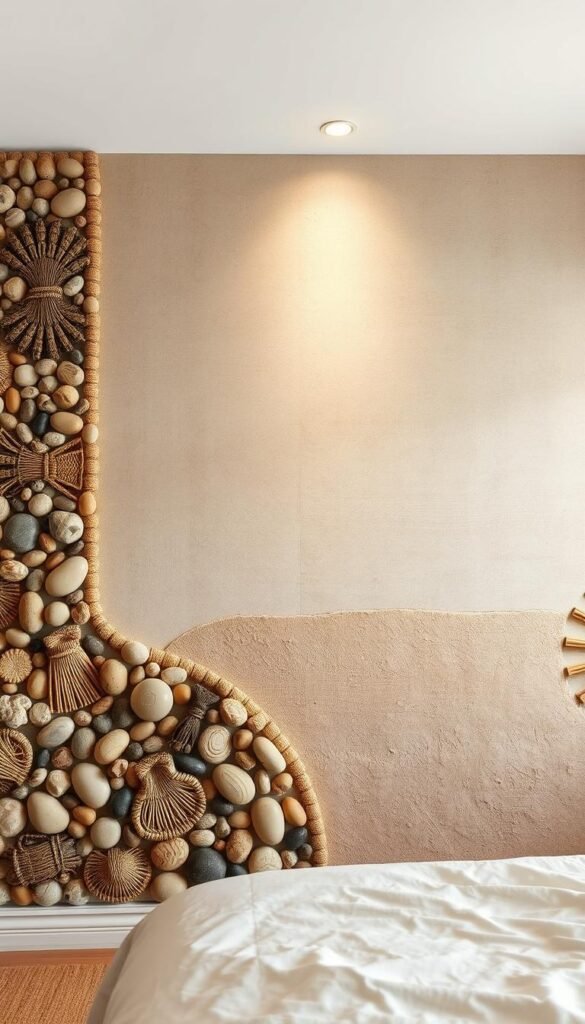
Your vertical surfaces offer incredible potential for creating atmosphere. They serve as the backdrop that ties your entire space together. Thoughtful wall treatments can transform ordinary rooms into extraordinary sanctuaries.
Using Botanical and Nature-Inspired Wallpaper
Patterned wallpaper brings personality without overwhelming your space. Choose designs featuring leaves, branches, or organic shapes. Neutral color palettes keep these patterns feeling serene.
Consider creating a single accent wall for dramatic effect. This approach adds visual interest without commitment. Peel-and-stick options make installation simple for renters.
Botanical prints connect your room to the natural world beautifully. They create depth and movement that flat paint cannot achieve.
Achieving Texture with Limewash and Wood Slats
Limewash paint creates soft, mottled effects on your surfaces. This technique adds organic character through subtle variation. The result feels both ancient and contemporary.
Wood slat installations bring rhythm and warmth to any room. Vertical or horizontal arrangements create different visual effects. This treatment works perfectly with Japandi or rustic aesthetics.
Both options add tactile interest through surface variation. Your walls gain dimension without additional clutter.
Leaving Wood Trim Natural for Rustic Charm
Unpainted wood trim showcases nature’s beautiful imperfections. The grain patterns and knots tell a unique story. This approach maintains authentic character throughout your space.
Natural wood finishes complement various color schemes beautifully. They work with both light and dark wall colors. The result feels cohesive and intentionally rustic.
Your trim becomes a design feature rather than just functional detail. This subtle choice makes a significant impact on overall atmosphere.
“Walls should whisper, not shout—their texture and tone support the room’s story without dominating it.”
Combine different treatments for a custom look. Try wood slats with natural trim for layered appeal. Ensure all elements work with your chosen color palette.
Textured walls create depth through shadow and light play. They make your space feel more dynamic and interesting. This approach enhances your room’s cozy atmosphere.
Your walls become a canvas for personal expression. Whether through bold patterns or subtle textures, they define your unique style.
Smart and Stylish Storage Solutions
Keeping your space organized doesn’t mean sacrificing beauty. The right storage choices can enhance your room’s natural feel while hiding everyday items. They maintain that clean, intentional look you love.
Utilizing Woven Baskets for Natural Texture
Woven baskets offer a beautiful way to store items while adding organic texture. They replace plastic bins with natural materials that complement your decor. Choose different sizes for various needs throughout your room.
Large baskets work perfectly for blanket storage at the foot of your bed. Medium sizes hold shoes or extra pillows neatly. Small ones keep bedside essentials organized without clutter.
Labeling baskets with natural tags maintains your organized system. This simple touch helps you find items quickly while keeping everything tidy.
Incorporating Rattan Room Dividers
Rattan dividers serve multiple functions in your space. They create visual separation while allowing light to filter through beautifully. These pieces add storage and texture simultaneously.
Use them to define different areas within your room. The woven pattern adds organic style to blank walls. Some designs include shelves for displaying decorative items or books.
This approach works especially well in smaller spaces. It maximizes functionality without compromising your aesthetic.
Creative Upcycling with Ladders and Vintage Finds
Old wooden ladders make excellent vertical storage solutions. Lean them against walls to hang throws or lightweight accessories. This creative approach adds character while serving a practical purpose.
Vintage finds bring unique charm to your storage system. An antique trunk stores extra linens while serving as a bedside table. Thrifted crates stack beautifully for modular shelving.
Staining or painting these items helps them match your color scheme. This personal touch makes your space truly one-of-a-kind.
“Good storage should disappear into your decor, becoming part of the beauty rather than distracting from it.”
Built-in storage solutions can maximize space and maintain a clean look in modern bedrooms. They provide hidden organization while contributing to your overall design.
Focus on materials that blend with your natural aesthetic. Avoid plastic or metal that might disrupt the serene atmosphere. Your storage should feel like part of the decor rather than an addition.
These smart solutions help maintain that calm, intentional feeling. They keep your personal sanctuary organized and beautiful every day.
Accessorizing Your Earthy Sanctuary
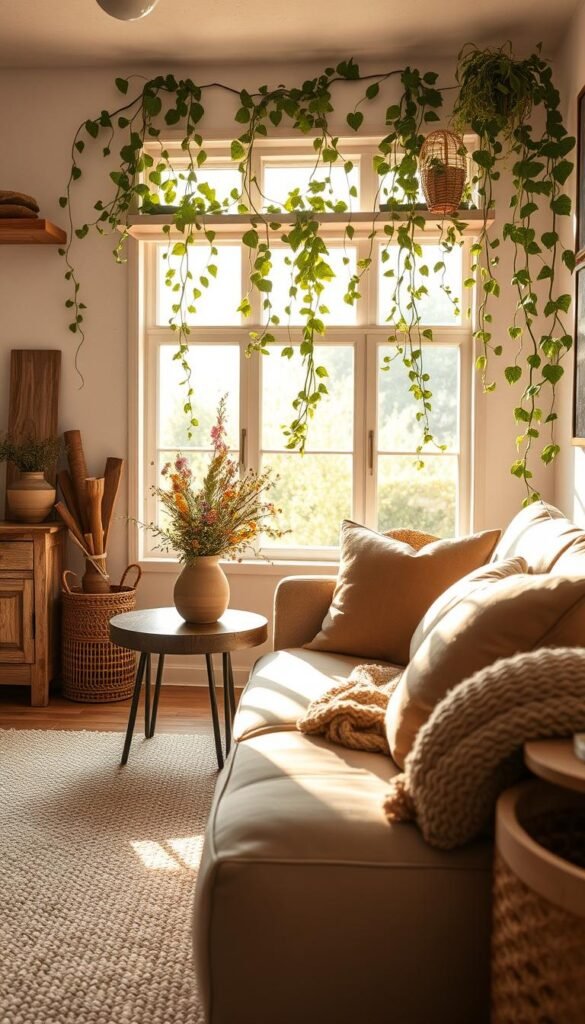
The final layer of your personal retreat comes through thoughtful accessories. These elements add personality while reinforcing your natural theme. They bring everything together in a cohesive and inviting way.
Choose pieces that serve both beauty and function. Every item should enhance your space’s peaceful atmosphere. This approach creates a room that feels both stylish and practical.
Choosing Artwork Inspired by Landscapes and Botany
Select art that connects you to the natural world outside your window. Landscape photography brings sweeping vistas into your personal space. Botanical prints showcase the intricate beauty of leaves and flowers.
Personal photos from favorite outdoor spots add meaningful touches. They remind you of peaceful moments in nature. These memories enhance your room’s calming atmosphere.
Frame choices matter as much as the art itself. Natural wood frames complement organic themes beautifully. Simple black or white frames let the artwork shine.
Adding Warmth with Leather, Ceramics, and Macrame
Leather accents bring rich texture and sophistication to your space. A throw pillow or small stool adds instant character. These pieces develop beautiful patina over time.
Ceramic vases and bowls offer handmade charm. Their imperfect shapes celebrate artisanal craftsmanship. Use them to hold dried flowers or simple decorative objects.
Macrame wall hangings introduce softness and bohemian flair. Their knotted patterns create interesting shadows when light hits them. Hang one above your bed for a focal point with texture.
“The best accessories feel like they’ve always belonged in your space, telling stories without saying a word.”
Including Practical yet Beautiful Items like Alarm Clocks
Everyday objects can be both functional and decorative. A wireless charging alarm clock keeps technology tidy while serving multiple purposes. Its warm wood or ceramic finish blends with your decor.
Group practical items on a beautiful tray for organization. This keeps essentials accessible while looking intentional. The tray itself becomes part of your decor.
Choose items that reflect your personal style while being useful. A handmade ceramic mug holds morning tea beautifully. A leather-bound journal sits ready for nighttime thoughts.
Your accessories should evolve as your tastes change over time. This allows your space to grow with you while maintaining its peaceful atmosphere.
Engaging All Your Senses
A truly restorative space appeals to more than just your eyes. It wraps you in comfort through subtle sensory details. These elements work together to create a deeply calming atmosphere.
When you engage multiple senses, your room becomes more immersive. This approach transforms it from a visual showcase into a personal haven. Every detail contributes to your overall well-being.
Introducing Earthy Scents with Candles and Oils
Natural fragrances can instantly change your room’s feel. Essential oils like cedarwood or sandalwood create grounding aromas. These scents promote relaxation and better sleep quality.
Choose soy or beeswax candles for clean burning options. Their subtle fragrances won’t overwhelm your space. Place them safely away from bedding and curtains.
Reed diffusers offer constant, gentle scent without flames. They work beautifully on dressers or bedside tables. Cedar-lined storage naturally scents your linens too.
Rotate scents seasonally to keep your space feeling fresh. Light floral notes work well in spring while warm spices suit autumn. This simple change maintains sensory interest.
The Tactile Experience of Different Textures
Your touch experience matters as much as visual appeal. Mixing materials creates rich, engaging surfaces throughout your space. This layered approach adds depth and comfort.
Run your hands over rough-hewn wood nightstands. Sink your fingers into chunky knit throw pillows. Feel the smooth coolness of ceramic lamp bases.
Combine fluffy rugs with crisp linen sheets. Add nubby wool blankets over smooth cotton duvets. These contrasts make your space more interesting physically.
Every texture should invite interaction and comfort. Your room becomes a playground for the senses this way.
Creating a Visually Harmonious Space
Visual harmony comes from careful coordination of elements. Your color palette, furniture arrangement, and decor placement all contribute. This creates a balanced look that feels intentionally designed.
Use the 60-30-10 rule for color distribution throughout your room. Place larger furniture pieces first to establish flow. Then add decorative items to complete the visual story.
Dimmable lighting lets you control visual comfort throughout the day. Softer light reduces eye strain during evening relaxation. Brighter settings work for reading or dressing.
Step back occasionally to view your space as a whole. Make adjustments until everything feels cohesive and calm. This ensures your room maintains its restorative quality.
“A harmonious space engages your senses gently, like a favorite song you can feel in your bones.”
Remember that sensory elements should complement rather than compete. Avoid overpowering scents or visually busy patterns. Your sanctuary should feel balanced and peaceful.
Periodically refresh textiles or scents to maintain interest. This keeps your space feeling inviting over time. Your personal retreat evolves with your changing needs.
DIY Projects for a Personal Touch
Adding your own creative flair makes your space truly special. DIY projects let you customize without spending much money. They bring unique character that store-bought items often lack.
You can transform ordinary pieces into extraordinary treasures. Simple crafts add personality and tell your story. This approach makes your room feel authentically yours.
Upcycling and Repurposing What You Already Have
Look around your home with fresh eyes. That old dresser could become a stunning statement piece. Glass bottles transform into beautiful vases for dried flowers.
Sand and stain wooden furniture to match your new color scheme. This approach saves money while reducing waste. You create something unique that fits your space perfectly.
One homeowner refreshed their headboard for just $50. They used batting and fabric to create a custom look. The result felt both fresh and personal.
Simple Crafts like Foraged Wood Curtain Rods
Nature provides wonderful materials for DIY projects. Collect fallen branches to create curtain rods. Sand them smooth and add simple hardware.
Air plant terrariums make lovely desktop decorations. Use glass containers from your kitchen. Add moss and small stones for natural texture.
Macrame wall hangings add bohemian charm. Basic knots create beautiful patterns. Choose natural cotton cord for an organic feel.
Customizing Your Space on a Budget
Small changes make big impacts on your room’s atmosphere. Paint thrifted frames to match your color palette. Stain wooden items for cohesive warmth.
Create dried floral arrangements from garden clippings. Press leaves and flowers for framed art. These touches add natural beauty throughout your space.
Even beginners can achieve beautiful results. Most projects require basic tools and materials. The personal satisfaction makes every effort worthwhile.
“The most meaningful spaces often contain handcrafted elements that whisper stories of their creation.”
Invite friends to join your creative process. Shared projects become cherished memories. Your room gains depth through these personal connections.
Every DIY addition makes your space more reflective of you. They create a sanctuary that feels genuinely personal and welcoming.
Curating Your Unique Earthy Aesthetic
Your personal space becomes truly special when it reflects your individual taste. This final design phase lets you blend everything into a cohesive look. It’s about creating a room that feels both intentional and uniquely yours.
Deciding Between Maximalist and Minimalist Nature Themes
Your design approach sets the overall feel of your space. Maximalist themes embrace abundance and layered complexity. Think jungle-inspired rooms with abundant greenery and rich patterns.
Minimalist themes focus on clean lines and edited selections. Desert-inspired spaces use sparse arrangements and open negative space. Both approaches can create beautiful, nature-connected environments.
Your lifestyle should guide this important decision. Busy schedules might benefit from calming minimalist spaces. Those who love visual stimulation might prefer maximalist expressions.
Drawing Inspiration from Different Ecosystems
Natural environments offer incredible inspiration for your color palette. Forest ecosystems suggest deep greens and rich browns. Incorporate wood textures and leafy patterns for this look.
Desert landscapes inspire warm neutrals and sandy tones. Use terracotta accents and clean-lined furniture. Oceanic themes bring in blues and soft whites with fluid patterns.
You can even blend elements from different environments. Mix desert neutrals with oceanic blue accents. Combine forest textures with mountain-inspired stone elements.
Making the Space Uniquely and Authentically Yours
Personal items transform generic spaces into meaningful retreats. Display travel mementos that connect you to special places. Incorporate cultural touches that reflect your heritage.
Family photographs in natural wood frames add personal warmth. Handmade items bring artisanal character to your room. These elements make your space tell your unique story.
Document inspiration from nature walks or digital platforms. Create mood boards that capture your vision. This helps maintain cohesion throughout your design process.
“The most authentic spaces don’t follow rules—they follow heartbeats and memories.”
Experiment freely without fear of mistakes. Your preferences and values should guide every choice. The result will be a retreat that feels perfectly tailored to you.
Remember that natural aesthetics are wonderfully flexible. They allow for individual expression rather than strict formulas. Your room should evolve as your tastes change over time.
The ultimate goal is creating a sanctuary that supports your well-being. Every element should contribute to your comfort and peace. Your personal retreat becomes a true reflection of who you are.
Bringing Your Earthy Bedroom Vision to Life
You can transform your space in just three days with paint, accessories, and simple DIY projects. Start with a color palette that sets a soothing base. Then layer in natural materials like wood and rattan.
Add soft lighting and greenery to enhance the calm atmosphere. Personal touches make your room uniquely yours. Begin small to avoid feeling overwhelmed.
Remember, it’s about progress, not perfection. Even small changes create a big impact. Your personal sanctuary will evolve with your tastes over time.
Enjoy the process and the peaceful results. Share your success to inspire others. Your beautiful, restful retreat awaits!