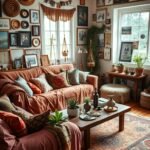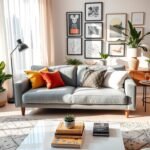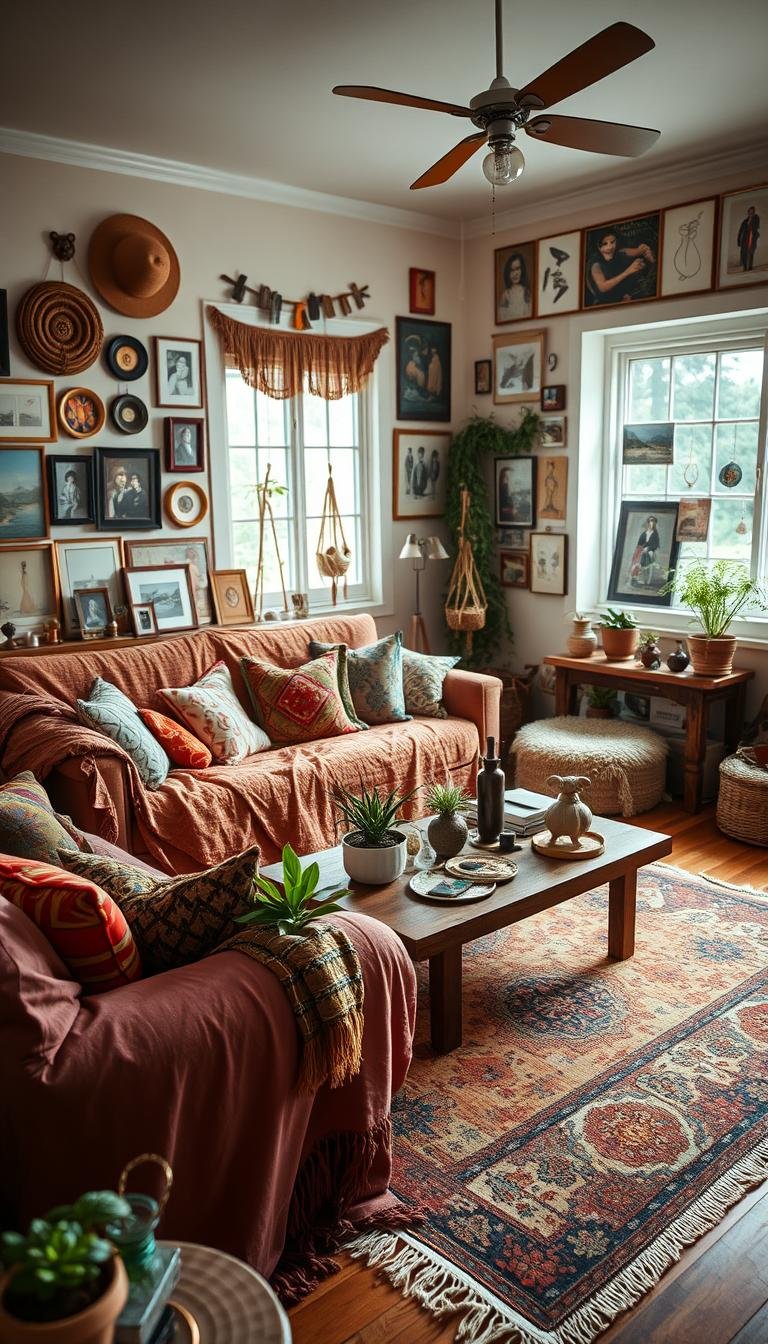
A room can feel warm and expressive without replacing every piece of furniture; living room designs boho can build that feeling from what you own. If your home feels unfinished or too much like a showroom, you can make it more personal without starting over. The change can happen gradually, through choices that reflect how you live and what you love.
Begin with the pieces you already own and enjoy using. Then develop the room with color, texture, and objects connected to your routines, memories, and interests. Small adjustments can shift the mood without asking you to buy a matching set or fill every empty corner. The result can feel relaxed and considered, with room for your life to show.
These living room ideas offer practical ways to shape a comfortable home with personality. You can work at your own pace, keep useful furnishings, and make each new choice earn its place. Begin with the pieces you already love, then add only what helps the room feel more like you.
What Makes a Boho Living Room Feel Collected?
A boho room feels collected because its furnishings and objects look gathered over time rather than bought as a matching set. Personal history matters more than a perfect theme: a handmade bowl, a well-used chair, or art from a trip can make the room feel distinctly yours.
Boho style blends patterns, textures, periods, natural materials, and personal objects. Relaxed seating and layered details make a boho living room comfortable, while art and mementos give the space a story. You can create boho living with a few personal pieces, even when most of your room is already furnished.
Choose objects that connect to your life, then let them share the room without forcing them into a matching set.
A simple material mix can help you start: choose three families, such as woven fiber, wood, and soft textiles. The shared materials make varied pieces feel at home together. You do not need to replace practical furniture to create this feeling; small, visible additions can shift the room’s character.
Try these four starting points as you explore room ideas:
- Woven textures, such as a basket or a wall hanging.
- Vintage or handmade pieces with visible character.
- Personal art that reflects a place, person, or interest.
- Plants that bring living color into the room.
These living room ideas work because each object has a reason to be there. A vintage frame may hold a family photograph, while a handmade bowl keeps keys within reach. For more ways to build a cozy look from existing pieces, explore cozy boho living room ideas. Keep the mix personal by choosing objects that connect to your interests, memories, or daily routines.
Living Room Designs Boho: Choose a Warm, Layered Palette

A restrained starting palette gives layered patterns and collected objects a common thread. For living room designs boho, choose two or three base colors and one or two accents, then repeat them across furnishings, textiles, and decor. Repeating color helps varied pieces feel connected rather than scattered.
Warm white with terracotta and sage, sand with mustard, or cream with one or two jewel tones are reliable combinations. Cream, sand, and warm white make calm foundations, while an accent can bring more energy. Repeat colors in several places instead of leaving each one as an isolated pop.
Start With a Calm Base
Begin with a base that works with the room’s existing finishes. Cream and warm white can feel soft and bright; sand adds a little more earthiness. Keep the foundation simple enough to welcome changing art and objects, rather than making every choice compete for attention.
For a current example, HGTV Home by Sherwin-Williams named Honest Essentials its 2026 Color Collection of the Year. Its Color of the Year is Universal Khaki, a sandy neutral. The collection also includes Neutral Ground, Cordovan, Lemon Chiffon, Creamy, Griffin, Reddened Earth, Still Water, Hazel, and Secret Garden.
Add Earthy and Deeper Accents
Terracotta, mustard, and sage add earthy contrast without making the whole room feel dark. One or two jewel tones can add more drama against cream. Choose accents that already appear in a rug, artwork, or cherished object, then echo them in another part of the room.
| Palette direction | Base colors | Accent colors | Mood |
|---|---|---|---|
| Soft earthy | Cream, sand | Terracotta, mustard | Grounded and gentle |
| Botanical | Warm white, Universal Khaki | Sage, Secret Garden | Fresh and natural |
| Dramatic | Cream, Neutral Ground | Cordovan, Still Water | Rich and expressive |
Repeat each accent in at least two places, such as a pillow and artwork, so the room reads as connected.
Which Paint Colors Make a Boho Room Feel Rich?
A rich-looking wall color is usually warm and nuanced, not simply the darkest color on the swatch. In 2026, designers are using cola browns, soft mauves, butter yellows, muted greens, and muddy pinks as nuanced warm neutrals. Warmth can come in many shades, not beige alone.
There is no single color replacing beige in 2026; designers are turning to these more nuanced warm neutrals. The right choice depends on whether you want the wall to recede softly or become a deep backdrop. Consider how your existing furnishings and natural light affect the shade in your room.
For a softer background, Farrow & Ball Stirabout is an earthy oatmeal shade with subtle gray undertones. Farrow & Ball Joa’s White and Benjamin Moore Muslin are adaptable taupe neutrals. Sherwin-Williams Wool Skein is a creamy khaki with subtle olive undertones, and its appearance shifts with natural light.
For more depth, Benjamin Moore’s 2026 Color of the Year, Silhouette, is described as a cross between chocolate and charcoal. A deep wall can add weight behind lighter furnishings, while an oatmeal or taupe shade keeps the room quieter. Think about how much contrast you want before choosing between them.
A paint color can look different on separate walls because daylight reaches each surface at a different angle. Test a sample on more than one wall, especially if one side of the living room gets stronger sun. Look at the sample against the floor and upholstery, not just by itself on a color card.
View a paint sample in morning and evening light before committing to the whole room.
How to Choose a Sofa and Mix Furniture Eras
A low, comfortable sofa can anchor the room without making the rest of the furniture feel formal. A main boho sofa can be about 200-220 cm long, with a low back and rounded or rolled arms. Comfort comes first, so choose a shape that suits how you actually sit.
A sofa’s scale, feel, and use matter more than choosing a specific period or matching every seat. Terracotta, ochre, or olive velvet adds color, while a leather or neutral sofa can ground a more colorful mix. A pair of chairs does not need to match the sofa to feel right together.
Select a Comfortable Sofa Shape
Look for a sofa that leaves room for people to stretch out and sit together. A low profile keeps the mood relaxed, while rounded arms soften the outline. Before deciding, consider who uses the living room, how often guests visit, and whether the sofa needs to handle everyday lounging.
Combine Upholstery and Furniture Periods
Linen, cotton, performance fabric, and velvet are timeless sofa upholstery options for 2026. Boucle may lose popularity over the next few years, so choose it for how it feels to you rather than its current moment. Pair a vintage wood chair with a simple contemporary sofa, or reverse the contrast.
| Upholstery | Visual feel | Practical consideration | Boho use |
|---|---|---|---|
| Linen | Relaxed and textured | May wrinkle with regular use | Softens a vintage mix |
| Cotton | Casual and familiar | Check care needs for the fabric | Works with handmade accents |
| Performance fabric | Clean and versatile | Designed for easier everyday care | Useful for a busy living room |
| Velvet | Rich and tactile | Consider how the nap shows marks | Adds color and depth |
Use shared colors or a repeated finish to help furniture from different periods feel intentional. A contemporary sofa can sit beside an older chair when their tones relate, even if their shapes do not. For more seating ideas, see sofa designs for living rooms. Choose upholstery for how you use the room first, then bring in the boho character through shape, color, and surrounding pieces.
Layer Rugs for Color and Comfort
A plain natural-fiber rug gives a smaller vintage pattern room to stand out. An accent rug is a smaller patterned rug layered over a larger rug to add color, texture, or a focal point. The larger layer should reach beneath the seating, while the accent rug can sit off-center.
A 240 x 320 cm jute base rug with a 160 x 230 cm accent rug is one workable layered setup. The smaller rug might be vintage Moroccan, Persian, or kilim. A patterned Berber or Persian rug can also sit over a larger plain jute rug, with shared colors tying the layers together.
Choose a Base Rug and Accent Rug
The base rug anchors the seating group and gives the smaller design a quiet border. The accent rug can shift to one side, so the arrangement feels collected rather than rigid. Let the edges of both rugs remain visible, especially where the patterned one overlaps the base.
Keep the Pattern Mix Cohesive
Choose a shared color between the rugs and the room’s textiles. A vintage Persian design can bring several shades together; a Moroccan pattern may offer a bolder focal point. A kilim adds its own graphic character. The aim is a connected mix, not an exact match between every surface.
| Base rug | Accent rug | Placement | Shared design detail |
|---|---|---|---|
| Plain jute | Moroccan | Off-center over seating zone | Repeat one accent color |
| Plain jute | Persian | Off-center over seating zone | Echo a color from the pattern |
| Plain jute | Kilim | Off-center over seating zone | Share a textile or art color |
If your living room does not have room for two layers, one patterned rug can work on its own. See more rug layering ideas for a different take on mixing a patterned top layer with a neutral foundation. Check that the front legs of the main seating sit on the base rug so the grouping feels anchored.
Mix Prints Without Making the Room Feel Busy

Pattern mixing feels intentional when a few colors repeat even as the motifs change. Keep the room to four or five distinct prints, and let them share two or three colors from the palette. Shared color gives a floral pillow, a striped throw, and a geometric textile a common thread.
Use three pattern scales, large, medium, and small, to separate bold motifs. Different scales help each design stay visible. A large floral can carry more visual weight, while a smaller stripe or geometric print adds detail without trying to take over the room.
Use this four-point check when choosing patterns:
- Repeat palette colors across more than one print.
- Vary pattern scale with large, medium, and small designs.
- Mix motif types, such as florals, geometry, and stripes.
- Leave some solid surfaces to give the eye a break.
Floral, geometric, and stripe patterns can coexist when they share colors and vary in scale. For example, a striped pillow can pick up a shade in a floral print, while a smaller geometric design adds contrast. Keep one motif quieter if another has a strong outline or a dense repeat.
Patterns do not have to appear in equal amounts. A patterned surface can take the lead, with smaller designs acting as supporting details. If several pieces seem equally bold, bring in more solid color or remove one print so the room has a clearer focal point.
If the room feels noisy, remove one print before adding another accent color.
Choose a Coffee Table and Low Seating
A lower coffee table keeps the seating zone relaxed and makes a vintage trunk feel at home. A useful boho coffee table can stand about 35-40 cm tall, but its height should work with your sofa and everyday reach. Daily use matters as much as the table’s character.
Choose a table that gives you a place to set down a drink without making the seating feel formal. A vintage wood trunk adds storage and a sense of history. A brass tray table feels lighter and can move easily, while a live-edge wood table brings an uneven natural outline.
Think about how each style will serve the room. A trunk can hold items you do not need every day, while a tray table keeps its surface open and accessible. A live-edge table can become the center point without requiring extra decoration. The table should still work for a book, a cup, or a game.
Floor cushions and poufs give you flexible seating without adding a fixed chair. Moroccan leather poufs can serve as a seat or a footrest, while floor cushions are easy to move when a friend drops by. Choose a height that lets people sit comfortably rather than treating these pieces as decoration alone.
A coffee table can hold a few useful or meaningful objects without losing its purpose. If you want more ideas for keeping a surface attractive and usable, try coffee table styling ideas. Leave enough clear tabletop for everyday use instead of treating the table as a display surface only.
Create a Personal Gallery Wall

A gallery wall feels personal when its pieces reflect what you like, not just a single decorating theme. Mix framed art with mirrors, woven pieces, and personal mementos to create a focal point that has more than one kind of character. Meaningful variety helps the wall feel collected.
Four types of objects, framed art, mirrors, woven pieces, and personal mementos, offer a flexible starting mix. You can add a carved object, a found piece, or a small textile if it connects to your life. A matching set of frames is not required for the display to feel intentional.
Mix Art With Objects
Combine framed prints with a small mirror, a woven basket, or a carved object. Travel keepsakes and family photographs can make the wall feel grounded in your own experiences. Keep some pieces simple, so a single unusual object has room to draw attention.
Arrange a Wall That Feels Collected
Lay the pieces out on the floor before hanging anything. Move them around until the sizes and shapes feel balanced, then vary frame sizes rather than lining every edge up. An asymmetrical arrangement often suits a mixed collection because the objects do not need to look like a formal set.
A small wall can look stronger with one oversized textile or artwork than with a gallery wall. Give that single piece enough space to stand on its own. In a larger area, let the arrangement grow around a few meaningful objects instead of filling every gap.
Keep one visual pause between clusters so the wall has room to breathe.
Bring in Plants at Different Heights
Plants give a layered room a living element that changes its shape and color over time. Choose plants for the available light and your care routine, not just for their look. A healthy plant brings more to a living room than a crowded collection that struggles in the wrong spot.
Five to 15 real plants can suit a boho room, from small pots to a fiddle leaf fig or monstera about two meters tall. The right number depends on your space and routine. Trees, vines, shrubs, cacti, and flowers can all add different forms and heights.
Choose Plants for the Room’s Light
Check how much natural light a spot receives before choosing a plant. A sunny window and a dim corner support different choices, so do not place a plant where its needs are unlikely to be met. Be realistic about watering, too; a low-care option may suit a busy household better.
Group Pots and Use Vertical Space
Put smaller pots on shelves, use a hanging planter where it will not block daily activity, and group larger plants in a corner. Change the height by using the room’s floor, walls, and surfaces. A few healthy plants can add enough green without turning a walkway into an obstacle.
- Floor: place a larger plant where it has room to grow.
- Shelf: use smaller pots to add height above furniture.
- Hanging planter: draw the eye upward without using floor space.
- Side table: keep a small plant close to where you sit.
Real plants need suitable light and water. If those needs do not fit your room, artificial greenery can add a similar visual layer with occasional dusting instead of watering. Find more greenery wall decor ideas for adding plants vertically. Leave enough space around each plant to reach it for watering and keep walkways clear.
Layer Lighting for a Softer Glow

A room feels more inviting after dark when its light comes from several points rather than one bright ceiling fixture. Combine overhead light with a table lamp and a lower accent source, such as a lantern or string lights. Several gentle pools of light can make the seating feel comfortable.
A ceiling pendant, table lamp, and low accent light offer three useful levels for a living room. Each source serves a different role: general light for the room, a lamp for a nearby task, and a softer glow for atmosphere.
Add Light at More Than One Height
Overhead light reaches across the room, while a table lamp brings light closer to a chair or sofa. A lantern or string lights can add a softer point at a lower level. These sources work together rather than asking a single fixture to cover every need.
Pick a Pendant That Fits the Seating Zone
A large natural-fiber pendant for a boho seating zone can measure 60-90 cm in diameter. Choose a size that feels in proportion to the area beneath it, not just to the room overall. The shade can become a focal detail while still leaving useful light elsewhere.
| Light source | Typical placement | Effect |
|---|---|---|
| Natural-fiber pendant | Over the seating zone | Soft, broad overhead glow |
| Ceramic table lamp | On a side table | Close light for reading or tasks |
| Lantern or string lights | At a low accent point | Gentle evening atmosphere |
A pendant is not a substitute for light where someone reads or does close work. A nearby lamp puts light where the activity happens, so people do not need to rely on the ceiling fixture alone. Turn on each light source at night and check that the seating area has both a comfortable glow and practical visibility.
Use Shelving and Natural Materials to Add Texture
Natural materials add depth even when their colors stay close to the room’s neutral base. Wood, jute, leather, rattan, bamboo, and seagrass can give a living room texture without demanding a new color scheme. Measured variety keeps their different surfaces from competing.
Open shelves work best when useful objects and empty space share the display. A tall rattan or natural-wood shelf can measure 180-220 cm high and 70-90 cm wide. Choose a size that suits the wall and does not crowd the room’s existing furniture.
Use open shelves for ceramics, books, and travel mementos you enjoy seeing. Baskets can contain small items that would otherwise spread across the room. Combining a few materials can add interest: wood against woven fiber, or leather beside a smooth ceramic surface.
Keep natural finishes in measured doses. A shelf, basket, and wood detail can relate without repeating the same material on every surface. This balance helps useful objects remain easy to find and gives each texture a chance to stand out.
Secure a tall shelf appropriately, and place it where it will not block a window or interrupt circulation. Before filling it, decide which items you want close at hand and which ones are better stored inside baskets. Reserve some shelf space for empty areas so the display does not become a wall of objects.
Add Boho Details Through Pillows, Throws, and Textiles
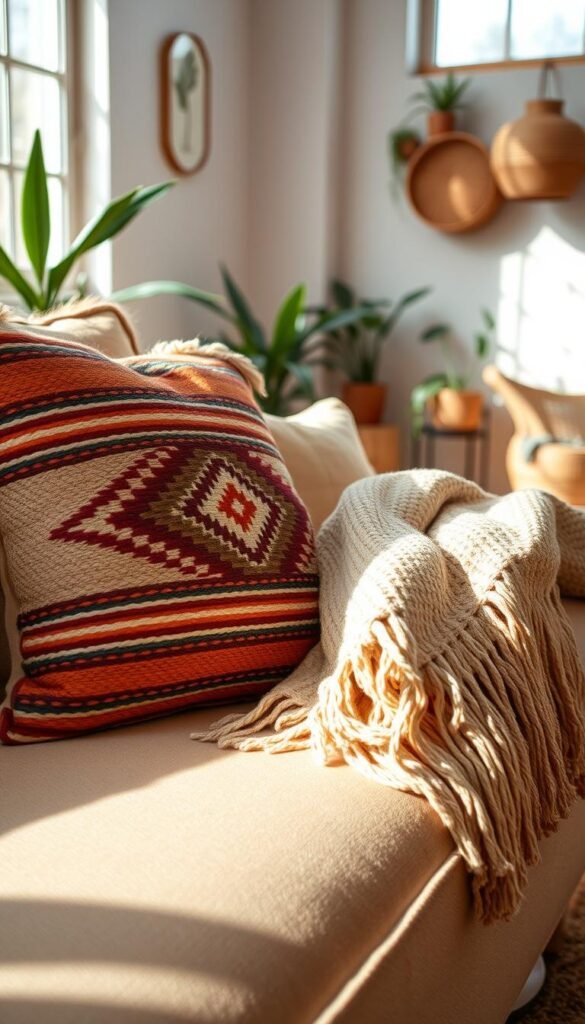
A few tactile details can make familiar furniture feel more relaxed and personal. A woven pillow, a soft throw, and a fringed or embroidered accent create a simple three-part soft layer. Texture makes a difference even when you keep the larger furnishings unchanged.
Choose soft layers for comfort and care, especially on seats that get daily use. Wool, leather, chunky knits, fringe, and woven grasses can bring different textures into the room. A kilim pillow, a quilt, macramé, or tassels can each add character, but none is a required part of the look.
Think about what feels good when you sit down, not just what looks striking on a sofa. A throw should be comfortable to pull over your lap, and a pillow should support the way you like to sit. A neutral seat can feel more personal with a textile that carries a color or craft detail you enjoy.
Washable or easy-care textiles are useful in high-use seating areas, particularly if you share the room with children or pets. Choose pieces that can handle regular use, and keep the more delicate accents where they are less likely to need frequent cleaning.
Soft layers can change with the season or your routine. You might keep a quilt close for a cool evening, then fold it away when the room gets warm. Keep the soft layers comfortable to use, not just attractive to look at.
Make the Layout Feel Relaxed, Not Cluttered
A relaxed room still needs clear routes between its doorway, seating, and everyday surfaces. Living room walkways are typically about 30-36 inches wide, adjusted for doors, furniture, and the room’s traffic. Clear paths make a casual arrangement easier to use.
Build the seating group around one central focal point, such as a fireplace, a view, or a coffee table. The seats should feel connected to that shared point without blocking windows or access through the room. A little open floor can make the furniture feel more inviting, not unfinished.
Protect Clear Paths Through the Room
Check the route from the doorway to the seating and any surfaces you use every day. Leave doors free to open and keep access to windows clear. Adjust the walkway width for the room’s shape and traffic rather than forcing furniture into a measured line.
Make the Seating Feel Connected
Arrange the main seats so people can talk without turning away from one another. A shared focal point gives the group a purpose, while a floor cushion can offer flexible seating where a permanent chair would block movement.
Use this four-step check as you arrange the room:
- Identify the focal point.
- Place the main seat.
- Add supporting seats.
- Test the paths through the room.
Walk through the room carrying something you use every day to test whether the arrangement works in practice.
Make Boho Style Feel Classy With a Few Polished Choices
A polished boho room depends on a few deliberate contrasts, not on making every piece look expensive. Choose one focal piece, two or three supporting finishes, and a few personal accents. Editing gives meaningful objects space to stand out from the rest of the room.
A vintage trunk or chair paired with simpler contemporary furniture creates a clear contrast without making the room feel formal. Use repeated finishes to connect the pieces, then let the focal object hold attention. A mix can look intentional even when its items come from different times.
Think of the focal piece as the item that gives the room its personality. It might be a carved chair, a handmade object, or a striking vintage find. Supporting finishes can show up in more than one place, which helps the room feel considered without making it look like a matched set.
Resist the urge to fill every surface. Treating each tabletop and shelf as a display area makes personal objects harder to notice. Leave some places clear, especially where you set down a drink, keys, or a book.
Before adding another decorative object, look at the room from its doorway. If one item already draws your eye, the surrounding area may need less rather than more. Clear one surface before adding another decorative object.
Is Boho Still in Style in 2026?
Boho is still in style in 2026, especially when its collected layers feel personal instead of theme-driven. Folk-bohemian interiors are artisan, cozy, and eclectic, with expressive finishes and textiles. Personal choices make the look feel lived in rather than assembled from trend items.
Warm, richer palettes and expressive interiors are gaining ground as people move away from overly safe neutral schemes. Living-room trends for 2026 and 2027 also include sculptural shapes, textured fabrics, and natural finishes. Boho fits that direction when comfort and individual character remain central.
Keep the pieces that still feel useful and meaningful, and update only the detail that makes the room feel dated.
To refresh the room without replacing everything, focus on four changes:
- Bring in one sculptural shape.
- Choose a richer warm tone.
- Include an artisan textile.
- Mix in a natural finish.
Folk-bohemian interiors suit the current interest in homes with more warmth and personality. You can keep furnishings that still work, then update one or two details that feel dated. A small change can give an older mix new energy without making the room look as though you bought it all at once.
Use trends as a prompt, not a shopping list. A sculptural object or artisan textile can fit into an established room if it relates to something you already own. Keep the pieces that still feel useful and meaningful, and update only the detail that makes the room feel dated.
Make Your Boho Living Room Feel Like Yours
A warm base, a few repeated colors, and meaningful objects can make your living room feel coherent without making it overly matched. Choose details that suit your routines as well as your taste, so the room feels comfortable on an ordinary day. You do not need to change everything to make a real difference.
Take one small step, then give yourself time to live with it. Choose one piece you already own, build a small color-and-texture combination around it, and live with that change before adding more.