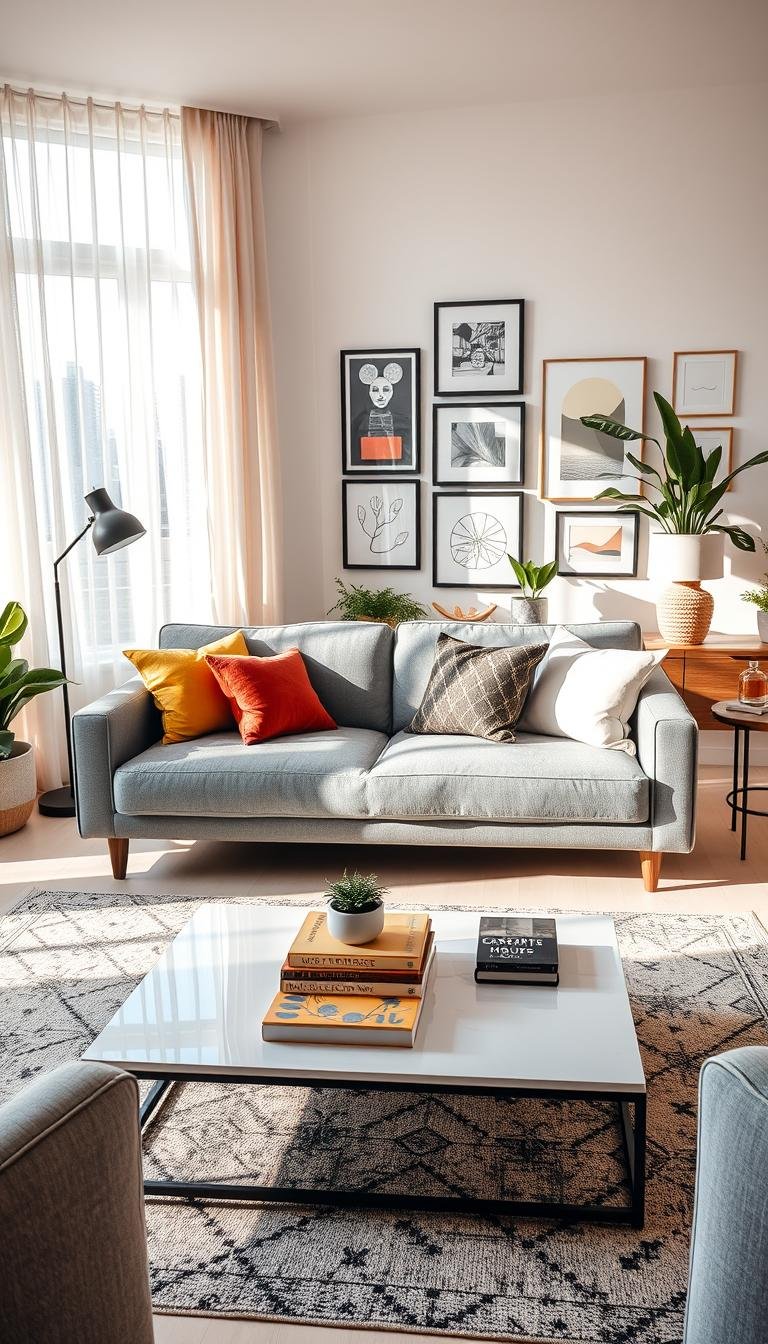
A gray sofa can feel polished, cozy, or bold depending on what you put around it. If you are planning living room designs grey couch schemes, the sofa is a flexible base, not a finished look. Its undertone, nearby colors, and mix of textures shape whether the room feels warm, calm, or dramatic.
The same gray can look different in a small apartment and a larger living area, so your space and natural light matter. There is no single palette that suits every home. You can build a room around the sofa by choosing its color direction, then selecting furnishings, layout, and care that fit your life.
Undertone means the subtle warm, cool, or neutral cast in a gray that affects how it appears beside other colors. Start by noticing whether your sofa reads warm, cool, or neutral in the light you use most.
Identify Your Gray Sofa’s Undertone
Look at the sofa beside a piece of warm white fabric in the room where it will sit. That comparison can reveal a color cast that disappears in a store photo or under different lighting. Fabric can shift in daylight, so judge the couch in its actual setting.
Build your palette around the gray you see at home, not the shade shown in a product image. Warm and cool tones respond differently to wood, accents, and other shades. A modern grey sofa colour combination starts with that distinction, then uses contrast to keep the room balanced.
Warm Gray and Greige
Warm gray and greige often carry beige, brown, or yellow influence. Earth tones, burgundy, and olive create a grounded color palette, while natural wood in a non-gray finish adds warmth. You can bring in these hues through a few accents and furniture pieces without replacing the sofa.
Avoid surrounding warm gray with too many other gray or cool tones. That can make a room feel cold, even when the sofa itself has a warm cast. For broader gray undertone and color ideas, compare how warm and cool shades shift beside different materials.
Cool Gray and Blue Gray
Cool gray may lean blue, green, or purple. Burgundy accents can add contrast, and solid surfaces help keep the color story composed. Yellow-toned oak brings warmth beside cool upholstery without making the whole palette feel busy.
Compare the gray in your own room before choosing the palette; nearby finishes can warm or cool its appearance.
Use this quick checklist before settling on a direction:
- Compare the sofa in daylight.
- Check it beside a warm white.
- Identify a brown or blue influence.
- Choose one contrasting material.
If you want to keep the gray sofa, changing nearby finishes is often enough to warm the room.
Living Room Designs Grey Couch: Build a Palette Around It

Keep the gray sofa as your anchor and choose one clear color direction around it. A restrained palette lets gray support the room without making every surface match. A grey sofa colour combination for a living room can start with gray, then add one warm neutral, one natural material, and one expressive accent.
Keep the strongest color to a small accent if you want a fresh look without committing every large surface. A cacao or mocha tone can deepen a neutral scheme, while smoked oak brings an earthy note through furniture. These choices can feel current while the sofa stays in place.
In 2026, warm neutrals are gaining ground as gray recedes from its once-dominant role as a default sofa color. Cacao, mocha, and smoked oak are among the colors and materials in the mix. You can introduce one through a cushion, an object, or a small upholstered seat.
Deep moss, smoky jade, and transformative teal offer a more vivid direction. A patterned floral can also give a gray base more personality, especially when its colors connect to existing pieces. The pattern does not need to cover a whole sofa or dominate the room.
If your living room ideas need a little more energy, test one expressive accent against the sofa before you repeat it. That keeps the gray useful as a flexible foundation and makes the new hue easier to change. Test a small accent in the room before repeating that color across larger furnishings.
Make a Light Gray Sofa Feel Bright and Welcoming
A light-gray sofa looks most inviting when the surrounding neutrals have a little warmth or texture. Soft contrast gives the space feel without making the room look stark. Cream, beige, and vintage wood can soften the upholstery, while one darker detail keeps the seating area defined.
Use one dark furnishing or accent for contrast instead of making every piece dark. A light sofa can handle blush, taupe, ochre, or navy, depending on the effect you want. These room ideas work in a small living area as well as a larger space.
Choose among these four setups to give a light sofa a distinct look:
- Pair warm cream with vintage wood and a blush accent for a soft, collected feel.
- Set beige beside a dark accent pillow to outline the seating without darkening the room.
- Use ochre with taupe for an earthy mix of warm tones.
- Ground a light-gray sectional with plush beige texture and a dark coffee table.
Dark accent pillows can add definition to neutral tones, especially when the rest of the furnishings remain light. Mustard brings warmth, while navy creates a cooler contrast. Mint can feel fresh beside gray, but keep it to a small accent if you want the room to stay relaxed.
For more light gray sofa living room inspiration, consider how texture can bring depth to pale upholstery. A beige rug can add softness under a sectional, while a dark table makes a clear visual counterpoint. If the room already gets abundant natural light, use darker accents sparingly so the pale palette stays relaxed.
Style a Charcoal Sofa Without Making the Room Feel Heavy

A charcoal sofa can anchor a dramatic room, but it needs a visible contrast nearby. Break up the dark mass with a lighter surface or a material that catches the eye. The goal is to make the couch feel grounded without letting it blend into the rest of the room.
When the floor and sofa are both dark, a pale rug can separate the seating from the floor. A cream or light-gray rug makes that boundary easier to see. The contrast also gives the living area a clearer shape, especially when the furniture sits against dark flooring.
For a high-contrast look, combine charcoal upholstery with a dark navy rug, a warm gray wall, black leather, and walnut wood. The materials bring different depths and finishes, so the room does not rely on a single dark color. Walnut and warm gray can keep the arrangement from feeling severe.
A dark rug can still work when a lighter floor or surrounding walls create a clear break in value. In that case, the rug can deepen the seating zone without swallowing it. Check the sofa and floor together before choosing a dark rug, since similar values can make the seating disappear.
Choose Wall Colors That Work With Gray Upholstery
Choose wall paint in the actual room, because gray can shift as daylight changes. Test the color in context instead of trusting how it looks on a small chip. The light and the sofa can change the way a wall shade reads from morning to evening.
LRV, or light reflectance value, measures how much visible light a paint color reflects. A higher LRV can help a room feel open, while a low value can make it feel more enclosed. Choose the wall mood you want, then check how its undertone sits beside the sofa.
Read the Room’s Light Before Choosing Paint
North-facing rooms can make cool gray paint look bluer or more purple. Warm greige is often a safer starting point in that light, especially if you want the wall to feel less chilly. A paint chip alone cannot show how the shade will behave across a full wall.
Paint a sample on the wall and view it at different times of day. The sofa, floor, and daylight all sit beside the test, giving you a more useful comparison than a store card. Keep the sample large enough to notice its cast against the upholstery.
Compare Gray Paint Undertones and LRV
For living-room walls, an LRV of 55 or higher is described as helping a room feel open and airy. An LRV from 35 to 50 is described as grounded and cozy, while a value under 25 is described as dramatic and enveloping. Values between those stated bands do not have a specified mood category.
The following paint shades show how undertone and LRV can guide a first comparison:
| Paint | LRV | Undertone | Likely room effect |
|---|---|---|---|
| Sherwin-Williams Repose Gray (SW 7015) | 58 | Faint violet-brown | Open and airy range |
| Benjamin Moore Gray Owl (OC-52) | 65 | Green-blue | Open and airy range |
| Sherwin-Williams Agreeable Gray (SW 7029) | 60 | Warm cream | Open and airy range |
| Sherwin-Williams Light French Gray (SW 0055) | 53 | Faint blue | Between stated bands |
| Benjamin Moore Stonington Gray (HC-170) | 59 | Blue-gray | Open and airy range |
Other options include Sherwin-Williams Mindful Gray (SW 7016), LRV 48, a mid-tone greige, and Benjamin Moore Revere Pewter (HC-172), LRV 55, with a green-gray undertone. Sherwin-Williams Worldly Gray (SW 7043), LRV 57, leans taupe; Sherwin-Williams Dorian Gray (SW 7017), LRV 39, is a deeper greige.
Benjamin Moore Coventry Gray (HC-169) has an LRV of 50 and a medium blue-gray appearance. Sherwin-Williams Silver Strand (SW 7057), LRV 59, has a soft green-blue undertone, while Benjamin Moore Wickham Gray (HC-171), LRV 65, appears light blue-gray. Sherwin-Williams Gauntlet Gray (SW 7019) has an LRV of 17 and a subtle warm undertone.
For related gray and white color inspiration, look at how lighter and darker values affect a room’s sense of depth. View a large paint sample at different times of day before committing to the wall color.
Choose Curtains for a Gray Sofa
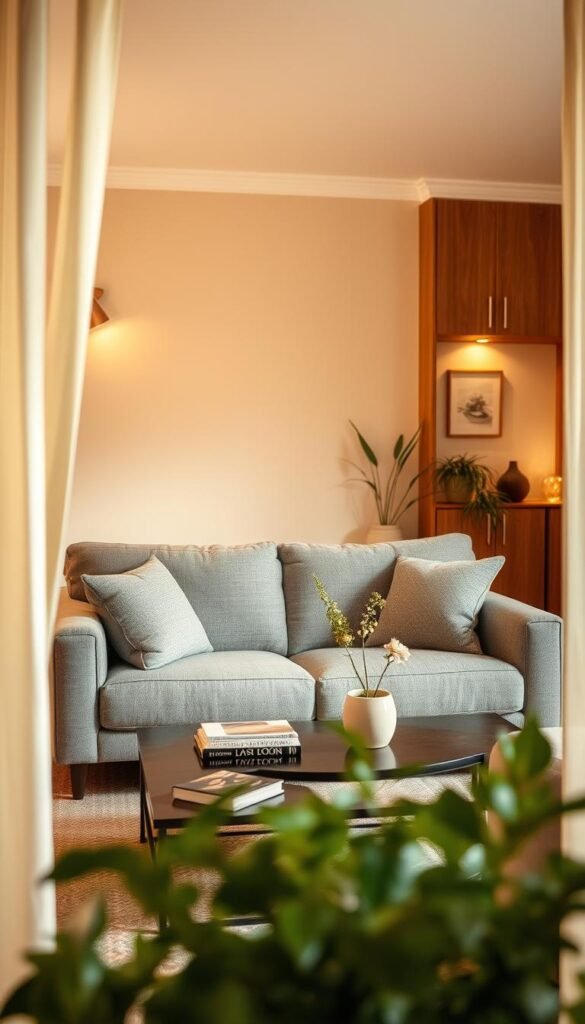
Cream and beige curtains bring more warmth beside gray than plain white does. Choose the fabric for both the sofa’s shade and the light you want in the room. Taupe can sit quietly beside gray, while blush brings warmth and light blue feels airy.
Use curtain color to decide whether the window blends in, brightens the room, or creates contrast. The right choice also depends on how much privacy you need. A pale, sheer panel lets more daylight through, while a deeper color makes the window wall more noticeable.
Match Curtain Color to the Sofa’s Undertone
White, cream, beige, and taupe can all work with gray, but cream and beige add more warmth than white. Blush-pink curtains warm the sofa, while light blue keeps the pairing calm and airy. Olive green and terracotta add an earthy note, with terracotta suiting warm gray with brown undertones.
For light gray, navy or forest-green curtains create high contrast. For charcoal, sheer white or soft cream can brighten the window area. Warm greige works well with terracotta, ochre, or burnt rose when you want an earthy direction.
Use Pattern and Contrast With Intention
A small neutral or pastel pattern brings subtle interest without taking over the room. Floral and geometric curtains make a stronger statement, so use them when the window should be a focal feature. Choose a scale that feels connected to the sofa and wall rather than competing with both.
These combinations answer common grey sofa living room ideas with curtains through specific choices:
| Sofa shade | Curtain choice | Room effect | Pattern direction |
|---|---|---|---|
| Light gray | Navy or forest green | High contrast | Solid or small neutral print |
| Charcoal | Sheer white or soft cream | Brighter window area | Plain sheer fabric |
| Warm gray | Olive green or terracotta | Earthy, warm finish | Small floral or geometric |
| Warm greige | Terracotta, ochre, or burnt rose | Warm, layered palette | Subtle neutral pattern |
Hold a curtain sample beside the sofa and wall together, not against either one alone.
Ground the Seating Area With the Right Rug
Use the rug to make the boundary between the sofa and floor feel intentional. Contrast helps define the seating when upholstery and flooring have similar values. A warm or dark rug can ground a light-gray sofa, while a lighter rug can give dark gray more separation.
Choose the rug’s value to keep the sofa visible against the floor. Creamy warm white and beige soften gray, while navy, terracotta, mustard, and ochre make a stronger color statement. The right option can make the seating zone feel calm or more vivid.
Choose Rug Color for Contrast or Calm
Light-gray upholstery can take a darker or warmer rug without losing its brightness. Dark-gray upholstery often benefits from a lighter neutral that lifts the seating area. A green rug offers another direction: a 2027 rug-color guide pairs sage with cool-toned light gray and forest or jade with dark gray.
Consider light gray sofa rug and texture ideas when deciding whether the floor should blend or contrast. Warm white and beige create a softer transition. Navy, terracotta, mustard, and ochre draw a clearer line around the sofa.
Use Texture to Balance Cool Gray
Jute, hemp, and sisal introduce golden-brown tones that can balance cool gray upholstery. Their natural texture changes how the seating area feels without relying on another bright hue. A woven surface can also bring a relaxed note to a room with smooth furniture.
Use this comparison to connect the sofa’s shade with the rug’s visual effect:
| Sofa tone | Rug choice | Visual effect | When it works |
|---|---|---|---|
| Light gray | Warm or dark color | Grounded contrast | When the sofa needs definition |
| Light gray | Sage | Soft green contrast | With cool-toned upholstery |
| Dark gray | Light neutral | Lighter seating zone | When the sofa feels heavy |
| Dark gray | Forest or jade | Deeper color contrast | For a richer 2027 pairing |
If both the sofa and floor are dark, choose a rug that gives the seating a visible edge.
Layer Throw Pillows and Blankets for Comfort

A few varied fabrics can make a plain gray sofa feel more inviting without changing its color. Texture matters more than quantity when you want the pillows to feel considered. A velvet cushion adds richness, while subtle houndstooth brings pattern without demanding a whole new color scheme.
Vary fabric and scale instead of filling the couch with unrelated colors. Linen, bouclé, velvet, and woven fabric each have a different surface. A mix can add depth without requiring a matching set or a large number of throw pillows.
For a simple arrangement, use four parts:
- Start with a larger, simple pillow that gives the sofa a calm base.
- Add a smaller patterned pillow, such as one with houndstooth.
- Bring in one tactile fabric, like velvet, bouclé, linen, or woven cotton.
- Drape a throw that echoes a color already used elsewhere in the room.
Mixing fabrics gives your living space a more personal feel than buying every cushion in the same material. A plain pillow beside a patterned one makes each surface easier to notice. Keep the arrangement comfortable enough for everyday use, not just for display.
For ideas on choosing fabrics that balance feel and durability, explore designer guidance on enduring interior fabrics. A softer throw can make a seat feel ready to use, while a more structured pillow helps the arrangement hold its shape. Keep one pillow or throw color connected to something already in the room.
Pair the Coffee Table With Warm Materials and Clean Lines
A coffee table should be easy to reach without overwhelming the sofa. Scale comes first, then the tabletop finish. Natural wood can bring warmth to a gray-sofa room, while marble, metal, and glass give the area different levels of contrast and reflection.
A coffee table is typically about two-thirds the length of the sofa and around seat height or 1-2 inches lower. Treat that as a starting point, not a fixed rule; the sofa and room affect what feels comfortable. Leave enough room to use the table without squeezing past it.
Wood gives the room a natural, grounded look. Marble adds a polished surface, metal feels crisp, and glass keeps the tabletop visually light. Each material changes the balance, so choose one that works with the sofa’s shape and the rest of the furnishings.
Brown leather seating or a wood side table can soften a cool upholstery base. A brushed or polished metal detail adds a reflective modern accent. You do not need every piece to match; repeating one material is often enough to connect them.
A round or curved coffee table can soften a room filled with straight lines. In a tighter area, it may also make the path around the table feel less abrupt. For further mid-century living room furniture ideas, consider how wood, glass, and clean-lined pieces can work together. Check the table’s height and length against the sofa before choosing a finish.
Create a Focal Point With Art, Mirrors, and Lighting

Choose the one feature you want people to notice first when they enter the room. A clear focal point can come from one large artwork, a small gallery grouping, or a mirror above the sofa. Pick one as the main feature so the wall does not feel crowded.
A mirror can reflect available daylight and make the room feel more open. Art can bring in accents such as gold and navy, while a sculptural floor lamp adds form and function. Let one of those elements lead, then give the others a supporting role.
A single large artwork gives the sofa wall a direct visual anchor. A small gallery grouping can work when its pieces share a color or frame style. Keep the arrangement connected to the furniture rather than spreading small items across the wall without a clear center.
Layer lighting in three ways: ambient light fills the room, task light supports activities, and accent light draws attention to a feature. A floor lamp can provide useful light and a sculptural shape at once. Adjust the plan to the room’s natural light and the way you use the seating area.
For more modern classic living room ideas, consider how art, layered lighting, and a few materials can create a composed space. Set the focal point at a comfortable viewing height and leave enough breathing room around it.
Mix Patterns and Textures Without Visual Clutter
Let the gray sofa provide a visual pause when several patterns share the room. A quiet base makes it easier to notice a floral, geometric, or color-blocked surface without making the seating area feel busy. Keep the number of competing patterns in check.
Mix one large-scale pattern with smaller prints so each design stays readable. Repeat one color across the different pieces to connect them. Pattern can bring personality, but it works best when scale and color give the eye a clear path.
Try one of these four approaches to set the level of pattern:
- Pair one large floral with a smaller geometric design.
- Choose color-blocked drapes and keep nearby pillows restrained.
- Hang patterned art above an otherwise mostly solid setting.
- Use a patterned rug with simpler upholstery around it.
Floral, geometric, and color-blocked patterns can work together when the gray sofa gives the room a calmer foundation. Keep their sizes distinct rather than choosing prints that all compete at the same scale. One repeated color can make separate pieces feel part of the same design.
Texture can add interest even when the color palette stays restrained. A woven surface beside a smooth one creates contrast without adding another print. If the patterns compete, remove one print before adding another accent.
Arrange the Sofa and Seating for Better Flow
Leave a clear route through the room before centering the furniture around the coffee table. Protect the walkway first, then arrange the seats toward one another or a shared focal point. A good layout makes conversation easy while keeping the room simple to cross.
A main walkway is typically about 30-36 inches wide, and the gap between a sofa and coffee table is commonly about 14-18 inches. Adjust both for mobility and the room’s scale. The measurements help you test a layout, but the actual paths matter most.
Set Up a Conversation Group
Face chairs toward the sofa when conversation is the priority, or angle the seats toward a shared focal point. Two matching gray sofas can create a comfortable gathering arrangement. Cane-backed chairs add a contrasting material without requiring a different large upholstered piece.
A sofa with two chairs works well when you want flexible seating, while a second sofa suits a larger room with frequent guests. Keep the center open enough to reach the table. The seats should feel connected, not scattered around the space.
Fit a Sectional to the Room
A sectional can define an open seating zone, but it should not block the main path through the room. A long bench-seat sectional creates an expansive, streamlined look. Pair it with chairs and a central table for a modern grey sofa living room layout that supports both conversation and clear movement.
Compare these arrangements before deciding where your sofa belongs:
| Layout | Furniture arrangement | Best suited to | Design effect |
|---|---|---|---|
| Sofa with two chairs | Sofa faces two chairs across a table | Flexible conversation areas | Balanced gathering group |
| Two sofas facing | Matching sofas face one another | Wide rooms and group seating | Formal, welcoming arrangement |
| L-shaped sectional | Sectional with chairs and central table | Open seating zones | Streamlined, defined area |
| Sofa with one accent chair | Chair sits beside or across from sofa | Compact living rooms | Light, flexible seating |
For more living room layout ideas with clean lines, consider how furniture can face a shared center without closing off the room. Measure the walking paths in your actual room before settling on a layout.
Choose Between a Simple and Modern Gray Sofa Look
Decide whether you want the sofa to blend into a calm background or stand out against stronger contrast. Both directions can work when you choose details that support the mood. A tonal room feels quiet, while darker accents and sculptural shapes create a more contemporary edge.
Use texture and contrast to keep a restrained gray palette from looking flat. The 60-30-10 rule of thumb divides a palette into a dominant color, a supporting color, and an accent. You can use it as a guide without forcing each color into an exact share of the room.
Keep the Room Simple and Tonal
A gray, cream, and white palette feels calm when fabrics and surfaces vary. Add a few dark details to give the eye a place to rest, such as a small frame or a table base. This approach supports minimalism without making every item look identical.
Simple living room designs with a grey couch benefit from fewer shapes and accessories. Choose a small number of furnishings, then let their texture and proportion do more work. The result can feel intentional without adding extra objects to fill every surface.
Add Modern Contrast and Sculptural Shapes
Clean lines, sculptural shapes, dark accents, and natural materials can make a room feel more contemporary. Curved furniture breaks up a grid of straight edges, while wood adds a warmer note. Strong contrast gives a gray sofa a clearer role in the design.
Modern living room designs with a grey couch feel balanced when one warm material offsets the clean-lined pieces. Modern grey living room ideas can use contrast and texture without adding clutter. Choose the direction that suits how you use the room, then keep the remaining details consistent with it.
Refresh the Room Without Replacing the Sofa
You can change the mood of a gray sofa room without replacing any major furniture. Small, removable details let you try a different hue while keeping the sofa and larger pieces as a stable base. A few easy changes can make your home feel fresh without reworking the whole space.
Test a new color in one or two details before repeating it around the room. A small update can be enough to change how the living area feels. You can return to the former look if the new accent does not suit the room.
Choose from these four seasonal updates:
- Switch one pillow for a new color or fabric.
- Change the throw to shift the room’s mood.
- Restyle one coffee-table object with a different finish or hue.
- Rotate or replace a small art accent.
A three-item refresh can be as simple as one pillow, one throw, and one tabletop object. You do not have to change all three at once. Pick one or two removable details, then see how they look with the existing furniture and natural light.
Small accents make it easier to experiment than changing a large piece. Keep the gray sofa and other major furnishings steady while you test the new color. Try one removable accent first and live with it before buying more pieces.
Protect and Maintain Upholstered Furniture
Regular light care is easier on upholstery than waiting for dirt or a spill to set. Simple upkeep can help the sofa keep its texture and feel. Vacuum the couch every 1 to 2 weeks, and treat spills before they settle into the fabric.
Follow the care label and test any cleaning product on an inconspicuous area first. Upholstery fabrics respond differently to water and cleaners, so a cautious spot test can help prevent damage. Blot a spill promptly rather than letting it sit.
Rotate loose cushions regularly so the same areas do not take all the wear. After spot cleaning, remove all soap residue from the fabric. Leftover cleaner can affect how the surface looks and feels, so follow the product directions carefully.
For regularly used upholstery, professional hot-water-extraction cleaning about once a year can help remove built-up soil. The method and timing should still suit the sofa’s care instructions. Avoid treating all upholstery as if it can handle the same cleaning process.
Care for spills promptly, rotate loose cushions, and clear away every trace of soap after spot cleaning.
Check the sofa’s care label before using water or any cleaning solution.
Choose One Gray Sofa Update to Try This Week
A more inviting room can begin with one small, deliberate adjustment. Start with the easiest mismatch you notice, such as a cold-looking accent, an empty focal wall, or a table that interrupts the flow. One well-chosen change can make the room feel more cohesive without changing its whole style.
Compare one sample or move one existing piece before buying anything. That quick test lets you see how a change works in the actual space and its natural light. Pick one change today, then check how it looks in the room’s natural light.