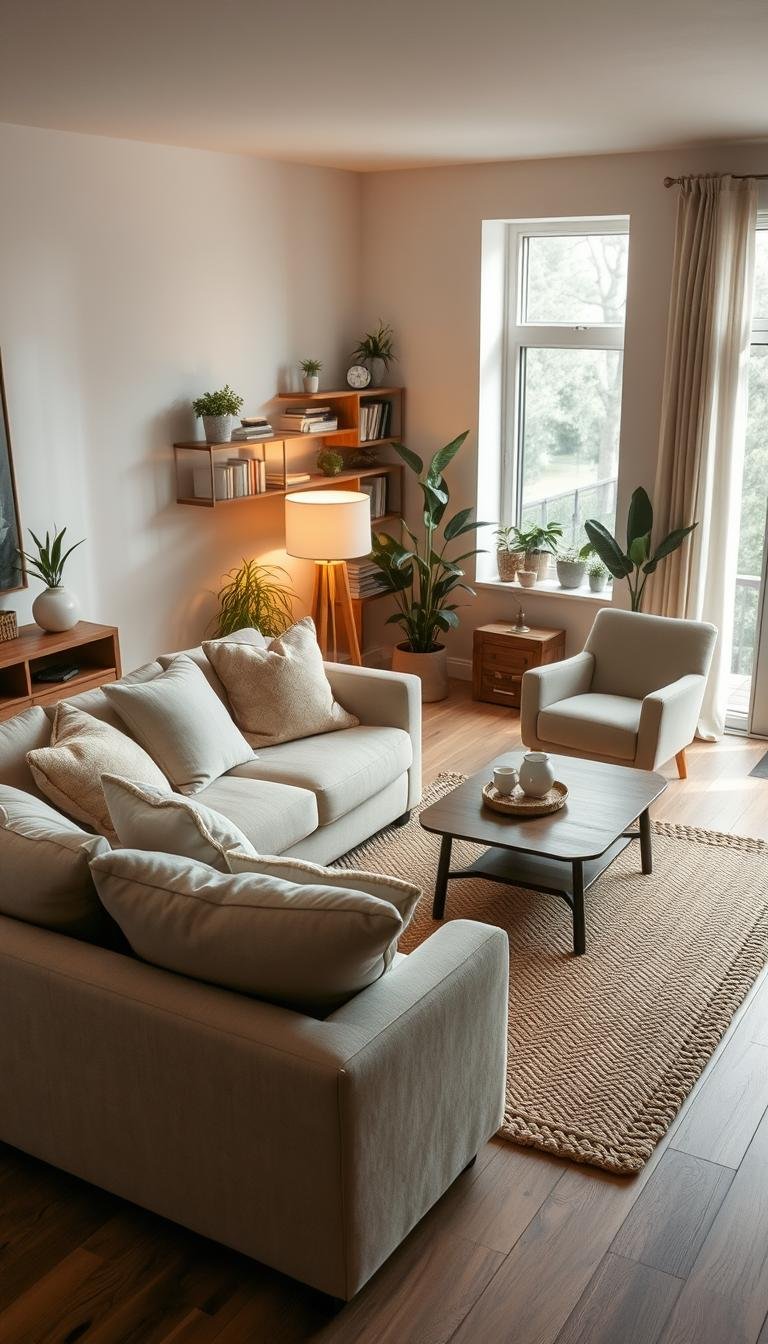
A compact living area can feel both cozy and airy when each choice earns its place and leaves enough room to move. That balance matters when your family shares a small house, apartment, or studio. Comfort and spaciousness can coexist when the room supports daily life without feeling crowded.
Negative space is the visible, unoccupied areas around furniture and decor that keep a room from feeling crowded. Thoughtful layout, useful storage, color, light, and texture can help you make the most of limited square footage. The aim is not to strip away everything you enjoy. It is to give each piece enough room to work and each activity a comfortable place.
These ideas focus on practical choices that make a room inviting while keeping its paths and surfaces usable. You can adapt them to your home instead of trying to copy a larger space. Start by thinking about the moments your household wants this room to support.
Cozy Living Room Designs Small Spaces Can Adapt to Daily Life
A room used for movie nights needs a different seating plan from one where you mainly host games. Start with real routines, then choose a layout that makes those activities comfortable. A small living room may need room for family time, a reading chair, or a place to set down game pieces.
A short list of regular activities can guide your furniture and storage choices. Movie nights may call for comfortable seating with a clear screen view. Hosting games may need a shared surface and seats that face one another. Reading or working often benefits from a lamp and a useful side table.
Before planning, check which everyday uses matter most:
- Watching TV: comfortable seats and a clear view of the screen.
- Talking with guests: seating that brings people together.
- Reading or working: a lamp, a nearby surface, and a supportive seat.
- Storing everyday family items: a defined place for books, games, and blankets.
These very small living room ideas give you a practical starting point: match each activity to a feature rather than buying furniture by habit. A home that hosts games often may need flexible seats more than a large media unit. A reading-focused room may benefit from a lamp before it needs another chair.
For broader guidance on activity zones and practical furniture choices, explore planning furniture around how you use the room. Keep comfort in view, but leave enough space for people to move between activities.
Let a short list of regular activities determine which furniture and storage earn a place in the room.
Once you know what happens most often, occasional uses can fit around those priorities instead of taking over the floor. Keep the two or three activities you do most often at the center of the plan.
Choose Furniture by Scale and Function

One well-proportioned sofa can make a small room feel more intentional than a collection of undersized seats. Look at the whole footprint, including the space people need to pass. A low-back sofa can preserve sightlines and keep the room from feeling divided by a tall block of upholstery.
Pick a sofa that anchors the seating area
A single larger sofa can create a cohesive anchor when several small seats would leave the room looking scattered. That works best when your household needs a main place to sit together and the sofa still leaves a clear route. In a narrow room, its length and depth matter as much as its seat count.
Simple living room ideas for small spaces often start with fewer pieces, not miniature versions of every possible seat. Measure the sofa against the room and consider whether its arms, back, and legs make it look heavy. An open base or visible floor beneath the frame can help the furniture feel lighter.
Add only the supporting pieces you need
A compact sofa suits shared seating without requiring several chairs. A loveseat with an ottoman can give you a flexible footrest or an extra seat when guests arrive. A sofa paired with slim chairs makes sense when people regularly visit and need seats that can shift around.
A room plan for compact homes can help you think through proportions and movement before choosing furniture. Compare the setups by their everyday use:
| Furniture setup | Useful when | Effect on the room |
|---|---|---|
| One sofa | You need shared daily seating | Creates one clear anchor |
| Loveseat plus ottoman | You want flexible seating | Keeps the arrangement adaptable |
| Sofa plus slim chairs | You often host guests | Adds seats with less visual bulk |
Choose pieces for the way your household actually sits, stretches out, and hosts. Before bringing home a piece, map its footprint and the route around it.
Arrange Seating Around Your TV and Conversation
In a small living room, the TV works best when its position supports the seating plan rather than dictating every piece. Keep viewing and conversation in balance, so the screen is easy to see without making every seat face one direction. A direct view and a clear walking path should coexist.
Use this setup checklist to plan the main pieces:
- Choose a screen wall that does not interrupt the room’s main route.
- Position the sofa for an unobstructed view of the TV.
- Angle extra seats toward both the sofa and the screen.
Wall-mounting a TV can preserve floor space by freeing the area a media stand would use. That choice can be especially helpful when a stand would narrow a walkway or compete with another useful surface. Keep cords managed so the wall still looks orderly.
To arrange living room furniture in a small space with a TV, give the main seat a direct view, then test the angle from any extra chairs. A side chair can turn slightly toward the sofa, making conversation feel natural between programs. Avoid placing the main route through the center of the seating group.
Small living room ideas with TV often work best when you treat the screen as one focal point, not the only one. A lamp, artwork, or conversation area can give the rest of the room a purpose when the TV is off. That helps the layout serve more than one kind of evening.
Pay attention to how people enter and leave the seating area. A clear route should not force anyone to squeeze between knees or step around a table. Sit in each intended seat and check that the screen is visible without blocking the main walkway.
Size the Rug to Anchor the Seating
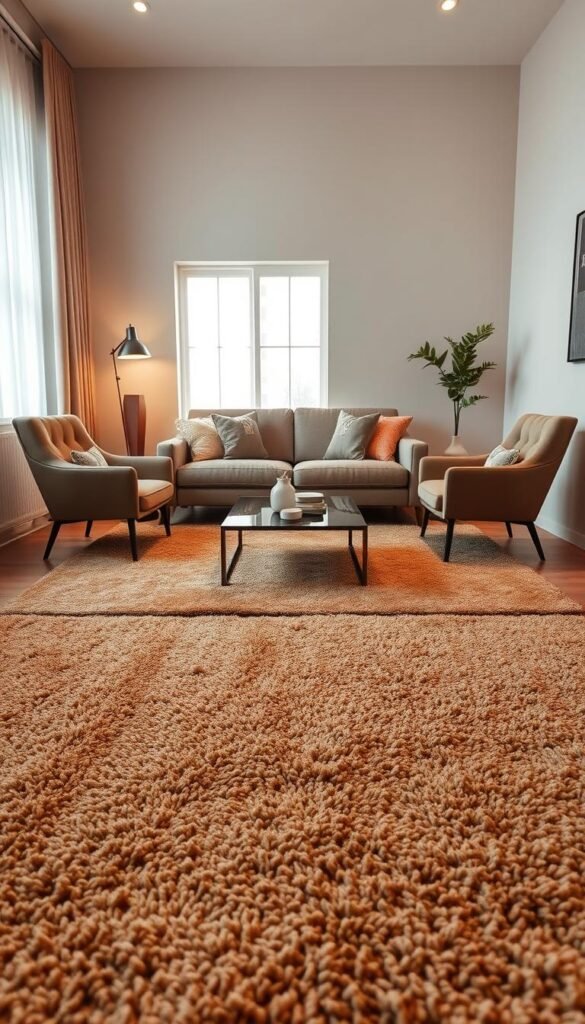
A rug should visually gather the seating, not stop short like a small island beneath the coffee table. Use the area rug to connect the group while preserving some visible floor. Two-thirds is a proportion cue, not a strict placement rule.
Use the sofa-to-rug ratio as a proportion cue
For a rug centered under a sofa, the sofa can measure two-thirds of the rug’s total length. That leaves the remaining third extending beyond the sofa at the sides. The proportion gives the seating zone a connected look without requiring every rug to follow one exact arrangement.
Another approach is to place two-thirds of the living room furniture in contact with the rug. That might mean the sofa and front legs of nearby chairs touch it, while a side table remains on the bare floor. Choose the method that makes the furniture read as one group.
The two-thirds rug placement cue can help you compare a rug against the sofa and the rest of the seating. It is a starting point, not a measurement you need to force onto a room with unusual proportions.
Leave a visible border around the rug
A visible border of about 12 to 18 inches around the rug can frame it and keep it from feeling like wall-to-wall carpet. Treat that gap as a guide, not a mandatory space on every side. A narrow room, doorway, or built-in feature may call for a different edge.
A modest rug can make the floor feel fragmented if it sits only under the coffee table. On the other hand, a rug that covers nearly all the floor may hide the room’s boundaries. Look at the whole seating area before settling on its size.
| Placement cue | Proportion | What it helps achieve |
|---|---|---|
| Sofa length | About two-thirds of rug length | Balances sofa and rug |
| Furniture contact | About two-thirds of furniture | Connects the seating group |
| Visible border | About 12 to 18 inches | Frames the rug with floor |
| Two-thirds rule | Flexible proportion cue | Guides, but does not dictate, placement |
Use the proportion that best connects your furniture while leaving a deliberate edge of floor visible.
Put Storage to Work Without Adding Bulk
The most useful small-room storage hides the things you reach for often without taking over the floor. Give everyday clutter a home before adding another cabinet. Concealed storage keeps surfaces usable for a drink, a book, or a game in progress.
Choose a storage option that matches what tends to collect in your living room:
- Built-in shelves: hold books and a curated set of display objects without adding a freestanding unit.
- Coffee table with hidden storage: keeps remotes, coasters, or game pieces close by.
- Storage ottoman: conceals blankets or toys while serving as a seat or footrest.
- Narrow closed-drawer console: contains chargers, mail, and small household items.
Built-in bookshelves combine storage with display, but open shelves can look cluttered when every item stays on view. Reserve them for books or a small, curated group of objects. A row of baskets can also keep smaller items together without turning each shelf into a display case.
Books can sit neatly under a low coffee table when its base leaves enough room. This keeps favorite reading material close without adding a separate bookcase. A table with a drawer or lift-up top is useful when papers and small items need to disappear between uses.
For more ways to reduce visual clutter with functional furniture, see these minimalist living room storage ideas. The best solution handles a real, recurring mess instead of creating a new place to store things you rarely use.
Be selective about what you keep within reach. If a storage piece requires frequent sorting or has no clear purpose, it may add work instead of easing it. Choose one storage piece to solve a real clutter problem before adding another.
Make Small-Room Seating Feel Open

A pair of timber-framed armchairs beside a two- or three-seat sofa can feel airier than matching upholstered chairs. The open frames reveal more of the room and bring in a different material. Choose additional seats that leave sightlines open.
Use an airy alternative to matching chairs
This arrangement can suit a room where guests need separate seats, but two bulky armchairs would make the seating group feel crowded. Timber-framed chairs with visible legs keep more floor in view. Placing them side by side can still create a clear place for conversation.
That mix also gives you room to vary the chairs slightly without making the space feel mismatched. Pick frames and cushions that share a material, color, or shape with the sofa. For more ideas on proportion and seating, browse open, minimal living room design.
Let curved or open furniture soften the layout
A curved sofa can soften sharp corners and make a tight layout feel less rigid. Open-backed seating lets your eye travel through the frame, while a low back helps preserve the view across the room. These shapes can bring elegance without relying on a large footprint.
Petite pull-up stools offer another option when you need a spare seat only sometimes. They can tuck beside a wall or table when guests leave, unlike another full-size chair. Check that a stool is sturdy and comfortable enough for the visits it needs to serve.
Elegant small living room ideas do not require delicate furniture that feels uncomfortable. Choose a seat with supportive proportions, then consider whether its frame, back, or legs block much of the room. A sculptural shape can add character while still doing useful work.
A lighter arrangement is especially helpful when the room serves as a path between other areas of the home. Chairs that move easily can shift for conversation or make room for play. Choose extra seats that can move aside when the room needs more open floor.
Layer Light and Reflect Daylight
A single harsh overhead light can make a compact room feel less welcoming, even when the layout is working. Layer warm light at different heights to soften the room after sunset. Several light sources can reduce dark corners and make the space feel more evenly lit.
Combine a few sources so the room does not rely on one ceiling fixture:
- A warm overhead fixture for general light.
- A floor lamp beside a reading or conversation seat.
- A table lamp on a side table or console.
- A mirror positioned to catch daylight from a window.
Soft, warm overhead lighting creates a more inviting atmosphere than harsh cool light. Floor and table lamps add gentle pools of light at different heights, which can make the room feel calmer. A focused lamp also helps with reading without flooding the whole space.
Mirrors can reflect daylight and make the room feel brighter. Place one where it catches light from a window, rather than aiming it at a dark corner. Reflective surfaces can also make furniture feel less visually heavy by allowing more light to move around it.
Keep window areas clear enough for daylight to enter. A lamp behind a tall chair may brighten the wall but leave the seat in shadow, so check the light where you actually sit. A mix of light sources gives you more control as the room changes from morning to evening.
After dark, notice whether a bright ceiling light creates glare on a screen or leaves one side of the sofa dim. Adjust the lamps to match the activities happening there. Turn on each light source after sunset and check for any corner that still feels dim.
Pick Colors From the 2026 Palettes
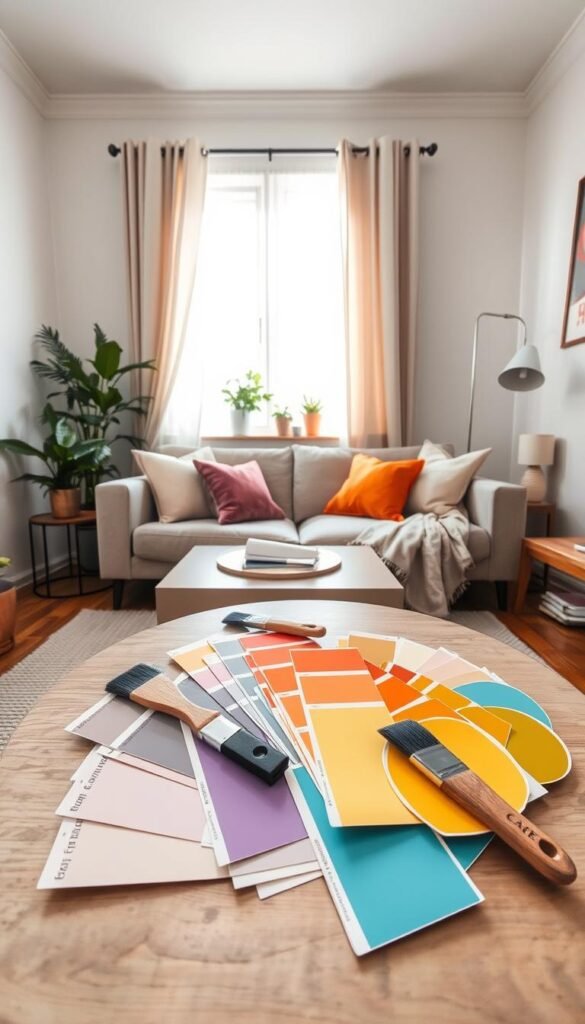
Silhouette AF-655 is Benjamin Moore’s named 2026 Color of the Year, while the other palettes offer distinct green, blue, blush, and earthy options. Use the names as a starting point for a room that suits your light and furnishings. A named Color of the Year is not a universal ranking for every home.
Compare the named paint palettes
Benjamin Moore named Silhouette AF-655, a blend of rich espresso hues and subtle charcoal notes, its 2026 Color of the Year on October 16, 2025. Its 2026 Color Trends palette also includes Raindance 1572, First Crush CSP-310, Swiss Coffee OC-45, Batik AF-610, Narragansett Green HC-157, Southwest Pottery 048, and Sherwood Tan 1054.
Sherwin-Williams’ 2026 Colormix Forecast, Anthology: Volume Two, presents four palettes focused on the evolution of specific color families. It highlights Halcyon Green SW 6213, Rojo Marrón SW 9182, Henna Shade SW 6326, and Pavestone SW 7642. The 2026 paint-industry color announcements also describe Benjamin Moore’s Silhouette selection.
Dunn-Edwards’ 2026 Color Trends include nine trending colors inspired by nature and eight notable neutrals described as warm-leaning and grounded. Its named colors include Eagle’s View DE6394, a soft mauve-gray neutral with a slightly cool undertone, and Antique Coin DE6270, a muted gray-green that pairs with warmer tones.
| Palette | Color | Color character |
|---|---|---|
| Benjamin Moore | Silhouette AF-655 | Rich espresso with subtle charcoal |
| Sherwin-Williams | Halcyon Green SW 6213 | Green |
| Dunn-Edwards | Country Air DET581 | Cool blue with a hint of periwinkle |
| Dunn-Edwards | Gypsum Rose DET452 | Sandy blush beige with peach undertones |
| Dunn-Edwards | Cedar Grove DE5152 | Burnt coral with a hint of red |
Country Air is a cool, calm traditional blue that can brighten a room. Gypsum Rose brings a sandy blush tone, while Cedar Grove recalls sun-warmed clay tile.
Use color names as starting points, not prescriptions
Test paint on more than one wall because daylight can shift across the room. Look at each sample in morning light, afternoon light, and lamplight. A color that appears soft near a window may look deeper on a shaded wall at night.
Benjamin Moore’s 2026 named Color of the Year is Silhouette AF-655, not a universal ranking of what every home should use. Compare samples with your sofa, flooring, and nearby finishes before choosing. Test a sample on more than one wall before committing to a room-wide color.
Use Color and Pattern With Confidence
For a grounded 2026 palette, trade pale butter yellow for ochre, tobacco, or warm caramel. Choose hues with softer depth rather than bright color that dominates every surface. A restrained color story helps a compact room feel composed.
Favor grounded hues over high-saturation shades
Designers favor richer, earthier yellows such as ochre, tobacco, and warm caramel over pale butter yellow. Kristina Khersonsky prefers subdued blues with gray, mineral, or earthy green undertones over poppy blues like bright teal and denim blue. These quieter shades still bring color without shouting across the room.
Khersonsky also favors dusty rosewood, or pink with brown undertones, over highly saturated maximalist pinks. Laura Stephens favors muted, chalky mint greens over sage green, while cautioning against versions that look too sweet or pastel. Armin Kousha favors mushroom, caramel, and creamy tones over white, which can feel harsh or clinical in some spaces.
| Color family | Less favored direction | Grounded alternative |
|---|---|---|
| Yellow | Pale butter yellow | Ochre, tobacco, or warm caramel |
| Blue | Bright teal or denim blue | Subdued blue with gray or earthy undertones |
| Pink | Highly saturated maximalist pink | Dusty rosewood with brown undertones |
| Neutral | White that feels harsh or clinical | Mushroom, caramel, or creamy tones |
| Green | Sage green | Muted, chalky mint that is not too pastel |
Balance bold choices with quieter elements
One strong hue can feel personal without taking over the room. Temper it with softer furnishings, natural textures, or neutral wall areas. For example, a rich accent can sit beside a plain sofa and wood details rather than competing with another vivid pattern.
Modern cozy living room designs for small spaces can combine clean-lined furniture, warm materials, and a controlled color story. Keep the largest surfaces calm if your chosen accent is strong. Pattern can still appear in a cushion, a throw, or one artwork, where it adds interest without filling every sightline.
Think about how a color appears beside nearby finishes. A muted shade may feel livelier next to pale wood, while dark trim can make the same paint seem deeper. Keep the boldest color to a deliberate area if you want the rest of the room to stay visually calm.
Take Walls and Ceilings Upward
Curtains hung close to the ceiling draw the eye upward and make the full wall feel taller. Use vertical lines to emphasize height instead of stopping decoration at eye level. A continuous visual field can make a compact room feel more expansive.
Hang curtain panels near the ceiling, even when the window sits lower on the wall. Long panels make the wall feel more continuous and give the window a taller presence. Vertical shelving can support that upward movement while adding a place for books or display items.
A mural or patterned wallpaper can add depth and visual movement. Choose a scale that suits the wall, then let nearby surfaces remain quieter. In a narrow living room, a bold wall treatment can add character without making every plane compete for attention.
Carrying one warm hue across the walls, trim, and ceiling can create a continuous visual field. This approach, often called color-drenching, reduces sharp visual breaks between surfaces. A single hue can make the room feel enveloping rather than chopped into separate bands.
You can also use shelving above a doorway or window to draw attention higher. Keep display items limited enough that the shelves do not become a busy stripe. The goal is to use the wall’s full height without making the room feel packed from floor to ceiling.
Bold treatments work best when the surrounding surfaces give the eye a rest. A patterned wall can pair with simple curtains and restrained trim, while a saturated ceiling can sit above calmer walls. If you choose a busy wall treatment, keep at least one nearby surface visually quiet.
Style Objects With the 3-5-7 Rule
The 3-5-7 rule groups decor in odd numbers to create a sense of rhythm without requiring every surface to be filled. Think of it as a styling approach, not a strict requirement. Three or five well-chosen objects can look more intentional than a crowded collection.
Group decor in odd numbers
Three objects on a side table can make a simple arrangement: a small vase, a book, and a candle. Five objects may suit a longer console, where the surface has room for a wider group. Seven can work on a large shelf, but a small table rarely needs that many pieces.
The 3-5-7 decor grouping rule is useful when you want a starting point for arranging objects. It does not mean every group must contain exactly three, five, or seven items. The size of the surface and the scale of each object matter more than reaching a number.
Vary the height, texture, and shape
Mix different heights, shapes, and textures so the objects do not look like a row of matching pieces. Connect them through a shared color, material, theme, or mood. A ceramic vase, a wooden bowl, and a framed photo can feel related when their colors or materials echo each other.
Pillows can follow the same loose logic. Three throw pillows can suit a sofa, while five can work on a sectional or larger seating. Varying pillow sizes and textures adds character without requiring every cushion to match.
Check a small arrangement before adding another item:
- Vary heights so the objects do not form a flat line.
- Repeat a linking color or material across the group.
- Leave some surface visible around the objects.
Do not let a styling rule turn a useful table into a display shelf. Keep room for a cup, a book, or whatever you reach for during the day. Step back from the arrangement and remove one object if the surface no longer has breathing room.
Let One Artwork or Collection Lead
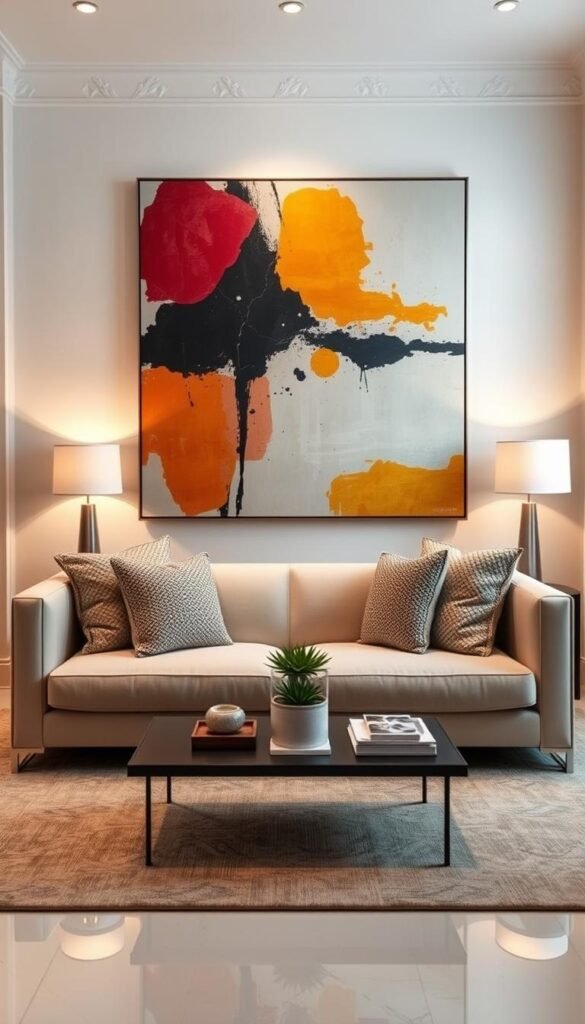
A single oversized artwork can add personality without taking up any of the room’s floor. Give one focal point the lead, then let smaller details support it. A clear visual anchor is easier to read than several unrelated focal points.
A large print or painting can fill a wall above the sofa without adding another piece of furniture. Choose a subject, palette, or style that feels connected to the way you live. Personal photographs, collected objects, or prints can make the room feel individual.
A compact gallery arrangement offers a different kind of character. It can make use of an otherwise overlooked corner and bring together photographs, prints, or small collected pieces. Keep the collection visually connected so it reads as one arrangement, not several competing focal points.
One strong artwork can be easier to understand from across the room than a set of unrelated images. It also gives you a clear point of focus without using valuable floor space. If you prefer a gallery, decide what links the pieces before arranging them.
A small stool can provide extra seating without competing with a focal artwork. Keep it simple in shape and easy to move, so it does not pull attention away from the wall. You can bring it forward when a guest needs a seat and return it afterward.
Leave space around the main piece so its edges remain easy to see. Nearby shelves, lamps, and small frames can crowd the view if they sit too close. Give the focal piece enough clear space that nearby objects do not compete with it.
Add Cozy Texture Without Clutter
A smooth sofa feels more inviting when you add a soft throw and a cushion with a contrasting texture. Let touch guide the layers, not the urge to cover every surface. A few different textures can make a room feel warm without adding clutter.
A wool or flatwoven rug brings texture underfoot, while linen curtains add a light, relaxed weave near the window. Velvet cushions introduce a smoother, richer contrast, and a knit throw offers a softer, more visible texture. Each material can add comfort without needing a large number of accessories.
Combine a smooth surface with a woven or nubby one. For example, pair a plain cushion with a textured throw rather than adding several cushions with similar fabrics. Natural materials beside soft textiles create contrast that you can feel as well as see.
Modern cozy living room designs for small spaces can pair clean-lined furniture with plush cushions and layered materials. The furniture keeps the room visually simple, while the textiles make it comfortable. Choose finishes that invite you to sit, read, or stretch out.
Warm and cozy living room ideas do not depend on a pile of blankets or a crowded collection of pillows. A rug, one throw, and a few tactile cushions may be enough. Let each layer earn its place by adding softness, warmth, or a useful bit of comfort.
Think about how the textiles work through the seasons and daily wear. A throw that stays folded on the sofa can be useful, while extra fabric may only collect dust. Keep the textures that invite you to use the room and edit the ones that only add visual noise.
Keep Clear Paths and Visual Breathing Room
A room often feels cramped because the route through it is blocked, not because every piece is too large. Look at the floor as a path as well as a place for furniture. A typical main walkway target is about 30 to 36 inches, adjusted for the room and household needs.
Blocked walkways, undersized rugs, and too many small pieces can interrupt the flow. Several little tables or chairs may create more obstacles than one well-chosen piece. Check the route people use most before deciding that the whole room needs new furniture.
The 30-to-36-inch range is a typical target, not a fixed rule for every home. Adjust it to the room’s shape and accessibility needs. A household member using a mobility aid may need a wider path, while an unusual doorway may call for a different arrangement.
Furniture with exposed legs keeps more floor visible, which can make a room feel less crowded. Lucite furniture can provide a usable surface with less visual weight because you can see through it. A clear table may suit a tight seating area where a solid base would block the view.
Negative space matters around objects as well as between furniture. A clear patch of wall or floor can keep a compact room from feeling overfilled. If a small piece does not serve a regular purpose, removing it may improve the flow more than shifting larger furniture.
Test the route your household actually uses, including the turns people make around furniture.
Walk the path you use most and move any piece that makes you turn sideways.
Create Separate Zones in an Open-Plan Room
In an open-plan home, a rug can mark the living area without building a wall around it. Use a visual boundary, not a closed one, when visibility matters. Every zone should still connect through a clear path.
A rug can distinguish the seating area from a kitchen, dining space, or studio workspace. A bookcase can separate areas while providing display and storage. A change in lighting can also make the living zone feel distinct without blocking the view.
Furniture orientation helps show what each area is for. Seats facing one another can define a conversation area, while a table and chairs set apart can mark a dining zone. In a studio, a desk facing a wall can give work its own focus without taking over the living area.
A tall divider can make a narrow shared room feel more closed. Choose an open shelf or a rug instead when you want light and sightlines to pass through. The mid-century approach to room layout also emphasizes purposeful zones and clear circulation.
Bookcases work best as partial dividers when they allow the room to remain connected. Use the shelves to define an edge, not to create a solid barrier between daily activities. A low or open design can preserve visibility while still giving each area a sense of place.
Consider what needs to happen between zones, such as carrying a meal from the kitchen or walking from a desk to the sofa. Keep the passage easy to follow rather than forcing people around the edges. Keep one uninterrupted route connecting the room’s everyday zones.
Make Your Small Living Room Feel Like Yours
A small room feels most comfortable when its choices reflect the way you actually use it. Trends can offer ideas, but they do not know your family’s routines, favorite colors, or need for a quiet corner. A useful home is personal before it is picture-perfect.
Choose one change to make first. You might clear a blocked path, test a paint sample, or add a storage piece that handles a daily mess. Give that change time to prove itself before taking on another project.
Small living room ideas work best when they make everyday moments easier and more pleasant. Pick one practical change you can make this week and see how it changes the way you use the room.