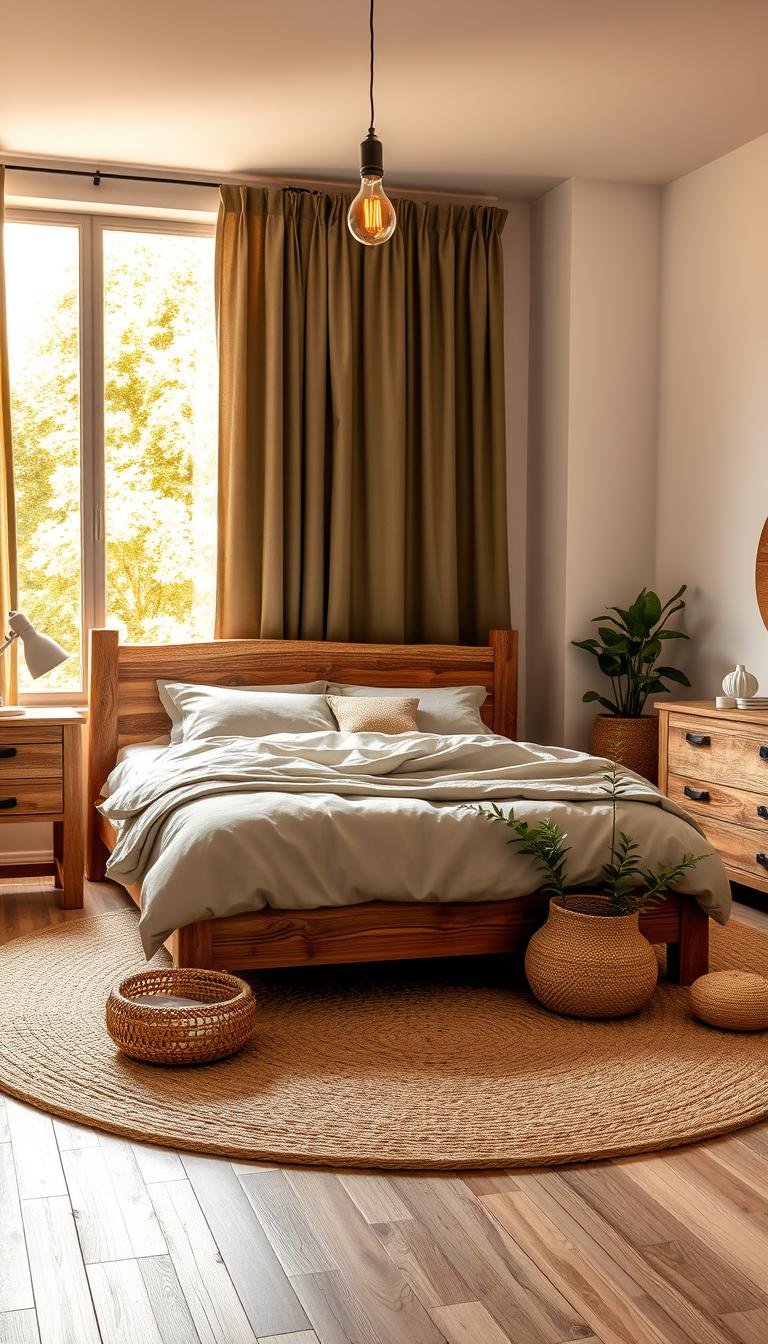
Imagine transforming your personal space into a peaceful sanctuary that feels connected to nature. Earthy decor draws inspiration from the natural world to create warm and inviting environments.
This approach uses earth tones and natural materials to craft a cozy retreat. It’s perfect for rooms where relaxation is key, like your sleeping area.
These design choices offer psychological benefits for better sleep quality. They combine beautiful aesthetics with practical functionality for true comfort.
The best part? You don’t need a complete renovation to achieve this look. Earthy elements work with various aesthetics from modern to rustic.
Our comprehensive guide will show you how to implement this style step by step. You’ll learn about color palettes, materials, furniture, and decor choices.
Get ready to create a space that promotes wellness and connects you with nature’s calming influence.
1. Understanding the Foundation: What Defines an Earthy Bedroom
Creating a personal retreat begins with understanding what makes a space truly restful. This design approach draws from the world outside your windows to craft interiors that feel both comforting and authentic.
At its core, this aesthetic celebrates natural materials like wood, stone, and organic fibers. These elements bring texture and character that manufactured items simply cannot replicate.
The color palette revolves around earthy tones found in landscapes and forests. Think soft greens, warm browns, and gentle neutrals that work together harmoniously.
Unlike minimalist or ultra-modern styles, this approach feels lived-in and welcoming. It prioritizes comfort over perfection and connection over stark simplicity.
“The home should be the treasure chest of living.”
This design philosophy creates multiple sensory experiences. You’ll notice:
- Visual warmth from organic patterns and natural hues
- Tactile comfort from varied textures and materials
- Subtle scents that evoke fresh air and greenery
The emotional benefits are significant. Spaces designed this way promote deep relaxation and mental calmness. They help you feel grounded and connected to the natural world.
Research shows such environments can improve sleep quality by reducing stress. The combination of visual calm and physical comfort creates ideal conditions for rest.
| Design Element | Traditional Style | Earthy Approach |
|---|---|---|
| Materials | Often synthetic or polished | Natural and textured |
| Color Palette | Can be bold or contrasting | Soft, organic, and harmonious |
| Overall Feel | Formal or structured | Relaxed and organic |
| Sensory Experience | Mostly visual | Multi-sensory engagement |
One of the best aspects? This style adapts to any room size or layout. You can incorporate these principles whether you have a spacious master suite or a cozy nook.
The balance between raw elements and modern comfort is key. You get the warmth of natural materials without sacrificing contemporary convenience.
This design direction has remained popular across decades because it speaks to something fundamental in us. It satisfies our innate desire to feel connected to the natural world while enjoying modern comforts.
Current trends continue to embrace this timeless approach, proving that some styles never truly go out of fashion. They simply evolve to meet contemporary needs while staying true to their core principles.
2. Your Earthy Color Palette: Core Hues for a Soothing Space

The foundation of a nature-inspired sanctuary lies in carefully selected organic tones that soothe the senses. Your color palette serves as the visual backbone of your entire design approach.
These natural tones work together to create harmony and balance. They evoke feelings of stability and connection to the outdoors.
Primary Earthy Tones: Browns, Greens, and Beiges
Warm browns form the foundation of many natural schemes. Think rich chocolate, soft taupe, or warm camel shades.
These hues create a grounded, secure feeling in your space. They work beautifully on walls or larger furniture pieces.
Soothing greens bring the calming energy of nature indoors. Olive, sage, and forest green work well in various lighting conditions.
Neutral beiges and creams provide a soft, flexible background. They allow other elements to shine while maintaining warmth.
Psychology shows these earthy tones promote relaxation and reduce stress. Brown evokes stability, green creates balance, and beige offers neutrality.
For paint recommendations, consider Benjamin Moore’s Revere Pewter or Sherwin-Williams Accessible Beige. These work well in different natural light situations.
Accent Colors to Complement Your Scheme
Accent colors add depth and personality to your base palette. They prevent the space from feeling too monotone.
Warm terracotta brings earthy warmth and character. Muted mustard yellow adds cheerful energy without overwhelming.
Sky blue introduces a refreshing contrast to warmer tones. Stone grey provides a sophisticated neutral accent option.
These secondary hues work best in smaller doses through textiles and accessories. Throw pillows, artwork, and decorative objects are perfect vehicles.
Test your chosen tones in your actual lighting conditions before committing. Paint large swatches on different walls and observe them at various times of day.
Create a cohesive story by repeating your accent colors throughout the space. This creates visual rhythm and harmony in your overall aesthetic.
Balance darker and lighter shades for visual interest. Darker tones ground the space while lighter ones keep it airy and open.
Your final look should feel intentionally layered yet effortlessly natural. The right combination creates a space that truly feels like your personal sanctuary.
3. The Best Bedroom Color Schemes Inspired by Earthy Style
Discover beautiful combinations that bring nature’s harmony into your personal space. These curated palettes create restful environments perfect for relaxation.
Each scheme offers unique character while maintaining natural warmth. You can mix and match these hues for a balanced look.
Forest green paired with walnut brown creates a deep, nature-inspired aesthetic. This combination feels rich and grounded.
Use these darker tones in larger rooms with plenty of natural light. They work beautifully on accent walls or through bedding.
Sage green and cream offer a lighter, airier alternative. This pairing feels fresh and tranquil.
It’s perfect for smaller spaces or rooms with limited sunlight. The cream base keeps everything bright and welcoming.
Terracotta and beige create warm, desert-inspired aesthetics. This combination brings cozy energy to your sanctuary.
These tones work particularly well in north-facing rooms. They add warmth where natural light might feel cool.
Slate blue and grey provide a cooler yet still organic alternative. This scheme feels serene and sophisticated.
It pairs beautifully with natural wood tones and textured linens. The result is calming and visually interesting.
Monochromatic brown schemes use varying shades of tan and chocolate. This approach creates depth through tonal variation.
It’s an excellent choice for creating a cohesive, streamlined look. Different textures prevent the space from feeling flat.
Here’s how to incorporate these palettes throughout your space:
- Paint walls in your dominant hue for overall atmosphere
- Choose bedding in complementary or contrasting shades
- Add accessories in accent colors for visual interest
- Incorporate natural materials that enhance your chosen scheme
Real homes show these combinations working beautifully together. A terracotta accent wall with beige bedding creates instant warmth.
Forest green curtains against walnut furniture feels both elegant and organic. These elements work in harmony.
Adjust your approach based on room size and lighting conditions. Darker schemes work best in spacious, well-lit areas.
Lighter palettes help smaller rooms feel more open and airy. Consider your existing light sources when choosing tones.
Seasonal transitions become effortless with the right foundation. Add lighter textiles in summer and warmer layers in winter.
Your base palette remains constant while accessories change. This maintains cohesion throughout the year.
| Color Scheme | Best For Room Types | Lighting Considerations | Seasonal Adaptability |
|---|---|---|---|
| Forest Green & Walnut Brown | Spacious master suites | Needs ample natural light | Perfect for fall/winter |
| Sage Green & Cream | Small rooms, guest spaces | Works in low light | Great year-round |
| Terracotta & Beige | North-facing rooms | Adds warmth to cool light | Ideal for cooler months |
| Slate Blue & Grey | Modern spaces | Balances warm artificial light | Excellent for spring/summer |
| Monochromatic Browns | Any room size | Versatile in various light | Easy to adapt seasonally |
Remember to test your chosen colors in your actual space. Observe them at different times of day before making final decisions.
The right combination creates a sanctuary that feels both personal and peaceful. Your space becomes a true reflection of natural beauty.
4. Incorporating Natural Materials for Authentic Warmth
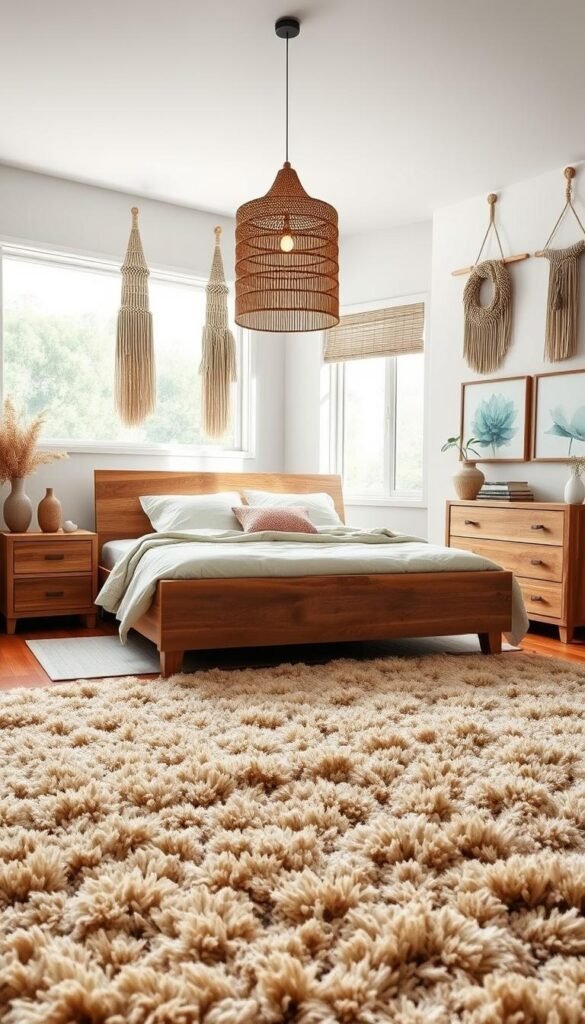
Authentic materials create spaces that feel genuinely connected to the outdoors. These elements bring unique character and organic beauty into your home.
Items made from natural sources offer visual and tactile richness. They transform ordinary rooms into special retreats.
Choosing the right materials makes your design feel cohesive and intentional. Each selection contributes to the overall atmosphere.
Essential Materials: Wood, Linen, and Rattan
Wood brings immediate warmth through its grain patterns and tones. Use it for bed frames, nightstands, and decorative accents.
Solid pieces create lasting value and timeless appeal. They age beautifully, developing character over years.
Linen offers breathable comfort for bedding and window treatments. Its natural texture adds visual interest while promoting air circulation.
This fabric works well in various climates and seasons. It feels cool in summer and cozy in winter.
Rattan and wicker introduce organic shapes and woven patterns. Use them for lighting fixtures, chairs, and storage solutions.
These materials add lightness and movement to your space. They create beautiful shadow patterns when light filters through.
Textural Touches: Wool, Jute, and Stone
Wool provides exceptional warmth and softness for throws and area rugs. Its natural properties regulate temperature and resist moisture.
Choose wool blankets for chilly evenings and cozy mornings. They offer comfort that synthetic fibers cannot match.
Jute and sisal bring earthy texture underfoot through durable rugs. Their natural tones blend seamlessly with various color schemes.
These fibers work beautifully in high-traffic areas. They maintain their appearance while adding organic charm.
Stone elements introduce cool, solid presence through accessories and occasional tables. Marble, slate, or river rock pieces add natural variation.
These materials create beautiful contrast against softer textiles. They ground the space with their substantial feel.
“The details are not the details. They make the design.”
Mixing different materials creates layered interest throughout your space. Combine smooth wood with nubby textiles for balanced contrast.
Vary scales and patterns for visual depth. Large woven elements pair beautifully with fine-grained wood surfaces.
| Material | Best Uses | Care Requirements | Sustainability Notes |
|---|---|---|---|
| Solid Wood | Furniture frames, shelving | Dust regularly, occasional oiling | Look for FSC-certified sources |
| Linen | Bedding, curtains, upholstery | Machine wash cool, line dry | Biodegradable, low water usage |
| Rattan | Lighting, accent chairs, baskets | Dust with soft brush, avoid moisture | Rapidly renewable resource |
| Wool | Throws, rugs, blankets | Professional cleaning recommended | Renewable, biodegradable fiber |
| Jute/Sisal | Area rugs, storage baskets | Spot clean only, avoid wetting | Compostable, sustainable crop |
| Stone | Accent tables, decorative objects | Wipe with damp cloth, seal periodically | Natural, long-lasting material |
Caring for these materials ensures their longevity and beauty. Follow manufacturer guidelines for cleaning and maintenance.
Regular dusting and proper cleaning preserve their natural qualities. Address spills promptly to prevent staining.
Sustainable sourcing options include reclaimed wood and organic fibers. These choices reduce environmental impact while adding history.
Look for certifications like GOTS for textiles and FSC for wood products. They verify ethical production practices.
Your selections create a space that feels both beautiful and responsible. They connect you to nature through thoughtful design choices.
5. Choosing Furniture That Grounds Your Design
Your furniture selections anchor the entire room’s atmosphere. They provide both function and foundational style that supports your natural aesthetic.
Well-chosen pieces create harmony between different elements. They bring cohesion to your personal sanctuary.
Focus on items that feel substantial yet welcoming. Your choices should invite relaxation and comfort.
Wood Bed Frames and Nightstands
A solid bed frame sets the tone for your entire space. Choose one made from natural wood for authentic warmth.
Reclaimed options offer character and sustainability. Live-edge designs bring organic beauty into your room.
Your nightstand should complement your sleeping area. Consider a wood table with simple, clean lines.
Rattan options add texture and visual interest. Stone-topped pieces introduce natural variation.
Mix wood tones for a collected, authentic look. Different species create depth and personality.
Woven and Organic-Shaped Accent Pieces
Woven accents add texture and movement to your space. They bring handcrafted charm to your design.
Choose chairs with rounded corners and soft curves. These shapes feel more inviting than sharp angles.
Consider multifunctional furniture for practical elegance. A storage bench or woven baskets serve dual purposes.
Scale matters in creating balanced proportions. Ensure your pieces fit comfortably without crowding.
Arrange items to promote easy movement and flow. Your space should feel open and relaxing.
“Good design is finding that balance between the expected and the unexpected.”
Sustainable choices include reclaimed wood and responsibly sourced materials. These options reduce environmental impact.
Your final arrangement should feel both intentional and effortless. It creates a sanctuary that truly reflects your connection to nature.
6. Transforming Your Walls with Earthy Character
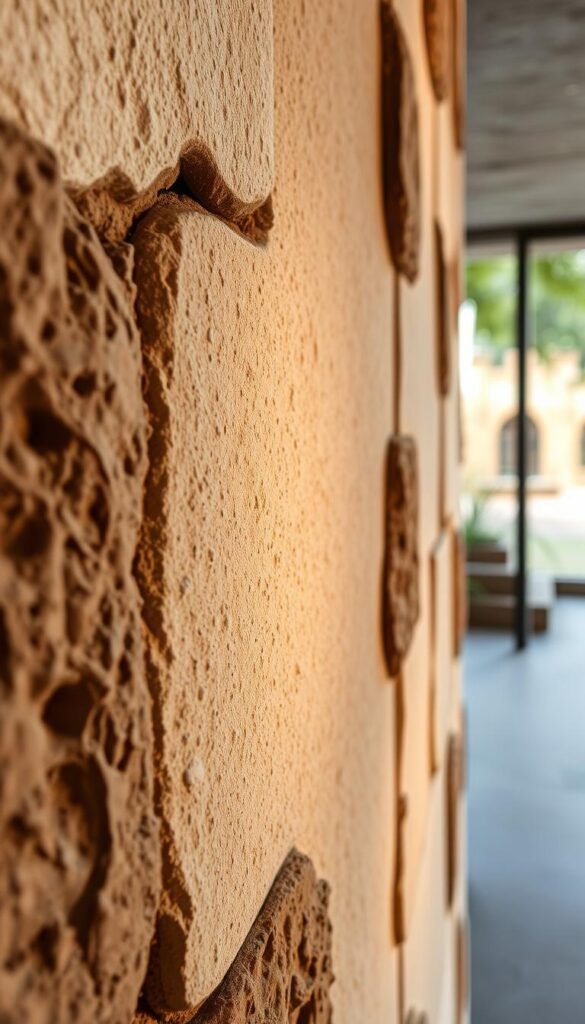
Your vertical surfaces offer the perfect canvas for creating natural ambiance. These treatments set the foundation for your entire design scheme.
Thoughtful wall choices establish mood and personality throughout your space. They create the backdrop against which all other elements shine.
These design decisions impact how your room feels and functions. They can make spaces feel larger, cozier, or more connected to nature.
Paint Colors: From Sage Green to Warm Terracotta
Selecting the right paint color creates immediate atmosphere. Earth-inspired hues bring outdoor tranquility inside.
Soft sage green evokes peaceful forest settings. Warm terracotta recalls sun-baked clay and desert landscapes.
Muted ochre suggests golden hour sunlight. These organic tones work beautifully alone or in combination.
Your chosen wall color significantly influences room perception. Lighter shades make spaces feel airy and expansive.
Deeper tones create intimacy and coziness. Consider your room’s natural light when selecting intensity.
Limewashing creates beautiful, textured finishes with subtle variation. This technique gives walls soft, mottled character.
It works particularly well with natural plaster surfaces. The result feels ancient yet completely contemporary.
Botanical Wallpaper and Wood Slat Accent Walls
Botanical prints bring organic beauty to your vertical surfaces. They create instant connection to the natural world.
Choose patterns that complement rather than overwhelm your space. Large-scale designs make bold statements.
Smaller repeats create subtle background interest. Consider the scale of your room when selecting pattern size.
Wood slat accent walls introduce warmth and texture. They create beautiful shadow play throughout the day.
Installation involves measuring, cutting, and securing boards to studs. This project adds significant character with moderate effort.
Grasscloth wallpaper offers another textural option. Its woven surface catches light beautifully.
Focal walls create visual interest without overwhelming. They provide a strong design statement while maintaining balance.
Test your choices with large samples in actual lighting. Observe them at different times before final decisions.
Coordinate your wall treatments with furnishings and textiles. They should complement rather than compete with other elements.
Your final look should feel cohesive and intentionally designed. The right combination creates a space that truly reflects your connection to nature.
7. Bedding and Textiles for Ultimate Coziness
Your sleep sanctuary reaches its peak comfort through thoughtful textile selections. These elements create the tactile experience that defines your personal retreat.
Natural fibers and organic materials transform ordinary sleep into restorative rest. They work together to create an environment that feels both luxurious and grounded.
Selecting Sheets: Organic Cotton, Linen, and Bamboo
Begin with sheets that feel wonderful against your skin. Organic cotton offers softness and breathability for year-round comfort.
This material becomes softer with each washing. It maintains its quality while providing excellent moisture absorption.
Linen brings exceptional temperature regulation and natural texture. Its slightly coarse feel softens beautifully over time.
Bamboo viscose provides silky smoothness with eco-friendly benefits. It’s naturally hypoallergenic and resistant to dust mites.
Each material offers unique advantages for different sleep preferences. Consider your climate and personal comfort needs when choosing.
Layering with Quilts, Throws, and Decorative Pillows
Build your bedding layers starting with a quality duvet or comforter. Choose natural fills like wool or down alternatives for temperature regulation.
Add a quilt or coverlet for visual interest and extra warmth. Woven textures create depth while maintaining breathability.
Throw blankets offer both style and function for chilly evenings. Drape a chunky knit or faux fur piece across the foot of your bed.
Pillows provide the finishing touches to your layered look. Mix sizes and texture for visual appeal and comfort.
Arrange two standard shams against the headboard with euro squares in front. Add smaller accent pieces to complete the arrangement.
Seasonal adjustments keep your space comfortable year-round. Lightweight cotton works well for summer months.
Switch to flannel or heavier linens when temperatures drop. Layering allows easy adaptation to changing weather conditions.
Mix patterns and solids for visual interest without overwhelming. Stripes, subtle prints, and textured weaves work well together.
Stick to your earthy color palette for cohesion. Vary scale and pattern density for balanced composition.
Caring for natural fibers ensures their longevity and beauty. Follow care instructions carefully to maintain quality.
Most natural bedding benefits from gentle washing and line drying. Avoid harsh chemicals that can damage fibers.
Eco-friendly options include GOTS-certified organic cotton and responsibly sourced bamboo. These choices support sustainable practices while offering superior comfort.
Brands like Coyuchi and Boll & Branch specialize in ethical bedding production. Their products combine quality craftsmanship with environmental responsibility.
Your final bedding arrangement should invite relaxation and rest. The right combination creates a space that feels both beautiful and deeply comfortable.
For more inspiration on creating your perfect sleep environment, explore these earthy bedroom ideas that incorporate natural textiles and cozy layers.
8. Lighting to Create a Warm and Inviting Glow
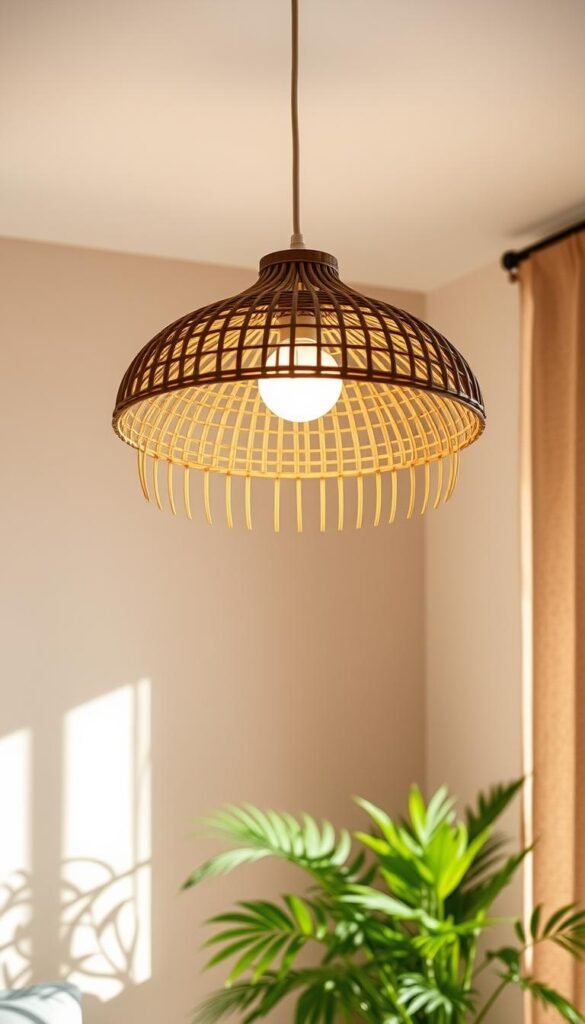
The right illumination transforms your room into a welcoming haven. Proper lighting enhances both mood and functionality throughout your personal retreat.
Warm, layered illumination creates depth and dimension in your environment. It highlights textures and colors while providing practical benefits.
Natural materials in fixtures add organic charm to your design scheme. They complement other elements while serving essential purposes.
Rattan Pendants and Fabric-Shaded Lamps
Woven pendant lights make beautiful statement pieces overhead. Their intricate patterns cast interesting shadows when illuminated.
Choose rattan fixtures for their natural texture and visual appeal. These elements bring handcrafted character to your ceiling space.
Fabric-shaded lamps provide soft, diffused illumination beside your bed. They create gentle pools of light perfect for evening reading.
Select shades in neutral tones that complement your overall palette. Linen or cotton materials work particularly well.
Layered Lighting for Ambiance and Function
Effective illumination combines three distinct types working together. Ambient lighting provides overall brightness throughout the room.
Task lighting focuses on specific activities like reading or dressing. Accent lighting highlights architectural features or artwork.
This layered approach allows you to adjust atmosphere as needed. You can create different moods throughout the day.
Consider these natural material options for your fixtures:
- Wood bases with simple, organic shapes
- Ceramic pieces with earthy glazes and textures
- Woven elements that filter light beautifully
Bulb temperature significantly affects how your room feels. Warm white bulbs (2700K-3000K) create cozy, inviting atmospheres.
Dimmer switches offer excellent control over intensity levels. They let you adjust brightness for different times and activities.
Maximize natural daylight with appropriate window treatments. Sheer curtains soften harsh sunlight while maintaining brightness.
Accent lighting draws attention to special features in your space. Use directional spots to highlight artwork or textured walls.
Proper illumination changes how you perceive colors and materials. Warm light enhances earthy tones and natural textures.
Your final lighting scheme should feel both practical and magical. It creates a space that welcomes you day and night.
9. The Essential Role of Plants and Greenery
Living elements bring vitality and authenticity to your nature-inspired retreat. They bridge the gap between indoor comfort and outdoor beauty.
Greenery adds movement, life, and organic texture throughout your space. It creates visual interest while improving air quality and mood.
These natural accents complete your design with fresh energy. They make your room feel alive and connected to the outdoors.
Choosing Low-Maintenance Potted Plants
Select varieties that thrive in indoor conditions with minimal care. Snake plants tolerate low light and irregular watering.
Their upright growth adds architectural interest to corners or shelves. They purify air by removing toxins while you sleep.
Pothos vines offer trailing beauty for high surfaces or hanging planters. They grow quickly in various light conditions.
ZZ plants handle neglect and low light beautifully. Their glossy leaves reflect light and add shine.
Consider your room’s light exposure before selecting greenery. North-facing windows suit low-light varieties.
South-facing spaces can handle brighter light plants. Rotate pots regularly for even growth.
Incorporating Dried Florals and Hanging Vines
Dried arrangements provide year-round beauty without maintenance. They add texture and earthy tones to your decor.
Pampas grass brings softness and height to empty corners. Wheat stalks add golden warmth to tabletops.
Hanging planters maximize vertical space with trailing vines. Macrame holders add bohemian charm to your look.
Mix real and high-quality faux plants for practical beauty. Silk varieties look authentic without any care needs.
Group plants in odd numbers for visual appeal. Vary heights and textures for dynamic displays.
“Plants give us oxygen for the body and soul.”
Proper placement ensures both health and visual impact. Larger floor plants anchor corners and define spaces.
Smaller tabletop varieties add life to surfaces without crowding. Hanging elements draw eyes upward for dimension.
Water when soil feels dry to the touch. Use pots with drainage holes to prevent root rot.
Wipe leaves occasionally to maintain their natural shine. This keeps them looking fresh and vibrant.
| Plant Type | Light Needs | Water Frequency | Air Purifying Benefits |
|---|---|---|---|
| Snake Plant | Low to bright indirect | Every 2-6 weeks | Removes formaldehyde |
| Pothos | Low to medium indirect | Every 1-2 weeks | Filters benzene |
| ZZ Plant | Low to bright indirect | Every 2-3 weeks | Removes xylene |
| Spider Plant | Medium to bright indirect | Weekly | Combats carbon monoxide |
Fresh cut flowers provide temporary bursts of color and scent. Change them weekly to maintain their vibrant appeal.
Your green touches should feel intentional yet effortless. They create a space that truly breathes with life.
10. Adding Depth and Interest with Textures
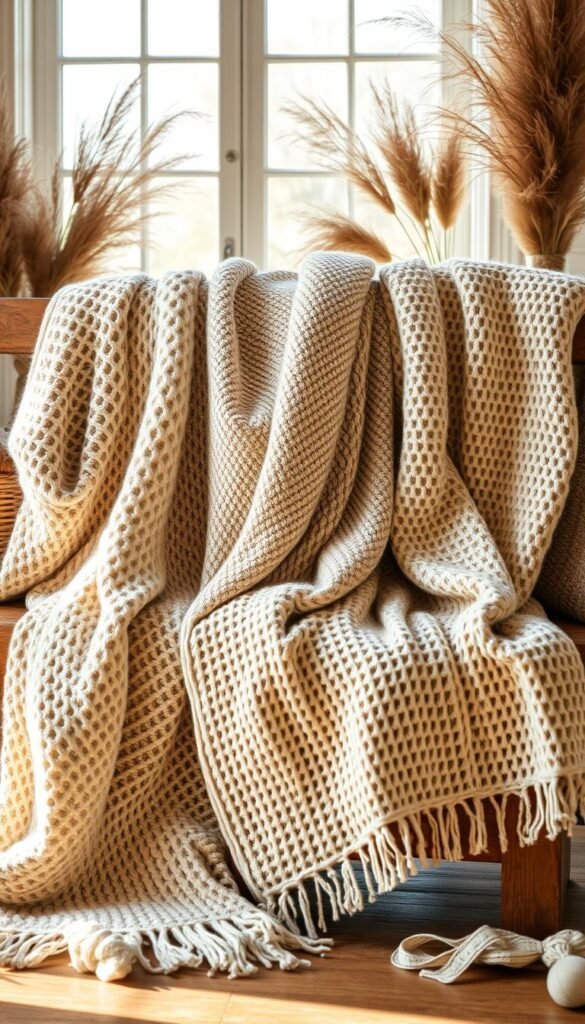
Texture creates the soul of your space through touch and visual richness. These elements transform flat surfaces into multidimensional experiences that engage your senses.
Natural materials work together to build an environment that feels both curated and organic. The right combination makes your retreat truly special.
Faux Fur Throws and Chunky Knit Blankets
Faux fur throw blankets add instant luxury and comfort to any seating area. They provide softness that invites you to relax and unwind.
These pieces create visual interest through their plush appearance and varied pile heights. They work beautifully draped over chairs or folded at the foot of your bed.
Chunky knit blankets offer substantial texture and cozy warmth. Their handcrafted appearance adds artisanal charm to your space.
These blankets provide wonderful tactile experiences during cooler evenings. Their weight feels comforting and secure.
Both options introduce different scales of texture to your overall design. They create contrast against smoother surfaces like wood or linen.
Woven Rugs and Natural Fiber Baskets
Natural fiber rugs anchor your space with earthy character underfoot. Wool options provide exceptional softness and durability.
Jute and sisal choices offer more textured surfaces with organic appeal. They handle foot traffic well while maintaining their natural beauty.
Woven baskets serve both functional and decorative purposes beautifully. They add texture while organizing smaller items throughout your space.
These storage solutions bring handcrafted authenticity to shelves and corners. Their woven patterns create visual interest even when empty.
Layering different texture creates depth throughout your environment. Combine smooth surfaces with nubby fabrics for balanced contrast.
Rough-hewn wood introduces organic variation through its grain patterns. Natural stone elements provide cool, solid counterpoints to softer textiles.
The sensory experience becomes richer with varied surfaces to touch and see. Your space gains character through these thoughtful additions.
Balance is key when working with multiple texture. Ensure no single element overwhelms the others in your composition.
The overall cozy factor increases significantly with well-chosen textural elements. Your retreat becomes more inviting through these tactile details.
11. Artistic Touches: Botanical Prints and Nature Artwork
Artistic elements transform blank spaces into visual stories of the outdoors. These final touches complete your nature-inspired design with personality and depth.
Your chosen artwork should reflect your connection to the natural world. It creates focal points that draw the eye and spark conversation.
Botanical prints bring scientific beauty and organic elegance to your walls. Vintage illustrations offer historical charm with detailed plant studies.
Modern interpretations provide contemporary twists on classic themes. Both styles work beautifully in nature-focused spaces.
Nature photography captures realistic scenes from forests, deserts, and coastlines. These images create windows to outdoor environments you love.
Choose photographs that complement your color scheme and overall aesthetic. Black and white options work well with neutral palettes.
Consider these framing options for your nature artwork:
- Natural wood frames in oak, walnut, or bamboo
- Rustic metal finishes with weathered patinas
- Simple gallery frames that let the art shine
- Floating frames for modern botanical prints
Gallery walls create dynamic displays with multiple pieces. Mix different sizes and orientations for visual interest.
Start with a larger central piece and build outward. Use consistent spacing between frames for cohesive look.
DIY options add personal meaning to your decor. Pressed flower arrangements make beautiful natural art pieces.
Create shadow boxes with collected leaves or feathers. These projects bring hands-on creativity to your space.
Scale matters when placing artwork in your room. Larger pieces work well above furniture or on empty walls.
Smaller artworks create intimate moments on shelves or nightstands. Group them in clusters for greater impact.
Mix different art types for layered visual interest. Combine botanical illustrations with landscape photography.
Add textural elements like woven wall hangings or wood carvings. This variety keeps your wall displays engaging.
“Art is not what you see, but what you make others see.”
Select pieces that personally resonate with your experiences and memories. Choose art that reflects landscapes you’ve visited or plants you love.
Your final art selection should feel both intentional and meaningful. It completes your space with visual stories that connect you to nature’s beauty.
Rotate pieces seasonally to keep your decor fresh and responsive. Spring blossoms in April, autumn leaves in October.
This approach maintains visual interest throughout the year. Your space evolves naturally with the changing seasons outside.
12. Earthy Window Treatments for Softened Light
Your window coverings do more than just provide privacy. They control natural illumination while adding character to your personal retreat.
These elements filter sunlight beautifully throughout the day. They create soft, diffused lighting that enhances relaxation.
Natural window treatments complete your nature-inspired aesthetic. They bridge indoor comfort with outdoor beauty seamlessly.
Linen Curtains for a Soft, Cozy Feel
Linen fabric offers exceptional light control and organic texture. This material filters sunlight while maintaining privacy.
Its natural weave creates beautiful shadow patterns when light passes through. You get soft illumination without harsh glare.
These curtains add movement and elegance to your windows. They drape beautifully and feel substantial yet airy.
Choose neutral tones that complement your wall colors. Off-white, oatmeal, or soft grey work particularly well.
Linen’s breathable nature helps regulate room temperature. It keeps your space comfortable during warmer months.
Natural Wood Blinds and Cafe Shutters
Wood blinds provide clean lines and organic warmth. Their slats offer precise light control throughout the day.
Bamboo options bring sustainable beauty to your windows. They filter light while adding textural interest.
Cafe shutters cover the lower portion of your windows. They maintain privacy while allowing upper light entry.
This style creates charming, rustic character in any room. It works beautifully with various architectural styles.
Both options let you adjust lighting based on your needs. You can create different atmospheres throughout the day.
Consider these factors when selecting window treatments:
- Room orientation and natural light availability
- Privacy requirements for your specific location
- Overall aesthetic and color scheme harmony
- Maintenance needs and cleaning requirements
- Budget considerations and installation complexity
Layered approaches offer maximum flexibility for light control. Combine sheer curtains with wood blinds for versatile options.
This lets you filter light while maintaining outside views. You can adjust each layer independently as needed.
“Light is the first of painters. There is no object so foul that intense light will not make it beautiful.”
Proper measurement ensures your treatments fit perfectly. Measure width at top, middle, and bottom of each window.
Record the smallest measurement for curtain width. For length, measure from rod to where you want fabric to end.
Installation hardware should complement your natural aesthetic. Choose wood rods or iron brackets for organic appeal.
These details complete your window treatment beautifully. They add finishing touches that enhance overall cohesion.
Energy efficiency benefits make these choices practical too. Proper window coverings reduce heat loss in winter.
They also block summer heat from entering your space. This helps maintain comfortable temperatures year-round.
| Treatment Type | Light Control | Privacy Level | Maintenance | Energy Efficiency |
|---|---|---|---|---|
| Linen Curtains | Medium filtration | Good when closed | Machine washable | Good insulation |
| Wood Blinds | Adjustable slats | Excellent control | Dust regularly | Very efficient |
| Cafe Shutters | Partial coverage | Lower section only | Wipe with damp cloth | Moderate efficiency |
| Layered Approach | Complete control | Maximum privacy | Multiple components | Excellent efficiency |
Your final window treatment should feel intentional and cohesive. It completes your space while serving practical needs.
The right combination creates beautiful light patterns throughout the day. It makes your room feel connected to nature’s rhythms.
13. Engaging the Senses: Sound and Scent
Complete your nature-inspired retreat by appealing to all your senses for deeper relaxation. A truly immersive environment goes beyond visual beauty to create holistic comfort.
Multiple sensory experiences transform ordinary rooms into extraordinary sanctuaries. They engage your mind and body for complete unwinding.
Using Essential Oils for a Calming Atmosphere
Essential oil diffusers create gentle aromatic environments throughout your space. These devices disperse natural plant essences into the air.
Different scents offer unique benefits for mood and wellness. Lavender promotes calmness and prepares your mind for rest.
Eucalyptus provides mental clarity and respiratory benefits. Sandalwood offers grounding warmth with its rich, woody aroma.
Choose high-quality, pure essential oils for best results. Look for therapeutic-grade options from reputable brands.
Natural candles with essential oil blends create flickering ambiance. Soy or beeswax options burn cleaner than paraffin.
Fresh flowers bring living beauty and subtle natural fragrance. Change them weekly to maintain their vibrant appeal.
Sound elements complete your multi-sensory experience beautifully. White noise machines with nature sounds mask disruptive noises.
Gentle rain or ocean wave recordings create peaceful background ambiance. These sounds mimic natural environments we find soothing.
Tactile experiences through textiles enhance your physical comfort. Soft blankets and textured pillows invite comforting touch.
Natural materials like wool and linen feel wonderful against skin. They create sensory connections throughout your environment.
“The senses are our gateway to experiencing the world around us.”
Safety matters when using scented elements in sleeping areas. Keep candles away from bedding and never leave them unattended.
Place diffusers on stable surfaces away from electronics. Follow manufacturer instructions for proper usage and cleaning.
Research shows scent and sound significantly impact sleep quality. Familiar, pleasant aromas can reduce sleep latency.
Soothing sounds help mask environmental noises that disrupt rest. They create consistent auditory backgrounds for uninterrupted sleep.
| Scent Type | Primary Benefits | Best Time for Use | Safety Considerations |
|---|---|---|---|
| Lavender | Calming, sleep promotion | Evening hours | Dilute properly for skin contact |
| Eucalyptus | Mental clarity, respiratory | Morning or daytime | Keep away from pets |
| Sandalwood | Grounding, warmth | Anytime | Use moderately due to intensity |
| Citrus Blends | Energizing, uplifting | Daytime hours | Photosensitive – avoid sun exposure |
Your multi-sensory approach creates a deeply personal sanctuary. It engages all aspects of your being for true restoration.
Experiment with different combinations to find what works best for you. Everyone responds uniquely to various scents and sounds.
The right balance makes your bedroom feel like a customized wellness retreat. It becomes a space that truly supports your relaxation needs.
14. Sustainable and Eco-Friendly Design Choices
Making conscious decisions about your room’s components creates a healthier environment while honoring nature. Sustainable approaches align perfectly with creating spaces that feel both beautiful and responsible.
These choices reduce environmental impact while enhancing your personal well-being. They create rooms that truly reflect your values and connection to the natural world.
Choosing Reclaimed Wood and Organic Fibers
Reclaimed wood brings history and character to your furniture pieces. Each piece tells a story through its unique grain patterns and imperfections.
This approach reduces demand for new timber harvesting. It gives beautiful materials a second life in your personal space.
Organic fibers like cotton, linen, and bamboo offer superior comfort and sustainability. These materials grow without harmful pesticides and chemicals.
They feel wonderful against your skin and promote better sleep. Their production supports healthier farming practices worldwide.
Look for certifications like GOTS (Global Organic Textile Standard) when shopping. These ensure fibers meet strict environmental and social criteria.
Healthier Finishes and Sustainable Mattresses
Low-VOC paints and finishes significantly improve indoor air quality. They release fewer harmful chemicals into your living environment.
These products help create healthier spaces for relaxation and rest. Many brands now offer beautiful colors in eco-friendly formulations.
Natural latex mattresses provide comfort without synthetic materials. They offer excellent support while being biodegradable and hypoallergenic.
Organic wool mattresses regulate temperature naturally. They resist dust mites and mold without chemical treatments.
“We do not inherit the earth from our ancestors; we borrow it from our children.”
Identifying truly sustainable products requires some careful consideration. Look beyond marketing claims to examine manufacturing processes.
Check for third-party certifications and transparent supply chains. Research company values and environmental commitments.
| Material Type | Environmental Benefits | Health Advantages | Certifications to Look For |
|---|---|---|---|
| Reclaimed Wood | Reduces deforestation, lowers carbon footprint | No off-gassing from new treatments | FSC Recycled, Salvaged Wood Institute |
| Organic Cotton | Reduces pesticide use, conserves water | Hypoallergenic, chemical-free | GOTS, OCS-100 |
| Natural Latex | Biodegradable, sustainable harvesting | Resists dust mites, mold-resistant | GOLS, Eco-Institut |
| Low-VOC Paint | Reduces air pollution, safer manufacturing | Better indoor air quality | Green Seal, GREENGUARD |
Creative Repurposing and DIY Solutions
Repurposing existing furniture reduces waste and adds personal meaning. A fresh coat of non-toxic paint can transform tired pieces.
New hardware or updated upholstery gives old items new life. These projects often cost less than buying new furniture.
DIY options using natural and recycled materials add unique character. Create wall art from fallen branches or pressed leaves.
Make storage solutions from reclaimed crates or baskets. These personal touches make your space truly one-of-a-kind.
Investing in quality, sustainable pieces offers long-term benefits. Well-made items last longer and maintain their beauty over time.
They often become cherished possessions rather than disposable goods. This approach aligns with creating spaces that feel meaningful and authentic.
Your sustainable choices create a room that feels good in every sense. It becomes a sanctuary that honors both personal wellness and planetary health.
15. Personalizing Your Earthy Sanctuary
Your retreat becomes truly special when it reflects your unique connection to the outdoors. Personal touches transform standard designs into spaces that feel authentically yours.
These elements tell your story through collected treasures and meaningful moments. They create environments that resonate with your personal journey.
Displaying Found Natural Treasures and Mementos
Collections from outdoor adventures add wonderful character to your space. Seashells from beach trips bring coastal memories indoors.
Smooth stones from river walks offer tactile connections to favorite places. Display them in clear glass jars or shallow bowls.
Driftwood pieces create organic sculpture on shelves or tables. Their unique shapes become natural art without any alteration.
Pressed flowers preserve seasonal beauty throughout the year. Arrange them in simple frames for delicate wall art.
Create a dedicated reading nook with inspiring natural elements. A comfortable chair near a window makes the perfect spot.
Add a small side table for books and a warm drink. Soft lighting creates cozy atmosphere for evening relaxation.
Incorporate personal mementos that complement your earthy aesthetic. Vacation photographs with landscape themes work beautifully.
Handmade ceramics from local artists add artisanal charm. These pieces support craftsmanship while adding personality.
Blend your personal style with natural aesthetics seamlessly. Favorite hobbies can inspire decorative elements throughout your bedroom.
Gardening tools become beautiful displays when arranged artistically. Hiking equipment tells stories of outdoor adventures.
DIY projects using natural materials add unique character. Create wall hangings from collected branches and fibers.
Make simple wreaths from dried grasses and flowers. These projects bring hands-on creativity into your decor.
“The home should be an anchor, a port in a storm, a refuge, a happy place in which to dwell, a place where we are loved and where we can love.”
Editing personal items maintains calm atmosphere throughout your sanctuary. Choose pieces that spark joy and meaningful connection.
Rotate collections seasonally to keep your space feeling fresh. Spring blossoms replace autumn leaves as months change.
This approach prevents visual clutter while maintaining personal touch. Your room stays organized yet full of character.
Meaningful objects create deeper connections to your personal retreat. They transform generic spaces into truly customized sanctuaries.
Your final arrangement should feel both intentional and effortlessly personal. It becomes a space that truly reflects your unique connection to nature.
16. Bringing It All Together for Your Perfect Earthy Retreat
You’ve now gathered all the pieces to craft a personal sanctuary that truly reflects your connection to the outdoors. This approach creates a space where you can unwind completely and find peace.
Remember the core elements: natural materials, organic textures, and soothing tones. These work together to create harmony and comfort in your personal retreat.
Trust your instincts when arranging your final look. Your personal touches make the design uniquely yours and deeply meaningful.
For more inspiration on nature-inspired palettes, explore these earth-toned color combinations that blend beautifully with natural elements.
Your finished room will become a haven for true relaxation. It will feel both grounding and refreshing, connecting you to nature‘s calming rhythm every day.