A well-planned entertainment area can make your living room feel more organized and personal, even when the screen is the largest object on the wall. The right choice gives your living space a practical role and a look that feels at home with the rest of your interior. A fluted finish is a surface with repeated narrow grooves, often running vertically.
These 25 ideas offer practical ways to make your entertainment area feel intentional without giving up everyday function. Your best fit depends on your room layout, storage needs, and the style you want to live with.
Some designs make a strong visual statement; others keep the furniture quiet and let the room’s existing character shine. Keep your room’s footprint, storage needs, and preferred style in mind as you compare the ideas.
Living Room TV Unit Designs With Modern Character
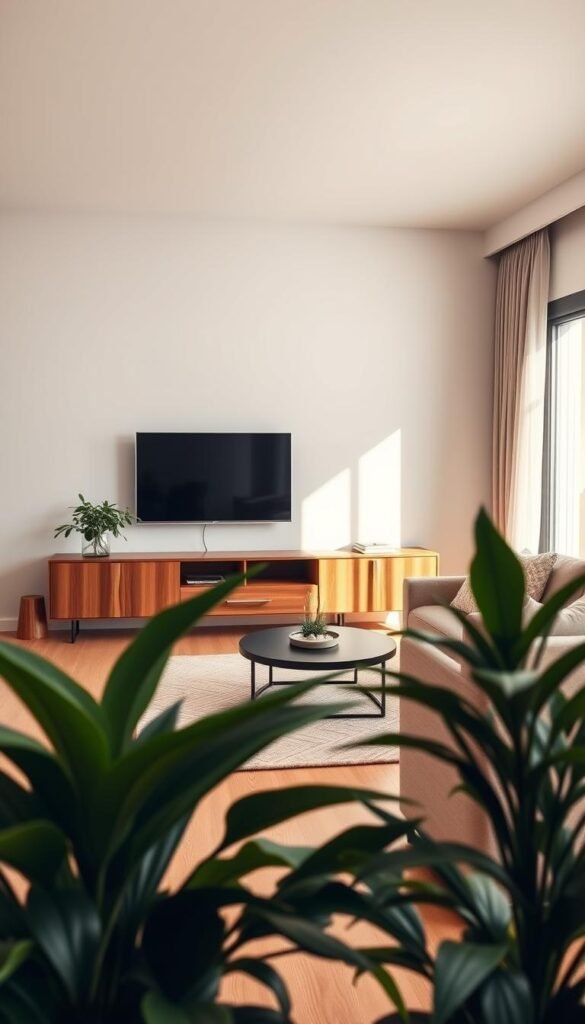
A contemporary setup can feel current through its shape and surface, not just through a larger or more elaborate cabinet. Modern living room TV unit designs often use texture and form to add interest while keeping the surrounding room calm.
Choose one distinctive feature, then keep the remaining lines and finishes simple. In 2026, popular unit designs include fluted fronts, rounded silhouettes, woven textures, floating forms, and warm wood.
- A fluted warm-wood console adds vertical texture and a welcoming tone. Its repeated grooves make a simple cabinet front feel more considered.
- An arched or curved silhouette softens the straight lines of a screen and nearby furniture. Let the curve stand out rather than adding competing shapes.
- A rattan or woven-texture front brings a tactile detail to a plain cabinet. The open-looking pattern can make a solid unit feel less heavy.
- A floating console keeps the area beneath it visible and frees floor space. Use its drawers or shelves for remotes and devices.
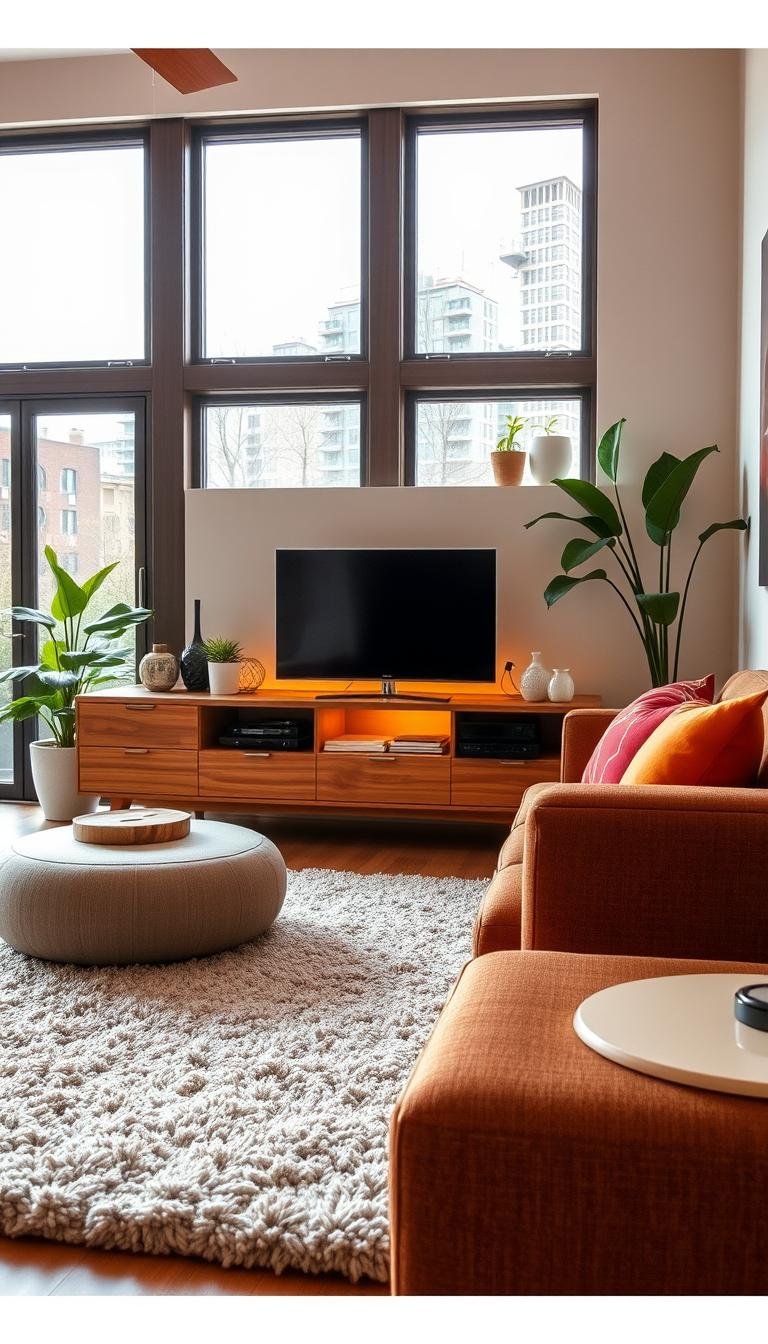
- A restrained mix of warm wood and a clean-lined cabinet pairs natural character with a neat outline. Keep hardware and extra trim understated.
Pick one standout texture or silhouette and let the rest of the room stay visually calm.
That restraint helps a modern unit look intentional instead of busy. Warm wood can carry the visual interest, while plain walls and simple hardware give your eye a place to rest.
For more ways to balance a current look with everyday use, explore these modern and functional TV unit styles. Notice how a unit’s surface and outline change the feel of the entire living room.
The floating option can be useful when the floor feels crowded, but it still needs secure mounting and storage that suits your devices. Let the TV and cabinet read as one composition, rather than two unrelated objects.
Small-Room Layouts That Leave the Floor Open
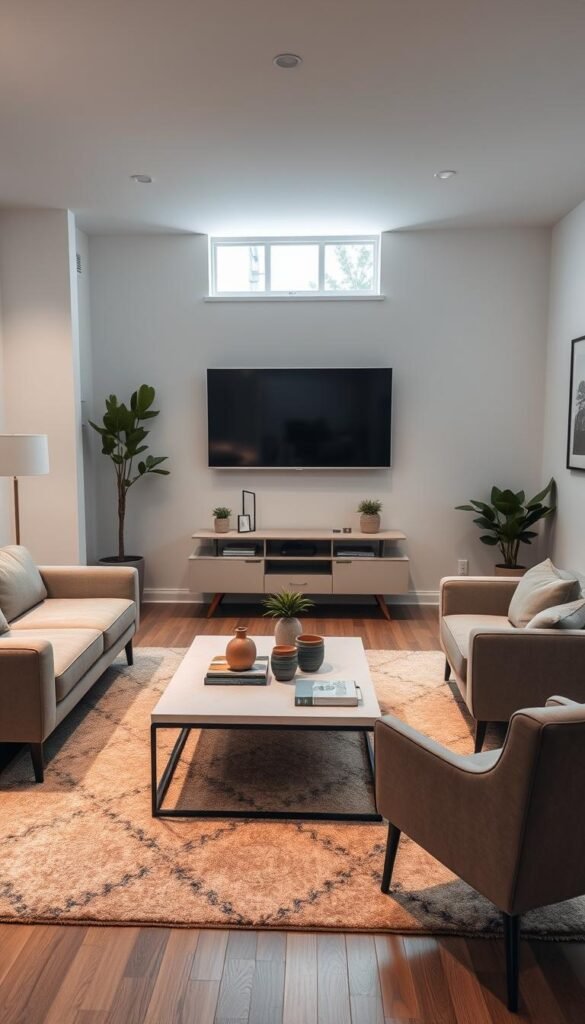
In a compact living room, the best-fitting choice is often the one that keeps the walking path and sightlines clear. A small living room benefits from a unit that fits its job without taking over the room.
Measure the furniture footprint against the route people use every day. The latest TV console designs for a small living room include floating, slimline, corner, rolling, and clear or glass options.
| Option | Placement | Space benefit | Storage or use |
|---|---|---|---|
| Floating stand | Mounted on the wall | Leaves the floor open | Stores remotes, devices, or decor |
| Slimline console | Along a flat wall | Avoids a bulky footprint | Holds essentials in a narrow cabinet |
| Corner stand | In an unused corner | Opens the center of the room | Uses space that might otherwise sit empty |
| Rolling stand | Wherever the screen is needed | Allows repositioning | Moves on wheels between uses |
| Clear or glass stand | Along a wall or open area | Preserves sightlines | Displays equipment with a lighter visual effect |
A floating stand can hold remotes, devices, and a small display while keeping the floor visible underneath. A floating stand can leave floor space open, which helps a compact room feel less crowded.
Drawers or shelves can hold DVDs and remotes, so small items do not collect on the top surface. A slim console works well against a straight wall, while a corner stand can open up the middle of a room.
A rolling stand gives you flexibility when the screen needs to move between uses. Clear or glass surfaces can make the furniture less visually dominant, though the equipment remains on display.
Before buying, check the depth as well as the width; a narrow unit can still interrupt a walking route if it projects too far. Measure the unit’s footprint against the walking route before choosing a corner or rolling option.
Simple and Modular Setups for Everyday Storage
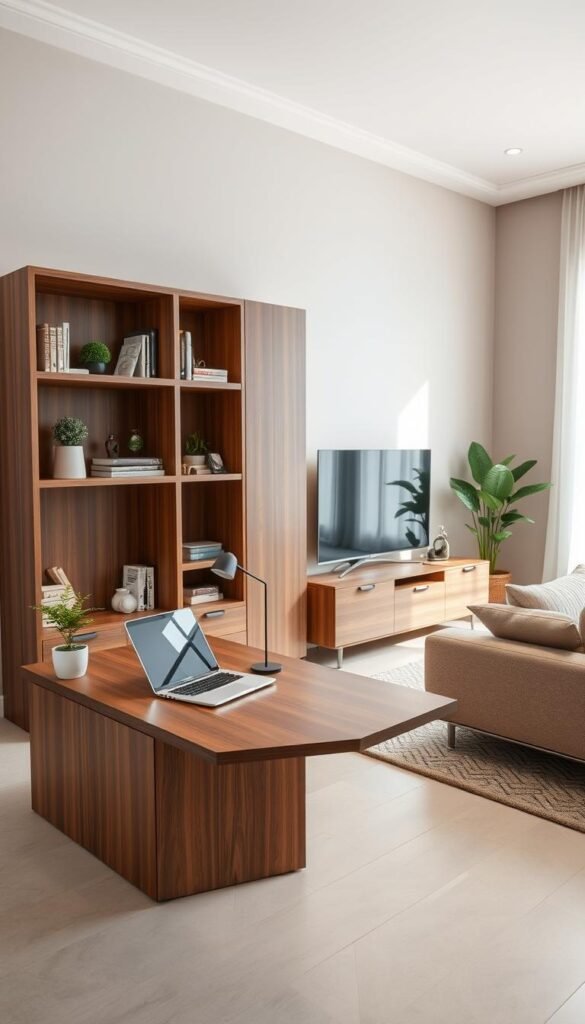
A simple arrangement works best when each cabinet, shelf, or work surface has a clear job. A modular unit design can combine storage and useful work areas without making every shelf a catchall.
Give devices, books, decor, and accessories specific places instead of filling every compartment. That approach keeps daily routines easy, whether your setup needs a charging station or a spot for a laptop.
- A wall-mounted panel with closed storage gives the screen a defined home and keeps less attractive items behind doors. Choose cabinet space for equipment and household extras.
- Floating drawers paired with a bookcase balance hidden storage with open display. Books can sit together, while small accessories stay in drawers.
- A grid-style modular arrangement combines open and closed compartments. Use open shelves for items you reach often and closed sections for things you prefer not to see.
- A TV unit can divide an open living-dining area while storing media equipment. Keep the arrangement useful from both sides if people move through the space.
- A compact unit with a work surface can support a laptop when the room serves more than one purpose. A pull-out laptop tray can tuck away between tasks.
Modular TV storage can also include display areas, charging stations, pull-out laptop trays, and drawers sized for different accessories. That mix makes it easier to give each item a home rather than letting loose devices spread across the room.
Use a bookcase for books you reach often, and reserve a closed cabinet for less-used supplies. A display shelf can hold a few personal objects without taking space from equipment you use each day.
A room divider needs a practical balance: open shelves can keep the view light, while closed sections hide the less tidy side of daily life. For more combinations of storage and work functions, see these multifunctional TV unit ideas.
Choose storage compartments around the devices and accessories you actually keep in the room.
Feature Walls That Frame the Screen
A feature wall works when it gives the screen a clear setting without competing with what you watch. One well-chosen surface or composition can make a simple TV wall design for a living room feel complete.
Let one wall detail do the visual work. A wood panel, a color block, or softly placed lighting can define the area without layering several finishes.
- Vertical wood slats add a steady rhythm behind the screen. Their narrow lines can give a broad wall a sense of height.
- A softly backlit panel creates a gentle glow around the screen. Keep the light subtle so it supports the viewing area rather than becoming its main event.
- A stone-look or marble-look backdrop brings pattern and depth to the wall. A restrained pattern can give the screen a setting without adding visual noise.
- A gallery wall pairs the screen with artwork sized in proportion to it. Arrange the pieces so the television remains part of the composition, not an interruption.
- A dark accent wall gives the area a defined mood and can reduce reflections. It works especially well when the rest of the room has a lighter visual feel.
A TV wall panel may use wood, a stone-look surface, fluted texture, or a solid contrasting color. Backlighting around the screen can add a soft glow when the rest of the wall stays simple.
For a wider range of compositions, browse these TV wall design ideas. Wood slats and a gallery arrangement can both frame a screen, but they create different rhythms on the wall.
A simple TV wall design for a living room does not need several bold finishes. One texture or a clear color block can be enough to make the screen feel considered.
Check the wall treatment from your usual seat to catch distracting reflections before settling on a glossy or strongly lit finish.
Wood, Metal, and Other Console Styles
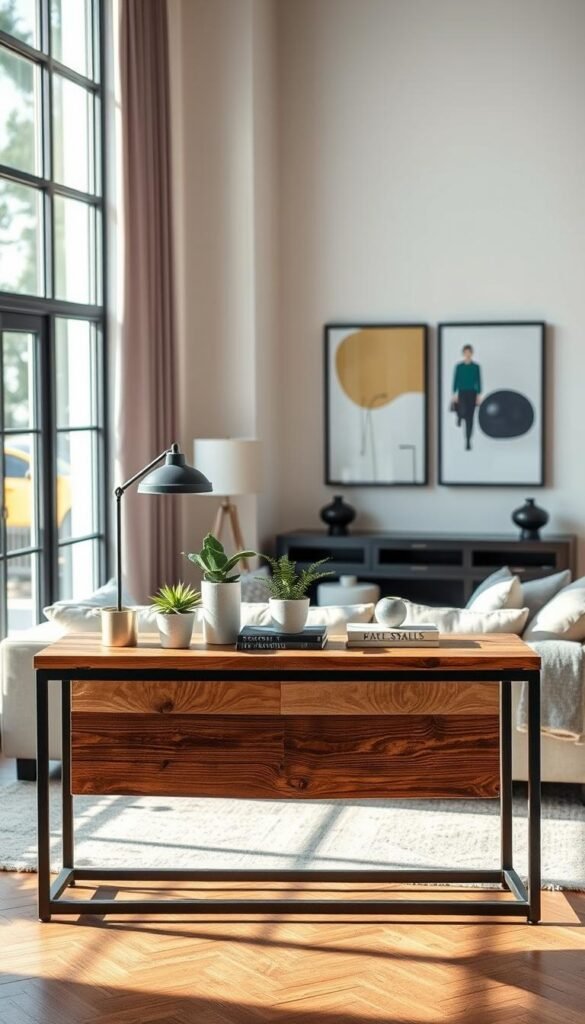
The material changes whether a console reads as warm, airy, architectural, or deliberately utilitarian. Wood adds warmth, metal gives a sharper frame, and glass can make a design feel visually lighter.
Choose a material for both its appearance and the way you use the furniture. A low cabinet has a different presence from open shelves, even when both hold the same entertainment equipment.
- An open industrial frame with reclaimed wood pairs visible structure with natural character. The shelves keep equipment in view, so this suits an orderly display.
- A low-profile, broad console spreads the screen’s visual weight across a longer horizontal line. It can make a large TV feel more balanced against the wall.
- A cabinet that conceals the screen can close over the display when it is not in use. This option lets the room read as a living area first.
- A repurposed dresser or sideboard brings existing furniture into the entertainment area. Check that its top and interior suit the screen and connected equipment.
- An acoustic-panel surround suits a media-focused room. Its tailored surface can help the screen and equipment feel like part of a single setup.
Wooden cabinets bring a natural note, while metal frames make the outline more defined. Glass may lighten the visual effect, though it leaves items easier to see.
Consoles can use glass, wood, metal, or a mix of materials. An open industrial frame with reclaimed wood offers one direction; a closed cabinet can create a quieter look.
A repurposed sideboard can add storage beyond media gear, such as linens or board games. Before converting one, check that its compartments fit the equipment you plan to keep there.
For a broader look at console materials and layouts, browse these TV unit design ideas for living rooms. The right finish can connect a new piece to existing furniture without making every item match exactly.
Match the finish to nearby furniture and choose a surface you can maintain with your usual cleaning routine.
Set the Screen at a Comfortable Height and Distance
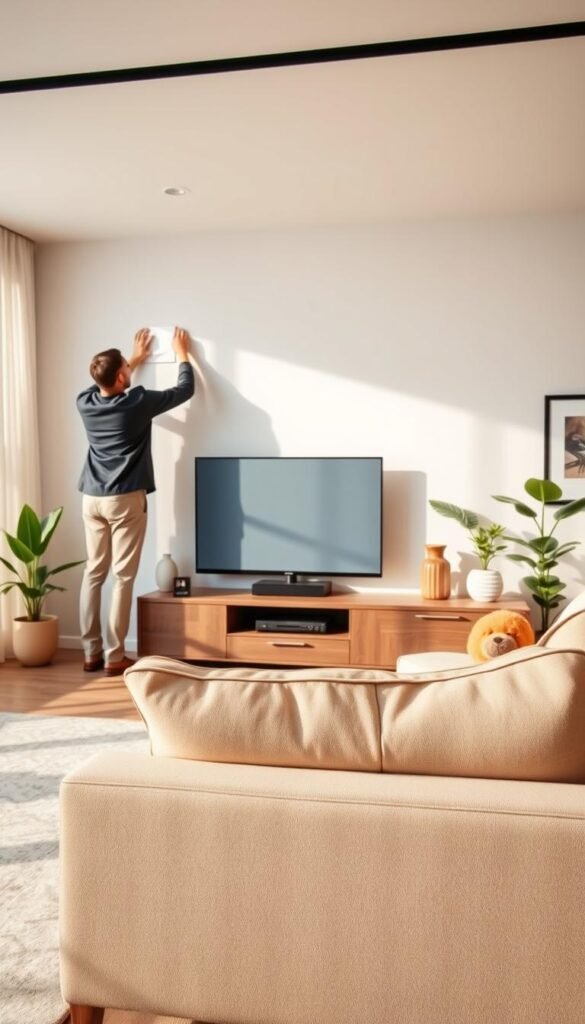
A comfortable setup starts with the distance between your usual seat and the screen, not with the furniture style. The right viewing distance and screen height help your television fit the way you watch.
Use the screen’s diagonal as a starting point, then test the placement from your seat. A room’s layout may affect where the TV can go, but your normal viewing position should guide the final choice.
Start With Your Viewing Distance
KEF’s suggested viewing distance uses the TV’s diameter multiplied by 1.67. The figures below give you practical starting points for common screen sizes.
| TV diagonal | Recommended viewing distance | How to apply it |
|---|---|---|
| 42 inches | 5.8 feet | Measure from seated eyes to the screen |
| 55 inches | 7.5 feet | Use the sofa’s usual viewing position |
| 65 inches | 9 feet | Check the distance before placing the unit |
| 75 inches | 10.5 feet | Compare the figure with your available seating space |
For example, a 55-inch screen has a suggested viewing distance of 7.5 feet. You can use the diagonal-times-1.67 formula as a guide when choosing where to put the seating.
The viewing-distance formula offers a consistent starting point, not a substitute for checking how the setup feels in your room. A very large TV can dominate a small living room if the seating sits close to it.
Find a Comfortable Screen Height and Angle
Measure seated eye level from the floor while you sit in your usual comfortable position. This gives you a real reference point, rather than relying on a standing measurement.
One example formula for the TV center height is EL+(VD*.22). EL means seated eye level, and VD means viewing distance; use the values in the same units.
The Society of Motion Picture and Television Engineers sets a 30° viewing angle for a 16:9 screen. That angle helps you judge how much of the screen fills your view from your seat.
Room layout and screen size can limit exact placement, so test the TV’s height before fixing the mount or console. Sit in your normal viewing position and check the screen’s height before fixing the TV or console in place.
Plan for Cables, Outlets, and Ventilation
A clean-looking setup still needs reachable outlets and enough room for connected equipment. A TV unit that hides every wire but blocks a plug can make routine changes frustrating.
Check access, depth, and airflow before choosing a closed-back console. Open-back designs make outlets easier to reach and let air move around electronics.
Keep Wires Reachable but Out of Sight
Open-back stands leave cables and outlets easier to reach, while closed-back storage conceals more of the setup. A cord cutout lets wires pass through the rear of the unit.
| Feature | What to check | Practical purpose |
|---|---|---|
| Cord cutout | Opening size and location | Routes wires through the rear panel |
| Console depth | Room for a power strip and devices | Prevents plugs from pressing against the wall |
| Outlet and connector clearance | Plug direction and wall space | Keeps connections reachable |
| Cable covers or clips | Route along the wall or unit | Holds cords out of sight |
A cable-ready TV stand needs enough depth for a power strip and connected devices, plus partly or fully enclosed storage that suits your needs. Cable covers, zip ties, and adhesive clips can route cords along a wall or cabinet.
The Marisol 84-inch Oak Media Console has four rear cord cutouts and is designed for TVs up to 85 inches. That example shows why the number and position of openings matter when several devices connect behind the screen.
Give Electronics Room to Breathe
Ventilated compartments help gaming consoles avoid overheating by allowing heat to escape. Closed storage should not seal in warmth around electronics that run for long periods.
Check the console’s depth against the power strip and each device, not just the TV’s footprint. Plugs that face sideways may need more clearance than the unit’s interior appears to offer.
An open back can make cable changes simpler, while a closed back hides more of the equipment. Check every plug’s direction and connector clearance against the wall before committing to a closed-back unit.
Style the Console Without Adding Clutter
A few useful or meaningful objects can make a console feel finished without turning it into another crowded shelf. Keep the display modest so your everyday accessories remain easy to find.
Use a small number of objects with clear purpose or personal meaning. A plant, a lamp, or one grouped display can soften the entertainment area without crowding the screen.
Add a Small Amount of Greenery and Light
A small potted plant brings greenery without taking over the console. Trailing ivy can soften an edge, while dried pampas adds height without needing regular watering.
A table lamp or LED strips behind the TV can add soft light to the living space. Place the light so it does not glare on the screen or draw attention away from the picture.
Choose lighting that suits how you use the room in the evening. A lamp on the console gives you a familiar light source, while an LED strip can keep the surface itself clear.
Group Useful and Decorative Objects
A tray can corral remotes, coasters, and small decor in one easy-to-find spot. It also gives loose accessories a clear boundary on an open surface.
For a simple display, group a candle, a small vase, and a framed photo at varied heights. The mix creates a little movement without spreading objects across the whole unit.
Baskets or decorative boxes can hold accessories on open shelves. Books can add a personal touch, especially when you keep them together rather than scattering them among small items.
Choose objects that leave room for the screen and the things you reach for daily. Keep the screen’s immediate edges clear so your display does not compete with the picture.
Choose Colors and Materials That Belong Together
A cohesive palette usually comes from repeating or balancing finishes already present in your living room. The TV unit feels integrated when its tones connect with nearby furnishings rather than competing for attention.
Compare the unit with the room’s existing colors and surfaces before choosing a finish. Matte surfaces can show fewer fingerprints and reflections than glossy ones.
Use a Clear Color Relationship
A black stand against a white backdrop creates strong contrast. This pairing makes the TV area stand out without requiring extra decorative detail.
Pastel cabinetry with warm wood feels softer and less stark. The wood gives the lighter color a grounded note, while the pastel keeps the arrangement gentle.
Gray with natural wood creates a grounded look that can sit comfortably beside neutral furnishings. The combination is a useful choice when you want definition without a sharp contrast.
Repeat One Material or Finish
Repeat a wood tone, metal detail, or matte surface elsewhere in the room to help the TV unit feel connected. A small echo in a side table or shelf can be enough.
Choose a finish that suits the room’s light and existing furniture. A glossy cabinet can reflect windows and lamps, while matte surfaces tend to show fewer fingerprints and reflections.
For more ideas on connecting wall finishes and furnishings, explore these TV wall and color coordination ideas. A finish can look different in daylight than it does under evening lamps.
Before choosing a finish, compare a sample with the wall color and nearby furniture in the room’s actual light.
That in-room comparison can reveal undertones that disappear under store lighting. Keep the sample beside the furnishings it needs to work with, then decide whether the contrast feels right.
Make the TV Wall Work for Your Room
The right setup is the one that fits your room’s proportions and the way you use it every day. A strong design balances scale, useful storage, and a style that belongs with the rest of your home.
Your living space does not need the most elaborate unit to feel finished. It needs furniture that supports daily routines and a screen arrangement that feels natural in the room.
Measure your wall, TV, and seating distance, then shortlist the designs that meet all three needs.