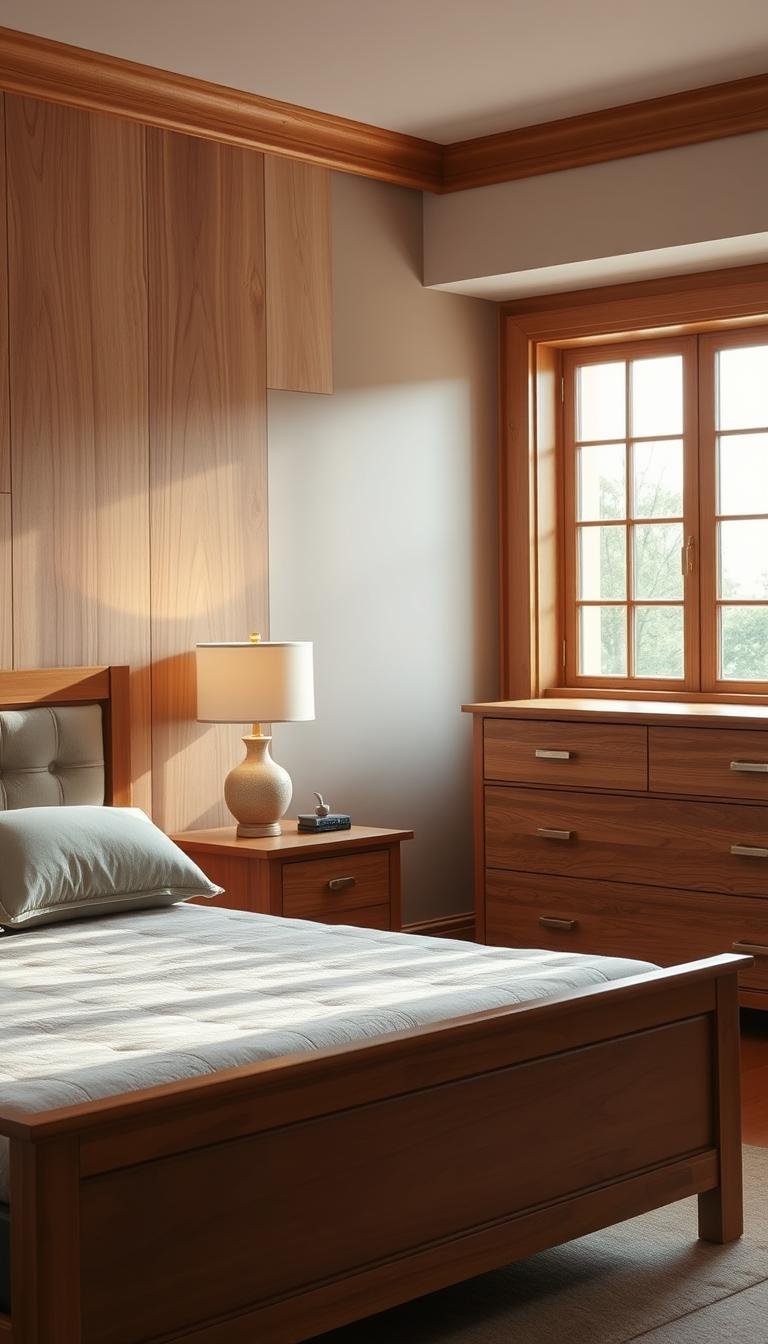
Your sleeping space should feel like a personal retreat. Creating harmony between different materials makes this possible. Instead of perfectly matched sets, consider mixing finishes for a more curated appearance.
This approach moves beyond traditional furniture sets. It allows your room to reflect your unique personality. The result is a space that feels both intentional and inviting.
Balance and repetition are key principles in this process. They help create visual flow throughout your bedroom. Strategic boldness adds depth and character to your design.
This method works beautifully with both inherited pieces and new custom furniture. According to design experts, mixing materials actually creates more visual interest than perfectly matched sets.
You’ll discover how to create a restful sanctuary that truly represents your style. The following guide covers everything from selecting tones to final accessory placement.
Why Mixing Wood and Upholstery Creates a Better Bedroom
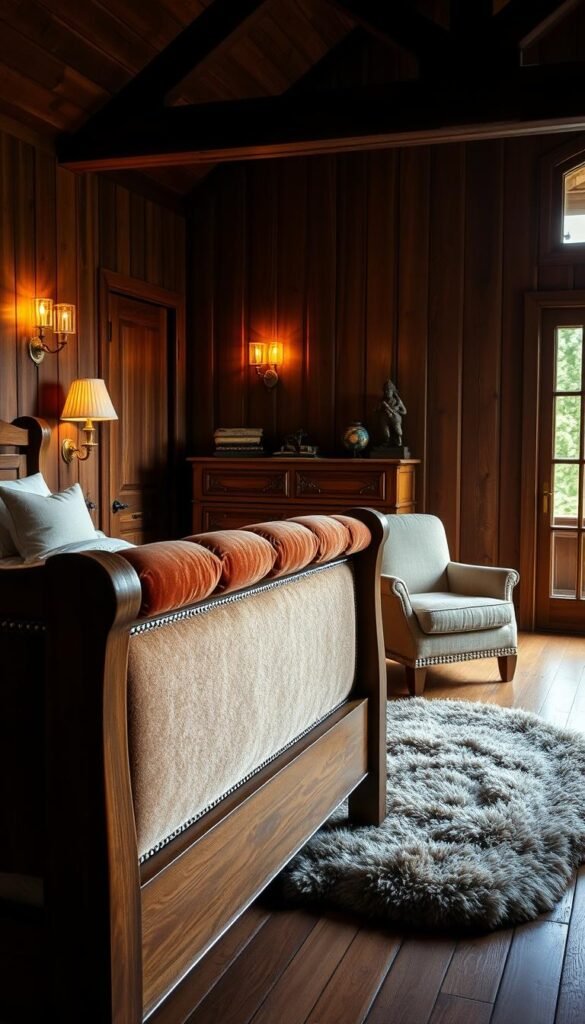
For decades, the matching bedroom set was considered the gold standard of interior design. This tradition shaped expectations about how a proper sleeping space should look.
Moving Beyond the Matching Bedroom Set
Many Americans grew up with complete furniture suites from the 1960s through the 1990s. These sets created a mentality that everything had to match perfectly.
Our brains naturally crave order in restful spaces. This makes mixing different pieces feel challenging at first. However, this approach actually creates more visual interest.
Perfectly matched collections often lack personality. They can make your room feel like a showroom display. Mixed arrangements reflect your unique character instead.
Adding Depth, Character, and Personal Style
Mixing furniture allows you to incorporate special pieces with history. Family heirlooms and vintage finds add authentic character. Custom items make your space truly personal.
Some worry that mixed approaches create chaos. With careful planning, you achieve beautiful cohesion. The result feels intentional rather than random.
This flexibility accommodates different tastes in shared rooms. Partners can blend their preferred styles harmoniously. Gradual updates become easier than buying complete sets.
Mixed wood tones and upholstery fabrics create wonderful depth. They tell a story about your life and preferences. Your bedroom becomes a sanctuary that truly feels like home.
Start by Choosing Your Dominant Wood Tone
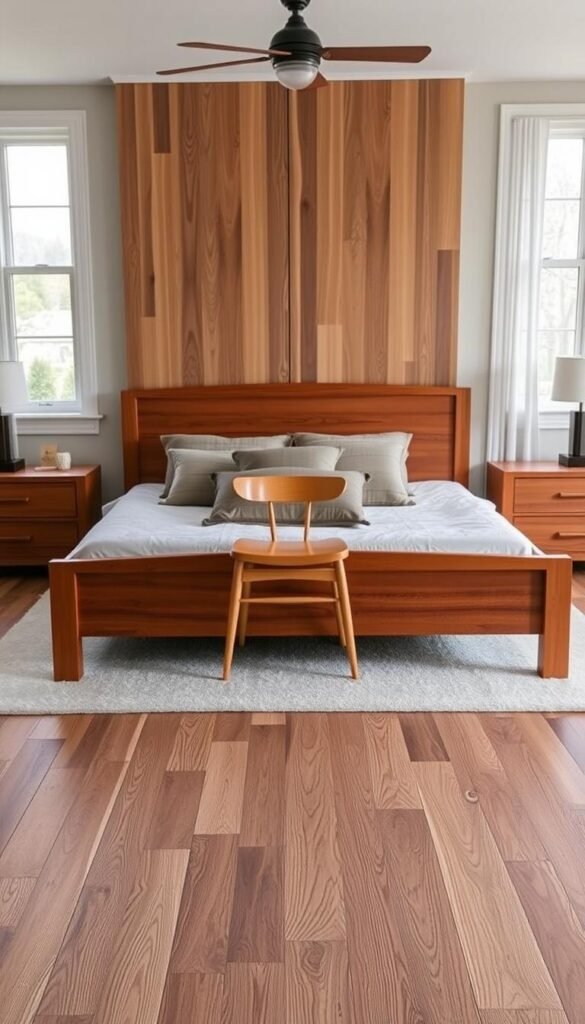
Establishing a cohesive bedroom design begins with selecting your primary wood tone. This creates a foundation for all other elements in your space. Your dominant tone becomes the visual anchor that ties everything together.
Identify Warm vs. Cool Undertones
Wood finishes generally fall into two categories: warm and cool tones. Understanding this difference helps you create the desired atmosphere.
Warm woods include cherry, walnut, and red oak. These finishes create cozy, inviting feelings. They work beautifully in traditional or rustic spaces.
Cool tones feature ash, maple, and gray-washed finishes. These create modern, airy environments. They suit contemporary or minimalist designs perfectly.
Look at your wood in natural daylight to identify undertones. Warm tones show reddish or golden hues. Cool tones appear more gray or ashy.
Your existing flooring often sets the room’s dominant tone. This provides an excellent starting point for your design decisions.
Let Your Largest Piece Be Your Guide
Your bed typically serves as the natural anchor piece. Build your wood palette around this central furniture item. Other pieces should complement rather than compete.
If you have multiple wood tones already, determine which should dominate. Consider scale, placement, and personal preference. The most visually substantial piece often leads.
For new spaces, choose a dominant tone that matches your desired atmosphere. Warm tones create traditional comfort. Cool tones establish modern serenity.
This selection affects wall colors, textiles, and accessories. Your dominant wood tone influences the entire room’s color story.
Remember this is a flexible process. You can adjust your dominant tone as your space evolves. The goal is creating harmony, not perfection.
Balance Light and Dark Woods with Confidence
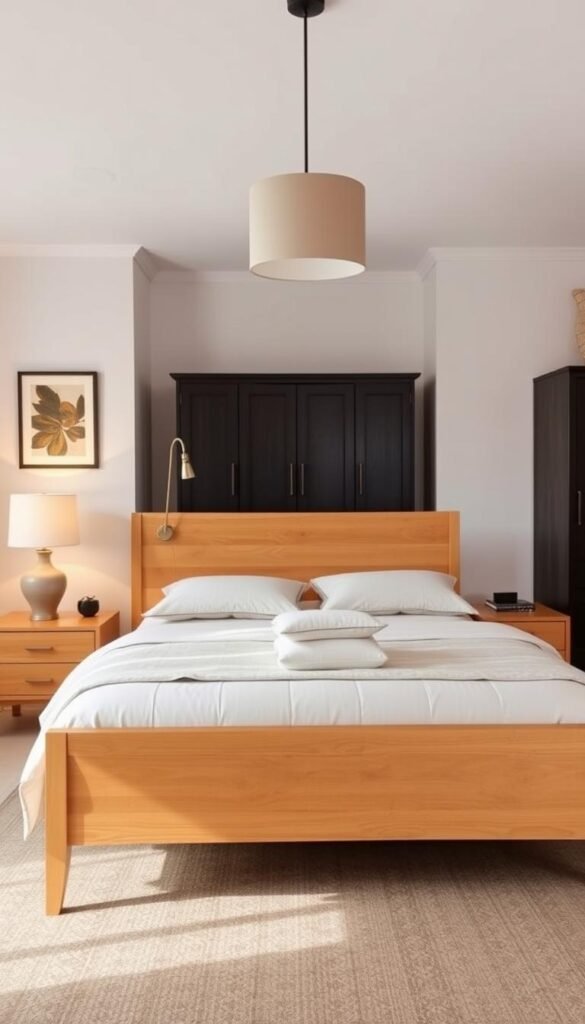
Strategic contrast between light and dark finishes elevates bedroom design from ordinary to extraordinary. This approach creates visual interest that feels intentional rather than accidental. Seventy-three percent of homeowners prioritize cohesive materials and tones in their sleeping spaces.
The Power of High-Contrast Pairings
High-contrast combinations create purposeful, deliberate design statements. They transform random mismatches into curated collections with character.
Vintage blonde pieces work beautifully with dark oak or walnut. Cherry pairs elegantly with teak or birch finishes. These combinations create visual depth and sophistication.
Contrast affects how we perceive spaces psychologically. Intentional pairings signal careful design consideration. They make your room feel professionally curated rather than haphazard.
Anchor Darker Pieces Low, Keep Lighter Pieces High
Place darker wood furniture low in your room for visual stability. Bed frames and dressers in rich tones ground the space effectively.
Position lighter pieces higher for airy balance. Shelving, headboards, and mirrors in pale finishes lift the eye upward. This placement prevents the room from feeling heavy or oppressive.
The strategy works across various room sizes and ceiling heights. It creates perceived spaciousness and improves air circulation visually. Your sanctuary feels both balanced and expansive.
Adjust contrast levels based on your personal preference. Stronger contrasts make bold design statements. Subtler variations create gentle, harmonious transitions between pieces.
Select Upholstery and Textiles That Tie the Room Together
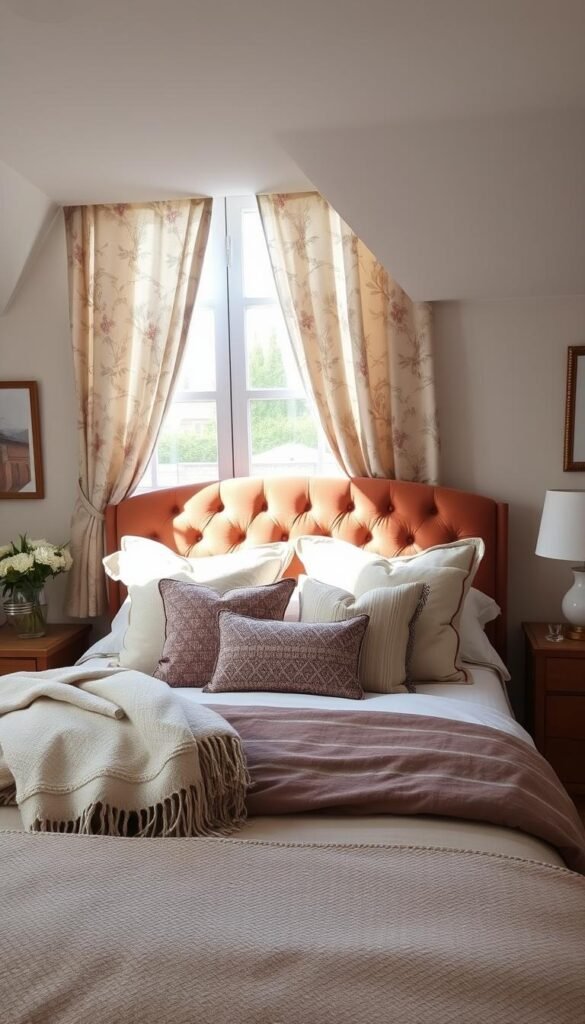
Textiles offer the perfect solution for creating harmony among your furniture pieces. They serve as visual bridges that connect different wood tones throughout your space.
These soft elements add comfort while unifying your overall design. They help blend various finishes into a cohesive look.
Matching Wood and Upholstery with Fabric
Fabric choices dramatically affect your room’s atmosphere. They can either warm up a cool space or add freshness to warm tones.
Select textiles that echo your dominant color story. Warm earth tones complement traditional wood furniture. Cool grays work beautifully with contemporary pieces.
Patterned fabrics incorporate multiple colors effortlessly. They create visual connections between different wood finishes. This approach makes your mix feel intentional.
Upholstered furniture pieces act as neutral ground. An upholstered headboard or linen bench softens contrast between wood items. These elements provide breathing room in your design.
Using Throws, Pillows, and Bedding to Bridge Tones
Bedding serves as your largest textile element. It can unify various wood tones throughout your sanctuary. Choose sheets and comforters that reference your dominant palette.
Decorative pillows add pops of coordinating color. They create rhythm and repetition across your space. Mix patterns and solids for added depth.
Throws offer both function and beauty. Drape them over chairs or the foot of your bed. Textured throws add tactile interest while blending finishes.
Consider practical aspects like maintenance and durability. Machine-washable fabrics simplify cleaning. Natural fibers like cotton and linen age beautifully.
Seasonal changes keep your space feeling fresh. Lighter textiles work for summer months. Heavier fabrics create coziness in winter.
Layer different textures for added dimension. Combine smooth silks with nubby wools. This approach creates richness beyond color matching.
Your textiles tell a story about your personal style. They transform functional pieces into a curated collection. The result feels both harmonious and uniquely yours.
Use Rugs and Wall Color as Your Unifying Foundation
Your walls and floor coverings create the perfect backdrop for mixed furniture pieces. They establish harmony between different elements in your space.
These foundational elements work together to blend various finishes. They make your curated collection feel intentional and cohesive.
Choosing a Rug that Complements All Wood Finishes
Area rugs serve as grounding elements in your design. They visually connect furniture pieces throughout the room.
Patterned rugs beautifully incorporate multiple wood tones. Their colors create repetition and balance between different finishes.
Select rug colors that reference your dominant palette. Warm earth tones enhance traditional furniture. Cool grays complement contemporary pieces.
Rugs solve practical challenges too. They work wonderfully when your flooring doesn’t match other elements. This creates a seamless transition between surfaces.
Layer rugs with other textiles for added depth. This technique builds cohesion throughout your sleeping area.
How Wall Paint Can Warm Up or Cool Down Your Space
Wall color serves as your room’s largest visual plane. It can unify diverse wood tones throughout the space.
Warm paint colors enhance traditional furniture pieces. They create cozy, inviting atmospheres in your home.
Cool wall tones establish modern serenity. They make contemporary design feel fresh and airy.
Test paint colors with wood samples before committing. Natural daylight shows how colors interact with surfaces.
Consider wall sheen and finish carefully. Matte surfaces absorb light for softer effects. Glossy finishes reflect light for brighter spaces.
Your wall color should complement rather than compete. It provides the perfect background for your curated furniture collection.
Incorporate Other Materials for a Layered Look
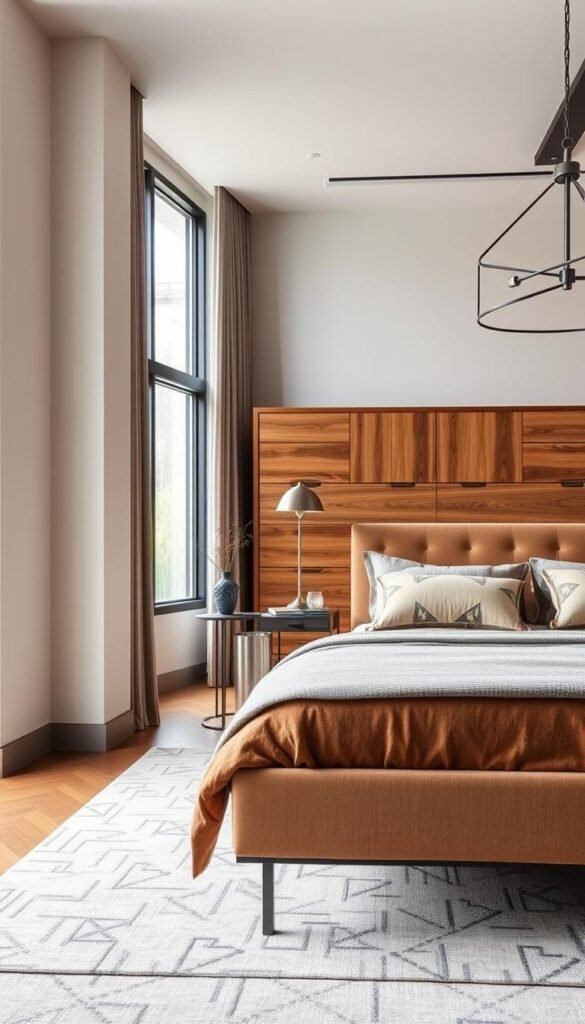
Adding different materials creates depth and sophistication in your personal retreat. These elements prevent your space from feeling monotonous. They provide visual breaks between your furniture pieces.
Strategic material mixing enhances rather than competes with your wood finishes. Each element contributes to the overall harmony. Your room gains character through thoughtful combinations.
Adding Metal, Glass, and Stone for Balance
Metal elements bring contemporary sophistication to wood-dominated spaces. They create beautiful contrast with traditional finishes. Black iron frames work wonderfully with oak or walnut furniture.
Brass or chrome accents add reflective quality to your design. These finishes catch light throughout your space. They create movement and visual interest between static pieces.
Glass surfaces lighten the visual weight of solid wood items. A glass-top nightstand prevents the room from feeling heavy. Mirrored dressers expand the perceived space beautifully.
Stone elements provide earthy grounding to your environment. Marble or quartz tops on dressers add natural elegance. These materials create balance through their substantial presence.
Consider these successful material combinations:
| Wood Type | Complementary Material | Style Effect |
|---|---|---|
| Dark Walnut | Brass Accents | Traditional Luxury |
| Light Oak | Chrome Hardware | Modern Minimalism |
| Reclaimed Pine | Wrought Iron | Rustic Charm |
| Cherry | Glass Inserts | Transitional Elegance |
The Role of Lighting and Accessories
Lighting fixtures serve as unifying elements throughout your space. Choose fixtures that incorporate multiple materials. A metal-based lamp with fabric shade bridges different finishes.
Accessories repeat material themes for cohesion. Decorative objects in similar metals create visual rhythm. This repetition makes your mix feel intentional and curated.
Balance material quantities to avoid overwhelming wood elements. Follow the 60-30-10 rule for material distribution. Sixty percent wood, thirty percent secondary materials, ten percent accents.
Your material choices affect the room’s tactile experience. Smooth metals contrast with textured wood grains. Soft textiles balance hard surfaces throughout your design.
These combinations create a rich sensory atmosphere. Your space becomes inviting through varied textures. The result feels both visually and physically engaging.
Arrange Your Furniture for Visual Harmony and Flow
Thoughtful placement transforms your sleeping area into a serene sanctuary. Proper arrangement creates both beauty and function in your personal space. It ensures every piece contributes to your room’s peaceful atmosphere.
Prioritizing Proportion and Scale
Scale determines how furniture fits within your room’s dimensions. Oversized pieces overwhelm small spaces while tiny items get lost in large rooms. Always measure your space before selecting any furniture.
Your bed naturally serves as the largest piece in the room. Build your layout around this central element. Other items should complement rather than compete with its presence.
Visual weight matters as much as physical size. Darker woods feel heavier than light finishes. Balance darker dressers with lighter nightstands for equilibrium.
Leave adequate breathing room between pieces. This negative space allows each item to shine independently. It prevents your room from feeling cramped or cluttered.
“Good design is about balance, not symmetry. It’s the thoughtful arrangement of elements that creates true harmony.”
Creating a Layout that Feels Intentional and Restful
Start by positioning your bed against the longest solid wall. This establishes a natural focal point for your space. It creates immediate visual hierarchy in your room.
Arrange nightstands symmetrically on either side. This classic approach promotes psychological comfort. Matching lamps enhance this balanced feeling beautifully.
Consider traffic patterns through your space. Maintain clear pathways to doors and windows. This functional flow supports daily routines effortlessly.
Different room shapes require unique solutions. Square rooms often work well with centered layouts. Rectangular spaces might benefit from angled arrangements.
Seasonal adjustments keep your space feeling fresh. Lighter arrangements work for summer months. Cozier configurations create warmth during winter.
Your final layout should serve both eyes and body. It must look beautiful while supporting restful sleep. This dual purpose makes your bedroom truly successful.
Common Mistakes to Avoid When Blending Pieces
Creating a harmonious bedroom requires thoughtful choices. Some errors can disrupt your space’s peaceful atmosphere. Knowing these pitfalls helps you achieve the perfect blend.
Even beautiful furniture can clash without proper planning. These common missteps often undermine bedroom design. Understanding them ensures your room feels both stylish and serene.
Using Too Many Different Wood Finishes
Limit your wood palette to two or three finishes maximum. More varieties create visual chaos rather than cohesion. This approach maintains balance throughout your space.
Uncontrolled mixing without repetition feels random. Intentional repetition creates rhythm between pieces. Your eyes move smoothly through the room.
Mixing warm and cool tones presents special challenges. These combinations require strong unifying elements. Without them, your space feels disjointed.
Every room needs a clear hero piece. Other items should support rather than compete. This hierarchy creates visual calm.
Forgetting the Primary Purpose of Your Sanctuary
Your bedroom serves as a restful retreat above all else. Design choices should support relaxation and sleep. Never sacrifice function for aesthetics.
Common arrangement errors disrupt visual harmony. Pieces placed too close create cramped feelings. Poor traffic flow affects daily routines.
Improper scale relationships undermine good choices. Oversized furniture overwhelms small rooms. Tiny pieces get lost in large spaces.
Textile mistakes can disrupt wood tone harmony. Wrong patterns or colors create visual competition. Choose fabrics that unite rather than divide.
Recognize when your approach isn’t working. The room should feel peaceful upon entering. Adjust pieces that create tension or clutter.
| Common Mistake | Why It Fails | Better Approach |
|---|---|---|
| Too Many Finishes | Creates visual chaos | Limit to 2-3 wood tones |
| No Focal Point | Everything competes | Establish clear hierarchy |
| Ignoring Function | Disrupts relaxation | Prioritize comfort |
| Wrong Scale | Feels unbalanced | Measure before buying |
| Clashing Textiles | Breaks harmony | Choose unifying fabrics |
Bringing Your Perfectly Blended Bedroom to Life
Your perfect bedroom begins with that special piece you truly love. Maybe it’s a vintage dresser with character or a handcrafted bed frame. Build your entire space around this passion item.
Trust your personal taste above strict rules. Your connection to furniture creates meaningful design outcomes. The room should feel like home where you’re most yourself.
Balance sanctuary qualities with personal expression. Experiment with arrangements until everything feels right. Your uniquely blended bedroom reflects your history and taste beautifully.
Enjoy living with a space that tells your story. The process brings joy when you embrace it fully. Your sanctuary awaits its final personal touches.