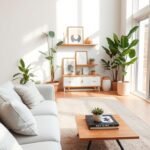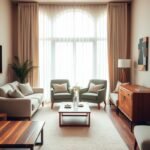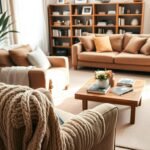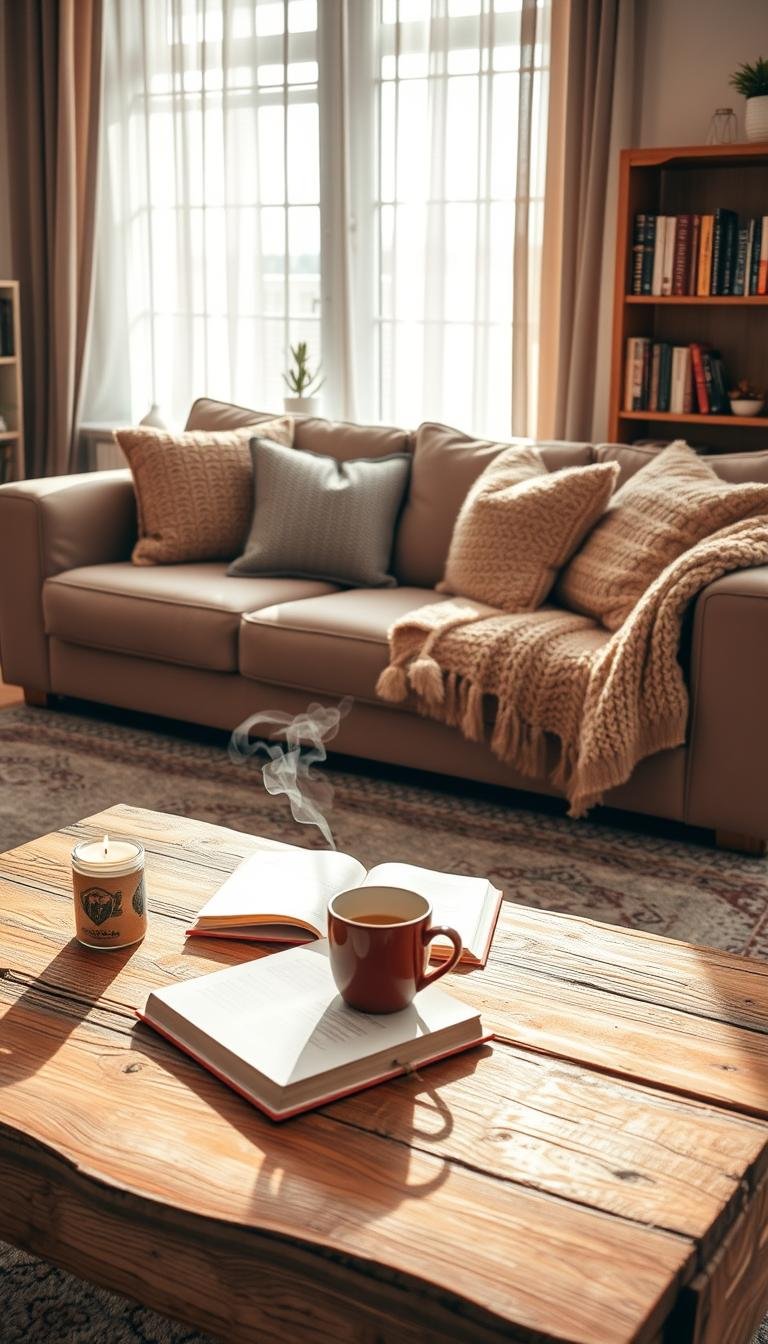
A living room can feel like a retreat without a full renovation or a single signature style. The best warm and cozy living room inspiration starts with your real home: how you sit, what you enjoy seeing, and how you spend your time there.
These 15 practical ideas work in a compact apartment or a larger open-plan home. You can use them to add warmth, make daily routines easier, or give a familiar space more personality. Comfort comes from choices that suit the way you live, not from copying one perfect-looking room.
Some changes take an afternoon; others begin with a paint sample or a furniture shift. You do not need to do everything at once. Start with one change you will enjoy using every day, then build around it.
What Makes a Living Room Feel Cozy?
A cozy living room is one that makes it easy to settle in and feel at home. Its comfort comes from useful choices, not from a fixed decorating style, so your room can feel welcoming whether it is spare or full of collected things.
Hygge is a Danish approach to everyday comfort that emphasizes simple pleasures, warmth and a relaxed atmosphere. A comfortable room balances function, ease and personal character. That can mean a lamp beside your reading chair, a sofa that suits your posture, or a clear path to the kitchen.
What a Cozy Living Room Means
Cozy describes how a room feels when you use it, rather than a list of furniture or a particular look. A room can feel warm and personal with modern lines, traditional details, bright colors, or a quiet neutral palette. The important part is whether it supports the moments you want to have there.
Hygge also has a social side: the Danish idea of hygge centers on being present and enjoying comfortable time together. You do not need candles or special decor to make that possible. A welcoming seat and room for a friend can be enough.
Match Comfort to Your Everyday Routine
Look at the way you use the room before choosing living room ideas. If you read, you may want a firm chair and a lamp close by. If you host, you may value flexible seats and a place to set a drink. A family room may need clear floor space for play.
A comfortable living room supports the routines you have, rather than asking you to change them for the sake of a style.
Four practical signs can help you decide what your own room needs:
- Seating that supports the way you relax.
- A clear route through the room.
- Useful light near the activities you do.
- Personal objects you enjoy seeing each day.
These details shape how your home feels over time. Choose comfort around your real routine, whether that means reading alone, hosting friends or relaxing with family.
Warm and Cozy Living Room Inspiration: Choose a 2026 Palette

In 2026, warm whites, greige, green-toned neutrals, soft earthy pinks and brown are taking the place of cool gray in many living-room palettes. These warmer tones can soften a room while leaving plenty of room for personal style.
Test paint where it will live, in daylight and under your lamps, before choosing a full-room color. Sherwin-Williams named Universal Khaki, a mid-tan with green undertones, its 2026 Color of the Year. Benjamin Moore chose Silhouette AF-655, a blend of burnt umber and charcoal, and included shades such as Raindance, First Crush and Swiss Coffee in its 2026 Color Trends palette.
Warm Neutrals Instead of Cool Gray
Warm white and greige offer a gentle base when cool gray feels stark in your space. Sherwin-Williams’ Top 50 includes Drift of Mist, Shoji White and Tricorn Black, giving you options from soft white to a strong contrast. Consider the room’s fixed features, including flooring, before picking a wall shade.
For more earthy paint ideas, earthy paint colors and natural decor can help you compare shades such as terracotta, sage, sand, ochre, taupe and warm greige. The room’s light and existing furnishings can shift how each color reads.
Earthy Alternatives to Beige
Cola brown, soft mauve, butter yellow, muted green and muddy pink are alternatives to beige in current palettes. Benjamin Moore’s choices include Batik, Narragansett Green, Southwest Pottery, Sherwood Tan and Silhouette. Sherwin-Williams also points to earthy greens, including muted blue-green Sea Salt, as an interior color trend.
Muddy pink can look soft in a bright room and more beige-brown in low light. That shift can be useful if you want a quiet, adaptable color, but it may surprise you on a large wall. Compare it with your upholstery and flooring instead of judging a small sample alone.
Test Color in Daylight and Lamplight
Put paint swatches on a wall that receives both daylight and lamplight. Check them after dark under the room’s actual lamps, because evening light can change how a color appears. A shade that looks balanced at noon may seem deeper or more muted later.
| Palette direction | Example wall or main shade | Supporting tone | Accent option |
|---|---|---|---|
| Warm neutral | Shoji White | Universal Khaki | Tricorn Black |
| Green-toned neutral | Sea Salt | Narragansett Green | Swiss Coffee |
| Earthy pink | First Crush | Southwest Pottery | Batik |
| Brown | Silhouette AF-655 | Sherwood Tan | Raindance |
Each named shade gives you a starting point, not a formula for every room. Check each finalist beside your flooring and upholstery after dark before committing to a full wall.
Balance Color and Pattern Without Overdoing It
A simple proportion keeps a strong color from taking over the entire space. The 60-30-10 rule gives 60% of a living-room scheme to a dominant color, 30% to a secondary color and 10% to an accent shade.
Use the proportions as a guide, not a measuring exercise. Walls or a sofa can carry the dominant color, while curtains or the area rug can supply the secondary one. Accessories and artwork are easy places to add the smaller accent shade.
The proportions work best when the colors have clear roles. A single accent shade can look intentional when you repeat it at least three times, such as in a pillow, throw and piece of art. Those touches can be small; they simply need to feel connected.
Use this 60-30-10 color rule as a starting point when you plan the palette:
| Role | Share | Where to use it | Example |
|---|---|---|---|
| Dominant | 60% | Walls or sofa | Warm white walls |
| Secondary | 30% | Area rug or curtains | Muted green rug |
| Accent | 10% | Accessories or artwork | Soft pink pillow |
The 3-4-5 method offers another way to think about mixing: three patterns, four period styles and five colors or textures. It is a flexible framework, not a requirement to add every category to a minimalist scheme. A room with a restrained mix can feel more composed than one trying to meet every number.
Before adding another print, look at the patterns already in the room. If the result feels crowded, remove one competing pattern before adding another accent.
Bring in Wood, Greenery and Natural Materials
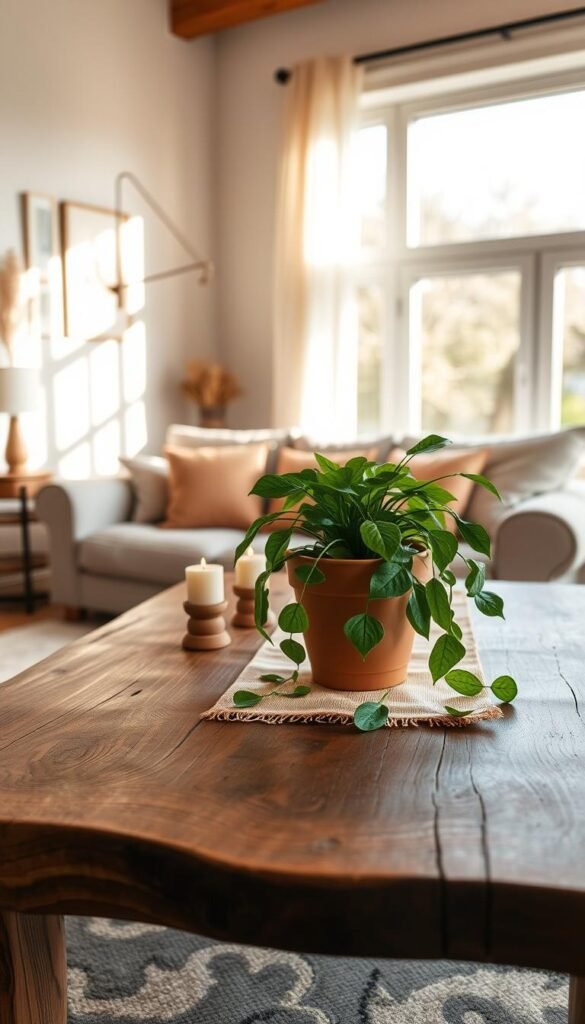
A few natural materials can soften a room without asking you to change its whole palette. Wood grain, leafy forms and woven surfaces bring visual texture and a grounded feel to your living space.
One or two natural elements can be enough in a minimal room. A more collected design can combine several materials, as long as you give each one space to show its own character.
Choose from these four options, each with a different role:
- A wood table brings visible grain and a warm, solid surface.
- A leafy plant adds a living shape and softens a hard corner.
- Woven fibers offer a relaxed surface through baskets or seating.
- Stone or leather adds contrast through a cooler or smoother finish.
Wood, rattan, stone, leather and woven fibers each bring a different texture. You can keep a simple room spare with one timber side table and a plant, or mix a few natural materials for a more layered look. Choose objects that earn their place through use or genuine appeal.
Think about care as well as appearance. A plant needs light and regular attention, while leather and woven materials wear in different ways. Choose plants and materials that fit the light, care and wear your household can realistically manage.
Layer Textures From the Floor Up
A room with a restrained palette can still feel rich when its surfaces have different textures. Tactile contrast gives your eye and hand more to notice, without requiring a bold pattern or a new color scheme.
Start with the area rug when you want to refresh a large surface. It covers a significant part of the floor, so its weave and pile can help guide the other fabrics in the room.
Try these four combinations to see which feels right in your space:
- A chunky-knit throw against a smooth leather sofa.
- A velvet pillow beside a linen one.
- A woven rug underfoot with a soft throw on the sofa.
- A nubby cushion beside smooth upholstery.
Each pairing brings a different kind of contrast. A knit has visible loops and depth; smooth leather gives it a sleek counterpoint. Linen looks relaxed beside velvet’s soft sheen, while a nubby cushion can make plain upholstery feel less flat.
As you compare area rugs, notice how the surface meets the room’s daily needs. A thick pile may catch at a doorway or make it harder to slide a chair. A flatter weave can be easier to move across, especially where furniture shifts often.
If you are styling a neutral sofa, contrasting fabrics and rug ideas can help you picture how different textiles work together. Test fabric combinations in the room, since texture and color can look different under your lighting.
Create a Softer Glow With Layered Lighting
A relaxed evening atmosphere usually comes from several pools of light rather than one bright ceiling fixture. Layered lighting lets you make a living room comfortable for conversation, reading and other everyday activities.
Use several smaller light sources at different heights instead of relying on one overhead fixture. Warm-spectrum bulbs rated 2700K-3000K suit a softer living-room glow. A dimmer can also make ambient light easier to adjust as the evening changes.
Use Several Light Sources at Different Heights
Build the room’s lighting from more than one level. Ambient light provides general illumination, a task lamp serves a reading seat, and accent light draws attention to art or shelves. Candles can add a real flame when you want them, but they are optional.
A ceiling fixture can still add useful ambient light, especially when you can dim it. The right ceiling lighting for your living room depends on the room’s dimensions and ceiling height. Flush-mount fixtures, pendants and recessed lights each spread light in a different way.
Choose Warm Bulbs and Check Lamp Placement
Put a floor lamp near a reading chair or beside a sofa, where its light can reach the activity. Its shade should cover the bulb when someone is seated. A side-table lamp works well beside a seat when the bottom of its shade sits around seated eye level.
Those height checks help prevent a bare bulb from shining into your eyes. They also keep the lamps useful for reading or conversation instead of turning them into glare sources.
Match Each Layer to an Activity
Match each light source to a clear job before adding another. A task lamp should reach your book or knitting, while an accent light can pick out a shelf or artwork. Candles belong on a stable surface, away from fabrics and other flammable objects.
| Layer | Example source | Placement | Best use |
|---|---|---|---|
| Ambient | Dimmed ceiling fixture | Ceiling | General room light |
| Task | Reading lamp | Beside a seat | Reading or handwork |
| Accent | Small directed lamp | Near art or shelving | Highlighting a feature |
| Candlelight | Candle | Stable clear surface | Optional evening glow |
Switch on each layer at the time you expect to use it. Sit in your usual seat and check for glare or a bare bulb before deciding a lamp is in the right spot.
Arrange Seating for Easy Conversation
Seats feel more inviting when people can talk without blocking the route across the room. A useful furniture plan keeps your conversation group close enough to connect and leaves a clear path to doors, windows and nearby spaces.
Flow matters as much as the look of the furniture. When space permits, leave 30″-36″ for a walkway between large furniture pieces; in a smaller room, aim for at least 18″-24″. These ranges help you balance movement with the room you have.
Keep a Clear Route Through the Room
Walk the paths you use most, including the route from the entry to the sofa and the way toward an adjoining room. A chair that blocks a door may look fine from one angle but interrupt the room every day. Measure the route with the doors open, not just the furniture in place.
Feng Shui is one furniture-arrangement practice that emphasizes flow and intimacy. You can use it as a way to consider how people move through the space, rather than as a rigid rule for where every piece belongs.
Bring Seats Into a Comfortable Group
Keep about 3.5′-10′ between seating, depending on the room and how you use it. A close arrangement suits a small conversation group; more distance can work in a larger room. Turn chairs slightly toward the sofa so people can speak without twisting around.
When space allows, pull the sofa 3-5″ away from the wall instead of placing it flush against it. That small gap can make the arrangement feel less pressed to the edges. For more ways to group seats and maintain clear routes, explore practical furniture design ideas.
Do not force a symmetrical layout if the room has an awkward shape or a heavily used doorway. A side chair can sit at an angle and still join the group, as long as people can reach it and move around it. Walk through the arrangement before settling on it, including the route you use most often.
Choose the Right Coffee Table and Area Rug
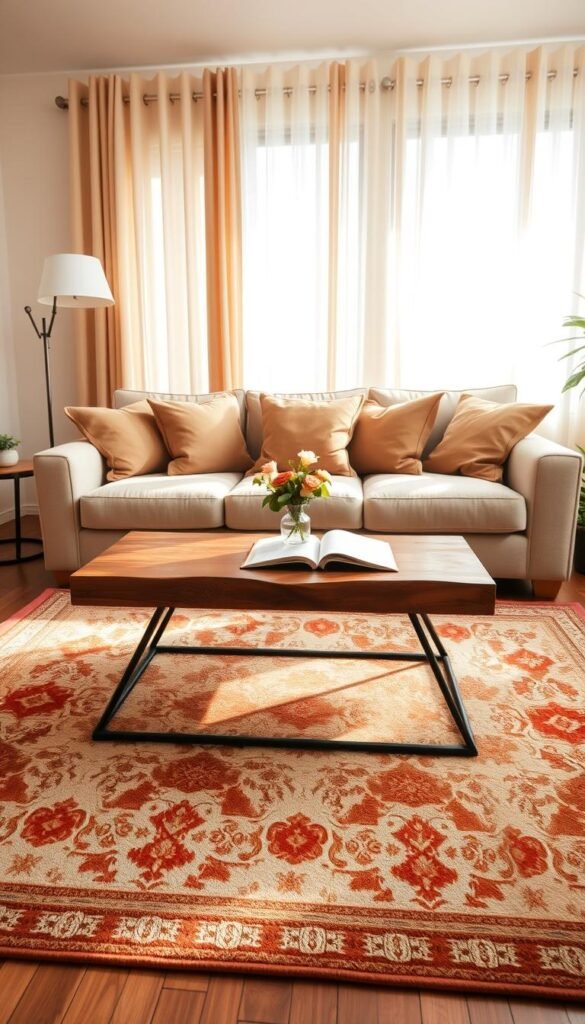
A coffee table should be easy to reach from the sofa without crowding people’s knees or the walkway. Good proportions make both the table and the area rug feel like part of the seating group instead of obstacles around it.
Leave 16″-18″ between the sofa and coffee table. The gap keeps the surface close enough for a drink or book while making room to sit and stand. Check the measurements against your actual seats before buying.
Use these practical checks to compare the two central surfaces:
| Element | Size or clearance | Placement | Practical check |
|---|---|---|---|
| Coffee-table length | At least half the sofa length | In front of sofa | Reach it from the seat |
| Coffee-table height | Within 4″ of seat-cushion top | Beside the sofa seat | Compare with cushions |
| Sofa-to-table gap | 16″-18″ | Between sofa and table | Check knee space |
| Rug coverage | Front sofa legs and all chairs | Under seating group | Include every chair |
| Rug-to-wall gap | About 24″ large room; 10″-18″ small room | Between rug and wall | Check the exposed floor |
A coffee table should be at least half as long as the sofa. Its height should be no more than 4″ higher or shorter than the top of the sofa seat cushions. Those proportions give you a useful starting point, but the table still needs to suit your household’s habits.
An area rug should fit at least the sofa’s front legs and all chairs. Many living rooms need at least an 8×10 rug, but that is a common minimum, not a universal fit. Large rooms can leave about 24″ between the wall and rug; smaller rooms can leave 10″-18″.
Mark the proposed rug edges on the floor before buying so you can check the fit around every seat.
Make the Sofa a Comfortable Anchor
The best-looking sofa still has to feel good for the way you sit, stretch out or share the room. Comfort starts with fit, so think about who uses the living room and what they do there before choosing a shape.
A typical sofa seat height is about 17″-19″, with an upright seat depth around 20″-24″. These are initial checks, not guarantees of comfort. Deeper lounge-style seats can feel quite different, especially if you prefer to sit upright.
A deep sofa can suit a household that likes to stretch out, while a loveseat may fit a smaller room or give one person a comfortable place to settle. A modular sectional can adapt to a changing layout, but its shape needs enough floor area. An armchair offers a separate seat without committing to a larger sofa.
Upholstery changes both the feel and the upkeep. Linen has a relaxed look, brushed cotton feels soft and familiar, velvet has a plush surface, and boucle has a looped texture. Consider the everyday wear your household brings, especially if the sofa gets used for meals, pets or frequent lounging.
A footstool can give you a place to rest your feet without requiring an oversized sofa. It can also move out of the way when you need more floor space. Look at upholstery samples next to the fabrics already in the room, rather than choosing from a swatch alone.
Seat height and depth only tell part of the story. The cushion’s firmness, the angle of the back and the way your feet meet the floor all affect how a sofa feels in practice. Try the seat in your usual posture and check that the cushion depth works for the people who will use it most.
Give the Room a Welcoming Focal Point

A clear focal point gives the room a visual center without requiring a fireplace. One main feature helps the eye settle, making the furniture arrangement feel more deliberate and the room easier to take in.
A living room usually benefits from one primary focal point. It might be a fireplace, a window with a view, large artwork, built-in shelving or a piano. Choose the feature that already draws your attention, or give a meaningful piece a more prominent place.
Arrange the sofa and chairs to acknowledge the anchor without making every seat face it directly. A rug can define the group, while armchairs or a low table can support the feature at a smaller scale. Keep these supporting pieces visually quieter than the element you want people to notice first.
A fireplace is not essential. A strong artwork or a bookcase can lead the room just as naturally, particularly when it holds objects you value. If the room has a large window, preserve a view of it instead of filling the space with competing decor.
Dark tones on the walls or furniture can make a room feel intimate, but too much of one dark shade may feel heavy. Balance it with lighter textiles, a colorful rug or warm natural materials. Those details bring contrast without pulling attention away from the main feature.
Look at the room from its entrance and reduce anything that competes with the feature you want noticed first.
Set Up a Reading Nook in an Unused Corner
An unused corner can become a retreat with a seat, focused light and somewhere to set a book. A small nook works when its basic pieces are easy to reach and the spot feels comfortable enough to use.
Start with a comfortable chair, a task lamp and a small side table. Add one soft throw or cushion and a short stack of books. This simple arrangement gives you a place to read without asking the rest of the living room to change.
A corner beside a window can make a pleasant place for daytime reading. A quieter part of the room may suit you better if you prefer fewer distractions. Either way, make sure the task light reaches the page and that you can set down a book or drink without stretching.
Think of Feng Shui as one way to consider flow and intimacy, not a fixed formula for placing a chair. You might angle the seat toward the room or set it with a view of the window. The best arrangement is the one that feels settled without making the corner hard to reach.
A reading nook should not block a doorway, heating vent or the main route through the room. If the corner is tight, a compact chair and a narrow side table may work better than a larger lounge seat.
For a few more ways to use an awkward corner, see these ideas for turning a corner into a retreat. Read in the spot for a few minutes before finalizing it to check the light and seat comfort.
Display Books, Art and Personal Collections

A room feels more lived in when the things on display have a story or personal meaning. Your own details can make a shelf or wall feel warm without filling every available surface.
Leave some open space around displayed objects so each piece can be seen. A gallery wall can bring together framed art, photographs and meaningful objects, while open shelves can hold books, framed photos, ceramics and small plants.
Use this four-part checklist as you arrange a display:
- Mix books with a few objects.
- Vary the size of your frames.
- Leave some shelf space open.
- Group pieces by a shared color or subject.
A gallery wall can feel personal when it includes more than matching prints. Combine a photograph with a small meaningful object or a piece of art you found on a trip. Keep the arrangement comfortable to look at from the sofa, rather than trying to cover every inch of wall.
Open shelves make it easy to change the display over time. Books can sit beside ceramics or a small plant, while framed photos add a familiar touch. For a relaxed, collected style, boho decor and natural details offer one way to mix personal pieces with a softer look.
Filling every shelf or using so many frames that the display feels crowded can make meaningful objects hard to notice. Step back from the display and remove one object if your eye has nowhere to rest.
Mix in Secondhand Finds for Character
One well-chosen vintage piece can give a room more character than a set of matching accessories. A little history brings a collected-over-time feel, especially when an older object sits beside simpler current furniture.
Choose a secondhand piece you genuinely like, rather than buying objects just to fill a room. A distinctive side table, mirror, lamp, chair or small cabinet can add personality without making every item compete for attention.
Thrift stores and vintage shops are useful places to look for a piece with an unusual shape or finish. Pair a carved cabinet with clean-lined seating, or set a vintage lamp beside a plain sofa. One older item can create contrast without making the room feel like a period set.
Mixing older finds with contemporary furniture keeps a room from feeling overly matched. The combination also gives you room to choose things based on their usefulness and appeal, rather than buying a complete set.
Secondhand pieces may need cleaning, repair or a closer look at their condition before they come home. Check that drawers open, lamps work as intended and furniture feels stable. Measure the piece and inspect its condition before bringing it into your home.
Make a Small Living Room Feel Cozy Without Clutter
In a compact room, comfort comes from making each piece useful and protecting the floor space you need to move. Useful choices help a small living room feel welcoming without filling every corner.
Cozy living room ideas for small spaces work best when furniture serves more than one purpose and floor area stays usable. A compact loveseat or corner sofa can still feel inviting when you pair it with soft textiles and leave a clear route through the room.
Choose Furniture That Works Hard
A storage ottoman can offer a footrest, an extra seat and a place to tuck away blankets. Nesting tables give you surfaces when needed and stack together when they are not. A slimline console can hold useful items without taking the depth of a larger cabinet.
Wall-mounted storage keeps some belongings off the floor, while a mirror can help a room feel more open. Multipurpose furniture is especially useful when one room serves several parts of your day. Choose pieces that solve a real problem, rather than adding storage you do not need.
Keep the Floor and Sightlines Open
Leave enough visible floor around the main furniture to make the room feel less crowded. A compact loveseat may suit a narrow room better than an oversized sectional, while a small corner sofa can use an awkward edge efficiently. Add soft textiles to keep the seating inviting.
Mirrors only help when their reflection is pleasant. Place one where it reflects a window, artwork or another part of the room you like, and avoid bouncing glare toward the seats. A mirror that reflects clutter may make that clutter more noticeable instead.
Choose a few personal objects that make the room feel like yours, then keep surfaces clear enough for everyday use. When a room has to do several jobs, each item should earn its space through comfort, storage or meaning. Remove one item that does not support seating, storage, light or a personal purpose.
Bring a Modern Cozy Look to Any Living Room
A modern room can feel warm when its clean shapes are balanced by comfortable materials and personal details. Softness with structure keeps a contemporary design inviting, whether your living room is compact or open to the kitchen.
Build around furniture and materials that work well together, not a showroom-perfect match. Clean lines, rounded forms, natural wood and a few warm accents can make modern living room ideas feel practical and personal.
Modern Cozy Living Room Ideas With Softer Shapes
Pair a simple sofa with a rounded chair or a low table with curved edges. Natural materials keep those shapes from feeling stark, while soft textiles help the room feel ready to use. A few warm accents can add interest without turning every surface into a statement.
Modern cozy living room ideas work best when the furniture suits the way you sit and move. A clear, simple shape can still feel comfortable when the seat is welcoming and the finishes feel pleasant to touch.
Build a Cozy Living Room Aesthetic Around What You Love
A cozy living room aesthetic can be minimalist, Japandi, eclectic or midcentury-inspired, as long as the space feels comfortable and personal. Japandi blends Japanese minimalism with Scandinavian simplicity through clean lines, neutral colors and natural materials.
For a midcentury-influenced room, mid-century living room layout ideas can help you think about furniture flow, wood tones and storage. Those choices can give a room character without making it feel overfilled.
Use function and softness as a practical balance for modern living room ideas. A seat needs to be comfortable, a path needs to work, and the objects you keep should have a reason to stay. That mix feels more genuine than arranging a room only to be looked at.
Zone Open-Plan Space Without Losing Warmth
In an open-plan home, rugs, sofas, sideboards and pools of light can help distinguish the living, dining and kitchen areas without building a wall. A sofa can mark the edge of a seating group, while a sideboard separates it from a dining area.
A rug alone may not define a zone if the furniture and lighting do not support it. Let the layout, surfaces and light work together, so each part of the open room feels useful while still connected to the rest.
Let the connected areas share one or two materials or shapes, so the open plan feels joined without making every zone identical.
Repeat a wood tone or a rounded shape in more than one area to create a quiet thread through the space. Keep the style consistent by choosing one or two repeated materials or shapes across the connected areas.
Start With One Change You’ll Enjoy Every Day
A welcoming room does not need every idea at once to feel more like yours. A comfortable home grows from a few useful choices that suit the people who live there, not from finishing every corner in a single weekend.
Choose the change with the biggest everyday impact. You might test a paint sample, add a lamp where you read, or clear a route through the seating. Pick one change to make this week, then live with it before deciding what the room needs next.