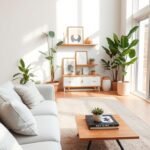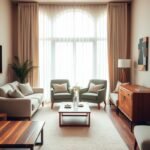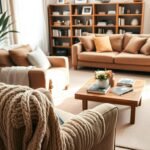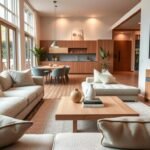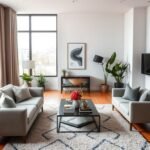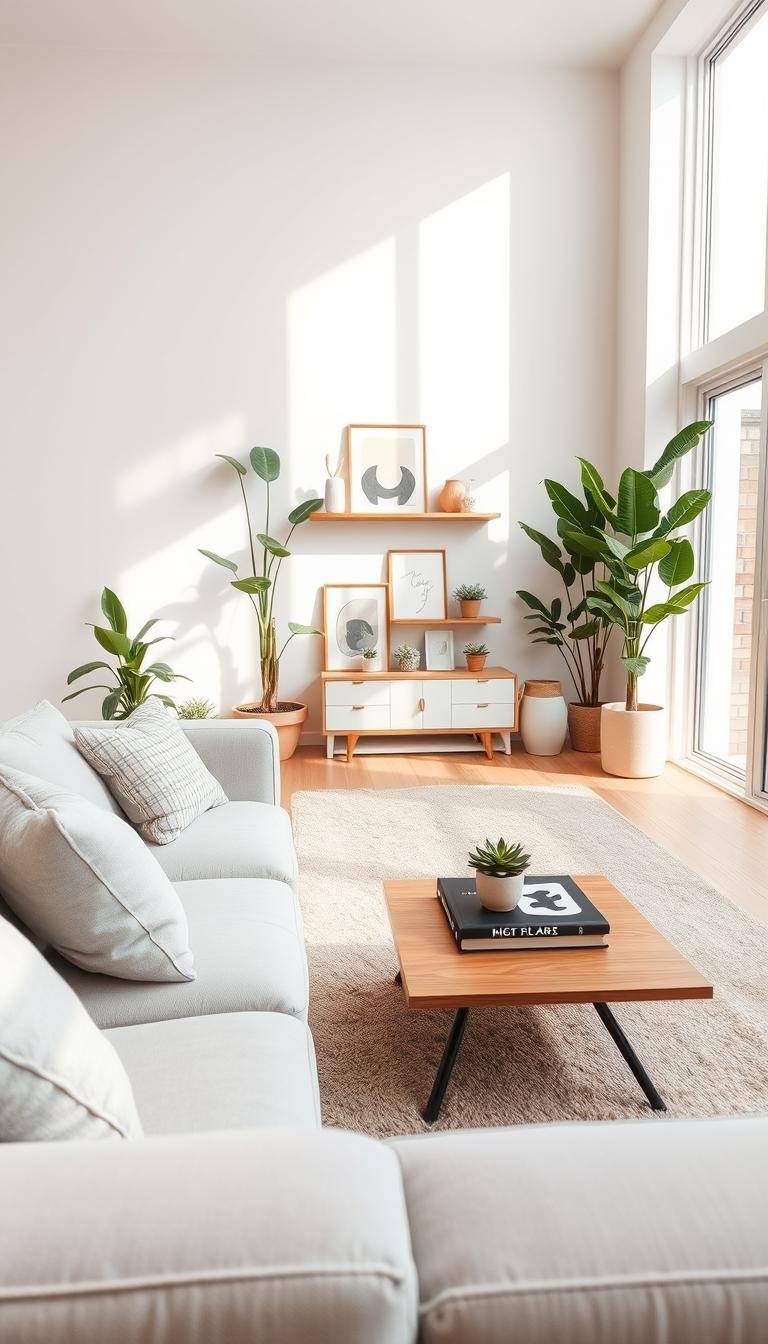
A room can feel simpler and more welcoming without giving up what makes your modern minimalist living room yours. If daily clutter, awkward furniture, or too many competing details make your home feel unsettled, a few thoughtful changes can help. You do not need to empty the space or replace everything you own.
Modern minimalism is about choosing what works and giving each piece a clear role. You can adjust the layout, edit what sits in view, and add details that feel personal. The goal is a calmer space that still supports reading, conversation, and quiet evenings at home. These ideas offer practical starting points, not a strict set of rules.
Some changes cost nothing; others take a little planning. Each can make the room easier to use and more comfortable to live in. Start with one change that solves a real annoyance, not a shopping list.
Create a Modern Minimalist Living Room That Feels Warm
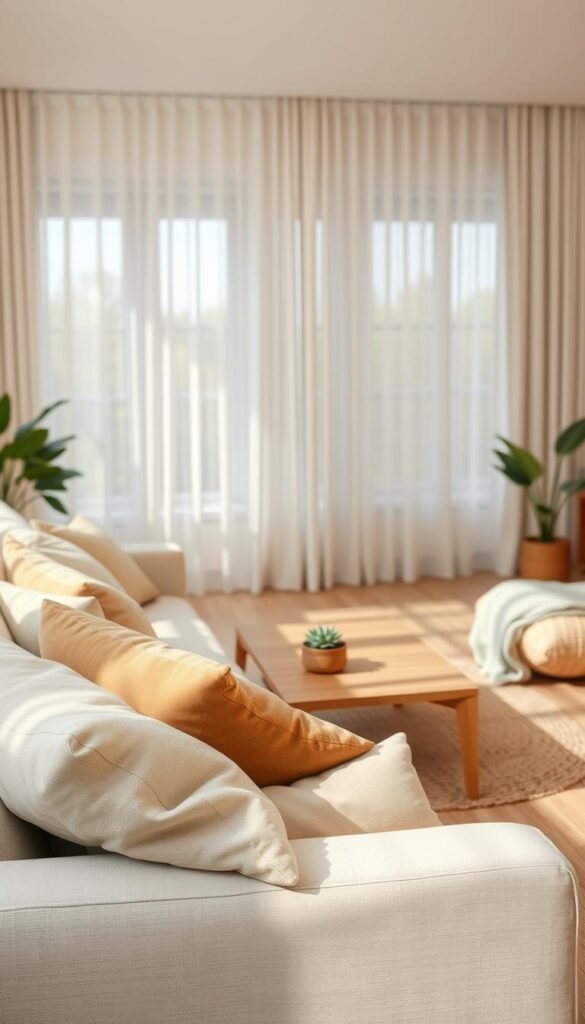
A restrained room feels more livable when its clean forms are balanced by tactile surfaces. Warm minimalism means minimalist simplicity paired with natural textures, soft neutrals, and inviting layers. In 2026, this approach helps a modern minimalist living room feel considered without seeming bare.
Minimalist design values usability and adaptability as much as simplicity. Choose shapes that serve daily life, then bring warmth through materials rather than extra objects. Western minimalism took shape in the early 20th century, with the Bauhaus movement emphasizing form and materiality.
Let texture carry the warmth; do not add accessories just to prove the room is finished.
Traditional Japanese design also connects with minimalism through simplicity, restraint, and natural materials. These histories point to a useful idea: a room can feel spare and still be comfortable. Linen curtains, a mohair pillow, and a wood table offer different textures without making the space feel crowded.
Pair Simple Forms With Natural Texture
Look for furniture with clean lines, then vary the surfaces around it. A linen sofa can sit beside a smooth wood table and a nubby mohair throw. Tonal finishes keep those textures related, while small differences in sheen and weave make the room feel less flat.
Wood, plaster, and natural fabrics bring quiet detail to minimalist design. A matte finish absorbs light differently from a polished one, so even similar tones can read as distinct. For more inspiration, explore mid-century living room layouts built around purposeful furniture and natural materials.
Mix Wood Tones Instead of Matching Everything
Wood tones do not need to match for a living room to look cohesive. Put a pale oak table near a deeper walnut cabinet, for example, when their undertones feel compatible. Similar finishes can connect them, while a clear difference gives the mix a deliberate quality.
In 2026, mixing wood tones rather than matching every finish is a defining interior look. A mix works best when one tone leads and the others play supporting roles. Keep the larger wood pieces in a related tonal family, then let one finish differ enough to feel intentional.
Choose a Calm Palette, Then Add One Clear Accent
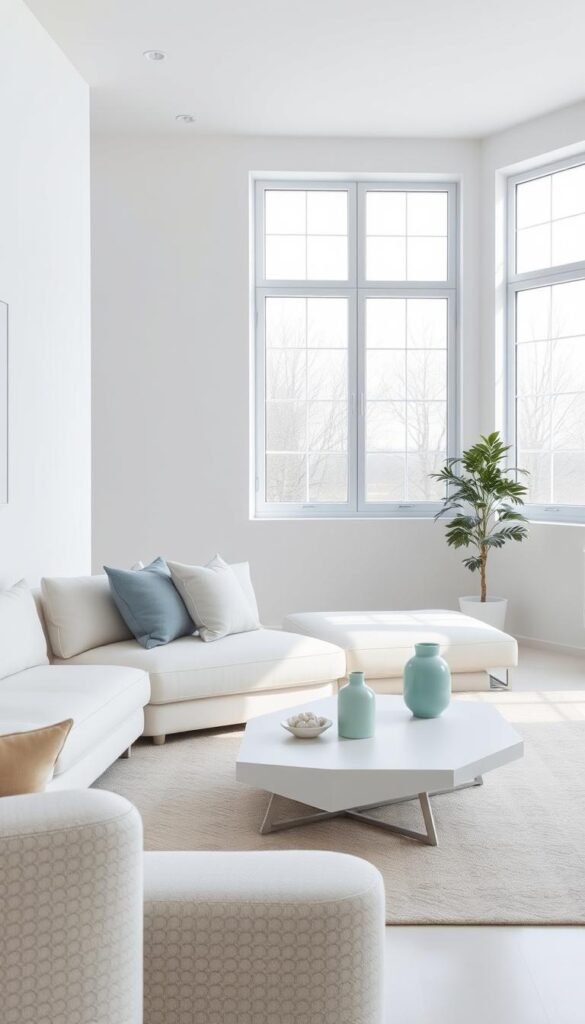
A limited palette creates visual calm, while a small accent keeps the room from feeling flat. One main color can anchor the room, with two or three complementary tones adding subtle variation. Keep the overall color scheme steady across the largest surfaces.
Universal Khaki (HGSW6150) is HGTV Home by Sherwin-Williams’ 2026 Color of the Year. Its 2026 Honest Essentials collection also includes Neutral Ground, Still Water, and Secret Garden. These colors offer a starting point for a warm palette, not a prescription for every home.
| Color or palette | Specific name or code | Suggested role |
|---|---|---|
| Universal Khaki | HGSW6150 | 2026 Color of the Year |
| Icy blue | No code given | Small accent such as a pendant, sconce, or upholstery piping |
| Transformative Teal | No code given | WGSN’s 2026 Color of the Year |
Icy blue is a 2026 color trend that can bring a cool note to a pendant, sconce, or upholstery piping. Teal is another direction, and WGSN named Transformative Teal its 2026 Color of the Year. A compact accent can test a trend without making it dominate the room.
Common color mistakes are easy to avoid: do not choose paint without checking it in your room’s light, combine too many unrelated hues, or assume gray is the only neutral. A favorite color can work as an accent rather than covering every wall. If you want heritage details with a restrained palette, consider these modern Indian living room ideas.
- View paint samples in daylight and at night.
- Repeat an accent color in more than one small detail.
- Keep the largest surfaces within a related palette.
Think about the surfaces you see most often before deciding where color belongs. A neutral wall can support a brighter accessory, while a colorful wall may need simpler furnishings. Test paint on more than one wall before committing, since light changes how a color reads.
Fit Furniture to Your Room and Your Routes
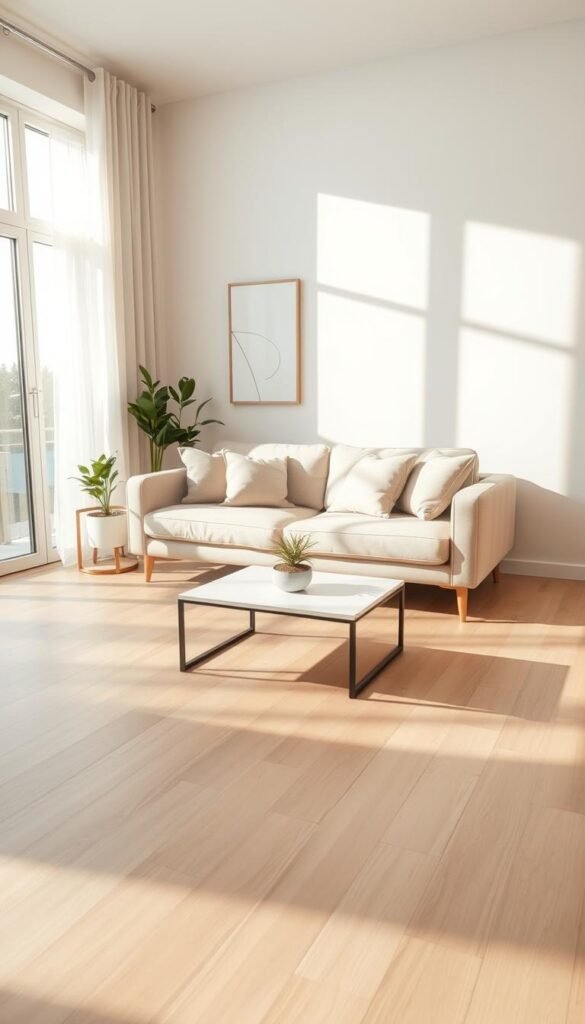
In a small room, the right sofa is the one that fits both the seating plan and the walking path. A sofa under 75 inches wide is a useful starting point for small living rooms. The room’s dimensions and circulation matter more than the label “apartment size.”
For living rooms under 150 square feet, a seat depth of 20 to 24 inches is recommended. A loveseat is typically 50 to 65 inches wide, while an apartment-size sofa is typically 66 to 80 inches wide. Both commonly have a seat depth of 20 to 24 inches.
Choose Seating That Suits the Floor Plan
Think about how many people need a comfortable seat and where the main conversation area will sit. A compact sofa can free up room for an armchair, while a loveseat may suit a narrow space better. Measure the full piece, including arms, rather than relying on a store label.
The following size guides match common small-room layouts. A compact sofa can work in a modest room, but only if it leaves enough space for daily movement. For more ways to plan a compact home, see these one-bedroom apartment ideas.
| Room dimensions | Seating option | Width guide | Seat-depth guide |
|---|---|---|---|
| 8×10 feet | Loveseat or sofa | 70 inches or less | Loveseat: 20 to 24 inches |
| 10×10 feet | Apartment sofa | 65 to 75 inches | Apartment sofa: 20 to 24 inches |
| 10×12 feet | Sofa or compact L-shaped sectional | 70 to 80 inches for sofa | Apartment sofa: 20 to 24 inches |
Leave Clear Paths Around the Furniture
For a small living room, leave 30 to 36 inches of walkway clearance where possible. Plan for 14 to 18 inches between the sofa and coffee table, enough to reach a drink without making the route awkward. These clearances help the room feel usable, not simply filled with furniture.
Mark out the sofa and coffee table before moving heavy pieces. A temporary outline made with painter’s tape can show whether doors open fully and whether a chair blocks the route. Measure the sofa, coffee table, and the route between them before buying or rearranging.
Use Daylight and Texture to Keep It Inviting
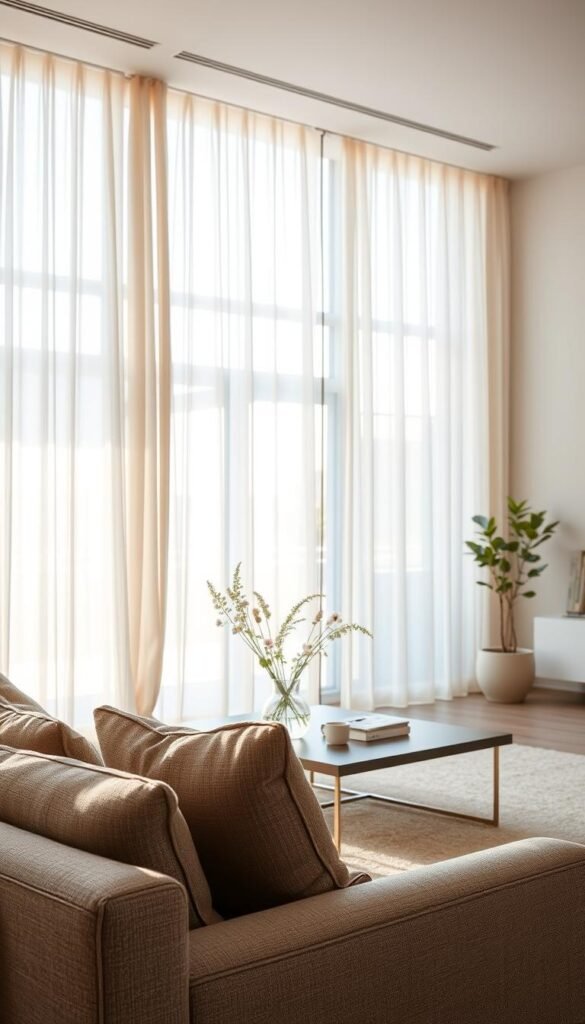
Daylight and touchable surfaces give a simple room depth without filling it with more decor. Natural light can make a living area feel more open, while fabrics and finishes soften hard edges. A thoughtful mix can make pared-back spaces feel comfortable at different times of day.
Keep the window line clear so daylight can move through the room. Light-filtering curtains soften glare without making the window feel blocked. Linen curtains, upholstered seating, and a rug add texture while keeping the number of objects low.
Make the Most of Natural Light
Notice where daylight enters and how it shifts across the room. Tall furniture near a window can cast heavy shadows, while a sheer or light-filtering curtain still gives privacy. If your room gets limited sun, reflect the available light with restrained finishes rather than filling the space with shiny decor.
Check the room’s light at different times before settling on fabrics or finishes. A surface that looks soft in the morning can seem sharper after sunset. These layered lighting and texture ideas show how materials and light can shape a room’s mood.
Layer Tactile Materials Without Adding Clutter
Use a few materials with distinct textures rather than many decorative items. Linen and mohair feel different in use, while wood and plaster add visual grain or subtle surface variation. Matte finishes can help those details register without adding shine or extra accessories.
A rug, upholstered chair, and two pillows can give a seating area a mix of soft and firm textures. Varying the scale matters: a fine weave beside a chunky knit feels more layered than several identical fabrics. The surfaces themselves do much of the decorating.
- Clear the window line of tall objects.
- Check how the room’s colors look in morning and evening light.
- Use warm artificial light near 2700-3000K for a cozy feel.
Residential lighting around 2700-3000K gives a cozy feel after daylight fades. Use that warmth where you read or gather, rather than relying on one harsh overhead light. Choose fabrics and finishes that still look good in the kind of light your room gets every day.
Ground the Seating With the Right Rug

A rug that is too small can make otherwise well-scaled furniture look disconnected. The two-thirds rule means a sofa centered on a rug should measure about two-thirds of the rug’s length. The rug should extend beyond both sides of the sofa.
A rug needs enough width to visually connect the main seating pieces. When choosing a size, account for the coffee table and nearby chairs, not just the sofa. The floor area around the rug helps the seating group read as one place.
A visible border of about 12 to 18 inches around the rug can help frame it. The border gives the rug breathing room against the floor and keeps it from seeming wall-to-wall. Measure the area first, especially if a door swings across one edge.
In a small room, placing the front legs of the sofa and other seating on the rug is a practical option. The back legs can remain off when a larger rug would crowd the space. This arrangement connects the furniture without asking the rug to cover every inch beneath it.
Designers often recommend placing at least the front legs of major furniture on a rug; see House Beautiful’s rug placement advice. A natural-fiber rug can introduce texture without a busy pattern. The right choice supports the seating plan and leaves enough floor visible to frame the group.
For an organic look, pair a simple rug with soft furniture shapes and tactile materials, as in these warm organic modern room ideas. Let the rug connect the pieces instead of competing with them. Before choosing a rug, mark its proposed edges on the floor and check that doors and walkways still clear it.
Edit Surfaces and Style Small Displays
A carefully edited surface lets your favorite object stand out instead of competing with a crowd. Open space on shelves and tables gives each piece room to register. You do not need to fill every available spot to make a room feel finished.
The 3-5-7 rule groups objects in odd numbers: three large foundational pieces, five medium supporting pieces, or seven small decorative details. Treat the count as a styling guide, not a requirement. The scale and character of the objects matter more than hitting a number.
Give Favorite Objects Room to Stand Out
Choose objects with a reason to be there: a keepsake, a useful bowl, or a small piece of art. A favorite item becomes easier to notice when the shelf around it stays open. That empty space is part of the arrangement, not a sign that something is missing.
On a coffee table, keep enough clear area for a mug, a book, or a game. A decorative tray can hold a few small items together, then move aside when you need the surface. For furniture inspiration that pairs wood and practical storage, browse these modern wooden furniture ideas.
Group Accessories in Odd Numbers
Use three items on a side table, or five on a coffee table or console. A larger foundational object might be a lamp or sculptural bowl, with smaller pieces providing support. The 3-5-7 rule helps you vary scale and create a grouped display that feels intentional.
Seven smaller items can suit a wide shelf, but the same count may overwhelm a compact end table. Leave enough breathing room to use the furniture comfortably. A stack of books can act as one visual group, rather than making every book feel like a separate display piece.
Try moving the objects before deciding a surface needs more decor. A small shift in spacing can make a group feel calmer without changing what you own. If a display feels busy, remove one item before adding another.
Give the Room One Memorable Architectural Detail
One strong architectural or visual detail can give a pared-back room a clear point of view. A focal point is the room’s visual anchor, such as a considered art piece, a textured wall, or a sculptural light. Keep nearby surfaces relatively quiet so the feature has room to stand out.
Choose one focal point that fits the room, rather than giving every wall a competing statement. A single feature can add personality without making the whole space feel busy. Its scale should suit the wall or area it occupies.
Choose Streamlined Doors and Built-In Storage
Flush-panel doors have smooth fronts without raised detailing, which gives a room a streamlined look. They appear in contemporary, Scandinavian, and minimalist homes in 2026. Closed storage can keep everyday objects organized and reduce visual noise along a wall.
Floating shelves offer a lighter alternative when you want books or art in view. Give each shelf a clear purpose and avoid lining every wall with open storage. A mix of closed cabinets and a small display area can keep the design useful without making the room feel like a showroom.
Use a Focal Point to Add Personality
A distinctive table, a textured wall, or a piece of art can carry the room’s character. Choose one feature that makes sense from the main seating area. A sculptural light can do the same job while giving the room a useful source of illumination.
Hue drenching carries one color across walls, ceiling, millwork, furnishings, accessories, and sometimes window treatments. This approach makes a bold choice feel continuous rather than scattered. Use it when you want the room’s architecture and surfaces to read as one deliberate visual statement.
Keep the area around the focal point simple enough for its shape or texture to register. If the feature sits above a console, leave nearby wall space relatively open. Choose one focal point that suits the room’s proportions, then let nearby surfaces support it rather than compete.
Make Everyday Function Feel Quiet
A calm room still has to support the way you watch, read, gather, and put things away. Useful storage keeps daily needs close without letting them take over the view. A few practical choices can make the space work for your routine.
Keep the items that serve daily life accessible, and give them a defined place. A media console can hold TV equipment and conceal cables, while a drawer or lidded box keeps remotes close at hand. The screen can remain part of the room without every accessory being on display.
A minimalist room can include a television; the cables and equipment do not need to become its main visual feature.
Keep TV Equipment and Daily Tools Within Reach but Out of Sight
A media console gives streaming devices, controllers, and cables one home. A storage ottoman can offer a seat while hiding blankets or reading materials. Side tables with storage and wall shelves also help keep useful items orderly.
Choose storage that matches what you actually use. A drawer is handy for small remotes, while a basket can hold a few larger items. For more ways to integrate a screen and conceal wires, see these TV wall design ideas.
Try a Minimalist Living Room on a Budget
A minimalist living room on a budget can begin with what you already own. Rearrange the furniture, remove decor you no longer enjoy, and repurpose a basket or storage ottoman before replacing larger pieces. A change in placement can make familiar furniture feel more useful.
Try these low-cost actions before making a bigger change:
- Edit one surface.
- Move existing seating to improve conversation.
- Repurpose a container for everyday tools.
Make an Extreme Minimalist Living Room Comfortable
An extreme minimalist living room keeps only essential seating, lighting, storage, and a few valued objects. The goal is not discomfort; leave clear pathways and keep the pieces you use. Plants can soften the space, but choose greenery that fits the care time you can maintain.
Comfort can come from a supportive chair, a useful lamp, and a pillow you enjoy using. You do not need many decorative things to make a room feel personal. Keep the items that make the room work, then remove only what adds upkeep without adding use or meaning.
Make One Change You Can Live With
A more intentional room can begin with one small decision that makes everyday life easier. Minimalism does not require an empty home or a finished room. It works best when you shape the space around what you value and how you spend your time.
You might notice one surface that collects clutter, a seat that interrupts conversation, or a corner that never feels useful. Pick a change that suits the home you already have. Keep the goal practical, and let comfort guide the result.
Pick one surface, seating adjustment, or storage fix to try this week, then live with it before making another change.