A comfortable place to sit, soft light, and a few meaningful details can make home feel like a retreat. Cozy living room designs inspiration can help you shape that feeling around your routines, not a showroom ideal. This article offers 15 distinct ideas for color, seating, materials, light, and personal style. Both a compact apartment and a larger family home can feel welcoming without a full redesign.
Start with the way you want to spend time at home. Maybe you need room for family movie nights, a quiet reading corner, or a place to host friends. Open-plan zoning means visually defining separate activity areas within one shared space. A thoughtful layout, considered textures, and the right light can give each area a comfortable vibe without making the room feel overdone.
Start with the way you want to use the space, then let comfort guide each decorating choice.
Plan the Layout Around Real Measurements
Measure the usable floor area first, because the right arrangement depends on the room’s shape as well as its square footage. A workable layout also accounts for doors, windows, outlets, vents, and light switches before furniture goes in. Keep major walkways at least 36 inches wide so people can move through the room without squeezing past a chair.
A small-apartment living room has a different footprint from a family room or a combined living and dining area. Use the typical areas below as starting points, then check the dimensions of your actual room. A floor plan sketched on paper can help you spot conflicts before you lift a sofa.
| Room type | Typical area | Planning priority |
|---|---|---|
| Small apartment living room | 130 to 160 square feet | Preserve clear circulation |
| Standard family-home living room | 215 to 320 square feet | Balance seating and open floor |
| Open-plan living and dining area | 375 to 540 square feet | Define activity areas |
Match the layout to the room’s footprint
Square footage gives you a starting point, but the shape of the space matters just as much. A narrow room may need furniture arranged along its length, while a square room can support a more balanced grouping. Take note of every fixed feature before choosing where larger pieces belong.
Use this pre-placement checklist to capture details that affect where furniture can go:
- Room dimensions, including the length of each wall
- Doors and the space they need to open
- Windows and the light they bring into the room
- Outlets and vents that must remain accessible
- Light switches you need to reach easily
Map circulation before placing furniture
Allow 14 to 18 inches between a sofa and coffee table, and keep seating pieces 30 to 36 inches apart. Leave 12 to 24 inches between an area rug and the wall where the room allows. These gaps make everyday movement easier while keeping the furniture close enough to use comfortably.
Keep major walkways at least 36 inches wide, and map them before you place large furniture.
A floor plan can also help you test whether a door swing or vent conflicts with a planned piece. Before moving heavy furniture, walk the planned route from every doorway to the seats and make sure it stays clear.
Arrange Seating Around a Shared Focal Point
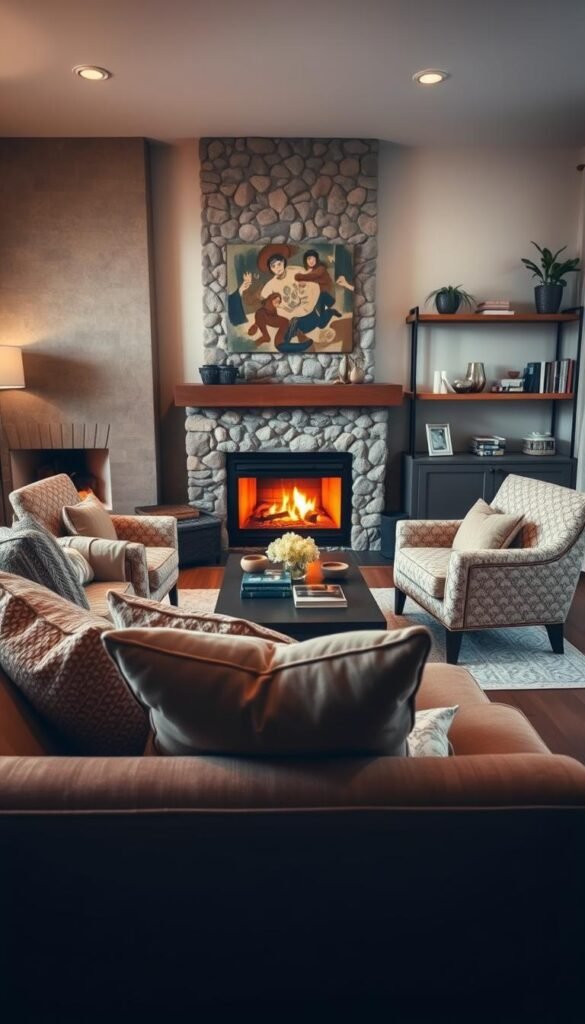
A conversation area works best when the seats face one another instead of lining the walls. Angle two chairs toward a sofa, or arrange the seats in a loose U around a coffee table. Face-to-face seating makes it easier to talk without turning your whole body toward another person.
Choose a fireplace, a view, or a piece of artwork as the focal point, then let it guide the arrangement. The sofa and chairs do not need to hug the walls; pulling them inward can make the seating group feel more connected. Keep seating pieces 30 to 36 inches apart for comfortable conversation.
A living room commonly includes a sofa, chairs, coffee table, side tables, and an area rug. Each seat should have a nearby surface for a drink or book, even if the table is small. That practical detail helps guests settle in rather than balancing things on their laps.
Low-level lounge chairs can give a living room a relaxed feel. The Armitage Geo Chenille Snuggle Chair from Dunelm is one example, with a low-slung profile and modern retro design. It shows how a chair can add a distinct silhouette while still supporting a laid-back vibe.
A loose U-shape can suit family evenings, while a pair of chairs turned slightly toward one another may fit a smaller seating group. In either case, leave the central area easy to reach. Check the view from every seat so the focal point supports conversation rather than blocking it.
Cozy Living Room Designs Inspiration Starts With a Deep-Seat Sofa
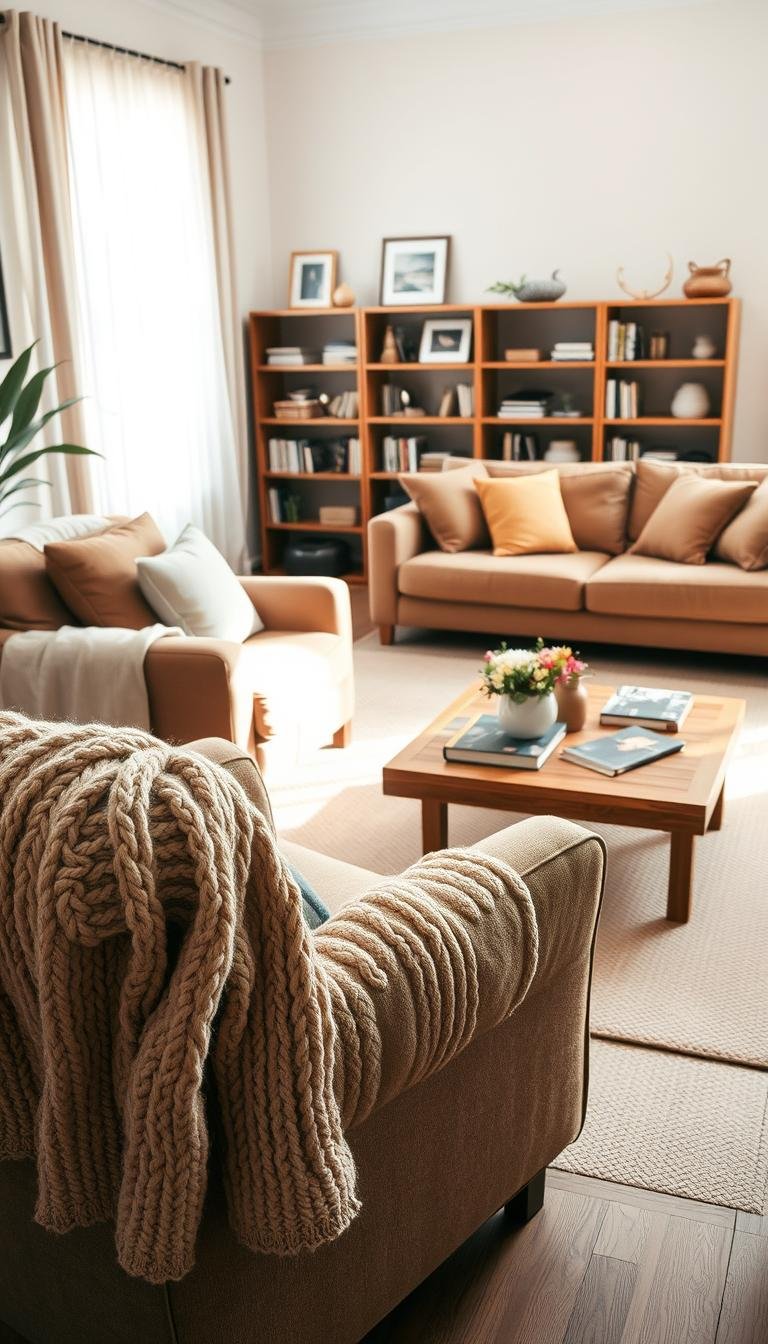
A deep, low-slung sofa is a strong choice when your living room is meant for stretching out and lingering. Its generous seat can suit movie nights or a long weekend read, while a more upright sofa may feel easier for conversation and daily sitting. Choose a silhouette that fits both your habits and the floor space around it.
Seat depth changes how a sofa feels in use. A deep seat gives you room to curl up, but shorter legs may find it harder to sit upright. A cleaner-lined, more upright option can feel more supportive for guests or family members who prefer their feet to rest firmly on the floor.
For modern living room furniture ideas, combine simple lines with comfort-first upholstery rather than treating modern style as a reason to choose stiff seating. A tailored shape can still have cushions that feel welcoming. Fabric choice also matters: consider how it will handle the room’s daily use and the way you like to lounge.
Low-slung, deep-seated sofas are a living-room design trend in 2026, but the shape should still suit your room. A large sectional may dominate a compact space or obstruct circulation, especially when it leaves little room for other furniture. In a larger room, that same sectional can create a generous place for everyone to gather.
Think about how many people use the sofa at once and whether you need a seat that supports both sitting upright and stretching out. A compact sofa may leave more room for an extra chair, while a wider one can replace several smaller pieces. Sit on the sofa in your usual lounging position and check that you can still rise comfortably and reach a side table.
Build Warmth With a Color Palette
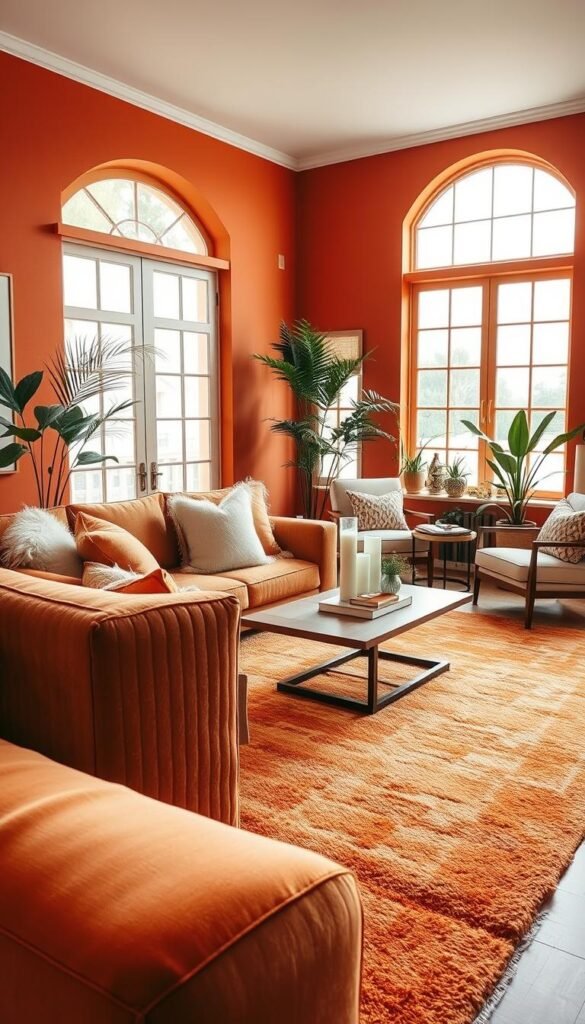
Warm neutrals create an easy backdrop, while one richer hue gives the room a more personal feel. Oat, off-white, and soft taupe can make the walls feel calm without leaving the room flat. A single deeper color can add character through an accent wall, a textile, or a painted piece of furniture.
Terracotta, rust, olive, and deep blue can all bring warmth or contrast to a living room. You do not need to paint every wall to make a color noticeable. Use a smaller accent when you want to test a bolder hue, or when a large block of color might overwhelm the room.
Try these three combinations as starting points for a palette:
- Terracotta with warm white
- Olive with oat
- Deep blue with soft taupe
Each pairing lets one color add depth while the other keeps the overall look balanced. The room’s natural light can change how paint appears across the day, so look at samples on more than one wall. For more ways to consider light and mood, explore living room color palette ideas.
A monochromatic palette can feel layered rather than plain when it uses lighter and darker shades of the same hue. Vary the finishes, too: matte paint beside a smoother surface gives the eye something to notice without adding another color. Test a paint color on more than one wall and look at it in daylight and lamplight before committing.
Layer Wood, Stone, and Soft Textures
Natural materials feel more inviting when their grain, finish, and texture are allowed to remain visible. Visible variation gives a living room more character than a set of finishes that all match exactly. Wood tones can vary while sharing a warm or cool undertone, which helps different pieces feel connected.
Darker-toned woods, reclaimed pieces, burl styles, and well-worn vintage wood all suit a more characterful interior. Designers are also mixing wood tones rather than matching every finish in a room in 2026. Pair the varied grains with simpler upholstery so the furniture remains easy to take in.
| Material or finish | Character it adds | A practical pairing |
|---|---|---|
| Reclaimed or well-worn wood | Visible character and patina | Cleaner-lined upholstery |
| Dark wood | Depth and contrast | Pale textiles or stone |
| Fluted or reeded detail | Repeated texture | A simple surrounding finish |
Mix wood tones with intention
Wood does not have to match across every table, frame, or cabinet. Choose pieces with a shared warm or cool undertone so the difference feels deliberate. A dark side table can sit comfortably beside lighter wood when the room has another detail that connects them.
Use fluted details and tactile finishes
Fluting is a series of narrow, repeated grooves that adds surface texture. In 2026, fluted and reeded details appear on fireplace surrounds, feature walls, and furniture. Keep the surrounding finishes simple so the grooves remain easy to see rather than competing with a busy surface.
Stone, ceramic, and wood paneling can add further material layers without relying on more color. A stone surface feels different from a polished wood top, while ceramic brings a distinct, solid texture. For more ideas on pairing materials across traditional and modern styles, see modern classic living room decor. Repeat one material in a second place, such as wood in both a side table and a frame, to make mixed finishes feel intentional.
Mix Patterns and Personal Pieces

A room feels more personal when patterns and objects look collected over time rather than bought as a matching set. A little contrast can make pillows, throws, and other textiles more interesting without turning the living room into a jumble. Keep one color or scale in common when you mix patterns.
A stripe and a check can work together if they share a color or use patterns of different sizes. One broad stripe beside a smaller check gives the eye a clear change in scale. An embroidered cushion or velvet accent adds another tactile detail without needing a third busy print.
The Henderson Embroidered Square Cushion from Dunelm has embroidery, ruffle-frill trim, and multiple colorways. Its decorative details offer one example of how a cushion can stand apart from a plain textile. It is an example, not a rule for how every pillow in the room should look.
Personal collections and well-worn pieces can make a room feel more welcoming than a perfectly coordinated set. A favorite book, a keepsake, or a textile brought home from a trip can give the space a story that does not come from a store display. Leave enough quiet around these items for their individual details to register.
Velvet can add a soft surface and a richer look, while cotton or linen keeps the mix more casual. Use a few different finishes rather than repeating the same fabric everywhere. Repeat one color from a patterned textile somewhere else in the room to keep the mix visually connected.
Ground the Seating With a Rug and Coffee Table
A rug beneath the seating helps the furniture read as one inviting group instead of separate pieces. Let at least the front legs of the main furniture rest on it so the sofa and chairs feel visually connected. The rug’s texture also changes how the area feels underfoot.
A natural-fiber or wool rug can bring a more tactile surface to the living room. A lower-pile rug may be easier to move furniture across and can work well when chairs need to shift often. Choose based on the way you use the seating area, not just its color or pattern.
A coffee table gives you a practical surface and a place for a small display. Wood and marble are two common materials, each adding a different look and feel. A round coffee table can soften a room full of straight lines, while a rectangular shape may echo the sofa and rug.
Keep the tabletop useful by leaving open space for drinks, books, or a remote. For a simple display, place a short stack of books beside a candle and a small arrangement of seasonal greenery. Decorative objects should not take over the surface you need every day.
Consider how the top’s material will look beside the other finishes in the room. Marble can bring a cool, smooth contrast to softer upholstery, while wood adds grain and warmth. Keep the coffee table’s everyday landing space clear before adding decorative objects.
Use Lamps to Soften the Light
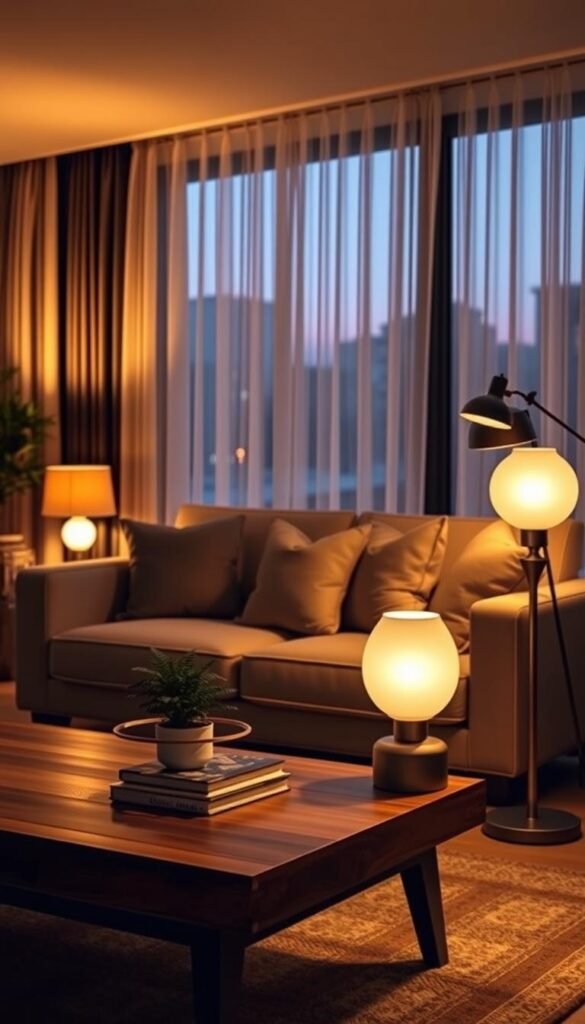
A room feels more relaxed after dark when light comes from several soft sources instead of one bright fixture. Ambient light gives you general visibility, task light supports activities such as reading, and accent light draws attention to artwork or a corner. Several light sources let you shape the room for different uses.
A single bright ceiling fixture can feel harsh during a quiet evening. Table lamps, floor lamps, and wall sconces provide different levels of residential lighting. A dimmer can also let you adjust a compatible light source as you move from reading to conversation.
Try these three layers to give each light a clear job:
- Overhead light for general use across the room
- A floor or table lamp beside a reading seat
- A wall sconce or lamp near an artwork display
Warm-toned bulbs can help the room feel softer at night. Use a dimmer where the bulb and fixture are compatible, and choose a level that still lets you read comfortably. The National Association of REALTORS® explains how layered lighting supports a warm, inviting feel.
Table lamps can bring light closer to the sofa, while a floor lamp can reach over a chair without using a table surface. A sconce can free up space on a side table and highlight a nearby wall. Turn on each light separately at night to check whether the room has comfortable light for reading and conversation.
Elegant Small Living Room Ideas That Keep the Space Open
In a small living room, the best space-saving choice is the piece that does more than one job without blocking movement. Inspiration for small, cozy living room designs can start with a sofa scaled to your main use, clear floor routes, and one or two multipurpose pieces. Usefulness before size helps the room keep its comfort.
Modern living room design for a small house can include clean lines, elevated legs, storage ottomans, nesting tables, and wall-mounted shelves. A large sofa can still work if it replaces several smaller pieces and leaves circulation clear. The goal is not to make the room bare, but to avoid filling every open patch of floor.
Small cozy living room ideas for a modern house
Clean-lined furniture with elevated legs can help a small room feel more open because you can see more of the floor beneath it. Storage ottomans provide a place to tuck away small items and can serve as extra seating. Nesting tables give you a larger surface when needed, then tuck away when they are not in use.
| Furniture choice | What it does | Space-saving tradeoff |
|---|---|---|
| Elevated-leg sofa | Shows more floor | Less enclosed storage |
| Storage ottoman | Stores small items and serves as a seat | May need to move when used for storage |
| Nesting tables | Tuck away when unused | Smaller surfaces when nested |
| Wall mirror | Reflects light but needs a useful placement | Uses wall space rather than floor space |
Modern living room design for a small house
A mirror opposite or beside a window can bounce light around the room without adding floor clutter. Place it where it reflects a useful view, rather than aiming it at an awkward corner. A wall-mounted shelf can also display a few essentials while keeping the floor open.
For elegant small living room ideas, choose a clear sightline across the room and avoid crowding it with too many shapes. One open view across the floor can make compact furniture feel less visually busy. Leave one clear sightline across the room so compact furniture does not make the space feel visually busy.
Make an Open-Plan Room Feel Intimate
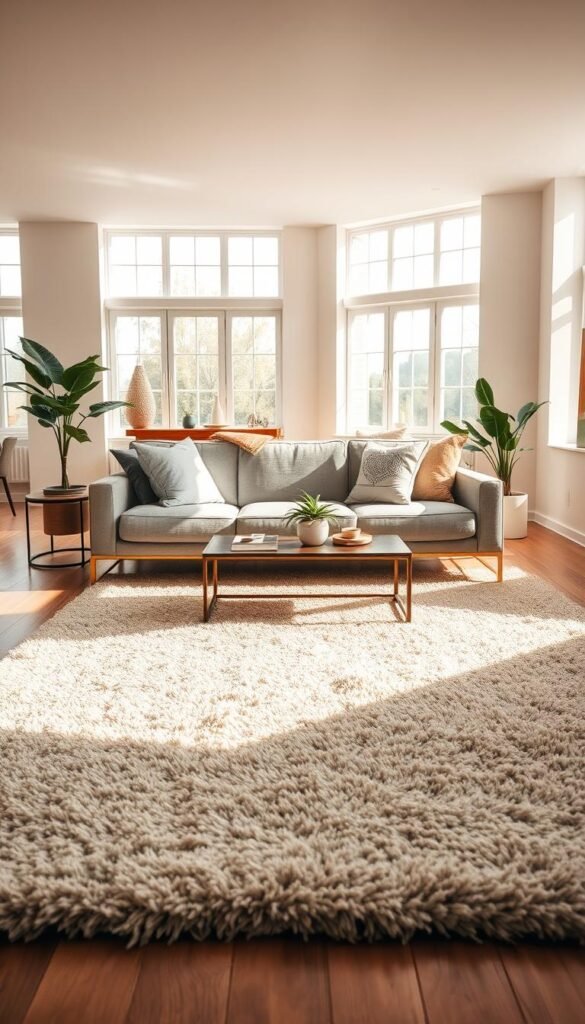
An open-plan room feels more intimate when its living area has a clear visual boundary. A rug can anchor the seating group, while a sofa or sideboard marks one edge of the space. Soft, localized light can make the living area feel distinct from the dining space.
Use the furniture boundary to give the family a comfortable place to gather without closing off the shared room. A rug beneath the seating, a sideboard behind a sofa, or a media unit can help distinguish living areas from kitchen and dining areas. Floor lamps and table lights create smaller pools of light within the larger space.
Preserve an easy route between the kitchen, dining table, and seats. The path should feel natural, not like a detour around the back of a chair or cabinet. Low furniture can mark a boundary while leaving the wider room visible.
Tall furniture can divide a room too heavily if it interrupts sightlines or blocks natural light. A sofa back or low sideboard often gives enough separation without making the shared area feel split in two. For more ideas on seating groups and flow, explore mid-century living room layout ideas.
Choose the edge that best fits your daily movement, such as the back of a sofa facing the dining table. That line can define the living zone while still letting people talk across the room. Keep the boundary low enough that people can still see across the shared space.
Choose a Style That Still Feels Like You
Transitional and modern farmhouse styles both make comfort and function central, while allowing room for personal details. A useful style direction gives the room a clear feel without requiring every piece to match. Choose the comfort-first option in each style, then let your own objects shape the result.
Japandi blends Japanese minimalism with Scandinavian simplicity, natural materials, and clean lines. Midcentury modern uses clean silhouettes and warm wood. These styles offer different visual cues, but each can work when the furniture suits how you actually use the room.
| Style | Typical visual cues | Comfort-first choice |
|---|---|---|
| Transitional | A mix of traditional and contemporary shapes | Upholstered seating |
| Modern farmhouse | Natural finishes and familiar forms | Practical wood furniture |
| Japandi | Restrained lines and natural materials | Low furniture and soft textiles |
| Midcentury modern | Clean silhouettes and warm wood | A comfortable statement chair |
Compare comfort-first styles
Transitional style combines traditional and contemporary shapes, so it can make room for a familiar sofa beside a cleaner-lined table. Modern farmhouse uses natural finishes and familiar forms, often with practical wood furniture. Both can feel relaxed rather than formal when you pick pieces for everyday use.
Bring modern cozy character into the mix
Inspiration from modern, cozy living room designs can mean borrowing a few modern shapes and textures while keeping the arrangement suited to daily use. The style does not have to control every choice. A soft throw or comfortable chair can bring a personal note to a clean-lined room.
For a deeper look at midcentury materials and furniture, see midcentury modern living room ideas. Pick just the cues that suit your home instead of treating the style as a strict checklist. Choose the style elements you genuinely enjoy, rather than trying to make every item belong to one design category.
Bring Walls and Surfaces to Life
One meaningful artwork or object can make a room feel more personal than a crowded display of accessories. A large artwork, a small gallery arrangement, framed photographs, or a meaningful object can give a wall a clear purpose. Choose a display with a story, then let the surrounding space stay quiet.
Modern living room decor ideas can combine a simple frame, a sculptural object, and one personal item without overcrowding shelves or tables. A small ceramic piece can add texture without demanding much room. The Fogo Ceramic Bowl from AM.PM is an example of a small accent with an organic, textured appearance.
Use art to create a personal focal point
A single large piece can make a wall feel finished, while a small gallery arrangement can bring together images with a shared color or subject. Framed photographs add a direct personal touch. You can also display an object that matters to you, rather than choosing art only to fill a blank space.
Art does not always need a permanent hanging place. Leaning a framed piece on a shelf can make it easier to change the display when your mood shifts. Keep heavier objects stable so they cannot slide or tip onto someone using the room.
Add small accents with texture and meaning
A sculptural object gives a shelf a different shape from framed art, while a meaningful personal item makes the display yours. Choose a few items that work with the room’s palette and leave space around them. Open surface helps each chosen object stand out.
For ways to select art, mirrors, and display shelves, see these living room wall art ideas. You can use a picture light or nearby lamp to make a favorite piece easier to notice after dark. Leave some open surface around the objects you choose so each one has room to be noticed.
Refresh the Room Without a Major Purchase
A fresh arrangement can change how a room feels before you buy a single new item. Rearranging seats may open a path or make a conversation area feel closer, while a different pillow cover or throw changes the color and texture. Small adjustments can make the living room feel new without turning it into a major project.
How to decorate a living room with simple things starts with what you already own. Move artwork to a wall where it feels more connected to the seating, or bring a plant or lamp into a darker corner. Look at the room from the doorway to see which detail catches your eye first.
Try one of these four simple refresh actions:
- Rotate the furniture arrangement
- Change pillow covers
- Move a lamp to a darker corner
- Restyle one shelf with existing objects
A new rug can change the room’s color and texture, but only if the existing layout and rug size work. A rug that crowds the seating or conflicts with a door swing may create more trouble than it solves. Check the room’s current arrangement before choosing one.
Moving a familiar object to a new place can make you notice it again. If you shift a lamp, make sure it still serves the seat or corner where you need more light. Try one change at a time so you can tell which adjustment makes the room more comfortable.
Borrow 2026 Trends With a Personal Touch
A trend is most useful when you adapt one detail to your home instead of rebuilding the whole room around it. In 2026, examples include a velvet pillow, an earthy paint color, a tassel-fringed pendant, and a statement sofa. Borrow a detail that suits your own style, rather than copying a complete display.
Vogue listed the Lulu and Georgia Brandis velvet pillow at $88 as a decorative-pillow trend item in 2026. It also listed Backdrop Home Weekend Upstate paint at $59 as an earthy-paint trend item. Those prices apply to those specific items, not to a general decorating budget.
Two other examples from Vogue’s 2026 trend list were the Anthropologie Sinclair tassel-fringed pendant at $298 and the Nickey Kehoe Tuxedo sofa at $6,400. These listed prices describe individual products, not what it costs to decorate a living room. A trend can inspire a shape or color without requiring the same item.
You might translate a velvet pillow trend into a fabric you already own, or borrow an earthy color through a small accessory. A fringed lamp shade or another sculptural silhouette can suggest a similar mood without repeating the whole look. The strongest choice is one that makes sense beside your existing furniture.
Consider upkeep as well as appearance. A pale fabric may need more care in a busy family room, while a dramatic pendant may change the feel of the whole space. Before adopting a trend, check that its color, scale, and upkeep make sense for your everyday routine.
Pair Vintage Finds With Modern Shapes
One vintage piece can give a modern room a more lived-in character when its shape or finish is balanced by something contemporary. A vintage Mario Bellini sofa paired with a sculptural Mike Ruiz Serra cocktail table shows how contrasting silhouettes can share a room. The difference is the point, as long as the pieces still feel connected.
Balance an older find with a modern piece through shared color, material, or scale. A similar tone can tie different silhouettes together, while a repeated material helps two shapes feel at home beside each other. One clear connection can make a contrast feel deliberate.
Connect a vintage find and a contemporary piece through a shared color, material, or scale.
Antiques can work alongside contemporary elements when the mix is balanced. A single vintage chair may be enough to bring character to a room with modern seating and tables. If you add several older pieces, vary their shapes so the space does not feel like a collection arranged without a plan.
Secondhand furniture can bring visible wear and character, but wear should not be mistaken for stability. Check whether a chair or table feels secure in everyday use, especially if it will hold weight or sit on a busy route. A damaged or unstable piece may need repair before you use it regularly.
Keep the surrounding furniture simple enough for the vintage piece to stand out without becoming the room’s only point of interest. A contemporary table with a striking outline can balance a softer, older sofa. Let one object or color connect the old and new pieces so the contrast feels deliberate.
Make One Comfort-First Change This Week
A cozy room grows from small choices that make everyday use feel easier. Comfort depends on furnishings and light that suit your daily routines, while personal character matters more than a perfectly matched room. Your habits are a better guide than a style label.
Choose the seat where you spend the most time and make its immediate area more comfortable. Add a reachable surface for a book or drink, or soften the light nearby so you can settle in at night. Pick one comfort-first adjustment this week, then live with it long enough to see whether it works for you.