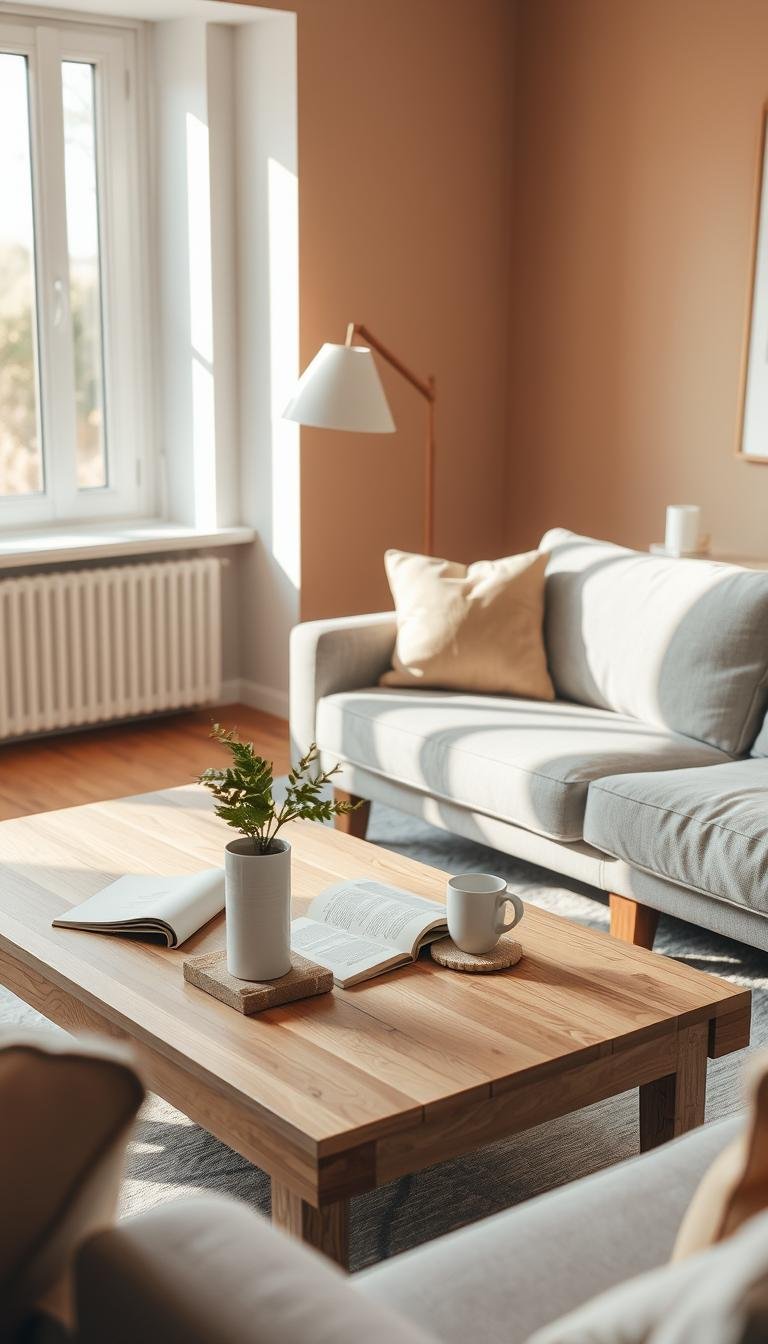
A room can feel calm without asking you to live with bare walls or an empty coffee table. A cozy minimalist living room makes intentional choices rather than stripping away every personal detail. That balance matters when you want your home to feel peaceful and still work for daily life. A vignette is a small, deliberately arranged grouping of decorative objects that creates a focal point. It gives a few chosen pieces a clear purpose without turning every surface into a display.
Start with a layout that gives you room to move, then bring in warm materials and decor you enjoy using. Manageable closed storage can keep everyday items handy without leaving them in plain sight. These choices can help you shape a style that feels simple, not bare, whether you live in a small apartment or have a spacious family room. Aim for a space that supports the way you actually relax, gather, and move through your day.
Build a Cozy Minimalist Living Room Around Comfort
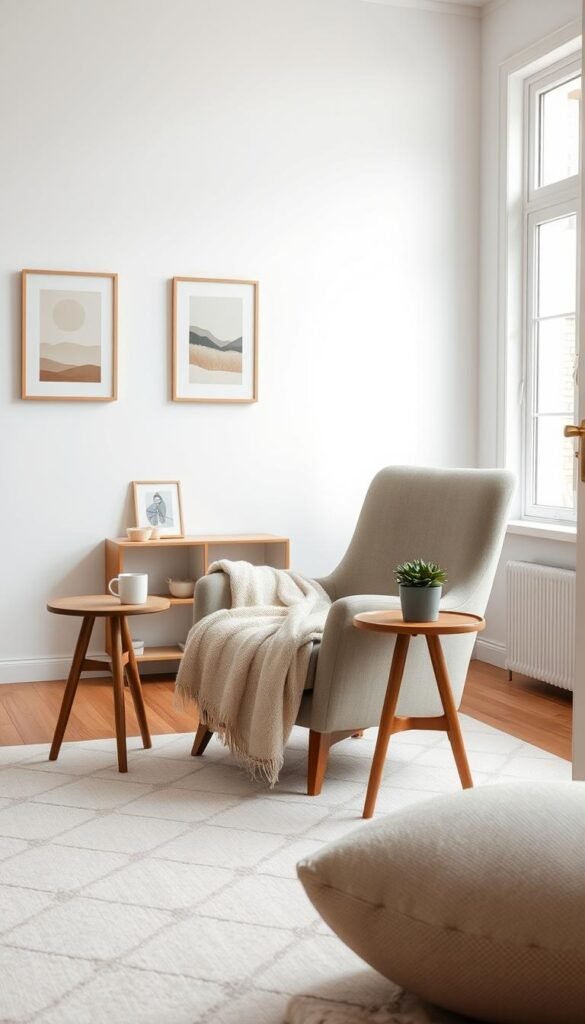
Warm minimalism keeps the visual calm of a pared-back room while making space for comfort and personality. Restraint does not mean an empty room: a cozy minimalist living room can include useful furniture, meaningful art, and a few objects you enjoy seeing. Choose simplicity that supports your routines, not a showroom look that makes you afraid to touch anything.
Warm minimalism without the showroom feel
Cozy minimalist living room ideas can include a few meaningful objects rather than an all-white, bare setting. A favorite ceramic bowl, framed family photograph, or well-used reading chair gives the living room a personal point of view. Give each piece space around it so its shape and purpose remain clear. The room can look calm without hiding the things that make it yours.
In 2026, interior design is moving toward lived-in, personal spaces and away from stark, overly curated rooms. That shift suits minimalist living when you value comfort as much as clean lines. A warm, inviting minimalist style can carry through your home without making every room look identical. Let a familiar object or a favorite book live where you naturally use it.
Keep personal objects that bring meaning, beauty, or real use to your room.
A softer counterpoint to stark minimalism
Modern minimalist living room ideas get a lived-in edge from one personal artwork, a comfortable seat, or an organic shape. These choices give the eye something to notice without making the space feel crowded. Choose pieces that feel good to use, too: a supportive chair matters more than a sculptural one you avoid sitting in.
Vogue describes romantic interiors as a 2026 counterpoint to minimalism, with softer, more whimsical rooms among the examples. That direction has not replaced warm, restrained design. You can borrow a curving silhouette or a gentle decorative touch while keeping the rest of the living room simple. Let the room feel collected over time instead of arranged only for a photograph.
Choose Furniture That Fits Your Floor Plan
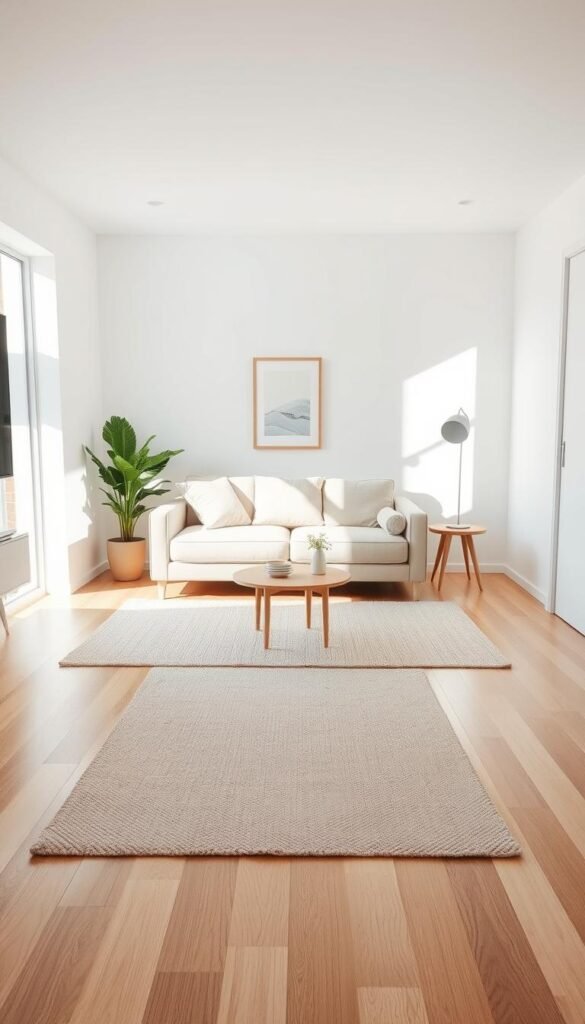
Measure the available wall and walking routes before choosing a sofa, since both determine how much seating will fit comfortably. Good proportions leave room for the furniture and the people using it. Keep 30-36 inches for walking paths and 18 inches between the sofa and coffee table. Those clearances help a living room feel usable instead of packed.
A sofa taking up about 60-75% of its wall length is a rule of thumb for visual balance. Typical sofa lengths range from 72-78 inches for a small sofa, 78-90 inches for a standard sofa, and 90-96+ inches for a large one. Apartment options include compact loveseats at 50-72 inches, small three-seaters at 72-78 inches, and standard apartment sofas at 78-84 inches.
Size the sofa to the room
A minimalist living room for a small space can use a 50-72-inch compact loveseat, depending on seating needs and available wall length. In a larger room, a longer sofa or sectional can define the seating area without forcing extra chairs into the plan. For more compact-home layout ideas, consider how furniture can preserve open floor space while meeting everyday needs.
These sofa examples show different forms, not ranked recommendations. The Burrow Union 5-Seat Sectional is modular, reconfigures into L-shaped or U-shaped layouts or separate seating areas, and lists at $3,600. The Burrow Union’s $3,600 price is one point of comparison, not a measure of fit. The HERNEST Brisa is an 84-inch sofa with a 24-inch seat depth and sculptural curved design.
| Model | Design or comfort feature | Size or configuration |
|---|---|---|
| Burrow Union 5-Seat Sectional | Modular | L-shaped, U-shaped, or separate seating areas; $3,600 |
| HERNEST Brisa | Sculptural curved design | 84-inch sofa; 24-inch seat depth |
| West Elm Harmony Chaise Sectional | Deep, sink-in comfort | Chaise sectional |
| Cozey Ciello XL Sectional | Value-oriented modular design | XL sectional |
| CB2 Ceva Performance Velvet Sofa | Velvet statement design | Sofa |
Keep routes and viewing areas clear
A minimalist living room with a TV benefits from closed media storage and a clear viewing area, with cords and accessories kept out of sight. Set the screen where seats face it comfortably, rather than letting it dictate every piece of furniture. Check that doors, windows, and the main path through the room stay usable after the furniture is placed.
Use Color, Texture, and Light to Make Minimalism Cozy
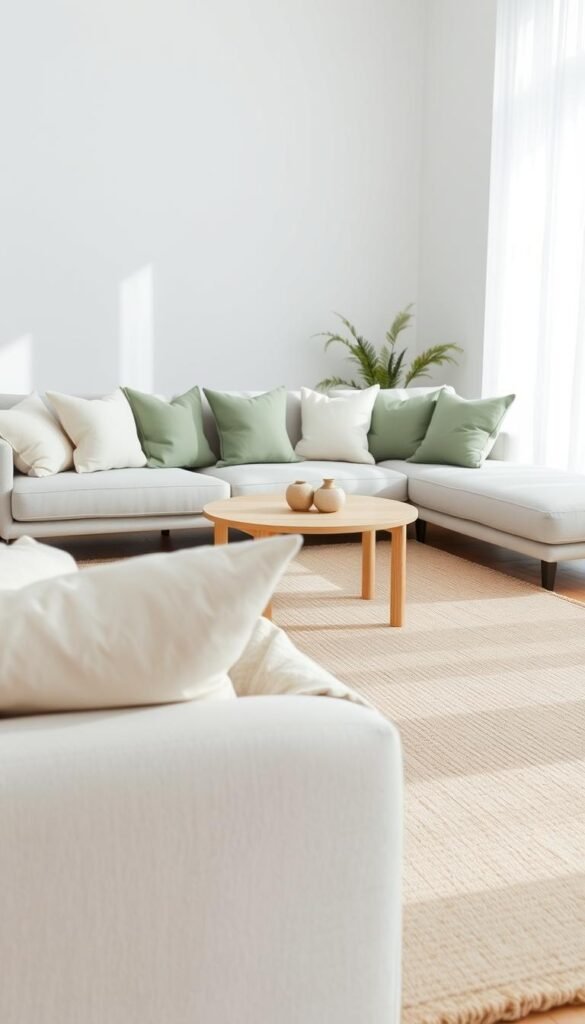
A restrained palette feels warmer when its surfaces offer different textures to the eye and hand. Soft contrast keeps a minimalist living room from feeling flat without adding a jumble of colors. Creamy whites, beige, taupe, and muted gray make a calm base. Repeat a small number of materials, while letting wood tones vary.
Warm minimalism in 2026 pairs simplicity with natural textures, soft neutrals, tactile materials, and inviting layers. Wood, linen, wool, ceramic, stone, and a plant each bring a different feel to the room. Designers are mixing wood tones instead of matching every finish; variation in tone and grain can make a space feel collected rather than coordinated by a set.
Build a warm, restrained palette
Cozy minimalist interior design can feel cohesive when a few materials appear in more than one place. Repeat wood in a table and frame, or use linen on pillows and curtains. You can also draw ideas from natural materials and warm living room design without matching every finish. One plant adds a living shape among solid surfaces.
Layer texture and lighting
Choose materials for what they contribute, not just how they look. A small change in texture can bring warmth without needing another accent color or a new furniture set.
- Linen adds a soft, relaxed surface to pillows or curtains.
- Wool brings underfoot comfort in a rug.
- Wood adds natural warmth to a table or frame.
- Ceramic gives you a simple handmade accent.
Warm light from a table or floor lamp helps the room feel inviting after dark, while available daylight brightens it during the day. A minimalist living room on a budget can keep its existing sofa, change pillow covers, or add one useful lamp instead of buying a full set of decor. Before adding another color, test whether a change in texture would create enough contrast.
Style Surfaces With the 3-5-7 Rule
A sofa, large area rug, and coffee table can anchor a room before you add a single small accent. The 3-5-7 rule groups decor as three large anchors, five medium supporting pieces, and seven small details. Think of it as a guide, not a shopping list. You do not need to buy or display 15 items to use the idea.
Anchors give a living room its basic structure, while smaller pieces add interest where you need it. The examples below show how the groupings can work across a room. Use only what fits your layout and daily life. An open surface can be a useful choice, not an unfinished one.
Use anchors, supporting pieces, and small details
The table lists suggested counts, but the exact arrangement can change with your furniture and space. A plant might be one of your medium pieces or a small detail, depending on its size. When you already have enough function and visual interest, skip the remaining count. Arranging decor at varied heights can also help a surface look considered without filling it edge to edge.
| Group | Suggested count | Examples |
|---|---|---|
| Large anchors | 3 | Sofa, large area rug, coffee table |
| Medium supporting pieces | 5 | Armchairs, floor lamp, plant, side table, ottoman |
| Small decorative details | 7 | Books, candle, bowl, vase, coasters, small art, plant |
Create a compact vignette
A vignette is a small, deliberately arranged grouping of decorative objects that creates a focal point. On a coffee table, use three objects at varying heights: a stack of books, a decorative tray, and a small plant. The tray can gather loose items, while the books and plant add different heights. Keep space free for a drink or anything else you reach for.
Let the rest of the decor support the room rather than compete for attention. A single accent can be enough beside a reading chair, and plants can soften a hard corner. Stop at the point where each surface still works for its everyday purpose.
Keep Clutter Manageable With Storage and Simple Habits
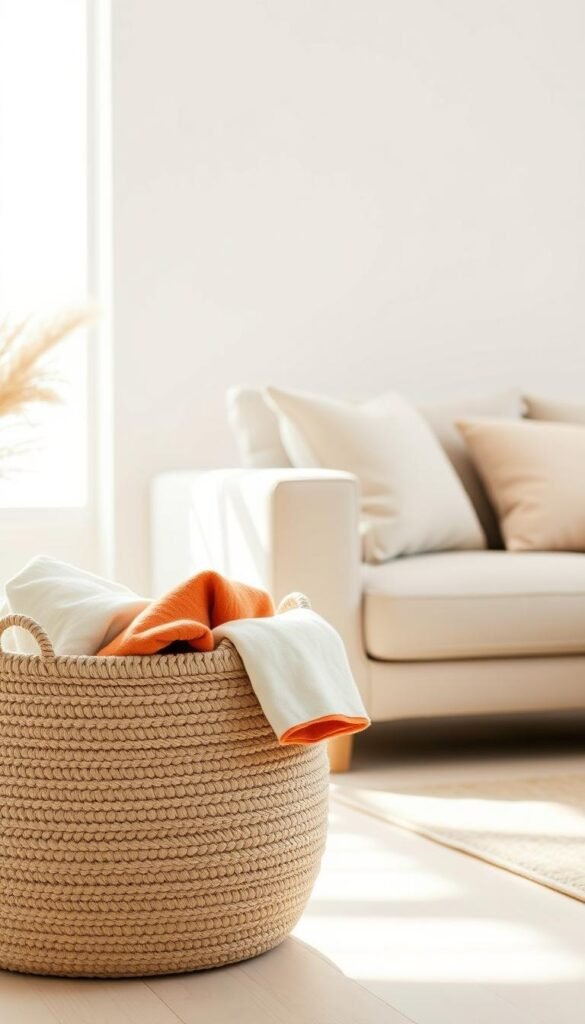
A short daily reset can keep small messes from becoming a room-wide project. Easy access makes it simpler to put things away as you use them. Closed storage can hide remotes, paperwork, and charging cords, while open baskets make frequently used items easier to put away. Choose a storage setup that feels simple to use, not just tidy to look at.
A basket beside the sofa can catch blankets or children’s toys, while a drawer can hold remotes and charging cords. Keeping similar items together makes them easier to find. For a small home, storage that helps everyday items stay organized can protect open floor space without hiding everything you use.
Make everyday storage easy to use
Give frequently used pieces a clear home near where you use them. A shallow tray can hold a remote, and a basket can collect a few blankets without requiring careful folding. Closed storage works well for items you want nearby but do not need to see. Make the choice based on what you reach for most often.
Use short resets instead of all-day cleanups
A 15-minute daily reset can involve putting things away, throwing things out, or filing items as needed. Try these practical habits:
- Spend 15 minutes putting away or sorting items.
- Group similar items in open containers.
- Keep a wastebasket in the room.
- Assign everyday items a consistent home.
Open containers for like items and a wastebasket in every room are suggested clutter-control options for adults with ADHD. Preferences vary, though; those ideas do not mean that everyone with ADHD likes minimalism or needs the same setup. Keep the storage used most often within easy reach, so putting things away takes fewer steps.
Keep Minimalism Personal Without Going Extreme
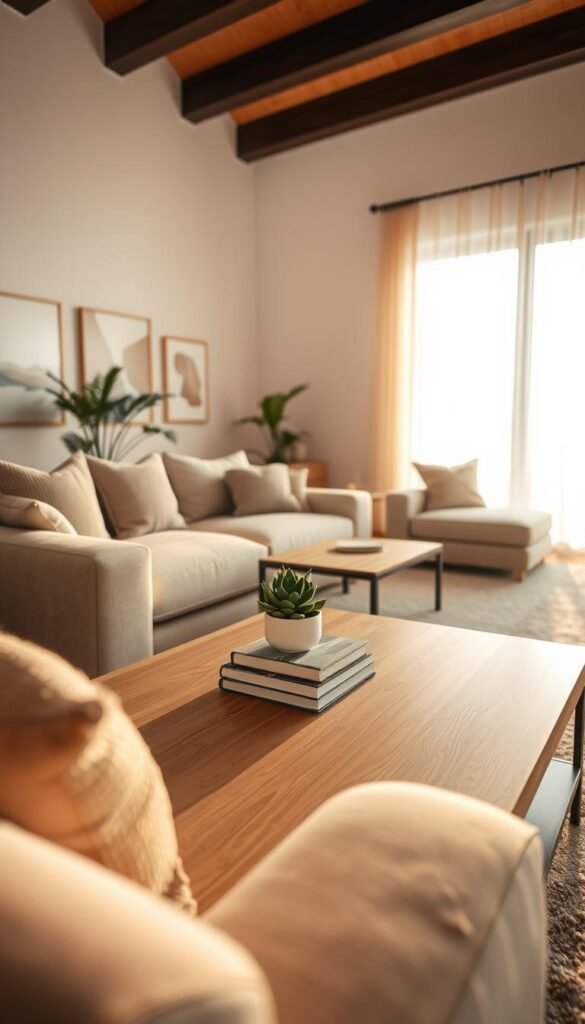
Minimalism works best when it serves your life rather than becoming another standard you feel pressured to meet. A useful living room design can make space for comfort, daily function, and personal meaning. Your values matter more than a strict style label. A room should support the people who use it, not just an ideal of visual simplicity.
An extreme minimalist living room is not automatically more successful if it lacks seating, useful storage, or meaningful personal items. Removing something helpful can make a space harder to live in without making it more thoughtful. Keep the needs of your household in view, including how you rest, host people, and spend time together.
Do not let a decorating rule turn a comfortable, useful room into an exercise in going without.
For readers considering a Christian perspective, biblical passages address greed, generosity, priorities, and stewardship, not a prescribed decorating style. Matthew 6:19-21 directs people away from earthly treasures and toward treasures in heaven, connecting the heart with what a person values. Luke 12:15 warns that life does not consist in an abundance of possessions.
First Timothy 6:10 says the love of money is a root of all kinds of evil, while Luke 6:38 teaches giving. Matthew 6:33 calls people to seek God’s kingdom and righteousness first. Psalm 24:1 says the earth and everything in it belong to God, which supports viewing possessions as things to steward rather than own absolutely. Keep the belongings that support your needs, relationships, and sense of welcome.
Start With One Change You Can Maintain
Choose one small adjustment that would make the room easier to use today. Start with a real annoyance, not a whole-room makeover. You might clear one walkway that catches your eye or make a frequently used item easier to store. A practical change is more likely to last when it fits your ordinary routine.
Try the adjustment before buying new furniture or decor. Notice whether it makes daily movement simpler or helps you settle in more easily. If the change works, keep it; if not, put things back and try a different solution. Live with that change for a few days before deciding whether the space needs anything else.