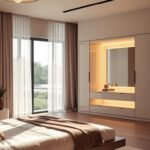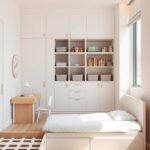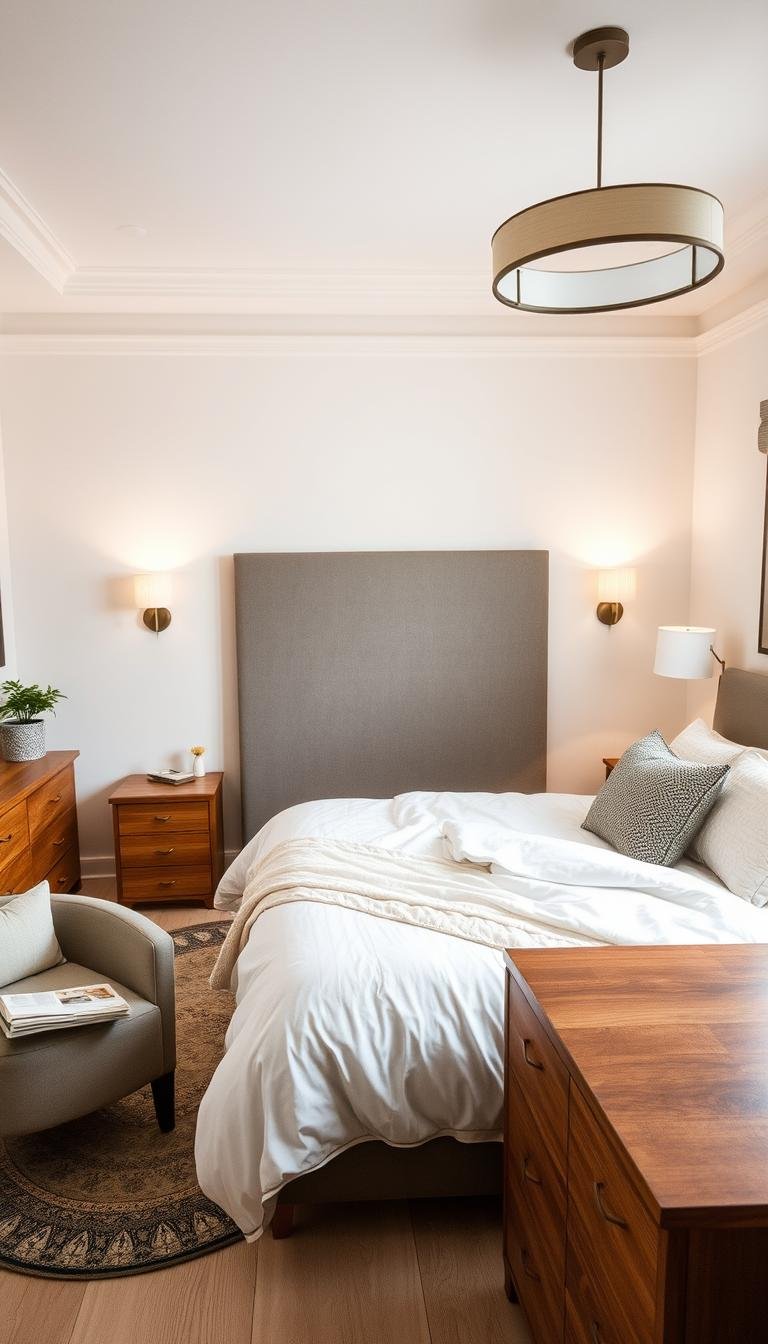
Welcome to your complete guide for creating the perfect sleeping space. We’ll show you how smart furniture placement can turn your room into a true sanctuary.
A good bedroom setup goes beyond just looking nice. It’s about crafting an environment that supports restful sleep and daily relaxation.
Our practical suggestions work for spaces of all sizes. From cozy rooms to more generous areas, you’ll find solutions that fit.
Proper arrangement improves both function and comfort in your personal retreat. You’ll learn how to make your space feel more organized and peaceful.
This guide covers everything from bed positioning to storage ideas. Get ready to create a room perfectly suited to your needs!
Why Your Bedroom Layout is the Key to Better Sleep
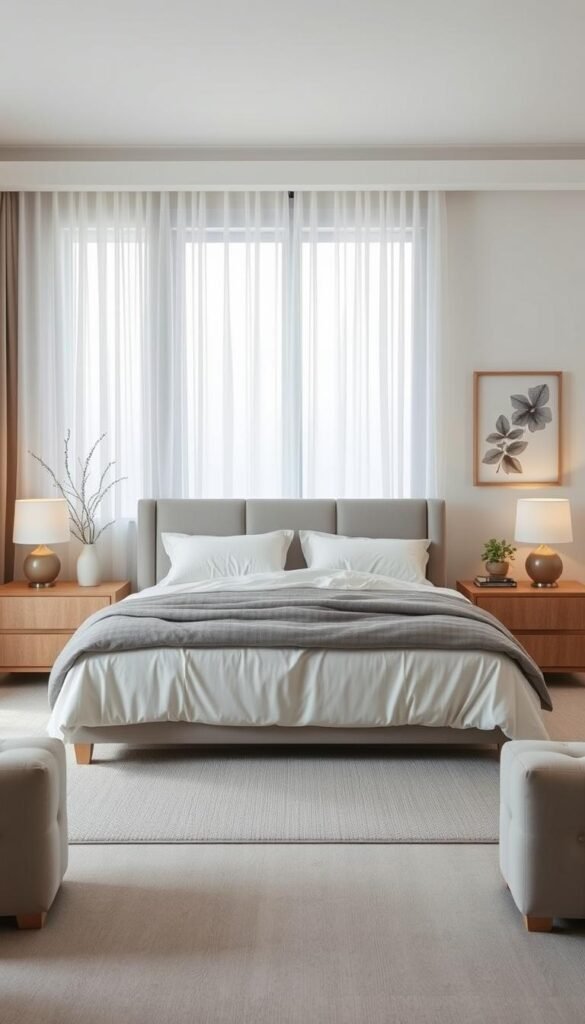
Your nightly rest is deeply connected to how you’ve organized your sleeping environment. The right setup can transform your experience from restless nights to truly restorative sleep.
“A well-arranged room can’t solve everything, but it helps more than you think”
Even with premium bedding, poor arrangement can work against your comfort. Strategic placement creates order that prepares your mind for deep relaxation.
Clutter in your personal space often leads to mental clutter. This disrupts the peace needed for quality rest. A clean, organized environment supports mental calm.
Design experts emphasize that a room’s function matters as much as its contents. How everything works together determines your comfort level.
Smart arrangement reduces nighttime disruptions. It makes those 3 a.m. bathroom trips safer and easier. This protects your sleep cycle from unnecessary interruptions.
Most adults require seven to nine hours of quality sleep nightly. Not the kind that leaves you groggy and hunting for coffee by 10 a.m. Your room’s design directly supports this essential need.
| Room Arrangement Factor | Impact on Sleep Quality | Improvement Strategy |
|---|---|---|
| Furniture Placement | High – affects airflow and movement | Create clear pathways around bed |
| Clutter Level | Very High – mental distraction | Implement smart storage solutions |
| Lighting Position | Medium – affects melatonin production | Use dimmable, indirect lighting |
| Air Circulation | High – affects oxygen levels | Ensure space around windows and vents |
The connection between spatial organization and relaxation is powerful. A thoughtful layout creates natural calm that welcomes rest. Your personal needs should guide every placement decision.
This approach supports the deep, uninterrupted sleep your body requires. It turns your sleeping area into a true sanctuary for recovery and peace.
Start with the Star: Finding the Perfect Spot for Your Bed
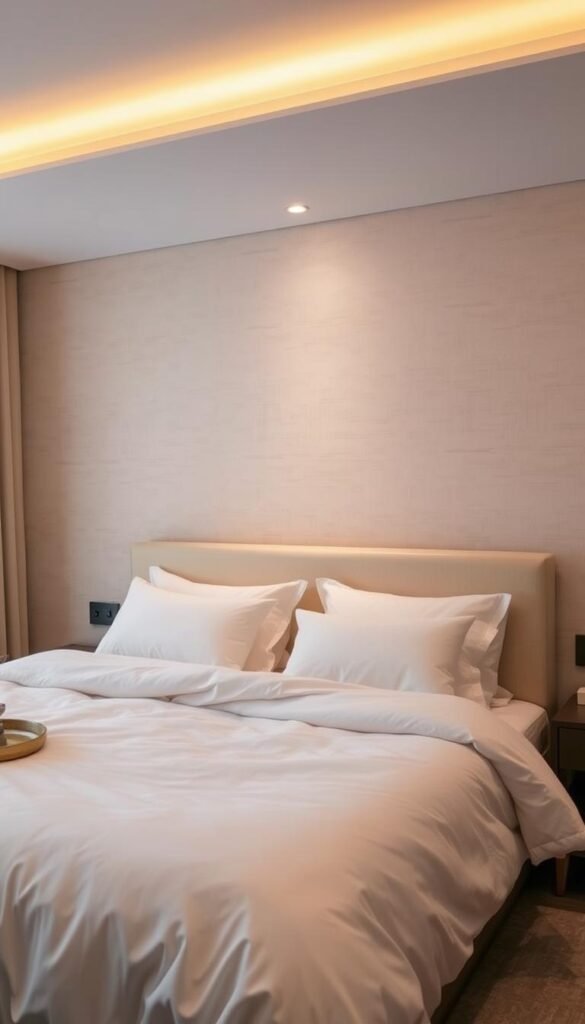
Your sleeping area’s arrangement begins with one central element. Getting this right sets the foundation for everything else.
The main piece deserves special attention in your planning process. Its position influences how you use the entire room.
Smart placement creates both visual harmony and practical benefits. You’ll enjoy better rest and easier movement through your space.
Identify the Longest Uninterrupted Wall
Walk around your room and notice which wall has the fewest interruptions. This typically becomes your best option for positioning.
The longest clear surface offers several advantages. It creates a natural focal point that anchors your entire design.
Centering against this wall establishes visual balance. The arrangement feels intentional and professionally designed.
Positioning opposite the entrance provides an additional benefit. You maintain privacy while seeing who enters your personal space.
Avoid Placing Your Bed Under a Window
Windows present multiple challenges for optimal rest. Drafts can create uncomfortable temperature variations during sleep.
Morning light often arrives earlier than desired. This can disrupt your natural waking rhythm and sleep cycles.
Traditional design principles suggest alternative placements. They recommend solid support behind you for feelings of security.
These practices have stood the test of time for good reason. They create environments that support deep, uninterrupted rest.
Ensure Easy Access from Both Sides
Comfort extends beyond just your sleeping surface. How you approach and leave your bed matters too.
Maintaining clearance on both sides serves multiple purposes. It makes nighttime movements safer and more convenient.
This arrangement simplifies routine tasks like changing sheets. You’ll appreciate the practical benefits every single day.
Proper spacing contributes to the overall energy flow. Your room feels more open and inviting with thoughtful clearance.
| Placement Consideration | Primary Benefit | Practical Application |
|---|---|---|
| Against Longest Wall | Creates natural focal point | Center bed opposite room entrance |
| Away from Windows | Reduces sleep disruptions | Choose solid wall for headboard |
| Dual-Side Access | Improves functionality | Maintain 24-30 inches on each side |
| Proper Clearance | Enhances movement flow | Ensure easy pathway around bed |
Your starting point determines how everything else falls into place. Thoughtful positioning creates both beauty and function.
The right spot makes your space feel intentionally designed. You’ll notice the difference in both comfort and appearance.
Create Clear and Comfortable Pathways in Your Room
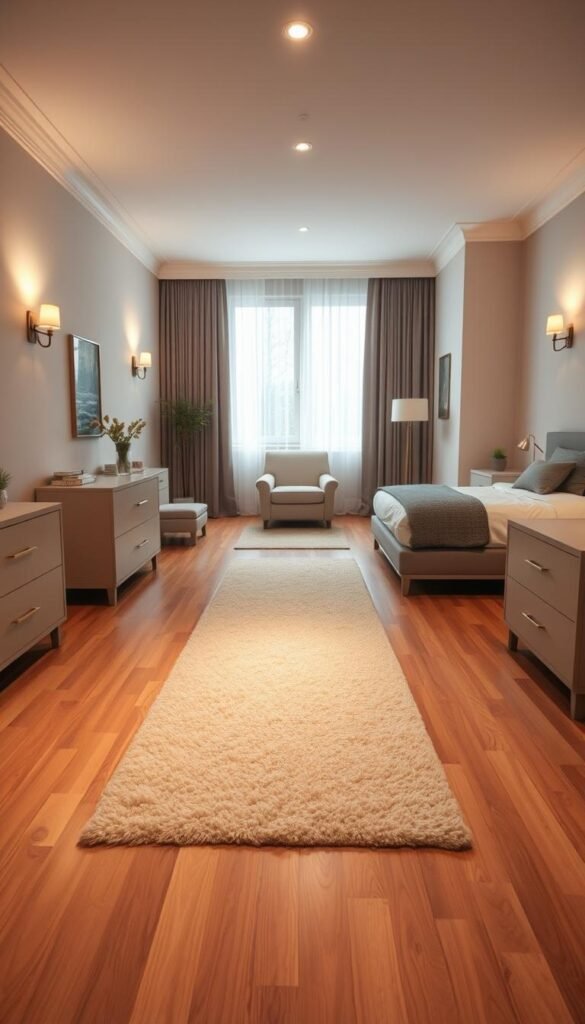
Moving through your personal space should feel effortless and natural. Well-planned pathways transform how you experience your entire room.
Smart circulation planning prevents those midnight stumbles. It makes every movement smooth and intentional.
Your room’s flow affects both safety and comfort. Thoughtful arrangement creates harmony in your daily routine.
The Ideal Clearance Zones Around Furniture
Professional designers recommend specific spacing around pieces. This ensures comfortable movement throughout your space.
Maintain at least 30-36 inches between your bed and dressers. This provides enough room for comfortable circulation.
In metric measurements, aim for 70-90 centimetres of clearance. This spacing rule applies particularly around sleeping areas.
You’ll appreciate this space when making your bed. It also helps when accessing storage spaces conveniently.
Mapping Your Room’s Natural Traffic Flow
Every room has natural movement patterns between key areas. Identify how you move between doors, closets, and main spaces.
Observe your daily routines to understand traffic flow. This reveals where pathways need to remain clear.
Your room’s door placement influences movement patterns. Work with these natural flows when planning your arrangement.
Clear pathways contribute to a sense of spaciousness. Even smaller rooms feel more open with smart circulation planning.
| Area | Minimum Clearance | Primary Benefit |
|---|---|---|
| Around Bed | 24-30 inches | Easy access and bed-making |
| Dresser Front | 30-36 inches | Comfortable dressing space |
| Closet Doors | 36 inches | Full door opening access |
| Main Pathways | 36 inches | Unobstructed movement |
Proper spacing makes your room more functional every day. It prevents bumps and stumbles during nighttime movements.
Your space becomes truly comfortable with thoughtful pathway planning. Enjoy the ease of movement in your perfectly arranged room.
Balance Your Space with Strategic Furniture Placement
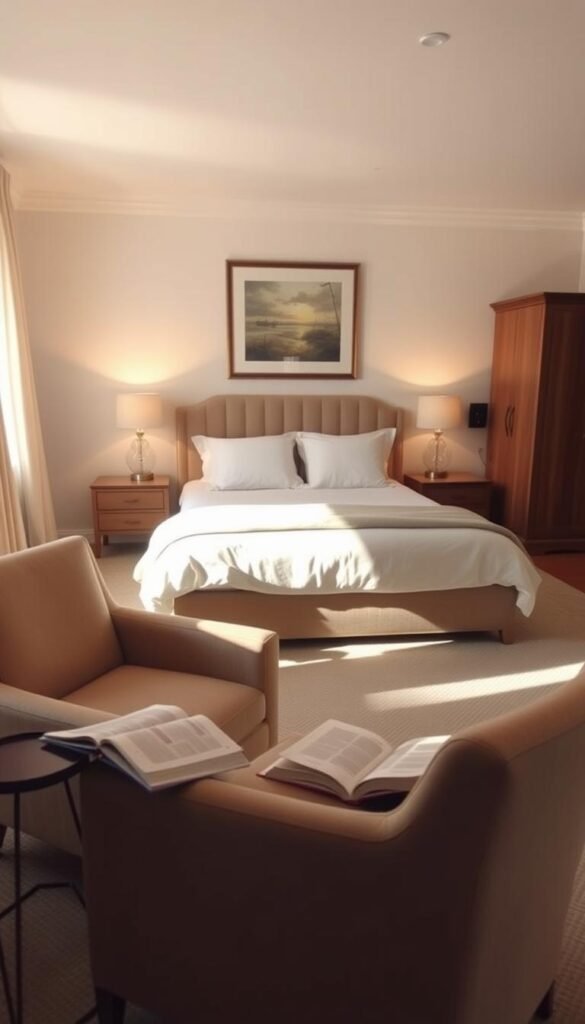
Your sleeping environment’s harmony depends on thoughtful arrangement. Strategic placement creates both visual appeal and functional flow.
Symmetry offers timeless appeal for creating order. Asymmetry provides creative solutions for challenging spaces.
Classic symmetry remains popular for good reason. The centered bed with matching nightstands creates instant polish.
This approach works beautifully in most sleeping areas. It establishes natural order that feels both calm and intentional.
The Classic Symmetrical Approach
Symmetrical arrangement creates immediate visual harmony. Matching pieces on both sides achieve perfect balance.
Centering your main piece anchors the entire design. Flanking it with identical nightstands enhances the effect.
Positioning a dresser opposite completes the symmetrical look. This traditional setup feels both elegant and functional.
Many designers consider this the gold standard. It creates environments that support relaxation through visual order.
Creative Solutions for Asymmetrical Rooms
Not every sleeping area supports perfect symmetry. Angled walls or multiple doors require creative thinking.
Visual balance becomes more important than mirror images. You can achieve harmony through careful placement.
Consider using different but complementary pieces. They create interest while maintaining overall equilibrium.
Focus on weight distribution rather than identical items. This approach works beautifully in challenging spaces.
| Room Challenge | Symmetrical Solution | Asymmetrical Approach |
|---|---|---|
| Angled Walls | Not recommended | Follow wall angle with furniture alignment |
| Multiple Doors | Center between doorways | Create focal point away from traffic flow |
| Small Space | Use scaled-down matching pieces | Multi-functional furniture for balance |
| Odd Shapes | Difficult to achieve | Use rug to define symmetrical area |
Your space’s unique features guide your placement decisions. Embrace creative solutions that honor your room’s character.
Thoughtful arrangement transforms any sleeping area. You’ll enjoy both beautiful aesthetics and improved functionality.
Essential Bedroom Furniture Layout Tips for Comfort and Function
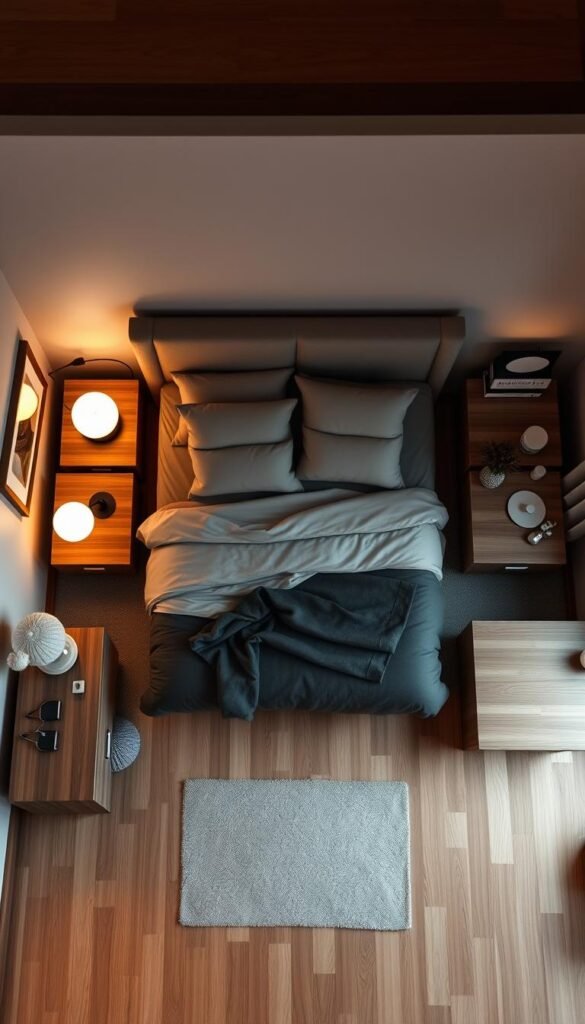
Creating a truly harmonious arrangement requires thoughtful consideration of how pieces relate to each other. The goal is establishing a balanced setup that maximizes both practical use and visual appeal while maintaining clear movement paths.
Professional designers follow core principles when organizing spaces. These guidelines help create environments that feel both complete and comfortable.
“Good design happens when function and beauty work together seamlessly”
Understanding the square footage to furniture ratio proves crucial. You want enough pieces to feel complete without creating a crowded feeling.
Your personal space should support all your daily activities. From sleeping to dressing to relaxing, each function needs proper consideration.
Starting with minimal pieces often leads to better results. Add items gradually as you discover what truly serves your needs.
Assess your specific lifestyle when planning arrangements. Your daily routines should guide every placement decision.
The right setup makes your area more efficient and enjoyable. You’ll appreciate how well everything works together.
| Design Principle | Functional Benefit | Comfort Impact |
|---|---|---|
| Balance Pieces | Creates visual harmony | Reduces visual stress |
| Clear Pathways | Easy movement access | Prevents accidents |
| Proper Scale | Optimizes available area | Maintains spacious feel |
| Multi-function Items | Serves multiple needs | Reduces clutter |
These approaches transform how you experience your personal retreat. You’ll enjoy both improved practicality and enhanced relaxation.
Thoughtful arrangement creates environments that truly serve your needs. Every element works together to support your comfort and daily routines.
Maximize Your Storage Without Sacrificing Space
Smart storage solutions transform how you experience your personal area. They keep essentials organized while maintaining an open, airy feel.
Many people struggle with finding enough room for their belongings. The secret lies in choosing pieces that work smarter, not harder.
Vertical options often outperform traditional horizontal designs. They provide excellent capacity while using less valuable floor area.
Choosing Between Dressers, Armoires, and Built-Ins
Each storage type offers unique advantages for different needs. Understanding these differences helps you make the best choice.
Traditional dressers with multiple drawers provide easy access to folded items. They work well for clothing you use frequently.
Armoires offer enclosed storage that keeps dust away from your clothes. Their taller design maximizes vertical space efficiently.
Built-in units create a seamless, custom look in your room. They can be designed to fit perfectly into awkward spaces.
Consider these factors when selecting your primary storage solution:
- Available floor space – measure carefully before deciding
- Storage needs – how much and what type of items you need to store
- Room style – choose pieces that complement your existing decor
- Budget considerations – built-ins cost more but offer custom solutions
Utilizing Vertical Space with Wall-Mounted Solutions
Look upward when planning your storage strategy. Walls and ceilings offer untapped potential for organization.
Floating shelves provide display space without consuming floor area. They keep items accessible while maintaining clean sight lines.
Tall bookcases or shelving units draw the eye upward. This creates the illusion of higher ceilings and more volume.
Wall-mounted cabinets keep surfaces clear for other uses. They’re perfect for storing items you don’t need daily.
Vertical storage offers several key benefits:
- Maximizes unused wall space effectively
- Keeps floors clear for easier cleaning and movement
- Creates visual interest through varied heights
- Makes small rooms feel more spacious and open
Remember that balance matters when using vertical solutions. Too many high pieces can make a room feel top-heavy.
Mix vertical and horizontal elements for the most pleasing result. Your space will feel both organized and beautifully balanced.
Layer Your Lighting for a Truly Relaxing Ambiance
Lighting creates the mood in your personal space more than any other element. A single harsh overhead light feels institutional and uncomfortable.
Layered illumination transforms your environment completely. Multiple sources working together create warmth and depth.
This approach lets you adjust brightness for different activities. You’ll enjoy both practical function and beautiful atmosphere.
Task Lighting: Bedside Lamps and Sconces
Focused illumination serves specific purposes like reading or dressing. These sources provide directed light where you need it most.
Bedside options offer convenient access for evening activities. They create perfect pools of light for books or devices.
Wall-mounted choices free up valuable surface space. They provide elegant solutions with clean lines.
Consider these benefits of proper task illumination:
- Reduced eye strain during reading sessions
- Localized brightness without disturbing partners
- Enhanced functionality for specific activities
- Style integration that complements your decor
Ambient Lighting: Overhead Lights and Dimmers
General illumination fills your entire space with comfortable brightness. It forms the foundation of your lighting plan.
Ceiling fixtures provide overall visibility when needed. They should never stand alone as your only source.
Control devices transform how you experience your environment. They adjust intensity from bright functionality to soft ambiance.
Warm temperature bulbs create cozy, inviting atmospheres. They feel much more relaxing than cool, blue-toned options.
These elements work together beautifully:
- Overhead fixtures with dimmers for adjustable mood
- Multiple sources creating depth and dimension
- Warm bulbs throughout for consistent comfort
- Strategic placement for both beauty and function
Your lighting strategy should support relaxation at all times. The right combination makes your space feel welcoming day and night.
Incorporate Seating and Define Functional Zones
Your personal retreat deserves more than just a place to sleep. Adding thoughtful seating creates inviting spots for relaxation and practical use.
These additions transform how you experience your entire area. They provide comfortable alternatives to your main sleeping surface.
Defined zones make your room feel more organized and purposeful. You’ll enjoy having dedicated areas for different activities.
As one design enthusiast shares, “I do like the idea of a bench or two little ottomans at the end of my bed… having something at the end of the bed not only gives me a place to sit on that’s not my bed but also is another opportunity to have a pretty design moment.”
The Versatile End-of-Bed Bench
This piece offers both style and function in one smart solution. It provides convenient seating for dressing or putting on shoes.
Many designs include hidden storage compartments. They’re perfect for extra blankets or seasonal items.
Position your bench about 18-24 inches from the footboard. This leaves enough room for comfortable movement.
Choose materials that complement your existing decor. Upholstered options add softness while wood brings natural warmth.
Creating a Cozy Reading Nook
Transform an underused corner into your favorite escape spot. All you need is a comfortable chair and good lighting.
Select a chair that invites relaxation with proper support. Add a small table for your book and morning coffee.
Position your reading area near natural light sources. Include a floor lamp for evening reading sessions.
As another expert notes, “If you have the corner for it, a comfortable chair and a small table can create a perfect spot to relax or read. It’s about making the bedroom furniture serve the rest you need.”
Use area rugs to visually anchor each functional zone. They define spaces while adding texture and warmth.
Your seating options should serve multiple purposes throughout the day. From morning routines to evening relaxation, they enhance your daily experience.
Proper placement maintains clear pathways while adding functionality. You’ll appreciate how these additions make your space more versatile and enjoyable.
Adapt These Principles for Small or Awkwardly Shaped Bedrooms
Small sleeping areas require smart thinking and creative solutions. You can still achieve comfort and function even with limited square footage.
Different approaches work best for compact spaces. Wall-mounted lights often replace bulky lamps that eat up surface area.
Choose pieces that match your room’s proportions. Oversized items overwhelm the area and make it feel cramped.
Creative solutions transform challenging spaces with angles or nooks. Work with your room’s unique features rather than fighting them.
Consider these space-saving strategies for your compact area:
- Push your bed off-center to create better flow
- Use multi-functional pieces that serve multiple needs
- Install floating shelves instead of floor-standing units
- Select furniture with legs to create airy visual space
Visual tricks make your area feel larger than its actual dimensions. Light colors, mirrors, and strategic lighting all help.
Prioritize essential pieces that support your daily routine. Every item should earn its place in your limited layout.
Multi-functional furniture maximizes every inch of your compact room. A storage ottoman provides seating and hidden organization.
Your room’s quirks can become its best features. Embrace unusual angles and turn them into cozy reading nooks.
The right approach transforms even the smallest sleeping area. You’ll enjoy both comfort and functionality in your perfectly arranged space.
Special Considerations for a Multi-Purpose Guest Room
Creating a welcoming guest room that serves multiple functions requires smart planning. Your spare room often needs to work harder than other spaces in your home.
This versatile area might function as your home office during the week. It could serve as your crafting space or even temporary storage. The challenge lies in balancing these uses with guest comfort.
Flexibility becomes your best friend in this situation. Instead of a permanent large bed, consider space-saving alternatives. These options provide sleeping space when needed without dominating the room.
Daybeds with trundles offer excellent solutions for dual-purpose spaces. They function as comfortable seating during regular use. When guests arrive, they quickly transform into sleeping accommodations.
Quality sleeper sofas provide another smart option. They maintain the appearance of regular furniture most of the time. Their hidden function emerges when you have overnight visitors.
Murphy beds represent the ultimate space-saving solution. These wall-mounted units disappear completely when not in use. They free up floor space for your daily activities.
Storage solutions require careful consideration in multi-purpose rooms. You want to keep your items organized without creating clutter. The space should still feel welcoming to guests.
Consider these storage strategies for your versatile room:
- Use attractive baskets and bins that complement your decor
- Install floating shelves for books and decorative items
- Choose furniture with built-in storage compartments
- Keep closet space partially available for guest use
Your layout should accommodate both your needs and visitor comfort. Create clear pathways that allow easy movement through the space. Maintain accessible areas for guest luggage and personal items.
Essential guest amenities make visitors feel truly welcome. Provide adequate lighting options for reading and relaxing. Include comfortable seating beyond just the sleeping surface.
A small side table offers space for personal items. A mirror helps guests prepare for their day. These thoughtful touches show you care about their comfort.
When designing your multi-purpose room, remember that balance matters. Your regular use of the space shouldn’t overwhelm its guest function. Smart organization keeps both purposes working harmoniously.
The right approach creates a room that serves you daily while welcoming guests warmly. You’ll appreciate the flexibility and functionality of your well-planned space.
Your Peaceful and Perfectly Arranged Bedroom Awaits
Your journey to creating a restful sanctuary begins with thoughtful arrangement. Implementing these suggestions transforms your personal space into a true haven of peace.
Small changes in your setup make a significant difference in daily comfort. This achievable goal requires planning but delivers lasting benefits.
Your room should be where you exhale after long days. The right configuration contributes to better sleep and reduced stress.
Maintain your beautiful space over time with simple habits. You’re well on your way to creating the retreat you deserve.