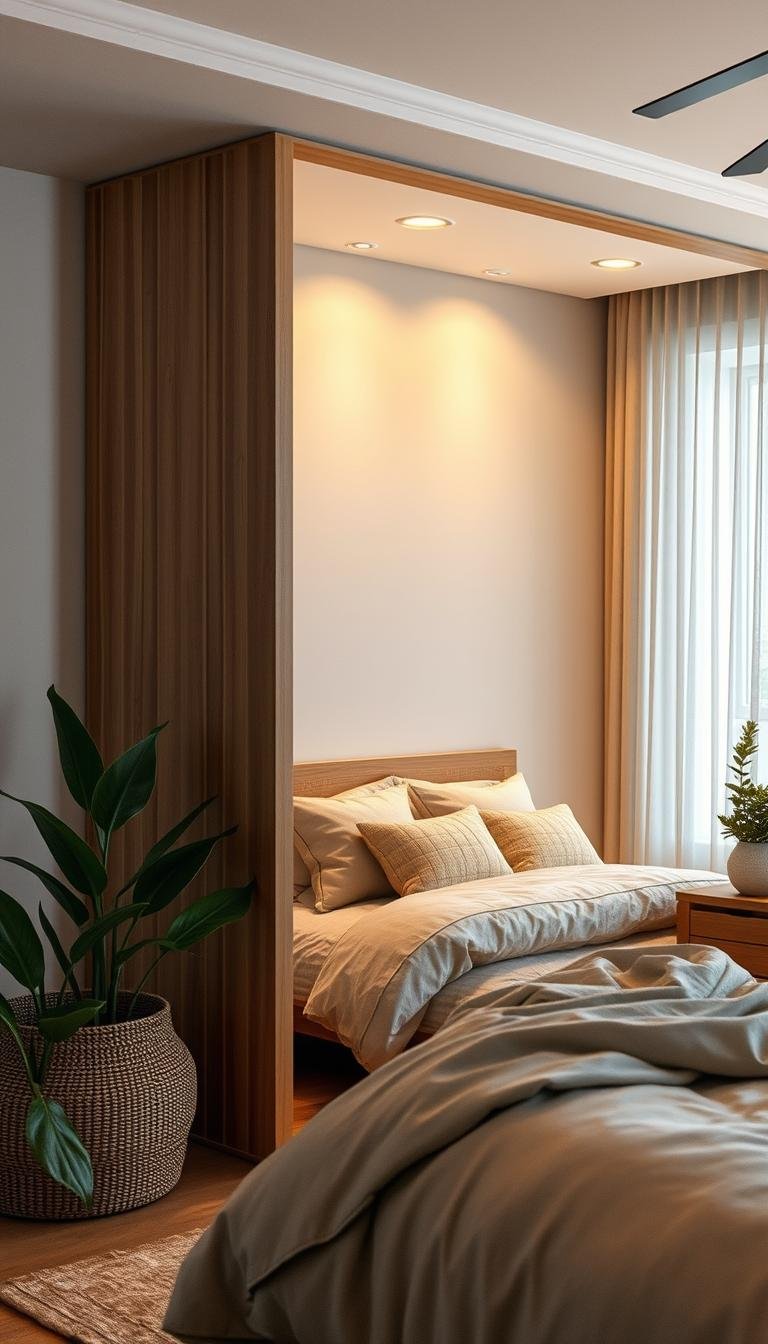
Welcome to your ultimate guide on creating a personal sanctuary in your home! Many people want more privacy in their living areas.
Creative solutions can help you define your space beautifully. You can achieve both style and function with smart design choices.
Room dividers offer a fantastic way to organize your area. They create distinct zones without permanent construction.
Options range from simple screens to built-in features. You can find solutions that fit any layout or size.
This guide explores various ideas to enhance your privacy. Discover how to make your space feel more intentional and organized.
Get ready to transform your room into a peaceful retreat. These tips will help you choose the perfect option for your needs.
Why You Need a Bedroom Divider for Enhanced Privacy
Creating a personal retreat starts with smart design choices. Many homes today have open layouts that blend living zones. This can make it hard to find quiet moments alone.
Room dividers offer a clever solution for defining your personal space. They create visual and physical barriers without permanent changes. This approach works well in shared rooms or studio apartments.
Privacy matters most in your sleeping area. You want a sense of security when resting. A proper screen ensures outsiders cannot see into your personal zone.
Design expert Elisabeth Rogoff emphasizes careful planning.
Privacy is the first thing one should consider when it comes to bedroom layout. A bed should ideally be placed where someone outside the room cannot peep in and see the person in bed.
Dividers help establish clear boundaries between different areas. You can separate your sleeping space from dressing or work zones. This creates a more organized and intentional environment.
Strategic separation enhances your comfort and peace of mind. It transforms your room into a true sanctuary. You’ll enjoy better rest and relaxation in your defined space.
Always measure your room before selecting any divider. Proper sizing ensures everything fits perfectly. This is the only way to achieve both function and style.
These solutions maximize your available space beautifully. They maintain openness while providing the privacy you need. Your room will feel more spacious and well-designed.
14 Creative Bedroom Divider Solutions for Any Space
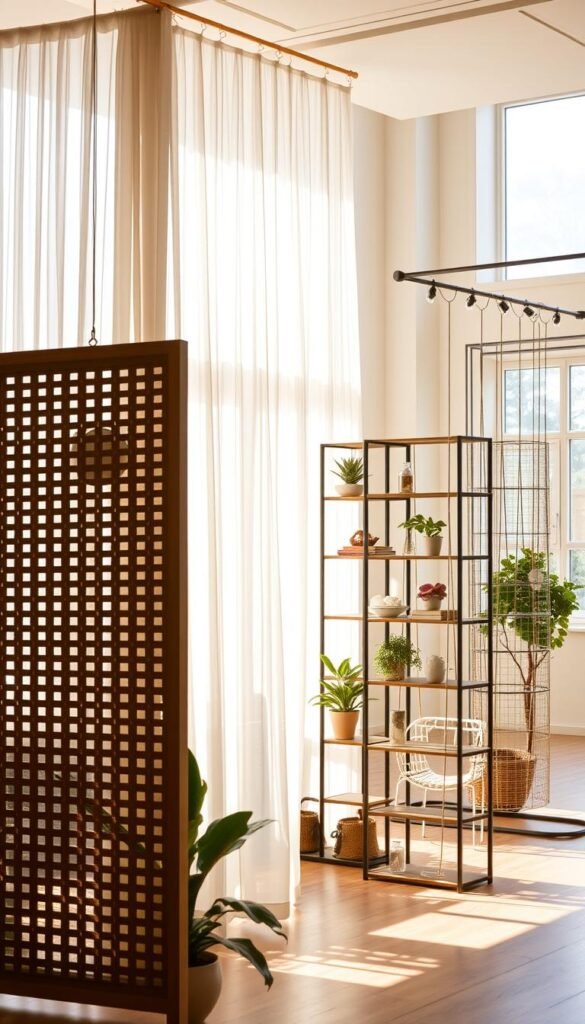
Transform your living space with these innovative separation solutions that blend form and function. You can achieve both privacy and style with the right approach.
These ideas work for various room sizes and layouts. You’ll find options from temporary screens to more permanent installations.
Elegant Drapery Dividers for Soft Separation
Fabric curtains create a gentle barrier between areas. They offer adjustable privacy that you can change throughout the day.
Designer Dane Austin used strategic drapes to separate spaces beautifully. He shares his experience with this approach.
I love the privacy it gives you, especially in the evening after a large party when people are winding down
You can choose from various materials and colors. This lets you match your existing decor perfectly.
Functional Bookcase Partitions with Storage
Shelving units provide both separation and practical storage. They create a built-in look that feels intentional.
Floor-to-ceiling bookcases make excellent room dividers. They define spaces while holding your books and decor items.
This solution works particularly well for open floor plans. You maintain visual connection while establishing clear zones.
Glass Partitions That Preserve Natural Light
Glass panels keep your space bright and airy. They create visual separation without blocking light flow.
Kristen Mendoza of Four Brothers Design + Build explains their material choice.
We selected a steel and glass partition to play with the mix of metals and natural wood finishes throughout the first floor
This option works beautifully in modern interiors. You get privacy while maintaining an open, spacious feel.
These solutions showcase how creative thinking can transform your space. Each offers unique benefits for different needs and styles.
Maximizing Small Spaces with Strategic Dividers
Living in a compact area doesn’t mean sacrificing style or function. Smart separation techniques can transform your layout completely.
You gain both privacy and better organization. These solutions work wonders in studio apartments and cozy rooms.
Strategic placement makes your area feel larger. It creates distinct zones without closing things in.
Rodney Lawrence demonstrated this beautifully. He hung delicate ceiling shelves to carve out a foyer from a larger living area.
These units distinguish the entryway while holding books and accessories. They prove that division doesn’t require bulky furniture.
Foldable Screens for Flexible Room Arrangements
Portable screens offer incredible versatility for changing needs. You can adjust your space layout throughout the day.
Melanie Turner used a brilliant approach in a small living room. Her mirrored folding screen reflects light, making the area feel more open.
This solution enhances perceived spaciousness. It works perfectly when you need temporary separation.
These units store flat against a wall when not in use. They maximize your available square footage beautifully.
Ceiling-Suspended Shelving Units
Elevated storage solutions create division without consuming floor space. They maintain an airy, open feeling in compact areas.
Zanini de Zanine shelves demonstrate this concept perfectly. Their delicate appearance belies serious functional capacity.
You can use these units to define different activity zones. They work particularly well between sleeping and office areas.
This approach keeps sightlines clear while establishing boundaries. Your room maintains flow and functionality.
Sliding panels offer another space-efficient option. They tuck completely into walls when opened wide.
This feature makes them ideal for small apartment living. You gain flexibility without permanent changes.
Light-colored materials and mirrored surfaces enhance spaciousness. They reflect natural light throughout your area.
Proper measurement ensures your solutions fit perfectly. This prevents overwhelming your available space.
Strategic division creates the illusion of more room. It maintains functional separation while enhancing visual appeal.
Your compact area will feel organized and intentional. You’ll enjoy both privacy and open spaciousness.
Architectural Divider Ideas for Permanent Solutions
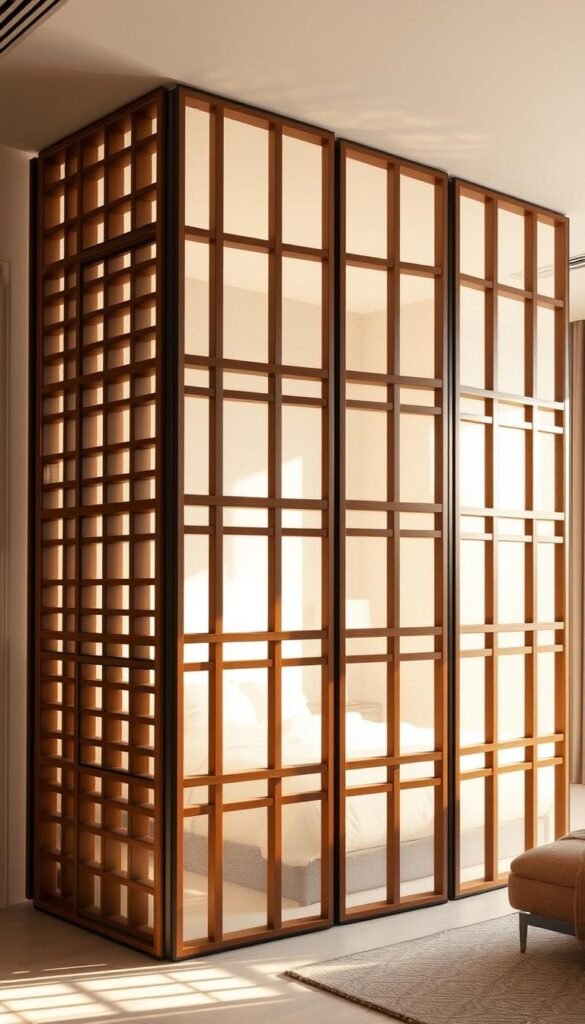
Elevate your space with built-in separation that becomes part of your home’s character. Permanent solutions offer sophisticated ways to define areas while adding architectural interest.
These features create lasting value and seamless integration. You achieve both privacy and enhanced aesthetics.
Elizabeth McNabb from Hypen & Co shares valuable insight. She explains how subtle touches make big impacts.
Architectural touches like archways or corbels can provide a subtle distinction between a seating area and sleeping area without closing off a space
This approach maintains openness while creating definition. Your room feels both connected and intentionally organized.
Sliding Door Systems for Versatile Separation
Sliding panels offer smart space management for modern living. They glide smoothly to create privacy when needed.
These systems tuck completely into walls when open. You maintain full access to your entire area.
They work better than traditional hinged doors in tight spaces. You gain functionality without sacrificing square footage.
Choose from various materials to match your decor. Glass panels maintain light flow while providing visual separation.
Partial Walls with Design Elements
Half-walls create physical barriers without complete enclosure. They define zones while keeping sightlines open.
You can incorporate decorative elements like arches or corbels. These details add character and sophistication.
These structures often include built-in shelving or display niches. You gain both separation and practical storage solutions.
Materials like wood or plaster can match your existing finishes. Your new feature looks like it was always part of the design.
| Solution Type | Best For | Space Impact | Installation Complexity |
|---|---|---|---|
| Sliding Door Systems | Modern homes, frequent layout changes | Minimal footprint | Moderate to high |
| Partial Walls | Traditional spaces, permanent zoning | Moderate footprint | High |
| Architectural Details | Subtle separation, aesthetic enhancement | Minimal footprint | Variable |
Consider your long-term needs before choosing permanent options. These investments should serve you for years to come.
Consult with design professionals for custom solutions. They ensure proper integration with your existing architecture.
Your space gains both function and elevated style. These permanent features become cherished elements of your home.
DIY Bedroom Divider Projects for Beginners
You can build your own separation solutions with simple tools and creativity. These projects transform any area into a multi-use space with privacy.
DIY room dividers offer a fantastic way to customize your layout. They provide separation without permanent changes to your home.
Beginner-friendly projects require basic tools and common materials. You can complete them in a weekend with minimal experience.
These creations help define distinct zones in your living area. They work perfectly even in compact spaces.
Home improvement expert Mike Holmes emphasizes the value of custom projects:
DIY solutions let you create exactly what you need for your specific space. You control the materials, size, and design to match your style perfectly.
Start with simple screen designs using lightweight materials. Fabric panels stretched over frames make excellent first projects.
You can find affordable materials at local hardware stores. Basic wood frames and decorative fabrics work beautifully.
Consider these popular beginner projects:
- Fabric screens with tension rods
- Wooden lattice panels
- Hanging bead curtains
- Repurposed shutter dividers
Always measure your area before starting any project. Proper dimensions ensure your creation fits perfectly.
Safety matters when working with tools and materials. Wear protective gear and follow all instructions carefully.
| Project Type | Skill Level | Estimated Time | Cost Range |
|---|---|---|---|
| Fabric Screen | Beginner | 2-3 hours | $30-50 |
| Wooden Lattice | Intermediate | 4-6 hours | $60-100 |
| Hanging Beads | Beginner | 1-2 hours | $20-40 |
| Repurposed Shutters | Intermediate | 3-5 hours | $40-80 |
Custom projects save money compared to store-bought options. You can spend half the cost for a personalized solution.
Repurposed materials add character and reduce waste. Old doors, windows, or fencing make unique separation pieces.
Your DIY creation will match your exact needs and style. Enjoy the satisfaction of building something functional and beautiful.
These projects help you gain new skills while improving your home. Start small and work your way up to more complex designs.
Choosing Materials That Complement Your Style
Your material selection makes all the difference in creating a beautiful separation. The right choices enhance your space while providing the privacy you need.
Different materials offer unique benefits for your layout. They affect light flow, sound control, and overall aesthetics.
Consider how each option matches your existing decor. Your choices should feel cohesive with your room’s character.
Solid partitions often block natural illumination. Thin wooden slats solve this problem beautifully.
They create visual interest while allowing light passage. This maintains brightness throughout your area.
Wooden Slats for Warmth and Texture
Natural wood brings organic beauty to any space. Slatted designs offer both privacy and light transmission.
You can choose from various wood tones and finishes. This helps match your existing furniture and decor.
Wood grain adds texture and visual depth. Your room feels warmer and more inviting.
Metal and Glass Combinations
Glass panels maintain an open, airy feeling. They create separation without visual weight.
Kristen Mendoza explains their design approach:
We selected a steel and glass partition to play with the mix of metals and natural wood finishes throughout the first floor
Metal frames add structural integrity and style. Irene Gunter notes their industrial appeal.
These materials work well in modern and contemporary spaces. They feel sleek and sophisticated.
Fabric Options for Softness and Movement
Textile solutions offer gentle separation with movement. Curtains provide adjustable privacy throughout the day.
Fabric absorbs sound, creating acoustic benefits. This makes your space feel quieter and more peaceful.
You can choose from countless patterns and textures. Lightweight materials billow beautifully with air movement.
Consider these material characteristics:
- Durability: Wood and metal last longer than fabric
- Maintenance: Glass requires frequent cleaning
- Cost: Custom metalwork costs more than basic curtains
- Light flow: Glass and slats maintain brightness best
Mix materials for unique design pieces. Combine wood with metal accents or fabric with wooden frames.
Your choices should reflect your personal style. They create functional art that enhances your living space.
Color and Pattern Strategies for Effective Division
Strategic color application creates visual boundaries that feel both organic and intentional. Your choices can make separation elements blend seamlessly or stand out beautifully.
Christine Markatos Lowe demonstrates this perfectly with a chinoiserie screen.
This screen serves to ground a seating area in our client’s large room and create a cozy nook where she loves to sit and have her tea at the end of the day
Contrasting colors define zones more effectively than matching tones. A vibrant screen against neutral walls creates clear boundaries between different areas.
Pattern scale affects how much visual separation you achieve. Larger patterns make stronger statements while smaller repeats offer subtle definition.
Consider psychological effects when selecting hues. Cool tones create calm private spaces while warm colors add energy to social zones.
Casey Smith’s approach shows clever color coordination. Cream walls complement a warm marigold ceiling through a vintage screen rather than bold wall paint.
You can incorporate color through paint, fabric, or decorative elements. This offers flexibility for changing your style over time.
Your room gains both function and artistic appeal. Thoughtful color choices make every separation feel intentional and beautiful.
Multi-Functional Furniture as Room Dividers
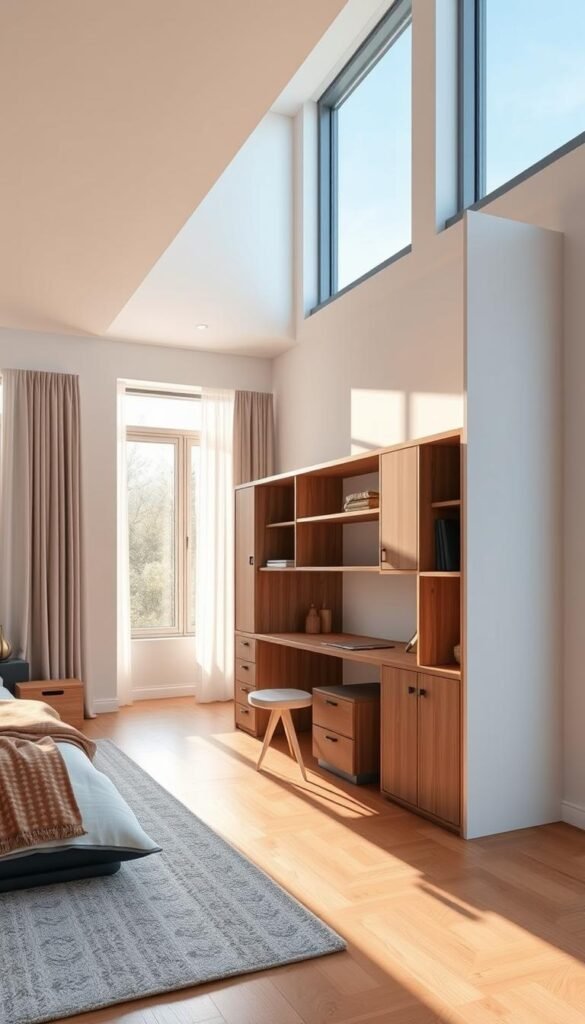
Smart furniture choices can transform your living area while serving multiple purposes. These pieces create natural separation without looking like traditional dividers.
You gain both function and beautiful design in one solution. This approach works especially well in compact spaces.
Oversized Headboards with Dual Purpose
Large headboards can create dramatic separation between sleeping and other zones. They serve as both a design statement and functional barrier.
Designer Alexa Evans from LTA Interiors faced a creative challenge. Her client wanted a desk in a room with limited layout options.
The team developed an innovative solution with an oversized headboard. This piece met the client’s needs while adding custom design elements.
We were able to meet the needs of the client while still bringing a bespoke design element to this primary bedroom
These headboards create visual separation without closing off the area. They define your rest space while maintaining an open feel.
Shelving Units That Create Zones
Bookshelves and storage units make excellent natural dividers. They organize your space while establishing clear boundaries.
Consider units with fold-down desks for added functionality. This creates dedicated office space within your living area.
Open shelving maintains light flow between different zones. You get separation without sacrificing brightness.
These solutions offer more than just spatial division. They provide practical storage and display opportunities.
| Furniture Type | Primary Function | Space Benefits | Best Room Size |
|---|---|---|---|
| Oversized Headboard | Sleeping area separation | Creates focal point, defines zones | Medium to large |
| Shelving Unit | Storage and division | Adds storage, maintains light flow | Any size |
| Bookcase with Desk | Office space creation | Dual functionality, space saving | Small to medium |
| Console Table | Subtle separation | Minimal footprint, decorative | Small |
Choose pieces that match your existing decor style. The right furniture should feel intentional, not like an afterthought.
Measure your area carefully before selecting any pieces. Proper sizing ensures everything works harmoniously.
Multi-functional furniture solves multiple design challenges at once. You create beautiful separation while adding practical features.
Your space becomes more organized and intentional. These solutions help maximize every square foot beautifully.
Maintaining Light Flow While Gaining Privacy
You can enjoy both privacy and natural brightness in your personal space. Solid barriers often block sunlight, making areas feel dark. Smart design choices solve this common problem beautifully.
Thin wooden slats offer an excellent solution for light passage. They create visual separation while allowing rays to filter through. This maintains illumination throughout your entire room.
Glass panels provide another brilliant option for brightness. They establish clear zones without sacrificing natural light. Your space feels open and connected while offering privacy.
Sarah West of Sarah West Interiors explains the benefits:
By opting for glass over a solid partition, the design maintains visual connectivity and allows natural light to flow freely between spaces, keeping a sense of openness and continuity.
Natalie Chong demonstrated this perfectly in a Toronto loft. Glass separators extend from partial walls to the ceiling. The guest area feels private yet remains filled with natural illumination.
Consider these light-friendly separation techniques:
- Position screens perpendicular to windows
- Choose translucent materials like frosted glass
- Use slatted designs that allow light passage
- Install partial barriers that don’t reach ceilings
Your room orientation affects which solutions work best. South-facing spaces can handle more solid materials. North-facing areas need maximum light transmission.
Natural illumination creates a welcoming, healthy environment. It boosts mood and enhances your overall well-being. Proper light flow makes your space feel more inviting.
Balance your privacy needs with brightness requirements. Some areas need complete visual blocking. Others work well with partial screening.
Artificial lighting can compensate for any reduced natural light. Add strategic lamps or overhead fixtures. This ensures your space remains bright and functional.
| Material Type | Light Transmission | Privacy Level | Best Room Orientation |
|---|---|---|---|
| Clear Glass | High | Low | North-facing |
| Frosted Glass | Medium | Medium | East/West-facing |
| Wooden Slats | Medium-High | Medium | Any direction |
| Sheer Curtains | High | Low-Medium | North-facing |
Experiment with different arrangements before finalizing your choice. Temporary screens let you test light patterns throughout the day. You’ll discover the perfect balance for your needs.
Your space will feel both private and beautifully illuminated. These techniques create comfortable zones filled with natural brightness.
Budget-Friendly Bedroom Divider Options
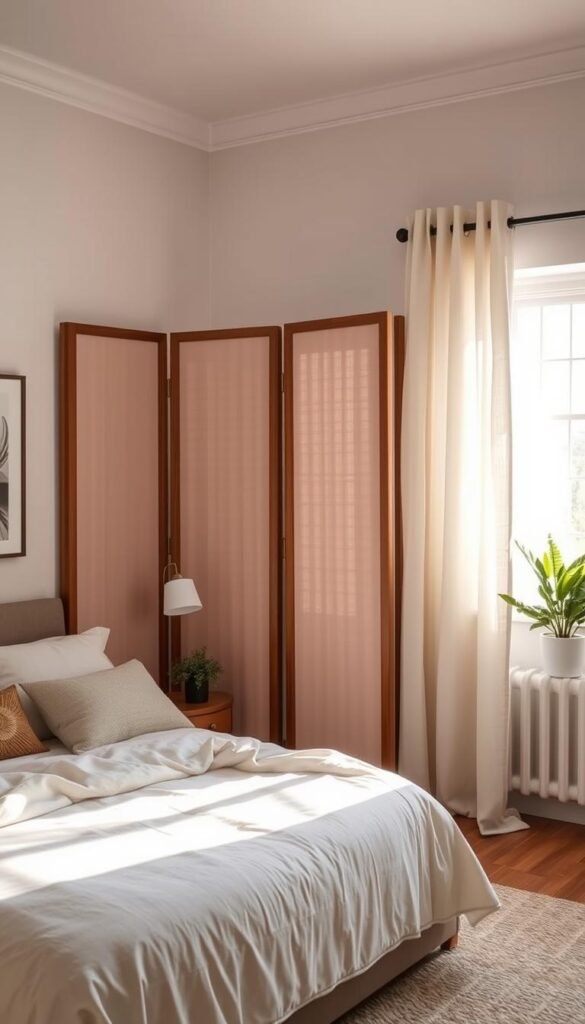
You don’t need a huge budget to create beautiful separation in your home. Many affordable solutions offer both style and privacy without expensive renovations.
These options work for various room sizes and layouts. You can find something that fits your space and wallet perfectly.
DIY projects let you create custom pieces using simple materials. Basic tools and creativity can transform any area.
Fabric curtains provide excellent flexibility for changing needs. You can open or close them throughout the day.
Traditional screens offer portable separation that stores easily. They create instant zones without permanent changes.
Ready-made solutions provide instant style at reasonable prices. Many retailers offer attractive options that won’t break your budget.
You can find beautiful pieces at discount home stores. Thrift shops often have unique finds that add character.
Repurposing existing furniture creates effective separation. Bookshelves or consoles can define areas while maintaining function.
This approach saves money and reduces waste. Your space gains organization without additional costs.
| Solution Type | Cost Range | Skill Level | Flexibility |
|---|---|---|---|
| DIY Fabric Screen | $20-50 | Beginner | High |
| Ready-Made Screen | $40-100 | None | Medium |
| Repurposed Furniture | $0-30 | None | Low-Medium |
| Tension Rod Curtains | $15-40 | Beginner | High |
Temporary solutions offer maximum flexibility for renters. They provide privacy without installation costs or permanent changes.
These options let you experiment with different layouts. You can adjust your space as your needs evolve.
Budget-friendly materials maintain aesthetics while saving money. Natural wood slats or simple fabrics create beautiful effects.
Your choices should reflect your personal style. Affordable doesn’t mean compromising on design.
These solutions help you create organized zones within your room. You gain both function and visual appeal without overspending.
Creating Specific Zones with Strategic Division
Defining clear zones within your room enhances both functionality and personal comfort throughout your day. Thoughtful separation creates dedicated areas for different activities while maintaining overall harmony.
This approach works beautifully in various room configurations. You can transform any space into a multi-functional environment that meets all your needs.
Strategic zoning helps establish visual and physical boundaries between different activities. This creates a more organized and intentional living environment that supports your daily rhythm.
Sleeping Area Separation Techniques
Your rest space deserves special consideration for optimal relaxation. Proper separation from other zones ensures peaceful sleep and true privacy.
Heavy drapes work wonderfully in long, narrow rooms. They create a soft barrier that defines the sleep area without permanent construction.
Position your bed away from high-traffic areas when possible. This natural separation reduces disturbances during rest periods.
Consider using an oversized headboard as a visual anchor. This piece creates a focal point that naturally defines the sleeping zone.
Home Office Space Creation
Working from home requires dedicated areas that promote focus and productivity. Creating a separate office zone helps maintain work-life balance.
Ideally, your desk should not be visible from your bed. This visual separation helps mentally distinguish between work and rest times.
Bookshelves make excellent dividers for office spaces. They provide both storage and visual separation while maintaining an open feel.
Consider acoustic solutions if sound privacy is important. Some materials better absorb noise between different activity areas.
Dressing Room Privacy Solutions
Creating a dedicated dressing area adds luxury and organization to your routine. These spaces need both visual privacy and functional storage.
Partial walls can hide dressing areas while maintaining airflow. They create the feeling of a separate room without complete enclosure.
Curtains offer flexible privacy for changing areas. You can open them when not in use to maintain spatial openness.
Consider built-in storage that doubles as separation. Custom cabinetry can define zones while providing organized space for clothing.
| Zone Type | Best Divider Solutions | Space Requirements | Key Benefits |
|---|---|---|---|
| Sleeping Area | Heavy drapes, tall headboards, partial screens | Minimum 6×7 feet | Visual privacy, noise reduction, peacefulness |
| Home Office | Bookshelves, sliding panels, acoustic screens | Minimum 4×5 feet | Focus enhancement, work-life separation, organization |
| Dressing Area | Curtains, partial walls, storage dividers | Minimum 3×4 feet | Privacy, organization, luxury feeling |
Each zone serves specific functions that enhance your daily experience. The right separation techniques make your space more efficient and enjoyable.
Consider your personal routines when planning zones. Your space should support your unique lifestyle and needs perfectly.
Temporary vs Permanent Divider Considerations
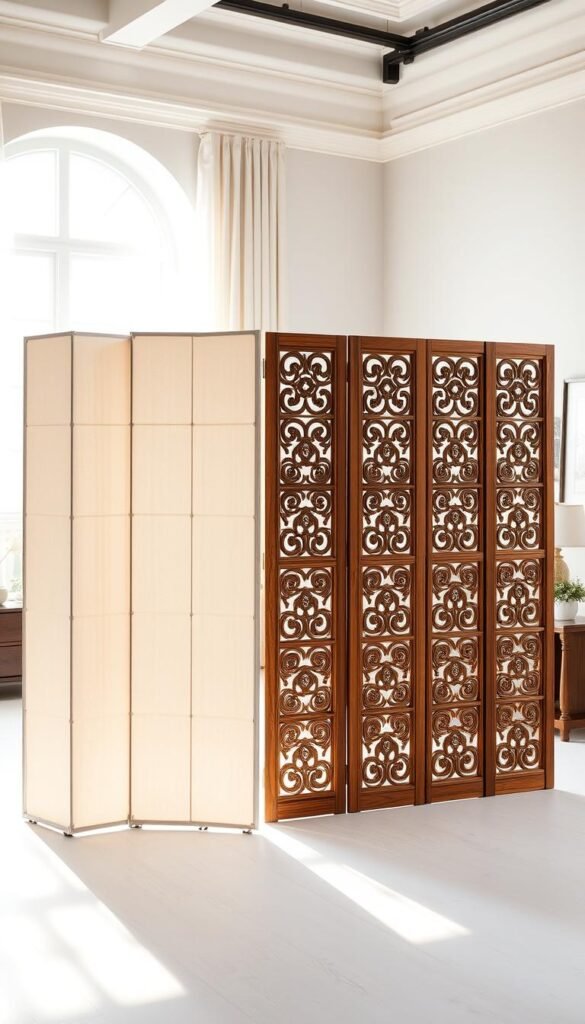
Understanding the differences between movable and fixed separation solutions helps you make the right choice. Your decision impacts both daily function and long-term flexibility.
Temporary options like screens and curtains offer instant privacy without commitment. You can rearrange them as your needs change throughout the day.
Permanent structures provide solid separation that becomes part of your room’s architecture. Built-in walls and sliding doors create defined zones with lasting value.
Temporary solutions work best for renters or frequent layout changes. They require no installation and can move with you to new spaces.
Homeowners often prefer permanent options for custom integration. These choices add value while creating exactly the separation you need.
Consider these key differences when deciding:
- Flexibility: Temporary dividers adapt quickly to new arrangements
- Durability: Permanent structures withstand daily use better
- Cost: Ready-made screens cost less than custom built-ins
- Installation: Temporary options need no professional help
Hybrid approaches combine elements from both categories. You might use a bookshelf that defines zones while providing storage.
Sliding panel doors offer semi-permanent separation. They provide solid division when closed but maintain openness when not needed.
Always measure your space before choosing any solution. Proper sizing ensures your selection works perfectly for your layout.
Think about your long-term needs before committing. Your choice should serve you well for years to come.
Reversible changes allow future flexibility in your space planning. You can enjoy current separation while keeping options open.
The right choice balances your immediate needs with future possibilities. Your space will function beautifully while maintaining its potential.
Measuring Your Space for the Perfect Divider Fit
Getting the right measurements makes all the difference in creating beautiful separation. Proper planning ensures your new addition fits perfectly and functions well.
Elisabeth Rogoff from Champalimaud Design emphasizes this critical step.
Always measure a room before buying furniture for it. No exceptions. Scale every item out and sketch a plan, there is no other way to ensure a proper fit.
Start by measuring your entire area from wall to wall. Note the length, width, and ceiling height. These basic dimensions guide all your decisions.
Account for architectural features like windows and doors. Measure their exact placement and size. This prevents conflicts with your new separation piece.
Consider traffic flow and furniture placement in your plan. Leave enough space for comfortable movement between zones. Your design should feel natural and functional.
Create scale drawings to visualize different options. Graph paper works well for hand sketches. Digital tools offer more precision for complex layouts.
Different separation types require specific measurements. Freestanding screens need floor space measurements. Built-in partitions require wall dimension accuracy.
Don’t forget electrical outlets and light switches. Their placement affects where you can position certain pieces. This ensures full functionality after installation.
Avoid common mistakes like guessing dimensions. Always use a tape measure for accuracy. Double-check numbers before making any purchases.
For custom projects, consider professional help. Experts ensure perfect fit and proper installation. They handle complex measurements with precision tools.
Enjoy the creative process of designing your space. Experiment with different layouts and ideas. Discover the perfect scheme for your home.
Whatever solution you choose, careful measurement comes first. This foundation ensures success in creating your ideal living environment.
Transform Your Bedroom into a Multi-Functional Sanctuary
Now you have all the tools to craft your perfect personal retreat. Combine different strategies to meet your unique needs.
Think about how you use your space daily. Prioritize what matters most for your comfort and routine.
Balance privacy with openness using smart material choices. Ensure your selections match your existing decor.
Always measure carefully before making any decisions. This guarantees a perfect fit for your layout.
Enjoy the creative process of designing your sanctuary. Play with various ideas to find your ideal scheme.
Your efforts will create a space that supports rest, work, and relaxation beautifully.