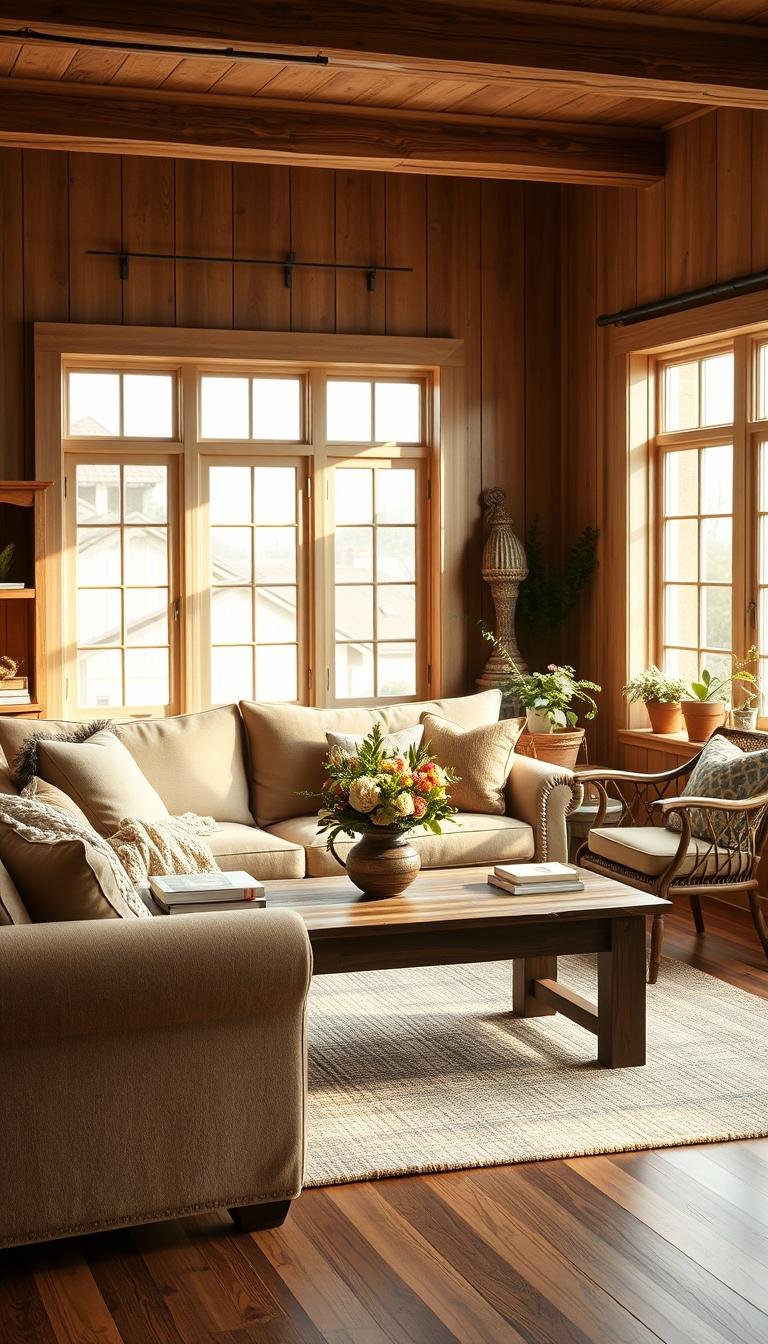
A welcoming farmhouse look can feel both relaxed and clean-lined when you combine natural texture with a few modern choices. If you want living room inspiration farmhouse ideas for a current home, start with what makes daily life feel comfortable. Warm wood, soft upholstery, and thoughtful restraint can give farmhouse style a fresh, cozy feel without making the room seem staged.
A visual anchor is the feature that first draws your eye and helps organize the rest of the room. It might be a fireplace, a large artwork, or a distinctive architectural detail. Once you have one clear anchor, it becomes easier to choose the right amount of texture, furniture, and decor.
The ideas ahead range from rustic details to practical room planning, so you can shape a design around your own space and routines. Natural materials add character, while modern choices keep the overall look from feeling too heavy. Choose the ideas that suit your home, then adapt their scale and materials to the way you live.
Living Room Inspiration Farmhouse: Pair Modern Seating With Rustic Wood
A clean-lined sofa in warm neutral upholstery gives rustic wood a calmer, more current partner. This balance is the heart of modern farmhouse style: simple seating against materials with visible grain, age, or texture.
Furniture does not need to match to make a room feel pulled together. A simple sofa beside a reclaimed-wood table can feel considered when nearby textiles repeat a few of the same warm tones. For more ways to balance comfort and character, explore modern cozy farmhouse living room ideas.
Keep the seating clean-lined
Choose a sofa with clear shapes and comfortable cushions rather than a heavily carved frame. Warm neutral upholstery lets the wood and other natural materials stand out without making the living room feel stark. A streamlined profile can also make an older home feel less crowded, especially when its architecture already has plenty of detail.
Modern living room inspiration in farmhouse style often comes from this exact contrast: contemporary furniture, natural materials, and one or two timeworn details. A slightly worn side table or a textured throw can add character without turning the seating area into a collection of rustic pieces.
Add warmth through natural materials
Bring warmth through wood, woven fabric, leather, or a soft wool textile. Vary the textures so the room feels layered, but avoid making every surface look equally rough or aged. The seating can be clean and quiet while a small number of natural details bring visual interest.
Let the materials differ, but keep their visual weight in balance. Too many heavy rustic accents can make streamlined furniture feel out of place.
When you choose a reclaimed-wood surface, look for a tone that works with the room’s other finishes rather than matching every piece exactly. Keep the largest upholstered piece visually simple when the room already has prominent beams or woodwork.
Balance Exposed Beams With Light Walls
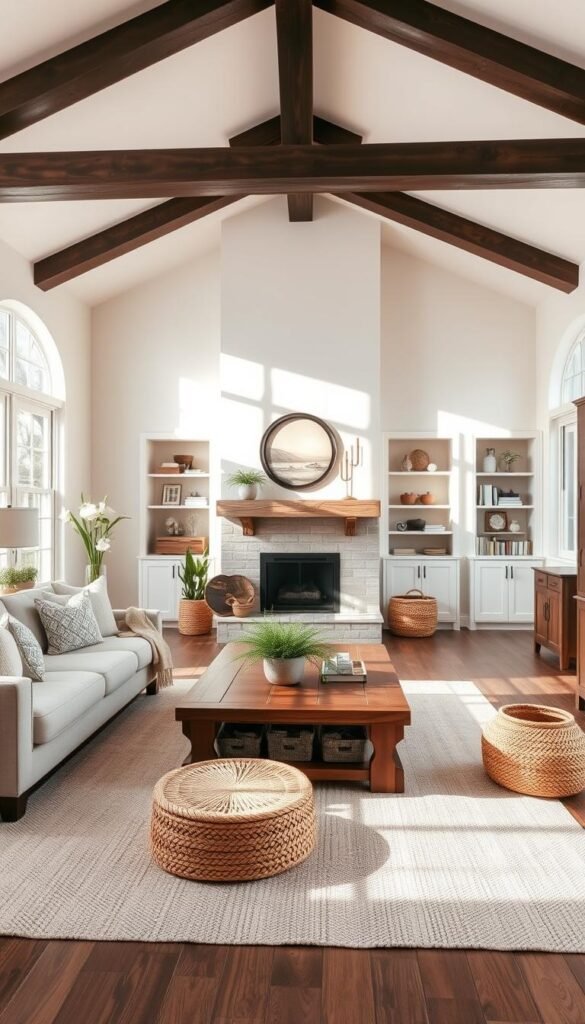
Pale walls let strong ceiling beams read as character rather than visual weight. Open daylight can bring out the grain while keeping the room from feeling closed in, especially when dark wood crosses a broad, light ceiling.
Pair dark beams with a broad pale wall surface to keep contrast in view. White walls or paneling can brighten a farmhouse living room without hiding the age and texture of the ceiling. Spruce and hemlock are examples of woods used for beams and floorboards, each bringing a natural pattern that changes with the light.
Think about the full view from the sofa, not only the ceiling. When beams and floorboards both have strong grain, daylight can help separate their textures from the walls. A simple ceiling profile and uncluttered wall surface give your eye a place to rest.
In a small living room, you may not need exposed wood across the entire ceiling. A single beam or one wood detail can provide enough warmth while leaving more of the space visually open. This approach lets a distinctive architectural feature stand out without darkening every surface around it.
Use the room’s existing structure as your guide. If the beams are dark and wide, a light wall can make their lines easier to see. If the wood is lighter, the same contrast may feel softer and less dramatic.
Natural light also changes how wood appears from morning to evening. Notice whether the beams feel dominant when the room is dim, then choose wall treatments that preserve a clear contrast throughout the day. If the ceiling is already dark, keep at least one broad wall surface light to preserve contrast.
Choose a Fireplace That Grounds the Room
A fireplace gives the seating area a natural center, especially when the chairs and sofa face toward it. A stone fireplace can make a farmhouse living room feel grounded, while brick or wood can provide a different kind of character.
Arrange the seating so the focal point feels easy to see without blocking movement. Chairs can turn toward the hearth, or the sofa and chairs can form a conversation group around it. Keep the room’s natural path clear, and avoid making the fireplace compete with a television for attention.
Stone, brick, and wood are established surround materials, so choose one that suits the house rather than adding a finish simply for effect. A fireplace does not have to be grand to work as the room’s visual anchor. The shape of the surround and the way the seating faces it matter just as much.
Without a hearth, you can establish a clear center in other ways:
- Hang one substantial piece of artwork above the main seating.
- Use a built-in display wall as the room’s strongest feature.
- Highlight a strong architectural wall detail with simple furnishings nearby.
Choose one of these features to lead the room, then give it enough visual space to register. A large artwork can make a strong focal point when no fireplace is present, while a built-in can combine display and storage. In a room without a hearth, make one substantial artwork or built-in the clear visual anchor.
Bring Reclaimed Wood Into Focus
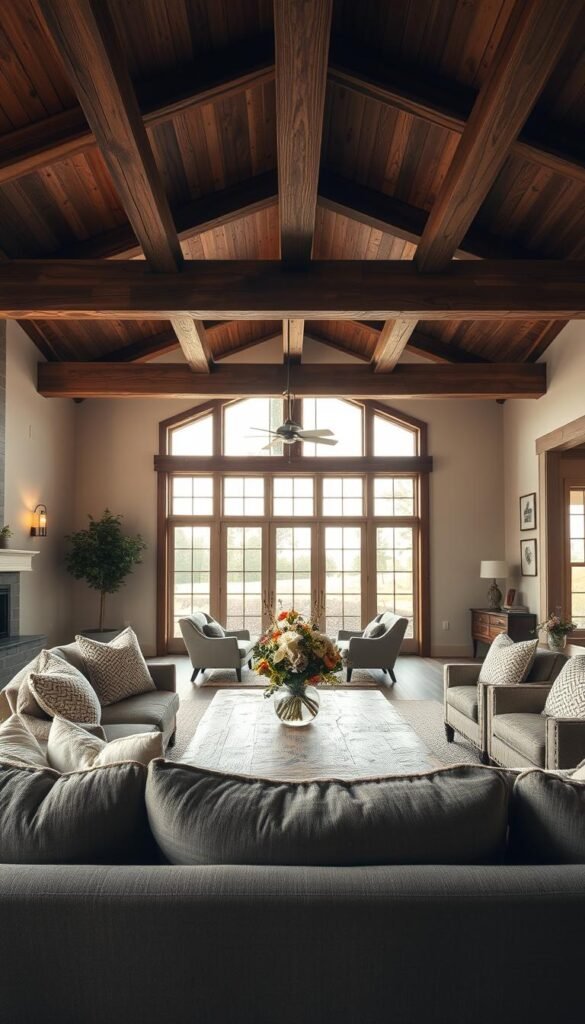
Reclaimed wood adds a sense of history most quickly when it appears in one prominent, well-chosen place. Its natural grain and existing wear create texture that newer materials cannot copy exactly.
Keep reclaimed wood limited when the floors and ceiling already show strong grain. Salvaged beams from an old building can bring age to a newer farmhouse interior; reclaimed beams have even been sourced from an 1800s mill. The material can be visually busy, so a single deliberate feature often has more impact than many scattered accents.
Consider these three placements when deciding where reclaimed wood will make the most sense:
- Ceiling beams that add character above a simple seating area.
- A mantel that gives the fireplace surround a distinct natural detail.
- One feature wall that brings texture to an otherwise quiet room.
Choose a location where the wood can be seen clearly from the sofa. A salvaged beam with worn edges may carry enough character on its own, while a feature wall can change the feel of the whole room. Let the surrounding finishes remain quieter so the grain stays easy to read.
Reclaimed material can vary in color and surface texture, even within one piece. That variation is part of its appeal, but it can be distracting beside several other highly patterned finishes. A room with busy floors may need only a single beam or mantel detail to feel established.
Look at the feature from more than one angle before deciding how much to use. Strong grain can feel subtle in one light and bold in another. Let the wood’s grain and wear show instead of covering every surface with competing rustic finishes.
Use Shiplap Without Overdoing It
A single shiplap surface can establish farmhouse character without turning every wall into the same feature. One deliberate treatment gives the room texture while leaving other surfaces free to contribute their own detail.
Repeating shiplap on every wall and the ceiling can flatten the room’s visual variety. Horizontal boards create a clear pattern, so use them where the lines help the space feel intentional. Painted paneling can offer a brighter, more restrained effect than natural boards with visible grain.
Three placements can bring the treatment into the room without making it feel repetitive:
- Cover one accent wall to give a main seating area a defined backdrop.
- Add lower wainscoting to introduce texture below the main wall surface.
- Use painted boards on the ceiling when the walls need to stay simple.
Natural boards show knots and grain, while painted boards let the wall’s grooves provide most of the texture. Choose the effect that fits the room’s other finishes. A quiet painted surface can make the lines feel crisp without adding another strong wood tone.
Consider how the boards meet corners, windows, and door frames. A treatment that stops neatly at an architectural edge tends to look more planned than one that ends without a clear reason. Keep the scale of the boards in proportion to the room, so the pattern does not overwhelm a small wall.
Shiplap can suit both a relaxed family space and a more edited farmhouse living room when you treat it as one part of the design. If you want to bring similar restraint to another room, these modern farmhouse wall-treatment ideas also show how selective paneling can work. Use a painted treatment when the room needs texture but already has plenty of visible wood.
Build a Warm Palette With One Accent Color
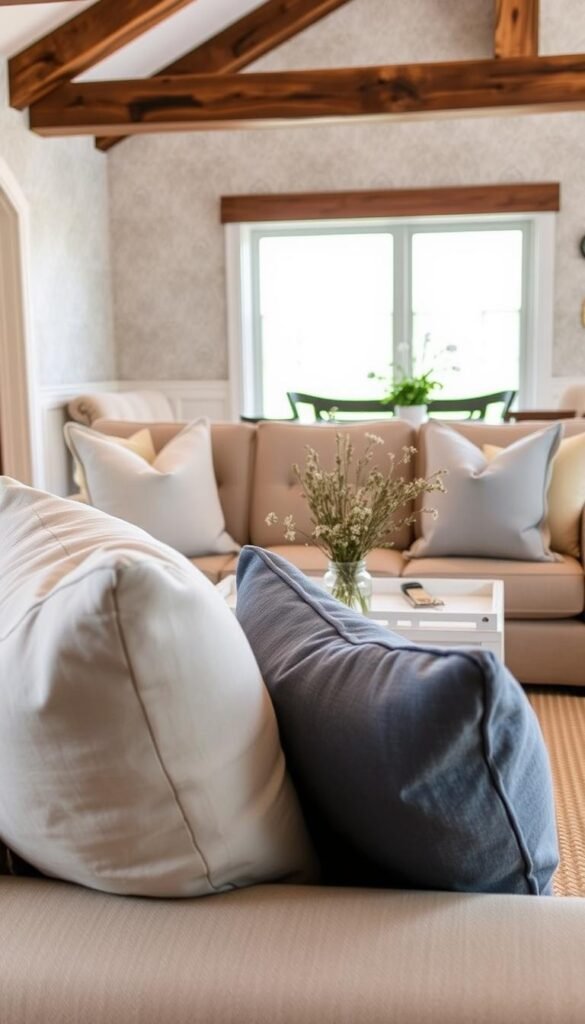
A warm neutral base lets a single muted accent color add personality without crowding the room. One accent family can show up in a few textiles or objects, while the larger surfaces stay easy to live with.
Start with neutral walls and larger pieces, then repeat one accent color in small doses. Off-white, gray, and warm taupe can each support farmhouse style. Muted blue, dark gray, or rich red can bring contrast without turning every corner into a separate color story.
Use the table as a quick way to compare the mood each color family can create:
| Palette role | Color family | How it reads |
|---|---|---|
| Warm neutral | Off-white | Soft and welcoming |
| Cool neutral | Gray | Quiet and clean-lined |
| Muted accent | Muted blue | Calm and gently distinct |
| Deep accent | Rich red | Warm and noticeable |
Dark gray can also work as an accent, especially in a room that needs a sharper edge. A mostly white living room may handle deeper color across a few visible details. A room with substantial dark wood may need a lighter neutral base than a mostly white room.
Consider how often you want to see the accent. A blue pillow or a red-toned textile can shift the room’s mood without changing large surfaces. If you prefer a quieter look, use the accent in a small object that you can move or replace with little effort.
The key is repetition, not quantity. Repeat the accent in two or three small places rather than giving every accessory a different color.
Make Vintage Finds Feel Intentional
A vintage piece feels more personal when its history or use is easy to recognize. A clear story makes an object feel chosen, not like another item filling an empty shelf.
Give the most distinctive find enough open space to be seen. A 19th-century banner or a vintage bookcase from a medical office can bring personal history into a living room without creating a crowded antiques display.
Choose pieces with a story
Look for one or two objects that matter to you or have a recognizable past. A repurposed trunk can hold blankets while adding a different shape to the room. An old bookcase can keep books and useful things close while giving a plain wall more character.
Farmhouse living room inspiration on Pinterest is easier to adapt when you save full-room photos and look for repeatable details. Notice wood tone, palette, and arrangement instead of trying to copy every object in someone else’s home. Those broader choices are easier to make your own.
Give collected objects breathing room
Place a vintage find where its shape is visible from the main seating area. Leave open space around it rather than filling every nearby surface with smaller pieces. The object will feel more purposeful when you can see its outline and understand how it fits the room.
Consider usefulness alongside appearance. A trunk with a working purpose or a bookcase that holds books can become part of daily life instead of a display that needs constant attention. Leave open space around the most distinctive find so its shape and story remain visible.
Layer a Rug for Comfort and Definition

A rug that reaches beneath the seating makes separate pieces feel like one conversation area. The right fit also adds comfort underfoot and defines the living room’s main zone.
Fit at least the front legs of the sofa and all chairs on the area rug. Most living rooms need at least an 8-by-10-foot rug, while 4-by-6-foot or 5-by-8-foot options suit smaller living rooms. In a smaller room, leave 10 to 18 inches between the rug and walls.
Material affects the room’s texture as much as the rug’s pattern. Compare these options before settling on one:
| Rug material | Texture | Visual effect |
|---|---|---|
| Sisal | Firm and woven | Natural, structured base |
| Jute | Soft and nubby | Relaxed, warm texture |
| Vintage kilim | Flat and patterned | Colorful, collected accent |
| Flatweave | Low and smooth | Simple, quiet surface |
A larger room can use an 8-by-10-foot rug to anchor more of the seating group. In a smaller room, a 4-by-6-foot or 5-by-8-foot rug can suit the available floor area. A smaller rug can still work when layered over a larger sisal rug.
Check where the seating legs land before choosing a pattern. A rug that sits too far from the chairs can look like a separate island rather than part of the conversation area. If a room opens into another zone, its edges can also help mark where the living room begins.
For more relaxed farmhouse living room ideas, consider how texture and seating work together. Check the rug’s edges against the room before buying so doors and walking routes remain clear.
Choose Furniture That Fits the Room
Furniture looks settled when its scale suits the architecture and the people who use the room. Proportion matters as much as style, especially in older houses where doorways and room shapes can affect how a piece feels.
Choose silhouettes with enough presence to feel comfortable, but not so much bulk that they overwhelm the room. A petite sofa with wingback chairs can suit a traditional farmhouse living room, while a tufted Chesterfield gives the seating a more formal look.
Try one of these combinations as a starting point:
- A petite sofa with wingback chairs for a balanced, classic seating group.
- A Chesterfield sofa with a simple side chair for a mix of traditional and restrained shapes.
- A clean-lined sofa with a leather armchair for a modern farmhouse contrast.
A furniture silhouette can feel substantial without overwhelming an older or compact room. Choose a piece with a defined shape, then let its proportions do the work instead of adding extra decorative details. A light frame or open legs may also help a large piece feel less solid.
Matching every piece is not required. A coordinated set can sometimes feel too formal, while different styles can bring more character. The key is to keep the seating group’s visual weight related, so one chair does not look tiny beside a bulky sofa.
Think about how the group supports conversation and daily use before you choose finishes. For a practical look at room furniture design, consider how each seat relates to the others. Compare seat heights and visual weight before mixing furniture from different styles.
Use Lighting to Soften the Rustic Edges

A dark metal fixture can sharpen a pale farmhouse room while echoing its wood and iron details. Metal overhead adds a crisp contrast, especially against light walls and warm wood.
Choose a fixture that fits the ceiling height and the seating area beneath it. A lantern-style pendant or wrought-iron chandelier can bring structure to the room, but a large fixture can overpower a low ceiling.
A chandelier can act as a clear design feature without needing elaborate ornament. Consider its outline from the sofa and from the room’s entrance. A simple shape can feel striking when the walls and furnishings around it are more restrained.
Wall sconces provide a softer supporting glow. Place them 5 to 6 feet above the floor, where they can brighten a wall without taking over the room. Their light can help soften the contrast of dark wood and metal after daylight fades.
Choose the finish with the other visible details in mind. A dark fixture can echo a small number of metal accents, while a lighter finish may sit more quietly beside pale walls. Avoid adding several large metal forms that compete for attention.
Look at the fixture from the main seating position, not only from below it. A room can feel balanced from one angle and top-heavy from another. Keep the fixture’s visual scale in proportion to the ceiling and the seating area beneath it.
Plan Clear Walkways Around the Main Seating
A clear route through the room matters more than fitting in another piece of furniture. Room to move helps the seating area feel calm and makes daily trips across the living room easier.
Keep 36 inches clear on primary walking paths when possible. A constrained secondary path may work with 30 inches, while less than 30 inches feels cramped. Measure furniture edges in their actual positions, counting door swings and fully extended recliner footrests.
Measure the main walking routes
Walk the routes you use most, such as the path from a doorway to the sofa. When 30 to 36 inches between large furniture pieces cannot fit in a smaller room, 18 to 24 inches is a layout guideline. Check the narrowest point rather than relying on the room’s overall size.
Furniture often shifts during normal use, so measure with each piece where it will stay. Include doors that swing into the room and recliner footrests that extend when someone sits down. For more ways to plan clear routes, see open-concept living room layout ideas.
Match the coffee table to the sofa
Leave 16 to 18 inches between the sofa and its coffee table. The coffee table should be at least half the sofa’s length and no more than 4 inches higher or lower than the top of its seat cushions.
The table’s shape affects how the seating group feels, but these options compare shapes, not clearance measurements:
| Table shape | Useful when | Farmhouse material |
|---|---|---|
| Rectangular | Seats line up along a sofa | Reclaimed wood |
| Round | Chairs curve around the table | Turned wood |
| Oval | A softer edge suits the route | Painted wood |
A smaller room may not allow the same spacing between large pieces as a generous one. Keep the table size and walking routes in mind together, rather than treating either as a separate decision. Recheck the narrowest route with doors open and any recliner fully extended.
Scale Sofas for a Small Living Room
A compact sofa can leave enough room for both comfortable seating and an unobstructed path. Useful floor space is the starting point for small living room inspiration in farmhouse style.
A typical apartment sofa is 60 to 75 inches wide and about 30 to 34 inches deep. Check both measurements against the available wall and the room’s shape, including how far the sofa projects into the walking area.
Small-room design works best when each piece has a clear purpose. A sofa with an open base can show more floor, while a storage piece can reduce the need for extra furniture. Choose a profile that suits the way you sit instead of picking the smallest option automatically.
These four moves can help a compact room feel more open:
- Choose raised legs to reveal more of the floor beneath furniture.
- Use wall-mounted shelves to keep useful storage off the floor.
- Carry light across the room with reflective surfaces, such as a mirror.
- Choose a compact storage ottoman that can hold everyday items.
A sectional can work when its footprint follows the room’s shape, but it is not automatically the best choice. An L-shaped layout may suit a corner, while a long sectional can make a narrow room feel harder to cross. Compare the shape on the floor before deciding.
Think about what the sofa needs to do each day. If you mostly use the room for reading or conversation, a smaller sofa with a chair may feel more flexible. If several people sit together often, a sectional may earn its footprint.
Measure the width and depth you can spare, then mark the outline where the sofa would sit. This shows how much of the floor remains for other uses. Sketch the furniture footprint on the floor before committing to a large sectional.
Choose Farmhouse Paint Colors for a Modern Living Room
A warm neutral creates a flexible base for farmhouse colors and natural materials. Start with the room rather than a paint chip, since existing wood and furnishings affect how a shade feels.
Choose a neutral for the largest wall area, then use a muted accent where you want more depth. Farmhouse paint ideas for living room inspiration can begin with a warm, adaptable foundation before you decide whether a wall needs a stronger color.
Start with a neutral foundation
These five colors offer different roles in a modern farmhouse palette:
| Paint color | Code | Palette role |
|---|---|---|
| Revere Pewter | HC-172 | Warm neutral |
| Balboa Mist | OC-27 | Soft neutral |
| White Dove | OC-17 | Light neutral |
| Gray Owl | OC-52 | Cool neutral |
| Hale Navy | HC-154 | Deep accent |
Other Benjamin Moore options include Gray Owl OC-52, Hale Navy HC-154, and Black HC-190. The Rustic Farmhouse collection includes Hopsack HGSW6109, Bunglehouse Blue HGSW0048, Dried Thyme HGSW6186, Alabaster HGSW7008, and Casa Blanca HGSW7571.
Pick a finish for each surface
Eggshell and satin finishes suit modern farmhouse interior surfaces. Semi-gloss works well for trim and doors, where a more reflective finish can distinguish those details from the walls.
Sherwin-Williams named Universal Khaki SW 6150 its 2026 Color of the Year. It is a mid-tone neutral with a slight yellow undertone, which can bring warmth to a room without leaning strongly toward white or gray.
Look at how a sample sits beside the room’s actual wood and upholstery. A shade that seems quiet on a small chip can look stronger across a full wall. Test a paint color in the room’s changing light before settling on the final wall shade.
Layer Task and Ambient Light
A comfortable evening setup uses more than one kind of light source. Layered light helps you see clearly for different activities without relying on one bright fixture.
Use an overhead source for general light, then add lamps for reading and conversation. A floor lamp beside a reading chair serves a different purpose from a shaded lamp on the side table beside the sofa.
An overhead fixture spreads light through the room, while a floor lamp can bring focused light closer to a reader. Choose a floor-lamp shade that covers the bulb for seated comfort. That helps reduce the direct glare you might notice while sitting in the chair.
A side-table lamp near the sofa supports quieter conversation and adds a pool of light at a lower level. The bottom of its shade should sit about eye level when you are seated. Check the view from the usual seat rather than judging the lamp while standing.
Consider how these light sources work together after dark. If the overhead fixture feels too bright for a quiet evening, the lamps can keep parts of the room comfortable without lighting every corner equally.
Put task light where you read, knit, or do another focused activity. Keep the softer lamp near the place where people talk or rest. Sit in the usual reading or conversation seat and check for glare from any exposed bulb.
Choose Family-Friendly Farmhouse Furniture
Family-friendly farmhouse furniture can look relaxed while still standing up to regular use. Easy-care choices help a cozy living room handle spills, daily sitting, and the small messes that come with a busy home.
Prioritize tight upholstery weaves, rotatable cushions, and stable table bases. These features support everyday use without requiring every piece to look formal or overly protected.
Look for easy-care upholstery
Tight, easy-care upholstery weaves can be more practical than delicate fabrics in rooms where people gather each day. Rotatable cushions let you change which side gets the most use. Washable slipcovers can help keep the sofa relaxed while making routine cleanup simpler.
A thick sisal rug can support a laid-back farmhouse feel in a family space. It adds a sturdy texture underfoot and gives the room a less precious look. Loose, delicate fabrics may suit a low-use formal room, but they are less practical where spills and daily wear are expected.
Make everyday storage part of the design
Use storage that conceals household clutter, so daily items remain close without filling the room’s open surfaces. A closed cabinet or an ottoman with interior space can hide toys, blankets, or other things you use often.
Check table bases for stability before bringing them into a busy seating area. A steady base is less likely to shift when someone leans on the edge or reaches across it. That small construction detail can matter more than an elaborate finish in a room used every day.
Practical furniture still needs to feel comfortable and inviting. Select fabrics that suit your household’s routines, then keep care instructions in mind when you choose the finish. For more ideas about authentic modern farmhouse style, use the same balance of useful materials and simple forms. Prioritize upholstery care and stable construction before choosing decorative details.
Finish With Personal Details, Not More Clutter
A useful object with a little character often feels more at home than a shelf full of themed decorations. Small personal touches can make a farmhouse living room feel lived in without adding another layer of stuff.
Choose accents that have a use as well as a decorative role. A few practical details can bring personality to the room while keeping the surfaces easy to manage.
Repurposed objects can add character and earn their place:
- Use a glass milk jar as a vase for fresh or dried flowers.
- Turn a wooden crate into a side table beside the seating.
- Use a metal bucket to hold books or dried flowers.
Choose a place where each item serves a clear purpose. A crate can hold a drink beside a chair, while a bucket can keep reading material close to the sofa. A milk jar can bring a simple natural detail to a surface without requiring a larger arrangement.
Keep one area relatively clear. Small objects can disappear visually when they are grouped across every shelf.
Think about which details you genuinely enjoy seeing each day. An object that is useful can feel more connected to your home than a decoration chosen only to match a theme. Choose one or two personal accents that you enjoy seeing every day and leave the rest of the surfaces open.
Make the Room Feel Like Yours
The most inviting farmhouse rooms reflect the people who use them, not a fixed set of decorations. A comfortable room balances useful seating, warm materials, and a few meaningful details, with enough restraint for each choice to feel deliberate.
You do not need to change everything at once. Pick one practical change to try this week, then notice how it affects the way you use the room. Try replacing a table that takes up too much space or testing a wall color before deciding what else needs attention. Keep what makes the room feel more comfortable to you.