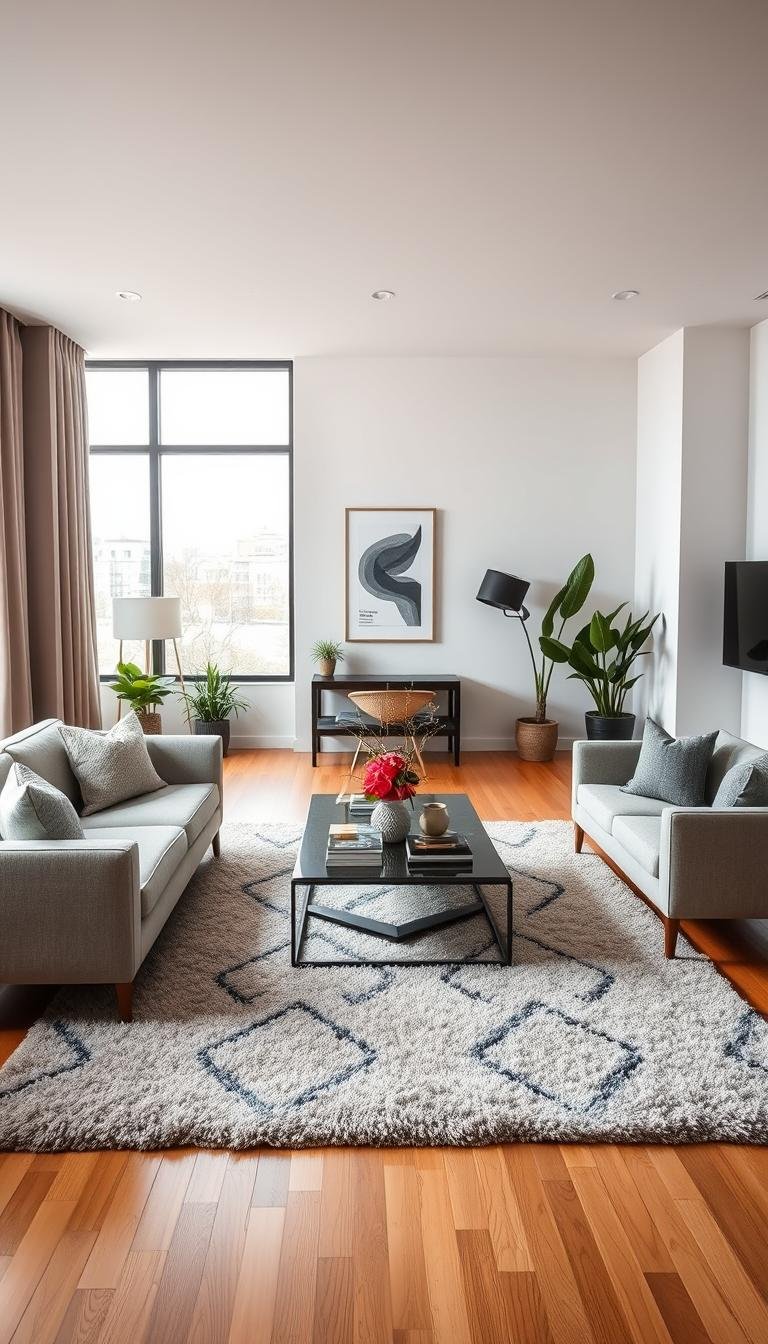
A contemporary space feels most like home when its clean lines leave room for the way you actually relax, gather, and entertain. Start with how you use the space each day, not with a furniture trend or a picture-perfect room. A focal point is the first element your eye lands on in a room. It can give your choices a clear direction without making the rest of the home feel too formal.
Your design choices should support both comfort and function. Clean-lined pieces can look polished while still feeling good to use, and a few well-chosen details can keep the room from feeling impersonal. Color, texture, and meaningful objects all help shape the atmosphere. The best ideas leave room for your habits, whether you spend a quiet day reading or welcome friends for dinner.
You do not need to copy a complete interior to get a sense of what works. Notice the details that suit your home, then adapt them to your routines and taste. Choose the feeling you want the space to give you before settling on any individual finish.
Contemporary Living Room Inspiration Starts With One Anchor

A strong artwork or colorful sofa can give the rest of your choices an immediate direction. Choose one anchor that feels personal, then let its shape, color, or history guide the room’s design. The focal point need not match every other piece. A clear anchor gives your living room character without requiring a perfectly matched set.
Let one piece set the direction
Begin with one of four anchors: a colorful sofa, a striking artwork, a fireplace, or a distinctive architectural detail. Each can set a different style and atmosphere. A deep sofa color might lead you toward quieter accessories, while a dramatic fireplace can make the surrounding furniture feel more restrained.
Contemporary living room inspiration images are most useful when you notice how the anchor relates to the other furnishings. Look at scale, contrast, and the balance of old and new, rather than trying to copy a whole room. Contemporary living room inspiration in 2020 can still offer ideas for enduring shapes and contrasts. A current refresh can update the palette or materials around them.
Let the anchor lead, but do not make every piece compete for attention.
Mix vintage character with clean-lined furniture
Antique furnishings can sit comfortably beside contemporary pieces. Their difference creates contrast and a layered look, especially when one older piece has a strong shape or an interesting finish. For more practical ways to combine eras, try this vintage and modern decor mix.
Modern Heritage pairs traditional details, such as classic moldings and millwork, with modern materials, furnishings, and color palettes in 2026. You can use the same idea on a smaller scale: an antique side table can stand beside a streamlined sofa, or old trim can frame a contemporary chair. The ASID 2025 Trends Outlook Report also describes renewed interest in historical details and vintage furnishings.
Older pieces bring character, while clean-lined furniture keeps the room comfortable for everyday use. Keep one or two older pieces that add character, and let the simpler contemporary pieces give them breathing room.
Choose a Color Story That Feels Current
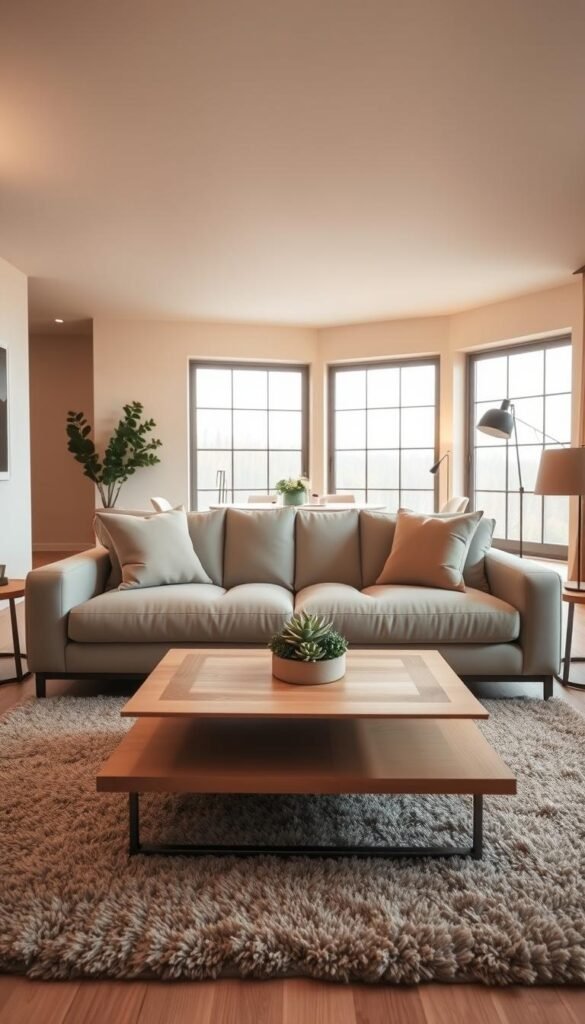
Warm neutrals offer a calm base, and one muted accent color can keep the room from feeling flat. Modern living room ideas in 2026 can begin with Universal Khaki or Neutral Ground, then build color in measured doses. Use a warm neutral as the main color story and reserve stronger shades for a few accents.
HGTV Home by Sherwin-Williams named Universal Khaki HGSW6150 its 2026 Color of the Year, describing it as a sandy neutral. Its Honest Essentials Color Collection also includes Neutral Ground, Cordovan, Lemon Chiffon, Creamy, Universal Khaki, Griffin, Reddened Earth, Still Water, Hazel, and Secret Garden. Universal Khaki and Neutral Ground pair with stone and wood for a natural scheme.
Light-colored paint can make a living room feel more open. A deeper shade can give a feature wall or reading nook a more defined presence. Shortlisted shades may look different from one wall to another because the room’s size and light affect their appearance.
Ground the room with warm neutrals
Off-white is not the only quiet choice. Mushroom, caramel, and creamy tones offer a warmer neutral effect, while ochre, tobacco, and warm caramel bring more earthy depth than pale butter-yellow walls. Pinterest also forecast cool-toned blues, including cobalt, as a 2026 design trend, but you can soften the look with less saturated shades.
Compare these current alternatives before settling on a wall color:
| Starting point | Current alternative | Color character |
|---|---|---|
| Pale butter-yellow | Earthy ochre, tobacco, or warm caramel | Earthy warmth |
| Saturated denim blue or bright teal | Subdued blue with gray, mineral, or earthy-green undertones | Quieter and softer |
| Highly saturated pink | Dusty rosewood pink with brown undertones | Muted and grounded |
| Off-white | Mushroom, caramel, or creamy | Warmer neutral |
| Sage green | Muted, chalky mint | Fresh and subdued |
Bring in color with a softer edge
Designers favored subdued blues with gray, mineral, or earthy-green undertones over saturated denim blues and bright teals in 2026. Dusty rosewood pink with brown undertones offered a softer alternative to highly saturated pink. For green, designer Laura Stephens recommended muted, chalky mint as a fresher choice than sage.
These modern living room ideas work best when the room’s color feels connected to its focal point and everyday use. A colorful sofa can carry a stronger accent, while neutral upholstery leaves more freedom for art and accessories. Test shortlisted samples on the actual wall and check them in both daylight and evening light.
For a cozy interior, warm modern living room ideas can help you balance quiet walls with richer details.
Arrange Furniture Around How You Use the Room
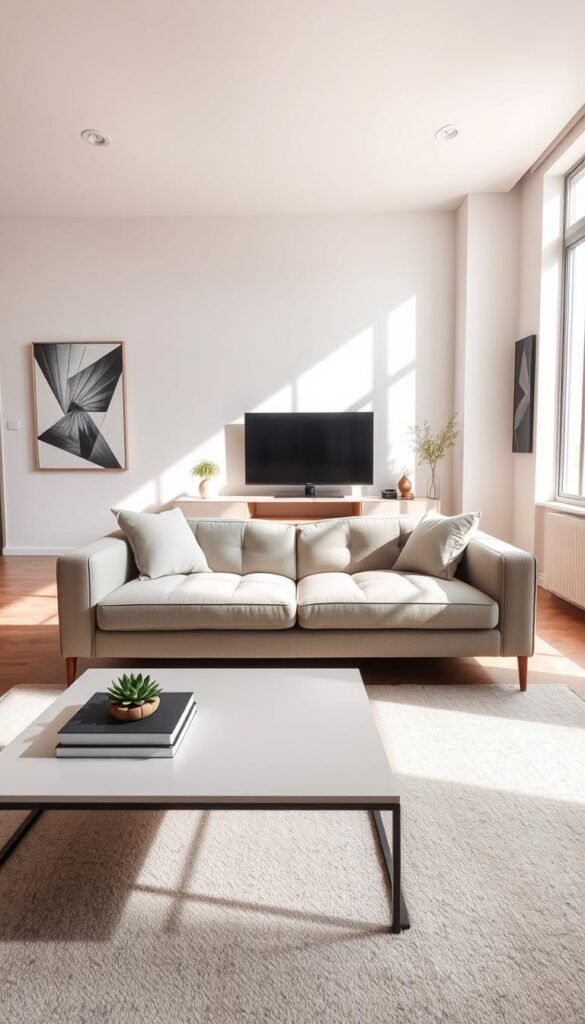
In a compact room, the sofa’s scale and the walking path matter more than adding another seat. Small contemporary living room inspiration should prioritize clear paths and appropriately scaled seating. In a room under 200 square feet, keep the sofa no longer than 84 inches.
Modern living room design for a small house can start with an apartment-size sofa, loveseat, or compact accent chair. Typical sizes are 72-84 inches for an apartment sofa, 52-64 inches for a loveseat, and 28-36 inches for a compact accent chair. Measure doorways and turns as well as the room before bringing a large piece home.
Keep a compact layout easy to move through
A clear route helps the room feel easier to use, even when every seat is occupied. These measurements offer useful starting points for planning a layout:
| Measure | Recommended value | Condition |
|---|---|---|
| Walkway between large furniture | 18-24 inches or 30-36 inches | Limited space or where space allows |
| Distance between seating pieces | 3.5-10 feet | Arrange for conversation |
| Sofa from wall | 3-5 inches | Pull away when space allows |
| Sofa-to-coffee-table gap | 16-18 inches | Maintain comfortable reach |
| Coffee-table length | At least half the sofa length | Compare before buying |
Keep the coffee table’s top no more than four inches above or below the sofa seat cushions. Choose a rug large enough for the sofa’s front legs and all chairs to sit on it. In a large living room, leave about 24 inches between the rug and wall; in a smaller room, leave 10-18 inches.
A mid-century living room layout can offer useful examples of seating that supports conversation without blocking movement.
Build conversation zones in a larger space
In a large room, separate furniture groupings can create distinct hangout zones, especially under expansive ceilings. One grouping might suit conversation, while another supports reading or watching a screen. Rugs can help define each area without adding walls.
A sectional often needs more than one place to set down a drink. Two coffee tables can give guests around the sectional more surfaces than one table. Check that each table remains within easy reach from its seats.
Before buying, mark the intended furniture footprints on the floor and confirm that the main route through the room stays clear.
For a more polished plan, modern chic living room ideas can help you balance practical furniture with a composed look.
Layer Texture, Wood, and Architectural Detail
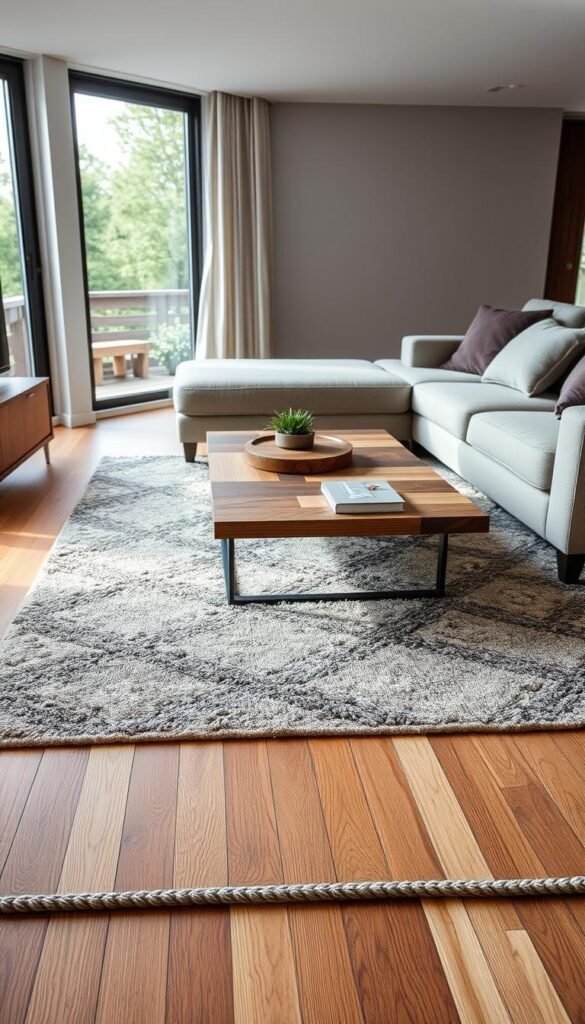
A mix of soft, tactile surfaces and precise architectural lines keeps a contemporary room from feeling sterile. Warm minimalism pairs soft neutrals with natural textures and tactile materials, so the space feels edited rather than bare. Use contrast in surface and finish to give clean lines a more welcoming feel.
Mix finishes and tactile surfaces
A plush rug can soften industrial-leaning materials such as metal, concrete, or exposed brick. Pairing smooth surfaces with woven, nubby, or brushed textures gives the eye something to notice without adding visual clutter. An older wooden piece can add another layer beside glass or metal.
Mixed wood tones bring variety without requiring every finish to match. In 2026, designers mixed light, medium, and dark wood finishes rather than trying to make every wood surface identical. The wood-mixing design guidance also encourages contrast between different colors and textures.
Fluted or reeded details add a repeating line that catches light and gives a surface depth. You might find them on a fireplace surround, a feature wall, or a cabinet front. If you prefer a smaller change, a reeded piece of furniture can add texture without taking over the room.
Modern classic living room ideas offer more examples of pairing timeless details with contemporary comfort and tactile materials.
Choose a decorative mood with a light touch
Pinterest living room ideas for a modern look can spark a fresh direction, but you can adapt one or two details instead of copying a complete theme. These forecast aesthetics each have a distinct visual language:
- Neo Deco uses crisp chevrons, fan arches, and chrome or brass outlines.
- FunHaus combines bold stripes, sculptural silhouettes, and playful details.
- Afrohemian layers African craftsmanship, textiles, wall art, handwoven baskets, and natural-fiber rugs.
- Opera pairs dramatic drapery with red roses, lush fabrics, and candlelight.
One geometric detail or sculptural accent can suggest a style without turning the room into a themed set. Choose the elements that suit the home and leave the rest behind. Repeat one material or shape in a few places to make contrasts feel intentional.
Use Lighting to Make the Room Feel Comfortable
A relaxing evening calls for warmer light, while a focused task benefits from a cooler, brighter source. Cozy living room ideas can start with warm-white bulbs at 2700K-3000K. Most living rooms need 1,500-3,000 lumens, depending on room size and use.
Cool-white lighting at 3500K-4000K can give a modern or minimalist living room a crisp, neutral look. For focused tasks, such as reading or detailed work, use cool-white bulbs at 4000K-5000K. Color temperature describes whether the light appears warmer or cooler.
The right brightness depends on the size of the room and how you use it. A space used for several activities needs more than one lighting option, while a small room with a single purpose may need less. Check the 1,500-3,000-lumen guidance as a starting point, then consider the light already entering the room.
Layer general, task, and accent lighting instead of relying on a single overhead fixture. General light fills the room, a reading lamp directs light where you need it, and accent lighting draws attention to a shelf or artwork. Separate controls make it easier to shift the atmosphere during the day.
Choose shades and fixtures that distribute light where the room needs it. A lamp that brightens a reading chair may not illuminate the far side of a sectional, so add another source if the space feels uneven. Check the bulb’s color temperature and lumen output on its packaging before choosing it.
Make the Walls Part of the Design
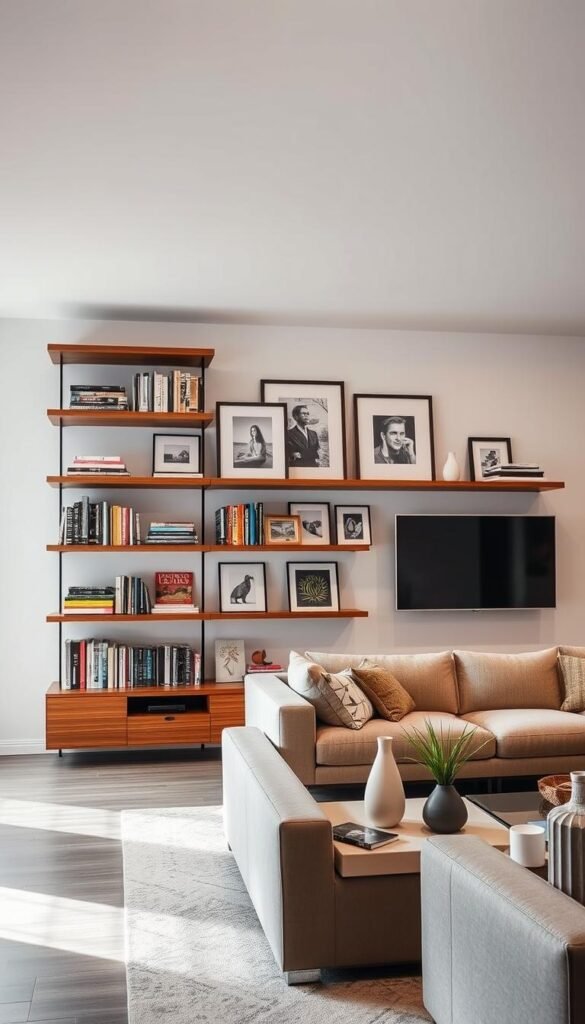
A wall can feel finished when it gives a favorite object, collection, or useful storage a deliberate place. Modern living room wall design can start with a built-in media unit for the screen, closed storage, and display shelves. Give everyday items a home while keeping the display focused.
A bookcase can hold books, plants, ceramics, vinyl, and artwork. Lower cupboards conceal cables, remotes, and other everyday clutter, while a glass display cabinet highlights a chosen collection. Decide what you want to see often and what should stay out of view.
Wall details can also carry a decorative mood. Neo Deco geometry, such as chevrons and fan arches, can shape a simple arrangement of framed pieces. Afrohemian wall art and textiles can bring craftsmanship and layered pattern to a display without requiring every surface to follow one theme.
Leave open wall around the main display so its most meaningful pieces remain easy to notice.
Use shelves to vary the height of objects, but avoid filling every available spot. A small group of books, ceramics, and plants can feel more considered than a packed display. Keep the screen, artwork, or collection easy to find at a glance.
A framed textile or woven basket can add depth to a wall composition without introducing another large object. If the display feels crowded, remove one piece and look again from the sofa. The clearest arrangement usually gives each favorite item a little room.
Make the Final Choices Feel Like Yours
The most successful room is not the one with the most ideas, but the one that fits the way you live. A contemporary home can feel polished without giving up comfort, and a few personal pieces can bring it character.
Start with a practical check before shopping. Take measurements, write a short list of what the room needs to do, and choose one element to prioritize. That first choice can be a sofa, better storage, or a display for art you already own.
Write down the room’s main uses and measurements, then choose the first piece or change that will support them.