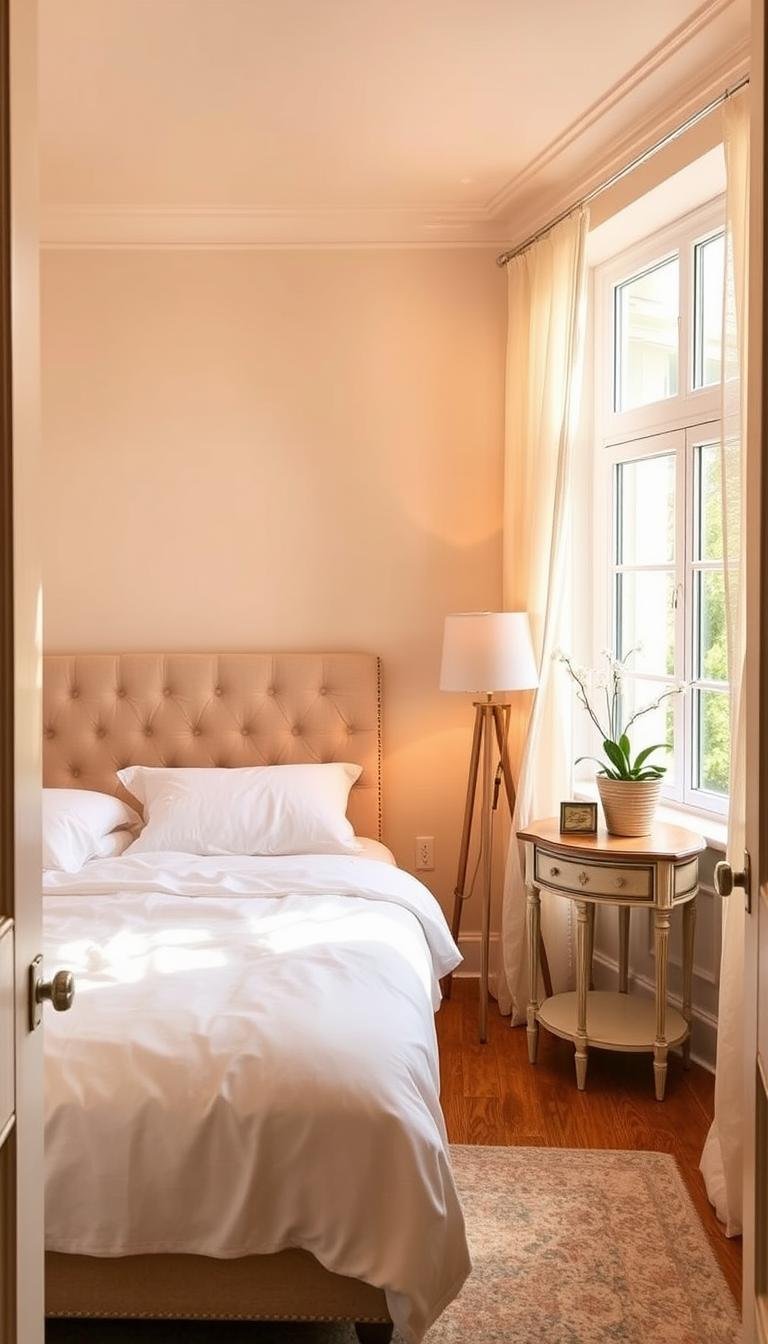
Welcome to your complete guide on creating a beautiful and functional sleeping area, no matter how limited your square footage might be. Many people face the challenge of working with compact rooms, but these spaces hold incredible potential.
With smart design choices and clever tricks, you can transform your area into a welcoming retreat. This article will show you how to maximize every inch and create a room that feels both spacious and intimate.
We’ll explore practical solutions for storage, furniture selection, and lighting layers. You’ll discover how the right bed frame, bedside tables, and wall decor can completely change your space feel.
Get ready to implement these straightforward ideas that work for any home. By the end, you’ll feel empowered to make your bedroom uniquely yours.
1. Define a Powerful Focal Point
Creating a deliberate center of attention can revolutionize your limited square footage. This approach shifts focus from the room’s size to its intentional design elements.
A focal point gives your space direction and purpose. It creates visual hierarchy that makes the entire area feel more organized and spacious.
Ideas for High-Impact Focal Points
Your headboard area offers incredible potential for creating drama. Consider attaching a custom wood board directly to the wall for a built-in appearance.
Another powerful option involves painting a half accent wall in a dark hue. Black creates sophisticated depth while drawing the eye upward.
Vertical elements work exceptionally well in compact areas:
- Tall artwork that stretches toward the ceiling
- Gallery walls arranged in vertical patterns
- Wood beams that emphasize height
- Floor-to-ceiling drapery that elongates walls
These elements create the illusion of more vertical space. They make your sleeping area feel grander than its actual dimensions.
How a Focal Point Tricks the Eye
The psychology behind this design principle is fascinating. A strong focal point simplifies the visual narrative of your space.
Instead of noticing the room’s compact nature, your eye goes directly to the intentional feature. This creates a curated look that feels both spacious and inviting.
“A focal point tells your eye where to look first, creating order from potential chaos in confined spaces.”
Centering your bed around this feature enhances the balanced feel. The entire layout gains cohesion when organized around a visual anchor.
This approach transforms cramped areas into stylish, functional retreats. You’ll create a sleeping environment that feels intentionally designed rather than limited by size.
2. Select Streamlined and Simple Furniture
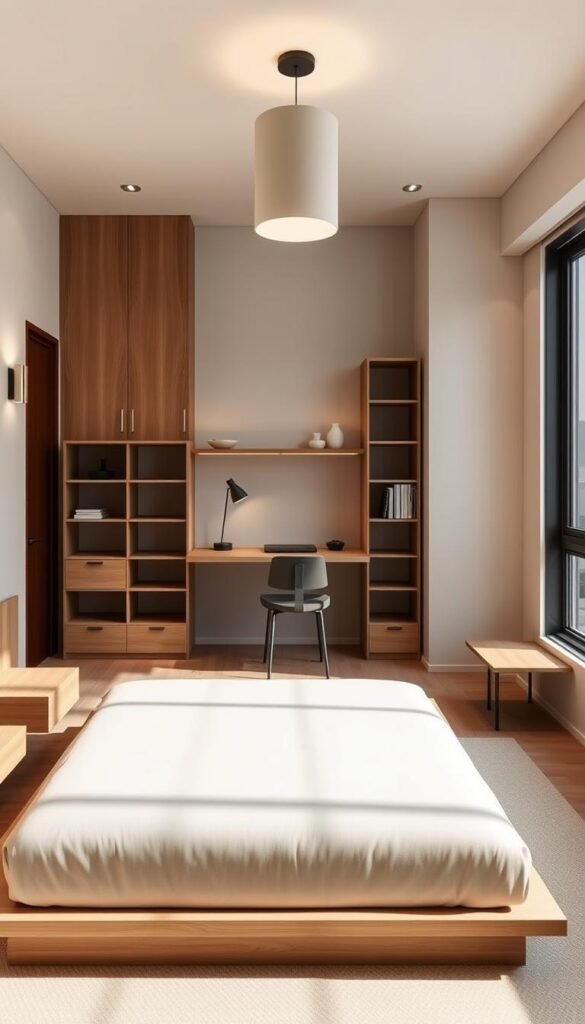
Smart furniture choices can make all the difference when working with a confined sleeping environment. The right pieces create harmony rather than chaos in your compact area.
Oversized accent chairs and massive dressers might appeal to you aesthetically. However, they fight against your limited square footage rather than working with it.
Why Bulky Furniture Fights a Small Space
Large furnishings consume both visual and physical room. They make your area feel congested and impractical for daily use.
Think of bulky items as neon signs highlighting crampedness. They disrupt the natural flow and movement within your sleeping area.
These pieces overwhelm the senses with too many details. Your brain needs visual rest in a compact environment.
Characteristics of Streamlined Pieces
Look for furnishings with clean lines and minimal details. Unfussy designs create calm and order in your personal retreat.
Matte black simple bed frames offer modern appeal. Industrial-inspired designs provide sleek functionality without bulk.
Ideal pieces feature slim profiles and proportional sizing. They maximize comfort without sacrificing precious square footage.
Multifunctional potential represents another key characteristic. Each piece should serve purpose without adding complexity.
By selecting the right furnishings, you create an intentional environment. Your sleeping area will feel open and perfectly suited to your needs.
3. Create the Illusion of Height
Looking upward transforms how you experience any compact area. This powerful approach changes your perception of the entire environment.
When you direct attention toward the ceiling, you expand the visual boundaries. Your sleeping area suddenly feels more expansive and airy.
Swap Floor Lamps for Hanging or Wall-Mounted Lights
Traditional floor lamps consume valuable real estate. They clutter your limited area and keep your gaze downward.
Hanging pendants or wall-mounted lighting creates dramatic improvement. These fixtures free up floor space while drawing eyes upward.
This simple switch makes your room feel more organized. You gain both physical and visual breathing room.
Use Tall, Leaning Decor like Ladders
Vertical elements add interest without crowding. A tall leaning ladder serves multiple functions beautifully.
It can hold extra blankets or display decorative items. This approach utilizes often-overlooked vertical areas.
These pieces create strong upward lines that enhance height perception. They make room feel taller and more dynamic.
Incorporate Wall Shelves for Vertical Interest
Wall shelves offer brilliant solutions for compact areas. They provide storage while adding visual appeal.
You can easily change out artwork or decor items. This flexibility keeps your space feeling fresh and intentional.
According to Elle Decor’s small bedroom ideas, stacking accessories vertically works with upward lines to enhance the room’s height.
These strategies transform how you experience your personal retreat. Your gaze moves around the entire space instead of staying low.
This creates a more open space feel that changes everything. You’ll appreciate your area in a completely new way.
4. Master Clever and Hidden Storage Solutions
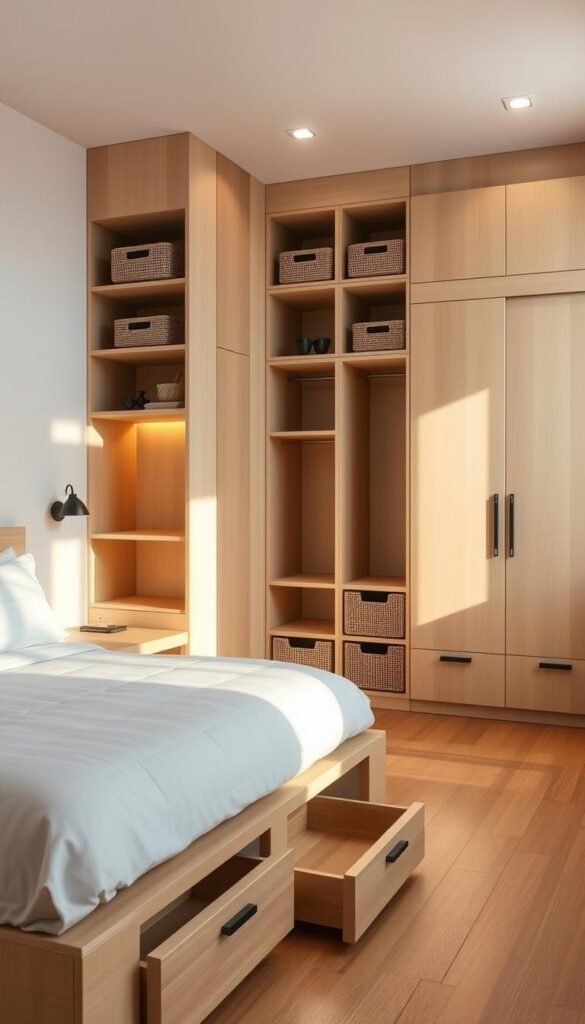
Smart storage transforms cramped areas into organized retreats. Every inch matters when you maximize your available square footage.
Hidden solutions keep your essentials accessible yet out of sight. This approach creates visual calm while maintaining full functionality.
Sleek Under-Bed Storage Boxes
Your bed frame offers valuable real estate for organization. Textured storage boxes provide both style and practicality.
Choose designs that complement your room’s aesthetic. These pieces work beautifully for seasonal clothing or extra linens.
They keep things tidy without sacrificing floor space. Your room maintains its open feel while gaining hidden utility.
Floating Nightstands and Wall-Mounted Shelves
Vertical surfaces offer incredible storage potential. Wall-mounted systems free up precious floor space.
Floating nightstands provide surface area without bulk. They create clean lines that enhance your room’s spaciousness.
Consider these smart options for your storage needs:
- Pegboards for customizable organization
- Shelves that display decorative items
- Hanging baskets for small essentials
- Mounted racks for jewelry or accessories
These solutions make your bedroom work harder for you. You gain functionality without compromising your design vision.
Embrace multifunctional storage that supports your lifestyle. Your space becomes both beautiful and highly efficient.
5. Reimagine Every Corner and Nook
Every inch in your compact sleeping area holds incredible potential. Often, you’ll find walls or corners that seem too small for traditional furniture. These spots can become your most valuable real estate with creative thinking.
I’ve personally transformed awkward areas in both my current and previous homes. One became a functional office nook, while another served as a peaceful writing space. Both solutions made perfect use of otherwise wasted areas.
Creating a Compact Office or Vanity Corner
Your unused corners can serve multiple purposes with smart planning. A slim desk tucked into a nook creates an instant workspace. This approach lets you work from your personal retreat without sacrificing comfort.
The same area can easily transition into a vanity corner. Simply swap artwork for a mirror above your desk. This flexible way of thinking helps your room serve more functions.
Here’s how to identify the best spots in your home:
- Look for corners wider than 24 inches
- Find wall areas between doors and windows
- Consider spaces beside closets or built-ins
- Measure alcoves or architectural niches
Floating shelves and corner desks maximize these areas beautifully. They provide function without disrupting your room’s flow. You’ll create dedicated zones for productivity or self-care.
| Area Type | Potential Use | Recommended Furniture |
|---|---|---|
| Small Corner (24-36″) | Reading nook or plant display | Corner shelf or small chair |
| Medium Corner (36-48″) | Compact office or vanity | Floating desk or console |
| Wall Nook (18-24″ deep) | Storage or display area | Custom shelving unit |
| Between Windows | Desk or dressing area | Narrow console table |
This creative approach lets you make room for activities you love. Your sleeping area becomes more versatile and personalized. Every corner serves a purpose in your daily life.
Embrace this mindset throughout your small space design journey. You’ll discover opportunities where you once saw limitations. Your transformed areas will bring both function and joy to your daily routine.
6. Invest in Multi-Functional Furniture Pieces
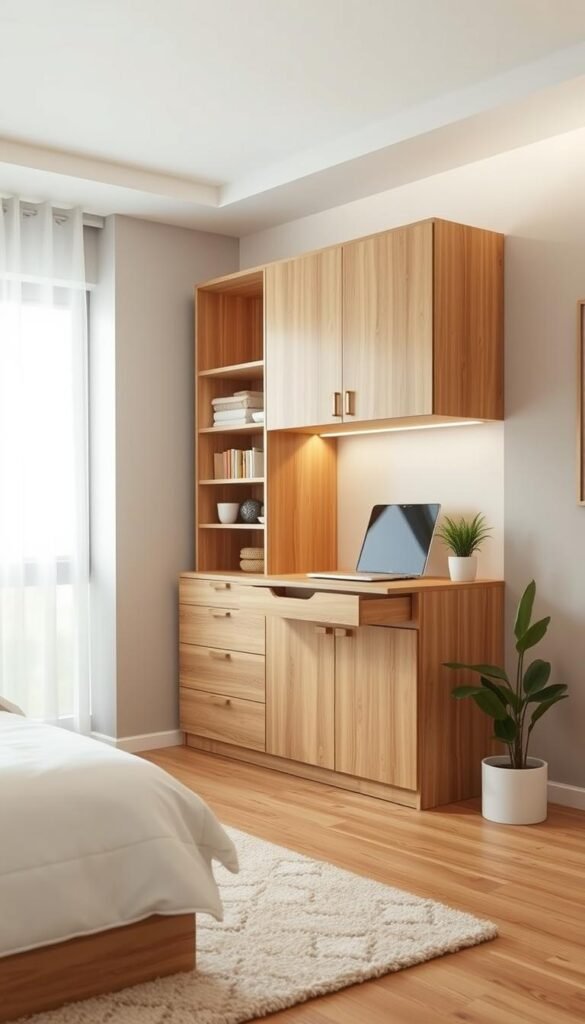
Smart furniture selection becomes your secret weapon in compact living areas. Choosing versatile pieces lets you maximize functionality without overcrowding your personal retreat.
Expert designer Downing observes a common challenge many homeowners face. “Instead, focus on functionality: Fewer, high-quality, multifunctional pieces make the space work harder and feel less crowded,” she advises.
This approach helps you eliminate unnecessary items automatically. You’ll discover how one well-chosen piece can serve multiple purposes beautifully.
The Stool: Side Table, Plant Stand, and Seat
A simple stool offers incredible versatility in your sleeping area. This one piece can function as a bedside table, display surface, or extra seating.
When guests visit, it becomes instant additional seating. For daily use, it holds your morning coffee or evening reading materials.
You can easily style it with plants or decorative items. This flexibility makes it one of the most valuable furniture investments.
Desks that Double as Vanities
Your writing area can transform into a vanity with simple adjustments. Just replace artwork with a mirror above your desk.
This clever way of thinking lets one surface serve multiple functions. You create dedicated zones without adding extra tables or furniture.
This strategy not only saves valuable square footage but adds flexibility. Your environment evolves with your changing daily requirements.
By selecting multifunctional pieces, you create an organized and intentional design. Your area feels both aesthetically pleasing and highly practical for everyday use.
7. Embrace a Minimalist Decor Approach
Sometimes the most powerful design strategy involves removing rather than adding. This counterintuitive approach can completely transform how you experience your personal sanctuary.
Clutter has a sneaky way of making any area feel more confined than it actually is. Visual noise creates mental chaos that fights against the peaceful atmosphere you want to create.
The “Take Everything Out” Reset Method
One transformative technique involves starting with a completely blank canvas. Remove every decorative item, extra pillow, and non-essential object from your space.
This radical reset lets you see your environment with fresh eyes. You’ll discover what truly matters versus what simply accumulated over time.
Only reintroduce items that serve a clear purpose or bring genuine joy. This curation process creates intentionality in your design choices.
“Minimalism isn’t about deprivation—it’s about choosing quality over quantity in everything that surrounds you.”
This method works wonders for both your physical space and mental clarity. You’ll create an environment that supports relaxation rather than distraction.
Smart Storage for Maintained Minimalism
After your reset, implement storage solutions that keep surfaces clear. Under-bed bins offer hidden space for seasonal items or extra linens.
Consider these space-saving alternatives to traditional furniture:
- Floating shelves for display without floor footprint
- Wall-mounted nightstands instead of bulky tables
- Multi-functional furniture with built-in storage
- Vertical organizers for often-overlooked wall space
These solutions maintain your clean look while providing practical functionality. Your room remains organized without visual clutter.
Why Minimalism Enhances Small Spaces
This approach creates visual breathing room that makes your area feel more expansive. Fewer things means less visual competition for attention.
Your carefully chosen decor items become statement pieces rather than background noise. Each element contributes to a harmonious whole.
This intentional style creates a calming atmosphere perfect for relaxation. Your sleeping area becomes a true retreat from the outside world.
Embrace this less-is-more philosophy throughout your design journey. You’ll create a space that feels both spacious and personally meaningful.
8. Choose Furniture Proportional to Your Square Footage
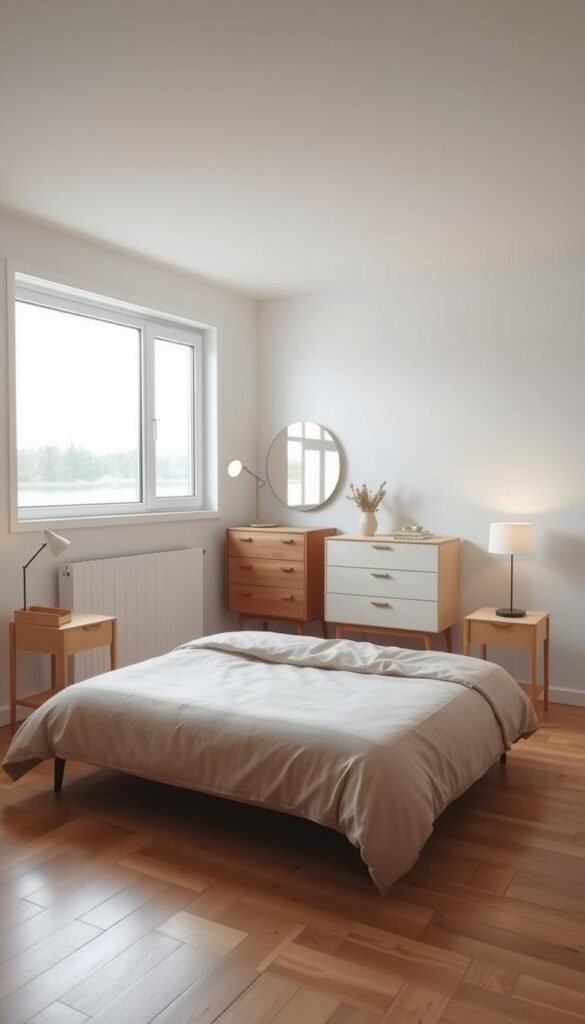
Getting your furniture scale right transforms how your room feels and functions. This approach creates harmony between your pieces and your available area.
Jennifer Press, founder of Press Interiors in New York City, identifies a common error. “Many people prioritize having a king bed in a room that can really only truly fit a queen,” she observes. This choice makes adding proper nightstands impossible.
Resisting the Urge to Cram in Oversized Pieces
Oversized furniture fights against your limited area rather than working with it. Large bed frames or bulky dressers consume both visual and physical room.
This creates a congested feel that disrupts your space’s natural flow. Sometimes, you might need to reconsider certain pieces entirely.
Finding alternative storage or relocating items to another room often helps. This strategy maintains openness while keeping essentials accessible.
Understanding Bed Size and Rug Proportions
Your bed serves as the foundation for your entire layout. Understanding exact dimensions helps determine what works best for your square footage.
Mattress size guides offer measurements and visuals for easier planning. These resources help you select beds that fit perfectly without overwhelming your area.
Rug proportions play an equally important role in your design. Properly sized rugs anchor the room and create visual cohesion.
Zehner cautions against playing things “too safe” with miniature furnishings. “Selecting rugs that are too small or choosing undersized nightstands makes the room feel disjointed,” she advises.
| Furniture Type | Recommended Size | Space Requirement |
|---|---|---|
| Queen Bed | 60″ x 80″ | Room width ≥ 10 feet |
| Full Bed | 54″ x 75″ | Room width ≥ 9 feet |
| Nightstand | 18-24″ wide | 24″ clearance per side |
| Area Rug | Extend 18-24″ beyond bed | Cover walking areas |
This balanced approach ensures every element complements your room’s dimensions. You’ll create an inviting atmosphere that feels both stylish and functional.
Embrace proportional planning to enhance flow and usability. Your space will feel thoughtfully designed rather than cramped or disjointed.
9. Layer Texture for Visual Interest and Warmth
Texture transforms your personal space from ordinary to extraordinary. It adds depth and character that flat surfaces simply cannot achieve.
Layering different materials creates a rich sensory experience. Your area becomes more inviting through thoughtful tactile elements.
This approach counteracts any cold or sterile feelings. You’ll create an environment that feels both curated and comfortable.
Textiles: Rugs, Linens, and Throw Pillows
Soft fabrics introduce immediate comfort and visual softness. A plush rug underfoot provides warmth and acoustic benefits.
Quality bedding makes your sleeping area feel luxurious. Natural fibers like linen or cotton offer breathable comfort.
Consider these textile combinations for your space:
- Chunky knit throw blankets for casual elegance
- Velvet accent pillows for subtle sophistication
- Layered bedding with contrasting textures
- Window treatments that add softness and privacy
These elements work together to create a cohesive look. Your room gains personality through carefully chosen fabrics.
Natural Materials: Baskets and Wood
Organic elements bring warmth and authenticity to your decor. Woven baskets offer both storage and visual interest.
Wood accents provide natural variation in grain and tone. These things add character without overwhelming your area.
Natural materials create connection to the outdoors. They make your personal retreat feel grounded and peaceful.
This layered approach enhances your overall space feel. You’ll achieve a balanced style that feels both intentional and inviting.
10. Layer Your Lighting for Ambiance and Function
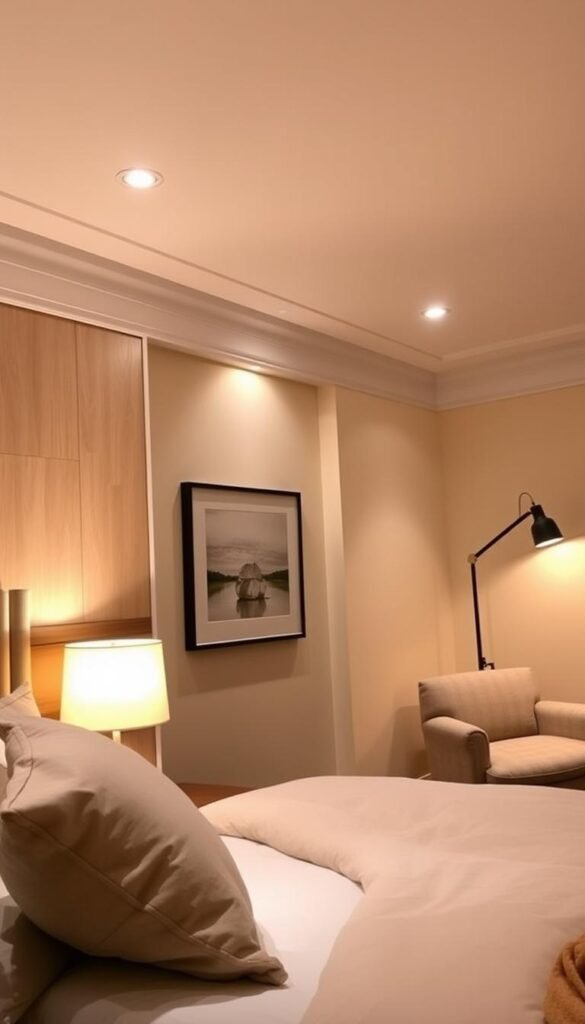
Lighting creates magic in your personal sanctuary. It transforms how you experience your environment every single day.
The right approach makes your area feel welcoming and spacious. Poor lighting can make even the most beautiful design feel cramped and uncomfortable.
Layering different sources creates depth and dimension. This strategy eliminates harsh shadows and flat illumination.
You’ll create a comfortable atmosphere perfect for relaxation. Your space becomes both functional and incredibly inviting.
The Three Types of Light: Overhead, Ambient, and Task
Every well-lit space combines three distinct lighting categories. Each type serves a specific purpose in your daily routine.
Overhead fixtures provide general illumination for the entire area. Your main ceiling light offers broad coverage for basic visibility.
Ambient sources create soft, diffused illumination throughout your space. These include table lamps, hanging pendants, and wall sconces.
Task lighting focuses on specific activities like reading or dressing. Bedside lamps offer directed illumination where you need it most.
This combination ensures your environment supports various needs. You gain both practicality and beautiful atmosphere.
Choosing Warm Light Bulbs Over Cool White
Bulb color temperature dramatically affects your space’s mood and feel. Warm tones create comfort while cool shades feel clinical and harsh.
Cool white bulbs emit a blue-tinged, sterile illumination. They make your area feel stark and uninviting rather than cozy.
Warm bulbs produce a soft, golden glow that feels welcoming. This approach makes your space feel more sophisticated and relaxing.
Always check packaging for color temperature information before purchasing. You’ll typically want bulbs in the 2700K-3000K range.
“Lighting should complement your space, not fight against it. Warm layers create sanctuary; cold single sources create interrogation rooms.”
Strategic placement enhances both function and atmosphere. Position task lights near your bed for reading convenience.
Place ambient sources in corners to wash walls with soft illumination. This way of thinking helps your room feel larger.
Wall-mounted options save valuable surface space while adding style. They contribute to ambient lighting without consuming floor area.
This layered approach transforms how you experience your personal retreat. Your environment becomes both practical and emotionally supportive.
| Light Type | Purpose | Ideal Placement |
|---|---|---|
| Overhead | General illumination | Center of ceiling |
| Ambient | Atmosphere creation | Corners, beside seating |
| Task | Specific activities | Bedside, desk areas |
| Accent | Highlighting features | Above art, architectural details |
Embrace this lighting strategy to enhance your daily experience. You’ll create a beautifully illuminated environment that supports both function and mood.
Your space will feel intentionally designed rather than accidentally lit. This approach truly helps make room for both practicality and pleasure.
11. Harness the Power of Mirrors
Mirrors work magic in compact sleeping areas. They create instant visual expansion that transforms how you experience your personal retreat.
These reflective surfaces bounce light around your environment. They eliminate dark corners while adding depth and dimension.
Strategic Mirror Placement to Reflect Light
Positioning matters tremendously when working with mirrors. The right placement maximizes their space-enhancing effects.
Hang a large wall mirror directly opposite your window. This captures natural light and distributes it throughout your area.
Choose a statement frame that complements your decor style. This approach adds elegance while serving practical purposes.
Consider these expert placement strategies:
- Angle mirrors to reflect attractive architectural features
- Position them to bounce light toward darker areas
- Use multiple smaller mirrors to create visual rhythm
- Place them at eye level for optimal reflection impact
This strategic approach helps make room feel more expansive. Your environment gains brightness and visual interest.
Mirrored Furniture for a Subtle Effect
Reflective furnishings offer sophisticated space enhancement. They provide function while amplifying your area’s perceived size.
A minimalist wardrobe with mirrored surfaces works beautifully. It stores essentials while subtly expanding visual boundaries.
These pieces distribute illumination throughout your sleeping area. They create an airy atmosphere that feels open and inviting.
“Mirrored furniture acts like hidden windows—it opens up walls without changing architecture.”
Choose items that blend seamlessly with your existing decor. This ensures cohesive look while maximizing spatial benefits.
Smaller accents like mirrored trays or decorative objects work wonders too. They add sparkle without overwhelming your design scheme.
This clever way of thinking transforms your compact sleeping area. You’ll create an environment that feels both spacious and intentionally designed.
12. Don’t Fear Dark or Bold Colors
Many people hesitate to use deep shades in compact sleeping areas. This hesitation often comes from the belief that light colors automatically make spaces feel larger.
Professional designers challenge this common assumption. They reveal how rich hues can actually enhance your personal retreat.
Dark palettes bring unexpected benefits to limited square footage. They create intimacy and sophistication that light colors sometimes lack.
How Dark Hues Create Cozy Sophistication
Deep colors envelop your space in warmth and character. They make your environment feel intentional rather than accidental.
Designer Higham explains this counterintuitive approach.
“Drenching the room in a darker hue can make it feel cozy and a bit more sophisticated,”
she observes.
This strategy works particularly well for creating intimate atmospheres. Your sleeping area becomes a true sanctuary from the outside world.
Consider these rich options for your color scheme:
- Navy blue for timeless elegance
- Forest green for natural tranquility
- Charcoal gray for modern edge
- Deep burgundy for luxurious warmth
These shades add depth and personality to your design. They transform ordinary spaces into extraordinary retreats.
Using Accent Walls for Character
Feature walls offer a brilliant compromise for color experimentation. They provide dramatic impact without overwhelming your entire area.
Maggio suggests an innovative ceiling approach. She notes that dark ceilings can make rooms feel taller when contrasting with lighter walls.
Wallpaper patterns introduce texture and visual interest. They create focal points that distract from limited dimensions.
Zehner encourages moving beyond safe neutral palettes.
“Incorporating color, texture, and thoughtfully chosen accents adds warmth and personality,”
she advises.
This philosophy helps you create a space that reflects your unique taste. Your environment becomes personally meaningful rather than generically decorated.
Choose shades that resonate with your emotional needs and aesthetic preferences. The right colors will make your area feel both bold and comfortable.
Embrace this creative opportunity to express yourself through color. Your sleeping area will stand out as a truly unique personal retreat.
13. Plan a Layout That Prioritizes Flow
Thoughtful arrangement makes your personal area feel open and functional. The right layout ensures everything works together beautifully.
You want to move easily without bumping into furniture. A smart plan creates harmony between your pieces and available area.
Optimal Bed Placement Against a Wall or Centered
Your sleeping surface serves as the foundation for your entire design. Its position affects how you experience the whole environment.
Pushing it against one wall opens up valuable floor space. This approach creates room for storage and movement around your area.
Position it opposite a window when possible. Natural light floods the space, enhancing the sense of openness.
For long, narrow rooms, place it lengthwise. This prevents the area from feeling too tight or confined.
If you prefer symmetry, center it with slim nightstands. This creates balance while maintaining clear pathways.
Raised or storage models maximize every inch. They provide hidden organization while keeping surfaces tidy.
Keeping Pathways Clear for Movement
Clear walkways ensure comfortable navigation through your personal retreat. They prevent that cramped, cluttered feeling.
Avoid furniture that blocks natural traffic patterns. Every piece should support easy movement throughout your area.
Leave at least 24 inches between your bed and walls. This allows comfortable passage and makes the room feel larger.
Consider these layout principles for optimal flow:
- Start with your bed as the focal point
- Arrange other pieces around this central element
- Ensure doors open fully without obstruction
- Maintain clear access to windows and closets
This approach creates both visual and physical breathing room. Your environment feels organized rather than chaotic.
| Room Shape | Recommended Layout | Clearance Needed |
|---|---|---|
| Square | Bed against longest wall | 24″ perimeter clearance |
| Rectangular | Bed lengthwise on short wall | 30″ end clearance |
| L-Shaped | Bed in longer section | 36″ turning radius |
| Irregular | Bed centered on flattest wall | Custom clearance planning |
This thoughtful arrangement makes your area feel spacious and intentional. You’ll create a layout that supports daily activities effortlessly.
By prioritizing flow, you transform your personal retreat. It becomes both practical and perfectly tailored to your lifestyle.
14. Your Tiny but Cozy Bedroom Awaits
Transforming your compact sleeping area becomes an exciting creative journey. You now have all the tools to craft a space that reflects your unique personality.
Implement these design strategies gradually. Start with streamlined furniture and smart storage solutions for immediate impact.
Remember that proportional pieces and layered lighting create balance. Your area will feel both spacious and intentionally designed.
Embrace this opportunity to make your home truly yours. Your personal retreat awaits, ready to become your favorite space.