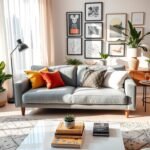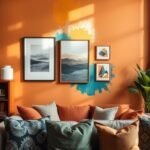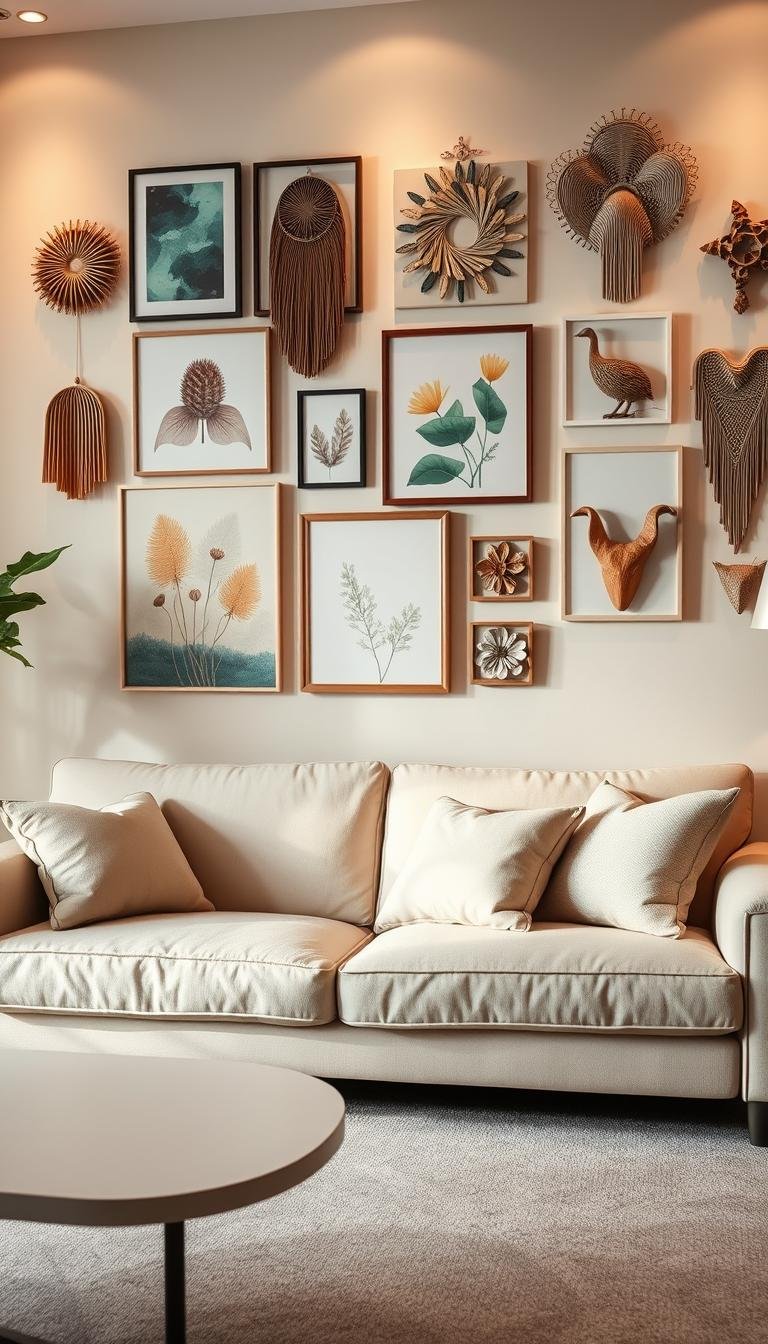
The right wall decor can make a living room feel more personal before you change a single piece of furniture. A statement can come from one large work, a personal arrangement, or a textured feature that gives the room a different feel. Your walls can show what makes your home yours, from the colors your family loves to the memories you want guests to notice.
A gallery wall is a planned arrangement of multiple artworks treated as one composition. It can bring family photos, travel images, and other art together without making every wall feel the same. The best living room wall decor designs suit your space, your taste, and the way you use the room, whether you host guests or spend quiet evenings at home.
You do not need to fill every open area to make the room feel finished. A carefully chosen piece can make a blank wall feel more inviting, while a layered treatment can add character without changing your furniture. Start with the wall that feels least finished and decide what mood you want it to create.
What’s Trending in Living Room Wall Art in 2026?
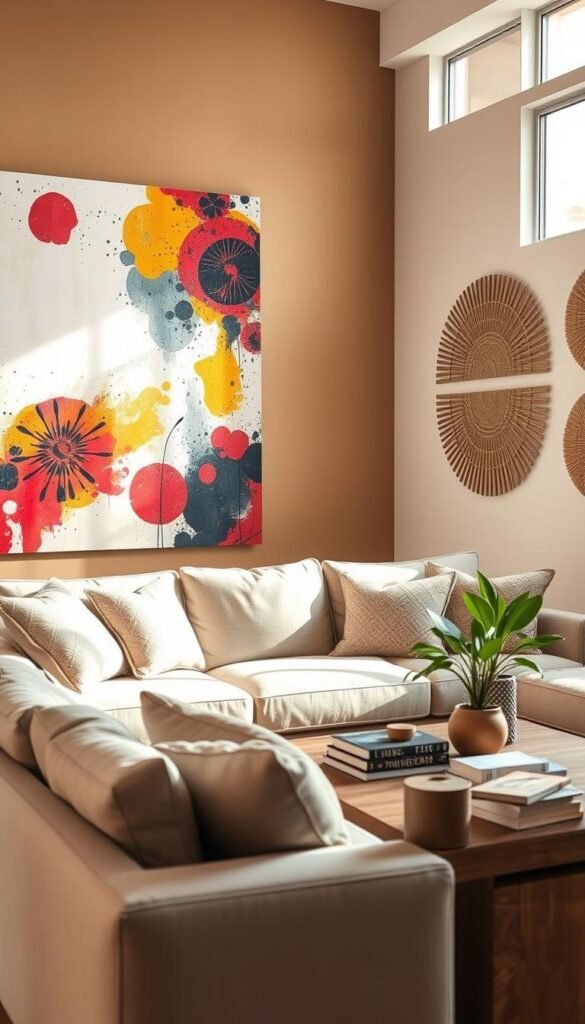
In 2026, wall art ranges from tactile, layered-looking pieces to oversized works that give a room one clear focal point. Warm minimalism offers a quieter contrast: restrained arrangements, subtle surfaces, and art that leaves space around itself. These choices can make a living room feel current without turning your home into a checklist of trends.
Oversized artwork can anchor furniture and create a focal point without taking up floor space. A broad canvas above a sofa can make the furniture feel connected to the wall, while one striking work gives the eye a place to rest. A thicker vintage frame adds depth and character, especially when the art itself has a soft or simple look.
Fewer intentional choices look more considered than undersized, overly matched, or cluttered displays.
Abstract nature-inspired imagery brings organic forms into a room without relying on literal scenes. Intentional color can make the same image feel restful or energetic, so choose tones that work with the furniture and the light. Subtle art can also sit comfortably against shiplap, where the wall texture already gives the room visual interest.
Looser gallery walls are another option, with varied artwork and less symmetry than a tightly matched set. You can mix subjects and shapes while keeping a shared palette or mood in view. That approach feels personal without requiring every piece to match its neighbor.
In 2026, wall art trends include tactile surfaces, oversized statements, warm minimalism, nature-inspired abstraction, and displays chosen to shape a room’s mood. None needs to dictate the rest of your decor. Choose a trend only when it supports the atmosphere you want to live with every day.
Living Room Wall Decor Designs for Every Style
Contemporary design has roots in the second half of the 20th century, while its look continues to change. Modern and contemporary are not fixed shopping categories: modern design often uses sharper lines, while contemporary design favors fluid shapes, innovation, and softened edges. Both can work well in a living room.
Modern living room wall decor designs often pair clean lines and restrained color with one strong focal point. Simple living room wall decor ideas can rely on one well-scaled piece instead of a crowded wall. Let the overall look guide your selection, then choose a format that suits the room and your budget.
Modern and Simple Contemporary Choices
For a sharper modern look, consider crisp shapes and a limited palette. Contemporary art can add a softer counterpoint through rounded forms and less rigid lines. You do not have to choose one style for the whole home; a single piece can make a room feel more relaxed or more graphic.
The format affects how the art appears on your living room wall. Canvas has a soft, substantial look, while floating frames give the edges a defined border. Poster prints keep the presentation simple, and framed prints arrive with a frame as part of the selected option. Materials and finishes can differ, so check the product details.
Pick a Format That Suits Your Space
Think about what you want to see at the edges of the artwork. A canvas may suit a casual room, while a floating frame can make a print feel more dimensional. Poster prints can be a straightforward choice when you prefer a lighter presentation. Framed prints put the image and frame together, though available frame options vary.
A format also affects the listed price, so compare the options you are considering rather than assuming one finish or price applies to every version. You can look at print formats and framing choices to see how presentation can change the feel of wall art in another room.
Check the product page for materials, framing, and the listed price before adding a piece to your selection. The page may show a regular price or a sale price, and the selected option determines what is included. Before choosing a format, check whether the displayed price is regular or sale pricing and what the selected option includes.
Choose Pictures That Set the Room’s Mood
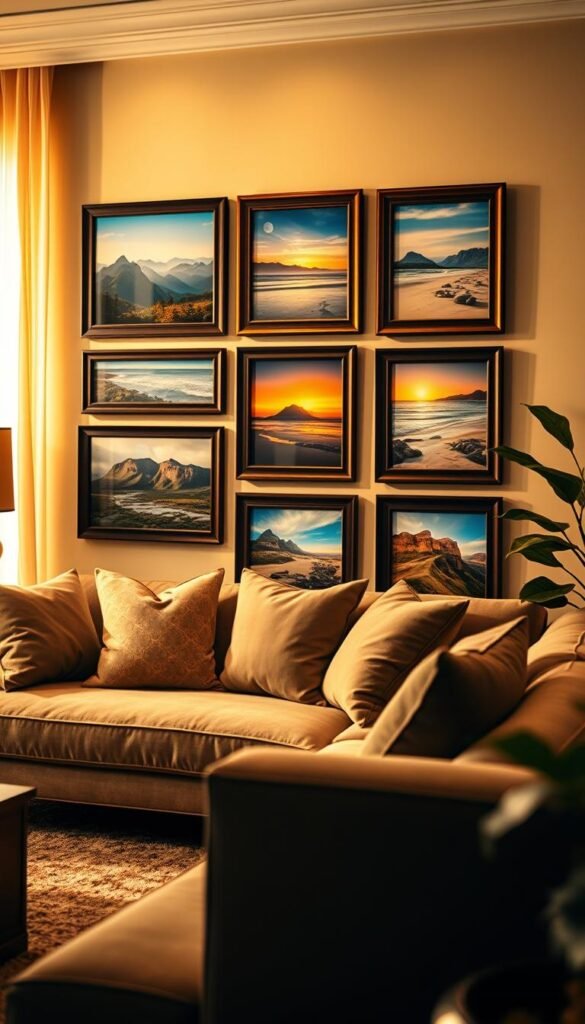
The subject of your art can make the living room feel calm, lively, nostalgic, or connected to nature. Choose by feeling as well as appearance, since you will see the pictures throughout daily life. Wall picture ideas for the living room can start with one subject that suits the mood you want.
A shared color or theme helps personal pictures feel like a considered selection. Your images do not need identical frames or matching subjects, but a common thread can make the arrangement feel connected. Consider what you want the room to say about your family, your interests, or the landscape beyond your window.
Choose Wall Pictures by Subject
These five subject routes give you a useful place to begin:
- Abstract work leaves room for open-ended interpretation and can bring movement without depicting a specific scene.
- Landscapes offer a nature connection, from quiet horizons to more dramatic views.
- Cityscapes depict physical parts of cities and can suit an expansive apartment with city views.
- Plants or flowers bring a natural motif into the room through leaves, stems, and blooms.
- Family or travel images make a personal display from the people and places you want to remember.
Figurative art, still life, trees, wildlife, and watercolors broaden the selection beyond those five routes. A watercolor can feel loose and atmospheric, while still life often brings attention to everyday objects. These subjects let you choose art that fits the room without making every image tell the same story.
Make Personal Pieces Feel Intentional
Personal pictures can include a family portrait, a travel photograph, or a place that matters to you. A repeating color, theme, or frame tone helps these pieces sit together. For example, a group of travel images can feel connected through a shared palette, even when each picture shows a different destination.
Cityscapes may feel especially at home in an expansive apartment with city views, where the art echoes the surroundings without copying them. Abstract pieces can be more open to interpretation, while family photographs bring specific memories into the room. Pick a subject you will still enjoy seeing when the room’s smaller accessories change.
Size Wall Art to Fit Your Furniture
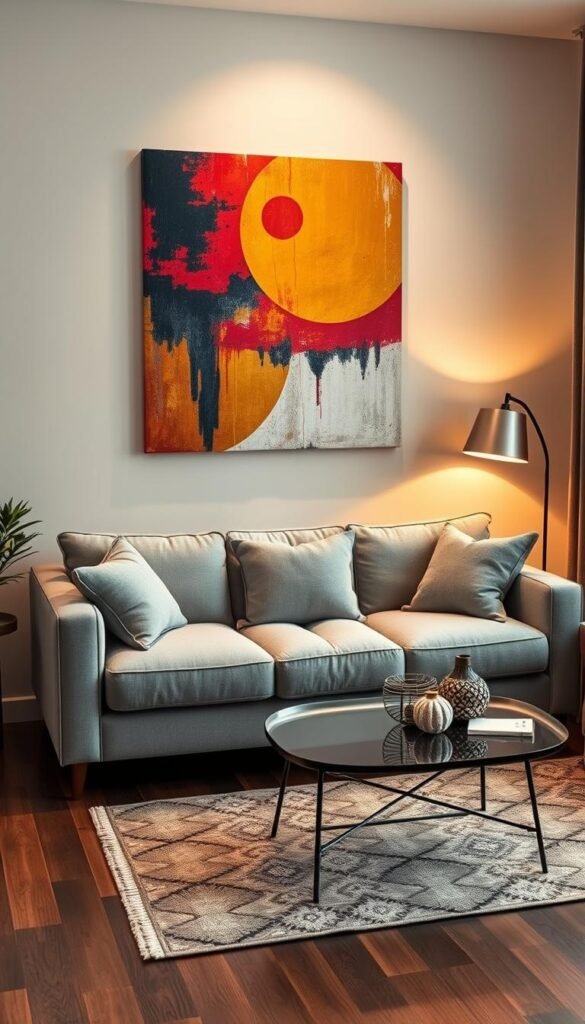
A useful starting point is art about two-thirds as wide as your sofa. That proportion gives the work a clear relationship to the furniture without making it feel cramped. For a 90-inch sofa, about 60 inches of living room wall art is a typical fit.
Hang art about 6-8 inches above the sofa’s top. The gap gives the picture room to read as a separate piece while keeping it visually connected to the seating. Use the same two-thirds guide for a loveseat, then adjust the artwork width to suit the furniture.
Measure the Sofa or Loveseat
The table gives you starting dimensions for common seating situations. A 55-70-inch loveseat typically suits art about 36-46 inches wide. A 24×36-inch print can work above a loveseat or a sofa under 75-80 inches wide, though it may look small over a larger sofa unless you pair it with other art.
| Situation | Furniture width | Suggested art width | Placement or caveat |
|---|---|---|---|
| 90-inch sofa | 90 inches | About 60 inches | 6-8 inches above the sofa |
| Loveseat | 55-70 inches | 36-46 inches | Use about two-thirds of its width |
| Sofa or loveseat under 75-80 inches | Under 75-80 inches | 24×36 inches | May look small above larger sofas unless paired with other art |
Choose One Large Piece or a Group
Several artworks above a sofa should read as one unit, not separate decorations. Measure the group from its outside edges and aim for a total width of about two-thirds of the sofa. This lets you combine different images while keeping the whole arrangement in proportion to the seating.
A canvas, print, or framed group can have a larger finished footprint than the image size suggests. Frames add width and height, which can affect how the piece fits above the furniture. For more ideas about choosing wall art for furniture, see large art for spacious living rooms. Measure the furniture and the finished outside edge of the frame before making a final choice.
Check the frame dimensions, not just the print size, before buying. The listed size may describe the art itself, while the finished frame adds to the overall measurement. A few inches can change whether a piece looks balanced above the sofa or too wide for the space.
Plan a Gallery Wall Before You Hang It
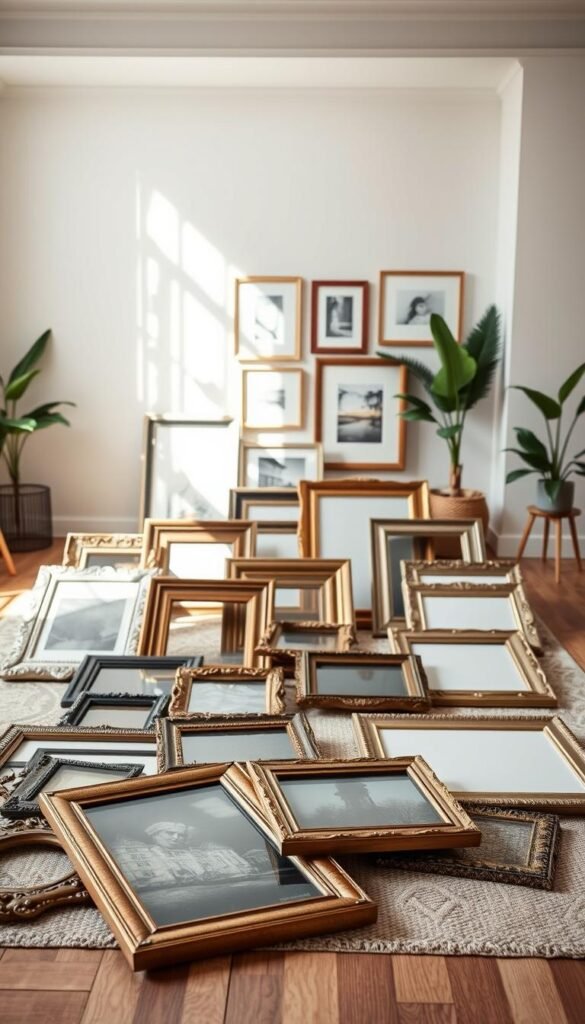
Planning the arrangement on the floor lets you test the balance before you commit to the wall. Lay out the full composition with each frame and picture in place, including a three-piece wall decor group. That preview makes it easier to judge the combined effect than treating every image as unrelated.
Start with one large, bold, or personally meaningful anchor piece. Build the rest of the gallery wall around that anchor piece, using a shared palette, theme, or frame tone to connect different artwork. Mixed frame finishes and less symmetrical layouts can feel personal without looking random.
Map the Arrangement on the Floor
Use these steps to test the layout before hanging:
- Measure the display area on the wall so the arrangement fits its intended space.
- Tape an outline of the same size on the floor to mark the display area.
- Place the largest pieces and the anchor piece first, then judge their relationship.
- Build around them with a mix of vertical and horizontal formats.
- Check the spacing and overall balance before hanging any frames.
The second-largest piece can sit diagonally from the largest as one way to balance the display. That choice creates a visual path across the arrangement instead of stacking every large piece in one area. Around 3 inches between frames can help the group feel curated, though the spacing should suit the individual pieces.
Balance the Anchor Piece and Frames
Vary artwork sizes and orientations, but give the eye a few clear points to follow. Three frame styles are one way to mix finishes without visual chaos. You can also use fewer styles and let the pictures bring variety through their content.
A shared palette or theme makes a mixed selection feel connected. Personal pieces can sit beside art prints when they share a color, subject, or mood. For more gallery wall layout ideas, consider how the full group works as one display rather than a set of separate images.
For a gallery wall that is not above furniture, aim to place its center roughly 145 centimetres from the floor. Treat that as a placement guide for the whole composition, not as the height of every frame. A unified layout looks intentional even when its individual works vary in size.
Add Texture Beyond Framed Art
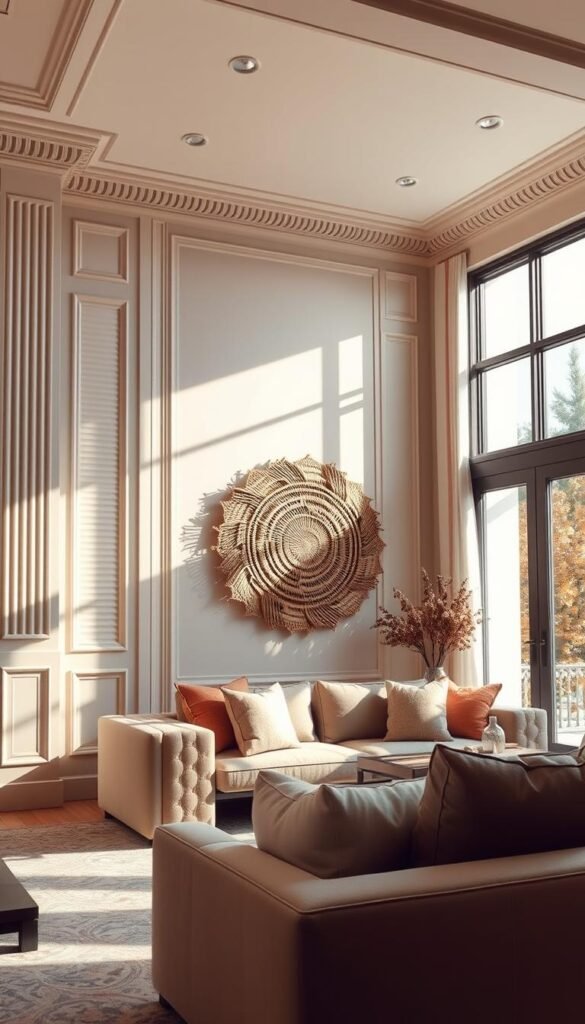
A textured wall treatment or three-dimensional object adds depth that a flat print cannot. Dimensional decor can be a single sculptural focal point or a full feature treatment across a broader area. The right scale depends on whether you want one object to stand out or the wall itself to shape the room.
Fluted or reeded millwork adds texture and visual depth across a wall. Tile, metal, wood, and ceramic sculptures can instead create a smaller point of interest. These choices bring a different feel from framed pictures and can help a wall look distinctive without adding more images.
Try Sculptural or Organic Wall Treatments
Fluted and reeded millwork creates repeating ridges that catch light and give a wall a tactile surface. Tile can add pattern and variation, while metal, wood, or ceramic sculptures project from the wall. For a softer look, consider tapestries, macramé, or other textiles that bring a woven texture into the room.
A living wall adds plants as part of the display. Ferns, dracaena, and pothos can bring greenery to a vertical surface, with their leaves supplying much of the visual detail. If you want a smaller feature, one sculptural piece can add dimension without turning the whole wall into a treatment.
Style Shelves and Objects in Small Groups
On shelves, the 3-5-7 method means grouping objects in threes, fives, or sevens. Vary their heights, shapes, and textures so the display has movement. This is a way to arrange shelf objects, not a rule about how many framed works belong in a gallery wall.
Woven pieces and vintage architectural objects can feel more distinctive than mass-produced decor. A woven basket, an old window, a door, or a shutter can add a sense of history and texture. Choose a piece that makes sense with the room’s design rather than adding an object only to fill space.
For more dimensional wall decor ideas, consider how sculptural materials, textiles, and wood can change the character of a living room. Leave enough breathing room around a dimensional piece so its texture remains visible.
Use Color and Lighting to Shape the Wall
The same paint can look different as daylight shifts and lamps come on. Light changes color, so a sample that looks soft by a window may appear stronger in a shaded corner. Compare paint with the furniture, trim, and decor already in your room before settling on a wall color.
Warm off-whites, greige, soft taupes, dusty muted blues, earthy greens, and deep moody neutrals are options for a polished-looking room. The effect depends on the light and the colors around them, so check each paint choice in the room where it will be used.
Select a Paint Color for the Room’s Light
Use the table to compare broad paint families with the details of your space. Furniture, decor, natural light, and artificial light all affect how an accent color reads. A favorite color still needs to work with the room’s light and the objects around it.
| Paint family | Examples | Light or decor check |
|---|---|---|
| Warm neutrals | Warm off-whites, greige, soft taupes | Compare with furniture and trim |
| Muted cool tones | Dusty muted blues | Test in natural and artificial light |
| Earthy tones | Earthy greens | Compare with room decor |
| Deep neutrals | Deep moody neutrals | Check how room light changes the appearance |
Matte and eggshell finishes give a large wall a soft look. They can also hide imperfections better than an overly shiny finish, which may draw attention to uneven areas. The wall’s finish affects how the color appears beside art, furniture, and a nearby window.
Avoid Accent Wall and Finish Mistakes
Two accent walls in one living room can weaken the focal-point effect by splitting attention. A short wall may also lack enough area to anchor furniture or decor. Consider the wall’s role in the room before making it the feature.
For more on how paint samples can look different in changing light, compare the color in several parts of the room. Natural light and lamps can bring out different qualities, even when the paint is unchanged.
Test samples in several spots and at different times of day before committing to a color. That simple check shows how the shade shifts near a window, in a corner, and under your usual lamps. Choose the finish for the size and condition of the wall, not just for the sample card.
Make Small or Long Walls Work
A small room benefits from a clear focal point, while a long wall needs an arrangement that reads as one composition. Keep the display deliberate so the room feels open rather than crowded. A mirror can reflect light and make a small living room feel larger without filling the wall with more pictures.
A long wall looks more settled with one unified display than with small items scattered across its length. You can choose one large work, group several pictures together, or use shelving as a continuous functional feature. The choice should suit the wall’s scale and what you need the room to do.
Keep the long wall to one clear composition or a functional run of shelves, rather than scattering small pieces across it.
Decorate a Small Living Room Without Crowding It
These three approaches can add purpose without using every open area:
- Use one oversized work as a focal point, such as a 40×60, 48×72, or 60×90-inch print.
- Treat several pictures as one composition instead of separate decorations.
- Add a picture ledge or shelving to combine display with storage.
Simple living room wall decor can also use a mirror to reflect light or a few well-chosen pieces instead of filling every available space. Floating shelves can flank a fireplace or television. Built-in bookshelves, benches, cabinets, and media centers can combine display with storage or seating.
Give a Long Wall One Clear Composition
A long wall can hold one oversized canvas, a connected group of pictures, or a functional run of shelves. Choose one clear idea and let the display read across the wall as a whole. A run of shelves also gives you room to adjust objects as your needs change.
For more living room wall design ideas, consider displays that combine art with useful features. Leave some open wall around a focal point, especially in a small room where every added object competes for attention. Keep some open wall visible so your display has room to breathe.
Choose Pieces That Feel at Home in Your Living Room
A statement wall feels most like yours when its pieces suit both your room and the way you live in it. A cohesive selection can mix materials or styles when a shared palette, theme, or mood connects them. That common thread lets the display feel personal rather than mismatched.
Compare available art, formats, and dimensions on the product pages, then add the pieces that fit your space to the cart. Check each selected option so the artwork and its presentation suit your room. Measure the wall, choose the mood you want, and browse the available pieces with those two decisions in mind.