Welcome to your guide for creating a sophisticated personal space that reflects your unique style. The home decor market has grown significantly, reaching $202 billion in 2024. This shows people care more than ever about their living environment.
Today’s approach to interior design blends strength with elegance. It moves beyond traditional bachelor pads to create adult spaces with character. Your living area should balance bold statements with comfort and function.
You’ll discover how to use materials like wood, leather, and metal. These elements create a robust yet inviting atmosphere. Proper lighting and strategic furniture arrangement elevate your space.
Every piece in your room should serve both decorative and practical purposes. This creates harmony between aesthetics and functionality. For more inspiration, check out these masculine living room ideas.
Color psychology plays a crucial role in setting the right mood. Clean lines and sophisticated materials define the latest trends. Prepare to transform your area into a space that commands respect while remaining comfortable.
Understanding the Core of Modern Masculine Design
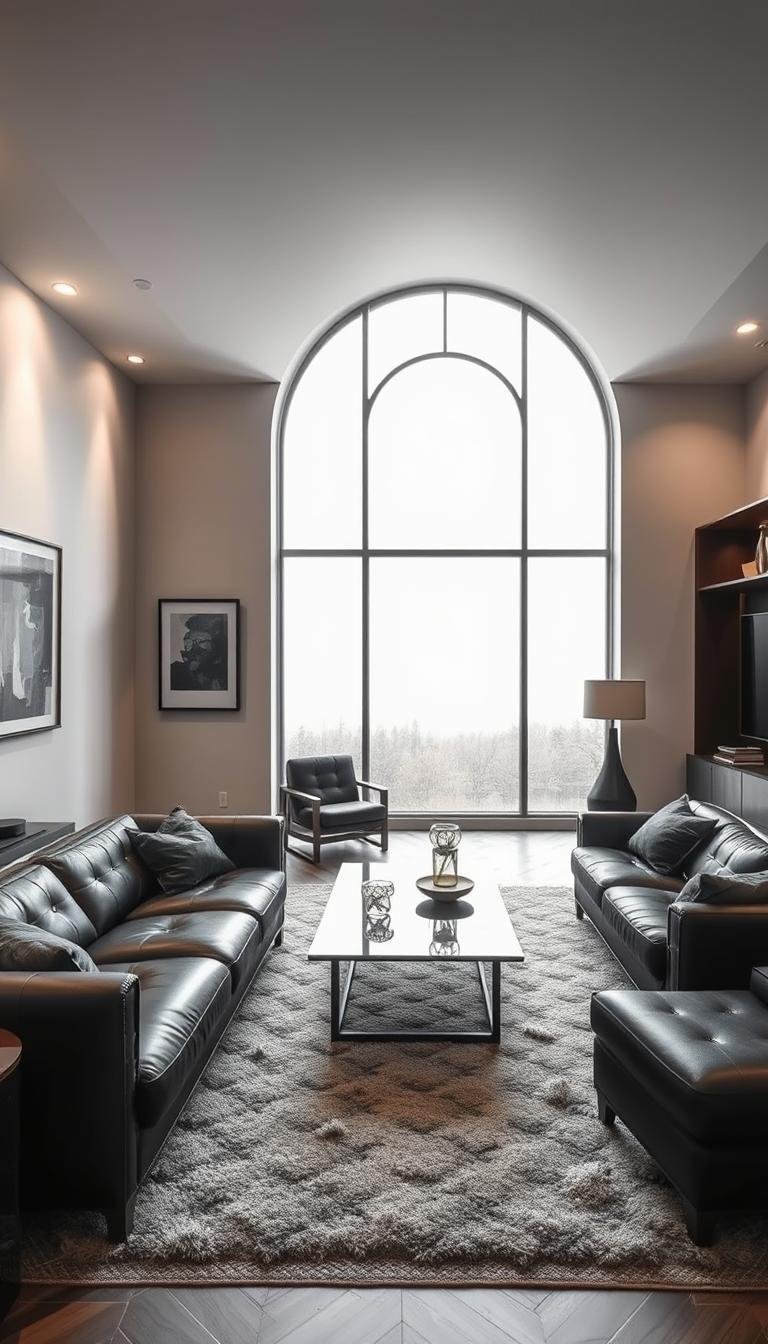
Creating a personal sanctuary starts with understanding design principles. Your space should reflect strength while maintaining comfort. This approach goes beyond mere decoration to create a purposeful environment.
Defining Strength and Sophistication in Your Space
Strength in design comes from clean lines and purposeful choices. Sophistication emerges through thoughtful material selection. Your room should feel intentional rather than accidental.
Consider how each piece contributes to the overall atmosphere. Strong silhouettes in furniture create visual impact. These elements work together to build a cohesive look.
Key Materials: Leather, Wood, and Metal
Three materials form the foundation of authentic design. Leather brings durability and rich texture. Wood adds natural warmth and organic character.
Metal provides industrial strength and clean lines. These elements combine to create a robust yet inviting space. Each material serves both functional and aesthetic purposes.
| Material | Key Characteristics | Best Applications |
|---|---|---|
| Leather | Durable, ages beautifully, rich texture | Sofas, chairs, accent pillows |
| Wood | Natural warmth, variety of grains | Tables, shelving, wall features |
| Metal | Industrial strength, clean lines | Lighting fixtures, table bases, decor accents |
Balancing Bold Elements with Comfort
The magic happens when bold meets comfortable. A sleek leather sofa needs plush throw pillows. Industrial metal lamps benefit from soft lighting.
Textured rugs add warmth to hard flooring. This balance creates spaces that feel both assertive and inviting. Your room becomes a place where strength meets relaxation.
Every design choice should serve dual purposes. Functional pieces become decorative statements. Comfortable elements maintain the space’s livability.
Embrace Deep, Rich Color Palettes
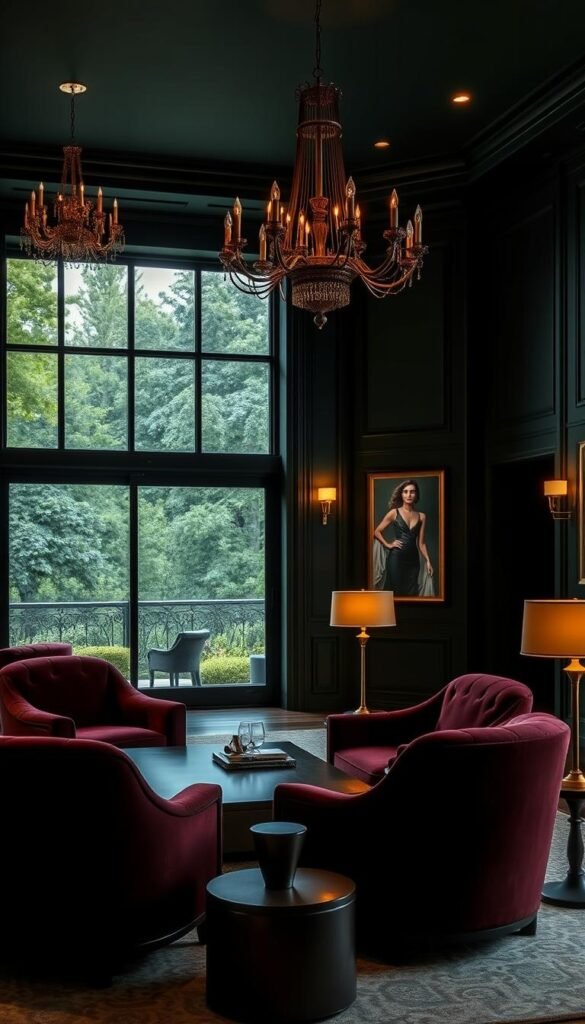
Color transforms a simple room into a powerful statement of personal style and sophistication. Your palette establishes the mood before anyone even sits on your sofa. Deep tones create intimacy while lighter shades maintain airiness.
The right combination makes your space feel both cozy and expansive. It’s about finding that perfect balance between drama and comfort. Your choices should reflect your personality while maintaining elegance.
Choosing Your Dominant Dark Hue
Start with a foundation of deep, resonant colors that speak to strength. Navy blue evokes confidence and stability in any environment. Charcoal grey offers neutral sophistication that pairs well with various materials.
Forest green brings natural warmth and organic character to your design. These hues create sophisticated backgrounds for your furniture and decor. They make other elements in the room stand out beautifully.
Consider your existing pieces when selecting your main color. Your dominant shade should complement leather, wood, and metal accents. It becomes the unifying element throughout your space.
Incorporating Lighter Accents for Balance
Prevent your room from feeling too heavy with strategic light accents. Cream, beige, or soft gray provide visual relief against dark walls. They maintain brightness while keeping the sophisticated atmosphere.
Follow the 60-30-10 rule for perfect color distribution. Sixty percent should be your dominant neutral or dark hue. Thirty percent becomes your secondary color, often a medium tone.
The final ten percent is for bold accent colors that create excitement. This formula ensures harmony throughout your entire space. It prevents any single color from overwhelming the design.
Using Color to Create Depth and Dimension
Layer different shades within the same color family for visual interest. Darker tones recede while lighter ones advance in perception. This technique makes your room feel larger and more dynamic.
Create an accent wall to add drama without overwhelming the space. Choose the wall that naturally draws attention when entering the room. This focal point adds character without requiring structural changes.
Metallic elements in gold, bronze, or silver complement deep colors beautifully. Wood tones add natural warmth against cool dark hues. These materials enhance your palette while maintaining cohesion.
Remember that lighting affects how colors appear throughout the day. Test your choices in both natural and artificial light. Your perfect palette should work under all lighting conditions.
Invest in Timeless Leather Furniture
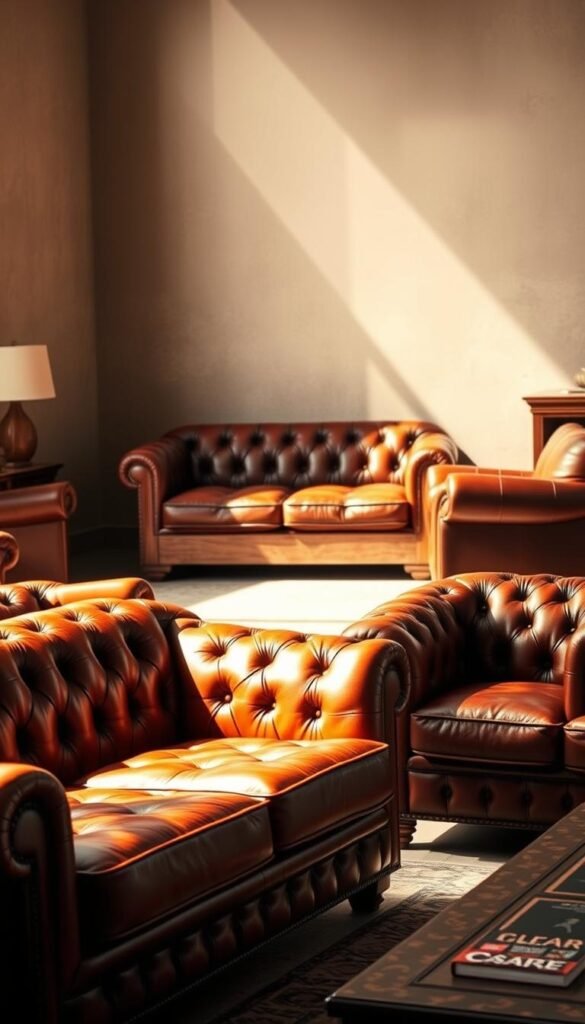
Leather furniture anchors your room with lasting quality and style. It brings both luxury and practicality to your daily life. This material withstands years of use while maintaining its appeal.
Your leather pieces become more beautiful with age. They develop a unique patina that tells your story. This creates character that new furniture simply cannot match.
Selecting the Right Leather Sofa for Your Space
Choose a sofa that fits your room’s proportions perfectly. Measure your available area before shopping. Consider how many people will regularly use the seating.
Look for clean lines and sturdy construction. The frame should feel solid and well-built. Cushions must provide both support and comfort for relaxation.
Full-grain leather offers the highest quality and durability. It develops the richest patina over time. According to Elle Decor, warm cognac or deep brown tones age particularly well.
Mixing Leather Tones and Textures
Combine different leather shades for visual depth. A dark brown sofa pairs beautifully with a cognac armchair. This creates interest without overwhelming the space.
Textured leathers add another dimension to your design. Distressed finishes work well with industrial elements. Smooth leather complements more refined pieces.
Your leather items should harmonize rather than match exactly. This approach feels collected and intentional. It prevents your room from looking too uniform.
Complementing Leather with Soft Textiles
Balance leather’s coolness with warm, soft fabrics. Wool throws add cozy texture during colder months. Velvet pillows bring luxury and visual weight.
Layer these textiles throughout your seating area. They make leather furniture more inviting for daily use. The combination creates perfect comfort for relaxation.
Choose neutral tones that enhance your leather pieces. Cream, gray, and beige work well with most leather colors. They maintain sophistication while adding softness.
| Leather Type | Best Features | Ideal Placement |
|---|---|---|
| Full-Grain | Highest durability, develops rich patina | Sofas, chairs, statement pieces |
| Top-Grain | Softer feel, more affordable | Accent chairs, ottomans |
| Bonded | Most budget-friendly, uniform appearance | Decorative items, small accents |
Leather furniture serves as both functional seating and artistic statements. It brings warmth and character to your environment. With proper care, these pieces will last for decades.
Consider leather’s practical benefits for your lifestyle. It resists spills and stains better than most fabrics. Regular conditioning keeps it looking its best year after year.
Your investment in quality leather pays off through years of enjoyment. These pieces become favorites that you’ll never want to replace. They grow more comfortable and attractive with time.
Incorporate Industrial Elements for Character
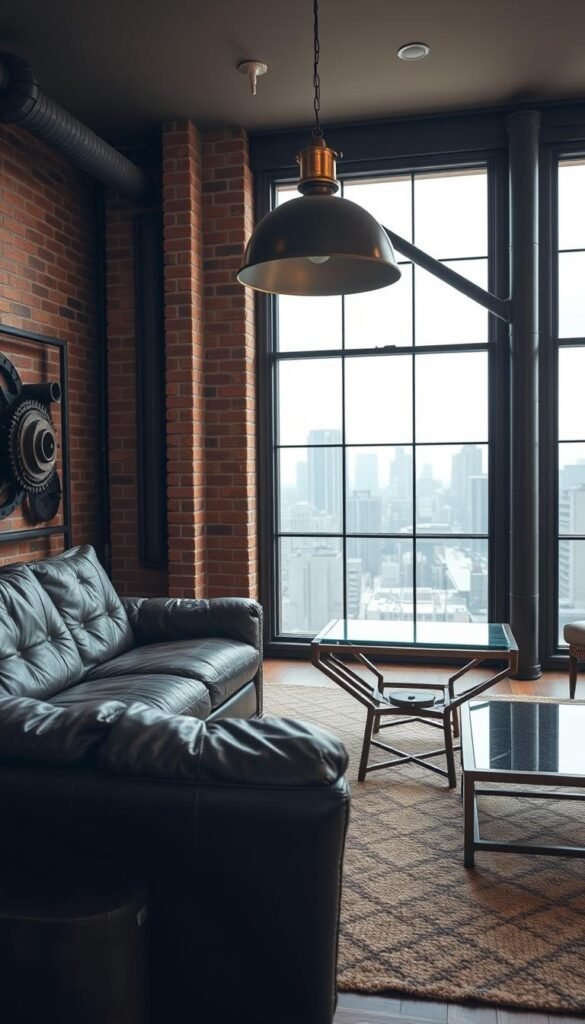
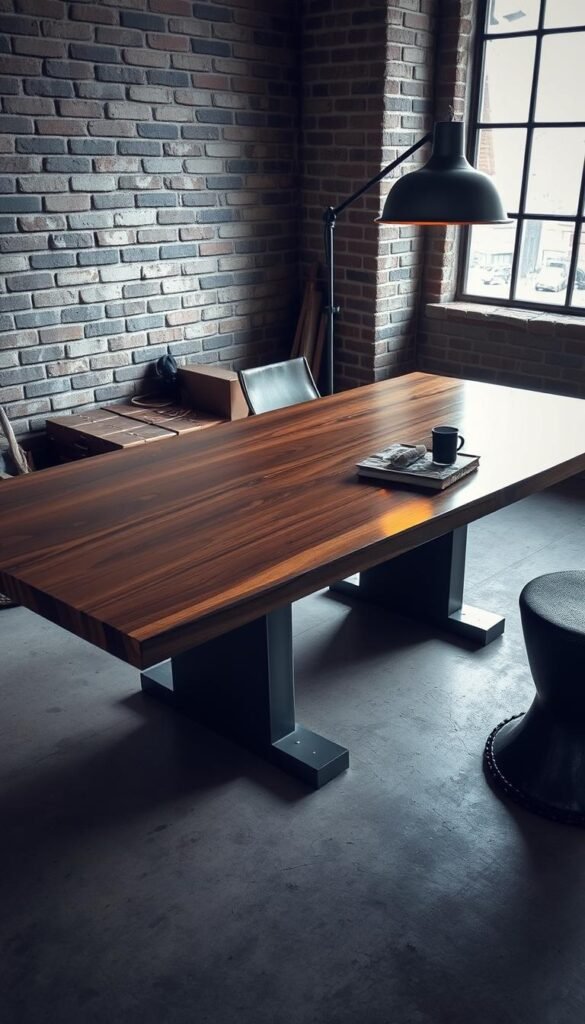
Raw materials and honest construction bring authentic personality to your environment. Industrial design celebrates function while creating visual interest. These elements add depth and history that new items cannot replicate.
Your space gains character through exposed materials and structural features. Think steel beams, reclaimed wood, and iron fixtures. These pieces tell stories through their imperfections and age.
Balance is crucial when working with industrial components. Too much hardness feels cold and unwelcoming. The right mix creates an inviting atmosphere with rugged charm.
Using Reclaimed Wood and Metal Features
Reclaimed wood brings warmth and history into your room. Each piece carries unique grain patterns and natural markings. These features add organic texture against smoother surfaces.
Metal elements provide structural strength and clean lines. Iron shelving units offer open storage with industrial character. Steel frame tables create visual weight without bulkiness.
Combine these materials for layered interest. A reclaimed wood coffee table with iron legs works beautifully. Metal light fixtures above wood shelving create cohesive design.
Balancing Industrial Hardness with Comfort
Soft textiles prevent industrial spaces from feeling too cold. Plush area rugs warm up concrete or wood floors. Throw blankets add cozy layers to leather seating.
Window treatments soften hard architectural lines. Choose neutral fabrics that complement your color scheme. These elements maintain comfort while preserving industrial aesthetic.
Lighting plays a key role in creating warmth. Soft glow lamps counteract harsh overhead fixtures. Dimmers allow you to adjust mood throughout the day.
Choosing Statement Industrial Pieces
Select one or two standout items as focal points. An iron coffee table makes a bold centerpiece. Metal shelving units serve as functional art installations.
Consider scale when introducing industrial elements. Large pieces anchor the room without overwhelming it. Smaller accents provide subtle nods to the style.
Authentic pieces carry more character than reproductions. Look for genuine factory items or well-made reproductions. These investments pay off through unique personality.
| Industrial Element | Character Contribution | Best Placement |
|---|---|---|
| Reclaimed Wood | Adds warmth and history | Coffee tables, shelving, accent walls |
| Iron/Steel | Provides strength and clean lines | Table bases, light fixtures, shelving frames |
| Factory Lighting | Creates industrial ambiance | Overhead fixtures, floor lamps, task lighting |
| Concrete | Adds raw texture | Flooring, side tables, decorative objects |
Industrial design transforms your room into a space with genuine character. These elements create conversation starters and visual interest. They blend strength with storytelling through materials and form.
Remember that industrial pieces should serve practical purposes. Storage shelving holds books and decor items. Coffee tables provide surface space while making style statements.
Your room becomes uniquely yours through these intentional choices. Industrial elements add depth that mass-produced items cannot match. They create an environment that feels both sturdy and inviting.
Layer Textures for Warmth and Interest
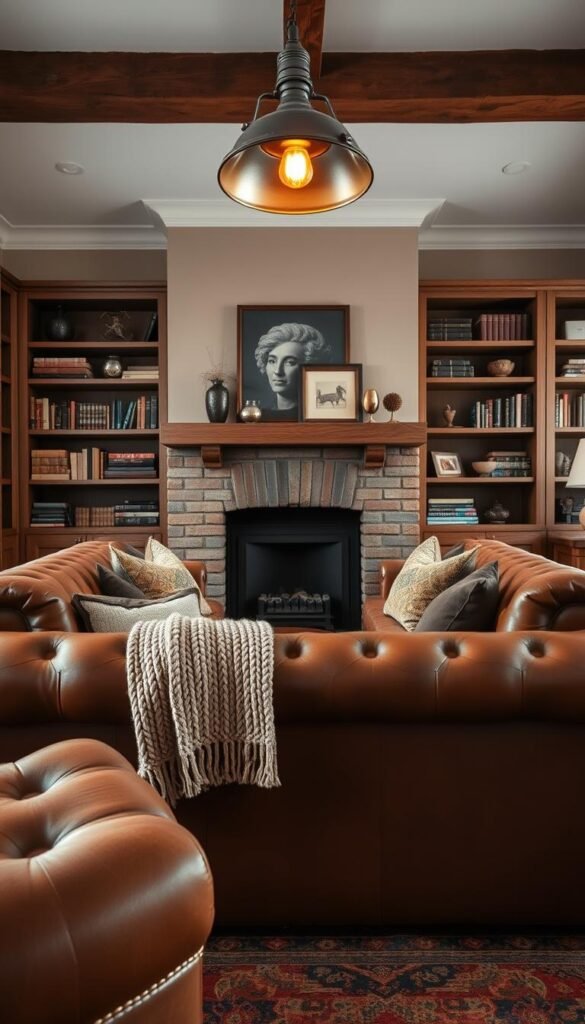
Texture transforms your environment from flat to fascinating. It adds depth and personality that color alone cannot achieve. The right combinations make your area feel both inviting and intentionally designed.
Think about how different surfaces interact throughout your space. Smooth leather meets rough wood grain. Soft fabrics contrast with hard metal finishes.
This approach creates visual richness that keeps the eye moving. It also enhances physical comfort through varied tactile experiences. Your room becomes more engaging on multiple levels.
Mixing Hard and Soft Materials
Balance is key when combining different material types. A metal coffee table needs a soft wool rug beneath it. Leather seating benefits from velvet throw pillows.
These combinations prevent your space from feeling too cold or too soft. They create harmony between structural elements and comfort features. Your room gains character through thoughtful contrast.
Consider the weight of each material in your design. Heavy wood pieces balance with lighter metal accents. Dense fabrics offset smooth, hard surfaces beautifully.
Selecting Textured Fabrics: Wool, Velvet, and Knits
Wool brings natural warmth and durability to your decor. It works wonderfully as area rugs or throw blankets. This material adds cozy texture without sacrificing sophistication.
Velvet offers luxury and depth through its rich pile. Use it for accent pillows or occasional chairs. The fabric catches light differently throughout the day.
Knitted items provide casual comfort and organic texture. Chunky throws add visual weight to sleek furniture. They make your space feel lived-in and welcoming.
Follow the rule of three textures for optimal impact. Combine one smooth, one rough, and one nubby fabric. This creates interest without visual chaos.
Creating Visual Interest Through Contrast
Contrast makes your design choices more noticeable and effective. Shiny metal lamps against matte wood surfaces. Smooth leather against textured woven pillows.
These differences highlight the qualities of each material. They create focal points that draw the eye through the space. Your room tells a more compelling story through variation.
Texture can compensate when color options are limited. Neutral palettes gain depth through varied surfaces. This approach maintains sophistication while adding visual intrigue.
Different fabric weights contribute to the overall atmosphere. Heavy drapes create formal elegance. Light linen adds casual breeziness.
Your textured elements should flow throughout the space. Repeat materials in different applications for cohesion. This creates a unified look that feels intentionally designed.
Master Your Lighting Strategy
Lighting creates both function and feeling in your personal environment. The right approach transforms ordinary areas into extraordinary spaces. Your illumination choices affect mood, functionality, and visual appeal.
Think beyond basic overhead fixtures. A thoughtful plan considers different activities throughout your day. Proper placement eliminates dark corners while creating welcoming glow.
Choosing Statement Fixtures and Lamps
Select lighting that reinforces your design aesthetic. Oversized pendants make dramatic focal points above seating areas. Industrial-style pieces with exposed bulbs enhance rugged character.
Consider scale when selecting statement pieces. A large floor lamp anchors your reading nook beautifully. Matching table lamps create symmetry on console tables.
Your fixtures should complement other elements in the space. Metal finishes coordinate with existing hardware and decor. Clean lines maintain sophisticated cohesion throughout.
Laying Ambient, Task, and Accent Lighting
Layer three lighting types for optimal functionality. Ambient illumination provides overall brightness for the entire area. Task lighting focuses on specific activities like reading.
Accent highlights architectural features or artwork. This approach creates depth and visual interest after dark. Each layer serves distinct purposes while working together.
Combine overhead lights with strategic lamps or sconces. Table lamps offer focused light for evening relaxation. Wall-mounted fixtures save surface space while adding illumination.
| Lighting Type | Primary Purpose | Best Fixtures | Ideal Placement |
|---|---|---|---|
| Ambient | General illumination | Overhead fixtures, track lighting | Center of room, evenly spaced |
| Task | Specific activities | Table lamps, floor lamps, under-cabinet | Near seating, workspaces |
| Accent | Highlight features | Spotlights, picture lights, sconces | Above art, along walls, architectural details |
Using Dimmers for Mood Control
Dimmable lights provide flexibility for different occasions. Bright illumination works for daytime activities. Softer settings create evening ambiance for relaxation.
Install dimmer switches on your main overhead fixtures. Choose compatible bulbs that work with dimming systems. This simple upgrade offers tremendous control over atmosphere.
Warm light bulbs between 2700K-3000K create cozy environments. They enhance wood tones and leather surfaces beautifully. The right color temperature makes your space feel inviting after sunset.
Remember that lighting affects how colors and materials appear. Test different intensities throughout the day. Your perfect setting might change with natural light availability.
Curate Minimalist Art and Personal Touches
Your walls provide the perfect canvas for expressing your personality without clutter. Thoughtful artwork and meaningful collections transform generic areas into authentic spaces. This approach balances visual impact with personal significance.
Selecting Impactful Yet Simple Artwork
Choose pieces that command attention through simplicity rather than complexity. Black-and-white photography offers timeless elegance with strong visual impact. Abstract works with clean lines complement sophisticated furniture beautifully.
Consider scale when selecting art for your space. Large pieces create dramatic focal points above sofas or consoles. Smaller works add interest to bookshelves or side tables.
Your artwork should harmonize with existing color schemes. Monochromatic pieces work well with rich, deep palettes. Metallic accents in frames echo other metal elements throughout the room.
Displaying Personal Collections with Intention
Curate your collections rather than displaying everything at once. Vintage sports memorabilia tells stories when presented as curated groups. Travel souvenirs gain significance through thoughtful arrangement.
Use display shelves or shadow boxes for special items. This approach elevates ordinary objects into decorative statements. Your collections become conversation starters rather than clutter.
Rotate pieces seasonally to keep your environment feeling fresh. This simple practice maintains visual interest without permanent changes. Your space evolves with your experiences and interests.
Creating Gallery Walls That Tell Your Story
Build cohesive arrangements that blend different art mediums seamlessly. Mix photographs with abstract prints for visual diversity. Maintain consistent framing styles for unified presentation.
Hang artwork at eye level for optimal viewing experience. The center should sit approximately 57 inches from the floor. This gallery-standard height creates professional-looking displays.
Use templates or paper cutouts to plan your arrangement before installing. This prevents unnecessary holes in your walls. Your gallery becomes a carefully composed visual narrative.
Personal touches transform your area into a true reflection of your journey. Each piece should hold meaning or spark joy. Your walls become chapters in your ongoing story.
Design a Functional and Inviting Layout
Your floor plan determines how your area feels and functions daily. A smart arrangement makes your space both beautiful and practical. It creates harmony between movement and relaxation.
Think about how you use your area throughout the day. Your furniture placement should support these activities. The right layout makes everything feel intentional and comfortable.
Arranging Furniture for Conversation and Flow
Position your seating to face each other for easy talking. This setup encourages natural social interaction. Your guests will feel welcomed and included.
Leave enough space between pieces for smooth movement. People should walk around without obstacles. This creates a comfortable flow throughout your room.
Consider the natural pathways in your space. Arrange furniture to follow these movement patterns. Your layout will feel both logical and inviting.
Using Rugs to Define Spaces
Area rugs create visual boundaries within open floor plans. They anchor furniture groupings beautifully. Your space gains clear definition without walls.
Choose rugs large enough to fit all furniture legs. This creates a cohesive look for each zone. Your arrangement feels intentional and complete.
Different rug textures add warmth underfoot. They also provide acoustic benefits in larger rooms. Your space becomes more comfortable and intimate.
Incorporating Smart Storage Solutions
Hidden storage keeps your surfaces clean and sophisticated. Ottoman coffee tables offer secret compartments inside. These pieces maintain your minimalist aesthetic.
Storage benches provide seating while organizing items. They work perfectly along walls or under windows. Your space stays tidy without sacrificing style.
Built-in shelving creates custom storage solutions. It maximizes your available space efficiently. Your room gains both function and character.
| Storage Solution | Primary Benefit | Ideal Placement |
|---|---|---|
| Ottoman Coffee Table | Hidden storage, multi-functional | Center of seating area |
| Storage Bench | Seating with organization | Under windows, along walls |
| Built-in Shelving | Custom fit, maximum efficiency | Empty walls, corners |
| Console Table with Drawers | Surface space with hidden storage | Behind sofa, entryway |
Keep surfaces mostly clear for that sophisticated look. About eighty percent empty space works perfectly. This approach maintains visual calm throughout your room.
Your layout should balance open areas with defined zones. This creates both intimacy and freedom of movement. Your space becomes truly functional and inviting.
Bringing Your Sophisticated Space Together
Your final design journey blends strength with comfort beautifully. Every piece should serve both purpose and style. This creates harmony throughout your entire area.
Balance bold materials with soft textures for warmth. Clean lines keep the look sharp and intentional. Your lighting sets the perfect mood for relaxation.
Personal touches make the space truly yours. Display meaningful art and collections with care. These elements add character without clutter.
Your finished room reflects your unique personality. It welcomes both solitude and social gatherings. Enjoy this personal sanctuary you’ve created.
The space will evolve with your tastes over time. Regular editing keeps it feeling fresh and current. Your design journey continues beautifully.