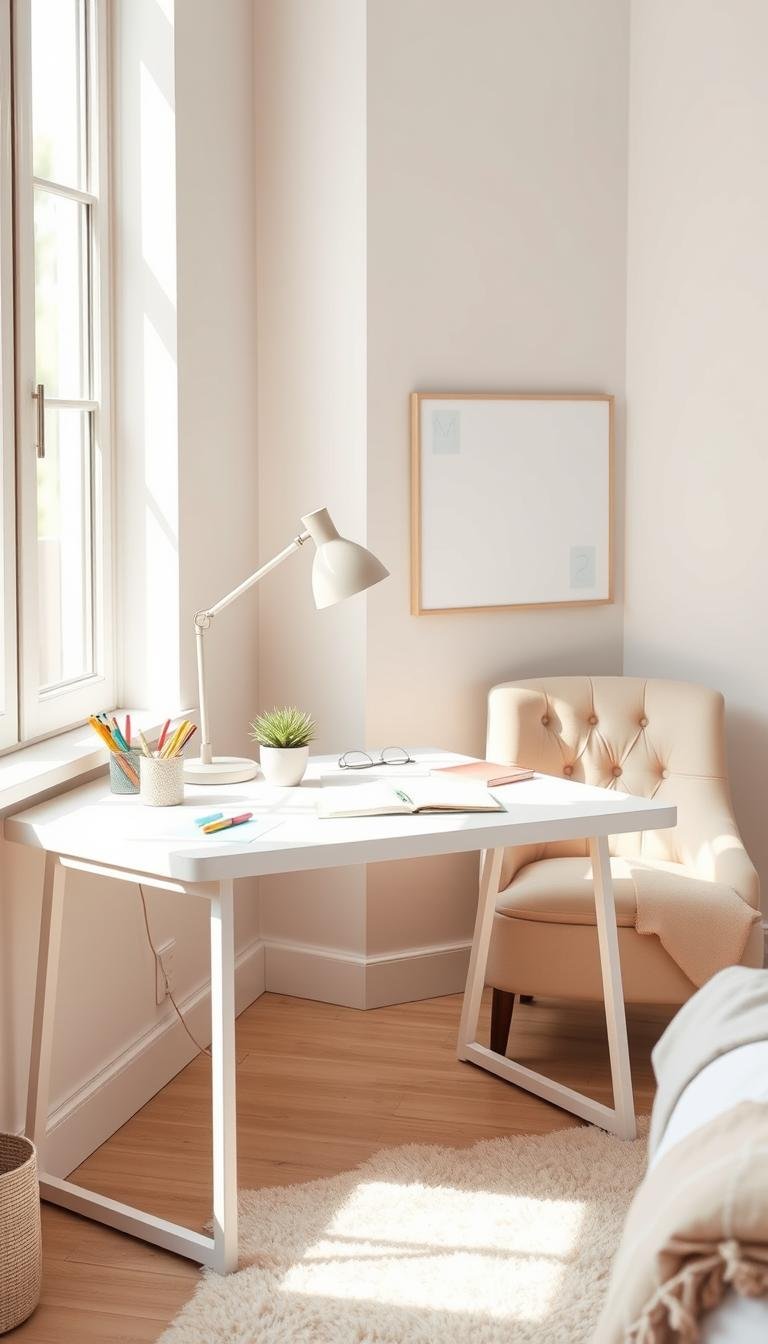
Welcome to your guide for designing a workspace that truly works for you. Your personal area should blend smart function with your unique flair.
A well-designed workspace can boost your focus and make studying more enjoyable. It’s not just about having a place to write or use your computer.
It’s about creating an environment that supports your goals. You will learn how to pick furniture, use colors, and stay organized.
This space can help improve your habits and academic success. Let’s build a spot that inspires creativity and reflects who you are.
Why Your Bedroom Desk Setup Matters for Academic Success
The space where you study directly impacts your ability to focus and retain information. When you have a dedicated area for learning, your brain recognizes it’s time to concentrate. This creates powerful psychological cues that improve your academic performance.
The Psychology Behind a Dedicated Study Space
Your mind responds to environmental signals. A consistent workspace tells your brain it’s time to learn. This mental conditioning helps establish productive routines that last throughout your school years.
Research shows that dedicated areas improve information retention. When you always study in the same spot, your brain associates that space with learning mode. This connection boosts your ability to absorb and remember material.
“A well-stocked, designated area means your child won’t have to waste time hunting for supplies or shuffling things around to find a place to work.”
Having everything you need within reach reduces frustration during homework sessions. This organized approach saves valuable time and mental energy. You can dive straight into your assignments without distractions.
How Organization Boosts Focus and Productivity
Physical organization creates mental clarity. When your space is tidy, your mind can focus better on schoolwork. This reduces stress and anxiety around studying and completing assignments.
Proper storage solutions like desk drawers keep supplies accessible yet out of sight. This eliminates visual clutter that can distract from your work. A clean workspace helps you concentrate on writing or computer tasks.
Investing time in creating the right environment pays dividends in improved grades. Organization systems reduce mental clutter and allow better concentration. Your home office setup becomes a catalyst for academic achievement.
Kids benefit tremendously from having their own organized work area. It teaches valuable life skills while supporting educational development. The right desk setup transforms how you approach learning challenges.
Assessing Your Space: Before You Start Designing
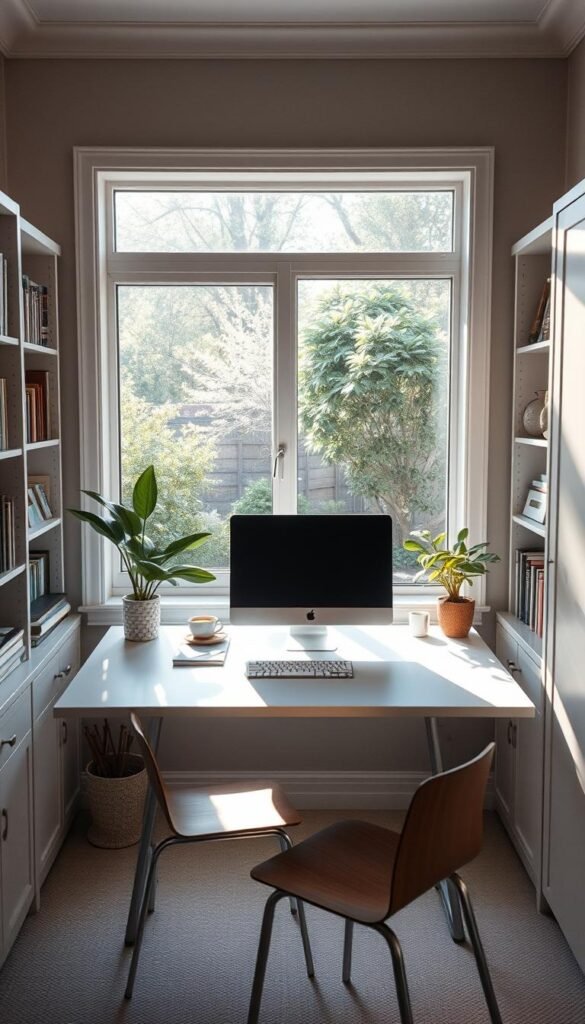
Before selecting furniture, take time to evaluate your room’s layout and potential. This careful planning ensures your workspace will be both functional and comfortable for years of productive use.
Consider your age and learning style when choosing the perfect spot. Younger students often benefit from areas where help is readily available. Older students typically prefer more private spaces for focused concentration.
Measuring Your Available Area
Grab a tape measure and document your room’s dimensions. Note window placements, door swings, and permanent fixtures. This prevents furniture crowding and ensures smooth movement.
Even compact areas can become excellent work zones with smart planning. Consider vertical storage solutions and multi-functional pieces. These maximize every inch of your available space.
Remember to account for chair movement and drawer openings. Leave adequate clearance around your chosen spot. This creates a comfortable environment for extended study sessions.
Identifying Natural Light Sources
Natural illumination significantly impacts your comfort during computer work and reading. Position your workspace to benefit from daylight without glare issues.
North-facing windows provide consistent, soft light throughout the day. East-facing windows offer bright morning light perfect for early study sessions. Consider your daily schedule when choosing placement.
Avoid positioning your monitor directly opposite windows to reduce eye strain. Side lighting often works best for writing tasks and screen viewing. Test different locations at various times to find your ideal setup.
Considering Room Traffic Patterns
Observe how people move through your space during different times. High-traffic areas near doors create constant interruptions. Quieter corners typically support better concentration.
Dr. Timothy Davis notes, “Younger children generally need more support during homework time. Their ideal location balances accessibility with minimal distractions.”
Consider electrical outlet locations when planning your computer station. Easy access to power prevents cable clutter across your floor. This maintains both safety and organization in your home office area.
Think about future needs as you grow and your study requirements change. Flexible arrangements accommodate evolving technology and storage needs. Your perfect workspace should adapt along with your educational journey.
Choosing the Perfect Desk: Style Meets Function
Finding the right work surface transforms how you approach learning tasks. Your selection balances daily needs with personal taste.
Consider your height, storage requirements, and available room space. The ideal piece supports both computer work and writing projects.
Desk Size Considerations for Different Age Groups
Elementary students need compact surfaces around 24” x 18”. This accommodates basic homework and art activities perfectly.
Middle and high school students require larger areas. A minimum of 36” x 24” handles textbooks, notebooks, and technology comfortably.
Dr. Lori Woodring advises positioning against a wall. This placement lets you view important reminders while minimizing distractions.
Consider future needs when selecting dimensions. Your workspace should adapt through different educational stages.
Material Options: Wood, Metal, and Composite
Solid wood offers exceptional durability and classic appeal. It withstands years of daily use while maintaining its beauty.
Metal frames provide structural strength with manageable weight. They often feature sleek designs that complement modern decor.
Composite materials resist stains and scratches effectively. These surfaces handle art supplies and accidental spills with ease.
Laminated finishes come in various colors and patterns. You can match existing furniture while ensuring easy cleanup.
The Vanity vs Desk Dilemma: Making the Right Choice
Many face the decision between dedicated pieces. An antique vanity might serve dual purposes initially.
As academic demands increase, specialized furniture becomes necessary. A proper writing table supports focused study sessions better.
Consider whether a mirror above a dresser meets grooming needs. This approach saves space while maintaining functionality.
Multi-functional furniture works well in compact areas. Look for pieces offering both work surface and storage solutions.
| Feature | Elementary Students | Middle School | High School |
|---|---|---|---|
| Minimum Surface Area | 24” x 18” | 30” x 20” | 36” x 24” |
| Recommended Height | 22-24 inches | 24-26 inches | 26-30 inches |
| Storage Needs | Small drawers | Medium drawers | Full drawers |
| Material Priority | Rounded corners | Stain resistance | Durability |
Proper desk size requirements vary by age and use. Elementary children need space for basic homework, while older students require room for technology.
Weight capacity matters for safety and longevity. Ensure your choice handles books and occasional leaning without issues.
Anti-tip hardware becomes essential for taller units. All components should meet current safety standards for peace of mind.
Your selection impacts daily comfort and academic performance. Choose wisely to create a space that truly supports your goals.
Color Psychology: Selecting Your Desk’s Palette
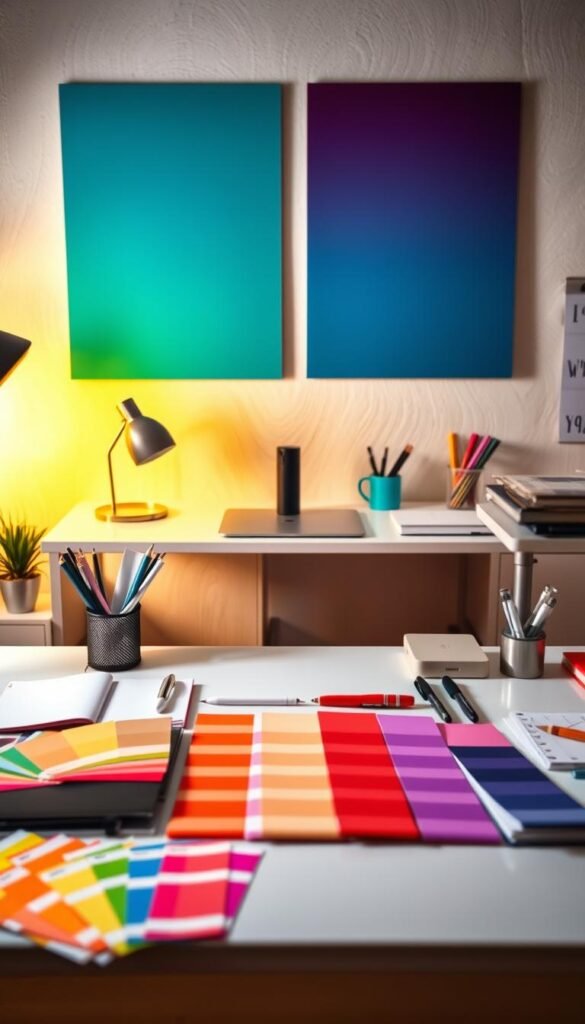
The colors surrounding your workspace do more than just look pretty. They influence your emotions, focus, and overall productivity during study sessions. Choosing the right palette creates an environment that supports your academic goals while reflecting your personal style.
How Colors Affect Your Study Mood
Different hues trigger various psychological responses. Cool tones like blues and greens promote calm concentration. These colors lower stress levels and help maintain focus during long study periods.
Warm colors like yellow and orange stimulate creativity and energy. They work well for brainstorming sessions or creative projects. However, they might be too stimulating for intense concentration tasks.
Neutral shades create balanced environments. They provide background support without overwhelming your senses. Many students find these tones ideal for computer work and writing assignments.
Coordinating With Existing Room Decor
Your workspace should harmonize with your room’s existing color scheme. A turquoise wall (like BM Florida Keys Blue) pairs beautifully with pink, white, and brown accents. This creates a cohesive look that feels intentional and stylish.
If you have existing black furniture, consider adding a white desk instead of another black piece. Light surfaces brighten spaces and prevent the area from feeling too heavy. They also make small rooms appear larger and more open.
Pull colors from your bedding or curtains for a coordinated look. This technique creates visual harmony without matching everything perfectly. Your space will feel put together while maintaining personality.
Breaking Away From Monochromatic Schemes
Single-color schemes can feel flat and uninspiring. Incorporating multiple colors adds visual interest and energy to your area. Start with a neutral base, then layer accent colors through accessories.
Use colorful organizers, pencil holders, and desk trays for pops of color. These items add personality without permanent commitment. You can change them easily as your tastes evolve.
Artwork and wall decor provide excellent color opportunities. Choose pieces that inspire you while adding needed color variety. This approach keeps your space fresh and motivating.
| Color Family | Psychological Effect | Best For | Pairing Suggestions |
|---|---|---|---|
| Blues & Greens | Calm, focused concentration | Exam preparation, reading | White accents, natural wood tones |
| Yellows & Oranges | Energy, creativity boost | Brainstorming, art projects | Gray neutrals, light browns |
| Neutrals (White/Gray) | Balance, reduced distraction | Computer work, writing tasks | Any accent color combinations |
| Warm Pinks | Comfort, emotional balance | Long study sessions | Greens, blues, metallic accents |
Consider your personal preferences when selecting colors. You’ll spend many hours in this space, so it should feel genuinely yours. The right combination improves both your mood and academic performance.
Remember that lighting affects how colors appear in your room. Test paint samples and fabric swatches in your actual space before committing. Natural and artificial light can significantly alter color perception.
Your ideal color scheme supports both function and enjoyment. It creates an environment where learning feels natural and inviting. The perfect palette makes your workspace somewhere you actually want to be.
Ergonomic Seating: Comfort for Long Study Sessions
Your chair choice makes a huge difference in how you feel after hours of homework. The right seating keeps you comfortable and focused throughout your academic tasks.
Quality ergonomic chairs support your body during extended periods at your work area. They help maintain proper alignment while you concentrate on school assignments.
Adjustable Chair Features That Grow With You
Look for chairs with multiple adjustment points that accommodate your changing needs. Height adjustments ensure your feet rest flat on the floor throughout your growth.
Armrests should position your elbows at a perfect 90-degree angle when typing or writing. This prevents shoulder strain during computer work and paper-based assignments.
Seat depth adjustments maintain proper leg support as you mature. These features make one chair last through multiple school years effectively.
Proper Posture Support for Healthy Habits
Lumbar support cushions your lower back during extended sitting sessions. This feature prevents discomfort that can distract from your academic focus.
When seated properly, your screen should sit at eye level without neck bending. This positioning reduces strain during long study periods at your work surface.
Dr. Sarah Johnson notes,
“Proper seating alignment in childhood establishes healthy posture habits that last a lifetime. It’s an investment in both immediate comfort and long-term wellness.”
Test chairs personally before selecting one for your learning space. Sit for several minutes to assess comfort and support features thoroughly.
Materials matter for both durability and daily comfort. Breathable fabrics prevent overheating during intense concentration sessions.
Your ideal chair combines functional support with personal style preferences. It becomes a trusted partner in your educational journey.
Lighting Solutions: Illuminating Your Workspace
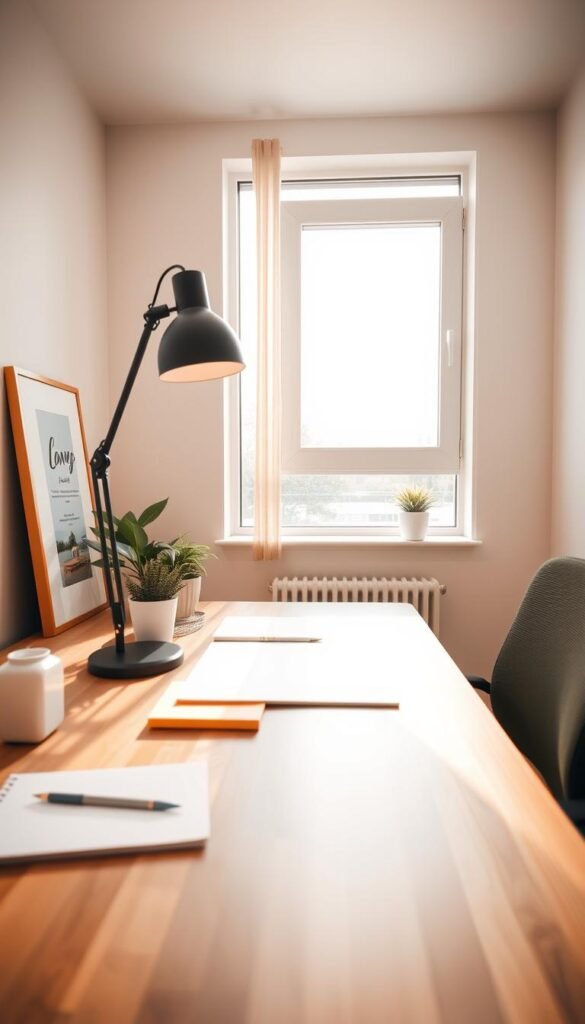
Good lighting transforms how you experience your study sessions. It protects your eyes while creating the perfect atmosphere for concentration. The right illumination makes reading and working more comfortable for extended periods.
Maximizing Natural Light Benefits
Position your work area near windows to capture daylight’s advantages. Natural illumination boosts mood and alertness during daytime tasks. It reduces eye strain compared to artificial options.
Dr. Deborah Gilboa explains the ideal combination:
“Task light along with any natural light should be enough illumination to stay alert and focused.”
Morning light works particularly well for early study sessions. Side lighting prevents glare on screens and writing surfaces. Adjustable blinds help control brightness throughout the day.
Task Lighting Options for Evening Study
Desk lamps provide focused illumination for nighttime work. Choose models with adjustable arms and brightness settings. This lets you direct light exactly where needed.
Floor lamps offer broader coverage for larger areas. They work well when combined with overhead lighting. Pendant lights create stylish focal points above your workspace.
Consider lamps with flexible necks for precise positioning. They eliminate shadows during reading and writing activities. Dimmable options adapt to different tasks and times.
LED Lighting for Style and Function
LED lights deliver excellent energy efficiency and longevity. They provide bright, focused illumination perfect for detailed work. Customizable color temperatures suit various activities.
Cool white tones enhance concentration during intense study. Warmer options create relaxation for reading breaks. Adjustable settings let you match lighting to your mood.
These modern solutions complement any decor style beautifully. Strip lights add personality while providing functional benefits. They make your space feel both productive and inviting.
Layer different lighting types for optimal results. Combine ambient, task, and accent illumination strategically. This approach supports various activities throughout your day.
Proper placement prevents screen glare and eye fatigue. Position lights beside rather than behind your monitor. This maintains comfortable visibility during computer work.
Your lighting choices significantly impact study effectiveness. They create environments where learning feels natural and enjoyable. The right illumination makes your workspace truly shine.
Storage Solutions: Keeping Your Space Organized
Smart storage choices transform how you work and feel in your personal area. The right systems keep supplies handy while maintaining a clean, inspiring environment. Organization reduces stress and saves precious time during busy school weeks.
Desk Drawers vs External Storage Units
Built-in desk drawers offer convenient access to everyday items. They keep essentials within arm’s reach during study sessions. These integrated solutions maintain a streamlined look.
External units provide flexible organization options. You can reposition them as needs change. Freestanding pieces work well for seasonal or less-used supplies.
Consider your available space when choosing between options. Smaller areas might benefit from built-in drawers that maximize surface area. Larger rooms can accommodate both solutions effectively.
| Feature | Built-in Drawers | External Units |
|---|---|---|
| Accessibility | Immediate access | Requires reaching |
| Space Efficiency | Maximizes workspace | Requires floor space |
| Flexibility | Fixed location | Movable |
| Cost | Higher initial investment | Budget-friendly options |
| Aesthetic | Streamlined appearance | Visible storage |
Creative Organization for School Supplies
Designate specific homes for different item categories. Use cups or containers for writing instruments. Assign folders or files for papers and assignments.
Eileen Kennedy-Moore suggests practical solutions:
“Having a single ‘Turn It In’ folder where you can put anything that needs delivering to the teacher the next day prevents last-minute searches.”
Vertical solutions maximize limited space beautifully. Wall-mounted organizers keep supplies visible yet organized. Hanging options work wonderfully for frequently used items.
Label everything clearly for quick identification. This system ensures you find what you need instantly. Categorize items based on how often you use them.
Digital Cable Management Systems
Cord clutter creates visual chaos and frustration. Modern solutions tame the cable jungle effectively. They keep your area looking clean and professional.
Use cable sleeves to bundle related cords together. These wraps create neat lines instead of tangled messes. They make vacuuming and cleaning much easier.
Adhesive clips route cables along furniture edges discreetly. They prevent cords from dangling across your work surface. This approach maintains both safety and organization.
Consider a charging station for multiple devices. These hubs contain power strips and cords in one location. They prevent cable sprawl across your valuable workspace.
Fabric storage options add softness and style to your organization. A decorative storage bag can hold larger items or projects. Fabric drawers offer flexible containment with visual appeal.
For small desk drawers, use dividers to maximize space efficiency. These inserts create custom compartments for different supplies. They prevent items from becoming jumbled together.
Your drawers bedroom organization should reflect your personal workflow. The same principles apply to drawers home office setups. Thoughtful systems make daily tasks smoother and more enjoyable.
Technology Integration: Smart Desk Setup
Your tech setup plays a crucial role in how effectively you learn and complete assignments. When done right, it supports your academic goals while keeping you comfortable during long sessions.
Thoughtful technology integration creates a seamless workflow. It reduces physical strain and mental distractions. Your space becomes a true partner in your educational journey.
Computer Placement and Ergonomics
Position your screen at eye level to prevent neck strain. The top of your monitor should align with your natural sightline. This keeps your spine straight during computer use.
Maintain proper distance from your display. Your eyes should be about an arm’s length away. This reduces eye fatigue during extended study periods.
Keep your keyboard and mouse at elbow height. Your wrists should remain straight while typing. This prevents discomfort during writing tasks.
Dr. Lisa Miller notes, “Proper tech positioning prevents physical strain that can distract from learning. It’s worth taking time to get it right.”
Charging Station Organization
Create a dedicated charging zone for all your devices. Use a power strip with multiple outlets. This keeps everything powered up without cable chaos.
Consider these organization solutions:
- Cable management boxes hide power strips and excess cords
- Adhesive clips route cables neatly along furniture edges
- Color-coded tags identify which cord belongs to which device
- Wireless charging pads reduce cable clutter on your surface
A white computer desk can make your charging station look especially clean. The light surface helps you spot cords that need tidying.
Minimizing Digital Distractions
Establish clear boundaries with technology during study time. Designate your workspace as a phone-free zone during focused sessions. This single change dramatically improves concentration.
Dr. Michael Davis offers practical advice: “There’s no need for a phone in a study space, so make sure it’s charging in another room. Use an old-fashioned clock or timer instead.”
Install productivity apps that limit access to distracting websites. These tools help you stay on track with your academic work. They block social media and other time-wasters during designated study periods.
Create specific technology zones within your setup. Keep your computer desk organized for schoolwork only. Store entertainment devices elsewhere to maintain focus.
Personalizing Your Girls Bedroom Desk Setup for Study & Style
Your workspace should feel like an extension of your personality. It’s where you spend hours learning and growing. Adding personal touches makes this area truly yours.
Thoughtful decoration boosts motivation and enjoyment. It turns ordinary tasks into special moments. Your space becomes a reflection of what matters most to you.
Displaying Inspiration and Achievements
Create a visual reminder of your goals and successes. A bulletin board works perfectly for this purpose. Pin up awards, certificates, and inspiring images.
Eileen Kennedy-Moore observes, “Many elementary-school-age kids love to display their collectibles to personalize their space.” This applies to older students too. Your achievements deserve celebration.
Vision boards keep future dreams visible during study sessions. They remind you why the hard work matters. Include college brochures or career inspiration.
Rotate displayed items seasonally to maintain fresh energy. This prevents your space from feeling stale. New visuals can reinvigorate your study routine.
Incorporating Your Favorite Colors and Themes
Choose accent colors that make you happy and motivated. These hues should complement your existing decor. Use them in organizers, artwork, and accessories.
Plants add life and improve air quality in your work area. Select low-maintenance varieties that thrive indoors. Greenery creates a calming natural element.
Personal photos and artwork make the space uniquely yours. Frame special memories or your own creations. These items spark joy during long study hours.
Balance personal expression with functional needs. Too much decoration can become distracting. Keep your actual work surface clear for focused tasks.
Your personalized area should support both work and self-expression. It becomes a place where learning feels personal and meaningful. This connection makes studying more enjoyable.
Creating a Productive Atmosphere
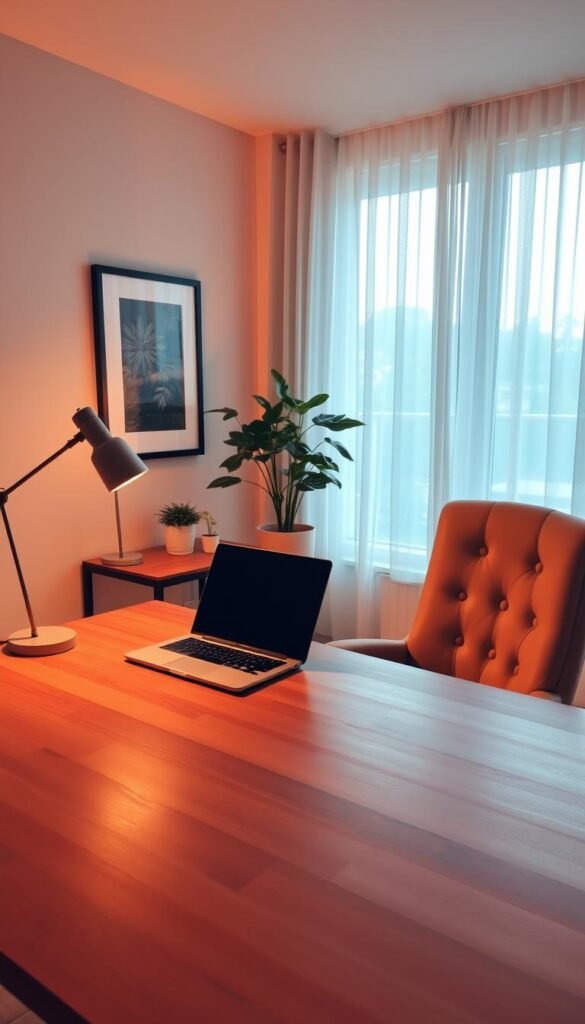
The environment around your workspace plays a huge role in how well you concentrate. A calm, focused area helps you get more done with less effort. You can create this perfect atmosphere with some simple adjustments.
Think about both what you see and hear while working. Too much noise or visual clutter makes it hard to focus. The right setup keeps distractions away so your mind can stay on task.
Minimizing Visual and Auditory Distractions
Position your work surface away from high-traffic areas in your room. This reduces interruptions from people walking by. Keep your back to the door if possible to avoid constant turning.
Use noise-canceling headphones during intense study sessions. They block out surrounding sounds that might break your concentration. Many students find these essential for focused computer work.
Organizational systems reduce visual clutter on your work area. Keep only essential items on your surface during study time. Put other supplies in drawers or storage containers.
Dr. Amanda Chen notes, “A clean workspace signals your brain it’s time to focus. Removing visual distractions improves information retention significantly.”
Consider these effective solutions:
- Sound-absorbing panels on walls near your home office area
- Window treatments that control outside distractions
- Designated homes for all supplies to prevent surface clutter
- Digital timers instead of phones to avoid notifications
Temperature and Air Quality Considerations
The right temperature keeps you comfortable during long study sessions. Most people focus best between 68-72 degrees Fahrenheit. This range prevents both shivering and overheating distractions.
Good air quality improves cognitive function and concentration. Proper ventilation brings fresh oxygen to your brain. This helps you stay alert during challenging work.
Plants naturally filter air while adding beauty to your space. Snake plants and peace lilies work well in indoor environments. They require minimal care while improving your atmosphere.
Consider a small humidifier during dry seasons. Proper moisture levels prevent throat irritation during long reading sessions. This is especially helpful for computer work in heated rooms.
| Factor | Ideal Condition | Improvement Strategy |
|---|---|---|
| Temperature | 68-72°F | Adjustable thermostat or fan |
| Air Quality | Fresh, circulated air | Open windows or air purifier |
| Humidity | 40-60% | Humidifier or dehumidifier |
| Noise Level | Under 50 decibels | Sound-absorbing materials |
| Lighting | Combination natural/task | Adjustable desk lamp |
Create study rituals that signal focus time to your brain. This might include lighting a specific candle or playing certain music. These cues help transition into productive work mode.
Your environment should support both comfort and concentration. Small adjustments make big differences in how effectively you study. The perfect atmosphere makes learning feel natural and enjoyable.
Multi-Functional Spaces: Study Meets Vanity
Your room can serve multiple purposes without sacrificing style or function. A smart layout combines different activities in one efficient area. This approach maximizes your available space beautifully.
Many face the challenge of balancing study needs with personal care routines. You might wonder if you need separate furniture pieces. The answer often lies in creative multi-functional solutions.
Dual-Purpose Furniture Solutions
Look for pieces that offer both work surface and storage options. A vanity desk can serve as your primary study area during the day. At night, it transforms into your personal grooming station.
Some designs feature flip-top mirrors that conceal when not in use. Others include hidden compartments for makeup and supplies. These smart solutions keep your space organized and clutter-free.
Consider mounting a mirror above your dresser instead of a separate vanity. This approach saves floor space while maintaining functionality. Your dresser top can handle both storage and preparation tasks.
Quick Transition Between Functions
Create simple systems that let you switch activities effortlessly. Use labeled containers for different supply categories. This makes finding what you need quick and easy.
Designate specific zones within your multi-functional area. Keep school materials on one side and personal items on the other. Visual separation helps maintain mental focus during work sessions.
Dr. Lisa Chen suggests, “Establish clear visual cues for different activities. A simple change in lighting or background music can signal transition between functions.”
Rotating trays or modular organizers offer flexible solutions. They allow you to customize your space based on current needs. These systems grow and change along with your requirements.
Your multi-functional space should support both productivity and self-care. With thoughtful planning, one area can beautifully serve multiple purposes. This approach creates a room that truly works for you.
Budget-Friendly Desk Setup Ideas
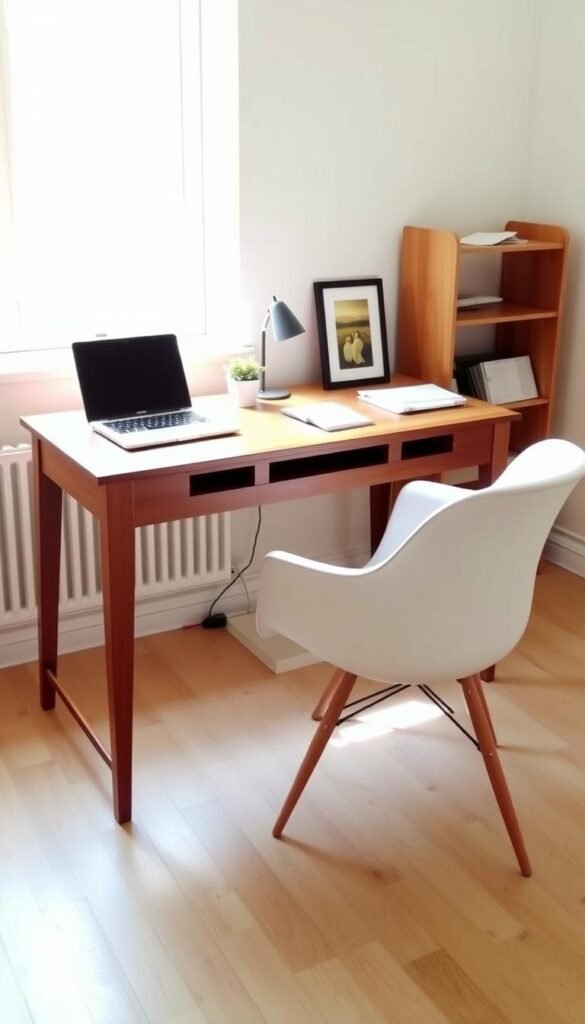
Creating an amazing workspace doesn’t require a huge budget. With some creativity and smart planning, you can design a functional area that supports your academic goals while saving money.
Many affordable options provide both style and practicality. You can find quality pieces without overspending. The key is knowing where to invest and where to get creative.
DIY Solutions and Upcycling Projects
Transform ordinary items into extraordinary organizational tools. Mason jars make perfect pencil holders with a quick coat of paint. Wooden crates can become stylish shelving units for books and supplies.
Old dressers often have great potential as desk bases. With some sanding and fresh paint, they become unique work surfaces. This approach saves money while creating something truly special.
Simple DIY projects personalize mass-produced items beautifully. Add decorative contact paper to plain organizers. Create custom drawer dividers from cardboard and fabric scraps.
Secondhand stores offer incredible finds for your home office area. Look for solid wood pieces that need minor repairs. These often outperform new furniture in durability and character.
Where to Splurge and Where to Save
Invest in quality seating for long study sessions. A comfortable chair supports your posture during extended computer use. This is one area where spending more pays off in daily comfort.
Save on decorative items and accessories. Thrift stores offer unique artwork and containers at fraction of retail prices. You can refresh these pieces seasonally without breaking your budget.
Prioritize spending on items that impact your work experience directly. Good lighting makes reading and writing easier on your eyes. A proper desk surface supports various academic tasks.
Consider these budget-friendly alternatives:
- Use a door or plywood sheet on filing cabinets instead of buying a new desk
- Repurpose kitchen organizers for school supplies storage
- Choose fabric bins instead of expensive wooden drawers
- Create your own bulletin board from cork tiles and a simple frame
Remember that functionality matters more than brand names. A well-organized small desk space works better than a cluttered expensive one. Focus on creating systems that support your learning process.
With thoughtful planning, you can build a space that grows with your needs. Start with essentials and add pieces gradually. Your perfect study area evolves over time through smart choices.
Age-Appropriate Design Considerations
Your study space needs to evolve as you grow through different school years. The perfect setup for elementary school looks different from what works in high school. Smart planning now creates a space that supports your changing academic needs.
Elementary Through High School Transitions
Younger children often benefit from working where help is available. Dr. Timothy Davis explains this need clearly:
“Younger kids generally need more support during homework time. Their ideal location balances accessibility with minimal distractions.”
Elementary students need room to spread out materials comfortably. Their workspace should accommodate art projects and hands-on learning. Safety becomes the top priority during these early years.
Middle school brings more independent work. Your area might need more privacy for focused concentration. Storage requirements increase with thicker textbooks and more supplies.
High school students often need dedicated technology space. College preparation materials require organized storage systems. Your setup should support both computer work and writing tasks.
Designing for Future Needs
Choose furniture that can adapt to your changing requirements. Adjustable height desks grow along with you. Modular storage systems can be reconfigured as needs change.
Consider these flexible solutions for your home office area:
- Mobile carts that can be repositioned as activities change
- Stackable storage that expands with your supply collection
- Convertible furniture that serves multiple purposes
- Modular organizers that can be rearranged seasonally
Teenagers typically need more independence in their work space. Safety concerns shift from physical hazards to digital distractions. Your setup should support both focused work and responsible technology use.
Balance current preferences with long-term functionality. Choose neutral foundation pieces that will last for years. Add personality through easily changed accessories and decorations.
Your perfect study environment supports you through every academic stage. With thoughtful planning, one space can beautifully serve your evolving needs.
Maintaining Your Organized Workspace
Simple daily habits can prevent clutter from overwhelming your learning environment. Your organized area deserves regular care to stay functional and inspiring. Consistent maintenance makes every study session more productive and enjoyable.
Think of your workspace like a favorite plant—it thrives with regular attention. Small efforts add up to big results over time. You’ll spend less time searching and more time achieving your goals.
Daily and Weekly Cleaning Routines
Develop a five-minute end-of-day tidy-up routine. Put away supplies and clear your work surface completely. This simple habit keeps your area ready for action.
Dr. Amanda Chen emphasizes this approach:
“A nightly reset prevents clutter accumulation and starts each day with mental clarity. It’s one of the most effective study habits you can develop.”
Weekly deep cleaning takes just 15-20 minutes. Wipe down surfaces and organize drawers systematically. Check your supplies and restock anything running low.
Create intuitive organizational systems that match how you actually work. Label containers clearly so everything has a designated home. This makes cleanup straightforward and almost automatic.
Keep personal items on a dedicated shelf or windowsill. This separation maintains focus during computer work and writing tasks. Your immediate study zone stays distraction-free.
Seasonal Decluttering Strategies
Schedule quarterly decluttering sessions to reassess your needs. Remove items you no longer use or need for current schoolwork. This prevents unnecessary accumulation in your limited space.
Ask yourself three simple questions during these sessions:
- Have I used this in the past three months?
- Will I need it for upcoming projects or assignments?
- Does it support my current academic goals?
Seasonal cleaning aligns with natural breaks in your school calendar. Use holiday periods for more thorough organization overhauls. This timing makes the process feel less disruptive.
Consider these effective decluttering approaches for your home office area:
- The four-box method (keep, donate, recycle, trash)
- Digital decluttering for computer files and bookmarks
- Supply inventory to avoid duplicate purchases
- Paper management system for old assignments and notes
Regular maintenance prevents overwhelming clutter that discourages studying. It teaches valuable responsibility habits that extend beyond schoolwork. Your organized space supports both academic success and personal growth.
The mental clarity from a tidy environment reduces stress around challenging assignments. You can focus energy on learning rather than searching for materials. This efficiency makes your study time more effective and rewarding.
Your maintenance routines become automatic with consistent practice. They transform from chores into empowering habits. These skills serve you well throughout your educational journey and beyond.
Incorporating Greenery and Natural Elements
Bringing nature into your workspace creates a refreshing atmosphere that supports learning. Natural elements reduce stress and make your area feel more inviting. They transform ordinary study sessions into peaceful, productive experiences.
Plants and natural materials connect you to the outdoors even when inside. This connection improves mood and concentration during homework time. Your space becomes a calm retreat for focused work.
Low-Maintenance Plants for Your Desk
Some plants thrive with minimal care while purifying your air. Snake plants survive in low light and need water only every few weeks. Their tall leaves add vertical interest to your work area.
Pothos vines trail beautifully from shelves or hanging pots. They grow well in various light conditions and forgive occasional missed watering. These plants bring lively green energy to your computer station.
ZZ plants handle neglect while looking lush and healthy. Their waxy leaves shine in any light situation. You can focus on your writing without worrying about plant care.
Spider plants produce baby offshoots that you can share with friends. They remove common toxins from your home office air. Their arching leaves create movement and visual interest.
Succulents come in fascinating shapes and colors. Small varieties fit perfectly on limited desk space. They need bright light but very little water attention.
Natural Materials for a Calming Effect
Wooden accessories bring warmth and texture to your study environment. A bamboo organizer holds pens while adding natural beauty. Wood grain patterns create visual interest without distraction.
Stone or ceramic desk weights keep papers in place during work sessions. Their cool, smooth surfaces feel pleasant to touch. These materials ground your space with earthy elements.
Natural fiber baskets store supplies while adding texture. Jute or seagrass containers hide clutter beautifully. They blend function with organic style perfectly.
Dr. Emma Wilson explains the benefits:
“Natural materials engage our senses in subtle ways that reduce stress. The texture of wood or weight of stone provides comforting tactile feedback during intense study periods.”
Consider these natural additions for your space:
- Wooden desk trays for paper organization
- Stone coasters to protect surfaces from drinks
- Wool felt pencil cases in natural colors
- Cork boards for displaying important notes
Balance natural elements with practical needs for your kids’ area. Choose materials that clean easily and withstand daily use. Your space will feel both beautiful and functional.
Even small natural touches make a difference in your home office. A single plant or wooden item can shift the entire atmosphere. These elements support better focus and reduced stress during study time.
Your Dream Study Space Awaits
You now have all the tools to build an amazing personal work area. This space will grow with you through school years and beyond.
Your ideal setup combines smart function with personal flair. It supports both serious computer tasks and creative projects.
Small changes make big differences in daily enjoyment. Personal touches transform ordinary study into something special.
This investment pays off in better focus and academic success. You’ll appreciate having a dedicated spot for years.
Get excited about creating a space that truly works for you. Your perfect learning environment is within reach!