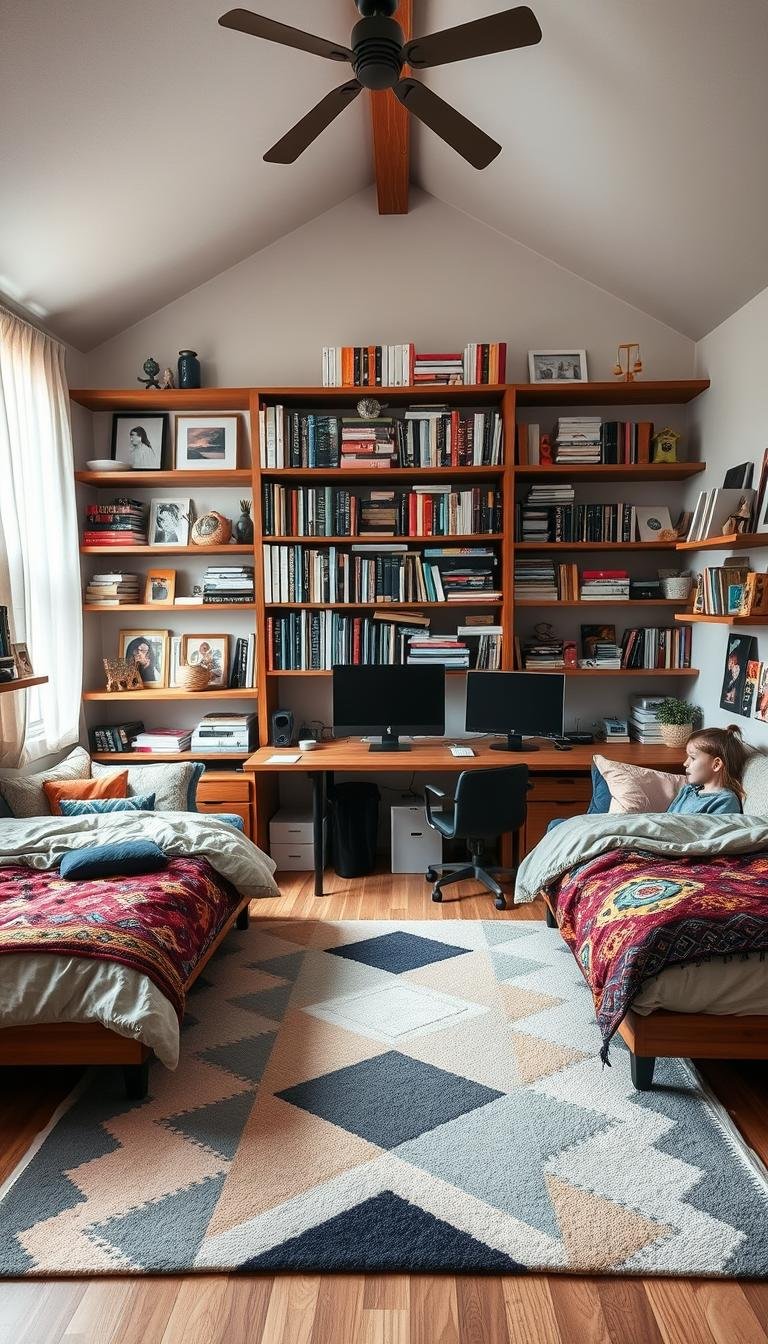
Welcome to your ultimate guide for designing a fantastic room that both your son and daughter will adore. Sharing a space can be challenging, but with smart planning, it becomes an opportunity for fun and bonding.
We will show you how to create a harmonious environment. You will learn to maximize every inch of the room. Our tips focus on functionality and personal expression for each child.
Discover clever solutions that address privacy needs and storage woes. These ideas help reduce conflicts and nurture positive relationships. Your kids will love their new, well-organized bedroom.
Get ready to transform your children’s shared space into a cozy, adaptable haven. It will grow with them through the years, making everyday living smoother and more enjoyable for your whole family.
1. Start with a Smart Layout and Floor Plan
Smart floor planning transforms a cramped shared area into a functional, harmonious environment. Begin by measuring your available floor space and creating a scaled drawing. This initial step ensures you maximize every square foot efficiently.
Consider traffic patterns when placing furniture. Leave clear pathways between beds, dressers, and play zones. This prevents daily frustrations and keeps the room flowing smoothly.
Maximizing Your Available Floor Space
Strategic furniture placement makes small rooms feel spacious. Position larger items against walls to open up the center area. This creates more room for activities and movement.
Think vertically when planning storage solutions. Wall-mounted shelves and tall bookcases free up valuable floor space. Your children will appreciate the extra room to play and explore.
The Power of the L-Shaped Bed Arrangement
L-shaped bed arrangements create a more open appearance in the room. This configuration provides excellent options for setting up other furniture pieces. It naturally defines separate sleeping zones while maintaining visual connection.
This layout works well for siblings of different ages. Each child gets their own defined space within the shared environment. The arrangement promotes both togetherness and personal territory.
Creating Defined Sleep and Play Zones
Dividing the space equally helps maintain order and reduces conflicts. Clearly mark sleep areas, play spaces, and study zones within the room. This organization gives each child their own designated territory.
Use creative room dividers that maintain visual openness. Bookshelves, curtains, or area rugs can subtly separate spaces. These solutions provide privacy without closing off the room completely.
Consider your children’s ages and activities when planning zones. The layout should meet their current needs while allowing for future changes. Flexible design ensures the room grows with your kids over time.
2. Embrace the Space-Saving Magic of Bunk Beds
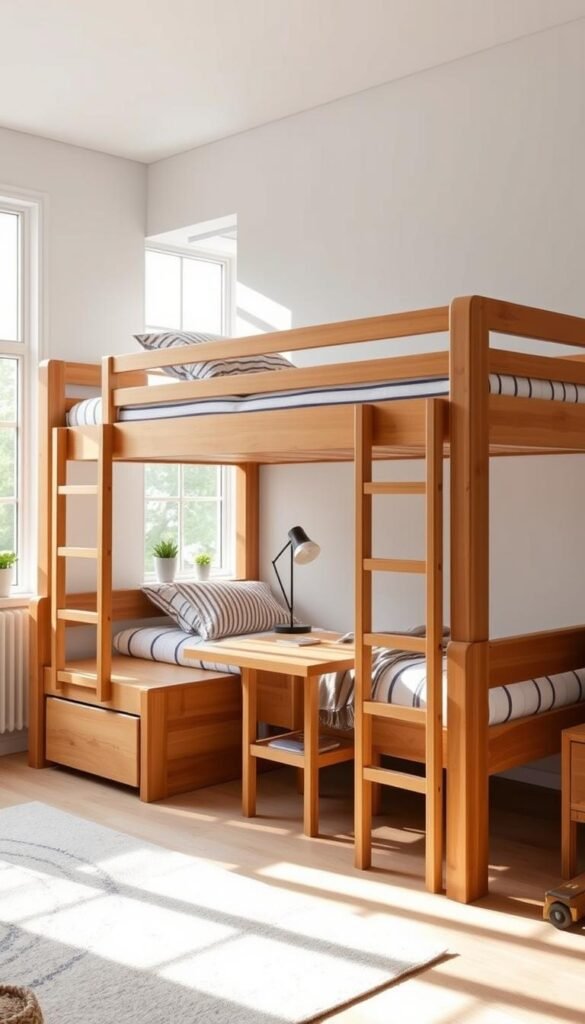
Transform your children’s sleeping area with the ultimate space-saving solution. Bunk beds create more room for activities while providing comfortable sleeping spots for both kids.
These innovative sleep systems free up valuable square footage in your room. They allow both children to have ample floor space for play and movement. The vertical design maximizes your available area beautifully.
Bunk beds also offer a wonderful sense of privacy. Neither sleeper can look over and see the other directly. This arrangement works perfectly for siblings sharing a room.
Traditional vs. L-Shaped Bunk Configurations
You have two main options when selecting bunk bed styles. Traditional vertical stacking takes up minimal floor space. This classic design works well in rectangular rooms.
L-shaped configurations offer unique layout possibilities. They create interesting angles that can better utilize corner spaces. This design often provides more headroom for the lower bed.
Consider your room’s dimensions before choosing. Measure carefully to ensure proper fit and functionality. Both options provide excellent space efficiency.
| Feature | Traditional Bunk | L-Shaped Design |
|---|---|---|
| Floor Space Used | Minimal footprint | Slightly larger footprint |
| Room Layout Flexibility | Works best against walls | Excellent for corner placement |
| Headroom Lower Bed | Standard clearance | Often increased clearance |
| Ladder Placement | Typically front-mounted | Side or corner options |
| Storage Integration | Built-in drawers possible | More storage opportunities |
Safety First: Choosing the Right Bunk Bed
Safety should always come first when selecting bunk beds. Look for sturdy construction and proper guardrails. These features prevent accidents and ensure peace of mind.
Check weight limits for both top and bottom bunks. Most manufacturers recommend ages six and up for the top bed. Always follow these guidelines for your children’s safety.
Consider these essential safety features:
- Guardrails on all sides of the top bunk
- Secure ladder with anti-slip steps
- Proper spacing between guardrail bars
- Sturdy construction materials
- Weight capacity appropriate for your children
Many bunk beds now include built-in storage solutions. Drawers underneath or within the stairs maximize functionality. These features help keep the room organized and clutter-free.
Trundle bed options provide additional sleeping space when needed. They slide out from under the lower bunk for guests. This smart design makes sleepovers easy and fun.
Your children will love their new sleeping arrangement. The bunk bed solution creates more play area while maintaining comfort. It’s a win-win for everyone in the family.
3. Opt for Neutral, Gender-Inclusive Base Colors
Color selection sets the foundation for your children’s shared environment. Choosing the right palette creates harmony and balance between both personalities.
Neutral tones provide the perfect backdrop for any room design. They create a calming atmosphere that appeals to boys and girls equally.
Building a Cohesive Palette with Whites, Greys, and Beiges
Start with soft whites, warm greys, or creamy beiges for your walls. These colors act as a blank canvas for personal expression.
They allow each child to add their favorite accents through art and accessories. The neutral base ensures everything works together beautifully.
Consider these timeless combinations:
- White walls with grey bedding and natural wood tones
- Light grey walls with white furniture and colorful accents
- Beige walls with white trim and mixed pattern textiles
These palettes create a sophisticated look that grows with your children. They provide flexibility for changing tastes over time.
How a Neutral Base Makes Future Updates Easier
Neutral walls and furniture simplify room updates as your kids mature. You won’t need to repaint when their preferences change.
Simply swap out accessories, bedding, and wall art to refresh the space. This approach saves both money and effort.
Your bedroom design remains adaptable through different stages. New items always coordinate with the existing foundation.
The neutral foundation supports individual expression on each side of the room. Both children can showcase their unique style while maintaining overall harmony.
This smart approach to color creates a peaceful environment that everyone enjoys. It’s one of the most practical ideas for shared spaces.
4. Implement Clever and Ample Storage Solutions
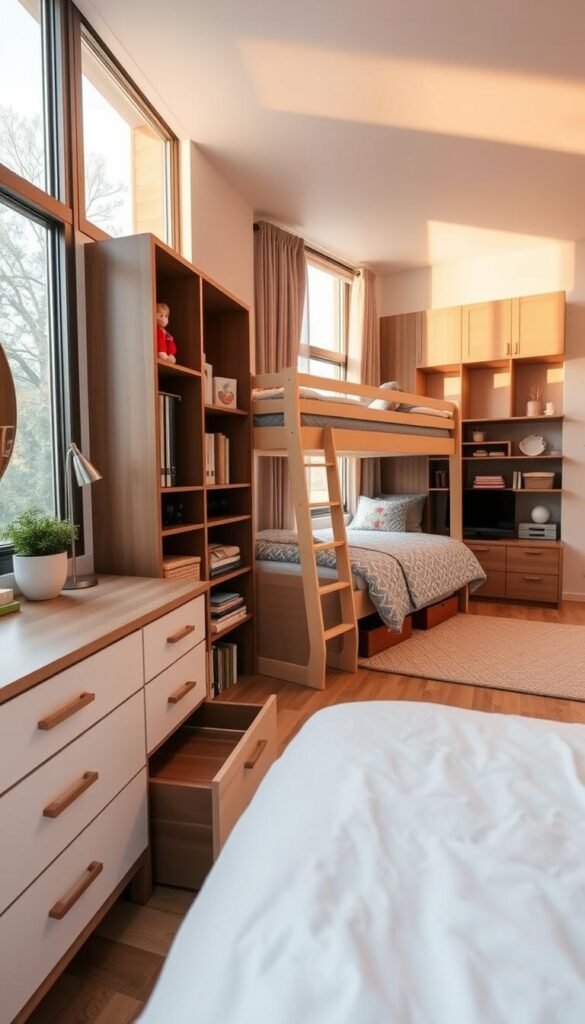
Discover how strategic storage can maximize your available space while keeping everything accessible. Smart organization transforms chaos into order, creating a peaceful environment for both children.
Well-planned storage systems help maintain room harmony. They provide designated spots for all belongings, reducing daily conflicts over misplaced items.
Utilizing Vertical Space with Shelving and Cubbies
Wall-mounted shelves create valuable storage without consuming floor space. They keep essentials within easy reach while maintaining open areas for movement.
Cubbies offer perfect organization for small items. Each child can have their own designated sections for personal belongings.
Consider these vertical storage options:
- Floating shelves for books and display items
- Hanging organizers for art supplies and small toys
- Modular cubby systems that grow with your children
- Wall-mounted baskets for quick cleanup
The Essential Guide to Under-Bed Storage Drawers
Under-bed drawers provide hidden storage for seasonal items. They utilize often-wasted space beneath sleeping areas efficiently.
Rollaway units hold limited-use items like winter clothing or special occasion toys. These drawers keep the main room area clutter-free.
Choose drawers that slide smoothly on quality tracks. This ensures easy access for both children when needed.
Multifunctional Furniture: Beds with Built-Ins and Storage Chests
Beds with built-in drawers combine sleeping and storage in one unit. They maximize functionality without increasing furniture footprint.
Storage chests serve dual purposes beautifully. With cushioned tops, they become additional seating surfaces while concealing toys inside.
Look for pieces that offer plenty of hidden compartments. These smart designs maintain visual cleanliness while providing ample storage capacity.
Multifunctional furniture adapts as your children grow. It supports changing needs over time without requiring replacement.
5. Design Two Dedicated Workspace Stations
Creating separate study zones helps your children focus on schoolwork while sharing a room. These areas give each child their own spot for homework and projects.
Well-designed stations reduce distractions and promote better learning habits. They make study time more productive and enjoyable for both kids.
Side-by-Side Desks for Focused Homework Time
Parallel desk arrangements work beautifully in shared rooms. They create a structured environment that supports academic success.
Your children can work together while maintaining personal space. This setup encourages collaboration without crowding.
Choose a single long desk with distinct work areas. This configuration maximizes your available floor space efficiently.
Each child gets their own designated section for studying. The shared piece of furniture creates unity while respecting individual needs.
Incorporating Personalized Shelving and Organizers
Custom storage solutions keep school supplies organized and accessible. They reflect each child’s unique learning style and preferences.
Floating shelves above each desk provide perfect spots for books and special items. They keep essentials within reach without cluttering the work surface.
Consider these organizational ideas:
- Drawer units for paper and writing tools
- Small baskets for frequently used items
- Pen holders that match each child’s favorite colors
- Wall pockets for ongoing projects and papers
Proper lighting is crucial for comfortable studying. Install adjustable desk lamps that reduce eye strain during homework time.
For added privacy between stations, consider small sound-dampening panels. These subtle dividers help minimize distractions when both children are working.
Explore more shared bedroom ideas that incorporate functional workspaces. These designs create rooms that support both play and study activities beautifully.
6. Foster Individuality with Personalized Zones
Personalized zones let each child shine in their shared environment. These special areas celebrate unique personalities while keeping the room cohesive.
Your kids will love having their own dedicated spots. These zones promote responsibility and pride in their personal space.
Using Unique Bedding and Wall Art to Express Style
Bedding offers an easy way to showcase personal taste. Let each child pick their favorite patterns and colors for their sleeping area.
Mix and match different designs that complement each other. This approach creates visual interest while honoring individual preferences.
Wall art provides another excellent personalization opportunity. Framed photos, posters, or original artwork add special touches above each bed.
Consider these creative expression ideas:
- Custom name signs above each sleeping area
- Favorite character themes through removable decals
- Color-coordinated throw pillows that reflect personal style
- Display shelves for special collections and treasures
These elements make the room feel uniquely theirs. They transform a shared space into a true home for both children.
Color-Zoning to Give Each Child Ownership
Color-zoning creates visual separation without physical barriers. Assign each child their own color scheme for their side of the room.
This technique works beautifully with neutral base walls. The contrasting accents define personal territories clearly.
Your daughter might choose soft blues while your son prefers greens. These color distinctions create natural boundaries within the shared space.
Coordinate accessories within each color zone for consistency. Matching storage bins, rugs, and curtains reinforce the personalized areas.
| Color Zone Element | Child 1 Options | Child 2 Options |
|---|---|---|
| Bedding Colors | Blue tones | Green tones |
| Wall Accents | Blue framed art | Green wall decals |
| Storage Solutions | Blue bins | Green baskets |
| Textile Touches | Blue throw pillow | Green area rug |
| Lighting Features | Blue lamp shade | Green nightlight |
Removable decor makes updating easy as tastes change. Peel-and-stick wallpapers and decals allow for simple transformations.
Budget-friendly personalization creates big impact without major investment. Small changes make each child feel truly at home in their shared room.
This balanced approach celebrates individuality while maintaining harmony. Both children enjoy expressing themselves within their beautiful shared space.
7. Incorporate Fun and Imaginative Play Areas
Play zones transform your children’s shared environment into a world of imagination. These special areas encourage cooperation while providing space for individual exploration.
Your kids will love having a dedicated spot for games and creativity. This approach balances togetherness with personal freedom beautifully.
Designating a Central Area for Shared Play
Choose a central location for your main play zone. This spot becomes the heart of cooperative activities and shared fun.
Keep this area open and accessible from both sides of the room. Clear pathways allow easy movement between play and sleep spaces.
Consider these elements for your central play space:
- Low storage units that double as play surfaces
- Rotating toy selection to maintain interest
- Theme-based play setups that both children enjoy
- Easy-to-clean surfaces for messy creative projects
The central location encourages natural interaction between siblings. It becomes their common ground for building memories together.
Adding a Soft Rug and Comfy Seating for Relaxation
A plush rug defines the play zone while adding comfort and safety. Choose a durable, washable material that withstands active use.
The right rug creates a visual boundary for play activities. It also provides cushioning for floor games and reading time.
Comfortable seating options make the area inviting for quiet activities. Bean bags, floor cushions, and small chairs create perfect spots for relaxation.
These cozy elements support different types of play throughout the day. Your children can enjoy active games or quiet reading in the same space.
Storage solutions keep toys organized yet accessible within the play zone. Bins and baskets make cleanup quick and easy for both kids.
Your children will treasure their special play area. It becomes their favorite spot for imagination and connection in their shared room.
8. Create a Sense of Privacy in a Shared Room
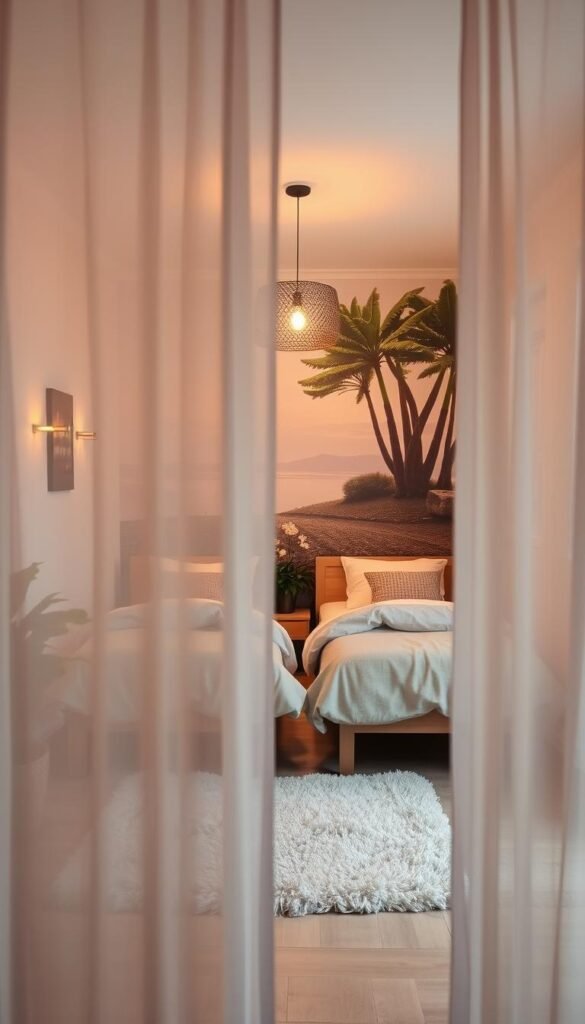
Every child needs their own personal retreat, even when sharing a room. Clever design techniques can provide that essential feeling of seclusion. These solutions respect individual boundaries while maintaining an open, connected environment.
Privacy doesn’t require permanent walls or major renovations. Simple, adjustable elements create personal zones that both children will appreciate. Your kids will enjoy having their own special spots within the shared space.
Using Bookshelves and Curtains as Subtle Dividers
Bookshelves make excellent room dividers that serve multiple purposes. They create visual separation while providing valuable storage space for books and toys. This approach keeps the room organized and defined.
Choose open-back shelving units that maintain light flow through the space. These allow some visibility while creating clear boundaries between areas. Each child gets their own designated side for personal items.
Curtain systems offer flexible privacy options throughout the day. They can remain open during shared play time and closed for private moments. This adaptability supports changing needs as they occur.
Consider these versatile divider options:
- Modular shelving units that can be reconfigured over time
- Ceiling-mounted curtain tracks for smooth operation
- Lightweight fabrics that filter light without darkening the room
- Matching storage bins that maintain visual consistency
Canopies and Curtains for Bed-Specific Seclusion
Bed canopies create magical sleeping nooks that children adore. They transform ordinary beds into cozy, private retreats for rest and relaxation. These additions make bedtime more special and personal.
Canopy designs range from simple fabric drapes to structured frames. Choose styles that complement your overall room aesthetic while providing the desired privacy level. Your children will love their personalized sleeping spaces.
Consider these benefits of bed-specific privacy solutions:
- Enhanced sense of security during sleep time
- Reduced visual distractions for better rest
- Personalized decor that reflects individual tastes
- Easy installation without permanent modifications
Temporary privacy solutions adapt as your children grow. Adjustable systems accommodate changing needs and preferences over time. This flexibility ensures the room remains functional for years.
Proper privacy planning significantly reduces sibling conflicts. It respects each child’s need for personal space while maintaining family connection. Everyone enjoys their shared environment more when boundaries are clear.
Psychological privacy can be achieved even in open layouts. Strategic placement of furniture and decor creates natural visual barriers. These techniques make the room feel more spacious while providing personal areas.
9. Select Durable and Long-Lasting Furniture
Smart furniture choices make your children’s shared environment both beautiful and practical. Quality pieces handle daily use while maintaining their appearance over time. This investment pays off through years of happy memories.
Shared spaces experience twice the wear of single-occupancy rooms. Your selections must withstand active play, frequent rearrangements, and growing needs. Thoughtful choices create a foundation that serves your family well.
Investing in Quality Pieces That Can Withstand Double the Use
Durable construction matters most for heavily used items. Look for solid wood frames, reinforced joints, and quality hardware. These features ensure your furniture remains stable and safe.
Consider these essential durability factors:
- Hardwood construction for beds and dressers
- Reinforced corners on all storage pieces
- Smooth-operating drawers with sturdy glides
- Non-toxic finishes that resist scratches and stains
- Weight capacities appropriate for active use
Modular systems offer excellent flexibility as your children grow. You can reconfigure components to meet changing needs. This approach extends the life of your investment significantly.
“Quality furniture might cost more initially, but it saves money by lasting through multiple children and room transformations.”
Clean Lines and Streamlined Designs to Avoid Clutter
Simple silhouettes create visual calm in busy shared spaces. They prevent the room from feeling overcrowded or chaotic. Your children will appreciate the organized atmosphere.
Streamlined designs maximize your available floor space efficiently. They allow for better traffic flow and more play area. This approach makes the room feel larger and more functional.
| Furniture Type | Recommended Features | Longevity Benefits |
|---|---|---|
| Beds | Solid wood construction, convertible designs | Lasts through teenage years, adapts to changing tastes |
| Dressers | Dovetail joints, soft-close drawers | Withstands daily use, maintains smooth operation |
| Desks | Adjustable height, reinforced legs | Grows with your children, supports study needs |
| Storage Units | Modular components, sturdy materials | Reconfigurable for different ages, durable construction |
| Seating | Washable covers, sturdy frames | Easy to clean, maintains structural integrity |
Warranty coverage provides peace of mind for your investment. Look for manufacturers offering generous protection periods. This indicates confidence in their product’s durability.
Your thoughtful selections create a room that grows with your children. The right furniture supports their needs today and for years to come.
10. Add Joyful and Upbeat Accent Pieces
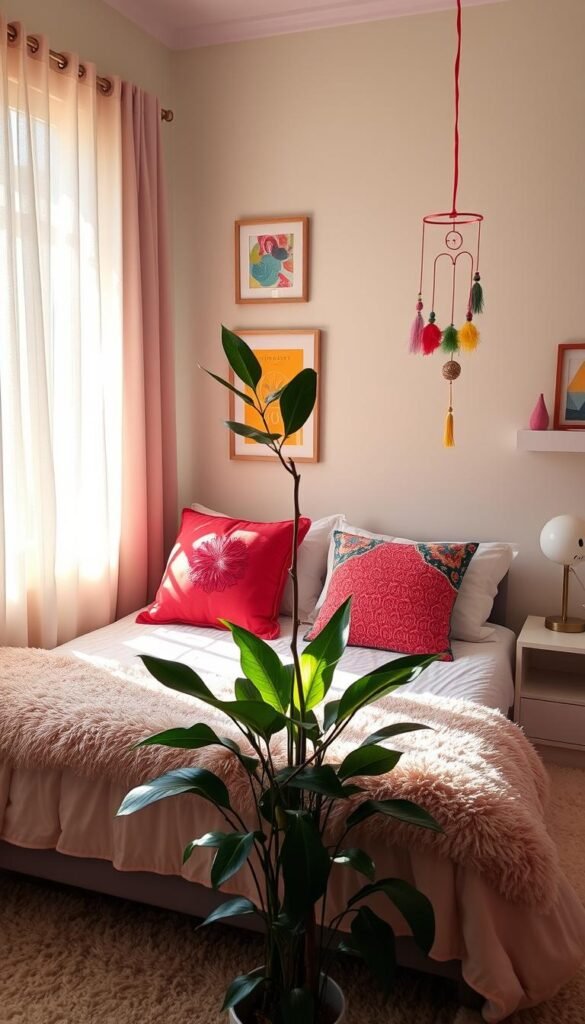
Accent pieces bring personality and energy to your children’s shared environment. These special touches transform a functional room into a vibrant, inspiring space that both kids adore. You can create a happy atmosphere that encourages creativity and connection.
Thoughtful decorations make the room feel complete and welcoming. They add visual interest while reflecting both children’s unique personalities. Your kids will love discovering new details in their special space.
Choosing Gender-Neutral Wall Art and Decor
Select artwork that appeals to both boys and girls equally. Look for themes that celebrate imagination, nature, or adventure. These universal subjects create harmony in the shared environment.
Consider these popular gender-neutral art ideas:
- Animal illustrations in modern graphic styles
- Space exploration themes with planets and stars
- Abstract patterns in coordinating color schemes
- Inspirational quotes in fun, playful typography
Rotating art displays keep the room feeling fresh over time. Use clip frames or magnetic systems for easy changes. Your children can participate in selecting new pieces as their tastes evolve.
Mix different sizes and formats for visual interest. Combine framed prints with dimensional wall hangings. This variety creates a dynamic gallery wall both kids enjoy.
The Fun of a DIY Chalkboard Wall for Creativity
Chalkboard walls unleash endless creative possibilities. They provide a dedicated space for artistic expression and collaboration. Your children will love this interactive feature in their room.
Choose a section of wall that’s easily accessible to both kids. Apply chalkboard paint following manufacturer instructions. The transformation creates an instant activity center.
Consider these creative uses for your chalkboard surface:
- Daily drawing challenges and collaborative murals
- Practice writing and math problems for homework help
- Message center for leaving notes and reminders
- Game board for tic-tac-toe and other simple activities
“A chalkboard wall becomes more than decoration—it’s a dynamic tool for learning, playing, and bonding between siblings.”
Keep colorful chalk organized in accessible containers. Magnetic chalk trays or wall-mounted buckets work perfectly. This organization makes cleanup quick and easy.
The chalkboard surface reinforces your color scheme beautifully. Choose frame colors that match your existing decor. This integration makes the feature feel intentional and designed.
| Accent Type | Functional Benefits | Decorative Impact |
|---|---|---|
| Wall Art | Sets room mood, covers blank walls | Adds color and personality to the space |
| Chalkboard Wall | Encourages creativity, serves as message center | Creates interactive focal point in the room |
| Textile Accents | Adds comfort and sound absorption | Introduces patterns and texture variations |
| Display Shelves | Shows special collections and treasures | Adds vertical interest and personal touches |
| Lighting Features | Provides task and ambient illumination | Creates warm atmosphere and visual appeal |
Budget-friendly accents make big visual impacts without major investment. Look for removable decals, affordable prints, and DIY projects. These options allow frequent updates as your children grow.
Dual-purpose items combine decoration with functionality. Storage baskets, decorative hooks, and patterned bins work beautifully. They keep the room organized while adding style.
Your thoughtful accent choices create a room that truly reflects both children. The space becomes a joyful environment that supports their individuality and shared experiences.
11. Layer in Texture and Calming Natural Elements
Natural elements transform your children’s shared environment into a peaceful retreat. These organic touches create balance and harmony in the room.
Texture and nature-inspired details make the space feel warm and inviting. Both children will enjoy the calming atmosphere these elements provide.
Using Botanical Prints and Potted Plants for a Tranquil Vibe
Botanical prints bring the beauty of nature indoors beautifully. Choose artwork featuring leaves, flowers, or natural patterns that both kids enjoy.
These nature-themed pieces create a serene backdrop for the entire room. They work well with any color scheme you’ve established.
Live plants add life and freshness to the shared environment. Select child-safe varieties that thrive in indoor conditions.
Consider these excellent plant choices:
- Spider plants for their air-purifying qualities
- Succulents that require minimal maintenance
- Pothos vines that can hang safely out of reach
- Snake plants that tolerate various light conditions
Soft nature-inspired colors enhance the tranquil feeling. Lavender, sage green, and pale blue promote peaceful moods.
These hues help children wake feeling refreshed and calm. They create a soothing environment for both play and rest.
How Woven Baskets and Textiles Add Warmth
Natural fiber baskets provide practical storage with organic texture. They keep toys organized while adding visual warmth to the room.
Choose different sizes for various storage needs. Larger baskets hold blankets and bigger toys perfectly.
Smaller woven containers organize art supplies and small items. They maintain order while contributing to the natural theme.
Textiles introduce comforting layers throughout the space. Area rugs define zones while providing softness underfoot.
Natural fiber rugs offer durability and easy cleaning. They withstand active use while maintaining their beautiful appearance.
Consider these textural elements:
- Cotton throw blankets for cozy reading time
- Linen pillow covers that feel soft and natural
- Wool rug that provides warmth and cushioning
- Rattan storage boxes that blend function with style
These natural materials create a harmonious environment that both children appreciate. The room feels inviting and comfortable for all activities.
Your thoughtful selection of natural elements makes the shared space truly special. It becomes a peaceful haven that supports your children’s wellbeing.
12. Explore Creative Brother and Sister Shared Bedroom Ideas with High Sleepers
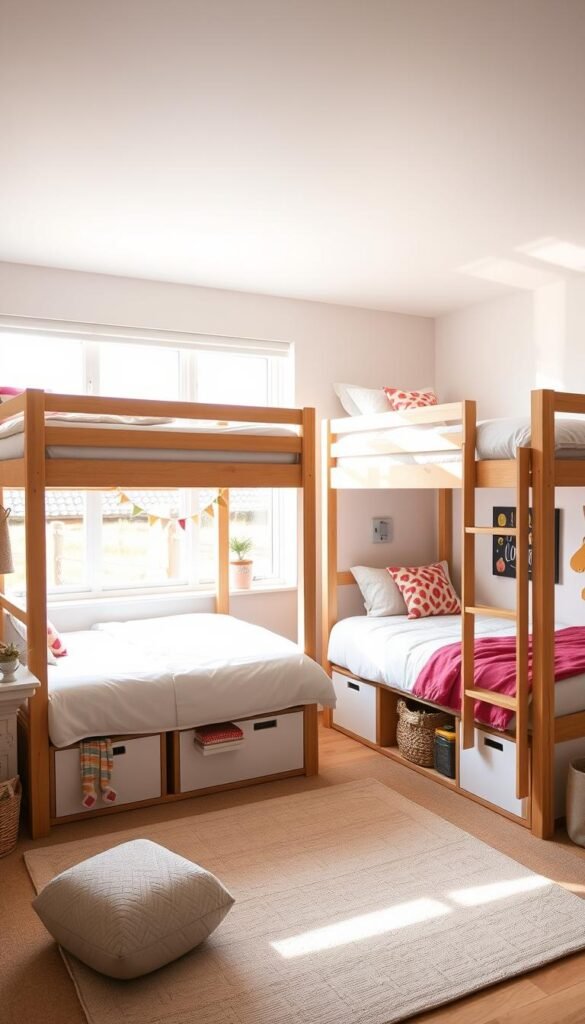
Elevated sleep solutions offer incredible opportunities for maximizing your children’s shared environment. These innovative configurations create multi-functional spaces that both kids will enjoy.
High sleeper beds transform the vertical dimension of your room beautifully. They provide sleeping areas above with versatile space below for various activities.
Maximizing Floor Space with Desk-Under-Bed Configurations
Desk-under-bed arrangements create compact study stations within sleeping areas. This smart design saves valuable floor space while providing dedicated work surfaces.
Your children get their own personalized study nooks beneath their beds. These areas feel private and focused, perfect for homework time.
Consider these benefits of integrated desk solutions:
- Efficient use of often-wasted vertical space
- Natural separation between sleep and study areas
- Personalized work stations for each child
- Reduced visual clutter in the main room area
Proper lighting is essential for these compact work spaces. Install adjustable LED strips or small desk lamps for optimal illumination.
The elevated sleeping area creates a cozy loft feeling children love. It makes bedtime more exciting while maximizing your available square footage.
The Trundle Bed Solution for Sleepovers and Guests
Trundle beds provide additional sleeping space without permanent footprint. They slide out from under the main bed when needed for guests or sleepovers.
This clever design keeps your room flexible for different situations. The extra bed remains hidden until required, saving daily floor space.
Your children will enjoy hosting friends in their shared environment. Sleepovers become easy and fun with this practical solution.
Consider these trundle bed features:
- Smooth-rolling mechanism for easy access
- Comfortable mattress that stores compactly
- Safety features to prevent accidental movement
- Matching design that complements the main bed
Some trundle units include built-in storage drawers. These provide extra organization for bedding or seasonal items.
The hidden bed solution maintains your room’s aesthetic when not in use. Your space stays organized and ready for daily activities.
High sleeper configurations work well for children ages six and older. Always check weight limits and safety guidelines before purchasing.
These innovative bed solutions create rooms that grow with your kids. They provide flexibility for changing needs over time.
Your children will love their elevated sleeping spaces. The configurations make their shared environment more exciting and functional.
13. Bringing It All Together for a Room They’ll Both Love
Creating a harmonious shared space requires thoughtful balance between individual needs and shared areas. Your children will appreciate having their own zones while enjoying common play spaces.
Involve both kids in decisions to ensure everyone feels heard. This approach builds excitement and ownership over the final design. Compromise becomes part of the fun!
Choose flexible furniture that adapts as your children grow. Neutral pieces work with changing tastes over time. This strategy keeps the room feeling fresh for years.
For more inspiration on balancing personal spaces with shared areas, explore these practical solutions for young siblings. The right combination creates a room everyone truly enjoys.
Celebrate the finished space together to build positive memories. Your children will treasure their special environment for years to come.