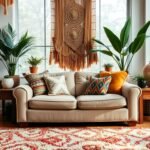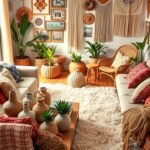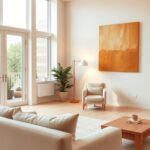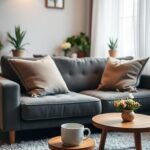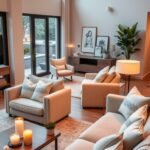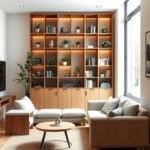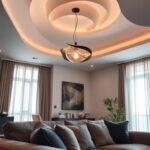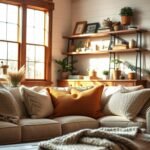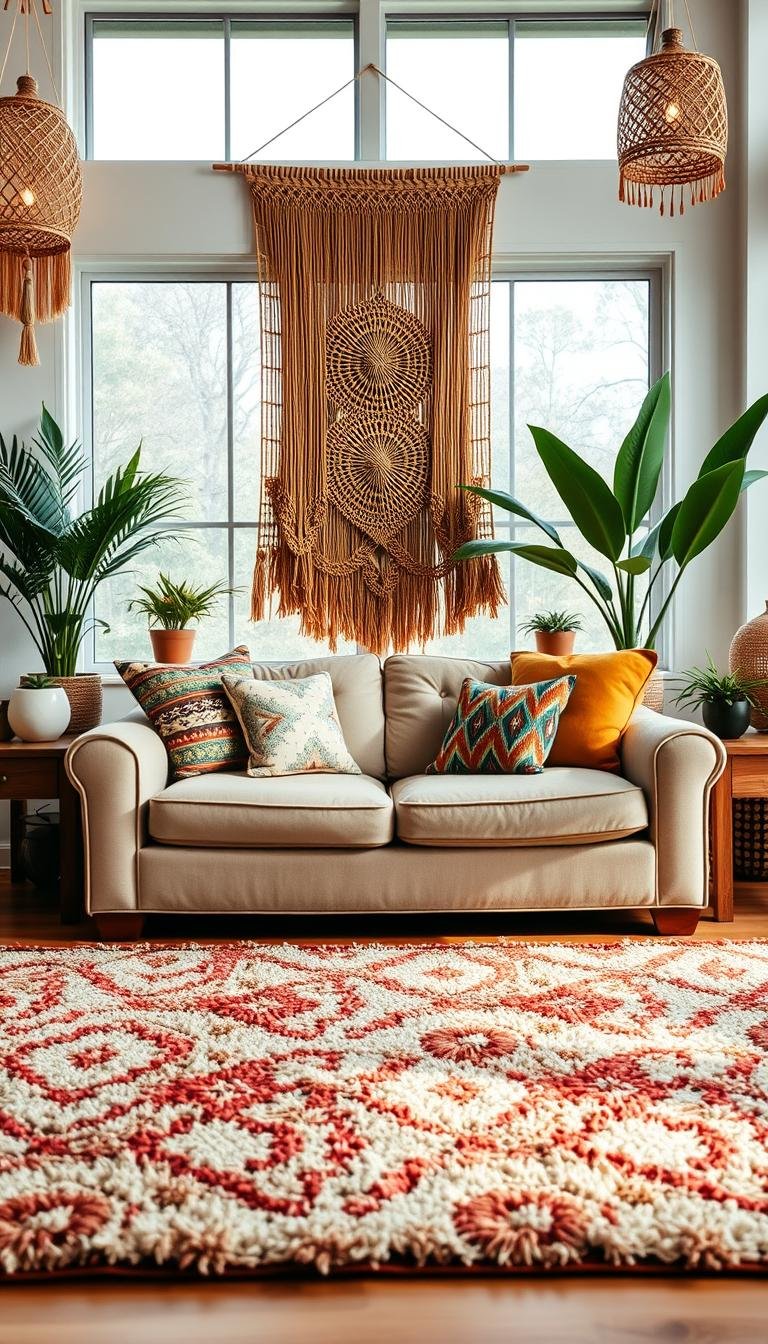
A cozy boho space feels warm and personal because its natural textures and collected pieces invite you to settle in, not because every surface matches. If your home feels unfinished or too carefully coordinated, small changes can make it more comfortable without replacing your furniture.
An area rug is a floor covering sized and positioned to visually connect the seating area rather than simply fill the center of a room. It can bring chairs and a sofa together in a small or large space, while a calm base, layered texture, natural materials, and personal finds add character.
These cozy boho living room inspiration ideas are meant to work with pieces you already own. You can adjust each one to your room’s size, budget, and daily routines, whether you want a quieter corner or a more collected living room. Start with one element you already love, then build around it at a pace that keeps the space comfortable.
How to Style Cozy Boho Living Room Inspiration Without Overdoing It
A simple four-step sequence helps you get a collected look without buying a whole new set of furniture. Keep the large pieces calm, then add smaller details with intention, so the room feels expressive without looking crowded.
Wood, jute, linen, and ceramics give you a neutral foundation with varied texture, even when they do not come from one matching set. Connect the colors across different materials, and the combinations will feel deliberate rather than mismatched.
A calm base gives your living room ideas room to breathe. Let the larger surfaces stay relatively quiet, then use a few accents to show your taste. You can build a similar foundation with these warm-neutral boho styling ideas.
Build a calm base before adding character
Start with the pieces that take up the most visual space, such as the sofa, curtains, and largest cabinet. Their surfaces can be simple, but they do not have to be identical in color or finish. A wood table beside a linen sofa already gives you contrast without adding another print.
Layer a few meaningful details at a time
Add character in small doses. The four actions below keep the process focused instead of turning every shelf into a display.
- Choose one surface that can stay visually quiet.
- Use a natural texture on one furniture piece.
- Bring in one pattern that suits your existing colors.
- Finish with objects that hold personal meaning.
A room already rich in color or pattern may need fewer new accents. In that case, let the existing features carry the style, and add only what helps the room work better. Leave one surface or wall visually quiet so the eye has somewhere to rest.
Let the large pieces stay calm, and use smaller accents to express your style.
1. Start With an Earthy Color Palette
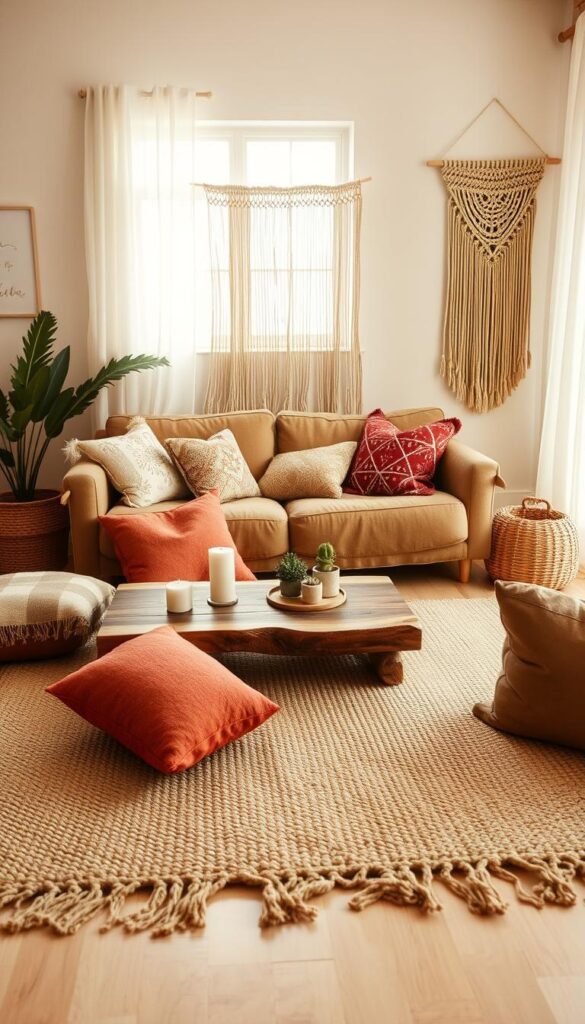
Cream, sand, and warm white make a quiet base, while one richer accent keeps the space from feeling flat. A layered color palette gives your living room warmth without asking every surface to compete.
Use a neutral shade across larger areas, then bring in deeper tones through one or two accents. HGTV Home by Sherwin-Williams named Universal Khaki its 2026 Color of the Year, within its Honest Essentials collection. The collection includes Neutral Ground, Cordovan, Lemon Chiffon, Creamy, Universal Khaki, Griffin, Reddened Earth, Still Water, Hazel, and Secret Garden.
Universal Khaki is a sandy neutral, and it pairs with Neutral Ground alongside stone and wood. The table gives you several distinct directions, from restrained nature-inspired colors to more saturated combinations.
| Direction | Named colors | Pairing or effect |
|---|---|---|
| Nature-inspired neutral | Universal Khaki, Neutral Ground | Pair with stone and wood |
| Sunset combination | Cordovan, Reddened Earth, Universal Khaki | Layered sunset-color effect |
| Contrasting combination | Still Water, Creamy, Reddened Earth | Cool and warm contrast |
| Soft neutral and yellow | Universal Khaki, Creamy, Lemon Chiffon | Nature-inspired combination |
| Alternatives to beige | Cola brown, soft mauve, butter yellow, muted green, muddy pink | Earthy color options with varied depth |
For another point of comparison, WGSN named Transformative Teal its 2026 Color of the Year. Benjamin Moore chose Silhouette, a shade between chocolate and charcoal. You can use either as a small accent instead of repainting the whole room.
The named shades are options, not a formula. A red-brown pillow, a green ceramic piece, or a yellow lampshade can bring a richer note into a neutral space without changing your main furnishings. Test a color beside your existing flooring and sofa before carrying it across a large surface.
Honest Essentials color collection includes shades that work with both earthy neutrals and deeper accents.
2. Anchor the Seating With a Well-Placed Rug
If your sofa and chairs feel like a group, the rug is doing its main job even when it is not centered in the room. In a boho living room, an area rug should connect the furniture rather than fill an empty patch of floor.
Place the seating’s front legs on the rug when the furniture fits comfortably, or choose a size that keeps every leg off it. Either approach can work; the awkward option is a rug that touches only one piece of furniture and leaves the rest disconnected.
Choose placement around your furniture
Start by measuring the furniture footprint, including the space between the sofa and chairs. Front legs on the rug can visually join the seats, while keeping all legs off creates a separate floor accent. Do not force the first option if it cramps the arrangement.
In an open-plan room, the rug can help mark the living zone without a divider. For more ways to shape a larger area, see these open-concept living room ideas.
Match rug size to the room
The right size depends on the room and the seating arrangement. These common dimensions offer a starting point for keeping the rug connected to the furniture while leaving floor visible.
| Rug size | Room or setting | Placement or visible-floor guidance |
|---|---|---|
| 10’x14’ | At least 11.5’x15.5’ | Leaves 18” to 36” of visible floor at walls |
| 9’x12′ | 12’x18′ or larger, or open plan | Fits most furniture and decor |
| 8’x10′ | 11’x13′ or slightly larger | Leaves a 12” to 18” border in a defined area |
| 6’x9′ or 6.5’x9.5′ | 11’x13′ or smaller | Leaves about 2′ of flooring around it |
| 5’x7′ | Small living room or fireplace seating | Under a coffee table, or beneath two chairs |
A 4’x6’ rug can cover most of an apartment-size living room, or sit beneath a coffee table while a sofa’s front legs remain off it. A small geometric rug layered over a neutral rug is an optional texture choice, not a requirement. A 10’x14’ rug suits a room at least 11.5’x15.5’ when you want a visible floor border. Measure the furniture footprint first, then leave enough visible floor to keep the edge from crowding the walls.
3. Layer Soft Textiles for a More Inviting Sofa
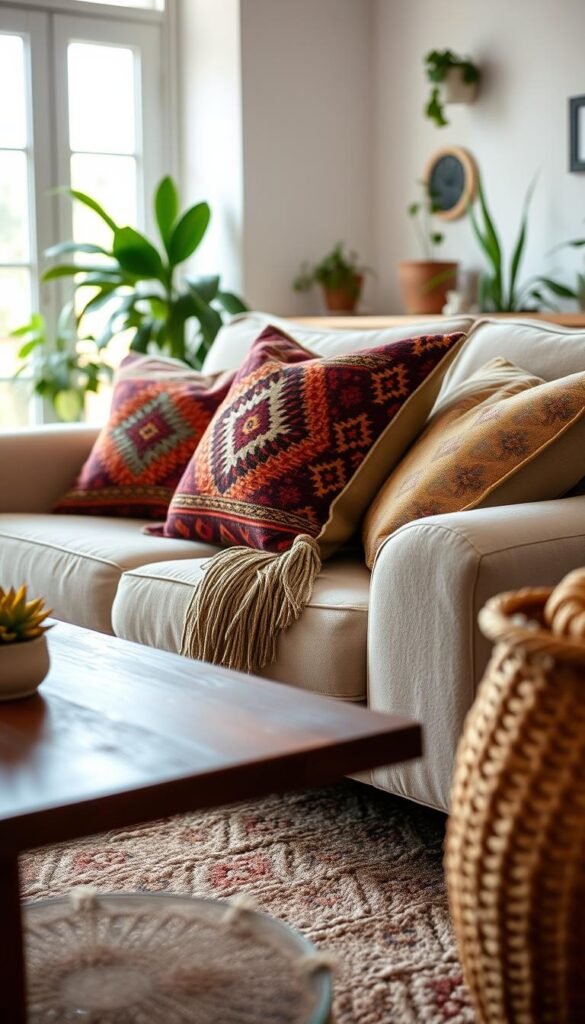
A neutral sofa can look more relaxed with a few distinct textures than with a matching set of pillows. Mix contrasting surfaces in a controlled way, so each pillow or throw has a purpose.
Keep the biggest textile quiet and let one smaller piece carry the strongest pattern or color. Linen and cotton feel easygoing, woven fabric adds visible structure, and velvet brings a smoother surface. A chunky throw can add bulk without requiring another print.
For example, place colorful kilim cushions on a neutral sofa and drape a fringed throw across one arm. The pattern adds character, while the throw’s fringe brings detail without introducing another large design. Leave some plain fabric visible between the cushions.
Bouclé and sherpa tend to work better on accent chairs, benches, throws, pillows, and ottomans than across a large sofa. Their nubby surfaces can feel appealing in smaller doses, where they add contrast without dominating the whole seating area.
Use a simple rhythm: one patterned cushion, one solid cushion, and a throw with a different weave. You can vary the number of pillows to suit the sofa, but avoid turning every cushion into a statement. When several pieces have the same visual weight, the seat can start to look like a display rather than a place to rest.
A woven cushion beside velvet, for instance, creates a noticeable change in texture even when the colors stay close. If the sofa already has a strong fabric or shape, use softer, less patterned accents. Keep one seat cushion partly clear so the sofa still looks ready to use.
4. Bring In Rattan, Wood, and Other Natural Materials
A rattan chair or warm wood table adds an organic note without asking you to change the whole room. One well-chosen surface can make familiar furniture feel more varied.
Pair a textured material with a smoother one, such as a woven chair beside a plain table. Rattan works on a chair or side table, while cane can appear across a cabinet panel or chair back. Warm wood suits larger furniture, and stone can add weight to a table or lamp base.
Woven fibers also suit a lampshade or basket, where their texture reads clearly without taking up much floor space. A stone surface can balance woven furniture, while a smooth wood table gives the eye a break from open weaves.
Choose materials by the job each piece needs to do. A side table should give you a stable place for a drink; a chair should feel comfortable enough for actual use. In a compact space, several large woven pieces can feel visually busy, especially when their patterns and shapes are all prominent.
If you want to add rattan without rearranging the room, a single statement chair can bring in the texture and become a useful seat. Cane is another option when you want a lighter, more open look on a furniture surface. For related ways to use rattan and handmade details, browse these boho natural-material ideas.
A mix of surfaces gives the room dimension, but every large piece does not need a visible weave. If you already have a strong wood grain, choose one quieter natural material for the next large piece.
5. Let Plants and Woven Baskets Add Life
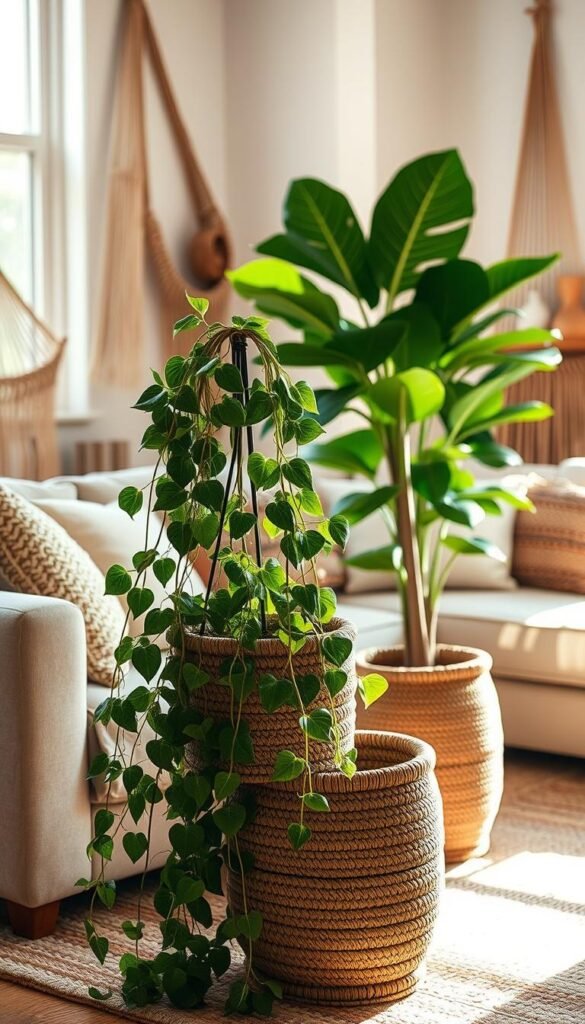
Greenery brings the soft, slightly untamed movement that woven furniture alone cannot provide. A tall plant, a trailing plant, and a tabletop plant create different heights without requiring a crowded display.
Give each plant enough room for its leaves, light, and care. A fiddle-leaf fig can draw the eye upward, pothos can trail from a shelf, and a small tabletop plant can soften a side table. Ceramic or woven planters give hanging plants a finished look.
Use different plant heights
Try these combinations to spread greenery around your living room instead of clustering every pot in one corner.
- Place a tall fiddle-leaf fig beside a low cabinet.
- Set trailing pothos on a shelf above a clear surface.
- Group a small tabletop plant with a ceramic planter on a side table.
Hanging plants can add height without using a table, while a small pot can bring life to a spot that feels bare. Choose placements based on the light and the room’s everyday use, not only on how the leaves look together.
Make storage part of the decor
Woven baskets can hold blankets, books, or everyday items that otherwise collect on the sofa. A basket beside a chair gives you a place to return a throw after use. Smaller baskets can keep loose objects gathered on a shelf, while one larger basket handles bulkier items.
Trailing houseplants, rattan storage, colorful textiles, macramé decor, and patterned rugs all suit bohemian decorating. Still, a plant-heavy corner needs a clear walking route and room for watering. Check that leaves are not blocking a doorway or brushing against a heat source.
6. Mix Vintage Finds With Personal Objects
One older piece beside a newer sofa can make a room feel more individual than a perfectly matched set. A vintage trunk, for example, can serve as a coffee table beside a modern sofa, while a collected object gives the mix a personal note.
Choose secondhand furniture for its condition, scale, function, and finish, not age alone. A piece can be meaningful without being displayed if it disrupts how the room works.
Use these four checks before bringing home an inherited or secondhand find:
- Condition: inspect the surfaces and structure for damage.
- Scale: compare the piece with nearby furniture.
- Function: decide how you will use it in the room.
- Finish: check whether its color works with your existing palette.
An aged wood trunk might hold blankets while offering a place to set a tray. A smaller ceramic object could sit nearby, carrying a story without taking over the surface. Framed art and travel mementos can add another personal layer, but they do not need to appear all at once.
2026 interiors favor aged woods, mixed periods and materials, and personal objects over perfectly coordinated decor. That does not mean every old piece belongs in your home. A family object can stay in storage if its shape blocks a cabinet or its surface has no practical use in the room.
Leave some breathing room around a special find so its character remains visible. Keep the object that adds a story or a useful function, not simply the one that looks most exotic.
7. Give the Walls Handmade Texture and Art
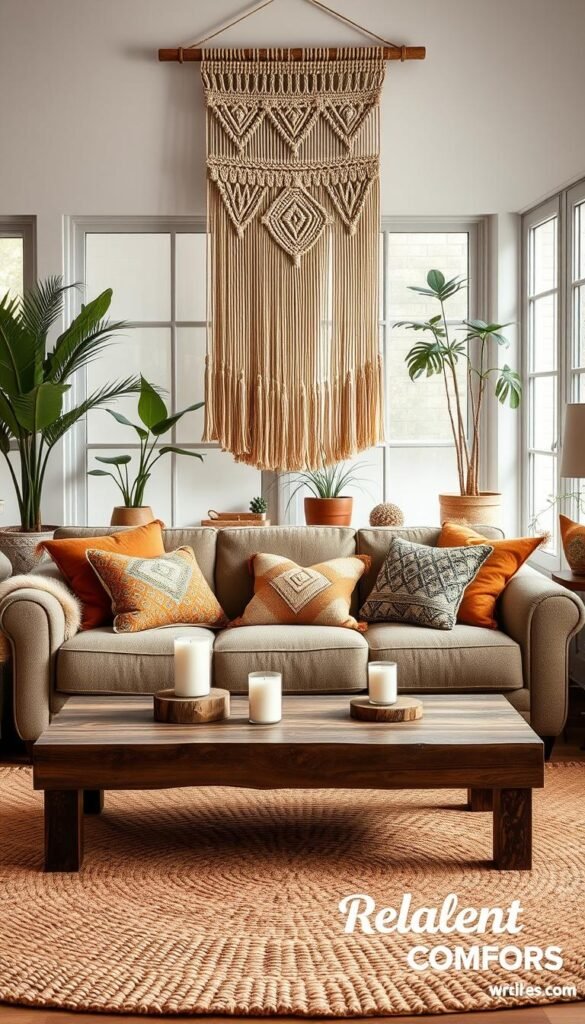
A single textile above the sofa can soften a bare wall and give the seating area a clear focal point. Handmade texture adds a tactile quality that framed art alone may not provide.
Leave open space around a large textile so its weave remains visible. An antique tapestry or stitched-textile artwork can bring patina to the wall, while macramé can create a focal point above the sofa.
Choose a treatment based on how much visual weight you want. One textile focal point makes a quieter statement. A collected gallery wall can mix vintage paintings, tapestries, and global-inspired artwork. Woven baskets offer another option, especially when you want texture without a framed arrangement.
Keep the pieces in a gallery wall related through a repeated detail, such as similar frame tones or a shared subject. They do not need to match exactly. A few varied frames can make the wall feel collected, while leaving room between pieces keeps the arrangement from becoming dense.
A textile works best when you can see its surface rather than losing it among nearby objects. Smaller wall details can frame a larger piece, but they should not compete with it for attention. Let the weave, stitching, or worn finish be the part that draws your eye.
Fragile or heavy pieces need suitable hanging hardware. Check the wall and use a support that can hold the artwork securely rather than relying on a small nail. Before hanging anything heavy, check the wall and use hardware rated for the piece.
8. Use Warm, Layered Lighting After Sunset
A table lamp beside the sofa changes the mood more gently than switching on a bright overhead fixture. Several light sources can make the room more comfortable after sunset.
Plan for three layers: ambient light for the room, task light for reading, and accent light for a softer focal glow. Warm-toned bulbs can help the space feel less harsh, especially when lamps sit in more than one corner.
General room light gives you visibility for everyday movement. Task light should reach the page or activity you are focused on. Accent light can add a lower glow near a shelf or another focal point, without taking the place of either practical layer.
Choose from these decorative sources according to what the spot needs:
- A ceramic table lamp beside a sofa provides a local pool of light.
- A floor lamp near a chair supports reading or another close task.
- A Moroccan lantern or string lights add a softer accent glow.
One lamp in a single corner can leave the rest of the room feeling stark by comparison. Adding light in more than one area helps the room feel balanced, while a lower accent source brings out the textures of nearby furniture and decor.
String lights are an accent, not a substitute for adequate reading light. Keep them for atmosphere, and use a brighter task source when you need to see a page clearly. Sit in your usual evening seat and check whether you can read comfortably without losing the softer glow elsewhere.
9. Add Low Seating or a Comfortable Reading Corner
A single comfortable chair and a lamp can turn an unused corner into a place you will actually use. A reading corner needs only a few useful pieces: a chair, a nearby light, a small table, and books within reach.
Choose low seating only when getting up from the floor feels comfortable for you. Floor cushions are easy to move, a pouf can serve as an extra seat, and a low-profile sofa offers a more settled place to sit.
Each option suits a different use. A floor cushion can be moved between activities, while a pouf adds flexible seating or a place to rest your feet. A low-profile sofa gives you a larger seat but takes more room and is less easy to shift around.
For a reading corner, place a chair near a lamp, then add a small surface for a book or drink. A short bookshelf nearby keeps reading material close without turning the corner into a storage area. You can leave the rest of the wall simple so the spot feels like a place to pause.
A leather pouf can work as extra seating or a small accent, especially when guests need another place to sit. Floor cushions and bean bags offer a more casual option, but they are not the right fit for everyone. If getting up from the floor is difficult, choose a chair with a seat height that feels comfortable.
Test the seat before deciding where it belongs. The best corner is one you can reach easily and use without shifting several other things first. Choose the seat for the person who will use it most, not just for the photograph.
10. Mix Patterns Without Losing the Calm
Pattern mixing feels intentional when the prints differ in scale but share at least one color. An eclectic room can include several pattern types while still leaving your eye places to rest.
Vary the scale and leave solid-color areas between prints. A large-scale floral can sit beside a smaller stripe, with a restrained geometric accent used on a smaller surface.
For example, use a large floral on a curtain, a fine stripe on a cushion, and a small geometric motif on a decorative object. Repeat one hue across the three patterns to connect them. The prints can differ in shape and size without looking unrelated.
Ikat, stripes, and florals each have a distinct look, so they can bring variety when their colors share a common thread. Solid upholstery or a plain wall provides a pause between those patterns. A geometric rug can support colorful textiles and patterned pillows, but it does not need to compete with every other print.
Check the pattern from the doorway as well as from the sofa. A print that feels small up close can become a strong feature across the room. If the overall effect looks too busy, reduce the number of patterned surfaces rather than adding another accent to balance them.
For more ideas on combining prints at home, these boho pattern-mixing examples show how varied scales can work together. If every surface competes for attention, remove the smallest or least meaningful print first.
11. Choose Sculptural Furniture and Touch-Friendly Upholstery
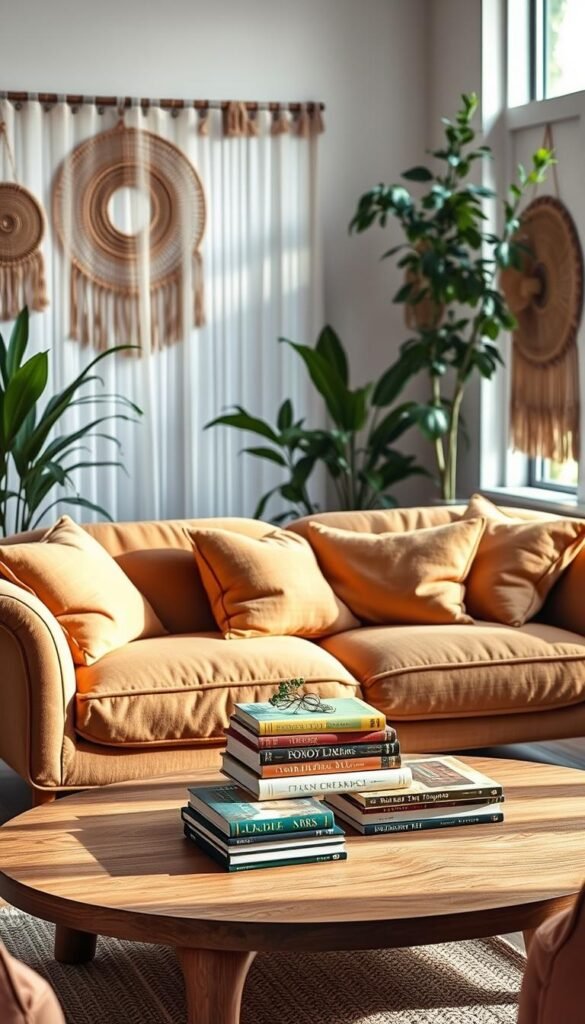
For a sofa you expect to keep for years, choose upholstery for how you live as well as how it looks. Comfort and care matter alongside color when a piece will anchor your living room.
Compare the fabric’s feel and upkeep needs before settling on a large furniture piece. Linen, cotton, performance fabric, and velvet are all options for sofa upholstery, with different surfaces and practical considerations.
| Upholstery | Tactile or visual quality | Practical consideration |
|---|---|---|
| Linen | Relaxed, textured surface | Check how the fabric fits your care routine |
| Cotton | Soft, familiar feel | Compare the specific fabric and finish |
| Performance fabric | Available in varied textures | Review its care instructions and feel |
| Velvet | Soft surface with a rich look | Consider how its texture suits daily use |
A flowing or sculptural sofa can become the room’s main visual feature. Keep nearby pieces simpler, so the shape has space to stand out. A rounded arm or curved back can soften a boxier room without requiring decorative furniture across every wall.
For 2026, living room trends include warm color palettes, flowing furniture silhouettes, natural stone surfaces, and luxurious details. Treat these as ideas, not rules. A sofa with a simple profile can still feel distinctive through upholstery, while a sculptural chair can add shape without changing the main seating.
Before making a large commitment, compare the fabric with the light and flooring in your room. A sample that looks calm in a store can read differently beside your existing surfaces. Bring home fabric samples and view them beside the room’s flooring and natural light before deciding.
12. Soften the Windows With Layered Treatments
A sheer curtain gives a bright window a softer edge without hiding the daylight. Two layers can give you more control over privacy and the room’s overall feel.
Use a sheer layer to soften daylight and a heavier drape when you need privacy or visual weight. Choose complementary colors to connect the window with other tones already in your living room.
A sheer panel keeps the window light and airy, while a heavier textured drape frames it more fully. The contrast adds softness without requiring another patterned surface. A quiet sheer beside a textured drape can also keep the window from looking too formal.
Use color to tie the treatment to a nearby cushion, wall detail, or piece of furniture. The shades do not need to match exactly; a close relationship in tone can be enough. Textured fabric adds depth even when both layers stay within a restrained range.
Consider how often you need to block light or protect privacy. In a small room with limited daylight, a heavier layer may make the space feel darker if it stays closed. You can keep it open during the brighter parts of the day and draw it when the room needs more coverage.
Test the drapes at the times of day you use the room most.
Make the Layout Work in a Small or Open Living Area
The most inviting arrangement leaves you a comfortable route through the room before it fills every corner with decor. Clear movement makes small living room ideas easier to use day after day.
Keep a main walking path about 30-36 inches wide, shaped by doorways and furniture. In a compact room, fewer multifunctional pieces can free up useful space; in an open-plan area, a defined seating zone can make the larger room feel organized.
Keep compact rooms visually open
Choose furniture that serves more than one purpose, such as a storage ottoman or a side table with a shelf. A room does not need a seat in every empty corner. Keeping a clear route matters more than adding another decorative seat.
For more ways to make a small home work harder, explore these one-bedroom apartment space ideas. They include flexible furniture and storage approaches that can help you keep surfaces and paths clear.
Define zones in open-plan spaces
In a larger room, place the main seating together and repeat a few finishes in nearby zones. The goal is a clear living area that still feels connected to the rest of the home, rather than a collection of furniture floating without purpose.
| Layout situation | Furniture approach | Way to define the area |
|---|---|---|
| Compact room | Fewer multifunctional pieces | Keep one clear route through the space |
| Open-plan room | Group seating into a clear zone | Repeat a few finishes across nearby areas |
| Main through-route | Keep bulky pieces away from the path | Allow about 30-36 inches for movement |
Stand at the entrance and look at the path you use most. A table that seems small beside a sofa can still narrow the way through, while moving one chair can open the route. Walk the route you use every day and move any piece that makes you turn sideways.
Are Boho Living Rooms Still in Style in 2026?
Boho is still a workable look in 2026, especially when you treat it as a flexible mix of natural materials, personal pieces, and color. Current boho living rooms can feel more personal and less perfectly coordinated.
Update the look with selective changes rather than replacing everything that feels familiar. The claim that a whole style is “out” is too broad to guide a room. A specific shift is the move away from perfectly coordinated decor toward aged woods, mixed periods, and personal objects.
For 2026, the bohemian look combines organic shapes and colors with deep accent walls and jewel tones. You can bring that current feeling into a familiar room through one focused adjustment.
- Use saturated colors in a small area or a few accents.
- Try a deep accent wall where the room can carry it.
- Choose one piece with an organic, sculptural form.
- Mix natural materials instead of matching every finish.
Secret Garden is an organic shade associated with the 2026 Conscious Color trend. In the Honest Essentials collection, Hazel appears on a wall alongside Secret Garden furniture and a Cordovan door. The 2026-2027 living-room outlook also includes rattan, cane, warm woods, stone finishes, sculptural shapes, and textured fabrics.
Colors such as chocolate brown, deep burgundy, navy blue, and saturated green are also popular living-room choices for 2027. You do not need to adopt all of them to keep a boho room current. A single deeper detail can change the mood while leaving meaningful vintage finds and everyday furniture in place.
A room does not need to match perfectly to feel considered; let its materials and personal objects share the space.
Keep the pieces that make your home feel like yours, and update only the detail that now feels out of step.
Build Your Room One Comfortable Layer at a Time
A comfortable boho room can take shape gradually, one useful and personal choice at a time. The most satisfying living room ideas are the ones that suit your habits, not a display that requires every piece to match.
You do not need to change the whole room to make it feel more welcoming. Choose one addition, such as a throw, a lamp, or a plant, and live with it before deciding what else the space needs.
Notice whether that change makes the room easier to use or gives a favorite corner more character. If it does, keep it; if not, move it somewhere else in your home. Pick one corner to refresh this week, using a piece you already own as your starting point.