Welcome to your guide for creating the perfect ocean-inspired space for young dreamers. This article shows you how to capture that relaxed beach vibe, no matter where you live.
We will walk you through 16 key elements that transform any room into a seaside retreat. You’ll learn to blend ocean colors, natural textures, and beachy accents.
Get practical tips from real homes and professional designers. Discover how to make a space that is both fresh and cozy.
Find inspiration from various styles, from sky blues to earthy palettes. Learn to create a beautiful, functional room for everyday living.
We help you incorporate coastal elements in an authentic way. Balance pattern, texture, and color for that perfect breezy feel.
Introduction to a Relaxing Coastal Retreat
Create a personal haven that mirrors the serene atmosphere of beachside living. This design approach brings ocean calm into your space through light colors and natural textures.
What makes this style special goes beyond blue hues and shell decorations. It’s about crafting a genuine connection to nature that promotes deep relaxation.
The design draws inspiration from seaside cottages and waterfront homes. It incorporates sophisticated elements reflecting sun, sea, and sand in elegant ways.
This aesthetic works beautifully whether you live near water or not. It brings vacation vibe into your daily routine, making every day feel like a getaway.
These spaces masterfully balance peace with personal expression. They range from joyful color explosions to more traditional soothing palettes.
Designers create areas that feel both timeless and contemporary. They use materials and colors that maintain their appeal through changing trends.
The goal is crafting a room that feels open and airy yet wonderfully cozy. It should be uncluttered while still welcoming and inviting.
This design style adapts beautifully for different age groups. It creates spaces that evolve as children grow from young years to teenage.
Even compact areas benefit from smart design strategies. Clever elements can make small spaces appear more spacious and open.
Your coastal bedroom becomes a personal retreat that rejuvenates your spirit. It’s a sanctuary where ocean-inspired tranquility meets everyday comfort.
1. Start with a Serene Ocean-Inspired Color Palette

The right color scheme sets the foundation for your tranquil space. Your palette should whisper ocean breezes and sandy shores rather than shouting beach themes.
Top designers often move beyond predictable blue and white combinations. They create sophisticated spaces with unexpected yet harmonious color choices.
Choosing Your Blues and Whites
Blue shades range from pale sea foam to deep navy waters. Each creates a different mood in your personal retreat.
Consider historical colors like “haint blue” used on Southern verandas. This traditional shade brings cultural depth to modern spaces.
Designer Natalie Roe used Sherwin-Williams’ Mountain Air on ceilings. This specific blue mimics coastal skies beautifully.
Whites vary from crisp bright tones to warmer, softer options. Your choice affects whether the room feels fresh or cozy.
Incorporating Sandy Neutrals and Warm Tones
Neutral tones ground your color scheme like beach sand underfoot. They create warmth and balance against cooler blues.
Design firm Bohlert Massey chose shell pinks and palm-frond greens. Their Florida space shows how unexpected combinations work.
Sandy browns and warm tones add sun-kissed feeling to any room. They evoke memories of warm beach days.
Mark D. Sikes used sage green with flaxen backgrounds. This creates beautiful timeworn, sepia-washed effects.
| Color Type | Designer Example | Mood Created | Best Use |
|---|---|---|---|
| Shell Pinks | Bohlert Massey | Soft, feminine | Accent walls |
| Palm-Frond Greens | Bohlert Massey | Natural, fresh | Textiles & accessories |
| Mountain Air Blue | Natalie Roe | Sky-inspired | Ceilings & trim |
| Sage Green | Mark D. Sikes | Timeworn elegance | Upholstery & drapery |
| Sandy Browns | Various designers | Warm, grounded | Flooring & furniture |
Your color choices should reflect personal connection to water and shore. The perfect palette feels both refreshing and comfortably familiar.
Experiment with different combinations on sample boards first. See how colors change throughout the day with natural light.
Remember that your coastal bedroom should feel uniquely yours. Let colors tell your story of sea and sand.
2. Maximize Natural Light for an Airy Feel
Sunlight transforms any room into a bright, welcoming space. It creates that open, airy atmosphere you love about seaside living.
Natural illumination makes your personal retreat feel larger and more inviting. It brings energy and warmth throughout the day.
Designer Heather Chadduck Hillegas shows us how to work with light. She adds textured layers to prevent white surfaces from feeling cold.
Her approach keeps spaces feeling warm and lived-in. This creates balance in rooms with abundant natural illumination.
Window Treatment Ideas for Breeziness
Your window coverings should enhance light, not block it. Choose fabrics that filter sunlight while maintaining privacy.
Sheer drapes create beautiful, soft light throughout your space. They move gently with breezes, adding movement to your room.
Roman shades in light fabrics offer another excellent option. They provide control while still allowing illumination to enter.
Some designers skip treatments entirely to highlight beautiful windows. This works well with interesting architectural elements.
Consider these fabric choices for your coastal style:
- Lightweight linens that diffuse sunlight beautifully
- Cotton voile for maximum light transmission
- Bamboo shades that filter light in patterns
- Muslin curtains for soft, even illumination
Using Mirrors to Enhance Brightness
Mirrors work magic in amplifying natural light. They bounce illumination around your space, making it feel brighter.
Place mirrors directly across from your windows for best results. This captures and redistributes sunlight throughout the room.
Large mirrors can make compact areas feel more spacious. They create the illusion of additional windows and depth.
Consider mirrored furniture pieces for added reflection. These pieces serve dual purposes in your design scheme.
Different window types need unique approaches for optimal light:
- Picture windows: Minimal treatments maximize their impact
- Dormer windows: Light-colored frames enhance brightness
- Irregular ceilings: Strategic mirror placement balances light
- Multiple windows: Consistent treatment creates harmony
Remember how light changes throughout the day in your space. Morning light differs from afternoon and evening illumination.
Design your room to take advantage of these daily variations. Place reading chairs where morning light falls brightest.
Create cozy evening spots where softer light creates atmosphere. Your space will feel different yet wonderful at all times.
This approach makes your personal retreat feel alive and dynamic. It connects you to natural rhythms in a beautiful way.
3. Select Light and Airy Bedding for Ultimate Comfort

Your sleeping space becomes the heart of your personal retreat. The right choices transform it into a cloud-like oasis that invites relaxation.
Quality bedding combines visual appeal with physical comfort. It creates that luxurious hotel feeling you love on vacation.
Natural materials make all the difference in your sleep experience. Breathable cotton and linen keep you cool through warm nights.
These fabrics offer exceptional breathability and softness. They become even more comfortable with each washing.
Avoid heavy layers that might overwhelm your space. Instead, choose light duvets and airy throws for adjustable warmth.
Layering creates that fluffy, inviting look you want. Start with crisp white sheets as your foundation.
Add a lightweight coverlet or quilt for texture. Finish with a throw blanket at the foot of the bed.
Patterns should enhance without dominating your space. Subtle stripes and gentle wave motifs work beautifully.
Consider scale when selecting patterns for your bedroom. Larger beds can handle bigger patterns better.
Serena & Lily offers exceptional coastal-inspired collections. Their designs capture that relaxed, seaside feeling perfectly.
Schumacher provides beautiful fabric options with coastal themes. Their patterns range from traditional to contemporary.
Decorative pillows add personality and color accents. Use them to introduce pattern and visual interest.
Limit throw pillows to maintain that airy feeling. Too many can make your sleeping area feel cluttered.
Mixing textures creates depth and dimension in your design. Combine smooth cottons with nubby linens and soft knits.
Your finished bed should feel like a luxurious retreat. It balances style with practical comfort for daily use.
| Bedding Element | Recommended Material | Brand Example | Design Tip |
|---|---|---|---|
| Sheets | Egyptian Cotton | Serena & Lily | Choose 300-400 thread count for balance |
| Duvet Cover | Linen Blend | Schumacher | Select reversible designs for versatility |
| Throw Blankets | Cotton Knit | Various artisans | Use for color accents and texture |
| Decorative Pillows | Mixed textiles | Coastal brands | Limit to 2-3 patterns maximum |
| Bed Skirt | Lightweight cotton | Custom options | Choose simple pleats for clean look |
Maintain your beautiful bedding with proper care. Follow manufacturer instructions for washing and drying.
Rotate your bedding seasonally for fresh perspectives. Lighter weights work best for warmer months.
Your sleeping area should reflect your personal style. Let it tell your story through fabric choices and arrangements.
Create a space that welcomes you day and night. The perfect bedding combination makes every moment feel special.
4. Incorporate Natural Textures and Materials
Natural elements bring authentic character to your space. They create a grounded feeling that connects you to nature’s beauty.
These textures add visual interest and physical warmth. They transform ordinary rooms into special retreats.
Designers use natural materials to balance modern elements. The result feels both sophisticated and comfortably casual.
The Beauty of Wicker and Rattan
Wicker and rattan furniture brings instant beach house spirit. These materials have a light, airy quality that feels perfect for relaxed living.
Their woven patterns create beautiful shadow play in sunlight. This adds movement and depth to your space throughout the day.
Consider a rattan headboard or wicker chair for your room. These pieces add texture without overwhelming the area.
Many designers use these materials for their casual elegance. They work beautifully with both modern and traditional decor.
Weathered Wood and Driftwood Accents
Weathered wood brings character and history to your space. Each piece tells its own story through natural aging patterns.
Driftwood accents add organic shapes and soft tones. They remind us of peaceful walks along the shoreline.
These natural elements work well as decorative touches. Consider driftwood mirrors or weathered wood frames.
Their imperfect beauty creates visual interest. They balance newer items with their timeworn charm.
Other natural materials complete your textured look. Grasscloth wallpaper adds subtle pattern and depth.
Seagrass rugs provide comfortable texture underfoot. They’re durable and age beautifully over time.
Plaster lamps temper formal furniture pieces. They add organic shapes that soften structured designs.
Natural fibers like jute and linen add cozy warmth. They create layers that feel inviting and comfortable.
| Material Type | Best Uses | Maintenance Level | Aging Characteristics |
|---|---|---|---|
| Wicker | Chairs, baskets, headboards | Low – dust regularly | Develops patina over time |
| Rattan | Bed frames, lighting, decor | Medium – occasional wipe | Darkens slightly with age |
| Weathered Wood | Frames, shelves, accents | Low – minimal care needed | Maintains character marks |
| Driftwood | Art pieces, mirror frames | Low – occasional dusting | Very stable over time |
| Seagrass | Rugs, storage baskets | Medium – vacuum gently | Softens with use |
Mix different textures for a collected look. Combine smooth surfaces with rough, nubby ones.
Layer materials rather than matching them exactly. This creates depth without feeling too busy.
Consider practical aspects like durability and care. Natural materials often improve with proper maintenance.
Your space should reflect your personal connection to nature. Let these elements tell your unique story.
5. Choose Functional and Breezy Furniture Pieces
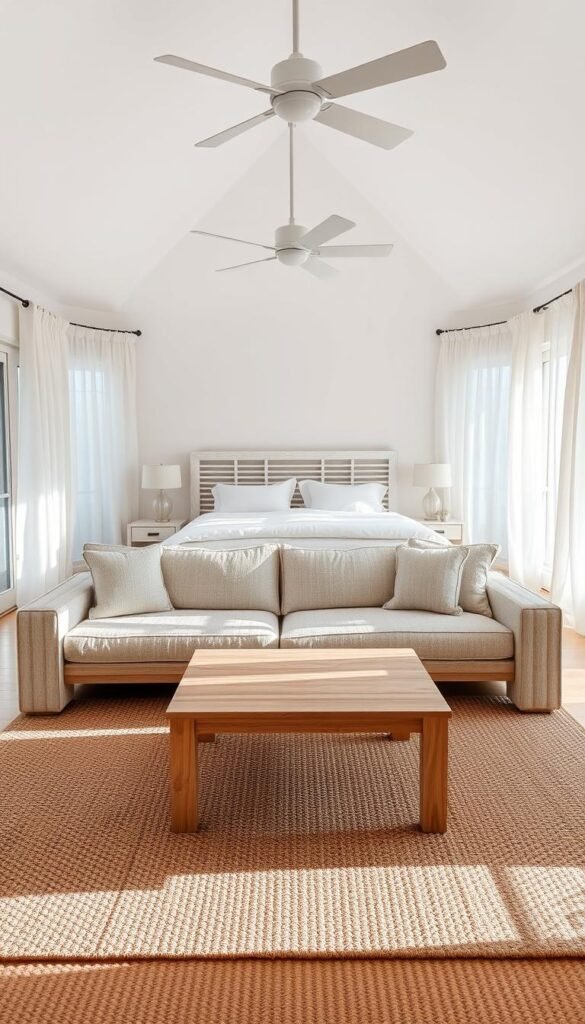
Your furniture selection sets the tone for your entire room. Choose items that balance beauty with everyday practicality.
Simple, light designs create that airy beach house feeling. They make your space feel open and inviting.
Whitewashed woods bring brightness without being too stark. Their soft finish adds warmth to your decor.
Wicker chairs offer casual comfort and natural texture. They work beautifully in reading nooks or dressing areas.
Weathered wooden bed frames add character and charm. Their timeworn look feels collected and personal.
Scale matters when selecting your furniture. Choose pieces that feel light rather than heavy.
Proportion keeps your space from feeling crowded. Leave room for movement and breathing space.
Multifunctional solutions work wonders in compact areas. They maximize every inch of your room.
Designer Lauren Liess created amazing solutions for five children. Her 740-square-foot bungalow proves smart design works.
Built-in beds offer storage and sleeping in one piece. They’re perfect for vacation homes or small rooms.
Under-bed storage hides belongings while keeping things accessible. It’s a practical way to reduce clutter.
Window seats provide extra seating and storage options. They become cozy reading spots too.
Custom bunk beds make shared rooms more functional. They create individual spaces within one room.
Your furniture should adapt as needs change over time. Choose pieces that work for years, not just today.
Mix vintage finds with new items for character. This creates that collected-over-time beach house feel.
| Furniture Type | Best Features | Room Placement | Style Notes |
|---|---|---|---|
| Whitewashed Dresser | Light reflective, versatile storage | Against light walls | Softens modern spaces |
| Wicker Chair | Breathable, lightweight, movable | Reading corner | Adds organic texture |
| Weathered Bed Frame | Character marks, sturdy construction | Room centerpiece | Works with various styles |
| Built-in Bunk | Space-saving, custom fit | Against longest wall | Maximizes small rooms |
| Storage Ottoman | Dual function, movable seating | Foot of bed | Great for extra blankets |
Your furniture choices should reflect how you actually live. Practical pieces make daily life easier and more enjoyable.
Remember that less is often more in coastal design. Select key pieces that serve multiple purposes well.
Your room will feel both beautiful and perfectly functional. That’s the true essence of relaxed living.
6. Add Personality with Coastal Artwork and Wall Decor
Wall decor transforms blank spaces into personal expressions of coastal living. Your choices make the room feel uniquely yours rather than generic.
Move beyond typical beach scenes to find artwork that speaks to you. Abstract pieces using ocean colors create sophisticated moods.
Watercolors bring soft, fluid energy to your walls. They capture the gentle movement of water and sky.
Photography offers another beautiful option for your space. Local wildlife images connect you to specific coastal regions.
Your artwork should tell a story about your connection to the shore. Personal photos from beach trips create meaningful details.
Consider these creative display ideas for collections:
- Shadow boxes for delicate seashells and beach glass
- Floating shelves for rotating displays of favorite finds
- Gallery walls mixing different sizes and frame styles
- Nautical flags framed as colorful graphic elements
Scale matters when placing your artwork. Large pieces make strong focal points above beds or dressers.
Smaller groupings create intimate moments throughout the room. Mix heights for visual interest that draws the eye upward.
Local artists provide unique pieces that reflect regional styles. Their work adds authentic touches you won’t find elsewhere.
Balance artwork with other wall treatments for layered interest. Shiplap or paneling provides texture behind your pieces.
Your wall decor completes the overall theme of your space. It ties together colors and textures beautifully.
Every piece should bring you joy and inspiration. Choose items that make you smile when you see them.
Your bedroom becomes a true reflection of your personality. The right artwork makes your coastal bedroom feel like home.
7. Play with Patterns for a Dynamic Look
Patterns bring energy and visual interest to your space. They create movement that keeps your design feeling fresh and alive.
The right combination adds depth without overwhelming your room. It’s about finding balance between different scales and colors.
Sarah Vaile shows how to incorporate unexpected elements. She uses organically-shaped prints that feel natural rather than themed.
Mixing Stripes, Florals, and Nautical Prints
Start with a foundation of classic blue-and-white stripes. These timeless patterns work well on bedding or accent chairs.
Add smaller scale prints like shell or coral motifs. Gentle wave patterns bring fluid movement to your space.
Florals introduce softness and organic beauty. Choose designs with ocean-inspired color palettes.
Nautical elements like rope details or sailboat prints add charm. Use them sparingly for authentic touches.
Consider these pattern mixing strategies:
- Maintain a consistent color story across all patterns
- Vary scales – pair large prints with smaller designs
- Balance busy patterns with solid neutral areas
- Use organic shapes that echo natural forms
Patterns can actually make compact rooms feel larger. The visual depth creates an expanded perception of space.
Start with changeable elements like pillows and throws. Build confidence before committing to permanent choices.
Your final look should feel collected rather than matched. This approach creates personality and charm.
8. Accessorize with Thoughtful Coastal Accents
Your finishing touches transform a beautiful space into a personal sanctuary. These small elements create that authentic beach house feeling you love.
Thoughtful accessories complete your room’s story. They add character without overwhelming the overall design.
Creative Seashell Displays
Seashells and beach finds become precious treasures in your space. Display them in ways that feel artistic rather than cluttered.
Glass jars create simple, elegant presentations for your collections. They keep items visible while protecting delicate pieces.
Shadow boxes offer another beautiful display option. They turn beachcombing finds into wall art that tells your story.
Consider grouping shells by color or type for visual impact. This creates organized displays that feel intentional.
Beyond the Obvious Accessories
Look for items that suggest coastal life indirectly. Vintage bottles evoke memories of messages in bottles.
Natural specimens like dried sea grass add organic texture. Travel souvenirs from beach trips bring personal meaning.
These subtle touches create depth in your decor. They feel more authentic than obviously themed items.
Editing your accessories prevents visual clutter. Choose pieces that truly matter to you personally.
Consider scale when arranging your collections. Group smaller items together for greater impact.
Leave breathing room on surfaces for that airy feeling. Your space should feel curated, not crowded.
Functional accessories serve dual purposes beautifully. Beautiful boxes hide everyday items while adding style.
Trays organize bedside essentials with elegance. Lamps provide both lighting and decorative appeal.
Seasonal changes keep your space feeling fresh year-round. Switch lighter summer items for cozier winter pieces.
Maintain your coastal theme while adapting to different seasons. This approach keeps your room feeling current.
Mix special finds with everyday items for character. That vintage compass paired with modern boxes creates interest.
Your bedroom becomes a true reflection of your personality. These final details make your coastal bedroom uniquely yours.
9. Create a Feature Wall with Shiplap or Paneling
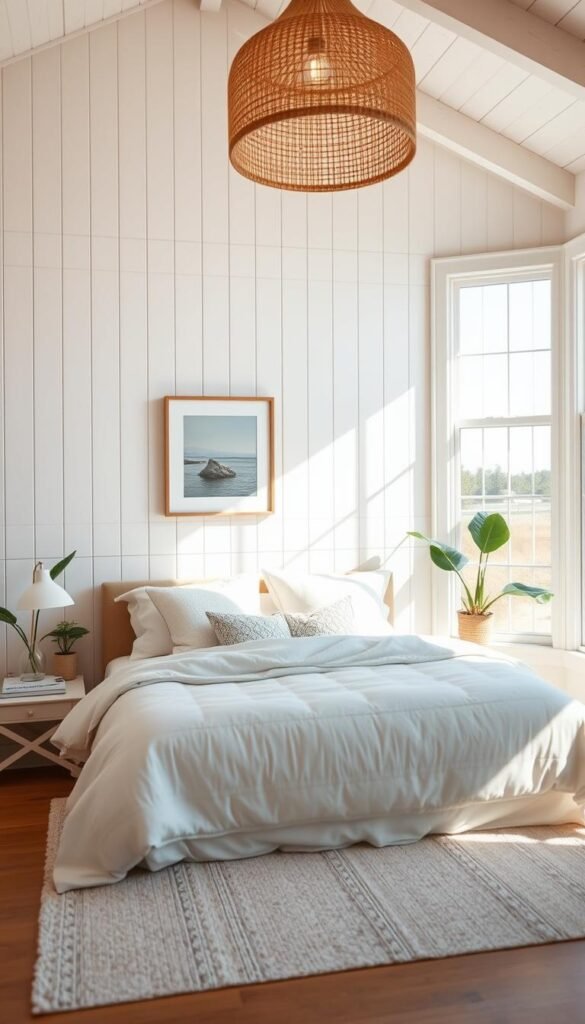
Shiplap and wood paneling instantly add character to your space. These classic elements bring authentic texture and timeless appeal.
Horizontal boards create visual interest without overwhelming your room. They add depth while maintaining that light, airy feeling you love.
Shiplap has deep roots in coastal architecture. Originally used as exterior sheathing, it now brings historical charm indoors.
Modern interpretations honor this tradition while feeling fresh. Today’s installations work beautifully in contemporary spaces.
Consider different application techniques for your project. Full wall coverage makes a strong statement in larger rooms.
Wainscot height installations wrap the lower half of your wall. This approach adds charm while protecting surfaces from daily wear.
Ceiling applications deliver an instant burst of character. Wood-paneled ceilings make newer builds feel more established.
Paint choices dramatically affect your final look. Bright white maintains maximum brightness and freshness.
Soft seafoam greens or pale blues add subtle color. These tones enhance your coastal theme while adding visual interest.
Natural wood tones bring warmth and organic beauty. They work well with other natural elements in your design.
Combine shiplap with other wall treatments for layered interest. Hang artwork directly on paneled surfaces for texture contrast.
Use wallpaper on adjacent walls to create visual balance. This approach prevents too much uniformity in your space.
Maintenance matters in humid environments. Proper sealing protects wood from moisture damage over time.
Regular dusting keeps grooves clean and looking fresh. Address any warping or discoloration promptly.
Balance textured surfaces with smoother ones. This contrast prevents your space from feeling overwhelming.
Your feature wall should feel integrated, not isolated. It works with your overall design to create harmony.
These wood elements add that collected-over-time feeling. They make your space feel personal and thoughtfully designed.
Your room gains character and depth through these details. The result feels both timeless and perfectly current.
10. Bring the Outdoors In with Potted Greenery
Living plants instantly connect your space to nature’s beauty. They add vibrant energy that makes any room feel alive and refreshed.
Greenery creates a natural vibe that complements your ocean-inspired style. Plants remind us of beach grasses, tropical palms, and lush gardens.
Choose plants that thrive in indoor environments. Palms bring tropical elegance with their graceful fronds. Ferns add soft texture and lush green tones.
Succulents offer low-maintenance options for busy lifestyles. Air plants create unique displays without needing soil.
Consider these creative planting ideas:
- Woven baskets instead of traditional pots
- Vintage containers with drainage holes added
- Wall-mounted planters for vertical gardens
- Glass terrariums for miniature landscapes
Green leaves pop beautifully against soft blue and white backgrounds. They add fresh contrast to your color scheme.
Understand each plant’s light requirements before placing them. South-facing windows offer bright light for sun-loving varieties.
North-facing windows work well for shade-tolerant plants. Rotate plants regularly for even growth patterns.
Watering needs vary by plant type and season. Most indoor plants prefer slightly dry soil between waterings.
Use plants to soften architectural elements in your space. They fill empty corners with natural beauty.
Large floor plants make dramatic statements. Smaller tabletop arrangements add life without clutter.
For low-light situations, consider realistic artificial options. Today’s silk plants look remarkably natural.
Some plants offer additional benefits beyond visual appeal. Certain varieties help purify indoor air quality.
Fragrant herbs like lavender add pleasant scents. Textural leaves create interesting shadow patterns.
These natural touches complete your personal retreat. They make your bedroom feel connected to the outdoors.
Your space becomes a living environment that grows with you. Plants add that final layer of authenticity to your coastal bedroom look.
11. Layer Rugs for Added Texture and Warmth
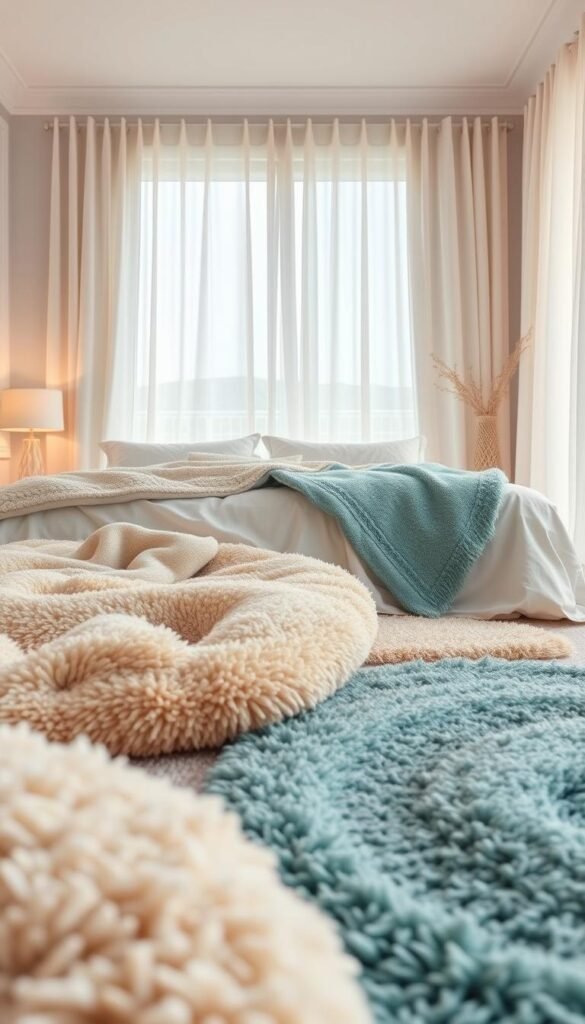
Rug layering creates a cozy foundation that feels wonderful underfoot. This technique adds visual interest while making your space more comfortable.
Natural fiber options bring authentic character to your room. Jute and seagrass provide beautiful texture against light floors.
Start with a larger natural fiber rug as your base layer. This establishes your foundation and defines the space.
Add a smaller, softer rug on top for extra comfort. This combination creates both visual and physical warmth.
Consider these popular natural fiber choices:
- Jute rugs with their organic, nubby texture
- Seagrass options that offer durability and natural beauty
- Sisal selections providing subtle pattern variations
- Cotton dhurries in watery blue and green tones
Layering offers practical benefits beyond just appearance. It adds cushioning for bare feet on cool mornings.
Rugs help protect your flooring from daily wear. They also reduce noise in multi-level homes.
Choose your base rug to cover the main seating area. It should be large enough to anchor your furniture arrangement.
Your top layer can introduce pattern or color accents. Moroccan wedding blankets add wonderful texture boosts.
Graphic patterns make beautiful finishing touches. They complete your layered look with style.
Consider these creative alternatives to traditional rugs:
- Painted floor designs that mimic rug patterns
- Stenciled borders that define space without rugs
- Natural fiber tiles arranged in interesting patterns
- Removable floor cloths for seasonal changes
Maintenance matters in homes near water. Natural fibers handle sand and moisture well.
Regular vacuuming keeps your rugs looking fresh. Spot clean spills promptly to prevent staining.
Rotate rugs seasonally to even out wear patterns. This extends their life and maintains appearance.
Use rugs to define different areas within your room. Create a soft landing zone beside your bed.
Establish a cozy reading nook with layered textiles. Define dressing areas with appropriate rug sizes.
| Rug Type | Best Placement | Maintenance Level | Texture Quality |
|---|---|---|---|
| Jute Base Layer | Under furniture grouping | Medium – regular vacuum | Firm, nubby surface |
| Seagrass Accent | High traffic pathways | Low – shakes clean easily | Smooth, durable weave |
| Cotton Dhurrie | Top layer for color | High – machine washable | Soft, pliable feel |
| Moroccan Blanket | Bedside or seating area | Medium – professional clean | Plush, textured surface |
| Sisal Border | Room perimeter definition | Low – occasional vacuum | Subtle pattern interest |
Your layered rug approach should feel intentional yet comfortable. The right combination makes your space feel complete.
Experiment with different arrangements before finalizing. Live with your choices for a few days to ensure they work.
Your finished look should balance beauty with practicality. That’s the true essence of relaxed living.
12. Consider a Canopy Bed for a Dreamy Vibe
A canopy bed instantly transforms your sleeping area into a magical retreat. It creates that vacation-like feeling you crave every day.
These special pieces serve as beautiful focal points in any room. They add architectural interest while maintaining comfort.
Designer Janie Molster shows how white canopy beds bring luxury vibe. Her designs maintain casual elegance perfect for relaxed living.
Different canopy styles offer unique benefits for your space. Traditional four-posters create classic elegance with their tall frames.
Modern minimalist frames provide cleaner lines for contemporary rooms. They offer structure without overwhelming smaller areas.
Mosquito netting adds exotic appeal wherever you live. Hang it from a canopy frame or suspend hoop-style from the ceiling.
Campaign-style canopy beds serve as striking focal points. Their structured look works well with various decor styles.
Tester beds with vintage bamboo bring character and history. These antique options add timeworn charm to your space.
Fabric choices dramatically affect your canopy’s final appearance. Airy linens and sheers create light, floating effects.
More substantial fabrics form cozy cocoons for privacy. They define sleeping spaces in shared rooms beautifully.
These beds offer practical benefits beyond their beautiful style. They provide visual separation in multi-use areas.
Canopy treatments add softness to angular room architecture. They balance other elements with their flowing presence.
DIY options achieve the look without major investment. Simple curtain rods can create elegant canopy effects.
Ceiling-mounted hoops offer temporary solutions for renters. These allow changes without permanent alterations.
Balance your canopy statement with other room elements. Keep surrounding decor simpler to prevent visual competition.
Your canopy bed should feel integrated, not isolated. It works with your overall design to create harmony.
This special piece makes your sleeping area feel extraordinary. It turns everyday rest into a luxurious experience.
Your personal retreat gains character through these details. The result feels both dreamy and perfectly practical.
13. The Impact of Statement Lighting Fixtures
Lighting choices dramatically transform your room’s atmosphere. The right fixtures create both function and beautiful mood throughout your space.
Statement pieces become focal points that define your personal style. They add sophistication while enhancing your overall design.
Oversize nautilus lamps make stunning artistic statements. Their organic shapes echo natural forms found along shorelines.
Marine-style sconces provide elegant wall illumination. These fixtures offer both task lighting and decorative appeal.
Woven pendant lights add texture and warmth overhead. Their natural materials complement other elements in your room.
Plaster lamps bring soft, sculptural beauty to surfaces. They diffuse light gently for cozy evening ambiance.
Brass hardware and gold finishes add refined touches. These metallic details catch and reflect light beautifully.
Roman shades work perfectly for irregular ceiling situations. They provide light control while maintaining clean lines.
Layered lighting creates the most inviting environments. Combine different sources for both practical and mood purposes.
Consider these lighting types for your layered approach:
- Overhead fixtures for general illumination
- Task lights for reading and specific activities
- Accent lighting to highlight architectural features
- Decorative pieces that serve as artwork
Natural material options enhance your coastal aesthetic beautifully. Rattan and wicker fixtures add organic texture.
Bamboo selections bring tropical elegance to your space. Rope details reference nautical traditions authentically.
Scale matters when choosing your lighting pieces. Fixtures should feel proportional to your room size.
Oversized pendants make dramatic statements in larger areas. Smaller sconces work well in compact spaces.
Vintage and antique options add character and history. These pieces bring timeworn charm that feels collected.
Look for quality construction and interesting designs. Older fixtures often feature craftsmanship rarely found today.
Practical considerations ensure your lighting works beautifully. Dimming capabilities allow mood adjustment throughout the day.
Bedside reading lights should provide focused illumination. Choose adjustable options for personalized comfort.
Morning light management creates gentle wake-up experiences. Soft, gradual illumination feels more natural than harsh brightness.
Creative solutions address challenging architectural situations. Rooms with limited natural light need strategic planning.
Multiple light sources prevent dark corners in these spaces. Mirrored surfaces help bounce available light around.
Your lighting should feel integrated with your overall design. Choose pieces that complement rather than compete.
The right combination makes your space feel both beautiful and functional. That balance creates true relaxation.
| Fixture Type | Best Placement | Light Output | Style Notes |
|---|---|---|---|
| Nautilus Lamp | Bedside table or dresser | Medium ambient glow | Sculptural art piece |
| Marine Sconce | Flanking headboard or mirror | Directed task lighting | Nautical heritage |
| Woven Pendant | Over reading chair or desk | Soft diffused light | Natural texture |
| Plaster Lamp | Side table or shelf | Warm ambient glow | Organic modern |
| Brass Fixture | Center of room or entry | Bright general light | Sophisticated detail |
Experiment with different bulb temperatures for varied effects. Warmer tones create cozy evening atmospheres.
Cooler bulbs work well for task-oriented areas. Dimmable options provide the most flexibility.
Your lighting choices should reflect how you actually use your space. Practical beauty makes daily life more enjoyable.
The right fixtures complete your personal retreat perfectly. They turn ordinary moments into special experiences.
14. Designing a Coastal Girls Bedroom That Grows with Her
Creating a room that evolves with your child brings lasting value and joy. This approach saves money and maintains a cohesive look through different life stages.
Smart design choices make your space adaptable for years. You avoid complete overhauls as interests and needs change.
Professional ideas focus on flexible foundations. They build upon timeless elements that remain relevant.
Convertible furniture serves multiple age groups beautifully. A crib that becomes a toddler bed offers excellent longevity.
Modular storage systems reconfigure as requirements shift. They accommodate toys, books, and eventually electronics.
The best children’s rooms balance current enjoyment with future flexibility. They honor each stage while planning for what comes next.
Color strategies work across various ages beautifully. Start with a neutral base for long-term use.
Add personality through changeable accessories. Pillows, artwork, and rugs refresh the look easily.
Young children enjoy brighter accent colors. Teens often prefer more sophisticated palettes.
Built-in storage maximizes every inch perfectly. It creates clean lines and reduces visual clutter.
Under-bed drawers provide accessible organization. Children reach their belongings independently.
Avoid bulky dressers that dominate the room. Choose streamlined pieces that serve multiple functions.
| Age Group | Furniture Focus | Storage Needs | Color Approach |
|---|---|---|---|
| 3-6 years | Convertible cribs, low shelves | Toy bins, accessible drawers | Playful accents on neutral base |
| 7-12 years | Full beds, study desks | Book storage, craft organizers | Balanced color stories |
| 13-18 years | Sophisticated pieces, seating | Electronics management, privacy | Mature palettes with personal touches |
| Young adult | Quality investment pieces | Systematic organization | Refined color schemes |
Personalization evolves through different methods. Changeable artwork reflects current passions.
Adjustable shelving displays various collections. Customizable lighting sets appropriate moods.
Involve your child in age-appropriate decisions. Young children choose between preselected options.
Teens express their developing style more fully. This collaboration creates meaningful spaces.
Activity zones support changing interests. Reading nooks transform into study areas.
Creative corners accommodate artistic exploration. Social spaces welcome friends appropriately.
Your bedroom becomes a true companion through life. It celebrates each chapter while maintaining its essence.
This thoughtful approach creates lasting memories. Your coastal bedroom grows alongside its occupant beautifully.
15. Clever Storage Solutions for a Clutter-Free Space
Smart organization keeps your room feeling open and airy. Clever storage solutions help maintain that relaxed coastal vibe while keeping everything in its place.
Built-in options maximize every inch of available space. Window seats with hidden compartments offer cozy seating and practical storage.
Under-bed drawers provide excellent hidden storage. They keep extra linens or seasonal clothes out of sight but easily accessible.
Vertical strategies use wall space without taking up floor area. Wall-mounted cubbies and shelves create organized displays.
Multifunctional furniture serves dual purposes beautifully. Beds with built-in drawers eliminate the need for bulky dressers.
Each child can have their own designated drawer for clothes. This system encourages independence and makes mornings smoother.
Creative hooks hold hat collections and beach bags. They turn everyday items into decorative elements.
A small niche in the wall displays special beach finds. It keeps treasures visible while preventing clutter on surfaces.
Beautiful baskets corral smaller items attractively. They add texture while keeping necessities organized.
| Storage Type | Best For | Space Saved | Style Benefit |
|---|---|---|---|
| Under-bed drawers | Seasonal clothing, extra bedding | Eliminates dresser footprint | Completely hidden storage |
| Built-in window seat | Books, toys, blankets | Uses otherwise wasted space | Adds architectural interest |
| Wall cubbies | Daily essentials, collections | Zero floor space used | Creates organized display |
| Multifunctional bed | Clothing, personal items | Combines sleeping and storage | Clean, streamlined look |
| Decorative baskets | Small items, accessories | Reduces surface clutter | Adds natural texture |
Specialized storage handles coastal living challenges. A ventilated basket holds wet swimsuits until they dry.
Sandy shoes stay in a designated tray by the door. This prevents sand from spreading throughout the room.
Open shelving shows off organized arrangements. It turns necessities into part of your decor.
Balance closed and open storage for visual harmony. Some items look beautiful displayed, while others need hiding.
Child-friendly solutions make cleanup simple and fun. Low shelves let little ones reach their toys independently.
Clear bins help children see what’s inside without opening everything. Color-coded systems work well for multiple children.
Your storage should work with your lifestyle, not against it. The right solutions keep your space feeling peaceful and organized.
These clever ideas maintain that breezy atmosphere you love. They prove practical organization can be beautiful too.
16. Bringing Your Breezy Coastal Bedroom Vision to Life
Your personal oasis awaits with thoughtful planning and creative touches. This final stage brings all elements together into a cohesive, beautiful space.
Start with a mood board to visualize your complete design. Collect fabric swatches, paint chips, and inspirational images. This helps you see how colors and textures work together before committing.
Focus on changeable elements first if working with a limited budget. New bedding, curtains, and accessories can transform your room dramatically. These updates create instant coastal vibes without major renovation.
Adapt these ideas to your specific space and lighting conditions. Even small rooms can feel open with the right color choices and furniture placement. Mirrors and light colors maximize natural illumination.
Remember to edit as you go to maintain that essential airy feeling. Too many decorations can overwhelm your peaceful retreat. Choose pieces that truly speak to your personal connection with the shore.
Your finished room will become a personal sanctuary that grows with you. It captures that relaxed beach house spirit while feeling uniquely yours. Enjoy creating a space that brings daily joy and calm.