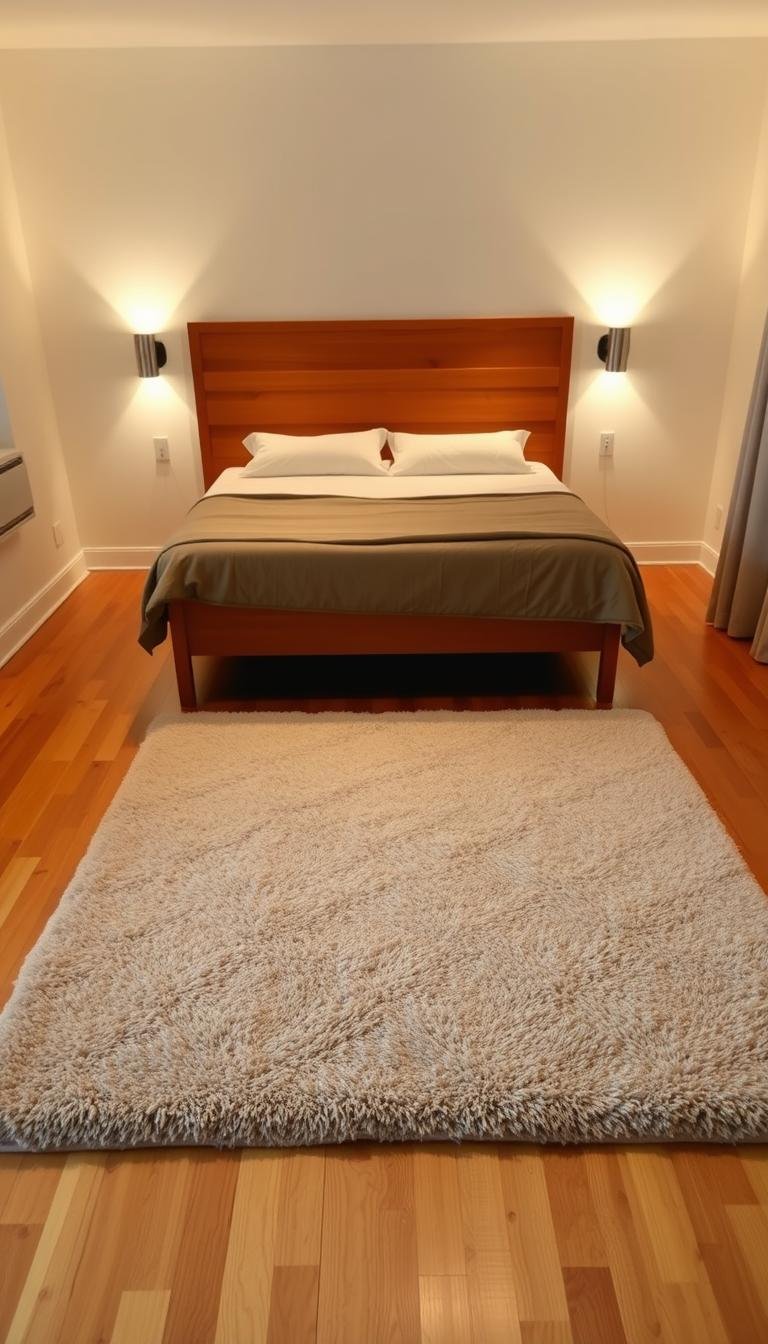
Welcome to your complete guide on transforming your personal space with smart floor covering ideas. A well-placed textile can completely change how your room feels and functions.
These pieces aren’t just decorations. They are essential parts of comfortable living. The right approach helps define different zones in your area.
It adds texture and creates visual interest throughout your home. You’ll learn how to make informed choices about size and style.
Our expert advice will help you create a cozy, intentional design. We cover everything from under-bed layouts to accent pieces for furniture.
Why Bedroom Rug Placement Matters for Your Space
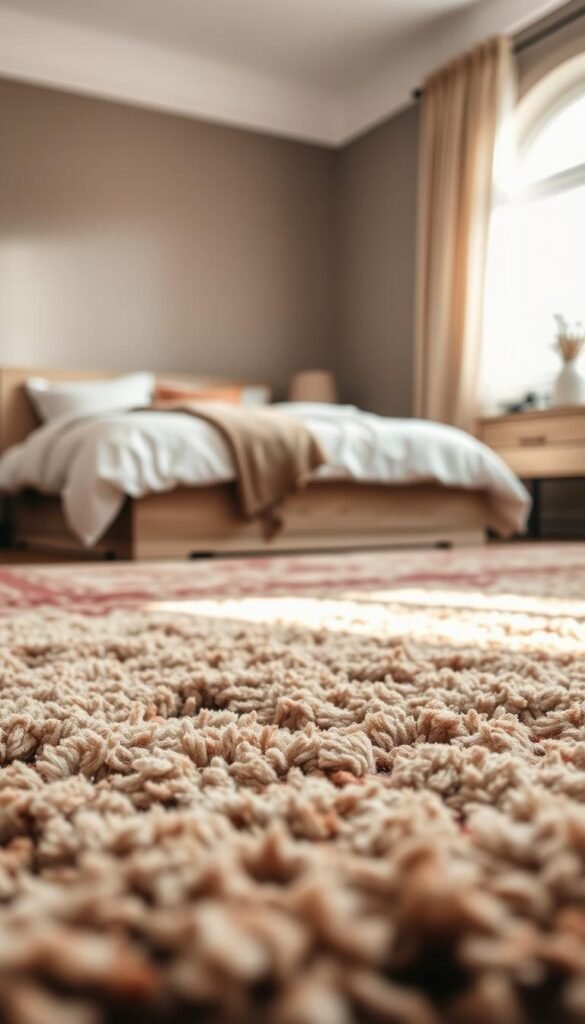
Your personal sanctuary deserves special attention to detail. The way you arrange floor coverings makes a significant difference in your daily experience.
These textile pieces serve multiple purposes beyond decoration. They create inviting atmospheres and improve functionality throughout your living quarters.
Creating Warmth and Comfort Underfoot
Imagine stepping onto a soft surface each morning. Quality floor coverings provide immediate physical comfort that enhances your morning routine.
The right textile adds thermal insulation during colder months. It creates a cozy environment perfect for relaxation and peaceful moments.
Psychological benefits include reduced stress and improved mood. Soft surfaces underfoot contribute to your overall sense of well-being.
Defining Areas and Adding Visual Interest
Strategic arrangement helps organize your layout effectively. You can separate sleeping zones from dressing or sitting spaces.
Patterns and colors introduce personality to your decor. They complement existing elements while adding depth and dimension.
Even compact quarters can benefit from multiple textile placements. Smaller pieces create visual boundaries without overwhelming the area.
| Benefit Type | Physical Impact | Visual Impact |
|---|---|---|
| Comfort | Soft surface for feet | Warm color tones |
| Protection | Floor preservation | Style consistency |
| Organization | Zone separation | Pattern definition |
| Insulation | Temperature control | Texture variety |
Your choices affect both practicality and aesthetics. Thoughtful selection transforms ordinary spaces into exceptional living environments.
High-traffic pathways benefit from durable materials. Protection and beauty work together in harmonious balance.
Perfect Placement Under Your Bed
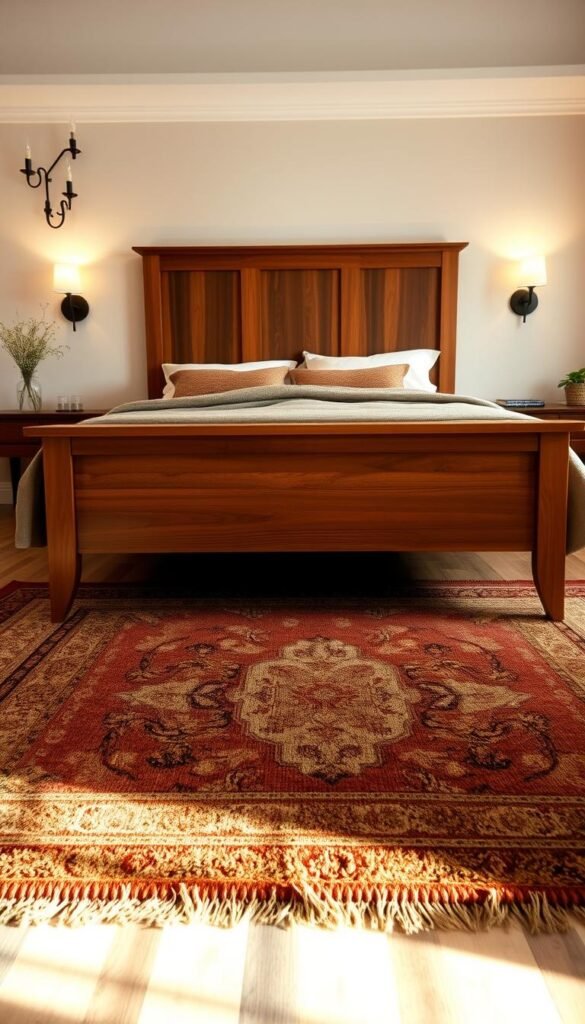
Getting your floor covering right beneath your sleeping area makes a huge difference in your daily comfort. The right approach creates a soft landing spot for your feet each morning.
Proper arrangement transforms your space into a luxurious retreat. It helps define the sleeping zone while adding warmth and texture.
Choosing the Right Rug Size for Your Bed
Selecting the correct dimensions ensures balanced proportions in your space. Different bed frames require specific textile measurements for optimal results.
Standard recommendations include:
- Twin bed: 5′ x 8′ area rug
- Full bed: 6′ x 9′ floor covering
- Queen bed: 8′ x 10′ textile piece
- King bed: 9′ x 12′ larger rug
These proven sizes create harmonious proportions around your furniture. They provide adequate coverage while maintaining visual balance.
Extension Guidelines for Optimal Coverage
Aim for 18-24 inches of visible material beyond each side of your mattress. This creates a generous border that feels luxurious underfoot.
For complete integration, ensure your nightstands rest completely on the surface. All four legs should contact the textile for a cohesive appearance.
The ideal setup shows at least 24 inches on three sides of your sleeping furniture. This golden rule ensures both comfort and aesthetic appeal.
Layering Techniques for Smaller Rugs
Don’t worry if your favorite piece seems too small for the space. Layering offers a creative solution that adds depth and dimension.
Place a larger neutral base layer first. Then position your smaller decorative piece on top. This technique allows you to use cherished textiles while maintaining proper proportions.
According to Martha Stewart’s design experts, this approach works particularly well with queen-sized beds. It creates visual interest while ensuring adequate coverage.
Remember that proper arrangement prevents that awkward too-small look. It transforms your morning experience into something truly special.
Enhancing the Foot of Your Bed with Runners
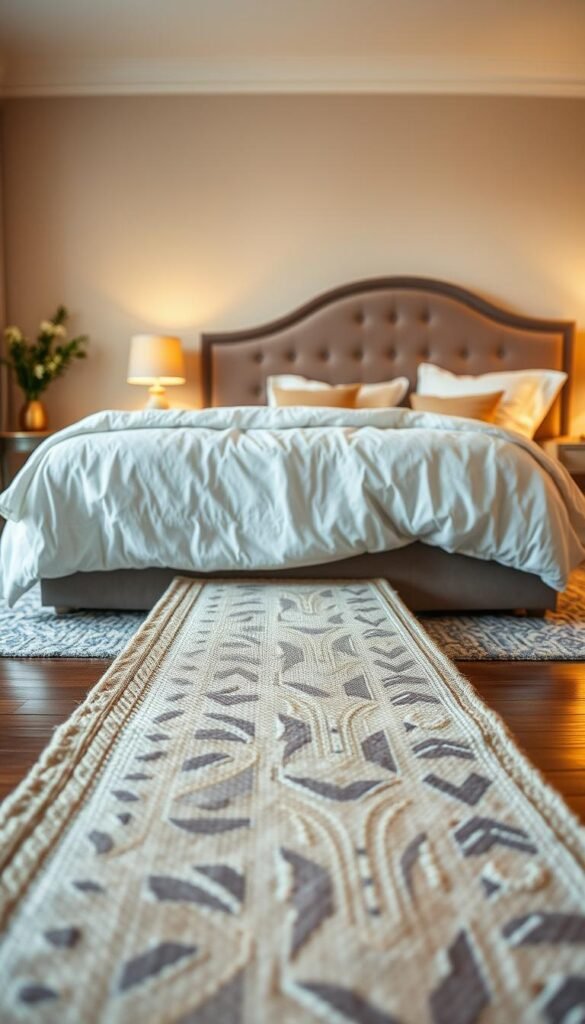
The space at the end of your sleeping area offers wonderful opportunities for creative textile arrangements. A well-chosen runner can transform this often-overlooked spot into a stylish focal point.
These narrow pieces serve both practical and decorative purposes. They create visual interest while protecting your floors from daily wear.
Selecting the Ideal Runner Dimensions
Finding the perfect size for your foot area requires careful measurement. A standard 4×2 foot piece often works beautifully in this location.
Ensure your chosen textile extends beyond your bench or footboard on both sides. This creates balanced proportions that please the eye.
For optimal results, measure your bench width first. Then select a runner that provides at least 3-6 inches of extra width on each side.
Coordinating with Benches and Furniture
When incorporating a bench, proper arrangement becomes especially important. All four legs should rest comfortably on your textile piece.
If you already have a larger floor covering under your bed, consider sliding it downward. This allows your bench to sit completely on the main textile.
Mixing patterns and textures adds depth to your overall design. Choose complementary colors that tie your various elements together harmoniously.
Runners at the foot of your sleeping space offer both style and function. They create a finished look while protecting your floors from shoe marks and scuffs.
Side Placement Options for Balanced Design
Flanking your sleeping furniture with runners creates both practical comfort and visual harmony in your space. These narrow textiles offer wonderful opportunities to enhance your daily routine while adding texture and interest.
The areas beside your mattress serve as perfect spots for long, narrow floor coverings. You can choose sheepskin or vintage Persian styles for added texture and character.
Single vs. Dual Runner Placement
You have two excellent approaches for side arrangement. Place a single textile on your preferred getting-in side, or create symmetry with pieces on both sides.
A single runner works beautifully for creating intentional asymmetry. It focuses comfort where you need it most while maintaining visual interest.
Dual runners offer balanced symmetry that feels organized and deliberate. This approach creates a finished, professional look throughout your space.
According to The Spruce’s design experts, both options work well depending on your personal preference and room layout.
Matching Runner Length to Your Bed Size
Finding the right dimensions ensures perfect proportions. Most runners measure 2-3 feet wide, which fits beautifully alongside standard sleeping furniture.
For length, aim for pieces nearly as long as your mattress. Five to six-foot lengths typically work well for most standard bed sizes.
This proportional approach creates visual continuity along the sides. It ensures your textiles don’t look too small or overwhelming in the space.
Different materials offer unique benefits for your morning routine. Soft sheepskin provides cozy warmth on cold floors, while durable Persian styles add vintage charm.
These side pieces create comfortable landing spots when getting in and out. They also contribute to the overall balance and symmetry of your room’s design.
The practical benefits extend beyond aesthetics. Soft surfaces feel wonderful on cold mornings and protect hard flooring from daily wear.
Accenting Dressers and Standalone Furniture
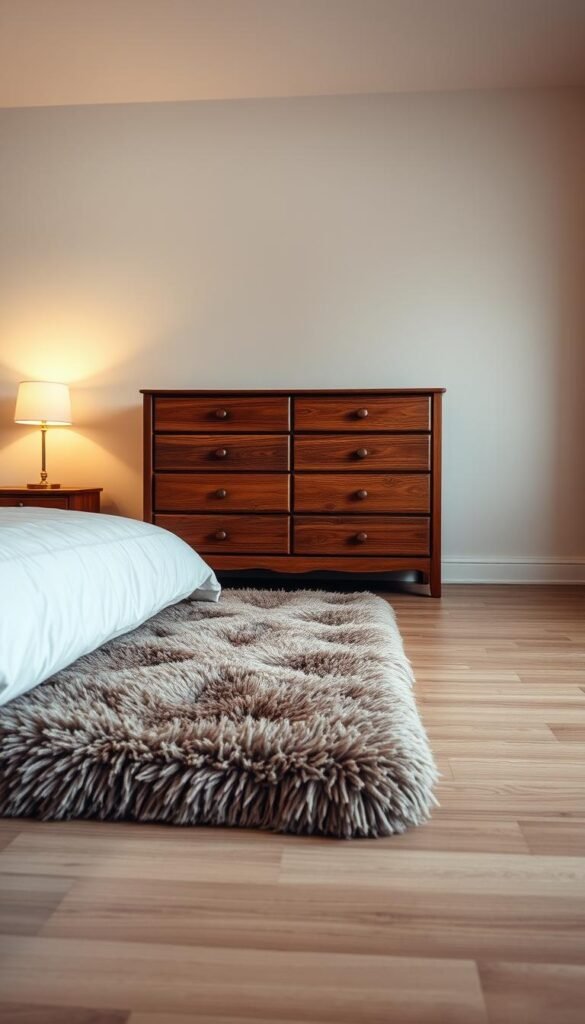
Your standalone furniture deserves the same thoughtful attention as your sleeping area. These pieces anchor your space and create beautiful focal points.
A well-chosen textile can transform ordinary furniture into extraordinary design statements. It adds warmth and personality to your entire room.
Strategic textile placement solves common design challenges while adding comfort. It creates intimate spaces within your larger area.
Creating Beautiful Vignettes with Rugs
Imagine your favorite dresser standing on a beautiful textile foundation. This creates a mini-room effect that draws the eye and adds depth.
These small scenes tell visual stories about your personal style. They make your furniture feel intentional and carefully curated.
Design expert Emily Henderson notes:
“A rug under a dresser creates instant coziness and makes the piece feel grounded in the space.”
Your textile choice can bridge different design elements throughout the room. It helps blend wood tones and adds unifying color patterns.
Sizing Guidelines for Furniture Placement
You have two excellent approaches for furniture textile placement. Both methods create beautiful results depending on your preference.
The full coverage method places your entire furniture piece on the textile. This creates a solid, anchored look that defines the space clearly.
Alternatively, the border style shows 2-3 inches of floor around your furniture. This framed approach adds visual interest and layered dimension.
For proper proportions, ensure at least two furniture legs rest on your textile. Allow approximately 18 inches of breathing room on each side.
| Furniture Type | Full Coverage Size | Border Style Size | Visual Effect |
|---|---|---|---|
| Standard Dresser | Matches exact dimensions | 2-3″ border showing | Anchored and substantial |
| Nightstand | Fits completely underneath | Small frame visible | Defined personal space |
| Accent Chair | Covers entire base area | Creates visual frame | Inviting seating area |
| Vanity Table | Full surface coverage | Elegant border effect | Luxurious dressing space |
Your textile selection should complement rather than compete with your furniture. Choose patterns and colors that enhance your existing decor.
These practical additions protect your floors from scratches and wear. They prevent furniture movement while adding comfort underfoot.
The right piece creates harmony between your furniture and flooring. It solves design problems while adding personality to your space.
Strategic Pathway Runners for Traffic Areas
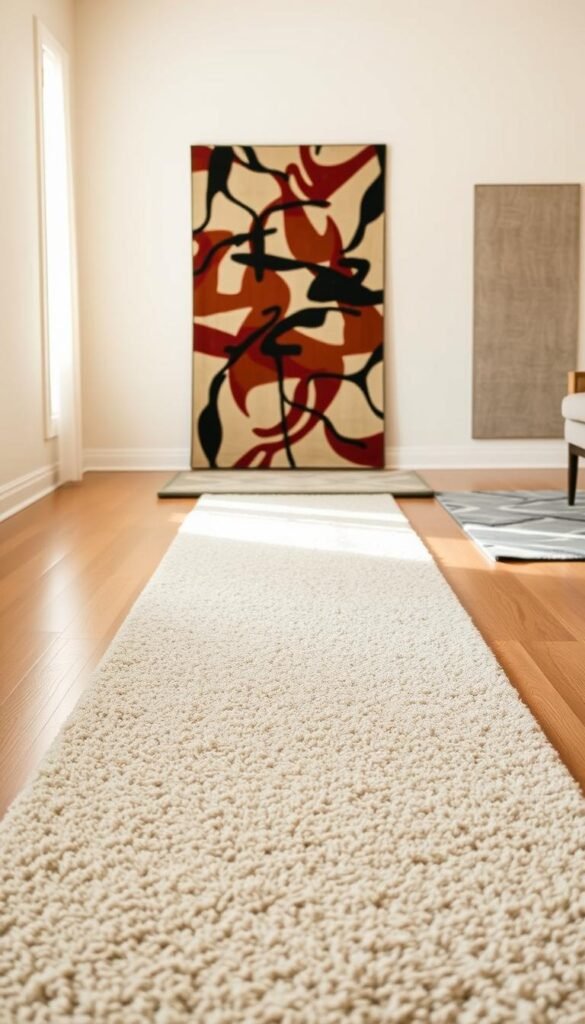
Your floor deserves thoughtful consideration in high-traffic zones. These areas see constant movement throughout your daily routine.
A well-placed runner transforms functional spaces into elegant pathways. It adds comfort while protecting your surfaces from wear.
You’ll discover how to identify natural walking patterns. Proper arrangement creates both beauty and practicality in your home.
Identifying Natural Walking Paths
Observe how you move through your space each day. Notice the routes you take to bathrooms, closets, or seating areas.
These natural pathways deserve special attention. Placing textiles vertically leading into connected spaces creates functional elegance.
For example, position a runner toward your primary bath suite. This guides movement while adding visual appeal to the transition area.
Proper Sizing for Hallways and Access Routes
Choosing the right dimensions ensures both safety and style. Your runner shouldn’t match the exact length of your hallway.
Leave at least 3 inches between the textile edges and walls. This creates proper proportion and prevents a cramped feeling.
It’s better to select a piece that’s slightly too long than too short. Generous coverage feels more luxurious underfoot.
Different rooms require various sizes based on their layout. Always measure your space before making final decisions.
| Pathway Type | Ideal Width | Length Consideration | Safety Feature |
|---|---|---|---|
| Bathroom Access | 2-3 feet | Extends beyond doorway | Non-slip backing |
| Closet Approach | 2-4 feet | Covers entire walkway | Low pile height |
| Seating Area Route | 3-5 feet | Connects furniture zones | Flat edges |
| General Circulation | 2-3 feet | Slightly longer than path | Secure corners |
These textiles protect high-traffic zones from daily wear. They add comfort for your feet while preventing floor damage.
Proper measurement and planning ensure optimal results. Always consider safety to prevent tripping hazards in your space.
The right choice creates harmony throughout your living environment. It blends functionality with beautiful design elements.
Final Styling Tips for Your Bedroom Rug Placement
Complete your room’s transformation with these essential finishing touches. Your design choices create a harmonious and functional personal space.
Select colors and patterns that complement your existing decor. This creates visual unity throughout your home.
Focus on high-traffic zones near furniture and entry points. Durable textiles protect your floors while adding comfort.
Remember the golden rule: choose larger sizes for better proportion. You can always adjust placement or add layers.
For areas near doors, select low-pile options that won’t interfere. Use non-slip pads underneath standalone pieces for safety.
Maintain at least six inches between textile edges and walls. This creates balanced, intentional design throughout your space.
Layer affordable natural fiber base pieces with decorative accents. This budget-friendly approach adds depth and texture.
Regular maintenance keeps your textiles looking fresh. Proper care ensures long-lasting beauty and comfort in your personal sanctuary.