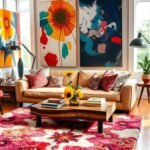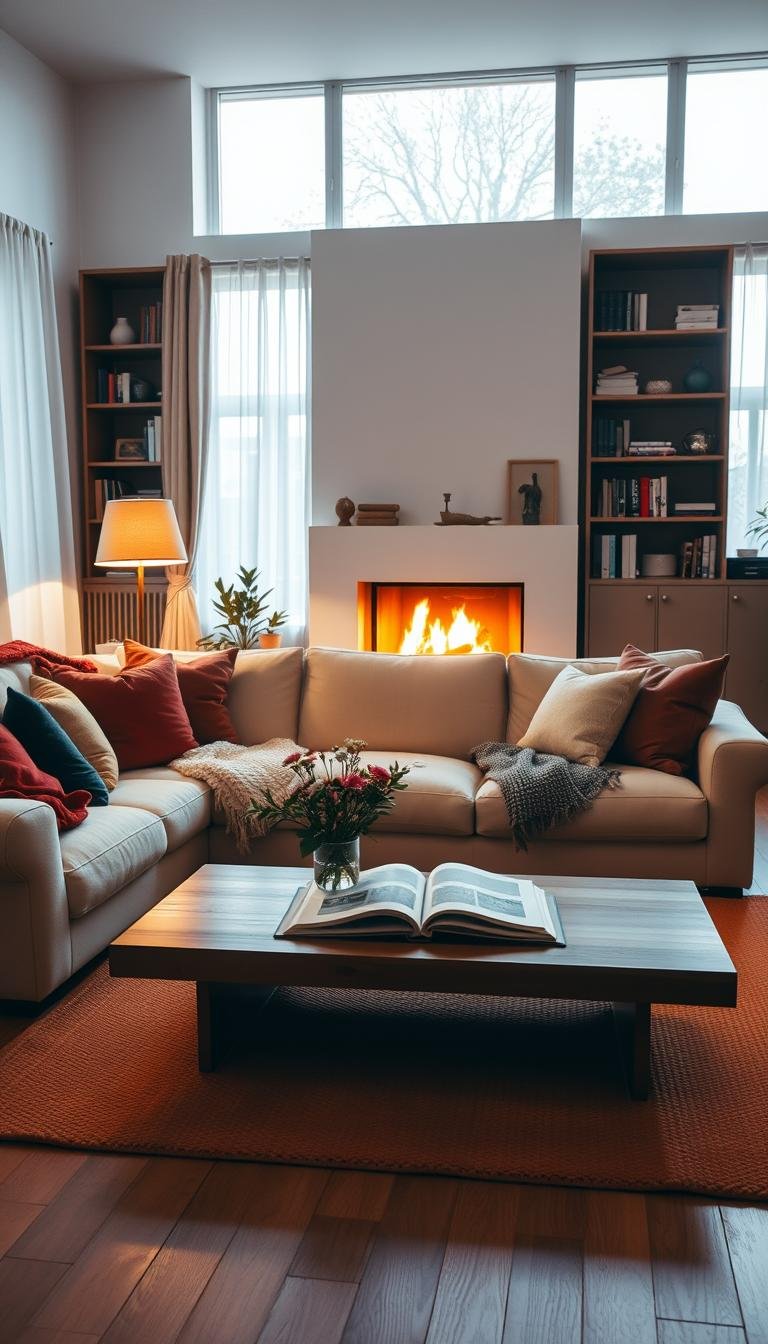
A welcoming home does not require a fireplace or a large budget; it starts with choices that make you want to settle in. Cozy living room inspiration can help you create warmth, comfort, and a personal atmosphere, even if your room feels plain or awkward right now. The goal is a place that feels good to use, not a perfect picture.
Coziness comes from combining comfortable furniture, thoughtful lighting, a balanced palette, touchable texture, and a layout that suits daily life. The 60-30-10 rule is a color-planning guideline that assigns 60% of a room’s color to a dominant shade, 30% to a secondary shade, and 10% to an accent shade.
Those choices work together: a plush seat feels less inviting under harsh light, while a beautiful palette cannot fix a walkway blocked by furniture. You can build a welcoming feel gradually, using what you own and changing only what makes a difference to your routines.
Choose ideas that suit the way you relax, gather, and spend time at home.
Cozy Living Room Inspiration Starts With a Functional Layout
Start by tracing the route you take from the doorway to the seating area before deciding where the sofa belongs. A clear path helps your living room feel easy to use, even when the room is small or shared with other activities.
The 2/3 sofa rule suggests choosing a sofa about two-thirds the width of the usable wall behind it. On a 12-foot wall, that points to a sofa around 96 inches wide. Measure the uninterrupted wall area, not the room’s full width or the space from one corner to another.
Map the route through the room before placing the sofa, and leave enough clear floor for people to pass comfortably.
Keep walkways clear in everyday layouts
Begin at the doorway, then follow the path to the sofa, windows, and any door you use often. Place the main seats outside that route. A seating group can still feel close and conversational without blocking access to a hall or making someone squeeze past a chair.
Think about how doors swing and where you set down bags or groceries. A chair pulled into a doorway’s path can turn a tidy arrangement into an obstacle. In a narrow room, angling one chair may open a better route than pushing every piece against a wall.
Scale the sofa to the usable wall
The two-thirds proportion gives you a useful starting point, not a rigid furniture law. A bulky sofa may dominate a room even when its width fits the wall. A low-back or curved shape can keep sightlines open, making a compact space feel less blocked.
Check the sofa’s depth and arms as well as its width. Deep seats need room in front, while wide arms take up space without adding another seat. Leave enough clear floor for people to pass without turning the seating group into an obstacle.
Choose the Right Rug Size and Placement
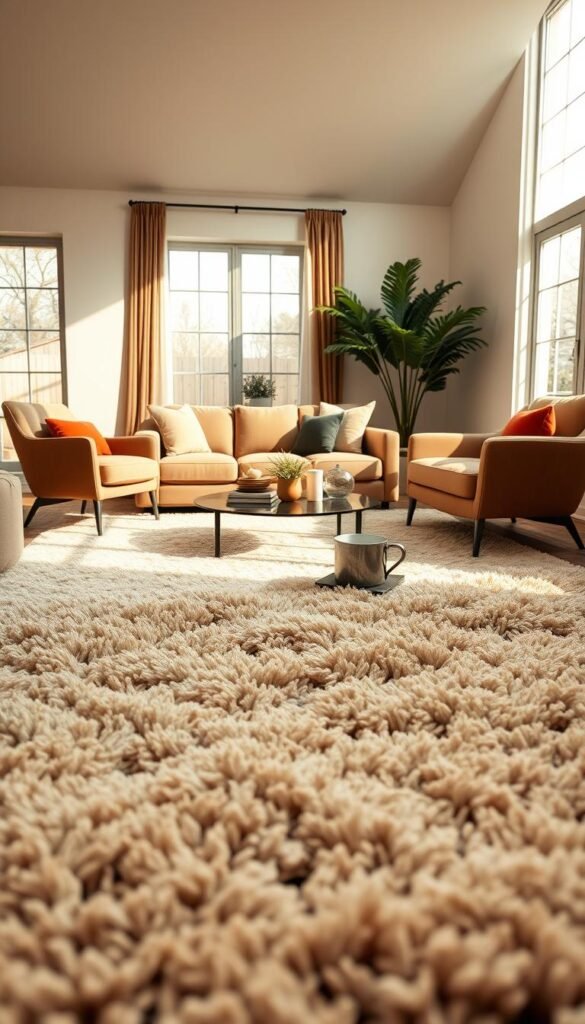
A rug should visually connect the main seats, rather than sit like a small mat in the middle of the floor. Choose an area rug wide enough to relate to the sofa and chairs, so the seating zone feels grounded.
A living room rug should extend at least 20-30 centimeters beyond each side of the sofa. Leaving about 40 centimeters of floor between the rug and the wall can create a spacious look. A rug that is too small often makes the seats seem disconnected from one another.
Standard rug dimensions include 200 x 300 centimeters, with larger options of 260 x 360 and 300 x 430 centimeters. Custom sizing is available for select designs. These measurements help you compare options, but the furniture arrangement determines which size will actually anchor the room.
| Placement | Furniture relationship | Visual effect |
|---|---|---|
| Fully beneath furniture | All main seats sit on the rug | One connected seating zone |
| Under front legs only | Sofa and chairs partly overlap | Grounded without covering all floor |
| Independent central feature | Seats sit around the rug | Defined center with separate furniture |
Each placement can work, provided the rug relates to the full arrangement instead of one isolated chair. Consider how the rug edge meets the legs of each seat and whether people can move around the group without stepping awkwardly between different floor surfaces.
A distinctive vintage Finnish rug from the 1940s can add history and pattern, though an heirloom is not necessary for a room to feel complete. A simple weave can anchor furniture just as effectively when its size and placement suit the floor.
Measure the sofa and the open floor before settling on a rug size.
Pick Seating That Invites You to Stay
The right seating is the piece you can use comfortably for an ordinary evening, not just the one that looks good in a photo. A good fit depends on how many people use the living room and how they like to sit.
A loveseat typically seats two people, while a standard sofa commonly seats three. That difference can matter more than the furniture’s style when you host family or share a room with housemates. Plump cushions and soft upholstery can also make a streamlined piece feel more relaxed.
- Count the people who use the seats regularly.
- Check seat depth for upright sitting and lounging.
- Compare arm and back bulk against the room’s open feel.
- Decide whether an ottoman or chaise suits your habits.
Seat depth changes how a sofa feels. A deeper seat may be pleasant for stretching out, while a shallower one can suit conversation and upright sitting. Try the position you use most often, rather than judging comfort by how the cushions look from across the room.
Bulky arms and tall backs can make a piece feel substantial, but they also take up visual space. A low-back profile can keep sightlines open between the sofa and other parts of the room. For more options, explore sofa designs for living rooms, including modular pieces that adapt to different arrangements.
A low-back sectional measuring 10 by 10 feet was used in one small-room project to preserve open sightlines. That is one project example, not a standard sofa size or a universal recommendation. A sectional may suit a large lounge arrangement, while separate pieces can be easier to move in a compact room.
Consider whether an ottoman can serve as a flexible footrest, or whether a chaise better matches how you stretch out. Sit in a sofa before choosing it whenever you can, since comfort is personal.
Build a Warm Color Palette That Feels Balanced
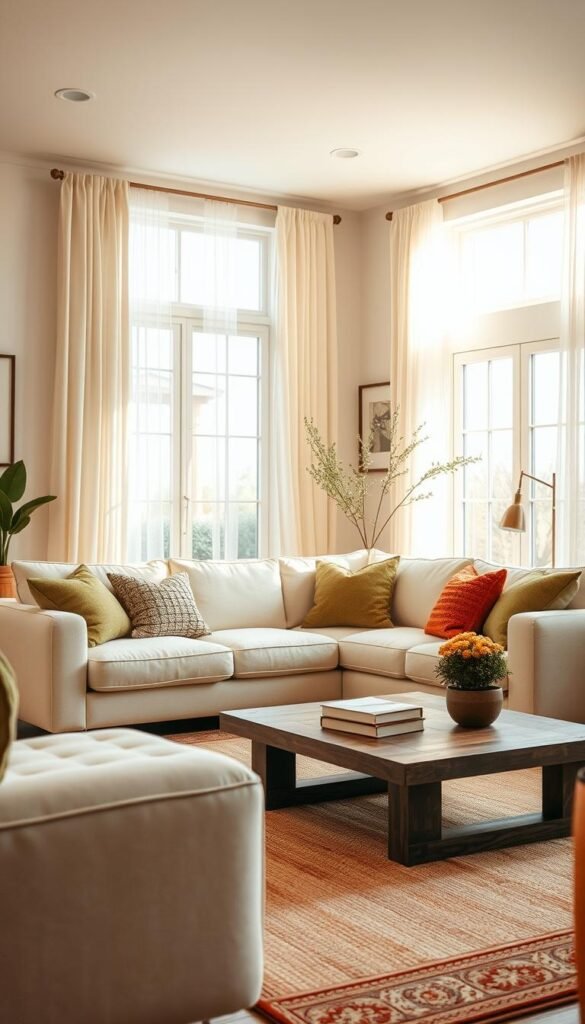
A warm palette feels intentional when one shade leads and the other colors have clearly smaller roles. Use quiet neutrals such as cream, beige, or taupe as a dominant shade, then bring in earthier colors for depth.
Let a neutral lead, then use smaller amounts of richer shades to create balance. Olive or rust can add warmth without taking over the whole living room. A secondary shade can appear in more than one place, which helps a palette feel connected rather than scattered.
Start with warm neutrals
Cream, beige, and taupe make flexible starting points because they work across many furniture styles. Cream can feel bright and soft, beige can bring a muted warmth, and taupe can add a little more depth. Choose the one that looks comfortable beside the floor and existing furniture.
One workable seven-color combination is cream, beige, terracotta, rust, olive, muted blue, and walnut brown. Let cream or beige dominate, then use the other hues in smaller roles. The combination gives you several options, but you do not need every shade to appear in equal amounts.
Use accent color with restraint
Olive and warm cream make a simple, earthy pairing. A third neutral, such as beige or taupe, can soften the contrast and help the colors fit a room with mixed finishes. Repeat an accent in a few small areas rather than adding it everywhere.
No single color universally causes anxiety. Vivid or strongly contrasting shades may feel overstimulating to some people, while others enjoy their energy. Personal responses vary, so treat a color’s effect as a matter of preference rather than a fixed rule.
Color can also change with the light in your home. A beige that looks golden at noon may seem cooler in the evening, and a muted blue can appear brighter beside a pale wall. Test color swatches in both daylight and lamplight before committing to a wall color.
Bring 2026 Paint Colors Into the Room
Warm khaki, brown, and green shades give you a range of 2026 options beyond cool gray. These earthy choices suit someone ready for a change, though no single shade is replacing gray in every home.
Universal Khaki HGSW6150 is HGTV Home by Sherwin-Williams’ 2026 Color of the Year. Benjamin Moore named Silhouette AF-655 its 2026 Color of the Year, describing it as burnt umber with notes of charcoal. Use a trend shade as one option among many, not a required makeover.
| Brand | Palette | Color | Code |
|---|---|---|---|
| Benjamin Moore | Color Trends 2026 | Raindance | 1572 |
| Benjamin Moore | Color Trends 2026 | Silhouette | AF-655 |
| Benjamin Moore | Color Trends 2026 | Swiss Coffee | OC-45 |
| HGTV Home by Sherwin-Williams | Honest Essentials | Universal Khaki | HGSW6150 |
| HGTV Home by Sherwin-Williams | Honest Essentials | Still Water | HGSW6223 |
Benjamin Moore’s Color Trends 2026 palette also includes First Crush CSP-310, Batik AF-610, Narragansett Green HC-157, Southwest Pottery 048, Sherwood Tan 1054, and Silhouette AF-655. The range pairs nuanced neutrals with deeper, more saturated hues.
HGTV Home by Sherwin-Williams’ 2026 Honest Essentials collection also includes Neutral Ground HGSW7568, Cordovan HGSW6027, Lemon Chiffon HGSW6686, Creamy HGSW7012, Griffin HGSW7026, Reddened Earth HGSW6053, Hazel HGSW6471, and Secret Garden HGSW6181. Those names cover pale neutrals, earthy browns, and greens.
You can use a richer paint on one wall or choose a soft neutral for a larger area. For more warm modern living room ideas, consider how wall color will sit beside the pieces you already own. Treat a color-of-the-year label as inspiration, then choose a shade that works with your own furnishings.
Layer Throws, Cushions, and Touch-Friendly Fabrics
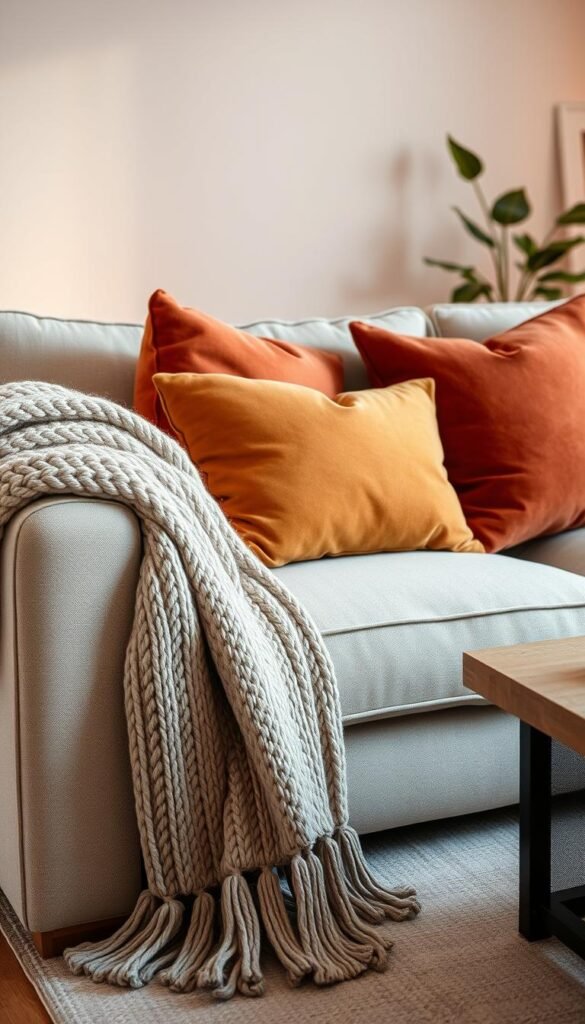
A familiar sofa can feel newly inviting when you add a few different textures rather than replacing it. Soft furnishings bring touch and visual interest to a living room, especially when the main furniture has a simple shape.
Upholstery, cushions or throws, and the floor rug create three tactile layers. Vary their weight and finish so a neutral sofa does not look flat. A woven surface beside velvet, for instance, reads differently from two smooth fabrics in the same color.
- A knit or woven throw adds a loose, touchable surface.
- Velvet or linen cushions offer contrasting finishes.
- A bouclé accent brings a nubby texture.
- A natural-fiber rug adds a grounded, woven surface.
You do not need to buy all four options at once. For a low-effort refresh, add one throw and two contrasting cushions to an existing sofa. Choose colors that relate to the room, then mix a smooth finish with a more textured one.
Each textile has a different job. Upholstery covers the largest seating surface, cushions change the feel under your back, and a throw gives you an easy layer when you settle in. A floor textile can add another texture without asking you to replace larger pieces.
Texture can come from weight as well as surface. A heavier knit feels different from light linen, even when both use a neutral shade. That difference helps a simple sofa look considered without relying on a busy pattern or a pile of decorative objects.
A crowded sofa can feel less relaxing than a few well-chosen pieces. Leave space to sit, stretch, and use the cushions instead of treating every open spot as a display area. Keep the fabrics you reach for most within easy reach and edit out the ones that only collect clutter.
Use Lamps to Create Warm, Flexible Lighting
A single bright ceiling fixture rarely gives you the same range of moods as several softer light sources. A layered plan lets your living room support conversation, reading, and a quieter evening.
Ambient, task, and accent light each serve a different purpose. Ambient light fills the room, task light reaches the place where you read or work, and accent light draws attention to a feature such as art or a textured surface.
Layer ambient, task, and accent light
A table lamp can add a pool of light beside a seat, while a floor lamp can reach over a reading chair. A sconce may highlight a wall or free a table surface. You do not need every fixture type; choose sources that solve the dim spots you actually notice.
Task light should reach the reading spot, rather than stopping behind the reader’s shoulder. Accent light can pick out art or a textured surface without having to brighten the whole room. A dimmer gives you more control when one fixture serves several activities.
Set a softer evening mood
Warm-white bulbs around 2,700-3,000K are commonly recommended for a relaxed residential mood. A ceiling fixture can still provide useful general light, but it does not have to carry the room on its own after dark.
Think about the activities that happen after sunset. A brighter pool near a book can coexist with softer light elsewhere, making it easier to read without turning the whole room into a brightly lit workspace. A dimmer can help adjust a fixture as the evening changes.
Make room for a mixture of heights, such as a table lamp and a floor lamp, when the layout allows. Their placement should support use rather than fill an empty corner by default. Turn on the evening lights before buying new fixtures so you can spot the places that still feel dim.
Add Wood, Greenery, and Natural Materials
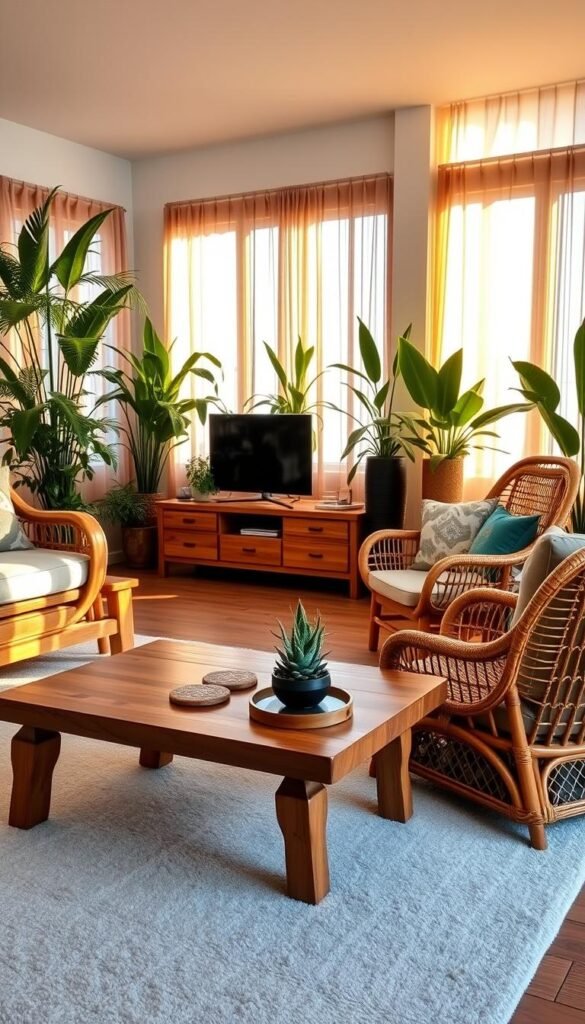
A little wood grain and living greenery can soften a room full of hard, smooth surfaces. Natural materials bring variation and warmth without requiring a full redesign or a dramatic new color scheme.
Wood with visible grain, woven materials, and greenery are three easy natural elements to work with. Rattan is one woven option; fresh flowers or a houseplant can add a living detail. Choose pieces that suit how much care you want to give them.
- Wood with visible grain, in lighter oak or darker walnut.
- Woven materials such as rattan.
- Greenery or fresh flowers suited to the room.
Lighter oak can keep a piece visually airy, while darker walnut often has more visual weight. That difference can help you decide whether a wood finish should blend into the room or stand out as a strong detail.
A tall floor plant can fill an empty corner, while smaller plants can sit on shelves. Look at the available light before choosing a plant, since a bright window and a dim interior spot do not suit the same needs.
Fresh flowers can bring a short-lived change in color and form without adding another permanent item. If you prefer longer-lasting greenery, choose a plant based on your care habits as well as its appearance. A demanding plant may become one more household task instead of an easy source of life.
Natural finishes also vary in tone and texture, so they can add character without relying on a strong pattern. A woven basket, a grainy wood surface, or a leafy shape can each introduce a softer note. Check the light near a plant’s intended spot before bringing it home.
Style the Coffee Table With Intent
A coffee table works best when you can still set down a mug after you finish styling it. Keep the useful surface in mind as you choose a table and arrange a few objects.
A coffee table’s length can be about two-thirds the length of the sofa. This guideline compares table length with sofa length, not sofa width against a wall. A shorter table may leave more floor open, while a longer one can serve more seats.
One practical arrangement uses a short stack of books, a small vase, and a candle. Keep a clear space for drinks and remotes so the centerpiece does not take over. A tray can group small items, but it should not make the whole surface feel unavailable.
The 3-5-7 styling rule groups decor in odd numbers of three, five, or seven to create visual balance and interest. It is a flexible guide, not a requirement to fill every surface. Three pillows can suit a sofa, while five can work for a sectional or larger seating arrangement.
Varying height can make a small grouping feel more natural. A low stack of books, a vase, and a candle already give the eye different shapes, so you do not need a tall tower of accessories. Keep the arrangement easy to move when you want the table clear.
Choose a finish that works with the rest of the room, while keeping daily use in mind. A glass top can feel visually light, while a wood surface may bring a more solid note. For more ways to balance usefulness and display, see coffee table styling ideas. Keep the tallest centerpiece low enough that people can see each other across the seating group.
Give the Walls a Personal, Finished Look
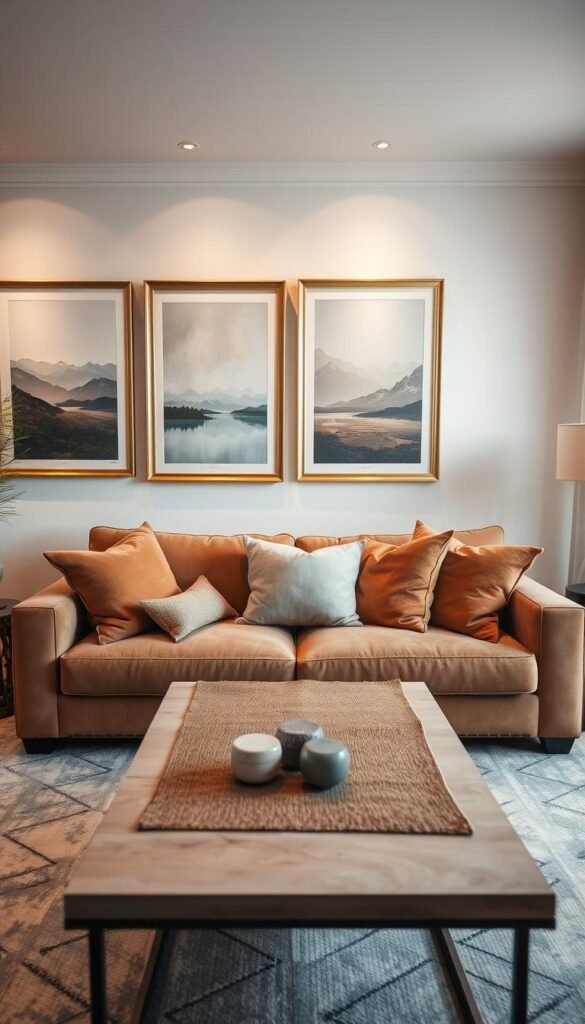
A bare wall can make an otherwise comfortable room feel unfinished, but it does not need to be covered edge to edge. A single considered choice can give your living room character without crowding the floor.
One substantial piece of artwork can create a focal point while using no floor space. A gallery wall can show work in varied sizes and include personal finds, as long as the arrangement feels connected rather than scattered.
- One oversized artwork for a clear focal point.
- A curated gallery wall with varied sizes and personal finds.
- Wallpaper that brings pattern or texture.
- A painted or limewashed accent wall.
For practical cozy living room wall decor, group framed art above the sofa and repeat one palette color in the frames or artwork. The repetition helps the pieces feel related, even when their subjects or sizes differ.
A gallery wall can combine family photographs, prints, and a small keepsake. Avoid placing every small artwork at unrelated heights, which can make the display feel unplanned. A shared edge or measured gap can help separate pieces look intentional.
Wallpaper can add pattern across a larger area, while a painted or limewashed accent changes the wall’s tone or surface. Choose a treatment that suits the room’s existing furniture instead of adding detail simply because a wall is empty.
Some walls need only one piece, while a larger wall can support a more varied arrangement. The right amount depends on the scale of the wall and the furniture beneath it. For more living room wall designs, consider how artwork and finishes relate to the rest of your decor. Lay out a gallery arrangement on the floor before putting holes in the wall.
Make the TV Area Feel Like Part of the Design
A television can belong in a cozy room without becoming the only thing your eyes notice. An intentional placement lets the screen serve movie nights while the rest of the living room still feels considered.
Most television screens use a 16:9 aspect ratio, and screen size is measured diagonally. The shape and diagonal measurement affect how a screen fits above a console or on a wall. Consider both the screen and the furniture beneath it before choosing a position.
| Placement | Advantage | Design caution |
|---|---|---|
| Wall-mounted | Frees console surface | Manage visible cables |
| On a media console | Offers a stable surface and storage | Avoid a console that crowds the walkway |
| Above a fireplace | Combines two focal points | Check that the screen is not uncomfortably high |
A wall-mounted screen can keep the console surface free, while a media console can provide storage and a stable base. Either setup works best when its furniture fits the route through the room and leaves space to move around the seating area.
Above a fireplace, the television shares attention with another focal point. Check the viewing position from the seat you use most, since a screen that looks balanced on the wall may feel too high when you watch it.
When the screen is off, it can become a dark rectangle that draws the eye. A low-glare arrangement can limit distracting reflections, and turning the screen off when it is not in use helps it recede. Avoid surrounding it with competing decor that demands attention.
Keep the nearby furniture simple enough to make the television feel integrated, not hidden behind a display. Sit in your usual viewing seat and check the screen height before finalizing its position.
Hide Clutter With Storage That Works Hard
Clutter is easier to manage when everyday items have a convenient place to go. Useful storage can keep a living room comfortable without turning it into a row of boxes and cabinets.
Measure a storage piece’s footprint and check door or drawer clearance before buying it. A cabinet that blocks a walkway or cannot open fully creates a new problem instead of solving one. Check how the furniture fits in the room you have.
Choose furniture with a second job
A storage ottoman can act as a footrest and hold blankets when you are not using them. It gives one piece two everyday roles, especially when the room has limited floor space. Choose an opening style that you can use without shifting nearby furniture.
A slim console can use a narrow strip of wall, while a bookcase draws storage upward. A closed cabinet can hide belongings that make surfaces look busy. Pick a form that fits the room’s use instead of filling every empty area.
Use shelves and cabinets to clear surfaces
Open shelves suit objects you want to see, such as books or a few collected pieces. Closed storage works better for items that create visual noise when left out. Decide which belongings deserve display before choosing how much open shelving you need.
- Use a slim console where a deeper cabinet would crowd the room.
- Choose a bookcase to use vertical space.
- Keep frequently used items in easy-to-open storage.
- Reserve closed cabinets for belongings that make surfaces feel busy.
Think through daily routines as you plan storage. A remote placed in a cabinet may be out of sight but inconvenient, while seasonal items can live higher or behind a door. Keep the items you use daily within reach and reserve higher or closed storage for occasional-use belongings.
Create a Focal Point Around a Fireplace or Art
A fireplace can anchor a seating arrangement, but it is not the only way to give the room a natural center. A clear focal point helps you decide where the seats should face and what deserves attention.
A fireplace can serve as the room’s focal point, while an electric stove is one alternative when a traditional fireplace is absent. Neither is necessary for a welcoming atmosphere; the room can center on another feature you enjoy.
A fireplace surround can feel softer when its material suits the character of the room. One example uses unglazed zellige tiles measuring 8 by 8 inches. That specific size and finish are an option, not a required specification for every fireplace.
Tile can add surface variation, while a quieter material may let the fireplace shape stand out. Consider the surround in relation to the room’s other finishes. A strong pattern can bring character, but it should not compete with every nearby surface.
If you do not have a fireplace, center the seating around a large artwork, built-in shelves, or an electric stove. The feature can be architectural, decorative, or useful. Choose what feels natural in your home rather than adding a faux focal point to meet a rule.
An electric stove can introduce the look and presence of a hearth without a traditional fireplace. It is an alternative, not a requirement for cozy living. A large piece of art or built-in shelves can create a center just as effectively when they suit the room.
Choose one main focal point so the room feels composed instead of competing for attention.
Once you decide on the center, let the seating and nearby details support it. Choose one main focal point so the room feels composed instead of competing for attention.
Make the Decor Tell Your Story
The details that make a room feel like yours are often the ones connected to people, places, or memories. Personal objects give a cozy living room aesthetic more meaning than a copied arrangement alone.
Books, photographs, collected ceramics, and travel mementos can create a lived-in display. Each item can prompt a memory or conversation, while its shape and color contribute to the room’s design.
| Personal object | Connection it can show | Display approach |
|---|---|---|
| Books | Interests and favorite subjects | Group by size or topic |
| Framed photographs | People and shared memories | Place near everyday seating |
| Travel objects | Places and experiences | Show a few meaningful finds |
A distinctive piece of furniture can tell a story too. Dutch designer Jan Van Grunsven designed a scissor chair in 1959, offering one example of midcentury furniture with a design history. A piece with a story can become a natural point of interest without dominating the room.
Pinterest boards can help you gather cozy living room inspiration and compare ideas, but your own keepsakes make the finished room personal. Modern cozy living room inspiration can pair clean-lined furniture with soft textiles and meaningful objects instead of relying on one period or style.
Keep displays selective so each object has a little room around it. A few ceramics collected over time can feel more personal than a shelf filled simply to look complete. Let pieces relate through color, material, or a shared memory when that feels right.
You can mix family objects with newer pieces without making the room feel mismatched. The balance comes from choosing items that matter to you and giving them space to be noticed. Leave a little open shelf or tabletop space so a collection can grow without becoming clutter.
Make a Small Space Feel Airy Without Losing Warmth
A small, cozy living room can feel more spacious when you guide light and sightlines instead of filling every corner. Open views make a compact room easier to read while keeping it welcoming.
A mirror opposite or beside a window can spread daylight around the room. Choose a reflection that shows something pleasant, such as a window view or a favorite feature, rather than a cluttered corner.
Reflect light with mirrors and lighter finishes
Reflective finishes can make furniture seem visually lighter, especially when a room has few sources of daylight. A mirror can bounce light across the space, while a lighter finish may help a large surface feel less heavy.
Place the mirror with care. A useful reflection can widen the room’s sense of depth, but one aimed at a crowded corner simply repeats the clutter. Check what the glass will show from the sofa before settling on a position.
Protect sightlines with low-profile pieces
Low-profile seating can preserve views across a compact room. A lower back lets your eye travel farther than a tall piece that cuts across the view. This can help the room feel connected instead of divided into blocked sections.
Curtains hung close to the ceiling can draw the eye upward and add perceived height. A tall plant can offer another vertical line in a corner, provided it does not block a window or a route through the room.
Keep the floor and walls from feeling crowded by choosing only the pieces that support how you use the space. Light finishes and open sightlines can make a small room feel airy without removing every soft or personal detail.
For more small-space living room ideas, consider how each piece affects the view across the room. Before adding another piece, remove one item that blocks a window, doorway, or clear view across the room.
Make One Comfort-First Change This Week
You can make a room feel more welcoming without changing everything at once. Small adjustments can improve comfort when they fit the way you actually use the living room.
Choose one manageable change, such as adjusting a lamp, editing a crowded surface, or adding a soft layer. Comfort comes from choices that work together, not from buying a full matching set or copying a complete room.
Notice what bothers you during an ordinary evening. Maybe a seat feels too dim for reading, or a busy surface makes it hard to relax. Start there, then give the adjustment time to become part of your routine.
Pick one change you can make this week, then live with it before deciding what the room needs next.