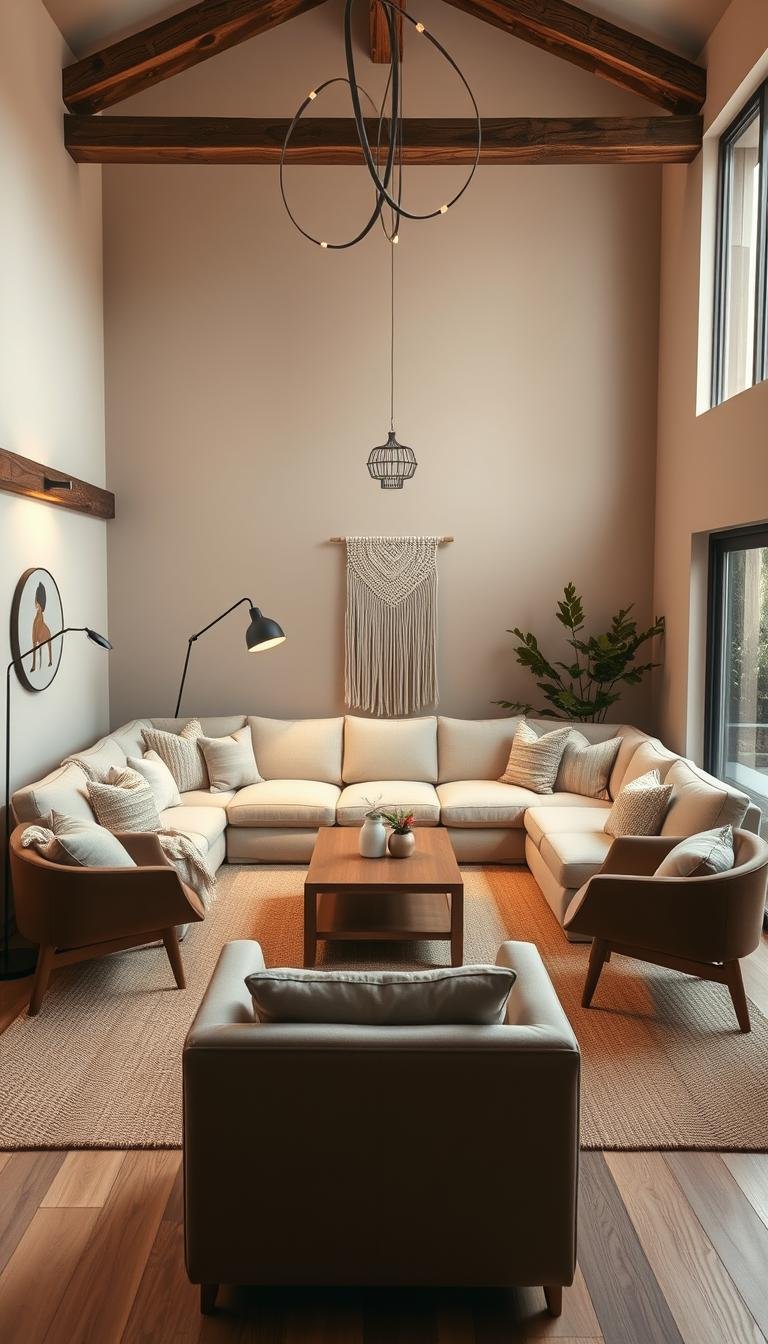
Have you ever walked into a space that just feels right? A place where you instantly relax and feel at home? That’s the magic of a well-designed neutral environment. These calming spaces create the perfect backdrop for your life and style.
This warm, earthy tone works beautifully in gathering areas. It creates a soothing atmosphere that welcomes everyone. The color’s flexibility means it complements any style you love.
You can build your entire design around this versatile foundation. It allows your personality to shine through carefully chosen accents and furniture pieces. The result is a space that feels both current and timeless.
Discover how this approach can transform your home into a sanctuary of style and comfort. Learn why designers are embracing these tones for their ability to create luxurious, serene environments that stand the test of time.
Why Beige is Your Secret Weapon for a Sophisticated Living Room
The most sophisticated interiors often hide their secret weapon in plain sight. This versatile hue creates harmony rather than competition in your space.
Many people misunderstand this tone as boring or safe. In reality, it offers incredible flexibility for personal expression. Your favorite pieces stand out against this peaceful backdrop.
Design professionals cherish this color for its chameleon-like qualities. It adapts to whatever style you love most. The result feels both luxurious and completely welcoming.
Today’s designers approach this palette through a wellness perspective. They use it to create calming environments that reduce stress. Your home becomes a sanctuary that promotes mental clarity.
This foundation works beautifully with artistic statements and sculptural elements. It lets your collection become the focal point. You can change accessories seasonally without redoing the entire space.
| Style Type | Beige’s Role | Best Pairings |
|---|---|---|
| Minimalist | Creates warm simplicity | Clean lines, single accent color |
| Traditional | Adds cozy elegance | Rich woods, classic patterns |
| Contemporary | Provides soft contrast | Metallic accents, bold artwork |
| Eclectic | Unifies diverse elements | Mixed textures, global influences |
This timeless approach means your interior won’t feel dated next year. You can refresh with new pillows or art while keeping the foundation. It’s the smartest investment for long-term satisfaction.
Your space becomes a canvas that grows with your evolving taste. The neutral living environment supports rather than dictates your choices. That’s true sophistication made simple.
Mastering the Art of the Tonal Beige Palette
What separates ordinary spaces from extraordinary ones is often the skillful use of a tonal palette. This approach creates depth and visual interest without relying on bold colors. You build a sophisticated foundation that grows with your style.
The easiest way to achieve this look involves using at least three different tones. Think light walls, medium textiles, and darker accents. This creates a soft, neutral backdrop that feels both current and timeless.
Choosing Warm, Cool, and Neutral Beige Tones
Understanding undertones transforms your space. Warm variations contain yellow or pink hints. They create cozy, inviting atmospheres perfect for gathering areas.
Cooler options have gray or green undertones. These work beautifully in sun-filled spaces. They provide a crisp, airy feeling that enhances natural light.
Neutral tones strike the perfect balance between warm and cool. They adapt to any lighting condition. Benjamin Moore’s Swiss Coffee exemplifies this versatile approach.
Your room’s natural light guides your choices. North-facing spaces benefit from warmer tones. South-facing areas can handle cooler variations beautifully.
Mix different undertones for balanced sophistication. Pair warm furnishings with cool wall colors. This creates dynamic contrast while maintaining harmony.
Layering Light, Medium, and Dark Shades
Start with lighter shades on your walls and ceiling. This opens up the space and reflects light. Pale wood flooring continues this airy foundation.
Introduce medium tones through area rugs and larger furnishings. These elements anchor the space visually. They create warmth without overwhelming the senses.
Add darker accents through decor and smaller pieces. Think throw pillows, artwork frames, and decorative objects. These provide contrast and visual depth.
Materials play a crucial role in this layering. Combine oak surfaces with linen textiles and metallic elements. Raw clay and aged brass add organic texture.
The result feels cohesive yet dynamic. Your space avoids flat or monotonous results. Instead, it offers rich, textured environments that welcome and inspire.
Modern Beige Living Room Ideas for Neutral Sophistication
What if your gathering area could feel both sophisticated and completely welcoming? This balance defines today’s most successful interior schemes. The right approach transforms neutral foundations into dynamic, personal spaces.
Many people mistakenly believe subtle color palettes lack personality. In reality, they provide the perfect canvas for self-expression. Your unique style shines through carefully chosen elements against this peaceful backdrop.
Contemporary design principles work beautifully with these tones. Clean lines and minimalist furniture create visual clarity. Strategic negative space allows each piece to breathe and stand out.
The concept of “quiet luxury” emerges through quality materials and craftsmanship. Instead of bold statements, you emphasize texture and detail. This approach values enduring quality over fleeting trends.
Your space can feel both current and timeless simultaneously. The neutral foundation accommodates seasonal changes effortlessly. You can refresh with new accessories while maintaining core elegance.
Sophistication and comfort coexist beautifully in these environments. Plush textiles and ergonomic furniture ensure livability. The result feels luxurious yet completely approachable.
Even smaller areas can feel expansive with smart design techniques. Light-reflective surfaces and strategic mirror placement enhance spaciousness. The monochromatic scheme creates visual continuity that expands perceived boundaries.
Architectural details and artwork become focal points against this backdrop. Statement furniture pieces command attention without competition. Your favorite collections receive the spotlight they deserve.
| Design Approach | Key Elements | Visual Impact | Practical Benefits |
|---|---|---|---|
| Minimalist Foundation | Clean lines, uncluttered spaces | Creates calm, orderly environment | Easy to maintain, adapts to changes |
| Textural Contrast | Mixed materials, varied surfaces | Adds depth and visual interest | Enhances tactile experience |
| Strategic Lighting | Layered illumination, focal points | Highlights architecture and decor | Improves functionality and mood |
| Adaptable Color Scheme | Tonal variations, accent colors | Creates cohesive yet dynamic look | Allows seasonal refreshes easily |
These techniques demonstrate how neutral environments offer incredible versatility. They support rather than limit your creative expression. Your space becomes a reflection of your evolving taste and lifestyle.
The true power of this approach lies in its adaptability. It grows with you through life changes and style evolution. This makes it one of the smartest long-term design investments available today.
Softening Modern Architecture with Curves and Texture
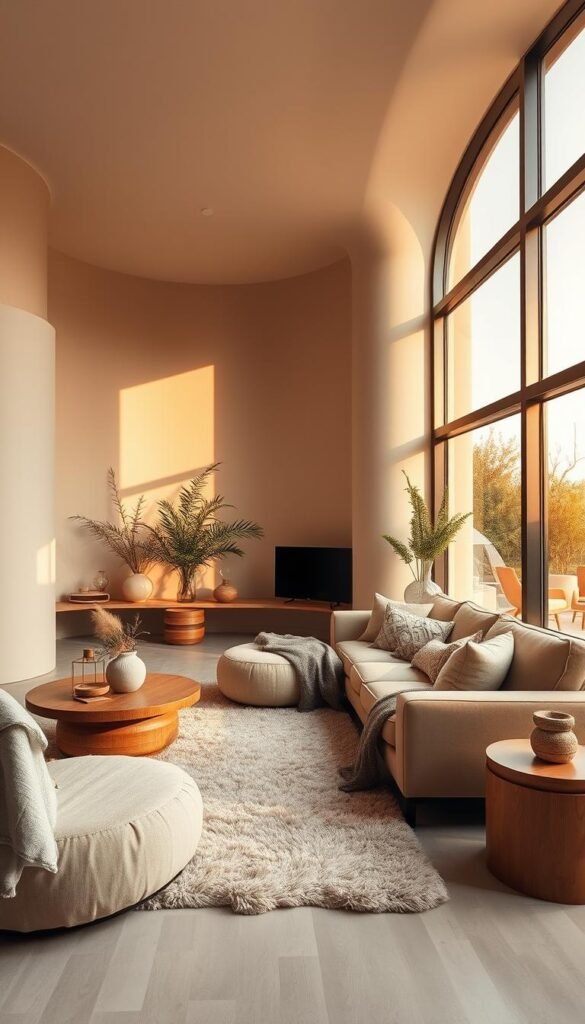
Have you noticed how some spaces feel both structured and wonderfully soft? This balance comes from thoughtful design choices that embrace comfort alongside clean lines. Your home can achieve this perfect harmony with intentional selections.
Many contemporary houses feature strong architectural elements. These can include sharp angles and straight edges throughout the space. The right design approach transforms these features into assets rather than limitations.
Incorporating Soft Furnishings like Velvet and Wool
Textiles play a crucial role in creating comfort. Plush materials like velvet bring instant luxury to any area. Wool throws and cushions add natural warmth during cooler months.
These elements introduce tactile variety against smoother surfaces. They make your environment more inviting through touch and visual appeal. Your selections should prioritize both quality and sensory experience.
Layer different fabrics for depth and interest. Combine chunky knits with smooth linens for contrast. This approach prevents monotony while maintaining cohesion.
Selecting Curved Furniture Silhouettes
Furniture shapes significantly impact how a room feels. Rounded forms create visual flow and movement. They guide the eye gently around the space without abrupt stops.
Consider pieces with organic contours and soft edges. These designs feel more approachable and comfortable. They provide excellent contrast to architectural straight lines.
Look for sofas with rounded arms and circular tables. These elements introduce feminine touches without sacrificing style. They make your layout feel more dynamic and interesting.
Your furniture choices should complement existing architecture. Select pieces that echo rather than fight your room’s features. The result feels intentional and perfectly balanced.
Grounding Your Space with the Perfect Beige Sofa
Imagine walking into your home and immediately feeling a sense of calm and balance. That’s the power of choosing the right centerpiece for your gathering area. A well-selected sofa sets the tone for your entire space.
Beige upholstery has remained popular for good reason. It offers the perfect balance between light and dark tones. This versatile choice works with any style you love.
Why does this color work so well? It’s more durable than white options. It feels less heavy than darker shades. Most importantly, it creates a timeless foundation.
Your sofa becomes the anchor that holds your design together. It allows other elements to shine without competition. You can change accessories seasonally while keeping your core piece.
Choosing the perfect shade depends on several factors:
- Room lighting: North-facing spaces need warmer tones
- Existing colors: Match undertones with your current palette
- Desired atmosphere: Warm for cozy, cool for crisp feelings
Three main categories help guide your selection:
- Warm beige (almond tones) – creates inviting, sunny spaces
- Cool beige (greige tones) – offers modern, airy sophistication
- Earthy beige (flax tones) – brings natural, organic warmth
Iconic designs like the West Elm Mella Sofa demonstrate this concept beautifully. Their Performance Velvet in Clay shade shows how texture enhances neutral tones. These pieces combine style with practical durability.
The right neutral sofa isn’t a default choice—it’s a design decision that offers lasting flexibility and style.
Styling your centerpiece involves strategic layering. Add throw pillows in complementary textures. Incorporate blankets that invite relaxation. Choose coffee tables that balance the softness.
This approach lets your personality shine through accessories. You can experiment with bold colors in small doses. The foundation remains constant through changing trends.
Your space becomes adaptable to life’s evolution. Children, pets, and daily living won’t diminish its beauty. Quality materials ensure years of enjoyment and comfort.
Ultimately, the perfect sofa creates harmony in your home. It welcomes guests with open arms. It provides your family with comfort and style.
Transforming Walls with Texture and Lime Wash Finishes

Have you considered what happens when walls become more than just flat surfaces? They transform into dynamic elements that add character and depth to your space. Textured treatments create movement and visual interest without overwhelming your senses.
Lime wash finishes have gained significant popularity for their organic beauty. These natural coatings create subtle variations that change throughout the day. Your walls become living surfaces that respond to light and shadow.
Different wall treatments offer unique aesthetic effects. Venetian plaster provides polished sophistication. Textured paneling adds dimensional interest. Each finish interacts differently with your chosen color.
These techniques work particularly well with neutral tones. They create depth without introducing additional colors. Your room maintains its peaceful atmosphere while gaining visual richness.
Architectural details naturally stand out against textured backgrounds. Crown molding and built-in shelving become focal points. Artwork appears more vibrant against these dimensional surfaces.
| Wall Finish Type | Visual Effect | Light Interaction | Room Style Match |
|---|---|---|---|
| Lime Wash | Soft, mottled appearance | Creates subtle shadow play | Organic, rustic, or Mediterranean |
| Venetian Plaster | Polished, marble-like finish | Reflects light beautifully | Formal, elegant, or traditional |
| Textured Paneling | Adds dimensional patterns | Creates interesting shadows | Contemporary, coastal, or farmhouse |
| Smooth Finish | Clean, uniform appearance | Even light distribution | Minimalist, modern, or transitional |
Choose your wall treatment based on existing conditions. Consider your room’s natural light availability. Think about your overall design goals and personal style.
North-facing spaces benefit from finishes that enhance warmth. South-facing rooms can handle more dramatic textural effects. Each situation calls for different approaches.
Textured walls can reduce your need for additional decor. They serve as the primary design element themselves. This approach creates sophisticated simplicity throughout your space.
Experiment with sample patches before committing. Observe how different finishes look at various times of day. This ensures you’ll love the result for years to come.
Textured walls don’t just decorate a space—they give it soul and character that flat paint simply cannot achieve.
Your walls become the foundation for your entire design scheme. They provide the perfect backdrop for furniture and accessories. This approach creates harmony between all elements in your room.
Remember that quality installation makes all the difference. Professional applicators understand how materials behave. They can achieve the exact effect you desire.
These wall treatments offer lasting beauty and durability. They withstand the test of time both stylistically and physically. Your investment continues paying dividends for years.
Embrace the transformative power of textured finishes. They elevate your space from ordinary to extraordinary. Your walls become works of art that enhance daily living.
Creating Depth and Contrast with Rich Wood Accents
Have you ever noticed how wood brings warmth and character to a space? Rich timber elements create stunning visual contrast against soft neutral backgrounds. This combination adds sophistication while keeping your environment grounded and welcoming.
Beige tones beautifully highlight wood’s natural texture and grain patterns. They allow timber to become the star of your design. The pairing creates a balanced aesthetic that feels both elegant and organic.
Dark wood pieces stand out magnificently against lighter backgrounds. A walnut coffee table becomes an instant focal point. Oak shelving units add warmth without overwhelming your peaceful palette.
Consider these professional strategies for balancing materials:
- Use wood as both structural and decorative elements
- Mix light and dark timber varieties for visual interest
- Pair smooth surfaces with textured wood finishes
- Balance wood tones with complementary textiles
Different wood types create unique effects with your color scheme. Light ash and birch maintain an airy, open feeling. Rich mahogany and ebony add drama and depth to your arrangement.
Wood accents develop beautiful patina over time. They gain character that enhances your overall design. This natural aging process adds unique charm to your interior.
Architectural wood elements make powerful statements. Exposed beams create striking visual lines. Wooden columns add structural interest while blending seamlessly with your palette.
Your furnishings benefit from this harmonious combination. Wood frames on upholstered pieces create definition. Natural timber side tables complement softer textile elements perfectly.
The marriage of wood and neutral tones creates environments that feel both refined and utterly comfortable—a combination that stands the test of time.
Remember to consider scale when incorporating wood elements. Larger rooms can handle substantial timber pieces. Smaller spaces benefit from slender wood accents that don’t overwhelm.
This approach creates a layered, sophisticated look that reveals its complexity gradually. Your space becomes more interesting the longer you experience it. That’s the magic of combining natural materials with thoughtful design.
Harnessing Natural Light to Elevate Your Beige Tones
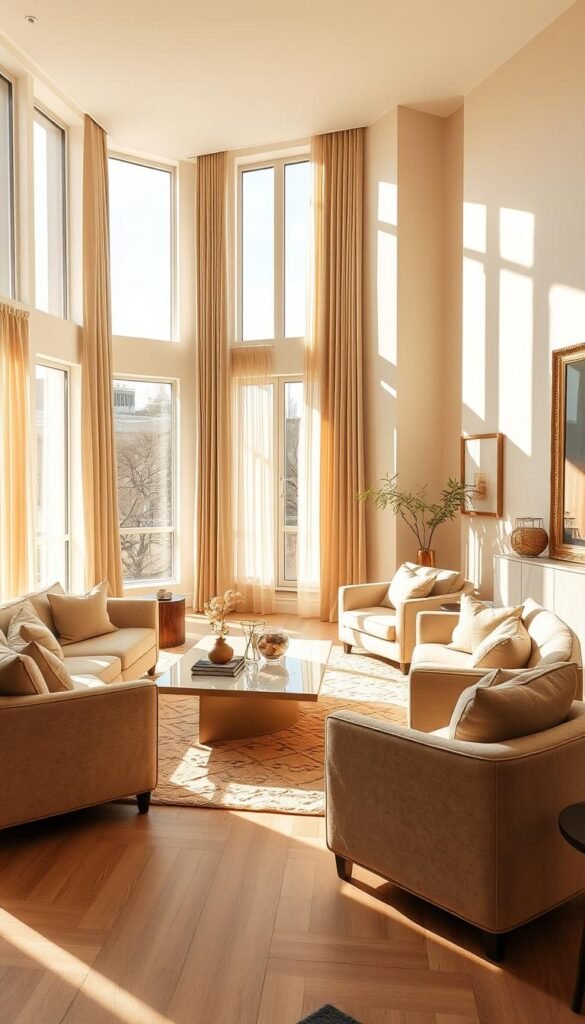
Have you ever watched sunlight dance across your walls throughout the day? This daily transformation creates dynamic environments that change with sunlight’s movement. Your space becomes a living canvas that evolves from morning to evening.
Natural illumination works magic with subtle color schemes. It reveals depth and dimension that artificial lighting cannot duplicate. The right shade amplifies this effect beautifully.
Benjamin Moore’s Swiss Coffee demonstrates this perfection. It captures light through arched windows and highlights architectural details. This specific tone creates warm, inviting atmospheres at all hours.
Sheer curtains filter harsh sunlight while enhancing softness. They distribute illumination evenly throughout your area. This technique brings the entire environment to life.
Why choose these hues for sun-filled areas? They offer warmth without overwhelming intensity. They provide better light reflection than darker colors. Your space feels more expansive and airy naturally.
| Room Orientation | Recommended Beige Tone | Light Interaction | Resulting Atmosphere |
|---|---|---|---|
| North-Facing | Warm undertones (yellow/peach) | Enhances limited natural light | Cozy, intimate feeling |
| South-Facing | Cool undertones (gray/green) | Balances abundant sunlight | Crisp, airy sophistication |
| East-Facing | Neutral balanced tones | Softens morning glare | Gentle morning warmth |
| West-Facing | Medium warmth tones | Complements evening glow | Dramatic sunset effects |
Strategic mirror placement maximizes light distribution. Position them opposite windows to bounce illumination deeper into your space. This creates brighter, more open-feeling environments.
Reflective surfaces enhance this effect further. Glass tables, metallic accents, and glossy finishes all contribute. They work together to amplify natural brightness.
Architectural features deserve special attention. Light naturally highlights moldings, built-ins, and unique wall treatments. Your design elements gain prominence through sunlight’s emphasis.
Artwork and textural pieces benefit tremendously. Sunlight reveals brushstrokes on paintings and weave patterns in textiles. These details become more noticeable and appreciated.
The right neutral shade doesn’t just cover walls—it collaborates with sunlight to create living, breathing spaces that change character throughout the day.
Consider your daily light patterns when choosing finishes. Observe how sunlight moves through your space during different seasons. This ensures year-round satisfaction with your selections.
Your environment becomes more adaptable and interesting. Natural illumination provides free mood lighting that changes constantly. You enjoy new perspectives with each passing hour.
Embrace sunlight as your design partner. Let it enhance your chosen palette and highlight your favorite elements. The result feels both intentional and magically organic.
Using Art and Sculptural Objects as Focal Points
Have you ever wondered how museums make every piece feel important? They use simple backgrounds that let artwork shine. Your home can achieve the same magical effect with thoughtful placement.
The right backdrop makes your favorite pieces stand out beautifully. Neutral tones create perfect galleries for personal collections. Your treasures become the stars they deserve to be.
White walls can feel cold and institutional sometimes. Warmer backgrounds add comfort while still highlighting art. This approach creates welcoming galleries that feel like home.
Choose one spectacular piece as your starting point. Build your entire design around this focal element. The result feels intentional and beautifully balanced.
Consider these professional techniques for showcasing art:
- Position statement pieces at eye level for immediate impact
- Use lighting to emphasize texture and detail
- Create breathing space around important works
- Group smaller pieces for collective impact
Sculptural objects gain presence against simple backgrounds. Handcrafted bowls and unique stools become conversation starters. Their natural materials complement earthy tones perfectly.
Metallic accents add wonderful contrast and shine. Bronze sculptures catch light beautifully throughout the day. Stone elements bring organic texture to your arrangement.
The most successful interiors don’t shout—they provide a graceful stage for life’s beautiful moments and cherished objects.
Your space becomes a personal museum of meaningful pieces. Each item tells its story without visual competition. The overall effect feels both curated and completely comfortable.
Remember that scale matters when positioning art. Larger rooms can handle bigger statement pieces. Smaller areas benefit from carefully chosen accents.
This approach creates depth and personality throughout your home. Your environment reflects your unique taste and experiences. That’s true design magic made simple.
Balancing Glamour with Earthy, Calming Beige Elements
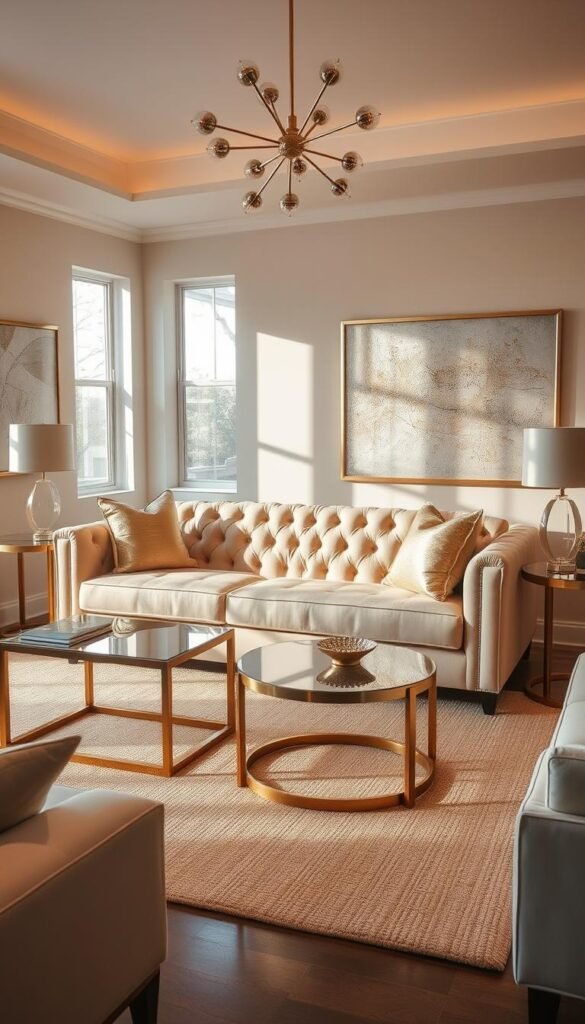
What if your space could feel both glamorous and completely grounded? This beautiful balance creates environments that sparkle with sophistication while remaining utterly welcoming. The secret lies in combining luxurious elements with earthy foundations.
Your room becomes a sanctuary where indulgence meets comfort. You enjoy visual richness without sacrificing daily livability. This approach transforms ordinary areas into extraordinary personal retreats.
Mixing Metals and Dramatic Lighting
Metallic accents add instant glamour to your foundation. Bronze, brass, and chrome create beautiful contrast against soft backgrounds. These elements catch light beautifully throughout the day.
Choose fixtures that make artistic statements. A dramatic chandelier becomes a sculptural centerpiece. Table lamps with metallic bases provide both function and beauty.
Layer different metal finishes for depth. Mix bronze candle holders with chrome picture frames. This creates visual interest without overwhelming your peaceful palette.
Your lighting choices significantly impact the mood. Dimmable fixtures allow adjustment from bright to intimate. This flexibility supports different activities throughout your day.
Natural illumination enhances metallic elements. Sunlight highlights texture and creates dynamic reflections. Evening lighting creates cozy pools of warmth.
Consider these professional techniques for metal mixing:
- Choose one dominant metal finish for consistency
- Add secondary metals as accent pieces
- Balance shiny and matte finishes for variety
- Repeat metal tones in different scales throughout
Your fixtures should complement rather than compete. They enhance your overall design scheme beautifully. The result feels both curated and completely comfortable.
Dramatic lighting becomes artwork against neutral walls. It draws attention without overwhelming other elements. Your space maintains harmony while making stylish statements.
This approach creates environments that feel special yet livable. You enjoy glamorous touches without impracticality. Your home becomes a true reflection of sophisticated taste.
The most successful spaces balance indulgence with comfort—creating environments that feel both luxurious and completely welcoming.
Remember that scale matters with metallic elements. Larger rooms can handle substantial metal pieces. Smaller areas benefit from delicate metallic accents.
Your color foundation allows metals to shine beautifully. The neutral backdrop highlights their unique qualities. This partnership creates depth and visual interest.
Embrace metallic elements as finishing touches. They add polish and sophistication to your design. The result feels both intentional and magically organic.
Warming Up Cool Neutrals with Beige Touches
Have you ever felt a gray room could use just a bit more warmth? That’s where beige comes to the rescue. These two colors create magic together despite their temperature differences.
Gray and beige share similar intensity levels. One brings cool sophistication while the other offers warm comfort. Together they form a balanced partnership that feels both stylish and welcoming.
Why do these tones work so well? They complement rather than compete with each other. Gray provides structure while beige adds softness. The combination creates visual interest without overwhelming your senses.
Your space gains depth through this clever pairing. A light gray rug anchors beige furniture beautifully. Darker gray frames highlight beige wall tones perfectly.
Color theory explains this successful partnership. Warm and cool neutrals balance each other naturally. They create environments that feel both current and timeless.
Introduce beige elements through thoughtful layers. Textiles like throw pillows add instant warmth. Wooden accessories bring organic texture to gray foundations.
Wall treatments offer another integration method. Beige accent walls soften gray-dominated spaces. This approach creates focal points that draw the eye gently.
Your room benefits from this harmonious balance. Gray provides the crispness some schemes need. Beige introduces the humanity that makes spaces livable.
The most inviting interiors often combine warm and cool elements—creating spaces that feel both refined and completely comfortable.
Professional designers use specific proportion techniques. They recommend 70% gray with 30% beige accents. This ratio maintains harmony while adding warmth.
Your color scheme becomes more adaptable with this approach. You can emphasize either tone seasonally. The foundation remains constant through changing preferences.
Remember that lighting affects this combination. Natural light reveals the beautiful interplay between tones. Artificial lighting can enhance specific elements intentionally.
This partnership transforms potentially cold environments. Gray rooms gain warmth and personality. Beige spaces receive structure and definition.
Your home becomes a testament to balanced design. You enjoy sophistication without sterility. Comfort meets style in perfect harmony.
Incorporating Natural Materials for Organic Appeal
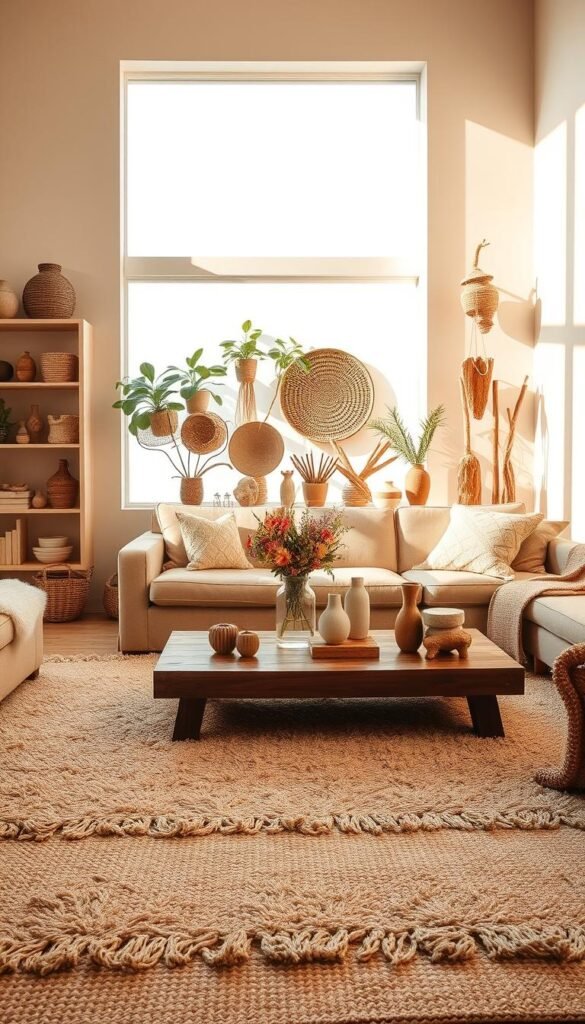
What if your home could feel both elegant and completely connected to nature? Natural materials bring that authentic warmth and texture that manufactured items simply cannot replicate. They create spaces that feel grounded and genuinely welcoming.
Your foundation works beautifully with organic elements. It enhances rather than competes with their inherent beauty. The result feels both sophisticated and completely authentic.
These elements introduce wonderful tactile variety. You experience different surfaces and temperatures throughout your space. This sensory richness makes your environment more engaging and comfortable.
Natural materials develop character over time. They gain patina that tells the story of your life together. This aging process adds unique charm that cannot be duplicated.
Pairing with Stone, Linen, and Leather
Stone elements bring solid, earthy presence to your arrangement. A marble coffee table becomes an instant focal point. Limestone fireplace surrounds add timeless elegance.
These materials work particularly well with warm undertones. They enhance the natural qualities of your color scheme. Your space feels more connected to the outdoors.
Linen textiles introduce casual sophistication beautifully. They offer breathability and comfortable softness. These fabrics work well in both formal and relaxed settings.
Natural fiber rugs anchor your space with organic texture. Jute and sisal options provide wonderful contrast against smooth floors. They define areas while maintaining visual flow.
Leather furnishings develop beautiful character over years. They soften and gain unique markings with use. This natural aging tells your family’s story beautifully.
Consider these professional balancing techniques:
- Mix smooth and textured surfaces for visual interest
- Vary material scales throughout your arrangement
- Repeat natural elements in different forms
- Allow breathing space between material groups
Your room benefits from this organic approach. It feels more authentic and personally meaningful. The environment becomes a true reflection of your values.
The most inviting spaces often feature natural materials—they bring authenticity and character that synthetic alternatives simply cannot match.
Remember that quality matters with organic elements. Invest in pieces that will age gracefully over time. Your selections should prioritize both beauty and durability.
This approach creates environments that feel both current and timeless. You enjoy sophisticated style with natural warmth. Your home becomes a sanctuary of authentic elegance.
Designing a Biophilic Sanctuary with Neutral Tones
Have you ever noticed how nature makes you feel instantly calm and centered? That peaceful feeling comes from our deep connection to the natural world. You can bring this serenity into your home through thoughtful design choices.
Your space becomes a true sanctuary when it embraces biophilic principles. These approaches connect you to nature through materials, light, and living elements. The result feels both beautiful and deeply restorative.
Soft color palettes create the perfect foundation for this approach. They promote visual rest and emotional ease throughout your environment. Scientific studies show these tones reduce stress and improve concentration.
Your interior benefits from this wellness-focused perspective. You create spaces that support both aesthetics and wellbeing. The combination makes your home truly special.
Adding Air-Purifying Plants for Vitality
Living greenery brings incredible vitality to any room. Plants purify air while adding natural beauty. They create that biophilic connection we all crave.
Choose varieties that thrive in your specific conditions. Consider light levels and humidity when selecting. Some options work better than others in different environments.
Position plants strategically throughout your space. Place larger specimens in empty corners. Use trailing varieties on shelves and mantels.
Even a single statement plant makes a dramatic difference. A fiddle leaf fig adds vertical interest. A mature monstera creates tropical vibes.
These living elements become integral parts of your design. They soften hard edges and add organic texture. Your space feels more alive and dynamic.
| Plant Type | Light Requirements | Air Purifying Qualities | Design Impact |
|---|---|---|---|
| Snake Plant | Low to bright indirect | Removes toxins, produces oxygen at night | Architectural vertical interest |
| Peace Lily | Medium to low light | Filters benzene, formaldehyde, trichloroethylene | Elegant white blooms, glossy foliage |
| Spider Plant | Bright indirect light | Removes carbon monoxide, xylene | Trailing habit perfect for shelves |
| Rubber Plant | Bright filtered light | Excellent formaldehyde removal | Large, glossy leaves make bold statement |
Care for your plants properly to maintain their beauty. Water according to each variety’s needs. Rotate pots regularly for even growth.
Group plants together for greater impact. Create mini ecosystems that support each other. This approach enhances humidity levels naturally.
Plants don’t just decorate a space—they breathe life into it, creating environments that nurture both people and planetary wellbeing.
Your room becomes a living, breathing sanctuary. You enjoy better air quality and natural beauty. The combination supports overall wellness beautifully.
Remember that plants need appropriate containers. Choose pots that complement your design scheme. Natural materials like terracotta enhance the organic feel.
This approach transforms your interior into a true oasis. You create spaces that feel both stylish and deeply restorative. That’s the power of biophilic design.
Strategic Lighting to Highlight Texture and Architecture
Have you considered how illumination transforms your environment after sunset? The right lighting plan brings your space to life in entirely new ways. It reveals textures and shapes that daytime light might miss.
Thoughtful illumination creates depth and dimension throughout your room. It highlights architectural details and showcases your favorite design elements. Your space becomes more interesting as evening falls.
Combining Ambient, Task, and Accent Lighting
Ambient lighting provides the overall glow in your area. Recessed fixtures create soft, even illumination from above. This foundation makes your room feel welcoming and comfortable.
Task lighting serves specific purposes throughout your space. Reading lamps illuminate your favorite chair perfectly. Kitchen counters benefit from under-cabinet fixtures.
Accent lighting adds drama and highlights special features. Directional spots emphasize artwork beautifully. Wall washers make textured surfaces come alive.
Layering these three types creates magical effects. Your environment adapts to different activities seamlessly. The combination makes your room both functional and beautiful.
| Lighting Type | Primary Function | Best Fixtures | Placement Strategy |
|---|---|---|---|
| Ambient | General illumination | Recessed lights, chandeliers | Even distribution throughout ceiling |
| Task | Specific activities | Floor lamps, desk lamps | Positioned where work occurs |
| Accent | Highlight features | Track lighting, spotlights | Focused on architectural elements |
Adjustable fixtures offer wonderful flexibility. You can change lighting patterns as needed. This adaptability supports different moods and occasions.
Dimmer switches provide excellent control over brightness. They let you create the perfect atmosphere for any time. Your lighting becomes as dynamic as your lifestyle.
Consider light temperature when selecting bulbs. Warmer tones create cozy, intimate feelings. Cooler options provide crisp, alert environments.
Your lighting plan should complement your color scheme. The right illumination enhances your chosen palette beautifully. It makes your space feel cohesive and intentional.
Great lighting design doesn’t just illuminate a space—it sculpts it, revealing textures and creating moods that transform ordinary rooms into extraordinary experiences.
Experiment with different lighting configurations. Notice how angles affect shadows and highlights. This exploration helps you discover perfect arrangements.
Your lighting choices should balance beauty and function. They must provide adequate illumination for tasks. They should also create the aesthetic you desire.
Remember that lighting affects how colors appear. Test your selections at different times of day. This ensures you’ll love the results around the clock.
Professional lighting designers often use this approach. They create layered plans that serve multiple purposes. You can achieve similar results with careful planning.
Your room becomes more versatile with smart lighting. It supports reading, entertaining, and relaxing equally well. This adaptability makes your space truly special.
Ensuring Your Neutral Room is Anything But Boring
Have you ever wondered how some spaces feel both peaceful and full of personality? The secret lies in mastering the art of contrast and texture. Your environment becomes a canvas where every element tells a story.
Many people worry that limited color means limited options. Actually, the opposite proves true. You gain incredible freedom to express yourself through materials and shapes.
Texture creates visual interest without adding competing colors. A chunky knit throw adds cozy dimension against smooth surfaces. Velvet pillows bring luxurious softness that invites touch.
Scale plays a crucial role in keeping things exciting. Oversized art makes a bold statement on subtle walls. A substantial coffee table anchors the space beautifully.
Silhouette adds another layer of sophistication. Curved furniture softens architectural lines. Angular pieces provide modern contrast against organic shapes.
Your accessories become the stars of the show. They let you refresh the look seasonally. You can swap elements without redoing the entire design.
The most interesting rooms often whisper rather than shout—they reveal their complexity through careful layering and thoughtful details.
Consider these professional techniques for adding depth:
- Mix matte and glossy finishes for light play
- Combine rough and smooth textures throughout
- Vary scale from large statements to small accents
- Layer patterns through textiles and artwork
Your space feels personally curated rather than designed by formula. Each choice reflects your unique taste and experiences. The result is an environment that truly feels like home.
Remember that simplicity and sophistication work beautifully together. They create rooms that are anything but boring. Your home becomes a testament to thoughtful design.
Your Serene and Adaptable Neutral Sanctuary Awaits
Imagine stepping into a home that truly reflects your personality while offering comfort and beauty. This is the magic of a well-designed space with foundational tones.
Your environment becomes a versatile canvas that adapts to changing needs and seasons. It serves multiple purposes—from family gatherings to personal retreats.
Discover how to transform your area into a sanctuary promoting relaxation and wellbeing. Thoughtful choices balance aesthetic appeal with practical functionality.
Explore long-term benefits of investing in a design that stands the test of time. Learn more about achieving this look with these neutral living room ideas.
Your peaceful haven awaits—a place that grows with your evolving style while providing endless comfort.