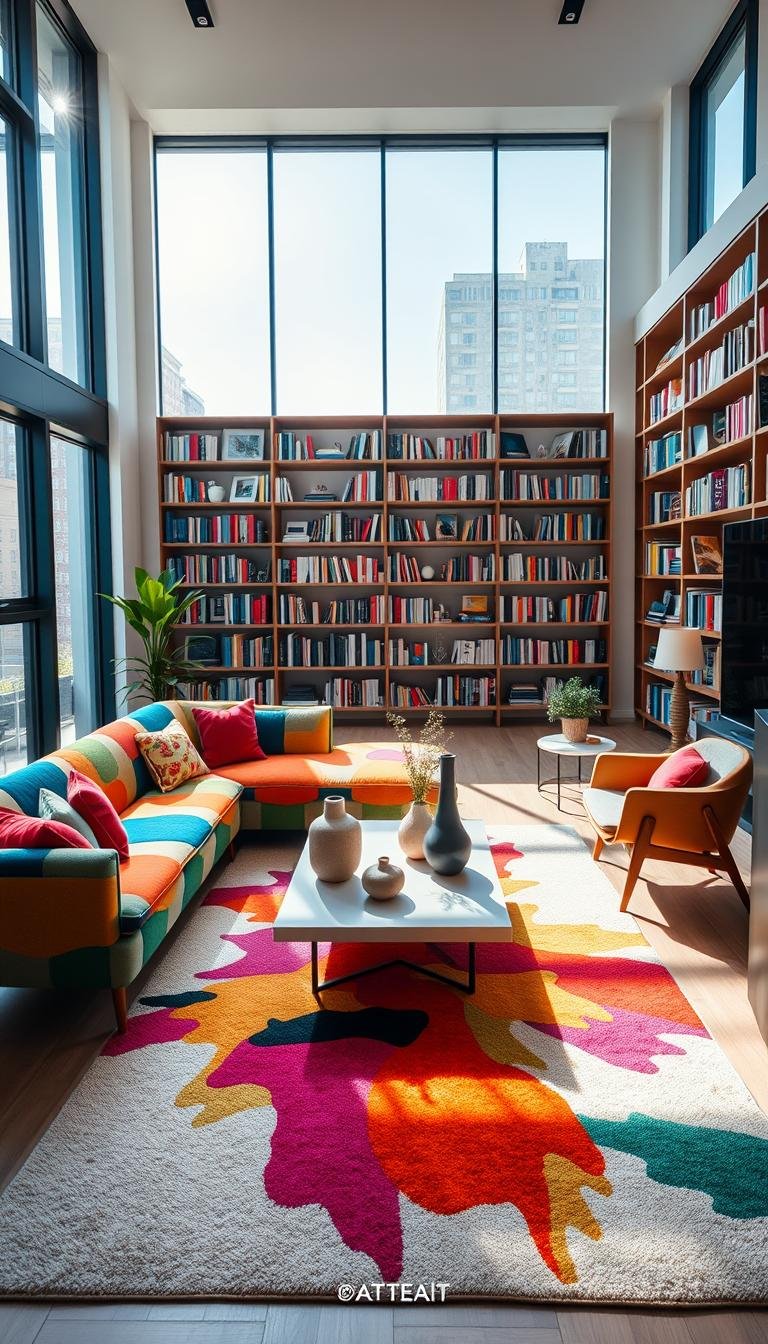
Welcome to your journey of creating a vibrant, personalized living room that reflects your creative spirit. Your home should be a true expression of who you are.
Discover how to transform your ordinary room into an extraordinary expression of your unique personality. This space can become your personal inspiration board.
Learn practical approaches to incorporating bold colors and innovative design elements. You can have both vibrant energy and contemporary style in your home.
These creative ideas will help you build a sanctuary that sparks daily joy. Your living area should feel both stylish and authentically you.
1. Find Inspiration in the World Around You
Finding design inspiration is about seeing the extraordinary in your everyday environment. Your creative journey begins when you start noticing the beauty in ordinary moments.
Designer Alexander Reid transformed a living room by drawing inspiration from its vaulted ceiling. The architectural feature reminded him of a birdhouse, leading to beautiful bird-themed wallpaper that enhanced the airy feel.
Look beyond traditional design magazines for fresh ideas. Your favorite coffee shop, local architecture, and nature walks can spark incredible design concepts.
Notice how colors change throughout the day and seasons. The morning light creates different moods than evening shadows. These observations can guide your color choices.
Create a mood board to capture inspiration. Use Pinterest, Instagram saves, or old-fashioned scrapbooking. This helps visualize your design direction.
Pay attention to how different spaces make you feel emotionally. Translate those feelings into your design choices for a more personal room.
Consider architectural elements as potential inspiration points. Like Alexander Reid’s ceiling, your space might have hidden design opportunities.
Document color combinations you love in nature, fashion, and urban environments. Keep photos or notes for reference during your design process.
Remember that inspiration can come from unexpected places. Keep an open mind and curious eye throughout your daily life.
| Inspiration Source | What to Look For | How to Apply to Your Space |
|---|---|---|
| Nature | Color combinations, textures, patterns | Incorporate natural colors, organic shapes |
| Architecture | Structural elements, lines, proportions | Highlight room features, choose complementary furniture |
| Art Galleries | Color palettes, composition, mood | Select artwork that sets your desired atmosphere |
| Urban Environments | Street art, building colors, public spaces | Bold accent colors, mixed materials |
| Everyday Spaces | Lighting changes, spatial feelings | Recreate comforting atmospheres, optimal lighting |
Your surroundings offer endless design possibilities. Train yourself to see the world through a designer’s eyes, and your living room will reflect your unique perspective.
2. Define Your Personal Color Palette
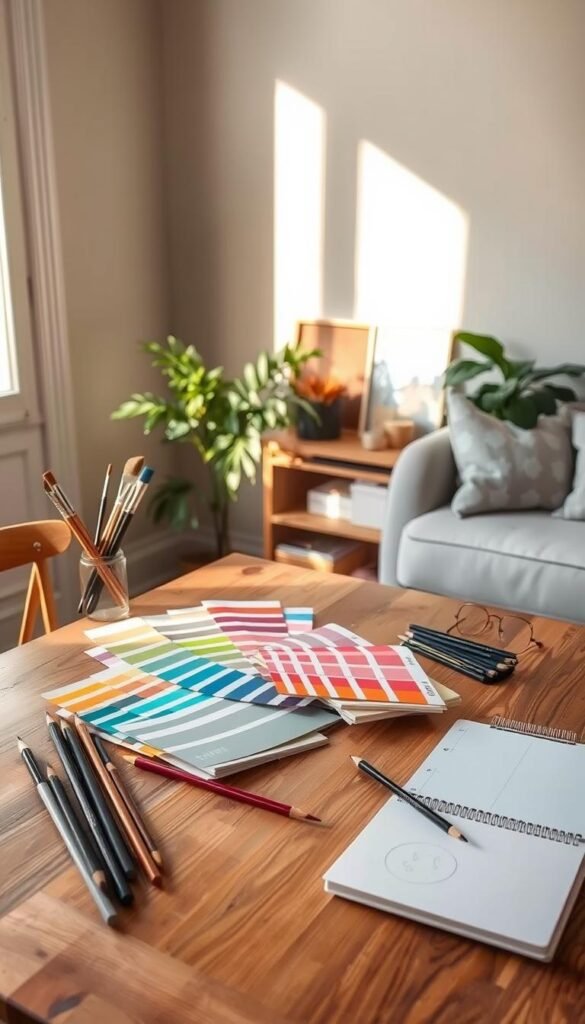
Your space deserves a color palette that feels authentically you. This foundation sets the mood for your entire design journey.
Start with shades that genuinely spark joy in your daily life. Forget fleeting trends and focus on what makes your heart sing when you walk into the space.
Consider how different colors affect your mood and activities. Relaxation hues work beautifully in reading corners, while energizing tones uplift social areas.
Test your selections at various times of day before making big commitments. Natural light changes everything about how colors appear in your environment.
Earth Tones and Natural Textures
Earthy tones create instant warmth and grounding through natural elements. Think rich browns, warm terracottas, and soft greens that connect you to nature.
These tones work beautifully with organic materials like wood, stone, and natural textiles. They bring a sense of calm and authenticity to your space.
Designer Wentz demonstrated this beautifully by choosing a light-toned graphic pattern rug. It complemented stunning wood paneling while balancing the darker elements.
Bold and Vibrant Statement Colors
Bold colors create incredible focal points and inject energy into your design. Jewel tones and saturated brights make maximum impact when used strategically.
These vibrant choices work best as accent walls, statement furniture, or dramatic accessories. They draw the eye and create conversation-starting moments.
Remember that powerful colors need breathing room. Balance them with neutral elements to prevent visual overload.
Muddy Pastels and Softer Hues
Muddy pastels offer sophisticated subtlety that provides color without overwhelming. These softened hues create gentle, inviting atmospheres.
As seen in Wentz’s design, these colors beautifully balance deeper tones like dark wood paneling. They add light without sacrificing warmth.
Designer Amber Lewis chose a relaxation-promoting hue for a TV room that might surprise you on a swatch. Sometimes the perfect color isn’t what you’d initially pick.
Your color palette extends beyond walls to furniture, fabric choices, artwork, and accessories. This creates harmony throughout your entire space.
Select a primary color, secondary color, and accent colors that work together beautifully. This trio creates cohesion while allowing for creative expression.
3. Start with a Single Statement Piece
Building your space around one statement piece creates instant focus and direction. This approach simplifies your design process while ensuring a cohesive look.
Designer Betsy Wentz demonstrated this beautifully with a purple tea room. The botanical wallpaper became the foundation for everything that followed.
Choose one exceptional item that truly speaks to your personal style. This could be bold wallpaper, a unique sofa, or dramatic art.
Let this anchor piece guide your entire design direction. Build your color scheme by pulling hues directly from this central element.
Consider scale and proportion carefully. Your statement piece should command attention without overwhelming the space.
| Statement Piece Type | Design Impact | Coordination Strategy |
|---|---|---|
| Bold Wallpaper | Sets overall mood and atmosphere | Pull accent colors for furniture and accessories |
| Unique Sofa | Creates immediate focal point | Choose complementary wall colors and textiles |
| Dramatic Artwork | Adds personality and conversation | Build color palette from artwork’s palette |
| Architectural Element | Highlights room’s best features | Select furniture that enhances rather than competes |
| Lighting Fixture | Defines style and illuminates space | Choose finishes that complement fixture materials |
Invest in quality over quantity for your central piece. One truly special item can serve as the heart of your space for years.
Remember that statement pieces can be functional or purely decorative. A colorful sofa works as hard as large-scale art.
This method creates clear intention throughout your design. Every subsequent choice supports your initial inspiration.
Your space gains character and personality through this focused approach. The result feels curated rather than randomly assembled.
4. Master the Art of Mixing Patterns and Textures
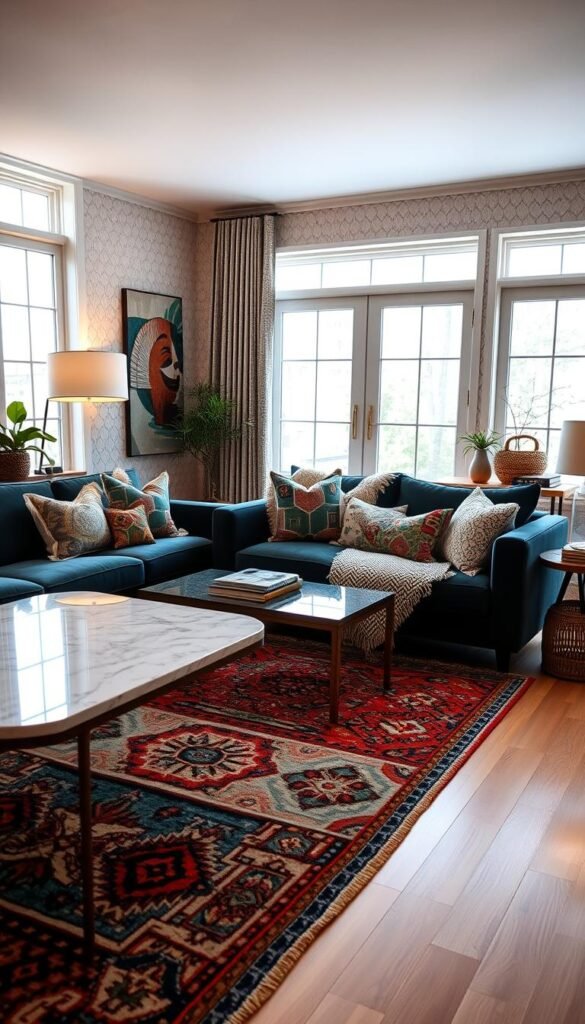
Transform your space with confident pattern mixing that feels curated, not chaotic. This skill elevates your design from ordinary to extraordinary.
Heather French demonstrates this beautifully in a den space. Multiple patterns coexist peacefully because she anchored everything in a deep blue color story.
Combine different scale patterns for visual harmony. Large patterns make bold statements on walls or upholstery. Medium patterns work well on curtains or area rugs. Small patterns add delicate details through pillows and accessories.
Maintain color consistency across your varied designs. Choose two or three main colors and use their different shades throughout. This creates cohesion despite pattern diversity.
“Pattern mixing should feel like a visual conversation, not a shouting match. When done right, it creates rhythm and movement throughout your space.”
Mix fabric textures for depth and tactile appeal. Combine plush velvet with rough linen or smooth leather. These contrasts add richness to your environment.
Use solid colors as visual breathing room between patterned elements. Neutral solids prevent overwhelming the senses while letting your patterns shine.
| Pattern Type | Best Use | Texture Pairing |
|---|---|---|
| Geometric | Rugs, curtains | Pair with smooth leather |
| Floral | Wallpaper, upholstery | Combine with nubby wool |
| Organic | Pillows, throws | Mix with natural linen |
| Abstract | Art, accent pieces | Partner with plush velvet |
Layer textiles throughout your space for multidimensional appeal. Start with a patterned rug, add textured throws, and finish with mixed pillows. This approach creates depth and interest.
Consider how different pattern types interact. Geometric patterns often complement organic designs. Floral motifs can balance abstract elements when color stories align.
Successful pattern mixing creates rhythm rather than confusion. Learn professional pattern mixing techniques that transform spaces beautifully.
Your final look should feel intentional and harmonious. Every pattern and texture should contribute to your overall design story.
5. Modern Colorful Living Room Ideas Begin with Thrifting
Discover the magic of secondhand treasures for your personal space. Thrifting offers unique opportunities to create a home filled with stories and soul.
Designer Alison Giese transformed a garden cottage using carefully selected vintage finds. Her approach shows how intentional shopping creates spaces with genuine personality.
Jenna Gross of Colordrunk Designs found inspiration in a Manuel Canovas pattern. She loved it so much she extended the fabric from her banquette to wall insets.
This method creates a cohesive look while honoring beautiful discoveries. Your space becomes a collection of meaningful moments and finds.
The Character of Secondhand Finds
Secondhand pieces bring history and character that new items simply cannot match. Each piece carries its own story into your home.
You often find superior craftsmanship and materials in vintage furniture. Solid wood construction and quality upholstery frames stand the test of time.
These unique finds become conversation starters and personal treasures. They reflect your individual taste rather than mass-produced trends.
Look for items with good bones at thrift stores and antique markets. Don’t dismiss something just because it needs cosmetic updates.
The Slow Decorating Philosophy
Slow decorating means collecting items gradually as you discover them. This approach values patience and intention over instant gratification.
Your space evolves naturally alongside your changing tastes and experiences. This creates a layered, personal look that develops over time.
This method aligns perfectly with sustainable living practices. You reduce waste while saving money and creating a unique environment.
Feel free to refurbish or reupholster finds to match your color scheme. A fresh coat of paint or new fabric can transform any piece.
| Thrifting Category | What to Look For | Transformation Tips |
|---|---|---|
| Wood Furniture | Solid construction, dovetail joints | Sand and stain or paint with bold colors |
| Upholstered Pieces | Good frame condition, comfortable padding | Reupholster with performance fabrics |
| Decorative Items | Unique shapes, interesting materials | Group similar items for greater impact |
| Lighting Fixtures | Working electrical components | Update shades or paint bases |
| Textiles & Rugs | Quality fibers, minimal damage | Clean professionally or use as wall art |
Your living room becomes a true reflection of your journey and personality. Each piece tells part of your story through its history and transformation.
This approach to design creates spaces that feel collected rather than decorated. Your home becomes a living archive of your tastes and discoveries.
Enjoy the process of hunting for special pieces that speak to you. The search itself becomes part of your creative life and design adventure.
6. Layer Rugs for Depth and Vibrancy
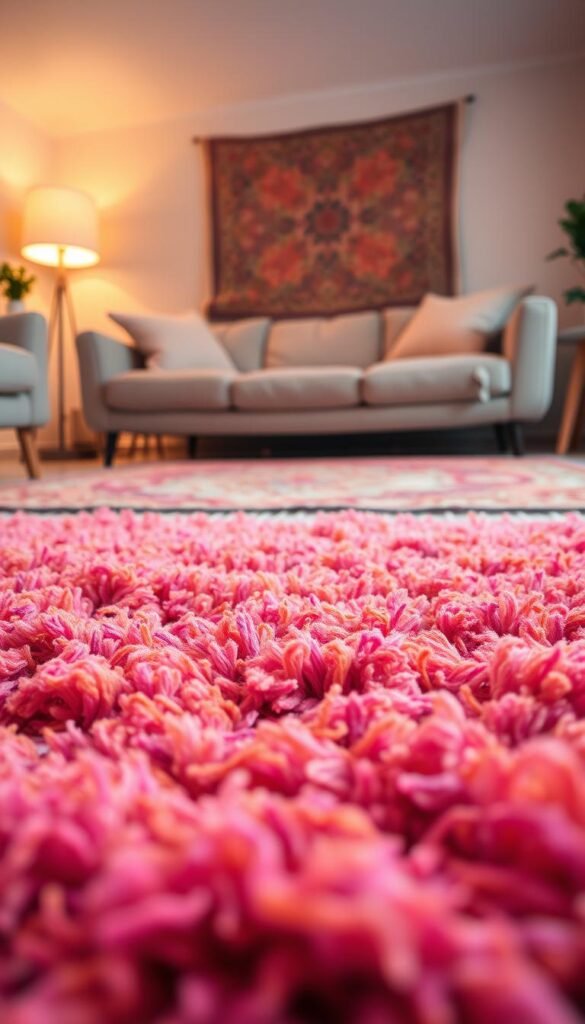
Your floor becomes a canvas for creative expression through strategic rug layering. This technique transforms ordinary floors into extraordinary design statements.
Sarah Stacey’s vibrant space demonstrates this beautifully. A tattoo artist created the striking snake pattern rug that serves as the colorful centerpiece.
Layering adds dimension through varied colors and textures. You create visual interest while defining different functional zones.
Start with a larger neutral base rug for stability. Layer smaller, patterned rugs on top for personality and pop.
Mix materials for tactile variety underfoot. Combine jute, wool, cotton, and synthetic fibers. Each material brings unique texture and durability.
Define areas in open-concept layouts without permanent walls. Your layered rugs create natural boundaries for different activities.
Consider practical aspects for daily living. Use non-slip pads beneath layers for safety. Choose easy-to-clean materials in high-traffic zones.
Embrace pattern mixing with confidence. Try geometric over floral designs. Experiment with solid colors over striped bases.
Change your layers with seasons or moods. This flexibility lets you refresh your look without major redecorating.
Your floor becomes part of your overall design story. Layered rugs add warmth, color, and personality to your entire space.
| Base Rug Type | Top Layer Style | Best Room Placement |
|---|---|---|
| Natural Jute | Colorful Pattern | Living Areas |
| Neutral Wool | Geometric Design | Entryways |
| Sisal | Textured Solid | Dining Spaces |
| Low-pile Synthetic | Bold Artistic | High-traffic Zones |
This approach lets you experiment with different combinations. You can easily swap layers to match changing seasons or moods.
Your floor treatment becomes an integral part of your overall aesthetic. Well-chosen rugs tie everything together beautifully.
7. Design Creative and Functional Lighting
Light transforms your environment more than any other element. It shapes mood, highlights colors, and defines how you experience your space.
Designer Alison Giese demonstrates this beautifully in a great room. Towering vaulted ceilings feel more intimate with eight-foot-long pendant lights.
These fixtures bring height down to human scale. They create cozy gathering spaces beneath them while maintaining an open feel.
Both illumination and fixtures change your room’s character dramatically. Thoughtful choices make your space functional and beautiful.
Statement Pendants and Fixtures
Lighting serves as functional art that defines your style. Choose pieces that make visual statements while providing necessary illumination.
Pendant lights work wonders in spaces with high ceilings. They visually lower heights and create intimate zones for conversation.
Consider sculptural floor lamps and colorful sconces too. These elements add personality while serving practical purposes.
Your fixtures should complement your overall design story. They become focal points that tie everything together beautifully.
Ambient and Task Lighting Layers
Layered lighting creates depth and flexibility throughout your day. Combine different types for optimal function and atmosphere.
Ambient lighting provides general illumination for the whole space. Task lighting offers focused light for reading or activities.
Accent lighting highlights architectural features or artwork. This combination ensures your room works for all occasions.
Consider color temperature when selecting bulbs. Warmer tones create cozy moods for relaxation areas.
Cooler tones work well in energetic spaces where you need focus. Dimmers let you adjust levels throughout the day.
Proper lighting enhances colors and textures beautifully. It creates mood and atmosphere while making your space truly functional.
8. Choose Furniture for Both Style and Comfort
Your seating and tables should feel as good as they look. This balance transforms your space into a welcoming retreat for everyday life.
Serena Dugan prioritized performance fabrics on every sofa. This choice combines durability with cozy comfort for lasting enjoyment.
Breegan Jane selected lightweight, movable pieces. Her design accommodates various gatherings without sacrificing support or style.
Balance aesthetic appeal with genuine comfort in your selections. Test seating for adequate support and cozy factor before committing.
Consider scale and proportion relative to your room dimensions. Oversized pieces can overwhelm, while too-small items may feel insignificant.
“Great furniture design serves both the eye and the body. It should invite you to sit longer and live better.”
Look for quality construction that withstands years of use. Solid frames and durable joinery maintain their integrity over time.
Choose upholstery fabrics that suit your lifestyle perfectly. Performance fabrics work wonderfully for active families.
Luxurious materials create elegance in more formal spaces. Your choices should reflect how you actually live.
Modular furniture offers wonderful flexibility for changing needs. You can rearrange sections to adapt to different occasions.
Mix furniture styles and periods for an eclectic, collected-over-time look. This approach adds character and personal history.
| Furniture Type | Comfort Features | Style Considerations |
|---|---|---|
| Sofas | Deep seats, firm back support | Clean lines or rolled arms |
| Chairs | Ergonomic design, proper height | Statement colors or patterns |
| Tables | Sturdy construction, smooth edges | Material mix and proportions |
| Storage Pieces | Easy access, functional organization | Integrated design aesthetic |
Your furniture choices shape daily experiences in your home. They should support both relaxation and social connection beautifully.
Invest in pieces that bring joy through both form and function. Your space becomes truly livable through this thoughtful approach.
9. Incorporate Smart and Stylish Storage Solutions
Smart storage transforms your space from cluttered to curated. It keeps your essentials organized while adding to your overall aesthetic.
Designer Serena Dugan installed shelving above a window in a family area. This clever solution adds color while using vertical space efficiently.
Creative storage options keep clutter hidden while enhancing your room’s design. They serve dual purposes of function and beauty.
Use vertical areas with shelving, wall-mounted units, and tall cabinets. These maximize your available square footage beautifully.
Multi-functional furniture works wonders in any home. Consider storage ottomans, coffee tables with drawers, and console tables with shelves.
Open shelving displays decorative pieces while keeping essentials accessible. This approach blends practicality with personal style.
Built-in storage maximizes awkward spaces and creates seamless integration. Custom solutions fit perfectly into challenging areas.
Colorful storage items can serve as design elements rather than just practical solutions. They add personality and character.
Organization systems within storage help maintain order. They make items easy to find when you need them most.
| Storage Type | Best Applications | Style Benefits |
|---|---|---|
| Vertical Shelving | Small spaces, display areas | Adds height, creates visual interest |
| Multi-functional Furniture | Living areas, entryways | Hides clutter, maintains clean lines |
| Built-in Units | Awkward corners, under windows | Seamless integration, custom look |
| Colorful Containers | Open shelving, tabletops | Adds pops of color, personal expression |
| Organization Systems | Drawers, cabinets, closets | Maintains order, reduces visual chaos |
Your storage solutions should reflect how you actually live. Choose options that work with your daily routines and habits.
Well-planned storage creates a more peaceful environment. You enjoy your space more when everything has its proper place.
These clever ideas help you maintain a beautiful, functional home. Your furniture and storage pieces work together harmoniously.
10. Use Textiles to Infuse Color and Comfort
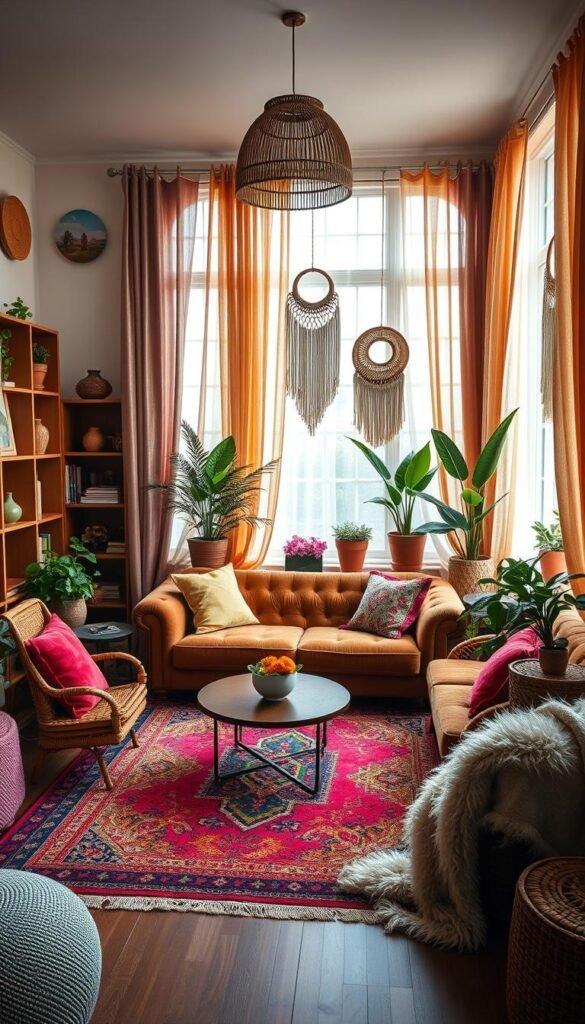
Your space comes alive through thoughtful textile selections. These elements add warmth, personality, and daily comfort.
Jenna Gross of Colordrunk Designs loved her Manuel Canovas pattern so much she extended it from banquette seating to wall insets. This approach creates cohesive design with personal significance.
Serena Dugan prioritized both style and practicality in her designs. She chose performance fabrics on every sofa for durability and lasting comfort.
The Power of Performance Fabrics
Performance fabric offers incredible benefits for active households. These materials resist stains while maintaining beautiful appearance.
You enjoy vibrant colors without constant worry about spills or wear. Modern options provide luxury feel with practical durability.
These textiles clean easily and maintain their integrity over time. They work beautifully for families with children or pets.
Your sofa becomes both stylish centerpiece and comfortable retreat. Performance fabrics ensure it stays beautiful through years of use.
Reusing Fabrics You Love
Repeating favorite patterns creates visual harmony throughout your space. This technique makes your environment feel custom-designed.
Use beloved fabric across multiple elements for cohesive storytelling. Pillows, curtains, and upholstery can share common patterns.
This approach adds depth and personal significance to your design. Each repetition reinforces your unique aesthetic vision.
Layer different textiles for multidimensional comfort and style. Combine various weights and textures for rich visual interest.
Heavy wool throws provide warmth during cooler months. Light linen curtains offer breezy elegance in warmer seasons.
Plush velvet pillows add luxurious texture to seating areas. These combinations create tactile experiences throughout your space.
Window treatments significantly impact both function and aesthetics. They control light while adding pattern and color to your walls.
Seasonal changes refresh your environment without major redecorating. Swap lighter fabrics for heavier ones as temperatures change.
| Textile Type | Best Applications | Comfort Benefits |
|---|---|---|
| Performance Fabrics | Sofas, chairs, ottomans | Stain resistance, durability |
| Plush Velvet | Throw pillows, accent chairs | Luxurious texture, visual warmth |
| Natural Linen | Curtains, lightweight throws | Breathability, casual elegance |
| Wool Throws | Seating areas, reading nooks | Insulating warmth, cozy factor |
| Mixed Textiles | Layered arrangements | Visual depth, tactile variety |
Your textile choices transform ordinary spaces into extraordinary retreats. They combine visual appeal with genuine physical comfort.
These elements work together to create environments that feel both stylish and welcoming. Your home becomes a true reflection of your personality.
11. Create Zones in an Open Floor Plan
Your open floor plan deserves smart zoning that creates both function and flow. This approach helps define different activities while maintaining an airy, connected feel.
Kevin Sawyers used wood slats to provide “a hint of separation” between areas. This clever technique maintains visual connection while establishing clear boundaries.
Alexander Reid demonstrated another brilliant solution with back-to-back sofas. This arrangement creates two distinct living spaces within one room.
Using Furniture Layout
Your furniture arrangement serves as natural room dividers. Strategic placement defines zones without building permanent walls.
Area rugs anchor different functional spaces beautifully. Use them to mark conversation areas, reading nooks, and entertainment zones.
Back-to-back sofa arrangements work wonderfully for creating dual-purpose spaces. This setup allows separate activities while maintaining openness.
Consider traffic patterns when arranging your zones. Ensure easy movement between areas while preserving each space’s intimacy.
Architectural Elements for Separation
Architectural features offer subtle separation with style. Partial walls, columns, or slatted screens provide definition without closing off spaces.
Different lighting schemes help define zones for various activities. Use warmer lights for relaxation areas and brighter illumination for task zones.
Maintain a consistent color palette throughout your open plan. This creates cohesion while allowing functional differentiation between areas.
Your zoning should reflect how you actually use the space. Each area should serve its purpose while contributing to the overall design.
| Zoning Method | Best Application | Visual Impact |
|---|---|---|
| Furniture Arrangement | Conversation areas | Natural boundaries, flexible changes |
| Area Rugs | Defining activity zones | Color anchors, texture definition |
| Architectural Screens | Partial separation needs | Visual interest, light filtration |
| Lighting Schemes | Mood differentiation | Atmosphere creation, functional zoning |
Your open floor plan becomes more functional through thoughtful zoning. Each area gains purpose while contributing to the whole room‘s harmony.
This approach maximizes your available square footage beautifully. You enjoy both defined spaces and open flow in your daily life.
12. Design Conversation Areas Around Focal Points
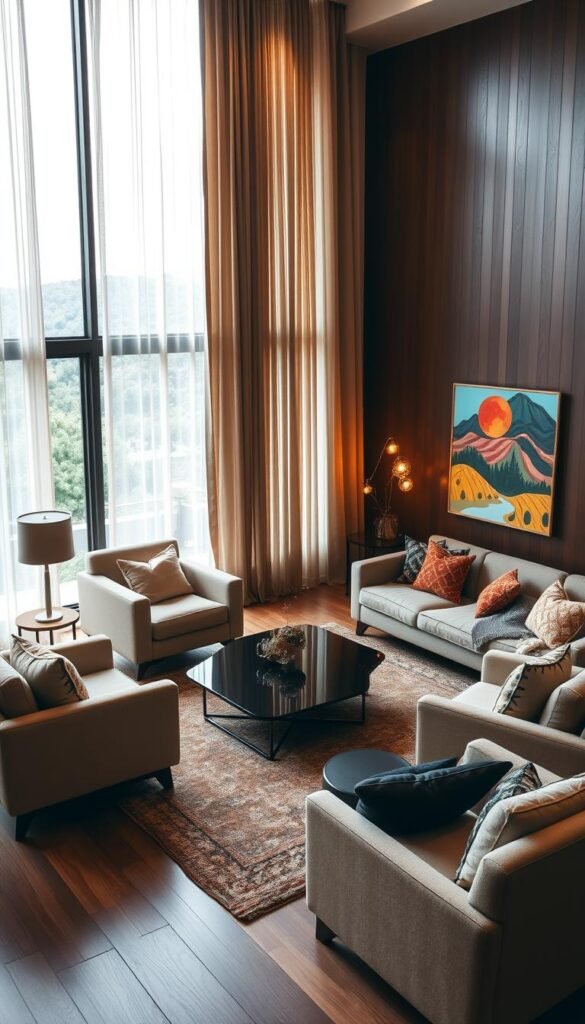
Your room comes alive when you arrange seating around natural gathering spots. These areas encourage connection and make your space feel inviting.
Hilary Colia of Fort Design Studio says a historic room “starts and ends with the fireplace.” When you have such a beautiful feature, showcase it properly.
Amber Lewis created two conversation zones in an extra-long room. Each area focused around its own fireplace for cozy gatherings.
Identify natural focal points in your space. Look for fireplaces, large windows, or architectural features. Statement artwork also works beautifully.
Arrange your sofa and chairs to face these points. This creates natural spots for conversation and connection.
Keep seats at comfortable distances for easy talking. Nobody should shout across the room during gatherings.
Use area rugs to define each conversation zone. They create visual boundaries and add warmth underfoot.
Include occasional tables within everyone’s reach. These practical pieces hold drinks, books, or decorative items.
Consider multiple areas in large rooms. They accommodate different group sizes and activities.
Lighting should enhance your focal points beautifully. Provide adequate illumination for social interaction and mood.
Your furniture arrangement supports how you actually live. It makes your space perfect for family time and entertaining.
This approach to design creates intentional gathering spots. Your room becomes both functional and welcoming.
13. Curate a Gallery Wall That Tells Your Story
Your blank wall transforms into a personal narrative through carefully curated displays. This creative approach lets you showcase memories and passions that define your unique journey.
A gallery wall becomes a living collection that evolves with your experiences. It reflects your personality through meaningful selections rather than store-bought sets.
Mix different frame styles and sizes for dynamic visual appeal. Combine vintage gold frames with modern black ones. Vary your artwork sizes from small intimate pieces to larger statement art.
Lay out your entire arrangement on the floor before hanging anything. This lets you experiment with composition and spacing. You can rearrange until everything feels perfectly balanced.
Include three-dimensional objects for added depth and interest. Small sculptures, decorative plates, or textile pieces break up the flat surface. These elements create a more engaging display.
Focus on thematic connections between your pieces rather than perfect color matching. Your collection might tell a travel story or showcase artistic influences. This approach adds character to your home.
Proper lighting makes your gallery wall a true focal point. Use picture lights or adjustable track lighting to highlight specific pieces. This creates drama and draws attention to your display.
Your gallery should evolve as you acquire new meaningful pieces. Don’t feel locked into one arrangement forever. Swap out artworks as your tastes and experiences change.
“A gallery wall should feel like a visual autobiography—each piece representing a chapter of your life’s story.”
Choose artwork that genuinely speaks to your heart and experiences. Family photographs, travel souvenirs, and local art all work beautifully. Your wall becomes a conversation starter about your life.
Consider the overall weight distribution when arranging your pieces. Balance larger items with clusters of smaller ones. This creates visual harmony across your entire display.
Your gallery wall adds personality and character to any room. It transforms empty space into a meaningful expression of who you are.
| Gallery Element | Visual Impact | Personal Significance |
|---|---|---|
| Family Photographs | Creates warmth and familiarity | Documents important life moments |
| Travel Artwork | Adds cultural diversity | Preserves vacation memories |
| Local Artist Pieces | Supports community creativity | Connects to your neighborhood |
| Personal Creations | Shows individual talent | Expresses your artistic side |
| Found Objects | Adds texture and dimension | Represents personal discoveries |
Your display becomes a constantly evolving expression of your life. It grows and changes alongside your experiences and acquisitions.
This approach to wall decor creates spaces that feel authentically yours. Your home becomes a true reflection of your personality and journey.
14. Bring the Outdoors In with Plants and Natural Light
Nature’s beauty deserves a special place inside your home. Blending indoor and outdoor spaces creates a refreshing atmosphere that energizes your daily life.
Suzanne Kasler designed an open-area living room that connects beautifully to the backyard. Large openings create seamless transitions to pool areas for effortless entertaining.
Greenery adds vibrant life and improved air quality to your environment. Living plants soften hard surfaces while bringing organic beauty indoors.
Choose plant varieties that match your light conditions and care preferences. Low-maintenance options thrive with minimal attention while still providing visual impact.
Maximize sunlight with strategic window treatments that offer control without blocking light. Sheer curtains filter brightness while maintaining airy openness.
Create smooth transitions between interior and exterior areas. Consistent flooring materials and large glass doors erase boundaries between inside and outside.
Mirrors amplify natural illumination while making areas feel more spacious. Position them opposite windows to bounce light deeper into your room.
Arrange plants at different heights for dynamic visual interest. Tall floor plants, medium shelf specimens, and hanging varieties create layered green scenes.
Automated lighting systems complement daylight patterns throughout the day. They adjust intensity and color temperature as natural light changes.
“The best rooms have something to say about the people who live in them.” – David Hicks
Your space gains vitality through these natural connections. Living elements make your environment feel fresh and invigorating daily.
| Plant Type | Light Requirements | Care Level |
|---|---|---|
| Snake Plant | Low to bright indirect | Very easy |
| Monstera | Medium to bright indirect | Moderate |
| Pothos | Low to medium indirect | Easy |
| Fiddle Leaf Fig | Bright indirect | Moderate |
| ZZ Plant | Low to bright indirect | Very easy |
These natural elements transform your home into a sanctuary that breathes. You enjoy healthier air and beautiful views throughout your space.
Your connection to nature becomes part of your daily experience. This approach creates environments that feel both stylish and alive.
15. Embrace Pieces with Movement and Flexibility
Your home deserves furniture that adapts to your changing needs. Flexible pieces create spaces that work for any occasion while maintaining comfort and style.
Breegan Jane designed a living area that welcomes all types of gatherings. She selected lightweight furniture that moves easily without sacrificing support or coziness.
Mobile options like rolling carts and modular seating offer endless room configurations. You can quickly transform your space for different activities and group sizes.
Consider how your room functions throughout your daily life. It might host large parties one evening and quiet reading time the next morning.
Your furniture should support these changing scenarios beautifully. Lightweight accent chairs create intimate conversation clusters when needed.
Nesting tables provide surface space during entertaining. They tuck away neatly when not in use, keeping your area open and clutter-free.
Multi-functional pieces serve various purposes while minimizing furniture quantity. This approach keeps your space feeling airy and adaptable.
Don’t anchor everything permanently in one arrangement. Leave room for seasonal changes and spontaneous rearrangements.
Your family will appreciate how easily the space transforms. Flexible furniture supports evolving needs and entertainment preferences.
This approach to design creates environments that truly work for your lifestyle. Your room becomes both functional and welcoming for all occasions.
16. Your Colorful, Creative Sanctuary Awaits
Your living room should feel like a true reflection of your unique personality. It’s your personal canvas for self-expression and daily joy.
Remember that creating your ideal space is an ongoing journey. Allow your room to evolve naturally as your tastes and experiences grow.
Trust your instincts about what makes you feel comfortable and inspired. Break design “rules” if something genuinely brings you happiness in your home.
The most successful spaces balance aesthetic appeal with genuine comfort. Your sanctuary should support both your wellbeing and creative expression.
Embrace the process of building an environment that tells your story. Your living room becomes a space that truly supports your creative life.