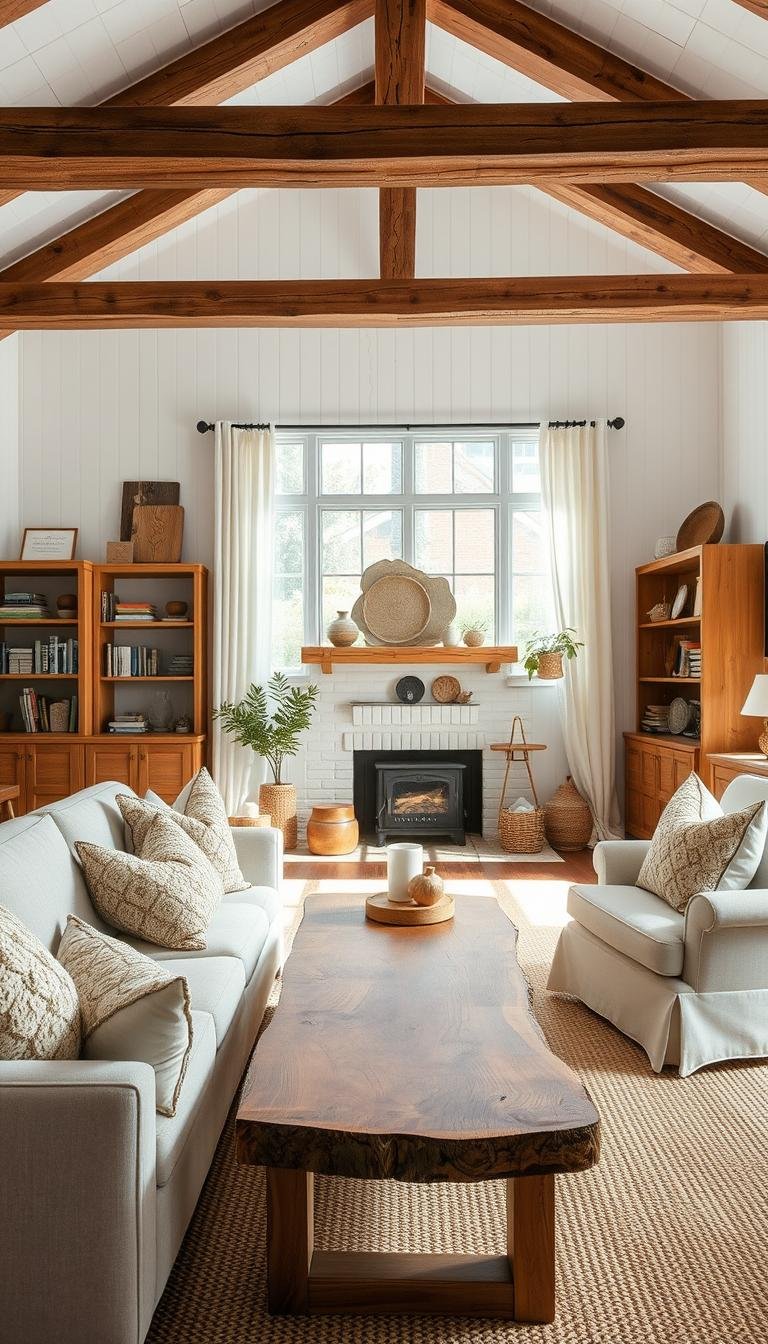
Imagine a space that feels both fresh and timeless. A place where you can truly unwind. This design approach brings together rustic charm with today’s comforts.
You can create this welcoming atmosphere anywhere. It works in city apartments and country homes alike. The style focuses on making your house feel like a true home.
Key elements include warm neutral colors and natural materials. Think exposed wood beams and plush seating. Mixing vintage finds with contemporary pieces adds character.
Interior designer Laura Lubin emphasizes balancing comfort with historical touches. Your space should tell a story while feeling perfectly livable.
We’ll share 14 practical ideas to help you achieve this look. Each suggestion focuses on creating a polished yet relaxed environment. Perfect for both quiet nights and entertaining friends.
Think about your own space as you read. Small changes can make a big impact. Let’s begin transforming your area into a personal retreat.
1. Begin With a Warm and Neutral Color Palette
Your color choices form the soul of your space. They set the mood before any furniture arrives. A thoughtful palette creates harmony throughout your room.
Neutral tones build a peaceful foundation. They let other elements shine without competition. This approach makes decorating simpler and more intentional.
Choosing Your Foundation Colors
Start with soft whites, warm grays, or muted beiges. These hues create a calm backdrop for your entire space. They make rooms feel larger and more welcoming.
Test paint samples on your walls before committing. Observe how colors change in natural and artificial light. North-facing rooms need warmer tones to avoid feeling cold.
Designer Laura Lubin advises:
Choose colors that enhance your natural textures. Warm neutrals make wood grains and stone details pop.
Adding Subtle Pops of Color
Introduce depth with nature-inspired accents. Sage green or navy blue work beautifully. Use these in throw pillows, artwork, or small furniture pieces.
Accent colors should complement rather than dominate. They add visual interest without overwhelming the serene base. This balance keeps your space feeling restful yet engaging.
| Color Type | Recommended Shades | Best Use Areas |
|---|---|---|
| Base Neutrals | Swiss Coffee, Repose Gray, Accessible Beige | Walls, large furniture, area rugs |
| Warm Accents | Sage green, muted navy, warm terracotta | Throw pillows, artwork, decorative accessories |
| Natural Enhancers | Warm white, soft gray, creamy beige | Trim work, ceiling, architectural features |
A neutral foundation offers flexibility for future changes. You can easily update accents with seasons or trends. Your core palette remains timeless and adaptable.
Consider existing elements like flooring or fixed features. Your colors should harmonize with these permanent items. This creates a cohesive look that feels intentional.
Your color scheme establishes the room’s entire character. It makes subsequent choices about textures and furnishings easier. You’ll build upon this harmonious foundation with confidence.
2. Incorporate Natural and Reclaimed Materials for Authentic Charm
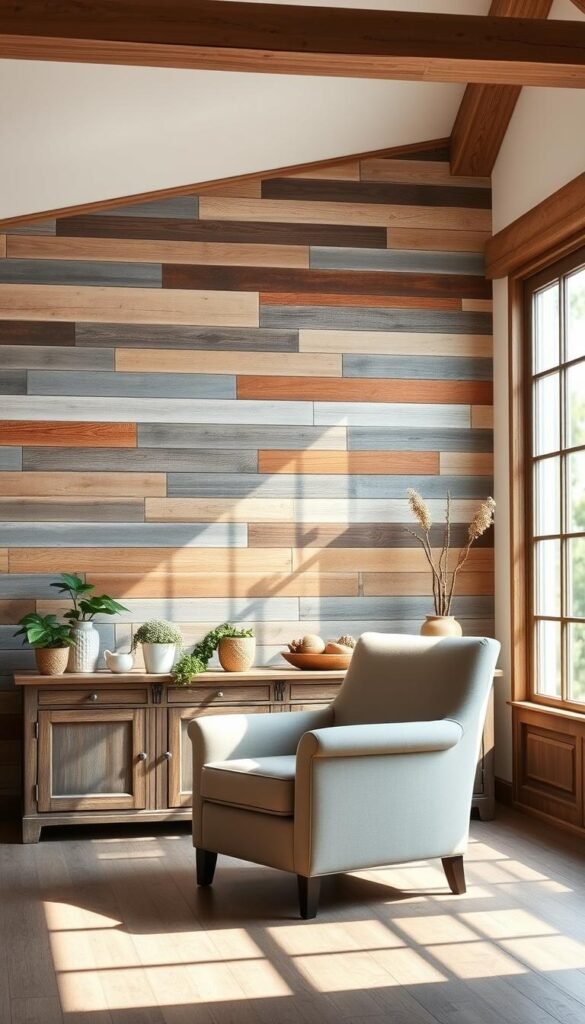
The soul of your space comes alive through the materials you choose. Each element tells a story and adds character to your design. Natural substances create an inviting atmosphere that feels genuine.
Using reclaimed and natural substances brings depth to your room. They offer texture and history that new items cannot replicate. This approach creates a space with true personality.
The Beauty of Reclaimed Wood
Reclaimed wood carries a unique history in every piece. Each knot and mark tells a story of its past life. This adds authentic charm to your space.
Consider using reclaimed timber for furniture like coffee tables or shelves. Arbor Upcycle creates beautiful pieces from salvaged barn wood. Their work shows how old materials gain new purpose.
Source your wood from local suppliers or reputable dealers. This ensures quality and supports sustainable practices. You’ll get materials with genuine character and history.
Textiles That Add Softness and Warmth
Natural fabrics bring comfort and texture to your room. Linen, cotton, and leather work beautifully for upholstery. They add warmth while being durable and practical.
Use throw blankets and pillows made from these materials. They create layers of comfort throughout your space. The tactile quality makes your room feel more inviting.
These textiles age gracefully, developing a lovely patina over time. They become even more comfortable with use. This enhances the lived-in feel of your farmhouse aesthetic.
Contrasting With Metal Accents
Metal elements provide a modern counterpoint to rustic wood. Iron or brass in light fixtures creates interesting contrast. This balance prevents your space from feeling too dated.
Look for vintage metal pieces with character and history. Old factory lights or salvaged hardware work well. They add industrial touch without overwhelming the space.
Mix metals with natural materials for the best results. A reclaimed wood table with iron legs looks perfect. This combination creates visual interest throughout your room.
| Material Type | Best Uses | Character Traits |
|---|---|---|
| Reclaimed Wood | Furniture, shelving, accent walls | Historical charm, unique grain patterns, sustainability |
| Natural Textiles | Upholstery, throws, pillows | Softness, durability, aging beautifully |
| Metal Accents | Lighting, hardware, decorative pieces | Modern contrast, industrial feel, structural interest |
Choose materials that will develop character over time. Their natural aging process adds to your room’s story. This creates a space that feels both grounded and inviting.
Mix different substances to achieve balance in your design. Too much of one material can make the space feel unbalanced. The right combination creates harmony and visual interest.
Your material choices form the foundation of your room’s character. They work together to create a space that feels authentic and welcoming. Each element contributes to the overall warmth and charm.
3. Select Oversized, Plush Seating for Ultimate Comfort
Your seating choices define how your space functions daily. They create the welcoming atmosphere that makes people want to stay. The right pieces transform your area into a true gathering spot.
Comfortable seating serves as the heart of your room’s design. It invites relaxation and conversation in equal measure. This balance creates a space that feels both polished and approachable.
Sofas and Sectionals That Invite Relaxation
Oversized sofas provide the perfect foundation for your room. They offer ample space for lounging and entertaining guests. RH’s Maxwell sofa exemplifies this approach with its generous proportions.
Choose neutral colors that complement your overall palette. Cream, gray, or beige upholstery works beautifully. These tones create a calm backdrop for your entire space.
Consider your room’s size when selecting pieces. Larger spaces can handle substantial sectionals comfortably. Smaller areas benefit from a thoughtfully scaled sofa with plush cushions.
Upholstery materials matter for both comfort and durability. Cotton and linen blends offer softness while standing up to daily use. They develop a lovely lived-in look over time.
Accent Chairs for Cozy Corners
Plush armchairs create inviting reading nooks throughout your room. They provide additional seating without crowding the space. Each chair becomes its own little retreat.
Mix different styles for added character. Pair a contemporary sofa with vintage-inspired chairs. This combination adds depth and personality to your design.
Consider a statement piece like Rose Tarlow’s dusty-blue bespoke sofa. It introduces subtle color while maintaining the serene atmosphere. Such pieces become conversation starters.
Throw blankets and oversized pillows enhance any seating arrangement. They add layers of texture and comfort throughout your space. These elements make your room feel truly lived-in.
Your seating choices should prioritize comfort without sacrificing style. Test pieces personally whenever possible. Sit down and imagine spending hours relaxing in each selection.
The right seating arrangement facilitates wonderful gatherings. It creates a space where family and friends naturally come together. This makes your home the preferred spot for creating memories.
4. Choose a Wooden Coffee Table as a Rustic Focal Point
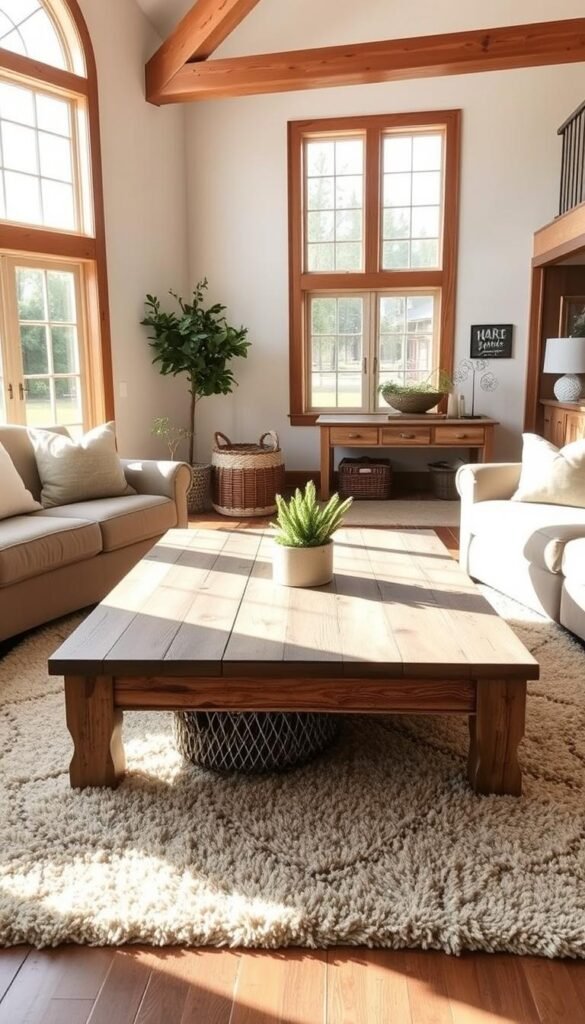
A well-chosen wooden table anchors your entire room design. This central piece of furniture becomes the natural gathering spot in your space. It combines practical function with beautiful design.
Your coffee table should complement your seating arrangement perfectly. Position it as the heart of your conversation area. This creates a balanced and inviting look throughout your space.
Embracing Organic Shapes and Imperfections
Choose tables with natural character and unique features. Reclaimed wood offers beautiful imperfections that tell a story. Each knot and grain pattern adds authentic charm.
Light-colored woods like pine or oak work beautifully. They maintain that airy, country feel while being durable. Elm is another excellent choice for its distinctive grain.
Look for handmade pieces on platforms like Etsy. These often highlight the wood’s natural flaws beautifully. They bring genuine craftsmanship into your living room.
Sizing and Styling Your Table
Proper proportions make all the difference. Keep your table 18-24 inches from your sofa’s edge. This creates comfortable reach while maintaining good flow.
Style your surface with natural decor elements. A wooden tray organizes books and remote controls. Dried flowers in a simple vase add organic beauty.
Many tables offer hidden storage solutions. Drawers or shelves keep your space clutter-free. This maintains that clean, organized look you want.
Pair your table with complementary elements. A Surya rug underneath adds texture and warmth. Metal accents on table legs create interesting contrast.
Your coffee table will become a cherished conversation piece. It brings warmth and character to daily life. This investment piece will age beautifully over years of use.
5. Maximize Natural Light for an Airy, Spacious Feel
Sunlight transforms your area into a bright, welcoming environment. It enhances every element while creating an open atmosphere. This approach makes your home feel larger and more inviting.
Natural illumination highlights textures and colors beautifully. Everything appears more vibrant under daylight. This creates a dynamic space that changes throughout the day.
Proper lighting makes your room functional at all hours. It balances rustic charm with contemporary brightness. You achieve that perfect blend of comfort and practicality.
Window Treatment Strategies
Choose treatments that welcome sunlight rather than block it. Sheer curtains filter light softly throughout your space. They maintain privacy while keeping things bright.
Light-colored fabrics work best for this purpose. Avoid heavy drapes or dark blinds that close off the room. These choices make your area feel less inviting.
Consider your room’s orientation when selecting treatments. East-facing windows need different solutions than west-facing ones. This ensures maximum light at all times.
Some homes feature beautiful bifold doors or large windows. These make the outdoor view become your focal point. A Colorado getaway room exemplifies this perfectly.
Furniture Placement for Light Flow
Arrange your pieces to avoid blocking windows. This allows illumination to reach every corner. Your space feels more open and balanced.
Keep larger items away from glass areas. Position sofas and chairs perpendicular to windows instead. This maintains clear light pathways.
Mirrors amplify natural light wonderfully when placed strategically. They reflect sunlight deeper into your room. This creates an even brighter atmosphere.
Consider your floor plan when arranging furniture. Ensure walking paths don’t interfere with light streams. Every element should work together harmoniously.
| Element | Light-Enhancing Strategy | Visual Impact |
|---|---|---|
| Window Treatments | Sheer curtains, light fabrics | Soft filtered light, airy feel |
| Furniture Placement | Away from windows, perpendicular alignment | Unobstructed light flow, spaciousness |
| Reflective Surfaces | Strategic mirror placement | Amplified brightness, expanded space |
| Color Scheme | Light walls and floors | Enhanced reflection, brighter environment |
Your walls and floor contribute significantly to light reflection. Light-colored surfaces bounce illumination around the room. This creates that sought-after airy feel.
Assess your space at different times of day. Notice how sunlight moves through your room. This helps you make the most of natural illumination.
Good lighting makes your home comfortable throughout daylight hours. It highlights your design choices beautifully. Everything looks more intentional and polished.
For more inspiration on creating light-filled spaces, explore these farmhouse living room ideas that balance brightness with rustic charm.
6. Layer Textures With Rugs, Throws, and Cushions
Your space gains depth through thoughtful texture combinations. These elements add visual interest while enhancing comfort. They transform a simple area into a welcoming retreat.
Layering creates that inviting atmosphere you desire. It makes your area feel collected over time. This approach adds personality without overwhelming the design.
Selecting the Perfect Area Rug
Choose light-colored rugs with subtle patterns. They anchor your space beautifully without dominating. The Sarrah Sage rug from Ruggable offers this perfect balance.
Your rug should complement your existing color scheme. Soft neutrals work best for maintaining serenity. They provide a soft underfoot feel that enhances comfort.
Position rugs to define conversation areas clearly. They work over both wooden floors and carpeting. This ties everything together visually and functionally.
Consider practicality when selecting materials. Stain-resistant options work well in high-traffic zones. You want pieces that look good while standing up to daily life.
The Art of the Cozy Throw Blanket
Throw blankets add instant warmth and softness. Drape them over sofas or chairs casually. This creates that lived-in look you want.
Choose natural materials like wool or cotton. They offer both comfort and durability. These fabrics develop character with use over time.
Mix different textures for added interest. A chunky knit beside smooth linen looks wonderful. This variety enhances the tactile experience.
Keep throws within easy reach throughout your space. They invite relaxation and impromptu cozy moments. This makes your area feel more inviting.
Interior stylist Emma Henderson emphasizes texture importance:
Layering different materials creates depth and character. It’s the secret to making a space feel truly lived-in and loved.
| Element | Material Options | Functional Benefits |
|---|---|---|
| Area Rugs | Jute, wool, polypropylene blend | Defines spaces, adds warmth, reduces noise |
| Throw Blankets | Wool, cotton, cashmere blend | Adds warmth, casual style, easy to move |
| Accent Pillows | Linen, velvet, knit patterns | Enhances comfort, adds color, easy to change |
Pillows offer another texture opportunity. Mix different fabrics like linen and knit. This creates visual interest while boosting comfort.
Choose pillow covers that are easy to remove and clean. This lets you refresh your look seasonally. You can experiment with patterns without commitment.
Keep patterns subtle and coordinated. Too many bold prints can feel overwhelming. Stick to a cohesive color story for best results.
Your layered textures should feel intentional yet effortless. They contribute to that comfortable atmosphere you love. This approach makes your space uniquely yours.
Remember that texture layering evolves over time. You can add pieces as you find them. This creates a collected look that tells your story.
7. Accentuate Architectural Features Like Beams and Shiplap
Your home’s architectural details build character throughout your space. They create visual interest and tell a story about your design approach. These elements form the backbone of an authentic aesthetic.
Structural features add depth and personality to any area. They work with your furniture and decor to create harmony. This approach makes your space feel intentional and well-designed.
Highlighting Exposed Wooden Beams
Wooden beams bring natural warmth and historical charm. They often become the focal point in a room. Their presence adds character and a sense of history.
Many older homes feature beautiful original beams. You can highlight these with strategic lighting or paint. This makes them stand out without overpowering your space.
Consider a Hudson Valley living room with wood side tables. The beams create vertical interest above the seating area. This combination feels both rustic and refined.
If your home lacks beams, consider adding faux versions. Use quality materials that match your existing wood tones. This creates an authentic look that enhances your design.
Incorporating Shiplap Walls for Texture
Shiplap adds vertical texture and timeless country charm. These wall treatments create visual interest without overwhelming. They work beautifully as accent walls or throughout a room.
Install shiplap in key areas to maximize impact. Behind a sofa or fireplace creates wonderful focal points. This approach adds depth without closing in the space.
Paint shiplap in neutral colors for cohesion. Soft whites or warm grays maintain that airy feel. These tones keep the look cohesive with your overall palette.
Shiplap pairs beautifully with other rustic elements. Reclaimed wood furniture creates harmonious texture layers. This combination feels both intentional and inviting.
| Architectural Feature | Installation Tips | Design Impact |
|---|---|---|
| Exposed Beams | Highlight with lighting, clean regularly | Adds height, historical character, warmth |
| Shiplap Walls | Use as accent wall, paint neutral colors | Creates texture, vertical interest, rustic charm |
| Combination Approach | Balance beams with shiplap on opposite walls | Layered interest, cohesive rustic aesthetic |
These architectural details create a layered, interesting space. They make your home feel thoughtfully designed and personal. Each feature contributes to the overall character.
Your walls and ceilings offer wonderful design opportunities. Embrace these elements to create a space with genuine charm. They transform ordinary rooms into special places.
8. Create a Heartwarming Focus With a Fireplace
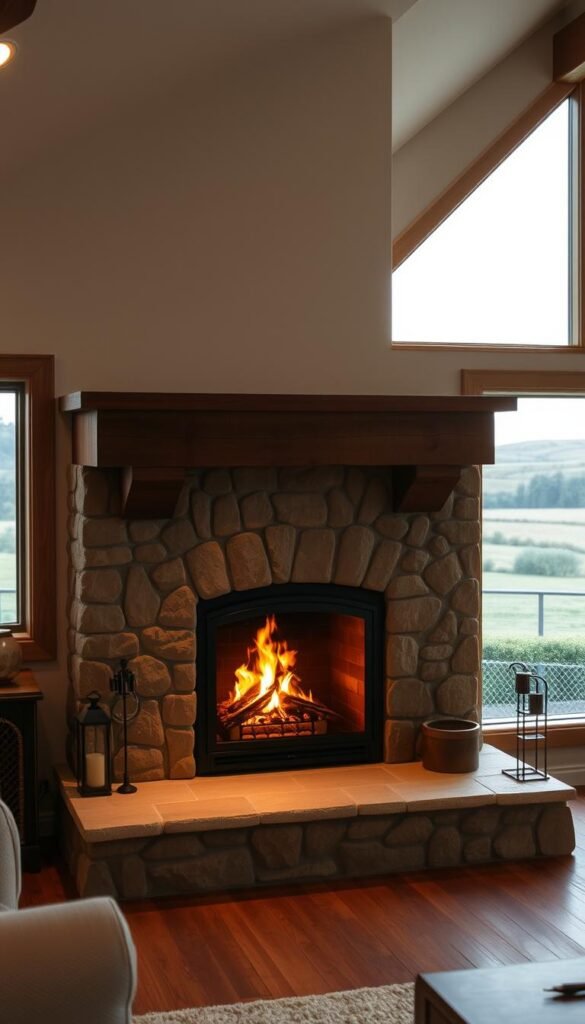
Your fireplace becomes the natural heart of your gathering space. It draws people together and creates lasting memories. This feature adds both visual and emotional warmth to your home.
A well-designed fireplace area completes your room’s character. It balances rustic charm with practical comfort. You’ll love how it transforms your space throughout the year.
Position your seating to face this welcoming feature. Arrange chairs and sofas in a conversational layout. This creates an inviting atmosphere for both quiet nights and entertaining.
The gentle glow of flames enhances evening ambiance beautifully. It makes your space feel extra special after sunset. This atmospheric touch completes your room’s design perfectly.
Styling a Stone or Brick Hearth
Natural materials like stone or brick add authentic character. They bring earthy texture and historical charm to your design. These elements create a strong foundation for your entire space.
Choose local stone for regional authenticity whenever possible. Fieldstone or limestone work beautifully for hearths. Their natural variations add unique visual interest.
Accessorize with rustic wrought iron tools and a wooden mantel. These pieces enhance the country feel without overwhelming. They provide both function and decorative appeal.
Style your mantel with meaningful personal items. Family photos in simple frames create warmth. Vintage finds add historical charm and storytelling elements.
Balance traditional materials with contemporary furniture pieces. A stone fireplace paired with modern seating looks fantastic. This combination feels both timeless and current.
Using a Fireplace Beam When You Don’t Have a Fire
Not every home comes with a working fireplace. You can still capture that cozy feeling with alternative solutions. A fireplace beam creates visual interest even without flames.
The chunky wooden beam from B&Q offers wonderful character. It serves as both focal point and functional shelf. This piece adds rustic charm to any wall.
Style your beam with candles or decorative objects. Groupings of pillar candles create soft evening light. Natural elements like dried flowers enhance the organic feel.
Consider electric or gas fireplace alternatives if possible. These options provide real warmth without construction work. They offer flexibility for various home situations.
| Fireplace Type | Best Features | Styling Recommendations |
|---|---|---|
| Stone Hearth | Natural texture, historical charm, durability | Wrought iron tools, wooden mantel, family photos |
| Brick Fireplace | Traditional appeal, warmth retention, versatility | Minimal accessories, clean lines, modern art |
| Fireplace Beam | Visual focal point, shelf function, easy installation | Candle groupings, natural decor, personal items |
| Electric Alternative | Realistic flames, heat options, no chimney needed | Built-in shelving, media integration, minimalist style |
Your fireplace area should reflect your personal style. Choose elements that make you feel comfortable and happy. This creates a space that truly feels like home.
Remember that even simple touches make a big impact. A few well-chosen items create that welcoming atmosphere. Your fireplace becomes the heart of your living space.
9. Illuminate Your Space With Thoughtful Layered Lighting
Your lighting strategy transforms how you experience your home daily. It creates atmosphere and functionality in equal measure. The right approach makes your area both practical and inviting.
Layered illumination serves different purposes throughout your day. It provides bright light for activities and soft glows for relaxation. This versatility makes your space work beautifully at all hours.
Good lighting highlights your favorite design elements perfectly. It makes textures and colors appear more vibrant. Everything looks more intentional and polished under proper illumination.
Statement Ceiling Fixtures and Chandeliers
Your overhead lighting makes a strong visual impact immediately. Choose pieces that reflect your personal style while providing ample light. These fixtures become focal points in your room.
Rustic chandeliers add character and historical charm. A wagon wheel-shaped design offers authentic country appeal. Such pieces create conversation starters while illuminating your space.
Consider materials that complement your existing decor. Wood, stone, or metal fixtures enhance the overall aesthetic. They blend seamlessly with other natural elements in your home.
Dunelm’s ribbed glass ceiling light provides soft, diffused illumination. It creates gentle light without harsh shadows. This type of fixture works beautifully in various settings.
Proper installation ensures your fixture becomes a true centerpiece. Hang it at the right height for both function and visual appeal. This balance makes your ceiling design feel intentional.
Using Lamps for Ambient Evening Light
Table and floor lamps create cozy pools of light throughout your room. They provide perfect illumination for evening relaxation. These sources make your space feel warm and inviting after sunset.
Choose lamps made from natural materials whenever possible. Wayfair offers beautiful options in wood and stone finishes. These pieces enhance your rustic aesthetic while providing function.
Position lamps strategically around your seating areas. Place them where you need light for reading or conversation. This practical approach makes your room more functional.
Warm bulb temperatures create that inviting glow you want. Choose LEDs around 2700K for energy efficiency without sacrificing style. These bulbs complement neutral palettes beautifully.
Vintage-inspired lamps add historical charm to your decor. They bring character without feeling dated. This approach maintains modernity while honoring traditional design.
| Lighting Type | Primary Function | Style Recommendations |
|---|---|---|
| Overhead Fixtures | General illumination, focal point | Rustic chandeliers, wagon wheel designs, ribbed glass |
| Table Lamps | Task lighting, accent illumination | Natural materials, vintage-inspired bases, warm shades |
| Floor Lamps | Ambient light, reading illumination | Adjustable designs, metal finishes, organic shapes |
| Accent Lighting | Highlighting features, mood setting | Directional spots, picture lights, subtle LEDs |
Mix different light sources for the best results. Combine overhead fixtures with table and floor lamps. This layered approach creates depth and flexibility in your illumination.
Use lighting to highlight architectural features or key areas. Directional spots can emphasize exposed beams or artwork. This strategic approach adds dimension to your space.
Your lighting choices should make the room versatile for different activities. Bright light works for daytime tasks while softer glows suit evenings. This adaptability enhances daily living.
Consider energy-efficient options that maintain style. LED technology offers excellent light quality with lower energy use. You get beautiful illumination without compromising your values.
Thoughtful lighting design completes your room’s character. It makes everything feel cohesive and intentional. You’ll appreciate how illumination transforms your space throughout the day.
10. Integrate Vintage and Antique Finds for Character
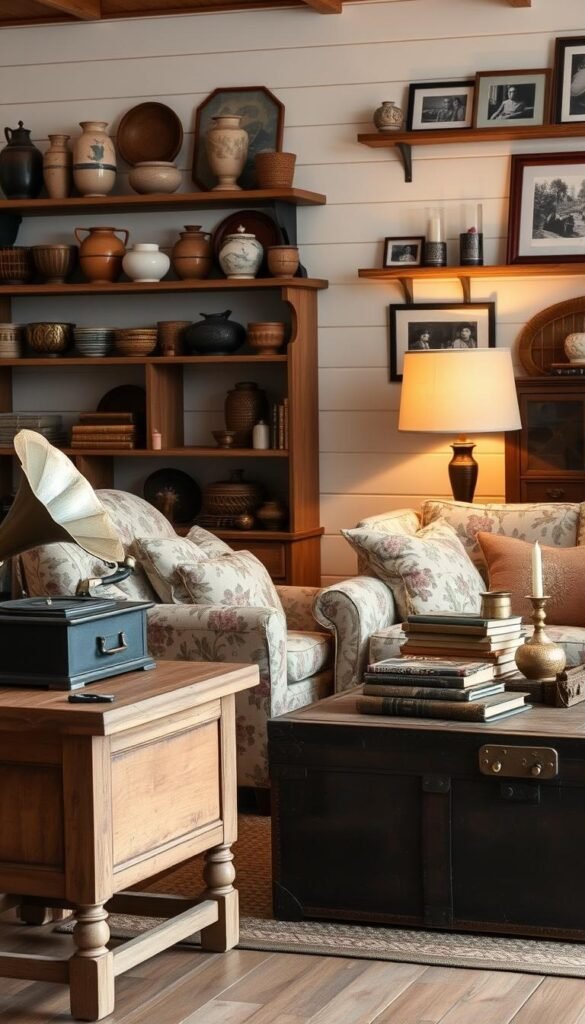
Antique discoveries bring soulful character to your living environment. These treasures add depth and history that new items simply cannot replicate. Your space becomes more personal and interesting with each unique find.
Vintage elements create a collected-over-time feeling. They make your area feel curated rather than decorated. This approach builds a space with genuine personality.
Mixing Old and New Pieces Seamlessly
Blend historical items with contemporary furnishings for balance. A vintage coffee table pairs beautifully with a modern sofa. This combination creates visual interest throughout your space.
Designer Laura Lubin recommends this approach:
Reclaimed wood beams alongside sleek furniture create wonderful tension. The contrast makes both elements stand out beautifully.
Look for statement pieces that bridge different eras. Lucite end tables offer transparency that doesn’t overwhelm. An antique English farm bench adds rustic charm without feeling too heavy.
Your mix should feel intentional yet effortless. Too many matching pieces can create a themed look. Variety keeps your space feeling dynamic and fresh.
Where to Hunt for Unique Vintage Decor
Excellent sources await your discovery journey. Flea markets like Round Top offer wonderful treasures. Online platforms such as 1stdibs provide curated selections.
Local antique shops often hide amazing finds. Estate sales reveal personal items with real history. These venues offer pieces you won’t find anywhere else.
Consider these shopping destinations:
| Location Type | Best For | Shopping Tips |
|---|---|---|
| Flea Markets | Unique furniture, architectural elements | Arrive early, bring measurements, negotiate politely |
| Online Platforms | Curated collections, specific styles | Check dimensions carefully, read seller reviews |
| Antique Shops | Quality pieces, professional restoration | Build relationships with dealers, ask about history |
| Estate Sales | Personal items, complete sets | Research items beforehand, respect the home |
Assess condition and authenticity before purchasing. Look for solid construction and quality materials. Minor flaws often add character, but structural issues may need repair.
Family heirlooms bring the most personal connection. These items carry your own history into your space. Locally sourced antiques tell regional stories too.
Even small accessories make significant impact. Vintage books, pottery, or textiles add layers of interest. They create conversation starters throughout your room.
Your vintage finds should reflect your personal taste. Choose pieces that speak to you emotionally. This creates a space that feels truly yours.
Remember that cost doesn’t always equal value. Wonderful treasures await at various price points. The right piece completes your design perfectly.
11. Bring the Outdoors In With Lush Greenery
Plants transform your area with natural energy and vibrant life. They add organic beauty that complements your overall aesthetic. This approach creates a fresh, inviting atmosphere throughout your space.
Greenery brings wonderful texture and color variation. It softens hard lines and adds visual interest. Your room feels more alive and connected to nature.
Choosing Easy-Care Floor Plants
Large leafy specimens create dramatic impact in your room. They add height and draw the eye upward beautifully. These plants become living sculptures in your design.
Select varieties that thrive indoors with minimal attention. B&Q’s low-maintenance palm works perfectly for shady spots. Fiddle-leaf figs offer beautiful broad leaves that enhance any corner.
Consider your light conditions before selecting plants. Some varieties need bright indirect light to flourish. Others tolerate lower light levels comfortably.
Place floor plants near windows for optimal growth. They can fill empty corners without blocking flow. This maintains your room’s open feel while adding natural elements.
Incorporating Trailing and Hanging Plants
Trailing varieties add wonderful movement and softness. They work beautifully in hanging baskets or on high shelves. These plants create flowing lines that enhance your vertical space.
Pothos and ivy are excellent choices for beginners. They grow quickly and adapt to various light conditions. Their cascading vines add organic charm throughout your room.
Use macrame hangers for a soft, textured look. They complement the natural materials in your design. This approach adds another layer of visual interest.
Position hanging plants near windows or in bright corners. They benefit from good light while saving floor space. This makes them perfect for smaller areas.
| Plant Type | Best Varieties | Care Level |
|---|---|---|
| Floor Plants | Palms, fiddle-leaf figs, monstera | Moderate light, weekly watering |
| Trailing Plants | Pothos, ivy, philodendron | Low to bright light, drought-tolerant |
| Seasonal Blooms | Orchids, peace lilies, African violets | Specific care, seasonal color pops |
Plants improve air quality and overall well-being. They filter toxins and add oxygen to your environment. This creates a healthier, more refreshing space.
Mix different sizes and types for layered interest. Combine tall floor plants with trailing varieties. This creates a lush, organic look throughout your room.
Greenery complements neutral colors and natural materials perfectly. It reinforces that connection to nature in your design. Your space feels more balanced and harmonious.
Choose plants based on your care commitment and light conditions. Some varieties need more attention than others. Select options that fit your lifestyle for long-term success.
Plants offer an affordable way to refresh your look seasonally. You can change arrangements as your preferences evolve. This keeps your space feeling dynamic and current.
12. Adorn Your Walls With Artwork That Complements the Style
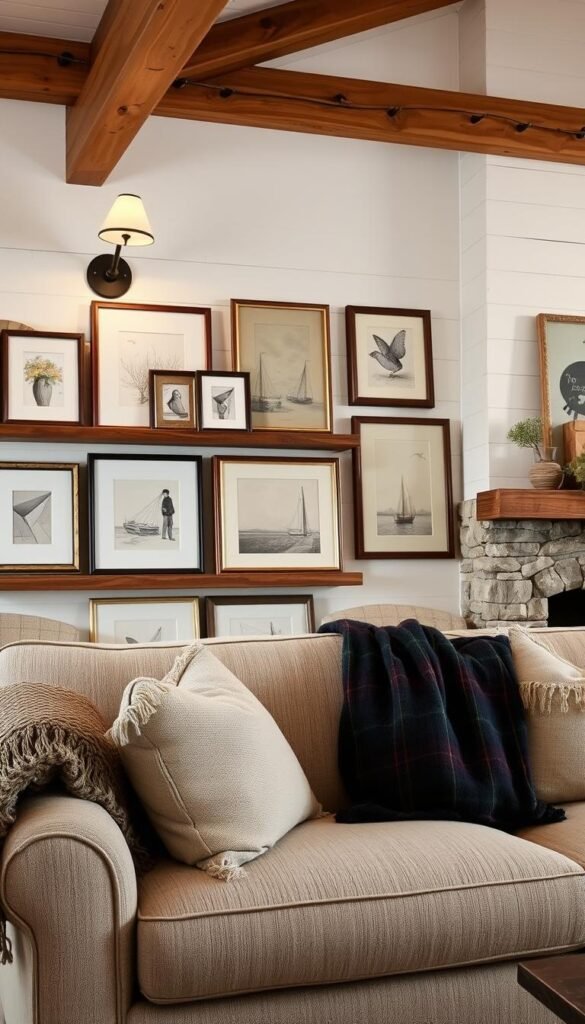
Your wall decor completes the character of your space. It adds personality while tying all elements together beautifully. The right pieces make your area feel truly complete.
Artwork brings visual interest to vertical surfaces. It creates focal points that draw the eye upward. This approach adds dimension to your overall design.
Selecting Subjects and Color Schemes
Choose pieces with soft, nature-inspired colors. Beige, light green, and cream work beautifully. These hues complement your neutral palette without overwhelming.
Botanical prints add organic charm to your walls. Countryside landscapes create peaceful focal points. Abstract patterns with natural tones evoke calm feelings.
Vintage botanical artwork from Etsy offers wonderful character. These pieces add subtle color while maintaining that back-to-nature vibe. They bring historical charm to your contemporary space.
Consider subjects that reflect your personal interests. Family photos in simple frames create warmth. Local scenes add regional character to your decor.
Creating a Cohesive Gallery Wall
Mix frames of similar materials for harmony. Wood and metal finishes work well together. This creates visual consistency throughout your arrangement.
Arrange pieces symmetrically for balanced appeal. Start with larger statement works as anchors. Fill spaces with smaller complementary pieces.
Highlight key areas like above your sofa or fireplace. These natural focal points deserve special attention. Your artwork becomes a conversation starter.
Original pieces or personal prints add meaning. They make your space feel uniquely yours. Local art shows support for community talent.
Artwork doesn’t need expensive price tags. DIY options add wonderful personal charm. Thrift store finds can become treasures with proper framing.
Balance large statements with smaller accents. This creates interest without visual clutter. Your walls feel curated rather than crowded.
Consider lighting when placing your pieces. Ensure they remain visible and enhanced. Proper illumination makes artwork shine day and night.
Your wall decor tells your personal story. It completes the character of your home. These finishing touches make everything feel intentional.
13. Accessorize With Organic and Woven Elements
Your finishing touches transform a decorated area into a complete home. These details add personality while serving practical purposes. They bring that final layer of warmth and character to your space.
Thoughtful accessories make your room feel collected over time. They add visual interest without overwhelming the design. This approach creates a space that feels both intentional and lived-in.
Using Wicker Baskets for Storage and Style
Wicker baskets offer beautiful storage solutions throughout your room. They hold blankets, magazines, or remote controls neatly. These pieces blend function with rustic charm perfectly.
Dunelm’s natural storage basket works wonderfully for cushion organization. Its woven texture adds visual interest while keeping things tidy. You maintain that clean look without sacrificing style.
Place baskets where you need easy access to items. Near seating areas or under tables works beautifully. This keeps essentials within reach while reducing clutter.
Choose sizes that fit your specific storage needs. Larger baskets hold throw blankets or firewood. Smaller versions organize remote controls or reading materials.
Adding Final Touches With Natural Decor
Organic accessories bring handmade charm to your surfaces. Dried flowers add subtle color and texture. Chunky candles create cozy ambiance during evenings.
Clay pots introduce earthy elements throughout your room. They work as planters or standalone decorative pieces. Their imperfect surfaces add authentic character.
Group items together to create intentional vignettes. A tray organizes smaller pieces on coffee tables. This approach feels curated rather than cluttered.
Designer Emma Henderson emphasizes organic materials:
Natural accessories develop beautiful patina over time. Their aging process adds to your room’s story and charm.
Choose pieces that serve both decorative and functional purposes. A beautiful bowl can hold keys or remote controls. This approach maintains practicality while enhancing style.
| Accessory Type | Functional Purpose | Style Impact |
|---|---|---|
| Wicker Baskets | Blanket storage, magazine organization | Adds texture, rustic charm, warmth |
| Dried Florals | Seasonal decoration, subtle color | Organic texture, natural beauty, handmade feel |
| Chunky Candles | Evening ambiance, subtle lighting | Cozy atmosphere, organic shapes, warmth |
| Clay Pottery | Plant containers, decorative objects | Earthy elements, handmade character, texture |
Scale matters when selecting your final touches. Choose items that fit your space proportionally. Oversized accessories can overwhelm smaller areas.
Woven elements like rattan or jute introduce wonderful texture. They complement other natural materials in your room. This creates harmonious layers throughout your design.
Your accessories should reflect your personal taste and lifestyle. Select pieces that bring you joy and serve practical needs. This makes your space feel uniquely yours.
Remember that less often creates more impact. A few well-chosen items make stronger statements than many pieces. This approach maintains that clean, intentional look.
Organic materials age beautifully over time. They develop character that enhances your room’s story. Your space becomes more interesting with each passing year.
14. Bring Your Modern Cozy Farmhouse Living Room Ideas to Life
Your journey to a welcoming farmhouse living room starts with small steps. Choose soft colors and natural materials first. Add comfortable seating and personal touches over time.
Mix old and new pieces for a balanced look. This creates a space that feels both fresh and timeless. Your home will reflect your unique taste beautifully.
Start with one idea that excites you most. Maybe it’s a neutral palette or reclaimed wood accents. Build from there as your confidence grows.
Remember to update textiles seasonally for a fresh feel. Share your progress with others for inspiration. This design approach offers lasting enjoyment for years ahead.
Enjoy creating a room that truly represents you. It should be a place where memories are made and comfort is always present.