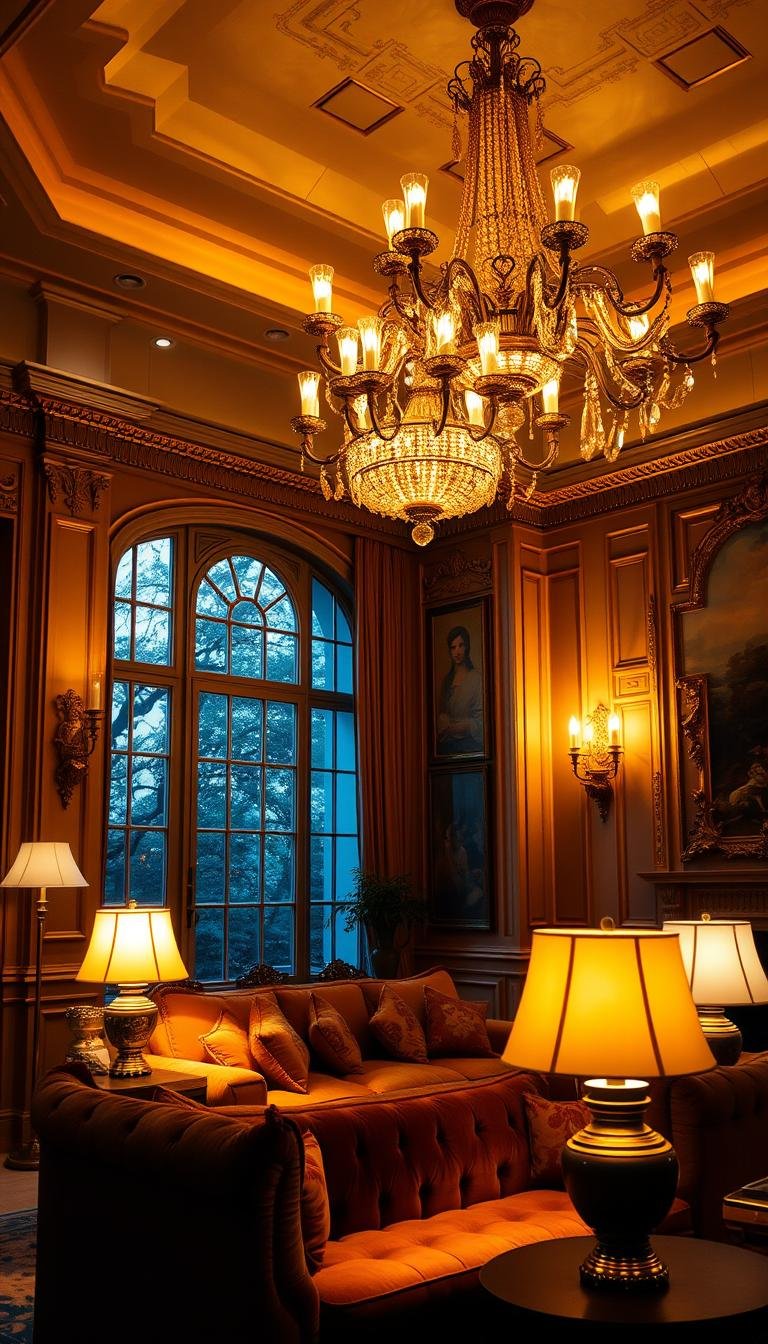
Your home’s atmosphere transforms with the right lighting. It goes far beyond simple function. The glow in your space sets the tone and tells a story about your personal taste.
Top interior designers, like Francesco Dolfo, treat fixtures as art. A sculptural floor lamp or a bold chandelier becomes a centerpiece. These elements add drama and highlight what you love.
There is no single solution that works for everyone. Your scheme should match how you relax and entertain. The best ideas make your area feel more inviting every single night.
This guide will help you explore various options. We will cover types, placement, and styling to create a stunning effect. Get ready to turn your everyday experience into something special.
Why Lighting is the Secret to Your Living Room’s Ambiance
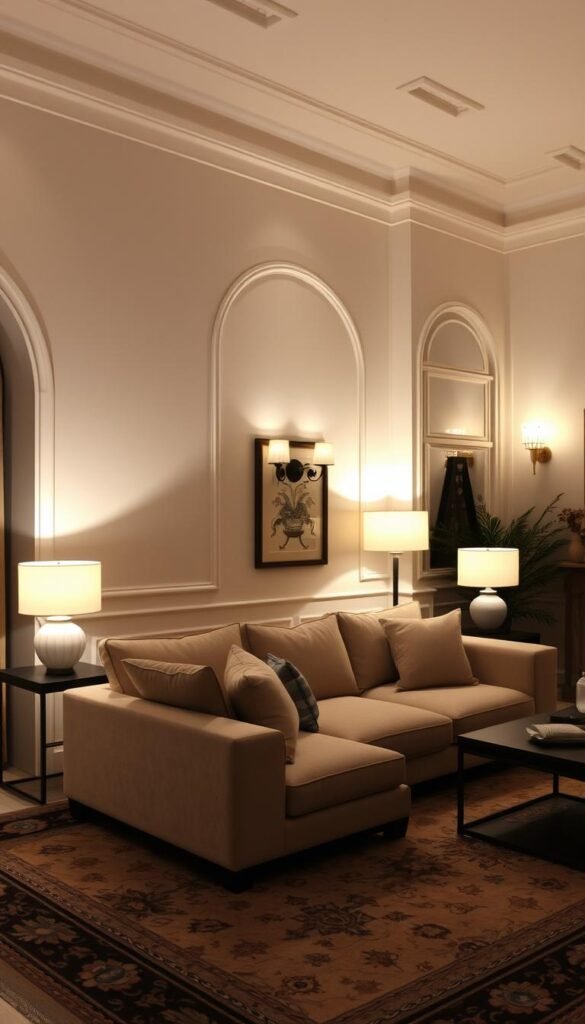
Think about the last time you walked into a beautifully lit area. You probably felt an immediate sense of comfort. That feeling is no accident. It is the direct result of thoughtful illumination planning.
Giorgio Armani once noted that illumination contributes to over half of a room’s stylistic impact. This shows its power goes far beyond simple brightness. It becomes part of your personal expression.
More Than Just Function: Lighting as a Design Statement
Your fixtures should do more than just help you see. They can act as sculptural elements that reflect your taste. Top designers treat them as functional art pieces.
Consider how a unique floor lamp or an elegant sconce can become a conversation starter. These pieces add character. They make your space feel curated and intentional.
Montana Labelle often uses natural sources creatively. She might position furniture to catch morning sun through shutters. This creates beautiful patterns without extra fixtures.
How Light Transforms Space and Perception
The right glow can completely change how you experience a room. Warm tones around 2700K to 3000K make areas feel cozy and relaxing. Cooler tones can energize the same area for daytime activities.
Strategic placement can also alter perceived size. Uplighting makes ceilings seem higher. Well-placed lamps can make a small area feel more open and inviting.
Light also highlights what you love. It can draw attention to a favorite artwork or interesting wall texture. This adds depth and makes your design feel more dynamic.
| Light Temperature | Best Use | Mood Effect |
|---|---|---|
| 2700K – 3000K | Evening relaxation, reading nooks | Calming, warm, and intimate |
| 3500K – 4100K | Task areas, home offices | Focused and alert |
| 5000K – 6500K | Art display, detailed work | Bright and energizing |
Remember to balance artificial and natural sources. Each type of light serves a different purpose throughout your day. Layering them creates a versatile and beautiful environment.
Your illumination choices truly shape how you live in and enjoy your home. They are among the most powerful tools in interior design.
10 Modern Luxury Lighting Ideas to Elevate Your Space
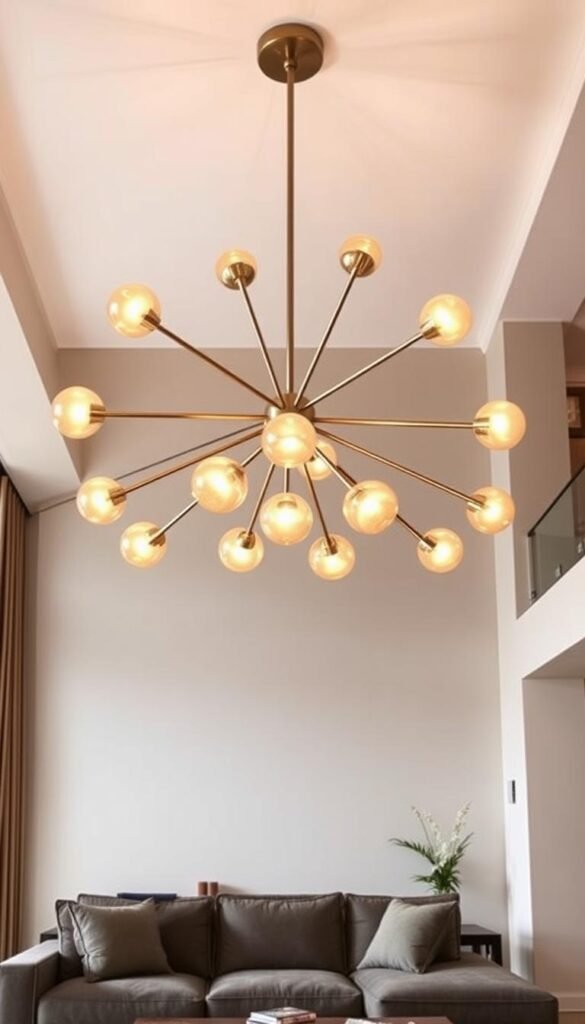
Ready to transform your home with brilliant illumination concepts? These ten approaches blend function with breathtaking beauty. Each one offers a unique way to enhance your daily experience.
You can mix and match these suggestions to create a personalized scheme. The best setups reflect your taste while improving how you use each area.
Statement Ceiling Fixtures: Beyond Basic Flush Mounts
Overhead illumination does not need to be boring. Brands like Bernd Goeckler and Lumens offer geometric designs that become instant focal points. These pieces add architectural interest without clutter.
Ford Huniford demonstrated this beautifully in his Sag Harbor project. He used repeated flush mounts to create rhythm and harmony. The result feels both intentional and inviting.
Consider materials like Murano glass for added drama. Uchronia’s chandelier shows how glass can scatter light beautifully. Your ceiling becomes a canvas for artistic expression.
Sculptural Floor Lamps: Art That Illuminates
Floor lamps do more than provide task lighting. They anchor seating areas and define zones within a room. Brands like Lambert & Fils create pieces that stand as sculpture.
Delia Kenza often uses minimalist leaning designs. These lamps add vertical interest without overwhelming the space. They become conversation starters while casting a perfect glow.
Christian Pellizzari’s work shows how these pieces complement other elements. A sculptural lamp can highlight textured walls or artwork. It serves dual purposes as both functional item and decorative object.
Elegant Wall Sconces: Jewelry for Your Walls
Wall fixtures act like precious accessories for your home. They provide focused illumination while adding sophistication. Jean Roger designs, favored by Martin Brûlé, offer timeless elegance.
Sconces create depth by drawing the eye upward. They make walls feel more dynamic and intentional. This approach works beautifully in reading nooks or beside artwork.
You can use sconces to highlight architectural features or textures. They provide ambient light without taking up floor space. Their refined presence enhances the overall mood after dark.
| Lighting Type | Best Placement | Design Impact | Recommended Brands |
|---|---|---|---|
| Statement Ceiling | Above seating areas | Creates focal point | Bernd Goeckler, Lumens |
| Sculptural Floor | Beside chairs or sofas | Defines zones | Lambert & Fils |
| Elegant Sconces | Flanking art or mirrors | Adds sophistication | Jean Roger |
These ideas represent just the beginning of what’s possible. Your space deserves illumination that reflects your personal style. Start with one statement piece and build around it.
Remember that great lighting combines aesthetics with practicality. The right fixtures make your home more beautiful and functional. They transform ordinary nights into special experiences.
The Art of Layering: Ambient, Task, and Accent Lighting
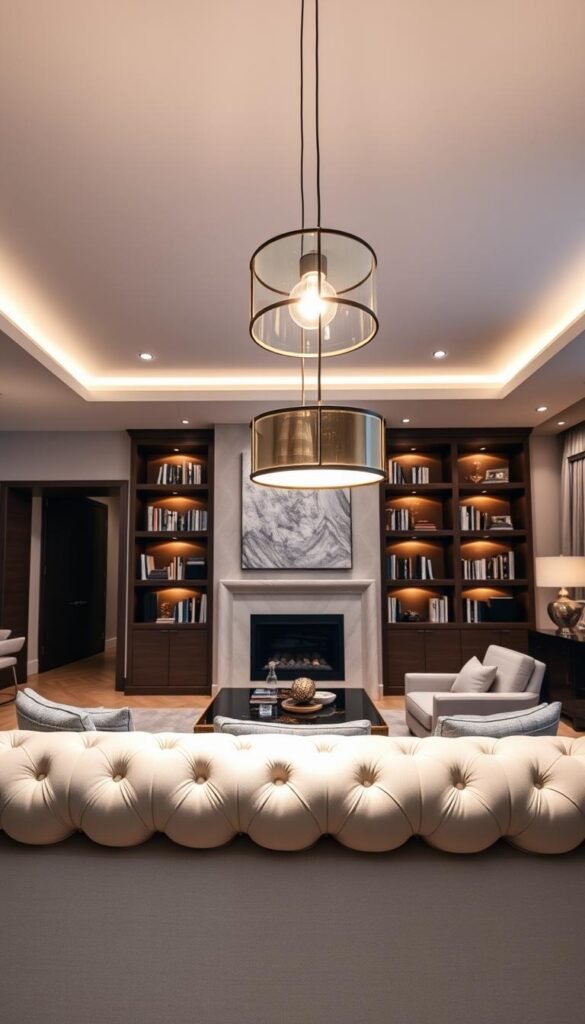
Transform your space from flat to fascinating by understanding the art of layered illumination. This approach combines different types to create depth and versatility throughout your day.
Think of it like building an outfit with multiple pieces. Each layer serves a purpose while contributing to the overall look. The result feels both intentional and adaptable to your needs.
Creating Depth with Multiple Light Sources
Ambient illumination forms your foundation. It provides general brightness throughout the area. Recessed lights or soft pendants work beautifully for this purpose.
Task lighting focuses on specific activities. A floor lamp beside your favorite chair creates perfect reading conditions. Table lamps on consoles offer both function and style.
Accent sources highlight what you love. Wall sconces can draw attention to artwork or interesting textures. LED strips emphasize architectural details with subtle drama.
Giorgio Armani approaches this creatively. He often uses paired table lamps to create balanced pools of light. This technique adds visual harmony while serving practical needs.
“I always layer mood before form – the feeling of a space comes first, then the physical elements follow.”
Balancing Function and Atmosphere
The magic happens when these layers work together seamlessly. During daytime, you might rely more on natural sources. As evening arrives, your artificial layers take center stage.
Martin Brûlé demonstrates this balance beautifully. He uses paired sconces to create symmetry while adding dimension. This approach avoids clutter while enhancing the overall effect.
Dimmers become your best friend for adjusting between occasions. Bright settings work for gatherings and activities. Softer glows create cozy evenings for relaxation.
Experiment with different combinations to find what suits your lifestyle. Start with your ambient base, then add task and accent pieces. The right balance makes your home both practical and inviting.
| Layer Type | Primary Purpose | Common Fixtures | Best Placement |
|---|---|---|---|
| Ambient | General illumination | Recessed lights, pendants | Throughout the space |
| Task | Specific activities | Floor lamps, table lamps | Near seating, workspaces |
| Accent | Highlighting features | Sconces, track lights | Above art, architectural elements |
Remember that great layering adapts to how you live. It should support everything from quiet reading nights to entertaining friends. Your personalized approach will make every experience more enjoyable.
Don’t be afraid to adjust and experiment over time. The best setups evolve with your changing needs and preferences. Your perfect ambiance awaits through thoughtful layering.
Strategic Lighting Placement for Maximum Impact
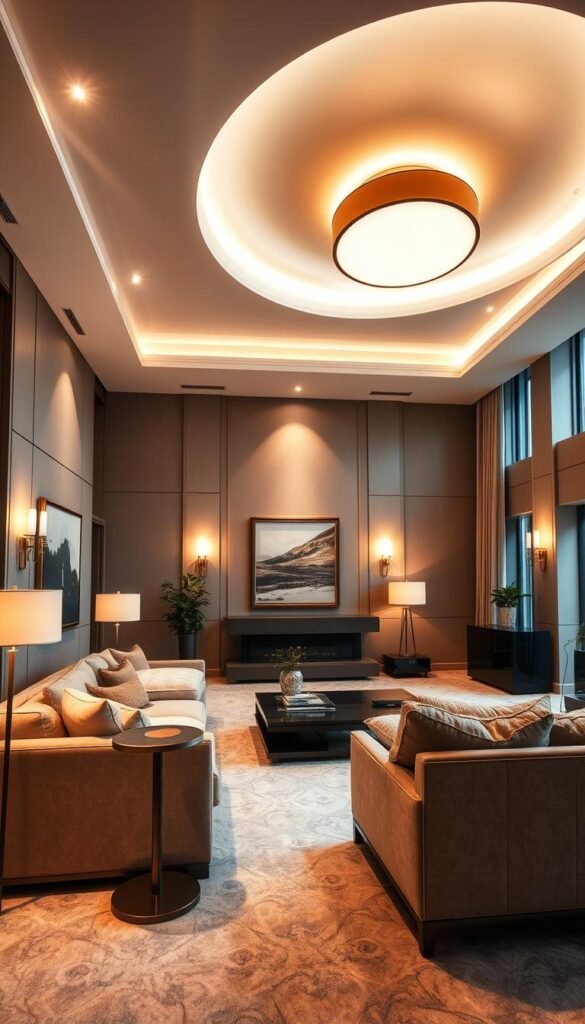
Where you place your fixtures makes all the difference between good and great illumination. Thoughtful positioning transforms how you experience your home after dark.
It’s not just about brightness. Proper placement creates visual harmony and eliminates shadows. Every fixture should serve both practical and aesthetic purposes.
Zoning Your Living Room for Optimal Illumination
Break your area into functional zones that need different lighting approaches. This creates a layered effect that adapts to various activities.
Your seating area deserves warm, inviting illumination. Media zones benefit from indirect light that reduces screen glare. Entry points need welcoming glow that guides movement.
Designers at RENG suggest treating each zone as its own small environment. Their handcrafted pieces work beautifully to define these spaces. Each fixture becomes both functional and artistic.
Height and Spacing Guidelines for Different Fixtures
Getting the measurements right ensures comfort and visual appeal. Follow these practical guidelines for best results.
Hang pendants 24-30 inches above your coffee table. This creates intimate pools of light perfect for conversation. Cluster multiple pendants based on furniture layout rather than room center.
Position floor lamps to clear seated head height by 5-6 feet. This prevents glare while providing excellent reading light. Stagger heights among different fixtures for visual interest.
Wall sconces should be placed at eye level when standing. This placement works beautifully beside artwork or in hallways. They guide movement while adding sophistication.
| Fixture Type | Ideal Height | Best Placement | Special Considerations |
|---|---|---|---|
| Pendant Lights | 24-30″ above surface | Over coffee tables, dining areas | Use odd-number groupings for dynamism |
| Floor Lamps | 5-6 feet tall | Beside seating, reading nooks | Ensure shade bottom at eye level when seated |
| Wall Sconces | 60-66 inches from floor | Flanking art, hallways, entryways | Space 6-8 feet apart in corridors |
| Table Lamps | 26-32 inches tall | On consoles, end tables | Shade bottom should align with seated eye level |
Test your placements with dimmable options before finalizing. This lets you adjust for different moods and activities. The right setup makes every night more enjoyable.
Remember that these are guidelines, not strict rules. Your personal preference and room layout might suggest slight adjustments. Trust your eye for what feels right in your space.
Choosing Materials and Finishes for Your Perfect Glow
The materials surrounding your bulbs create unique lighting personalities throughout your home. Each substance interacts with illumination differently, transforming ordinary brightness into something special.
Your choices affect both visual appeal and practical function. The right combination enhances comfort while supporting your design vision.
How Glass, Metal, and Stone Affect Light Quality
Glass creates soft, diffused illumination that feels warm and inviting. Frosted or textured varieties scatter light beautifully across your space.
Murano glass chandeliers demonstrate this elegance perfectly. They transform bright sources into gentle radiance that flatters both people and fabrics.
Metal offers crisp, directional light perfect for task areas. Polished finishes add sparkle while matte surfaces provide subtle reflection.
Stone and alabaster deliver honeyed, tactile illumination. These materials absorb and re-emit light with organic warmth that feels luxurious.
Ceramic introduces matte texture that reduces glare. Handcrafted pieces bring artisanal character to functional lighting.
Matching Fixture Finishes to Your Design Aesthetic
Your finish choices should harmonize with existing color palettes. Brass or bronze tones complement warm interiors beautifully.
Brushed nickel works well in contemporary schemes. Its subtle shine adds sophistication without overwhelming other elements.
Consider how finishes interact with bold textiles and patterns. Neutral fixture materials balance vibrant upholstery and artwork.
Designers often mix materials for visual interest. A glass pendant paired with metal floor lamps creates depth and character.
“Materials don’t just house light—they transform it into emotional experiences that define how we feel in a space.”
Evaluate materials based on room zones and activities. Diffused glass works wonderfully in conversational areas where soft light encourages relaxation.
Choose non-reflective finishes near television screens to reduce glare. Matte ceramics or painted metals perform beautifully in media spaces.
Warm stone materials enhance dining and reading nooks. Their organic glow makes evening hours feel more intimate and comfortable.
| Material | Light Quality | Best Applications |
|---|---|---|
| Glass | Soft, diffused glow | Ambient lighting, social areas |
| Metal | Crisp, directional | Task lighting, accent pieces |
| Stone/Alabaster | Warm, honeyed | Dining spaces, bedrooms |
| Ceramic | Matte, reduced glare | Media areas, reading nooks |
Experiment with material combinations that reflect your personal style. The right mix creates both visual harmony and functional versatility.
Remember that materials work with temperature choices. Warm 2700K-3000K light enhances natural material characteristics beautifully.
Your perfect glow awaits through thoughtful material selection. These choices transform functional fixtures into expressive elements that elevate daily living.
Modern Luxury Living Room Lighting Ideas for Mood and Style
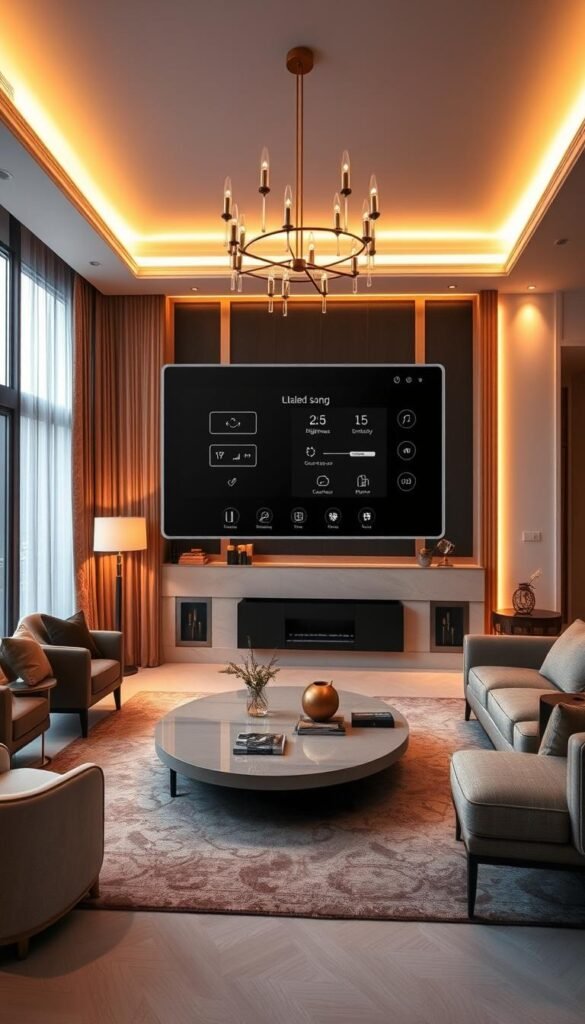
Technology now lets you adjust your home’s glow with a simple tap or voice command. These systems bring new convenience to creating the perfect atmosphere.
Imagine setting up scenes for different moments. Your “movie night” preset dims overhead fixtures while accenting walls softly. “Dinner party” brightens the whole area for lively conversation.
Brands like RENG offer dimmable artisanal pieces that work with smart controls. You get beautiful design plus modern functionality in one package.
Incorporating Smart Technology for Seamless Control
App-based systems let you manage illumination from anywhere. You can adjust settings before arriving home or create schedules that match your routine.
Voice-activated setups respond to simple commands. Ask your assistant to “set relaxing evening mode” and watch the transformation happen instantly.
Smart switches integrate beautifully with existing fixtures. They maintain your design aesthetic while adding technological benefits. Installation is often simpler than you might expect.
These systems work across all your layered sources. You can adjust ambient, task, and accent lighting independently. This creates truly dynamic experiences throughout your space.
Using Dimmers to Create Versatile Atmospheres
Dimmers remain the simplest way to transform mood instantly. They let you shift from bright social settings to soft intimate moments with a gentle slide.
Start by installing dimmers on key fixtures like pendants or sconces. These often serve as primary sources that set the overall tone.
Layering dimmers across different types creates depth. You might brighten task sources while keeping ambient glow subdued. This approach supports various activities simultaneously.
Even artisanal pieces benefit from dimming capabilities. The right controls preserve their artistic integrity while adding practical flexibility.
“Dimmers don’t just adjust brightness—they curate experiences. The same room can host energetic gatherings and peaceful solitude within hours.”
Consider energy efficiency when planning your system. LEDs with smart controls reduce consumption when full brightness isn’t needed. This saves power while enhancing comfort.
View technology as a tool for personalizing your scheme. It adds both style and functionality to your overall design approach.
| Control Type | Best Applications | Mood Range | Installation Complexity |
|---|---|---|---|
| Smart Dimmers | Primary fixtures, frequently used areas | Full spectrum from bright to intimate | Moderate (may require hub) |
| Voice Control | Whole-room scenes, hands-free adjustment | Pre-set moods for different activities | Easy (works with existing assistants) |
| App Control | Scheduling, remote access | Customizable for time of day | Moderate (requires WiFi) |
| Manual Dimmers | Individual fixtures, budget-friendly option | Basic brightness adjustment | Easy (standard switch replacement) |
Begin with dimmers on your most used fixtures. Expand to full smart systems gradually as you discover what works best for your lifestyle.
Your perfect atmosphere awaits through thoughtful technology integration. These tools make beautiful illumination more accessible than ever before.
Statement Pieces: When Lighting Becomes the Focal Point
Some fixtures do more than provide illumination—they command attention and define your entire space. These bold elements become the heart of your room, sparking conversation and reflecting your unique personality.
Choosing the right statement piece requires careful thought. It should complement your room’s scale and existing decor while adding that wow factor you crave.
Choosing Bold Chandeliers and Pendants
Oversized chandeliers create instant drama and grandeur. Nicholas Obeid demonstrated this beautifully by using twin fixtures in a long room. The repetition created rhythm while making the space feel expansive.
Consider proportions when selecting your centerpiece. A fixture that’s too small gets lost, while one that’s too large overwhelms. Measure your area and choose something that feels substantial but not cramped.
Materials matter for maximum impact. Murano glass scatter light beautifully while adding artistic value. Christian Pellizzari’s creations show how glass can transform ordinary brightness into something special.
Don’t shy away from color either. Ken Fulk’s bright pink chandelier proves that playful defiance can work wonderfully. It becomes a joyful surprise against more neutral backgrounds.
Mixing Styles for Eclectic Elegance
Combining different eras creates fascinating tension in your home. Pair vintage fixtures with contemporary furniture for a curated, collected look. This approach feels personal and intentional.
The key is finding common elements that tie everything together. Similar finishes or materials can bridge style gaps beautifully. Your space will feel cohesive rather than chaotic.
Uchronia’s work demonstrates how mixed styles create depth. Their pieces reference historical designs while feeling completely current. This balance makes your lighting feel both timeless and fresh.
Remember that your statement piece should enhance rather than dominate. Balance bold fixtures with simpler secondary lighting. This creates harmony while letting your focal point shine.
“A great statement fixture doesn’t shout—it whispers something wonderful about the person who chose it.”
Finally, trust your instincts when making bold choices. Your lighting should reflect what you love rather than following strict rules. The most memorable spaces always feel authentically personal.
Incorporating Natural Elements and Outdoor Inspiration
Nature offers the perfect blueprint for creating a soothing atmosphere in your home. Drawing from organic patterns and materials brings a sense of calm and authenticity to your space. This approach makes your interior feel connected to the world outside.
Many top designers look to landscapes for creative ideas. They use textures, shapes, and natural light to craft environments that breathe. Your home can benefit from this same thoughtful inspiration.
Bringing the Outside In with Organic Materials
Choose fixtures made from wood, stone, or natural fibers. These substances add warmth and texture that manufactured items often lack. They make your design feel grounded and real.
Allison Willson demonstrates this beautifully with her tree-branch chandelier. This piece ties a room to its wooded setting through organic forms. It becomes both functional object and natural sculpture.
Woven fixtures introduce handcrafted character to your scheme. Their intricate patterns scatter light in soft, interesting ways. This creates a cozy glow that feels both rustic and refined.
Position these pieces near windows or in seating areas. Natural materials look especially beautiful when complemented by daylight. They enhance the connection between indoors and outdoors.
Lantern-Style Lighting for Coastal Charm
Lantern designs evoke breezy, relaxed feelings perfect for any home. RH’s Duomo collection shows how these fixtures bring coastal character indoors. Their perforated metal casts beautiful shadow patterns.
Meyer Davis integrates natural illumination beautifully in projects like their Oaxaca resort. They use lantern-style pieces to channel alfresco living even inside. This approach creates vacation-like vibes daily.
Consider rechargeable or candle-powered options for authenticity. These choices provide soft, flickering effects that electric sources sometimes miss. They add romance and ambiance to evening hours.
Mix these elements with contemporary designs for balance. A modern lantern in natural materials bridges styles beautifully. Your space feels both current and connected to nature.
| Natural Element | Design Effect | Best Placement | Style Pairing |
|---|---|---|---|
| Wood | Adds warmth and organic texture | Near windows, in reading nooks | Mid-century modern, rustic |
| Stone/Alabaster | Provides soft, honeyed glow | Dining areas, entryways | Mediterranean, minimalist |
| Woven Fibers | Creates patterned light effects | Seating areas, hallways | Coastal, bohemian |
| Lantern Styles | Evokes breezy, relaxed mood | Patio openings, console tables | Coastal, transitional |
Look to your home’s surroundings for inspiration. If you live near woods, incorporate branch-like forms. Coastal homes might feature nautical lantern designs.
These natural touches add character and tranquility to your retreat. They make every night feel more peaceful and connected to the world outside your doors.
Practical Tips for Lighting Specific Living Room Areas
Great lighting makes your home feel warm and welcoming. It turns everyday moments into special experiences. Each part of your space deserves its own thoughtful glow.
Focus on how you use different zones throughout the day. Your seating area needs cozy light for relaxing. Art displays benefit from focused beams that show off their beauty.
Smart placement prevents shadows and glare. It makes your whole environment more comfortable and attractive. Let’s explore how to brighten key spots perfectly.
Illuminating Seating Arrangements and Conversation Nooks
Your favorite chairs and sofas deserve gentle, inviting light. Floor lamps work beautifully beside reading spots. They provide direct illumination without harshness.
Adjustable pendants hung above side tables offer flexible task lighting. You can raise or lower them based on your needs. This creates perfect conditions for chats or quiet reading.
Kemble Interiors shows how to light built-in seating cleverly. They use discreet sources to highlight shelves and cabinets. This approach adds function while keeping the look clean.
Dimmers help you set the right mood for any occasion. Bright settings work for game nights with friends. Softer glows create cozy evenings for relaxation.
Highlighting Artwork and Architectural Features
Art pieces and interesting walls deserve special attention. Picture lights mounted above frames provide focused beams. They make colors pop and details shine.
Wall sconces placed beside artwork add depth and dimension. Alex Reid uses plug-in versions for flexible movie night setups. You can move them around to highlight different pieces.
Consider the material and finish of your accent fixtures. Matte black finishes disappear against dark walls. Brass options become decorative elements themselves.
Position lights at eye level for best viewing experience. This prevents awkward shadows or reflections. Your favorite pieces will look their best day and night.
| Area Type | Recommended Fixtures | Placement Tips | Ideal Light Temperature |
|---|---|---|---|
| Seating Zones | Floor lamps, adjustable pendants | Beside chairs, 42-48 inches tall | 2700K-3000K (warm white) |
| Reading Nooks | Task lamps, directional sconces | Behind shoulder, avoid glare | 3000K-3500K (soft white) |
| Art Display | Picture lights, track lighting | 30 degrees from center, even coverage | 3500K-4100K (bright white) |
| Architectural Features | Uplights, recessed spots | Base of feature, upward angle | 2700K-3000K (warm white) |
Experiment with different combinations to find what works best. Your perfect setup might mix several types of fixtures. The goal is both beauty and function in every corner.
Remember that lighting should adapt to your changing needs. Smart controls make adjustments easy throughout the day. Your home will always feel just right.
Bringing Your Luxurious Lighting Vision to Life
Your home’s glow transforms everyday moments into special experiences. The right setup makes your space feel both beautiful and functional.
Remember to layer different sources for depth. Mix ambient, task, and accent pieces. This creates a versatile scheme that adapts to your needs.
Small changes make a big impact. Try adding a dimmer or a sculptural lamp. These touches personalize your area with ease.
Start with one corner and build gradually. Your perfect atmosphere will develop over time. Trust your instincts and enjoy the creative process.
Need guidance? Top designers offer wonderful inspiration. Tailor their ideas to suit your unique home and lifestyle.
Light shapes how you live and relax. It turns ordinary nights into cherished memories. Your vision awaits—illuminate it beautifully.