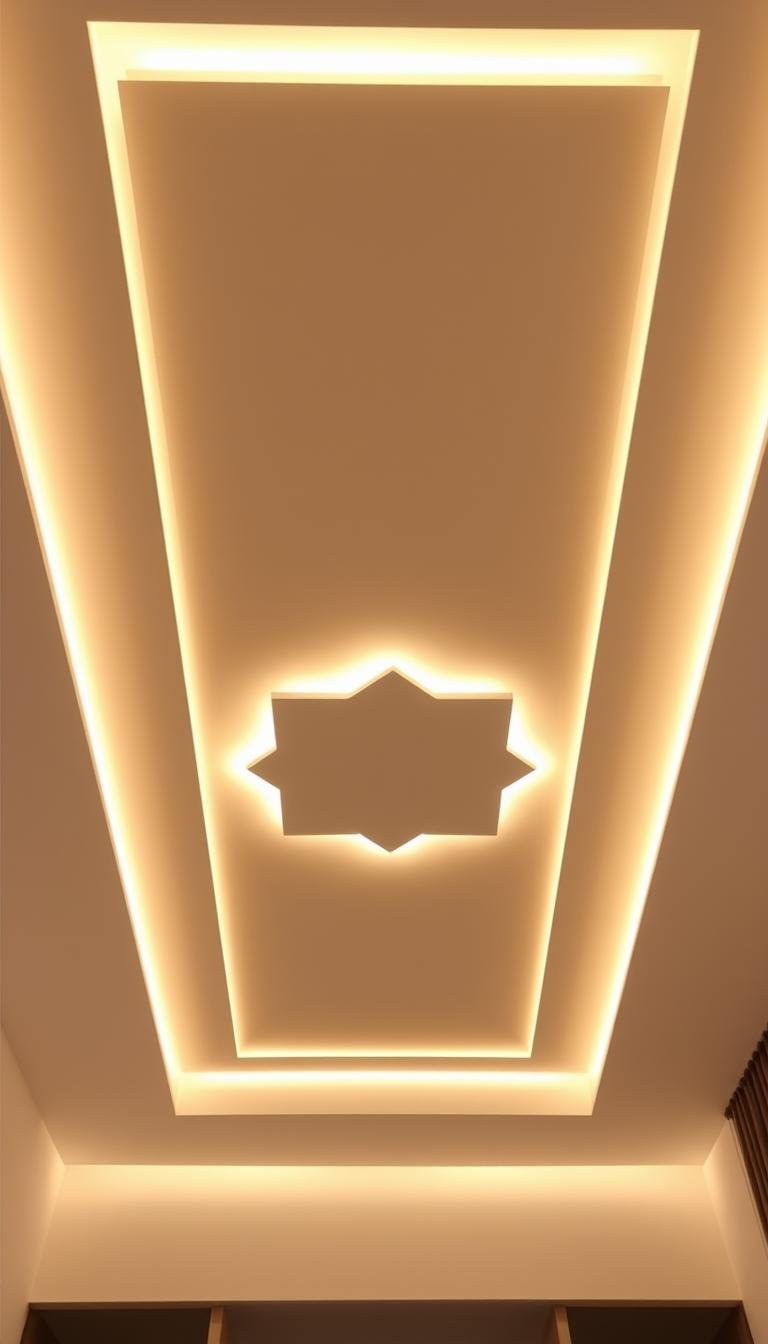
Your living area deserves more than just four walls and a basic overhead surface. Today’s interior solutions offer amazing ways to enhance your home’s atmosphere and functionality.
These innovative overhead systems do more than hide wires and ducts. They create depth and dimension, turning your fifth wall into a stunning focal point.
You can choose from various materials like gypsum or wood panels. The right selection transforms your space with beautiful geometric patterns or subtle cove lighting.
Modern solutions integrate LED strips and recessed lights perfectly. This approach gives you complete control over ambiance while maintaining a clean, polished look.
Whether you have high or standard ceiling height, these design ideas adapt beautifully. They bring architectural interest without compromising your room’s proportions.
Discover how the right overhead design can redefine your living experience. Let’s explore material options and creative possibilities that match your personal style.
Why Your Living Room Deserves a False Ceiling
Think of your ceiling as a blank canvas. A false ceiling gives you a chance to elevate your room’s entire vibe.
It’s not just about looks. These systems offer real perks for daily living. They make your space more comfortable and efficient.
More Than Just Hiding Wires: The Aesthetic Upgrade
A well-designed overhead structure adds serious style. It creates architectural interest where none existed before.
You get a seamless, modern finish that complements your decor. This approach turns your ceiling into a stunning focal point.
Choose from various materials like gypsum or wood panels. Each brings its own texture and character to your space.
Functional Benefits: Sound, Heat, and Light Control
These installations hide unsightly wires and ducts beautifully. You achieve that clean, minimalist look you love.
They also improve your room’s acoustics by absorbing noise. This means less echo and a more peaceful environment.
Thermal insulation is another huge advantage. It helps regulate temperature and can lower your energy costs.
Lighting control becomes effortless with integrated options. Think recessed lights, LED strips, or subtle cove lighting.
Gypsum boards are great for soundproofing. PVC panels offer moisture resistance for humid climates.
This combination of beauty and practicality makes it a smart investment. You enhance both your living experience and your home’s value.
Key Considerations Before You Choose a Design
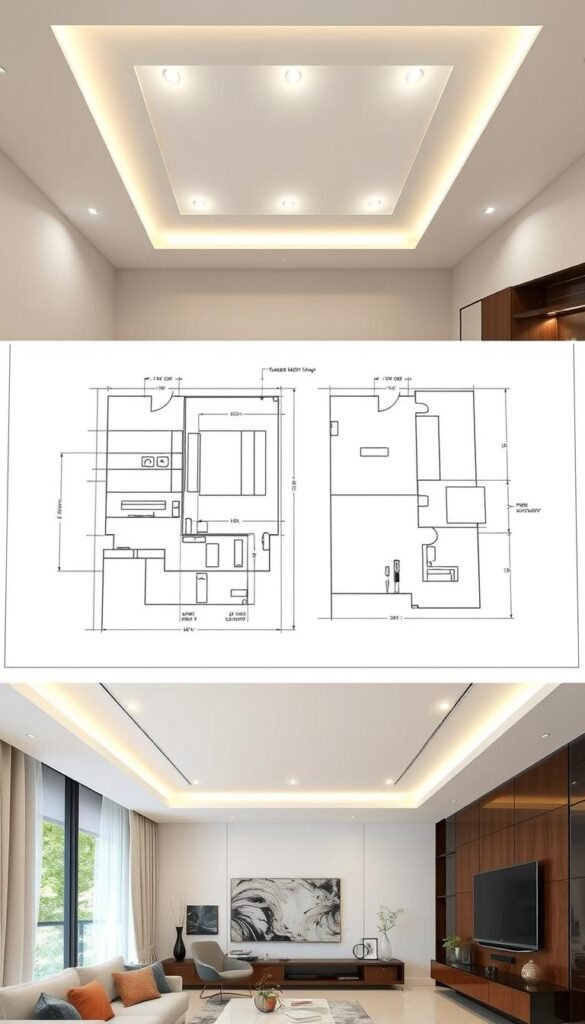
Planning your overhead upgrade requires careful thought. You want a result that looks amazing and functions perfectly.
Three factors play a huge role in your project’s success. Your budget, room dimensions, and lighting plan need early attention.
Taking time with these details ensures a smooth process. You avoid surprises and get the beautiful space you envision.
Setting a Realistic Budget for Your Project
Your material choice directly impacts the total cost. Simple designs cost less, while intricate patterns increase the price.
Here’s a quick guide to common material costs per square foot:
| Material Type | Cost Range (per sq ft) |
|---|---|
| Gypsum Boards | $1 – $1.50 |
| Plaster of Paris (POP) | $1.50 – $3.50 |
| PVC Panels | $2 – $4 |
| Wooden Panels | $5 – $10 |
| Metal Options | $3 – $7 |
Remember to factor in labor and additional elements. Lighting fixtures and controls add to your final investment.
Measuring Your Room’s Height for the Perfect Fit
Your existing ceiling height determines what you can achieve. Most installations require 4-6 inches of clearance.
Measure carefully from floor to your current overhead surface. Consult a professional if your room has low height.
Very low spaces might not suit this type of upgrade. You want to maintain comfortable proportions in your interior.
Planning Your Lighting Strategy from the Start
Lighting integration works best when planned early. Decide on fixture types and switch locations during design.
Popular options include subtle cove lighting or efficient LED strips. Recessed lighting creates a clean, modern look.
Your wiring needs proper placement before installation begins. This ensures everything works perfectly when finished.
Good planning gives you a cohesive and functional result. Your overhead becomes both beautiful and practical.
Exploring Common False Ceiling Materials
Your material choice sets the tone for your entire overhead transformation. Each option brings unique benefits to your space.
Consider your room’s climate and your personal style. The right selection balances beauty with practical needs.
Versatile and Modern: Gypsum Boards
Gypsum boards offer a smooth, clean finish for contemporary interiors. They are lightweight and relatively easy to install.
This material provides excellent fire resistance for added safety. You can achieve various looks from simple planes to layered designs.
Gypsum works well with integrated lighting solutions. It creates that seamless, polished appearance you love.
For Intricate Designs: Plaster of Paris (POP)
POP enables detailed custom work with stunning results. You can create floral motifs or complex geometric patterns.
This material allows for curved forms and ornamental details. It gives your overhead surface a grand, architectural presence.
Artisans can shape POP into truly unique configurations. Your ceiling becomes a genuine work of art.
Durable and Moisture-Resistant: PVC Panels
PVC panels stand up well in humid environments. They resist moisture damage and require minimal maintenance.
These panels work beautifully in kitchens or bathrooms. You get lasting performance without sacrificing style.
PVC offers various finishes that mimic other materials. It provides durability at a reasonable cost.
Adding Natural Warmth: Wooden Panels
Wood brings organic texture and warmth to your interior. It creates a cozy atmosphere that feels inviting.
You can choose from various wood types and finishes. Each offers distinct grain patterns and color variations.
Wood panels provide natural insulation properties. They help regulate temperature while adding visual interest.
| Material Type | Best For | Key Advantage | Maintenance Level |
|---|---|---|---|
| Gypsum Boards | Modern, clean looks | Fire resistance | Low |
| Plaster of Paris | Custom details | Design flexibility | Medium |
| PVC Panels | Humid areas | Moisture resistance | Very low |
| Wooden Panels | Warm, natural feel | Thermal insulation | Medium |
Your final choice depends on room conditions and desired aesthetics. Each material creates a different atmosphere and functionality.
Consider both initial investment and long-term upkeep. The perfect selection enhances your daily living experience.
How Room Size and Ceiling Height Shape Your Design
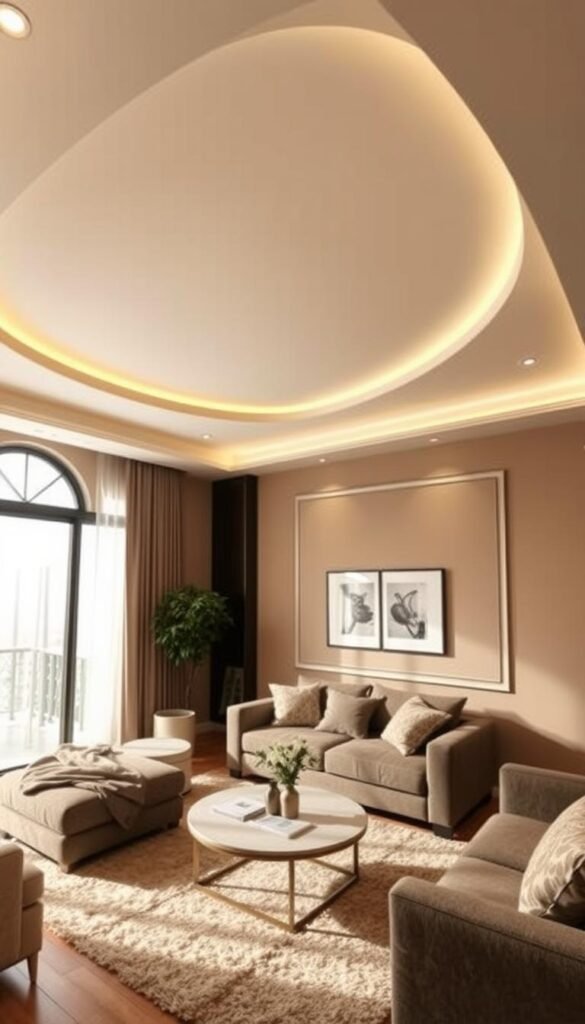
Your room’s dimensions play a huge role in choosing the perfect overhead solution. The right approach enhances your space instead of overwhelming it.
Whether you have cozy or generous proportions, smart design choices create balance. You can maximize visual appeal while maintaining comfortable functionality.
Optimal Designs for Low Ceilings
Rooms with limited overhead clearance need thoughtful planning. Simple, single-level planes work beautifully in these spaces.
Choose light colors and glossy finishes to create height illusion. These reflective surfaces make your room feel more open and airy.
Subtle cove lighting adds ambient glow without reducing headroom. This approach draws the eye upward, enhancing perceived space.
Avoid complex patterns or deep tiers that might feel oppressive. Clean lines and minimal elements keep your interior feeling spacious.
Making a Statement with High Ceilings
Generous overhead space offers exciting design opportunities. You can create dramatic focal points with multi-tiered configurations.
Coffered patterns add architectural interest and grand presence. These detailed elements emphasize your room’s generous proportions.
Consider incorporating led strips to highlight different levels. This lighting strategy adds depth and visual drama after dark.
Your high ceiling becomes a stunning canvas for artistic expression. Bold geometric patterns or intricate designs make impressive statements.
Creating Space in Small Living Rooms
Compact living areas benefit from minimalist overhead solutions. Simple designs prevent visual clutter and maintain openness.
Choose materials like gypsum for smooth, seamless surfaces. These create clean backgrounds that make your room feel larger.
Recessed lighting provides illumination without bulky fixtures. This approach keeps sightlines clear and enhances spatial perception.
Strategic lighting placement can define zones in open layouts. You achieve functional separation without physical barriers.
Remember that proportion matters most in smaller spaces. Your overhead design should complement rather than dominate the room.
Modern and Minimalist False Ceiling Designs
Minimalist overhead treatments offer a timeless elegance that never overwhelms your interior. This approach focuses on clean lines and purposeful simplicity.
You achieve a sophisticated look without unnecessary complexity. The result feels both contemporary and enduring.
These designs work beautifully in various room sizes. They create visual calm while maintaining full functionality.
The Sleek Look of a Single-Level Plane
A single-plane design creates a clean, uncluttered appearance. This approach is perfect for contemporary living rooms seeking minimalist style.
You get a smooth, continuous surface that enhances your space. It provides a neutral backdrop that complements any decor.
This type works especially well in compact areas. It maintains openness while adding architectural interest.
Gypsum boards are ideal for achieving this matte finish. They provide the seamless look you want for modern interiors.
Integrating Hidden Cove Lighting for Ambiance
Hidden cove lighting offers soft, indirect illumination. It creates ambient glow that defines room edges beautifully.
This lighting strategy produces a floating ceiling effect. It makes your overhead surface appear higher than actual height.
Cove lighting reduces glare while adding depth to your space. You can combine it with RGB LEDs for complete mood control.
The hidden nature keeps your look clean and minimalist. It provides function without visual distraction.
These simple designs are more cost-effective than elaborate options. You save on both materials and installation complexity.
As one designer noted,
“Sometimes the most powerful statement is the one you don’t make.”
Consider this timeless approach for your home. It creates spaces that feel both modern and permanently stylish.
Geometric Patterns for a Bold Statement
Ready to make your overhead surface truly unforgettable? Geometric patterns create instant visual impact that transforms ordinary spaces into extraordinary ones.
These angular arrangements bring rhythm and sophistication to your home. They work particularly well in contemporary settings seeking a strong architectural statement.
Hexagons, Triangles, and Asymmetrical Shapes
Hexagonal patterns create honeycomb effects that feel both organic and structured. They distribute visual weight evenly across your overhead surface.
Triangular arrangements introduce dynamic energy and directional movement. They guide the eye through your space in exciting ways.
Asymmetrical configurations break from traditional symmetry for modern appeal. They create unexpected focal points that capture attention immediately.
These patterns work wonders in narrow areas by creating width illusion. They can also bring organized structure to open-plan layouts.
Materials like gypsum or metal work beautifully for these intricate designs. Their flexibility allows for precise angular execution.
Using LED Strips to Highlight Angles
LED strips emphasize geometric shapes with brilliant precision. They trace patterns and create stunning visual effects after dark.
You can choose single-color or RGB options for mood customization. Warm white creates cozy ambiance while colors add playful energy.
Strategic placement along angles adds depth and dimension. The lighting becomes an integral part of the design rather than an addition.
This approach combines aesthetics with practical illumination. You get both dramatic visual impact and functional lighting solutions.
| Pattern Type | Visual Effect | Best Room Shapes | Lighting Integration |
|---|---|---|---|
| Hexagonal | Organic yet structured | Square or rectangular | Perimeter or cell lighting |
| Triangular | Dynamic movement | Long or narrow spaces | Edge highlighting |
| Asymmetrical | Modern focal points | Open-plan areas | Selective accent lighting |
Consider how these geometric ceiling designs can elevate your interior. They transform your overhead surface into a conversation-starting masterpiece.
Multi-Tiered Ceilings for Depth and Drama
Imagine your overhead surface transformed into a captivating architectural masterpiece. Multi-level configurations create stunning visual interest that draws the eye upward.
These layered designs add remarkable dimension to your interior. They work particularly well in spacious areas with generous overhead clearance.
You achieve both aesthetic appeal and practical functionality. The result becomes a conversation-starting centerpiece in your home.
Defining Zones in an Open-Plan Space
Open layouts benefit greatly from tiered overhead solutions. They create natural separation without physical barriers.
Different height levels signal distinct functional areas beautifully. Your living and dining spaces gain individual identity while maintaining visual connection.
Material changes between tiers enhance this zoning effect. You might choose gypsum for one section and wood panels for another.
Shadow gaps between levels add crisp definition. These intentional breaks create clean transitions between functional zones.
Layered Lighting for Function and Mood
Multi-tier configurations offer exceptional lighting opportunities. You can integrate different fixtures at various levels.
Concealed cove lighting on upper planes creates ambient glow. This soft illumination establishes the overall mood in your space.
Recessed lights on lower tiers provide task illumination. They ensure proper lighting for reading, dining, or other activities.
LED strips along edges highlight the architectural form. They emphasize the depth and drama of your multi-level design.
This layered approach gives you complete control over atmosphere. You can adjust different light sources to match various occasions.
| Tier Level | Recommended Lighting | Primary Function | Best Material Choices |
|---|---|---|---|
| Upper Level | Cove lighting, LED strips | Ambient mood setting | Gypsum, POP |
| Middle Level | Recessed fixtures | General illumination | Gypsum panels |
| Lower Level | Directional downlights | Task lighting | All materials |
| Transition Edges | Accent LED strips | Architectural highlighting | Metal trim, wood |
Consider your room’s proportions when planning tiered designs. More generous spaces can handle dramatic height variations.
Compact areas might prefer subtle level changes. The goal is enhancing your space without overwhelming it.
Materials like gypsum or POP work beautifully for clean tiers. They allow seamless integration of lighting elements.
Your multi-level ceiling becomes a stunning focal point. It grounds furniture arrangements and defines your entire interior.
This approach balances visual drama with comfortable proportionality. You create a space that feels both impressive and inviting.
The Classic Elegance of Coffered Ceilings
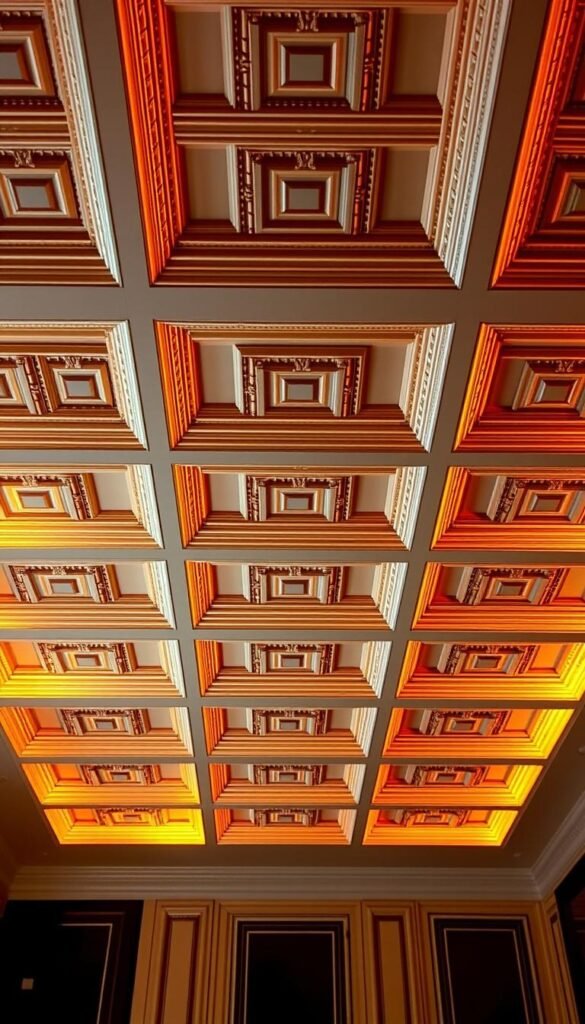
Looking for a way to add architectural sophistication to your home? Coffered ceilings bring timeless elegance with their recessed panel grid pattern. This classic approach transforms your overhead surface into a stunning feature.
These sunken panels create depth and dimension throughout your space. They work beautifully in both traditional and contemporary settings.
You get a grand, luxurious feel that elevates your entire room. The geometric arrangement adds visual interest without overwhelming your decor.
Traditional Grid Patterns for a Grand Feel
Traditional coffered designs feature symmetrical grid patterns. These create a sense of order and formal elegance in your space.
Materials like wood or MDF panels work beautifully for this look. They provide warmth and richness that enhances the classic appeal.
You can choose from various grid sizes and depths. Larger panels make a bold statement while smaller ones offer subtle refinement.
The recessed sections create shadow lines that add dramatic contrast. This interplay of light and dark emphasizes the architectural detail.
Modern Twists with Integrated Lighting
Contemporary versions incorporate innovative lighting solutions. LED strips placed within the coffers create stunning visual effects.
This approach adds ambient glow that highlights the grid pattern beautifully. You can customize the color temperature to match your mood.
Recessed lighting can be strategically placed within individual panels. This provides both general illumination and accent lighting.
The combination of traditional form and modern function creates a unique statement. Your ceiling becomes both a historical reference and contemporary feature.
Coffered designs work best in rooms with generous overhead clearance. They create a powerful focal point that draws the eye upward.
You can personalize your design with contrasting paint colors. Darker recessed areas against lighter beams create dramatic visual impact.
These ceilings bring architectural interest that complements various styles. They work equally well in formal living rooms and relaxed family spaces.
The timeless appeal of coffered designs ensures they remain stylish for years. You invest in a feature that never goes out of fashion.
Tray Ceilings: A Recessed Center for Focus
Ever wanted your overhead surface to create a natural gathering point? Tray ceilings offer a sophisticated solution with their recessed center panel. This design draws eyes upward while adding architectural interest to your space.
The stepped configuration creates depth and dimension beautifully. It works particularly well in areas with standard overhead clearance.
Creating a Stage for a Statement Chandelier
Your tray configuration becomes the perfect showcase for dramatic lighting. The recessed center acts like a stage for your favorite chandelier.
This placement emphasizes the fixture’s grandeur beautifully. It focuses attention on your lighting choice as a central design element.
The elevated edges frame your chandelier with architectural context. You create a cohesive look that feels both intentional and elegant.
Using Contrasting Colors on the Vertical Risers
Vertical risers offer fantastic opportunities for personal expression. Contrasting colors or materials add visual interest and personality.
Consider these creative options for your riser surfaces:
- Bold accent colors that complement your decor
- Textured wallpaper patterns for added dimension
- Wood paneling for natural warmth and texture
- Metallic finishes for contemporary glamour
These contrasting elements highlight the architectural form. They make your overhead design truly unique to your home.
Transition edges can feature angular or curved profiles. Modern spaces often prefer sharp lines, while traditional rooms might choose softer curves.
This design approach offers practical benefits too. The recessed center creates an illusion of greater height in your room.
In open-plan areas, tray configurations help define functional zones. They create visual separation without physical barriers.
Consider this elegant solution for transitional or contemporary living spaces. It brings sophistication without overwhelming your interior.
“A well-executed tray ceiling transforms ordinary rooms into extraordinary spaces with its layered elegance.”
Materials like gypsum or pop work beautifully for this ceiling type. They allow for clean lines and seamless integration of lighting elements.
Your tray design becomes a stunning focal point that enhances daily living. It combines aesthetic appeal with practical spatial enhancement.
Incorporating Wood for Warmth and Texture
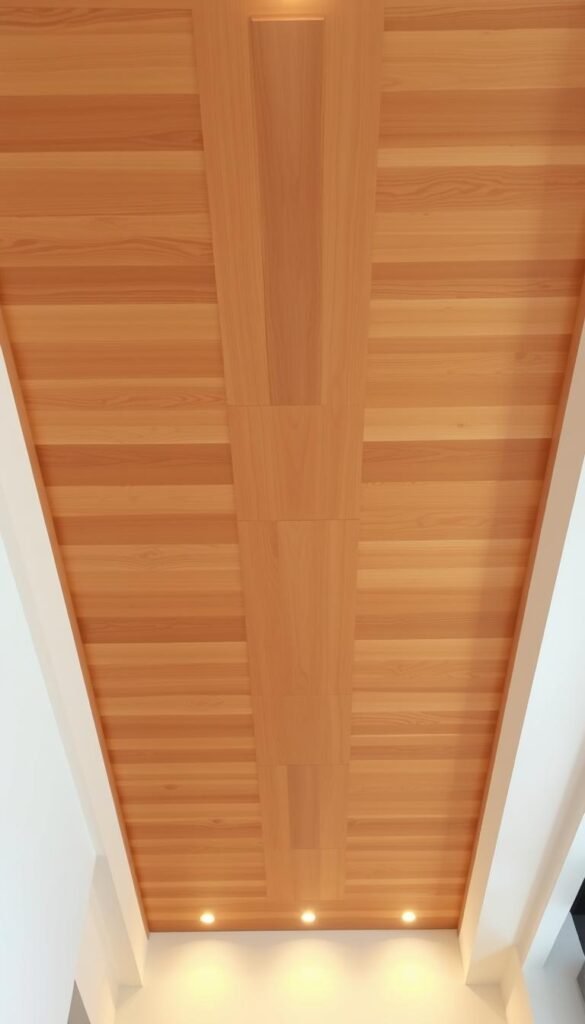
Nothing transforms a space quite like the natural beauty of wood overhead. This material brings organic warmth and rich texture to your ceiling design.
Wood works beautifully in various interior styles. It creates cozy atmospheres while offering practical benefits.
You can choose from rustic exposed beams or sleek contemporary panels. Each option creates a distinct feel in your home.
Wood provides excellent insulation and sound absorption qualities. These features enhance your living experience while adding visual appeal.
Rustic Exposed Beams
Exposed wooden beams create charming character in traditional spaces. They work perfectly in farmhouse or cottage-style rooms.
These elements add architectural interest where none existed before. You get instant vintage charm with modern functionality.
Beams can highlight your room’s structural lines beautifully. They draw the eye upward, emphasizing your space’s proportions.
Consider pairing beams with subtle cove lighting for evening ambiance. This combination creates warm, inviting atmospheres after dark.
Contemporary Wooden Panel Accents
Modern spaces benefit from sleek wooden panel arrangements. Materials like veneer or laminate offer clean, polished finishes.
These panels create geometric patterns or simple linear designs. They bring natural texture without overwhelming your decor.
Wood integrates beautifully with various lighting solutions. Recessed fixtures or led strips highlight the material’s natural grain.
You can achieve both minimalist and intricate designs with wood. The material’s versatility supports numerous creative expressions.
Consider these popular wood options for your project:
- Teak: Offers rich color and natural durability
- Oak: Provides classic grain patterns and strength
- MDF: Delivers smooth finishes at budget-friendly cost
- Pine: Brings light tones and subtle character
Wood works wonderfully with other materials too. Combining it with gypsum or metal creates interesting visual contrasts.
Your choice depends on budget, style preferences, and room conditions. Each wood type offers unique aesthetic and functional qualities.
As one designer beautifully stated,
“Wood brings the outside in, creating spaces that feel both grounded and elevated.”
This natural material transforms ordinary rooms into extraordinary living spaces. It adds character that synthetic materials simply cannot match.
Curved and Organic Shapes for a Soft Look
Ready to soften your space with a touch of natural elegance? Curved overhead designs bring a gentle, flowing energy that contrasts beautifully with sharp room angles. These organic forms create visual harmony and a relaxed atmosphere.
This approach represents a growing trend for creating calming interiors. It offers a refreshing alternative to rigid geometric patterns.
Fluid shapes work particularly well in contemporary homes. They introduce movement and softness where straight lines dominate.
Fluid Forms to Contrast Angular Rooms
Many modern rooms feature strong architectural lines and sharp corners. Curved ceiling elements provide the perfect counterbalance to these angular features.
These flowing forms create a more relaxed, harmonious environment. They guide the eye smoothly around your space without abrupt transitions.
Materials like reinforced gypsum or plaster allow for these complex shapes. They can be molded into beautiful, seamless curves that feel both intentional and natural.
The gentle arcs help blend different ceiling levels smoothly. You avoid sharp edges that can feel harsh or disruptive in your living area.
Wave-like Patterns for Artistic Freedom
Wave-inspired patterns offer incredible creative possibilities for your overhead surface. These undulating forms add motion and unique character to your ceiling design.
You can create subtle ripples or dramatic sweeping curves. Each variation brings its own personality and visual impact to your room.
This approach allows for true artistic expression in your interior. Your ceiling becomes a custom work of art that reflects your personal style.
Consider these popular wave pattern applications:
- Gentle undulations that create rhythm across your ceiling
- Sweeping arcs that define specific functional zones
- Spiral forms that become dramatic focal points
- Organic shapes that mimic natural formations
These designs create a biophilic effect by subconsciously echoing nature. They bring a serene, grounded feeling to your living environment.
Integrated lighting enhances these organic forms beautifully. Soft cove lighting or subtle LED strips highlight the curves and create beautiful shadow play.
This ceiling type works wonderfully in various room sizes. Even compact spaces benefit from the spacious feeling that curves provide.
As one designer beautifully expressed,
“Curves speak the language of comfort and belonging—they welcome rather than confront.”
Consider this soft, organic approach for your home. It creates a distinctive, modern look that feels both innovative and timeless.
3D and Sculptural Ceilings as a Focal Point
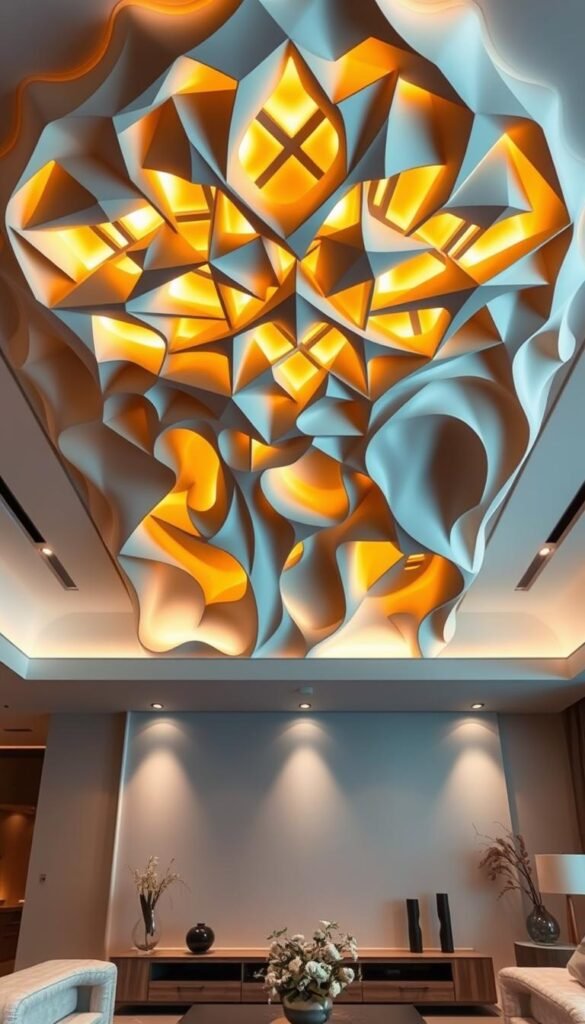
Imagine looking up to discover an artistic masterpiece overhead. Three-dimensional ceiling treatments transform your fifth wall into a captivating sculpture that commands attention.
These installations go beyond flat surfaces to create dramatic depth. They become the undeniable centerpiece of your interior space.
Projecting and Recessing Forms for Dynamic Interest
Three-dimensional elements play with depth in exciting ways. Projecting forms extend downward while recessed areas create shadow pockets.
This interplay creates constantly changing visual interest. Light interacts differently with each surface throughout the day.
Morning sun might highlight one area while evening illumination emphasizes another. Your ceiling becomes a living, dynamic artwork.
Materials like reinforced plaster allow for these complex shapes. Expert craftsmen sculpt these forms with precision and artistry.
The tactile quality invites closer inspection and engagement. You create an experience that goes beyond visual appeal.
Custom Thematic Designs for a Personal Touch
Thematic ceilings reflect your personality and interests beautifully. You can bring your favorite concepts to life overhead.
Fiber optic systems create stunning night sky effects. Tiny lights mimic constellations across your ceiling surface.
Nature-inspired shapes bring organic beauty indoors. Flowing forms might resemble clouds, waves, or forest canopies.
These personalized creations make your space truly unique. They transform ordinary rooms into extraordinary environments.
Consider these popular thematic approaches:
- Celestial patterns with twinkling star effects
- Organic shapes inspired by natural formations
- Abstract sculptures that create artistic statements
- Cultural motifs that reflect heritage or interests
These designs require specialized fabrication techniques. Artisans use materials like plaster or reinforced gypsum for durability.
The result becomes an immersive environment that surrounds you. Your ceiling tells a story about your personal style.
| Design Type | Visual Impact | Material Requirements | Lighting Integration |
|---|---|---|---|
| Projecting Forms | Dynamic shadow play | Reinforced plaster | Directional accent lights |
| Recessed Elements | Depth creation | Gypsum composites | Cove or hidden lighting |
| Thematic Designs | Personal expression | Specialty materials | Fiber optics or LEDs |
| Sculptural Pieces | Artistic focal point | Custom fabrication | Strategic highlighting |
These ceiling treatments create conversation-starting environments. Guests will marvel at the creativity and craftsmanship overhead.
Your home becomes a reflection of your distinctive taste. The ceiling transforms from mere surface to personal statement.
“A sculptural ceiling doesn’t just cover space—it defines character and creates lasting impressions.”
This approach requires careful planning and expert installation. The investment delivers unparalleled visual impact and personal satisfaction.
Your overhead surface becomes the most memorable feature in your home. It elevates everyday living into an artistic experience.
Industrial Chic with Metal and Suspended Panels
Want to give your home a bold, urban edge? Industrial style brings raw, utilitarian charm into residential spaces. This approach celebrates exposed elements and mixed materials for a distinctive look.
Metal grids and suspended panels create dynamic overhead surfaces. They offer both function and striking visual appeal.
This ceiling design works beautifully in contemporary settings. It adds character while maintaining clean lines.
Aluminium Grid Systems for a Utilitarian Look
Aluminium grid systems deliver a sleek, industrial vibe. They are lightweight yet incredibly durable for long-term performance.
These systems create geometric patterns across your overhead surface. The metallic finish adds modern sophistication to any room.
Integrated LED strips highlight the grid structure beautifully. You get both ambient lighting and architectural interest.
This material works well in various home environments. It resists moisture and requires minimal maintenance.
Mixing Materials for an Edgy Vibe
Combining different elements creates truly unique overhead designs. Metal paired with wood or gypsum adds textural contrast.
This approach lets you customize your space’s personality. You balance industrial coolness with natural warmth.
Suspended panels at varying heights create dramatic three-dimensional effects. They add depth and movement to your ceiling design.
Consider these popular material combinations:
- Aluminium grids with wooden accent panels
- Metal frames with gypsum infill panels
- Steel elements with integrated LED lighting
- Mixed finishes for visual contrast
These designs work particularly well in loft-style spaces. They embrace architectural raw-ness while adding polished details.
Your overhead becomes a conversation-starting focal point. It reflects contemporary urban living at its most stylish.
As one designer noted,
“Industrial design isn’t about unfinished spaces—it’s about celebrating honest materials in refined ways.”
This ceiling type offers both aesthetic appeal and practical function. It creates distinctive interiors that feel both edgy and inviting.
For more inspiration on how suspended panels can transform your space, explore these creative ceiling design ideas that blend industrial elements with residential comfort.
Top False Ceiling Design Trends to Inspire You
Stay ahead of the curve with these exciting innovations in overhead design. The latest trends blend artistic expression with smart technology for truly personalized spaces.
You can now create environments that adapt to your mood and activities. These advancements make your overhead surface more dynamic than ever before.
Colorful and Textured Finishes Beyond White
Move beyond basic white surfaces to make a bold style statement. Rich hues and interesting textures add depth and personality to your room.
Deep blues and warm terracottas create dramatic backdrops overhead. Metallic finishes like copper or bronze add reflective quality and luxury.
Textured plaster or 3D panels create fascinating shadow patterns. These surfaces interact beautifully with both natural and artificial light.
Your overhead becomes an artistic canvas that reflects your unique taste. This approach transforms ordinary rooms into extraordinary spaces.
Smart LED Integration for Dynamic Atmospheres
Modern lighting systems offer incredible control over your room’s ambiance. Smart LED strips can change color temperature or create colorful displays.
You can program lighting sequences for different occasions. Movie nights might feature dimmed blue tones while dinners use warm white.
These systems integrate with voice assistants and smartphone apps. You adjust overhead lighting without leaving your comfortable seat.
Energy efficiency becomes another significant advantage. LED technology consumes less power while providing brilliant illumination.
Consider these popular smart lighting features:
- Color-changing RGB strips for mood customization
- Tunable white options that adjust from cool to warm light
- Programmable scenes for different activities
- Voice control compatibility for hands-free operation
Your overhead lighting becomes an interactive element in your home. It responds to your needs while creating beautiful visual effects.
Geometric patterns continue to dominate contemporary interior design. These angular arrangements create visual interest and modern sophistication.
Wood accents bring natural warmth to high-tech environments. This balance between organic and technological elements defines current style.
Your living area becomes a reflection of cutting-edge design thinking. These trends offer both aesthetic appeal and practical functionality.
Embrace these innovations to create a space that truly represents you. Your overhead design can now be as dynamic and unique as your lifestyle.
Understanding the Cost of False Ceiling Installation
Budget planning is the foundation of any successful ceiling installation project. Knowing what to expect financially helps you make choices that balance beauty with practicality.
Your investment depends on two main factors: material selection and design complexity. Understanding these elements ensures your vision matches your budget reality.
Price Ranges by Material per Square Foot
Different materials offer varying price points and benefits. Your choice affects both initial cost and long-term value.
Here’s what you can expect for common material options:
| Material Type | Cost Range (per sq ft) | Best For |
|---|---|---|
| Gypsum Boards | $1 – $1.50 | Smooth, modern finishes |
| Plaster of Paris (POP) | $1.50 – $3.50 | Custom intricate designs |
| PVC Panels | $2 – $4 | Moisture-resistant areas |
| Wooden Panels | $5 – $10 | Warm, natural aesthetics |
| Metal Options | $3 – $7 | Industrial contemporary style |
Remember that material costs are just one part of your total investment. Installation labor and additional elements add to your final project price.
How Design Complexity Impacts Your Budget
Simple single-level designs offer the most budget-friendly approach. These clean installations provide modern elegance without elaborate details.
Basic designs typically range from $85-110 per square foot. They work beautifully in compact spaces and contemporary interiors.
Complex configurations significantly increase your project cost. Multi-tiered layouts or geometric patterns require more materials and skilled labor.
Premium designs with intricate elements can reach $175-300+ per square foot. These include detailed plaster work or custom wooden installations.
Consider these factors that influence your final cost:
- Room size and ceiling height requirements
- Lighting integration needs (recessed fixtures or LED strips)
- Professional installation fees and expertise level
- Additional electrical work for lighting controls
Your living area’s proportions play a role in cost calculation. Larger spaces naturally require more materials and installation time.
Lighting choices like cove lighting or integrated LED strips add to your budget. However, they create beautiful ambiance that enhances your overall design.
Plan for a realistic budget that includes all elements. This approach prevents surprises and ensures a smooth installation process.
Your dream ceiling becomes achievable with proper financial planning. The right balance of materials and design complexity creates stunning results within your budget.
Bringing Your Dream Ceiling to Life
Your overhead transformation journey begins with proper planning and professional guidance. These installations combine stunning aesthetics with practical benefits like improved lighting and acoustics.
Hiring experts ensures safe installation and proper material selection. They handle technical details while creating your vision. Always plan for access panels to reach hidden wiring or valves.
Use this guide for inspiration when consulting designers. They can tailor concepts to your specific space and preferences.
Your overhead can become a beautiful focal point that transforms your entire room. The right approach creates a luxurious, modern environment you’ll enjoy for years.