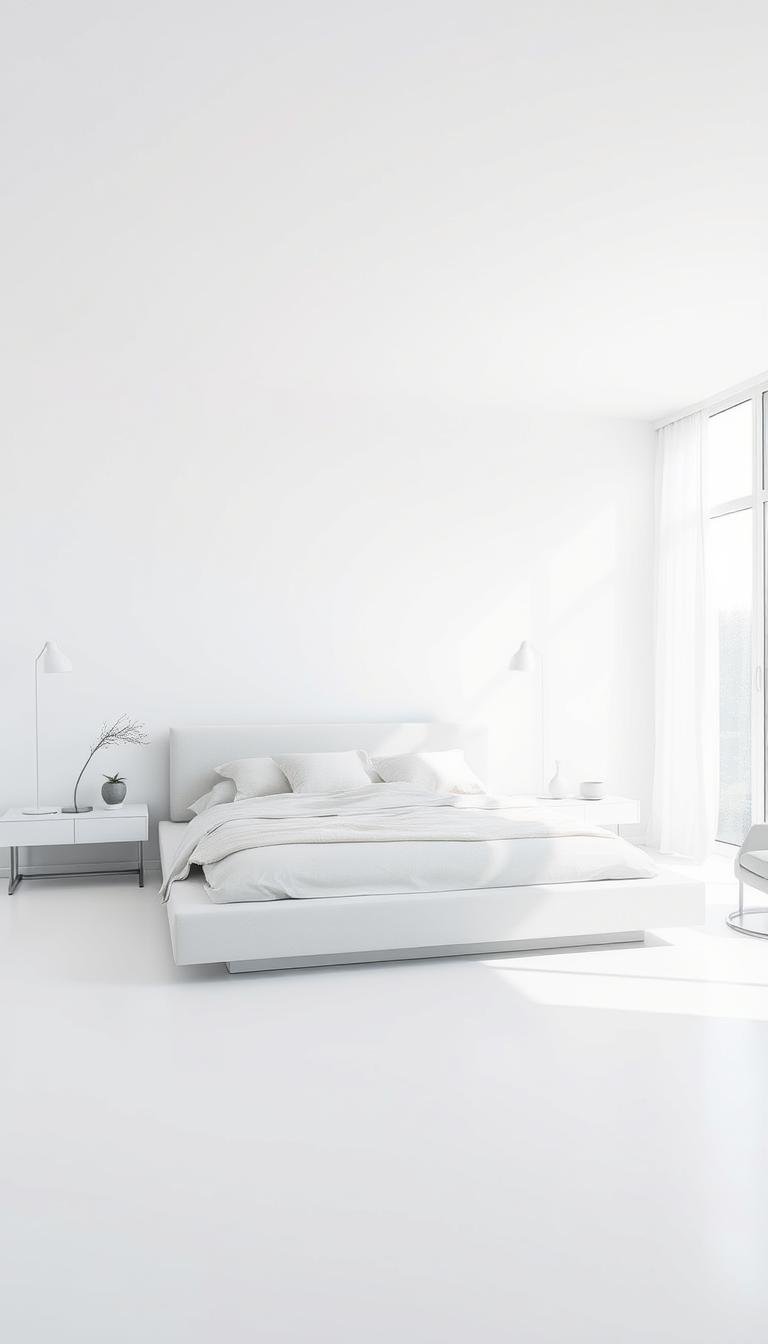
Imagine stepping into a space that instantly melts away your stress. A serene sanctuary where your mind can finally unwind after a demanding day. This is the power of a carefully curated sleeping environment.
There’s a profound reason luxury hotels and world-class spas embrace this aesthetic. They understand that neutral environments promote deep relaxation far better than stimulating, colorful palettes. The goal is to create a personal retreat that feels both luxurious and calming.
This design philosophy isn’t just about looks—it’s about how a room makes you feel. A minimalist approach can transform even compact spaces, making them feel remarkably open and airy. It provides a perfect, adaptable foundation for your unique style.
Ready to learn how to achieve this tranquil vibe? Discover practical white bedroom ideas that blend simplicity with sophistication. Let’s create a personal haven that promotes restful sleep and mental clarity.
Why an All-White Bedroom is Your Perfect Sanctuary
The magic of white lies in its power to turn any sleeping area into a peaceful haven. This color choice creates an immediate sense of openness and freshness that few other palettes can match.
Your personal space should feel expansive, not cramped. White achieves this beautifully by reflecting light and eliminating visual boundaries. Even compact areas appear significantly larger with this approach.
There are profound psychological benefits to this aesthetic. Clean, uncluttered environments promote mental relaxation far better than busy, colorful schemes. Your mind can finally unwind in a space free from visual noise.
One of the greatest advantages is timelessness. While trends come and go, white remains eternally fresh and sophisticated. You won’t need to completely redecorate every few years.
The flexibility is remarkable. With white as your foundation, you can easily update the look with minimal effort. Just swap out a few accent pieces, and you have a completely new atmosphere.
This color serves as the perfect canvas for self-expression. You can introduce personality through textiles, art, or decorative elements while maintaining that serene, spa-like quality.
Practical benefits include enhanced brightness and a perpetual sense of cleanliness. Light bounces around the space, creating an airy feel that promotes both mental clarity and better sleep.
By reducing visual stimulation, this scheme supports truly restful nights. Your sanctuary becomes a place where calm reigns supreme, mirroring the tranquility of luxury retreats.
Exploring various bedroom ideas centered around this concept can transform your daily experience. The right design choices make all the difference in creating your personal oasis.
Laying the Foundation: Essential Elements for Your Space
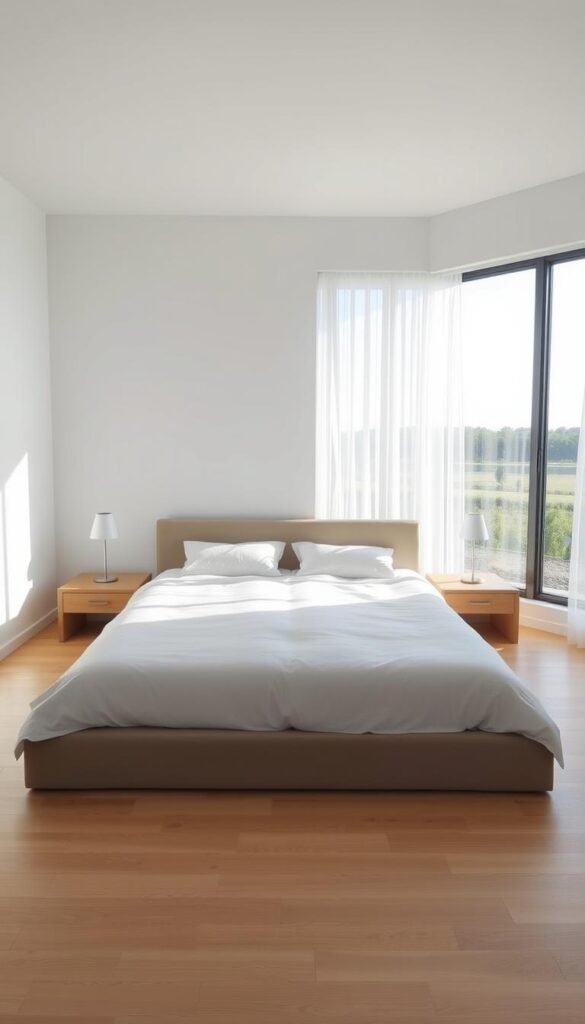
Building your serene retreat starts with three key components. These foundational pieces set the tone for your entire space. They work together to create harmony and balance.
Getting these elements right ensures your room feels intentional, not accidental. Each choice contributes to the overall atmosphere. They form the backbone of your personal sanctuary.
Choosing the Right White Paint for Your Walls
Not all whites are created equal. The perfect shade depends on your room’s lighting and desired mood. Cool whites have blue or gray undertones, while warm whites lean toward yellow or pink.
Natural light dramatically affects how paint appears. North-facing rooms benefit from warmer tones to counter cool light. South-facing spaces can handle cooler shades without feeling chilly.
Always test samples on your actual walls. Observe how they change throughout the day. This prevents disappointing results after painting the entire room.
“The right white can make a room feel both expansive and intimate—it’s the ultimate design paradox.”
Consider these popular white paint options:
| Paint Name | Undertone | Best For |
|---|---|---|
| Chantilly Lace | Neutral/Cool | Modern, crisp looks |
| Alabaster | Warm | Cozy, traditional spaces |
| Simply White | Slightly Warm | Versatile applications |
| Decorator’s White | Cool | Contemporary designs |
Selecting a Bed Frame That Anchors the Room
Your bed serves as the focal point of your space. The right frame provides visual weight and structure. It grounds the entire room’s design.
Platform beds work exceptionally well in minimalist spaces. Their clean lines complement simple aesthetics. They often include built-in storage for added functionality.
Consider materials that add subtle contrast. Light wood tones warm up the space. Black metal frames create striking definition against light walls.
Low-profile designs enhance the sense of openness. They make ceilings appear higher. This creates an airy, uncluttered feeling.
The Impact of a High-Quality White Bedding Set
Your bedding transforms both look and comfort. Quality fabrics feel luxurious against your skin. They also drape beautifully for a polished appearance.
Thread count matters, but fabric type matters more. Egyptian cotton offers exceptional softness and durability. Linen provides wonderful texture and breathability.
Layering different white shades creates depth. Mix crisp white sheets with softer ivory duvets. Add texture with knitted throws or waffle-weave blankets.
Investing in quality pays off in longevity and satisfaction. Good bedding maintains its appearance through countless washes. It becomes the cozy heart of your sanctuary.
These three elements—walls, frame, and bedding—work in harmony. They create a cohesive foundation for your personal retreat. Choose each piece thoughtfully for maximum impact.
How to Make Your All-White Bedroom Feel Warm, Not Cold
Creating cozy warmth in a minimalist space requires thoughtful design choices that go beyond color selection. The right approach transforms your sanctuary from clinical to comforting.
Your chosen palette should never feel sterile or hospital-like. Warm white paint tones make a significant difference in achieving this balance.
Cool whites can create a chilly atmosphere. Warm whites with subtle yellow or cream undertones instantly add coziness. Test samples at different times of day to see how light affects them.
Natural materials bring organic warmth into your space. Wood tones, whether light oak or rich walnut, add depth and character. These elements create visual interest without overwhelming the minimalist aesthetic.
Lighting temperature dramatically affects how your room feels. Warm bulbs (2700K-3000K) create inviting glow instead of harsh brightness. Layer ambient lighting through lamps and dimmers for ultimate control.
“The warmth of a room comes not from color alone, but from how light interacts with textures and surfaces.”
Textured elements provide both physical and visual warmth. A chunky knit throw or plush rug invites touch and comfort. These layers break up monotony while maintaining clean lines.
Personal items prevent your space from feeling impersonal. Display cherished objects that tell your story. This lived-in quality makes the room truly yours.
Subtle patterns integrate beautifully without compromising minimalism. Consider tone-on-tone designs or delicate textures. They add movement while keeping the serene atmosphere.
Balance crisp elements with soft, warm-toned accessories. Creamy linens paired with crisp cotton create depth. This combination prevents flatness in your design.
Discover more techniques for adding warmth through strategic layering of patterns and textures. The right approach makes your sanctuary both restful and refined.
Remember that warmth comes from careful combination of elements. Your space should feel inviting the moment you enter. This creates the peaceful retreat you deserve.
Incorporating Texture to Add Depth and Interest
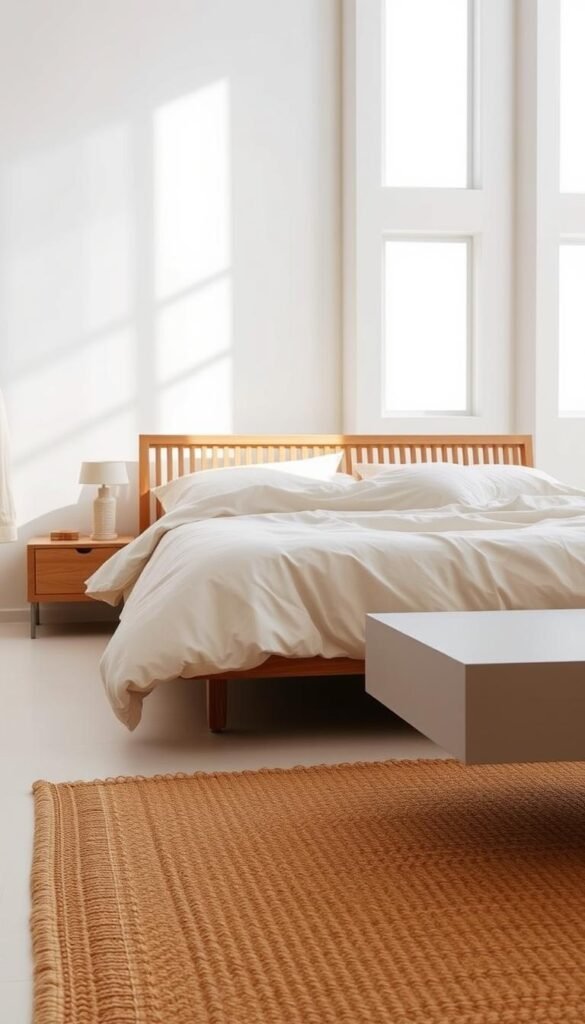
The secret to avoiding a sterile feel lies in the strategic use of varied surfaces and materials. Texture creates visual intrigue that keeps your space from feeling flat or one-dimensional. It adds personality without compromising your minimalist aesthetic.
Thoughtful layering of different finishes transforms a monochromatic scheme. You achieve both comfort and visual appeal through this approach. The result feels intentionally designed rather than accidentally sparse.
Cozy Throws and Plush Rugs
Soft textiles provide immediate warmth and comfort underfoot. A quality area rug anchors your space while adding visual depth. Choose natural fibers like wool or jute for organic appeal.
Throws offer both practical warmth and decorative interest. Drape a chunky knit blanket across your bed or chair. This creates inviting moments throughout your sanctuary.
Consider these texture combinations:
- Smooth cotton sheets with nubby linen throws
- Plush wool rugs against sleek hardwood floors
- Knit pillows alongside smooth leather accents
These elements work together to create dimensional interest. They guide the eye through your space in a natural flow. The effect feels both curated and comfortable.
Natural Fiber Curtains and Woven Accents
Window treatments serve dual purposes in your design. They soften incoming light while adding organic texture. Linen or cotton curtains provide beautiful drape and movement.
Woven elements bring artisanal quality to your space. Consider baskets for storage or wall hangings for decor. These pieces add character without introducing color.
Mix matte and glossy surfaces for sophisticated contrast. A wooden bench offers smooth warmth against textured walls. This balance creates visual interest throughout your room.
Your lighting choices can also contribute to textural appeal. Slim hanging pendants or woven ceiling fixtures add decorative elements. These practical pieces become part of your overall design scheme.
The right combination of textures makes your space feel complete. It maintains minimalism while adding warmth and personality. You create a sanctuary that’s both restful and refined.
Playing with Light to Enhance Your Serene Oasis
Thoughtful lighting design creates atmosphere that soothes both eyes and soul. Your illumination strategy should work harmoniously with your minimalist aesthetic.
Three types of lighting work together beautifully. Ambient lighting provides overall illumination. Task lighting focuses on specific areas like reading nooks. Accent lighting highlights architectural features.
Warm gold fixtures add elegant warmth to monochromatic spaces. Their subtle glow creates cozy ambiance without overwhelming the simplicity. This is a wonderful way to introduce subtle luxury.
Natural light interacts beautifully with pale surfaces. It bounces around the room, creating bright, airy environments. Your walls and ceilings maximize this reflection effect.
Layered lighting creates both mood and functionality. Combine overhead fixtures with table lamps and wall sconces. This approach gives you complete control over ambiance.
“Lighting should be dimmable in a bedroom—it’s the difference between a clinical space and a sanctuary.”
Window treatments control light while maintaining your aesthetic. Floor-length curtains in luxurious fabrics add elegance. They frame outdoor views beautifully when open.
Pendant lights become decorative elements in themselves. Choose unique fixtures that complement your style. They serve as functional art pieces.
Dimmer switches are essential for controlling ambiance. They let you adjust brightness throughout the day. This flexibility supports different activities and moods.
Use lighting to highlight textural elements. Directional spots can emphasize woven textures or artwork. This creates visual interest through strategic illumination.
Your space particularly benefits from careful design plans. Consider how each fixture contributes to the overall atmosphere. The right combination makes your sanctuary truly magical.
This thoughtful approach to illumination transforms your retreat. It creates depth, warmth, and functionality in perfect balance. Your space becomes both practical and profoundly peaceful.
Strategic Use of Accent Colors in a White Bedroom
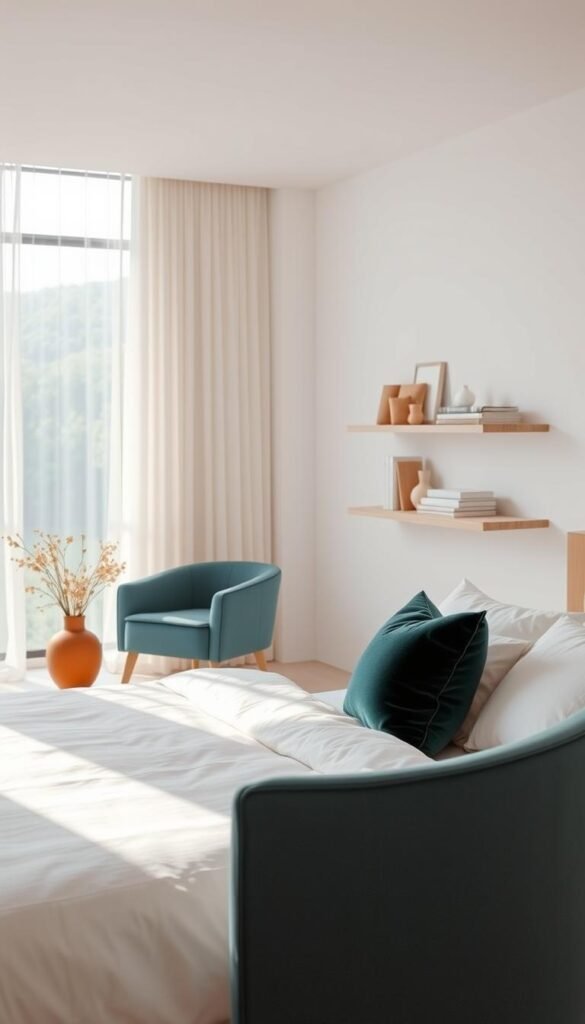
Strategic pops of color can transform your serene space from simple to spectacular. The right accent choices add personality without overwhelming your peaceful retreat.
Your minimalist foundation remains clean and calming. Thoughtful additions create visual interest and depth. This approach keeps your sanctuary feeling intentional and inviting.
Natural materials often serve as the most effective color accents. Wood tones bring organic warmth to your space. They complement rather than compete with your neutral foundation.
Metallic pieces add sophistication without introducing bold hues. Gold and brass fixtures provide subtle luxury. Black iron elements create striking definition against light backgrounds.
“The most sophisticated spaces use accent colors like punctuation—they emphasize rather than overwhelm the sentence.”
Follow the rule of three for cohesive placement. Repeat your chosen accent in three locations throughout the room. This creates rhythm without forming predictable patterns.
Seasonal changes refresh your space effortlessly. Swap throw pillows or art pieces with the changing months. This maintains interest while honoring your minimalist aesthetic.
Consider these psychological impacts of different accent colors:
| Accent Color | Psychological Effect | Best Placement |
|---|---|---|
| Soft Blue | Promotes calm and relaxation | Bedding or artwork |
| Earthy Green | Creates connection to nature | Plants or decorative objects |
| Warm Terracotta | Adds energy and warmth | Textiles or ceramics |
| Charcoal Gray | Provides sophisticated contrast | Hardware or lighting |
Small hints of color make significant impact. A single vibrant throw pillow can anchor the entire space. This restrained approach maintains your peaceful atmosphere.
Your design should always feel cohesive and intentional. Choose accents that complement your existing elements. They should enhance rather than distract from your sanctuary’s purpose.
Remember that sometimes the most effective accent is no color at all. Textural variations and material contrasts often provide enough visual interest. Your space remains perfectly peaceful and personal.
Exploring Timeless White Bedroom Color Pairings
Your minimalist sanctuary gains character through thoughtful color combinations. Classic pairings bring personality while maintaining that peaceful atmosphere you love.
These timeless combinations have stood the test of time for good reason. They enhance rather than compete with your serene foundation. Each pairing creates a distinct mood and feeling.
The Coastal Calm of Blue and White
This combination evokes fresh ocean breezes and sunny skies. Light blue accents create an airy, relaxed feeling in your personal space.
Different blue shades create varied moods. Soft sky blue feels gentle and peaceful. Navy blue adds sophisticated depth without overwhelming.
Natural light enhances this pairing beautifully. Sunlight makes blue tones appear brighter and more vibrant. Your room feels connected to the outdoors.
Consider these placement ideas for blue accents:
- Throw pillows in faded denim tones
- Ceramic vases or decorative objects
- Artwork featuring ocean or sky themes
- Textured rugs with subtle blue patterns
The Modern Contrast of Black and White
This pairing creates striking sophistication in minimalist spaces. Black elements provide strong definition against light backgrounds.
Balance is crucial for maintaining airiness. Use black as punctuation rather than the main statement. This keeps your space feeling open and bright.
Black works beautifully in metallic finishes too. Matte black hardware adds contemporary elegance. These small details make significant impact.
Popular black accent pieces include:
- Sleek side tables or chairs
- Modern lighting fixtures
- Picture frames and decorative objects
- Window hardware and curtain rods
The Soft Warmth of Grey and White
Grey adds neutral elegance to your peaceful retreat. This combination feels both sophisticated and incredibly soothing.
Different grey tones create varied effects. Light silver grey maintains airiness and brightness. Charcoal grey adds depth and cozy contrast.
Grey works beautifully in textiles and furniture. A grey upholstered headboard adds soft comfort. Grey bedding creates beautiful tonal variation.
This table shows how different grey tones affect your space:
| Grey Tone | Visual Effect | Best Use |
|---|---|---|
| Light Silver | Adds subtle contrast | Walls or large furniture |
| Medium Heather | Creates soft warmth | Textiles and bedding |
| Charcoal | Provides strong definition | Accent pieces |
| Warm Taupe | Adds earthy elegance | Natural material accents |
The Earthy Feel of Brown and White
Natural brown tones ground your space beautifully. Wood elements add organic warmth and character.
This combination feels welcoming and lived-in. It prevents your sanctuary from feeling too designed or perfect. The result is comfortable and personal.
Wood finishes work particularly well. Light oak keeps things bright and airy. Rich walnut adds depth and sophistication.
Brown accents through natural materials create cohesion. Woven baskets add texture and functionality. Leather details bring subtle luxury.
These classic pairings offer endless possibilities for your personal retreat. They help create a space that feels both timeless and uniquely yours.
Furniture Choices That Complement a Minimalist Aesthetic
Selecting the right pieces transforms your space into a harmonious retreat. Your furniture choices should enhance simplicity while providing comfort and function. Every item must serve a purpose in your peaceful environment.
Platform beds with clean lines anchor minimalist designs beautifully. Their low profile creates an open, uncluttered feeling. These frames often include hidden storage for added practicality.
Floating nightstands maintain visual lightness in your room. They free up floor space, making your area feel more expansive. This approach supports the airy aesthetic you want to achieve.
Multi-functional pieces maximize efficiency in compact spaces. A desk can serve as both workspace and bedside table. This smart approach reduces furniture clutter while maintaining style.
“In minimalist design, every piece of furniture must earn its place—function and form should be inseparable.”
Simple geometric forms work best against neutral backgrounds. Avoid ornate details that compete with your serene atmosphere. Clean shapes create visual calm and order.
Proportional sizing maintains balance throughout your space. Oversized furniture overwhelms, while tiny pieces get lost. Choose items that fit your room’s dimensions perfectly.
Material selection adds subtle texture and interest. Light wood tones bring natural warmth to your scheme. Metal accents provide sleek contrast without introducing color.
Built-in options offer excellent space solutions. Custom shelving integrates seamlessly with your walls. These elements provide storage without disrupting visual flow.
Strategic placement affects both movement and mood. Arrange pieces to create clear pathways and functional zones. This thoughtful layout enhances daily living in your sanctuary.
Quality construction becomes more noticeable in simple designs. Well-crafted joints and finishes elevate your entire space. Investment pieces last longer and maintain their beauty.
This table shows how different furniture styles impact your minimalist design:
| Furniture Type | Space Impact | Best For |
|---|---|---|
| Platform Bed | Creates open feel | Small to medium rooms |
| Floating Nightstand | Saves floor space | Compact layouts |
| Multi-function Desk | Serves dual purposes | Efficient spaces |
| Built-in Storage | Maximizes efficiency | Custom solutions |
Your furniture should work together as a cohesive system. Each piece contributes to the overall peaceful atmosphere. The right choices make your sanctuary both beautiful and functional.
The Role of Art and Personal Details
Your walls become a perfect gallery for cherished memories and favorite works. This approach adds soul to your space without overwhelming its peaceful nature. The right selections make your room feel uniquely yours.
Clean surfaces serve as ideal backdrops for displaying meaningful pieces. They let your artwork shine without visual competition. This creates a focused, gallery-like atmosphere in your personal retreat.
Minimalist art choices work best in these environments. Simple lines and neutral tones maintain serenity. They complement rather than compete with your overall design.
“The most personal spaces tell stories through carefully chosen objects, not through overwhelming decoration.”
Creating cohesive gallery walls requires thoughtful planning. Arrange pieces with consistent spacing between them. This creates rhythm and harmony across your wall space.
Framing choices significantly impact your artwork’s presentation. Simple frames in natural materials enhance without distracting. They let the art itself take center stage.
Personal photographs and mementos add wonderful warmth. They transform spaces from showrooms to lived-in sanctuaries. These touches make your room truly feel like home.
Curated accessories create personality without clutter. Choose functional items that also serve as decor. A beautiful scented candle or fresh flowers add life and fragrance.
Negative space around art enhances its impact. It gives each piece room to breathe and be appreciated. This thoughtful spacing maintains your minimalist aesthetic.
Select art that complements your color scheme and overall feel. Abstract works in neutral tones often work beautifully. They add interest while maintaining calmness.
This table shows how different art styles work in minimalist spaces:
| Art Style | Visual Impact | Best Placement |
|---|---|---|
| Abstract Minimalism | Adds movement without clutter | Above bed or main wall |
| Black and White Photography | Creates dramatic contrast | Gallery wall arrangements |
| Textural Wall Hangings | Provides tactile interest | Secondary accent walls |
| Personal Photographs | Adds emotional connection | Bedside or reading nook |
Your details should feel intentional and meaningful. Each piece contributes to the overall peaceful atmosphere. They make your sanctuary both beautiful and deeply personal.
Maximizing a Small Space with an All-White Palette
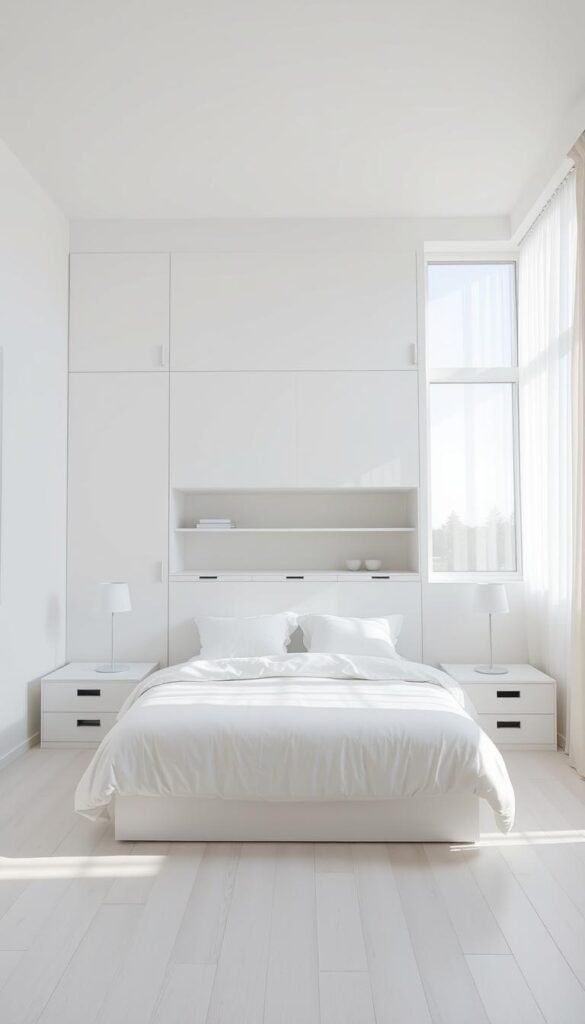
Small rooms can feel incredibly spacious with the right design approach. A light color scheme works wonders for creating optical illusions that expand your area visually.
Your compact sleeping area benefits greatly from this strategy. Consistent pale tones eliminate visual breaks that typically make rooms feel smaller. This creates a seamless flow throughout your personal retreat.
Reflective surfaces enhance the spacious effect beautifully. Strategic lighting placement bounces illumination around your room. This combination makes your area feel brighter and more open.
Minimal clutter becomes essential in compact environments. Every item should serve a purpose or bring joy. This approach maintains the airy feeling you want to achieve.
“In small spaces, white isn’t just a color—it’s a spatial strategy that changes how we perceive boundaries.”
Vertical elements draw the eye upward beautifully. Hanging light fixtures and tall mirrors create height illusions. This clever trick makes ceilings appear higher than they actually are.
Multifunctional furniture serves multiple purposes wonderfully. A desk can moonlight as a nightstand in your cozy area. This smart solution reduces furniture needs while maintaining full functionality.
Glass and acrylic pieces maintain visual lightness perfectly. These materials seem to disappear against light backgrounds. They provide function without adding visual weight.
Built-in storage solutions work seamlessly in compact layouts. Custom shelving integrates flush with your walls. This approach provides organization without sacrificing precious square footage.
Strategic furniture placement optimizes your available area. Leave clear pathways between pieces for easy movement. This thoughtful arrangement makes your room feel more generous.
Proper scale selection ensures everything fits harmoniously. Choose pieces that complement your room’s proportions perfectly. This prevents overcrowding and maintains that open, airy feeling.
Your small sanctuary can feel surprisingly spacious and inviting. These design techniques maximize every inch of your precious area. You create a personal retreat that feels both functional and beautifully open.
Creating a Luxe, Hotel-Inspired Feel at Home
Luxury hotels have mastered the balance between minimalist elegance and ultimate comfort. Their spaces feel both sophisticated and incredibly inviting. You can recreate this premium atmosphere in your own sanctuary.
High-quality linens form the foundation of this luxurious feel. Crisp cotton sheets and plush duvets create that signature hotel comfort. Investing in premium bedding transforms your sleeping experience completely.
Layered textures create visual depth and premium comfort. Mix smooth sheets with nubby throws and velvet pillows. This approach adds richness while maintaining clean lines.
Warm gold light fixtures add understated elegance to neutral spaces. Their soft glow creates a cozy, inviting ambiance. This metallic accent brings sophistication without overwhelming minimalism.
“True luxury lies in the details—the weight of the curtains, the quality of the sheets, the perfect lighting temperature.”
Luxurious window treatments elevate your entire design. Floor-length drapes in heavy fabrics add drama and elegance. They frame your windows beautifully while providing light control.
Subtle color accents prevent monotony in neutral schemes. A muted mauve throw blanket adds warmth and personality. This restrained color approach maintains serenity while adding interest.
Premium materials make a significant difference in your space. Natural wood tones, quality metals, and rich textiles create tactile luxury. These elements feel wonderful to touch and use daily.
Attention to detail separates basic rooms from luxe spaces. Perfectly made beds, fluffed pillows, and organized surfaces create that hotel polish. This meticulous approach makes your space feel professionally designed.
Your sanctuary should prioritize comfort and sensory experiences. Soft lighting, pleasant scents, and comfortable textures work together. They create an environment that feels truly restorative.
Investment in quality basics pays off in enduring appeal. Well-made pieces maintain their beauty through years of use. They become the foundation of your personal luxury retreat.
The final look should feel both polished and perfectly comfortable. Your space becomes a daily escape that rivals any five-star hotel. You deserve this level of luxury every single day.
Common Mistakes to Avoid in Your All-White Bedroom Design
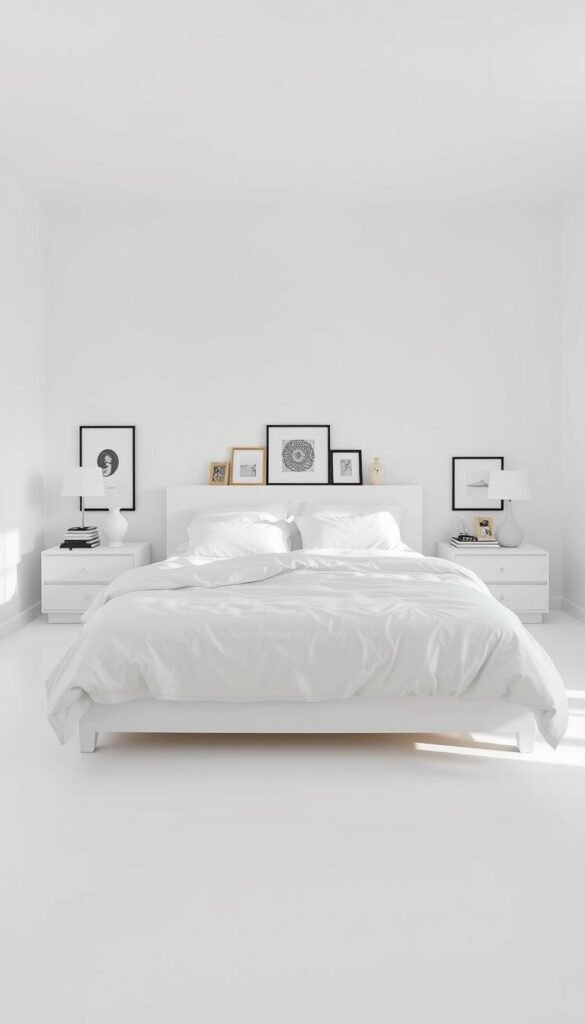
Even the most beautiful design can be undermined by simple oversights. Knowing what to avoid helps you create that perfect peaceful retreat you deserve.
Choosing cool paint tones creates a clinical atmosphere instead of cozy warmth. Warm undertones make your space feel inviting rather than sterile.
Neglecting texture is perhaps the most common error. Without varied surfaces, your room can feel flat and one-dimensional.
Improper lighting choices amplify cold feelings in neutral spaces. Warm bulbs create inviting glow instead of harsh brightness.
“Testing paint samples saves countless hours of disappointment—natural light transforms how colors appear throughout the day.”
Using too many different shades creates visual chaos. Stick to two or three complementary tones for cohesive harmony.
Poor quality materials show obviously in minimalist designs. Invest in pieces that maintain their beauty over time.
Inadequate storage leads to clutter that undermines your aesthetic. Smart solutions keep surfaces clean and peaceful.
Ignoring room orientation affects how colors appear. North-facing spaces need warmer tones than south-facing areas.
Overlooking personal touches makes spaces feel impersonal. Your retreat should reflect your unique personality.
Following trends too closely compromises timeless appeal. Choose elements that you’ll love for years to come.
These common errors are easily avoidable with careful planning. Your sanctuary deserves thoughtful consideration at every step.
The right approach creates that perfect balance of serenity and style. You’ll enjoy a space that feels both beautiful and authentically yours.
Your Next Steps to Achieving the Minimalist Bedroom of Your Dreams
Ready to transform your personal retreat? Start with a mood board and paint samples. This helps visualize your final look before big purchases.
Begin with walls and bedding for dramatic change. These updates provide the most visual impact. They set a fresh foundation for your space.
Phase your makeover to manage budget and effort. Invest in quality pieces like mattresses and linens. Save on decorative items you may change later.
Incorporate existing furniture that fits your new scheme. A simple paint update can refresh old pieces beautifully.
Take before photos to appreciate your progress. Your sanctuary will evolve as you refine personal touches over time.
This flexible design always feels current and calm. Enjoy creating your perfect peaceful haven!