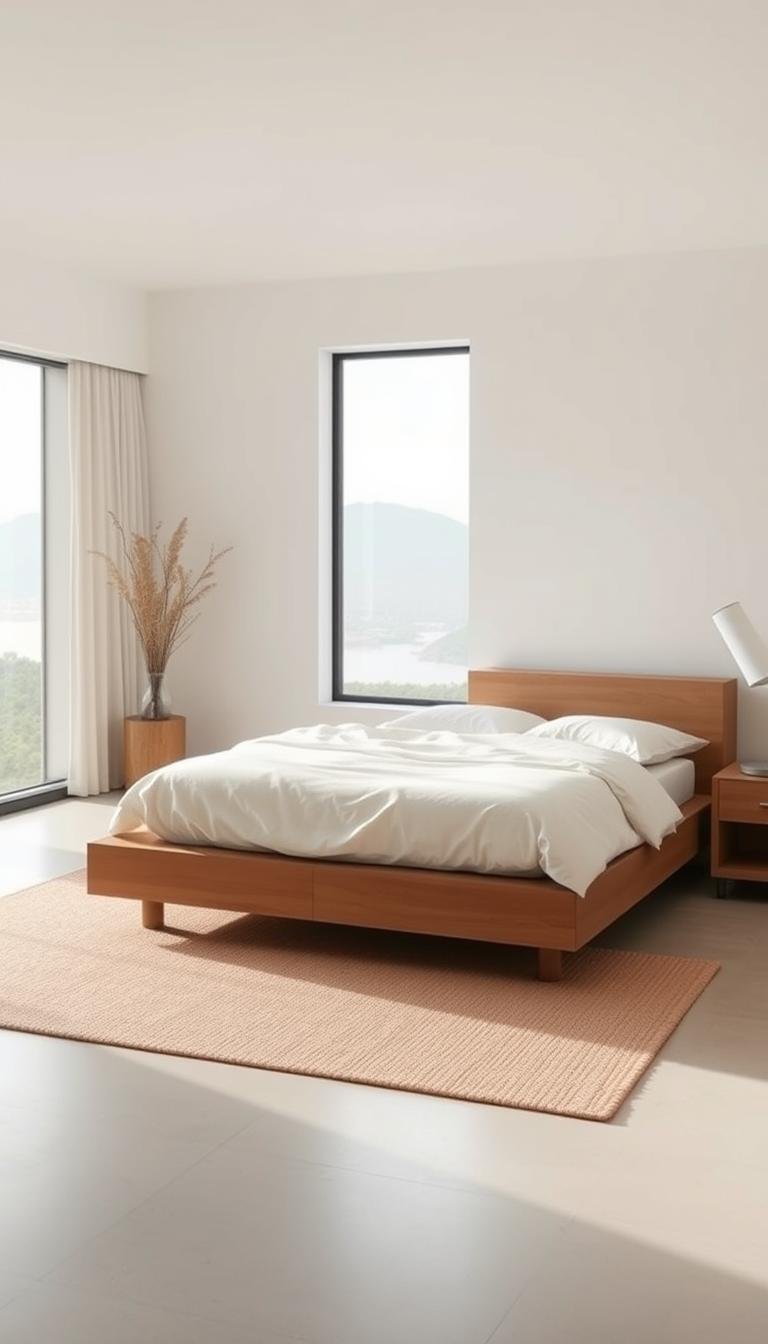
Your sleeping space should be your personal retreat. It’s where you recharge and find peace after long days. Many people are discovering the power of simple design in creating this special environment.
This approach to your room isn’t about empty walls or cold spaces. It’s about making intentional choices that serve your need for calm. As designer Rushda Hakim emphasizes, your personal sanctuary should foster true serenity.
Whether you prefer very simple furniture or just a limited color palette, minimalism adapts to your lifestyle. The goal is creating a room that feels both functional and deeply peaceful.
You’ll learn practical steps to transform your space into a haven of relaxation. We’ll cover decluttering, color schemes, and furniture selection. These changes can reduce stress and improve your sleep quality.
Remember: this is a personalized journey. Your room becomes a reflection of what truly matters to you.
1. Understanding the Core of Clean and Serene: Modern Minimalist Bedroom Vibes
Your journey to a peaceful sleeping environment begins with mindset. This approach isn’t about deprivation but finding your perfect balance.
Cultures worldwide have embraced this concept for centuries. The Swedish call it “lagom” meaning just the right amount. Japanese philosophy celebrates “hodo-hodo” or just enough.
These ideas focus on quality over quantity. They help you create a space that feels complete without excess.
It’s All About Your Personal “Just Enough”
Your version of minimalism will be unique. What works for others might not work for you. The goal is identifying what truly matters in your personal sanctuary.
Designer Krista Hermanson emphasizes creating “snuggle spots” for comfort. These are areas designed specifically for your relaxation needs. They make your room feel inviting rather than empty.
Consider what items spark joy in your daily life. Keep those things that serve a purpose or bring happiness. Let go of everything that doesn’t contribute to your peace.
More Than Just a Style—It’s a Feeling
Minimalism creates an emotional response in your space. It’s about cultivating calm and contentment through your environment. Designer Rushda Hakim notes this approach avoids starkness by incorporating warmth.
This philosophy reduces visual noise and mental clutter. You’ll notice less anxiety and more order in your daily routine. Your bedroom becomes a true sanctuary for rejuvenation.
Many people mistakenly think minimal means cold or rigid. Actually, it’s highly adaptable to different tastes and lifestyles. Your room should reflect your personality while maintaining simplicity.
| Traditional View | Modern Understanding |
|---|---|
| Empty, cold spaces | Warm, intentional environments |
| Rigid rules | Personal adaptation |
| Focus on absence | Focus on quality presence |
| One-size-fits-all | Individualized approach |
Start by reflecting on what you need from your sleeping area. Your intention will guide every decision moving forward. This understanding forms the foundation of your transformation.
2. Begin with the Big Purge: Your Decluttering Foundation
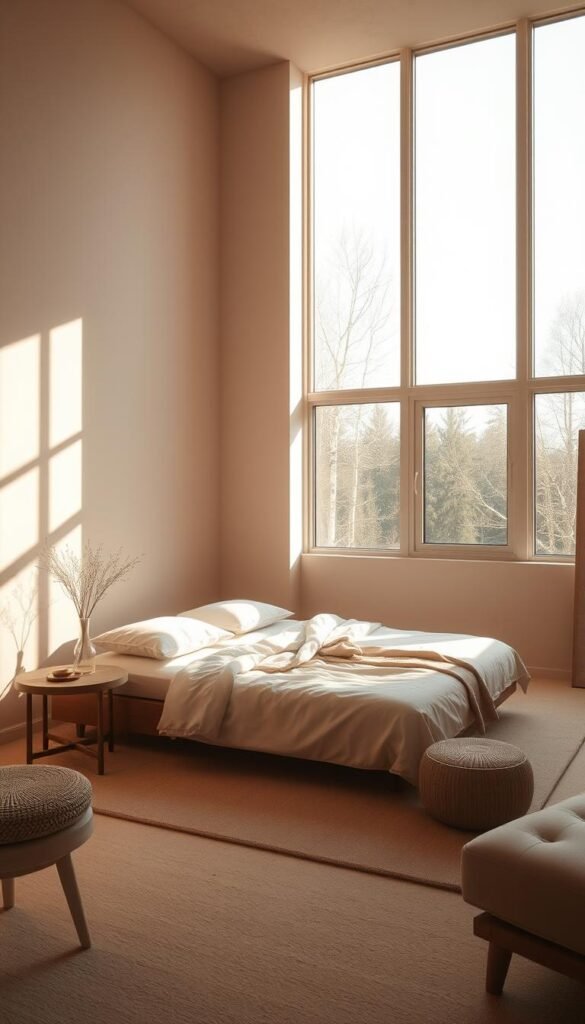
Before adding any design elements, you must first subtract what doesn’t belong. This process creates the clean canvas your peaceful retreat deserves.
Start by removing everything from your room. This might feel overwhelming, but it’s the best way to see what you truly own. You’ll be surprised how many things have accumulated over time.
The “Spark Joy” Method for Your Sanctuary
Marie Kondo’s famous approach works beautifully for creating your personal sanctuary. Hold each item and ask: Does this spark joy? Be honest with your answers.
Items that create happiness or serve a clear purpose deserve to stay. Everything else should find a new home. This emotional connection to your belongings transforms the process.
Designer Rushda Hakim emphasizes this thoughtful approach. She notes,
“Your space should contain only what resonates with your current life, not past versions of yourself.”
Finding a Home for Everything
Once you’ve selected your keepers, give each item a designated place. Hidden storage solutions maintain visual calm while keeping essentials accessible.
Consider these effective strategies:
- Built-in bed frames with drawers for linens and clothing
- Floating shelves for a few meaningful decorative items
- Baskets and boxes that corral smaller objects neatly
This organization system prevents future clutter from accumulating. Everything has its place, making tidying quick and simple.
Regular maintenance becomes part of your routine. Spend five minutes each day returning items to their homes. This small habit preserves your peaceful environment long-term.
The psychological benefits are immediate. You’ll experience reduced stress and greater mental clarity. Your room becomes a true haven rather than another source of anxiety.
Remember that this foundation supports all other design choices. A well-edited space allows beautiful elements to shine without competition.
3. Craft a Restful Canvas with a Neutral Color Palette
Your color choices set the emotional tone for your entire sleeping area. The right palette creates instant calm when you enter your personal space.
Neutral tones form the perfect foundation for your retreat. They provide visual rest without demanding attention.
Why Creams and Whites Foster Serenity
Light, soft colors reflect natural light beautifully. This creates an airy, open feel in your bedroom.
Studio Plow demonstrates how creamy walls establish tranquility. These shades make rooms appear larger and more inviting.
White and cream colors reduce visual competition. They allow your mind to relax instead of processing busy patterns.
Introducing Depth with Warm, Muted Tones
Designer Rushda Hakim cautions against sterile all-white spaces. She recommends incorporating warmth through subtle color variations.
Beige, taupe, and soft grays add cozy depth without overwhelming. These tones create dimension while maintaining peaceful vibes.
Krista Hermanson uses cream-hued drapes to introduce warmth. This approach adds visual interest without sacrificing serenity.
Test your colors at different times of day. Natural light changes how paints appear in your space.
Consider your room’s size and lighting conditions. North-facing rooms might need warmer tones than south-facing spaces.
| Color Option | Best For | Psychological Effect |
|---|---|---|
| Soft White | Small rooms, good light | Creates openness and clarity |
| Warm Cream | Most room types | Adds comfort and warmth |
| Light Taupe | Rooms needing depth | Provides cozy sophistication |
| Pale Gray | Modern aesthetic | Offers calm neutrality |
Maintain color consistency throughout your space. Match bedding, accessories, and walls within the same tonal family.
This cohesive approach reinforces the peaceful atmosphere. It creates harmony rather than visual competition.
Your color palette serves as the background canvas. It lets furniture and textures stand out beautifully.
The right neutral scheme reduces visual stress significantly. You’ll notice improved relaxation almost immediately.
Remember that color preference is personal. Choose shades that genuinely make you feel calm and rested.
Your perfect palette creates that sought-after serene feeling. It transforms your room into a true sanctuary.
4. Choose Furniture with Clean Lines and a Low Profile
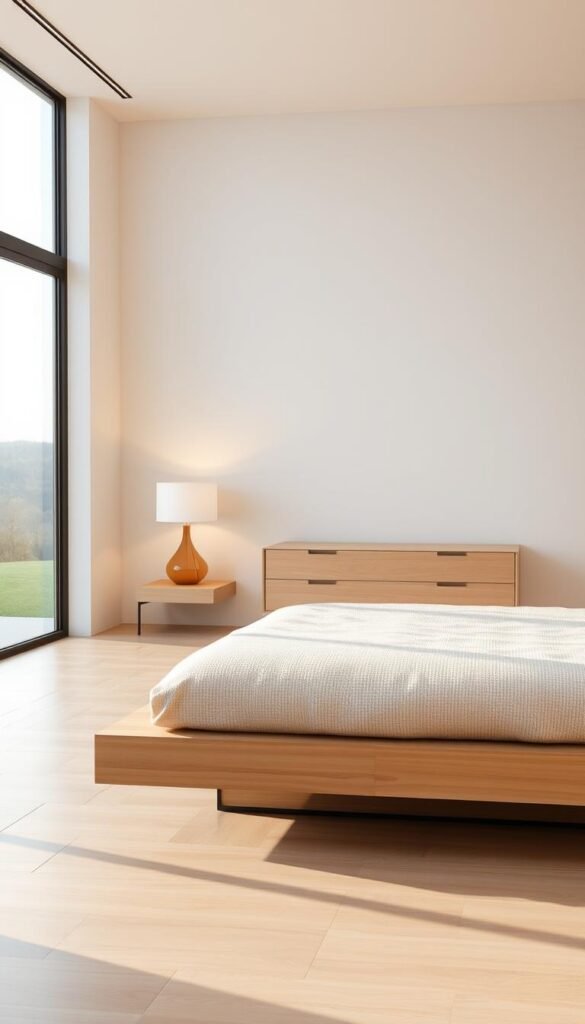
The right furnishings transform your sleeping area into a peaceful haven. Your selection process focuses on pieces that enhance calm rather than create chaos.
Marie Flanigan’s approach demonstrates how tailored furniture maintains tranquility. Each item should serve a purpose while contributing to the overall harmony.
Selecting Pieces that Complement, Not Clutter
Think of your furniture as functional art. Every piece should feel intentional and carefully chosen.
Low-profile designs keep sightlines clear and your space feeling open. They create an airy atmosphere that promotes relaxation.
Consider the footprint of each item before purchasing. Measure your room and visualize how pieces will fit together.
Multi-functional furniture works beautifully in smaller areas. A storage bed or compact dresser maximizes utility without crowding.
The Magic of “Invisible” Acrylic Pieces
Transparent materials create visual magic in your personal retreat. Kristin Fine’s custom acrylic nightstand demonstrates this concept perfectly.
These pieces provide function without adding visual weight. They seem to disappear while still serving their purpose.
Acrylic furniture works especially well in compact rooms. It makes spaces feel larger and more light-filled.
Consider a lucite chair or clear side table for your reading nook. These additions maintain openness while providing necessary function.
| Furniture Type | Best Features | Space Impact |
|---|---|---|
| Platform Bed | Low profile, built-in storage | Creates grounded, spacious feel |
| Floating Nightstand | Clears floor space, modern look | Enhances openness and flow |
| Acrylic Desk | Transparent, versatile styling | Visually lightens the room |
| Bench Storage | Dual purpose, hidden organization | Reduces clutter while adding seating |
Built-in storage solutions keep surfaces tidy and clear. They hide necessities while maintaining your serene environment.
Quality matters more than quantity when selecting furnishings. Choose well-crafted pieces that will last and bring you joy.
Your furniture should work together harmoniously. Create a cohesive look that supports peace and relaxation.
Thoughtful selection balances form and function perfectly. Your space becomes both beautiful and deeply practical.
5. Make Your Bed the Undisputed Star of the Space
Transform your sleeping area by making the bed the undeniable centerpiece of your design. This approach creates instant visual impact while maintaining functional excellence.
Your sleeping surface deserves this starring role. It serves as both practical furniture and artistic statement.
Opting for a Sculptural or Minimalist Bed Frame
Choose a bed frame that makes a statement without overwhelming your space. The Brownstone Boys demonstrate how sculptural designs create interest without clutter.
Platform beds offer clean lines and built-in storage options. Low-profile designs maintain open sightlines throughout your room.
Consider these frame options for different styles:
- Platform beds with hidden storage compartments
- Floating designs that create visual lightness
- Statement pieces with artistic yet simple lines
Your selection should align with your personal aesthetic. The right frame becomes functional art in your sanctuary.
The Simple Luxury of High-Quality Bedding
Invest in bedding that offers both tactile comfort and visual simplicity. Tali Roth’s velvet coverlets demonstrate how quality materials create luxury without fuss.
Natural fibers like linen and cotton provide breathable comfort. They develop beautiful texture over time while maintaining elegance.
Avoid excessive pillows and layered arrangements. Instead, choose two or three well-selected pieces that create inviting comfort.
Designer Krista Hermanson notes,
“Your bedding should invite you to relax the moment you see it. Keep it simple but sumptuous.”
Coordinate colors between your frame and bedding. This creates cohesive visual flow throughout your sleeping area.
Your investment in quality materials pays dividends in daily comfort. You’ll appreciate the difference every time you rest.
This focused approach makes your bed the room’s true centerpiece. It delivers both style and substance in perfect balance.
6. Illuminate Your Space with Strategic and Soothing Lighting
Lighting transforms your personal retreat into a true sanctuary. It sets the mood and enhances your room’s peaceful atmosphere.
The right approach balances natural and artificial sources. This creates harmony throughout your day and evening.
Capitalizing on Natural Light First
Begin with maximizing sunlight in your personal area. Designer Sarah Solis recommends strategic mirror placement.
Position mirrors opposite windows to bounce light deeper into your room. This technique makes spaces feel larger and more open.
Choose window treatments that filter rather than block sunlight. Sheer curtains maintain privacy while welcoming soft illumination.
Arrange furniture to avoid blocking window areas. Keep larger pieces away from natural light sources.
Natural light enhances your room’s airy quality beautifully. It creates an uplifting environment during daytime hours.
Choosing Statement Fixtures that Soften the Mood
Evening lighting requires careful consideration for relaxation. Victoria Ninette’s frosted glass chandelier demonstrates perfect mood lighting.
Always install dimmers on overhead fixtures. This allows you to adjust brightness for different times and activities.
Select fixtures with clean designs that complement your aesthetic. Avoid overly ornate pieces that might feel distracting.
Consider these lighting options for layered effect:
- Overhead fixture with dimmer for general illumination
- Bedside lamps for reading and soft ambiance
- Accent lighting for artwork or architectural features
Warm-toned bulbs create coziness and reduce blue light exposure. Choose 2700K-3000K color temperatures for evening use.
Designer Ninette uses blackened brass finishes throughout her projects. Maintaining consistent finishes creates visual cohesion.
Your lighting choices should serve both function and atmosphere. They become decorative elements without adding clutter.
| Lighting Type | Best Placement | Mood Created |
|---|---|---|
| Overhead Fixture | Room center | General warmth with dimmer control |
| Bedside Lamps | Nightstands | Intimate, task-friendly glow |
| Wall Sconces | Reading nooks | Focused, glare-free illumination |
| Floor Lamp | Room corners | Soft, ambient fill lighting |
Soothing lighting significantly impacts relaxation and sleep quality. It reduces eye strain and prepares your mind for rest.
Strategic illumination completes your peaceful environment perfectly. It blends natural and artificial light for optimal comfort in your home.
7. Add Visual Interest Through Subtle Texture, Not Clutter
Texture creates depth and character in your room without adding extra items. It brings warmth and personality to your space while keeping things simple.
This approach adds visual interest through surfaces and materials. You maintain a clean look while making your room feel cozy and inviting.
Textured Walls: Limewash, Planking, and Molding
Your walls offer excellent opportunities for adding texture. Designer Elisa Baran used limewash paint for Alisha Marie’s room.
This technique creates artful variation without needing additional decor. The subtle color shifts add movement to your space.
Studio Diaa demonstrates whitewashed pine planking for a serene backdrop. This treatment adds character without overwhelming your room.
Amy Knerr’s box molding provides another elegant solution. When painted the same color as your walls, it adds dimension quietly.
These wall treatments work beautifully in minimalist settings. They provide visual richness without introducing clutter.
Layering Rugs and Natural Fiber Bedding
Textiles offer another way to incorporate texture thoughtfully. Designer Reena Simon suggests wool and linen for organic warmth.
Natural fiber bedding feels cozy against your skin. It adds tactile interest while maintaining a streamlined look.
Consider layering a jute rug over your main flooring. This adds depth and warmth underfoot without visual noise.
Knitted throws on your bed provide another textural element. They create inviting spots for relaxation and comfort.
| Textural Element | Best Application | Designer Example |
|---|---|---|
| Limewash Paint | Feature walls | Elisa Baran for Alisha Marie |
| Planked Walls | Accent walls | Studio Diaa whitewashed pine |
| Box Molding | Entire room | Amy Knerr’s dimensional treatment |
| Natural Fibers | Bedding and rugs | Reena Simon’s wool and linen |
Balance remains crucial when working with texture. Choose one or two elements to highlight rather than mixing many.
Your room should feel lived-in and comfortable. Texture helps counteract any potential coldness from simplicity.
Subtle textural elements complete your peaceful environment beautifully. They add warmth and interest while maintaining your clean aesthetic.
8. Embrace Statement Pieces that Define the Room
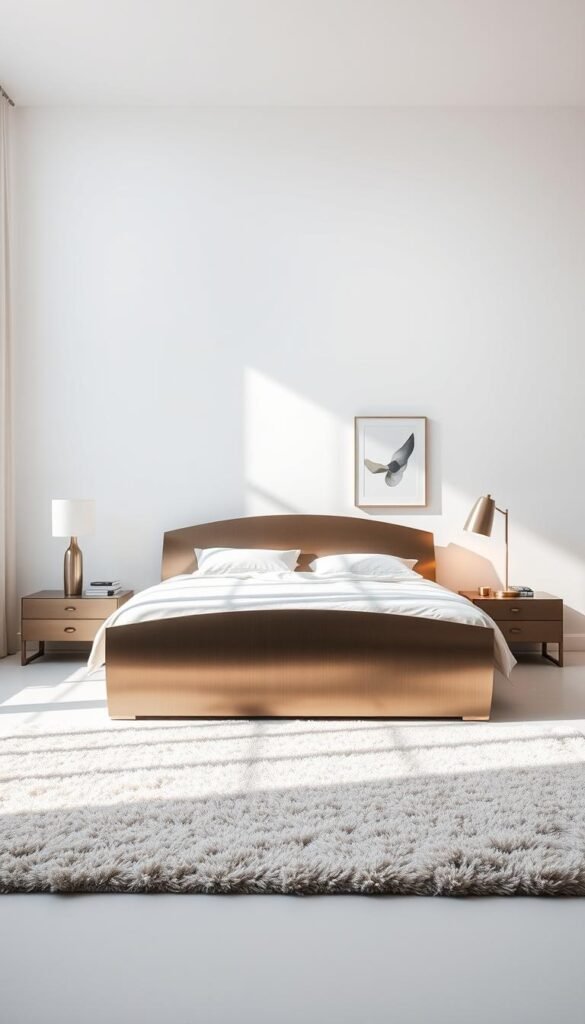
A single standout element can transform your entire space. This approach adds personality while keeping your environment peaceful and uncluttered.
Choose one fantastic item that truly represents your style. Let this piece become the heart of your room’s character.
Letting One Fantastic Item Shine
Luis Laplace’s stained oak bed demonstrates perfect focal power. Its rich wood grain and simple form anchor the entire space beautifully.
This bed needs no additional decoration around it. The craftsmanship and material speak for themselves.
Select pieces with clean lines and neutral colors. They make strong statements without overwhelming your peaceful atmosphere.
Your statement item should reflect what you love most. It becomes a personal signature in your curated space.
Using an Accent Wall as a Focal Point
Maison Amarande’s wood-paneled wall shows how texture creates interest. This treatment adds depth while maintaining visual calm.
An accent wall draws attention without adding physical clutter. It provides background character that enhances your entire room.
Keep other walls simple and unadorned. This balance maintains your minimalist approach while adding dimension.
Choose materials that complement your existing color scheme. Natural wood tones work beautifully with neutral palettes.
| Statement Element | Best Placement | Visual Impact |
|---|---|---|
| Unique Bed Frame | Room center | Creates immediate focal point |
| Accent Wall | Behind bed | Adds depth without clutter |
| Large Mirror | Opposite window | Enhances light and space |
| Fiber Art | Above bed | Adds texture and personality |
Psychological benefits come from having a clear focal point. Your eye knows where to rest, creating mental calm.
Too many statement pieces compete for attention. One strong element makes your room feel intentional and special.
Integrate your chosen piece with existing decor through color or material. This creates cohesion throughout your space.
Remember that less truly becomes more. Your statement piece elevates the entire room without sacrificing serenity.
9. Dress Your Windows Simply for Height and Light
Window treatments define your room’s atmosphere and light quality. They balance privacy needs with your desire for openness. Your choices here impact how your space feels throughout the day.
Simple window dressing maintains your clean aesthetic. It enhances natural light while providing necessary function. This approach keeps visual focus on your room’s best features.
The Impact of Floor-to-Ceiling Drapery
Full-length curtains create dramatic height in your room. They draw the eye upward, making ceilings appear higher. This optical trick expands your space beautifully.
Krista Hermanson uses cream linen drapes for cozy warmth. Neutral fabrics like these add softness without pattern distraction. They frame windows while maintaining serene vibes.
Choose simple rods in matching metallic finishes. Avoid ornate hardware that might compete with your design. Clean lines keep attention on the fabric’s graceful fall.
Consider these drapery benefits:
- Enhanced room height through vertical emphasis
- Softened natural light with gentle filtering
- Added texture through fabric choice and folds
- Improved insulation during colder months
Measure from ceiling to floor for proper installation. This creates that sought-after elegant elongation. Your windows become architectural features themselves.
Sometimes, Leaving Windows Bare is Best
Beautiful windows deserve to shine on their own sometimes. Hilary Walker and Ashley Maddox’s geometric windows demonstrate this perfectly. Their unique shape becomes the room’s artwork.
Uncovered windows maximize sunlight and outdoor views. They create stronger connection with nature outside. This approach works especially well with interesting architectural details.
Evaluate your privacy needs before choosing bare windows. Upper-floor rooms or private properties often work well. You might use subtle window film for daytime privacy.
Designer Ashley Maddox notes,
“When windows have strong character, they need no decoration. Their form provides enough visual interest on its own.”
Bare windows emphasize openness and spatial freedom. They make rooms feel larger and more connected to outdoors. This choice celebrates simplicity in its purest form.
Your window treatment decision depends on multiple factors. Consider light control, privacy needs, and architectural value. Both approaches support a peaceful environment when chosen thoughtfully.
Simple window solutions maintain your room’s calm atmosphere. They balance function with aesthetic purity perfectly. Your choices here complete your personal sanctuary beautifully.
10. Curate Your Art and Accessories with a Heavy Hand
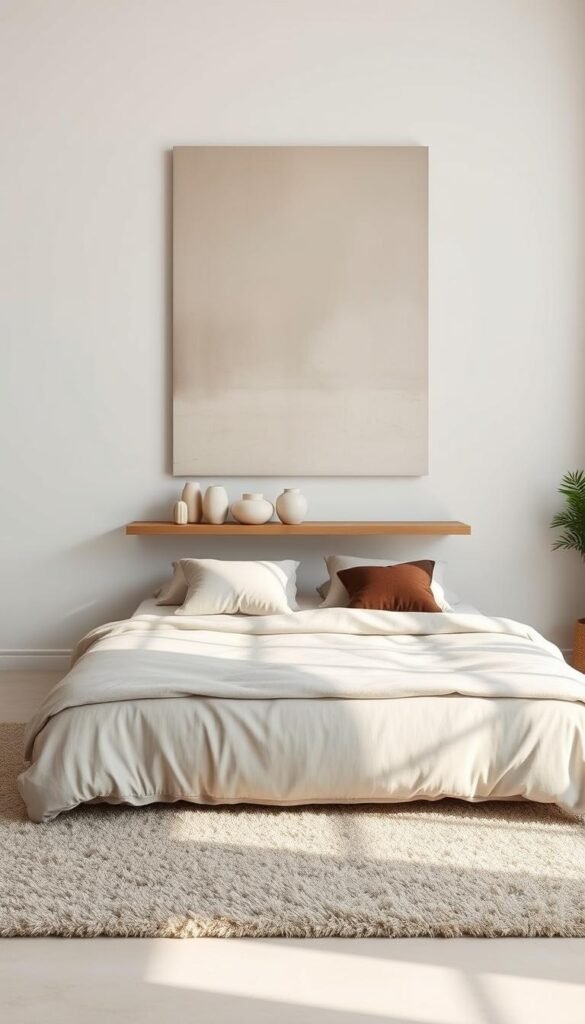
Your final decorative choices make your room feel complete without clutter. Every piece should add meaning and beauty to your space.
This careful selection process brings personality into your design. It creates visual interest while keeping your environment peaceful.
Choosing One Meaningful Piece Over a Gallery Wall
Select a single artwork that truly speaks to you. Elaine Santos chose an unframed landscape that captures her personal style perfectly.
This approach avoids visual competition on your walls. Your chosen piece becomes a focal point that tells your story.
Consider what emotions you want to feel in your room. Your art should evoke those feelings every time you see it.
Designer Elaine Santos explains,
“One powerful piece creates more impact than multiple smaller items. It becomes a conversation starter and personal treasure.”
Negative space around your artwork gives it room to breathe. This emptiness actually highlights your special piece beautifully.
Incorporating Natural Elements like Simple Florals
Bring nature indoors with organic touches that add softness. Casa Marcelo uses pampas grass for subtle texture and movement.
Simple florals in a single vase create life without fuss. They introduce color naturally while maintaining simplicity.
Consider these natural additions for your space:
- Dried branches or grasses for lasting beauty
- A single fresh flower in a simple vessel
- Found objects like interesting stones or shells
Natural materials like wood or stone work well for accessories. They add warmth through their organic textures and forms.
Regularly edit your decorative items to ensure they still serve you. Remove anything that no longer brings joy or meaning.
Your carefully chosen pieces complete your personal sanctuary beautifully. They add character without compromising your peaceful atmosphere.
11. Incorporate Natural Materials to Bring Warmth Indoors
Natural elements transform your personal space from stark to soulful. They add organic character that manufactured items simply cannot replicate. This approach creates a welcoming atmosphere in your home.
Marie Flanigan’s ranch house demonstrates the power of lightened wood tones. These finishes create an airy, unadorned feel throughout the space. They bring nature’s beauty indoors without overwhelming your design.
Lightened Wood Tones for an Airy Feel
Choose pale oak or ash finishes for furniture and accents. These woods maintain visual lightness while adding natural warmth. They prevent your room from feeling heavy or closed-in.
Light wood tones reflect available light beautifully. They make your space feel larger and more open. This creates that sought-after airy atmosphere.
Consider refinishing existing pieces with light stains. This DIY approach personalizes your space sustainably. It allows you to keep beloved furniture while updating its look.
Stone, Wool, and Linen for Organic Texture
Reena Simon champions materials that echo nature’s diversity. Stone accents, wool textiles, and linen bedding add layered interest. These elements provide tactile richness without visual clutter.
Natural materials develop character over time. A wool rug becomes softer with use. Linen bedding gains beautiful texture after repeated washing.
Designer Simon notes,
“Organic materials tell a story of craftsmanship and connection to the earth. They make spaces feel lived-in and loved.”
These choices offer sustainability benefits too. Natural fibers are biodegradable and often locally sourced. They align with mindful living principles.
| Material | Best Uses | Emotional Impact |
|---|---|---|
| Light Wood | Furniture, flooring | Creates openness and warmth |
| Stone | Accent pieces, decor | Adds grounded, earthy feel |
| Wool | Rugs, throws | Provides cozy comfort |
| Linen | Bedding, curtains | Offers relaxed elegance |
Mix materials thoughtfully for cohesive results. Choose pieces that share similar color tones or textures. This creates harmony rather than competition.
Your space gains psychological comfort through natural elements. They evoke calm and connection to the outdoors. This transforms your room into a true sanctuary.
Natural materials blend functionality with timeless elegance perfectly. They create warmth and character that synthetic items cannot match. Your home becomes both beautiful and deeply comforting.
12. Rethink Your Storage to Maintain a Clear Space
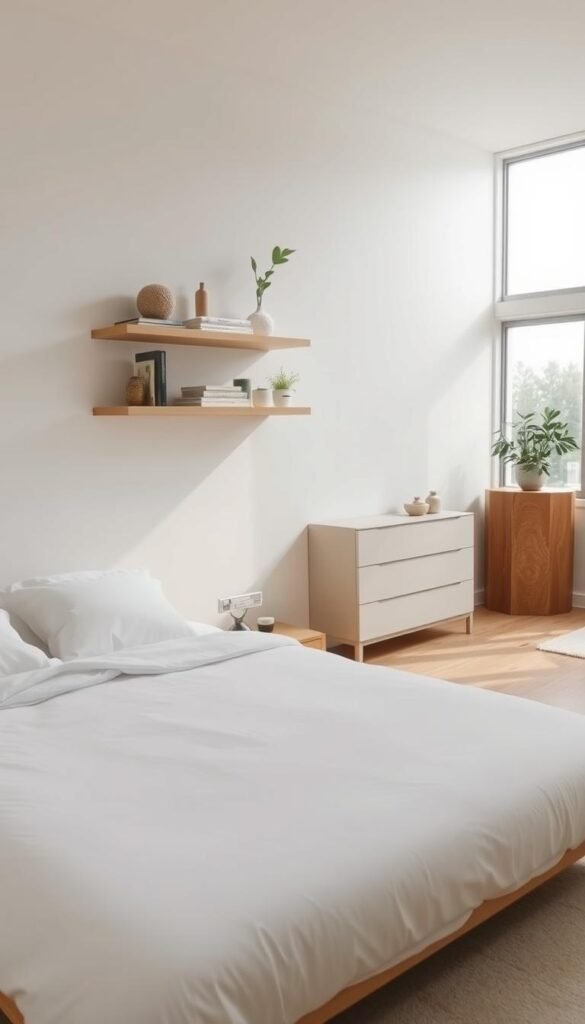
Smart organization transforms your personal retreat into a lasting sanctuary. It keeps your environment peaceful and functional every day.
Hidden storage solutions prevent visual chaos while keeping essentials handy. This approach supports both beauty and practicality in your home.
Utilizing Built-In Bed Frame Storage
Platform beds with drawers offer brilliant hidden space. They tuck away linens, clothing, or seasonal items neatly.
This furniture choice maximizes your room’s potential beautifully. Everything stays accessible yet completely out of sight.
Consider vertical storage solutions for smaller areas. Tall bookcases or wall-mounted shelves create height illusion.
Multi-functional pieces work wonders for limited spaces. Ottomans with hidden compartments provide seating and organization.
Keeping Surfaces Like Dressers Completely Clear
Clear surfaces maintain visual calm throughout your space. They reduce mental clutter and promote relaxation instantly.
Designers emphasize this practice for preserving serene aesthetics. It creates breathing room for your mind and eyes.
Adopt the “everything in its place” mentality daily. Spend five minutes returning items to their designated homes.
Use drawer organizers to maximize interior space efficiently. Dividers keep belongings sorted and easy to find.
Under-bed storage offers another discreet option. Wheeled bins or shallow drawers house items without crowding.
Regular tidying prevents accumulation before it starts. This habit maintains your peaceful environment long-term.
Your storage solutions should match your lifestyle needs. Choose practical systems you’ll actually use consistently.
Effective organization supports simplicity and order perfectly. It transforms your room into a true haven of calm.
13. Create Zones Within Your Room for Specific Purposes
Dividing your sleeping area into clear zones boosts both function and focus. This smart approach makes your room work better for daily activities. It transforms one large space into several useful areas.
Zoning helps your mind switch between different tasks easily. You create dedicated spots for reading, resting, or other personal routines. This organization supports a peaceful and productive environment.
Designing a Cozy Reading Nook with a Single Chair
Create a special corner just for quiet reading time. Choose one comfortable chair that invites you to sit and relax. This becomes your personal escape within your room.
Place your chair near natural light if possible. Add a small side table for your book and a drink. Keep accessories minimal to maintain a clutter-free feel.
Consider a chair that offers multiple functions. Some designs include hidden storage for blankets or books. This maximizes utility without adding extra furniture.
Your reading nook should feel inviting and separate. Use a rug to define this special area visually. This creates a sense of purpose for that specific spot.
Defining a “Bed Nook” for Ultimate Focus
Frame your sleeping area to emphasize its importance. Eddie Maestri’s arched design demonstrates this concept beautifully. It makes your bed the clear center for rest.
This approach creates a dedicated space just for sleep. Your mind associates this area with relaxation and recovery. It improves sleep quality by reducing distractions.
Use architectural elements or furniture arrangement. Position your bed against a focal wall or use canopy styling. These techniques define your sleeping zone clearly.
Keep the area around your bed simple and clear. This maintains focus on relaxation and tranquility. Your bed nook becomes a true sanctuary within your room.
Zoning makes your room adapt to different needs throughout the day. It creates organization without adding physical dividers. This approach enhances both function and peaceful atmosphere.
Consider your personal habits when creating zones. You might need a meditation corner or small workspace. Design these areas to support your specific routines.
Remember to maintain visual consistency between zones. Use similar colors and materials throughout your room. This creates harmony while supporting different functions.
Your zoned room becomes more efficient and peaceful. It supports better focus and reduces daily stress. This thoughtful organization completes your personal retreat.
14. Play with Monochromatic Schemes for a Cohesive Look
A single-color palette unifies your room beautifully. It creates harmony throughout your personal space.
Wendy Labrum’s taupe gingham shows pattern can be calming. Using one color in different shades simplifies your design.
This approach reduces visual noise. Your mind relaxes in the organized environment.
Choose a base color that makes you feel peaceful. Warm neutrals work well for this way of decorating.
Texture adds interest without new colors. Matte and glossy finishes create depth.
Apply your chosen hue to walls, bedding, and accessories. Consistency ties everything together.
Your home becomes a restful retreat. This final touch completes your serene bedroom.