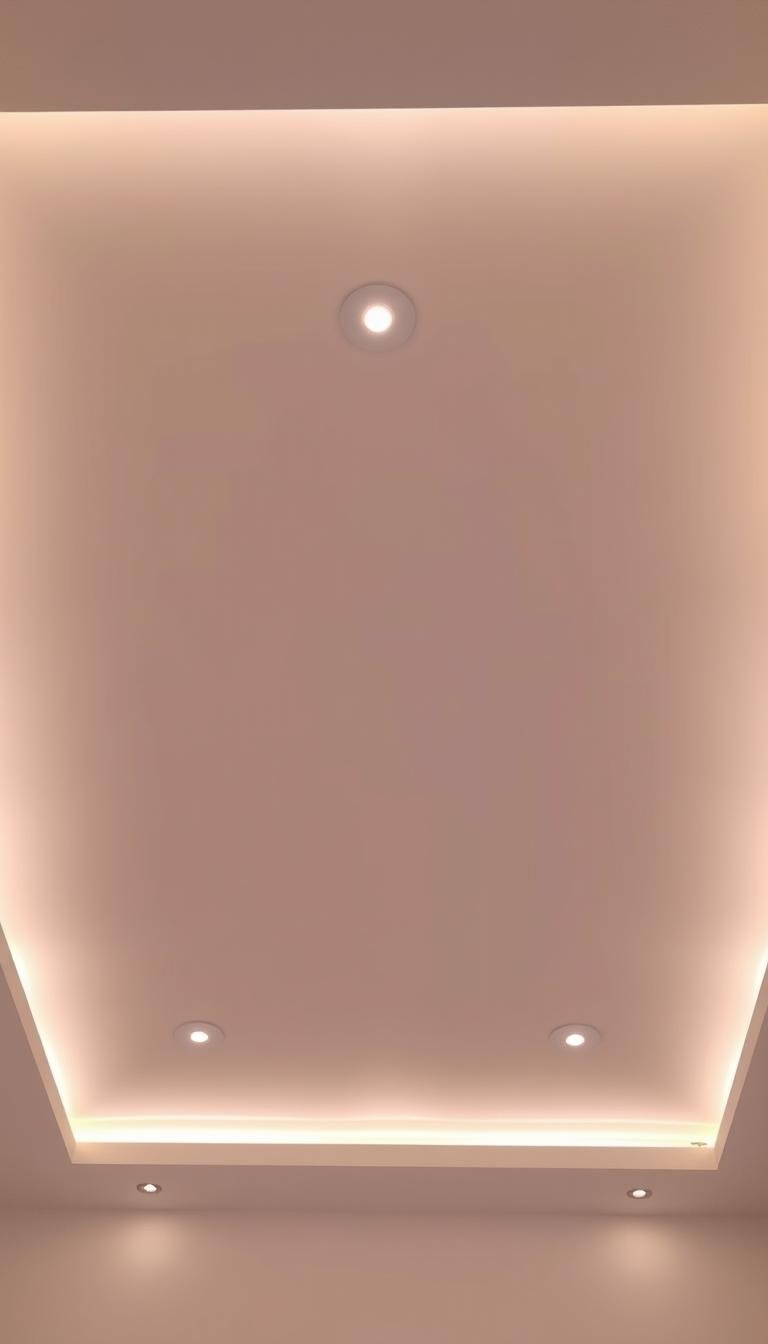
Your bedroom’s upper surface holds incredible power to transform your entire space. Many overlook this crucial feature when planning their room’s interior.
The right approach can completely change your room’s atmosphere. It creates a specific feel that enhances your overall living experience.
Modern style emphasizes clean lines and thoughtful materials. These elements work together to create a sense of elegance and depth.
This isn’t just about looks – it’s about crafting your perfect personal retreat. Different approaches can make your space feel larger or more intimate.
We’ll explore various creative options that can elevate your bedroom. Discover how to make this often-ignored feature your room’s standout element.
Why Your Bedroom Ceiling Deserves Your Attention
Your room’s uppermost boundary offers creative opportunities most people never consider. This overhead surface completes your space in ways that walls alone cannot achieve.
Many focus solely on walls and floors, forgetting that the area above contributes significantly to your room’s character. This oversight means missing out on dramatic transformations.
More Than Just the Fifth Wall
Interior experts often call this surface the “fifth wall” for good reason. It deserves equal consideration in your planning process.
This feature does more than simply cover structural elements. It establishes the entire room’s mood and personality.
- Creates visual depth through various treatments and materials
- Enhances lighting effects from both natural and artificial sources
- Adds architectural interest to otherwise simple spaces
- Defines different zones within your sleeping area
Whether you choose a dark hue for intimacy or intricate patterns for elegance, your options are nearly limitless. The right approach can make your space feel larger or more intimate based on your needs.
Setting the Tone for Your Entire Room
Your overhead treatment influences how you experience the entire space. It works with other elements to create harmony or intentional contrast.
Consider how different approaches affect perception:
“The ceiling is the forgotten surface that actually determines much of a room’s atmosphere and spatial feeling.”
Lighter colors and smooth finishes can increase brightness and create an airy feel. Darker tones or textured materials often produce a cozier, more enclosed atmosphere.
Proper planning from the beginning ensures your overhead feature complements your wall treatments and overall decor. This coordination creates a seamless look that feels intentional and polished.
For more inspiration on transforming this crucial element, explore these bedroom ceiling design options that can elevate your personal retreat.
Remember that this often-overlooked aspect of your room holds tremendous power. Thoughtful consideration early in your design process pays dividends in your final result.
Key Factors to Consider Before You Choose a Design
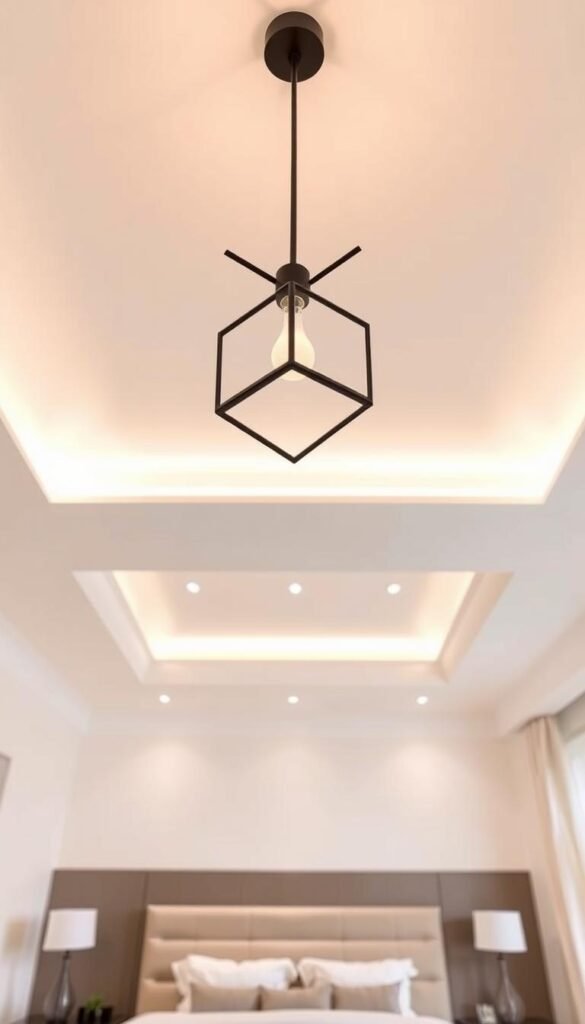
Making the right overhead design choice involves more than just picking a pretty pattern. Several practical elements deserve your attention to ensure your space feels harmonious and functional.
Taking time to evaluate these factors will help you create a look that enhances your room’s atmosphere. It ensures your investment delivers both beauty and practicality.
Understanding Your Room’s Dimensions and Ceiling Height
Your space’s proportions dramatically influence which treatments work best. Always measure your room’s length, width, and height before making decisions.
Lower overhead surfaces benefit from simpler approaches. They can feel cramped with elaborate designs or dark colors.
Taller spaces offer more creative freedom. They can handle dramatic elements without overwhelming the room.
How Natural and Artificial Lighting Will Interact with Your Design
Light plays a crucial role in how your overhead treatment appears. Natural illumination changes throughout the day, affecting colors and textures.
Brighter surfaces reflect more light, creating an airy feel. Darker materials absorb illumination, producing cozier atmospheres.
Consider how artificial fixtures will integrate with your plan. Recessed lights, pendants, or coves should complement rather than compete with your design.
Matching Your Ceiling to Your Existing Decor and Style
Your overhead treatment should feel like a natural extension of your room’s character. It shouldn’t clash with your furniture or color palette.
Modern interiors often favor clean lines and minimal ornamentation. Traditional spaces might incorporate more detailed elements.
Think about how colors, textures, and materials will work with your current decor. Consistency creates a polished, intentional look throughout your space.
Budget-Friendly Materials and Maintenance Considerations
Different materials offer varying price points and maintenance needs. Gypsum and PVC provide moisture resistance at reasonable costs.
Simple layouts typically cost less to install and maintain. Elaborate designs may require professional installation and special cleaning.
Consider long-term upkeep when selecting materials and finishes. Some options withstand wear better than others, maintaining their appearance over time.
Future flexibility matters too. Choose treatments that allow for updates without complete overhauls when your style evolves.
14 Inspiring Ceiling Design Ideas for a Modern Aesthetic Bedroom
Transform your overhead space into a stunning feature with these creative approaches. Each option brings unique character to your personal retreat.
These concepts range from simple updates to dramatic transformations. You’ll find something that matches your taste and room proportions.
1. The Minimalist Flat Ceiling for a Clean, Timeless Look
A smooth, unadorned surface creates understated sophistication. This approach works with virtually any decor style.
Combine with recessed lighting for a seamless appearance. The result feels both contemporary and eternally stylish.
2. Wooden Panels and Beams to Add Warmth and Texture
Natural materials introduce organic charm to your space. Light-toned options maintain a modern feel while adding character.
These elements create visual interest without overwhelming your room. They pair beautifully with neutral wall colors.
3. Versatile Gypsum Board for Sleek Lines and Integrated Lighting
This popular material offers excellent flexibility for creative expressions. Its smooth finish accommodates various lighting solutions.
You can incorporate hidden illumination or decorative coves. The material works well in different climate conditions.
4. Creative POP Designs for Subtle Dimension and Elegance
Plaster of Paris allows for intricate patterns and shapes. Geometric forms or minimalist frames create sophisticated depth.
These treatments add artistic flair without excessive ornamentation. They work particularly well in larger rooms.
5. Practical and Modern PVC Ceiling Options
Lightweight and moisture-resistant materials offer smart solutions. They’re perfect for areas with humidity concerns.
These panels come in various finishes and patterns. You achieve a contemporary look with practical benefits.
6. Tray Ceilings to Create Depth and a Layered Effect
Recessed central sections add architectural dimension to your space. This design makes rooms feel more structured.
Accent lighting enhances the layered appearance beautifully. It’s an elegant way to define your sleeping area.
7. Strategic Use of Paint Color to Alter Perception
Color choices dramatically affect how your room feels. Lighter hues expand spaces visually.
Darker tones create intimacy and coziness. The right shade can completely transform your atmosphere.
8. Industrial Chic with Exposed Elements and Raw Materials
Unfinished beams and concrete surfaces create urban sophistication. This style embraces authenticity and character.
Matte finishes and metal accents complete the look. It’s perfect for loft-style bedrooms.
9. Making a Bold Statement with a Dark or Contrasting Ceiling
Dramatic color choices create unforgettable visual impact. A dark overhead surface adds modern edge.
This approach works particularly well in rooms with ample height. It creates a striking focal point.
10. Suspended or Drop Ceilings for a Structured Modern Feel
These systems provide clean lines and hidden utility spaces. They’re ideal for concealing wiring or ductwork.
The result is a polished, intentional appearance. You gain both style and functionality.
11. Incorporating a Striking Light Fixture as a Focal Point
Let your lighting become the star of the show. Choose an eye-catching fixture that commands attention.
Keep the surrounding treatment simple to highlight your choice. This creates balance and visual interest.
12. Playful and Imaginative Designs for a Child’s Room
Create magical spaces with creative shapes and cutouts. Cloud formations or star patterns spark imagination.
Vibrant LED lights enhance the playful atmosphere. Safety and durability remain priorities.
13. Cove Lighting and LED Strips for Ambient Glow
Hidden illumination creates soft, welcoming atmosphere. LED strips around the perimeter produce elegant effects.
This approach adds sophistication without visible fixtures. It’s perfect for evening relaxation.
14. Vaulted and Sloped Ceilings to Maximize Space and Light
Angled surfaces create dramatic volume and airiness. They make rooms feel expansive and grand.
Wooden beams can emphasize the architectural lines. This is ideal for creating a sense of openness.
Each of these concepts offers unique benefits for your space. Consider your room’s specific needs and your personal style.
The right choice will enhance your entire bedroom experience. It creates that perfect personal sanctuary you deserve.
How to Seamlessly Integrate Lighting into Your Ceiling Design
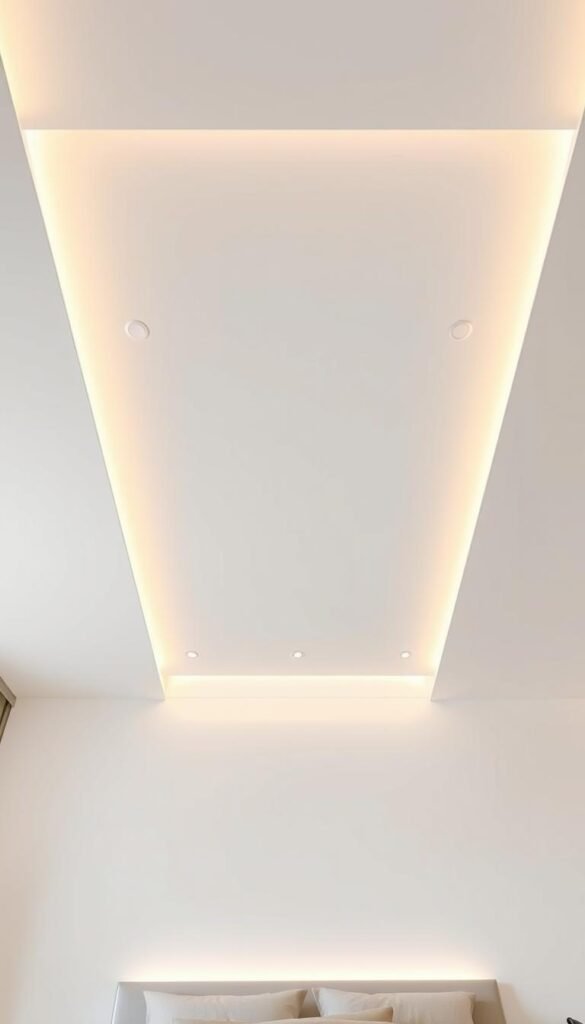
Lighting transforms your overhead surface from functional to fabulous. The right approach creates atmosphere while serving practical needs.
Your illumination choices work with materials and colors to establish mood. They can make spaces feel larger or more intimate.
Different types serve different purposes in your sleeping area. Combining them creates layers that enhance both function and beauty.
Recessed Downlights for a Clean, Uncluttered Look
Recessed lighting offers minimalist sophistication. These fixtures sit flush with your surface for a streamlined appearance.
Multiple circular lights can frame fans or architectural features. They provide even illumination without visual clutter.
Installation works well with various materials. The result feels contemporary and intentionally simple.
Placement matters for both aesthetics and function. Strategic positioning eliminates shadows where you need light most.
Using Cove and LED Strip Lighting to Enhance Ambiance
Hidden illumination creates magical atmosphere. LED strips around the perimeter produce soft, welcoming glows.
Warm light temperatures make spaces feel cozy and inviting. They can highlight patterns on walls for added depth.
This approach adds elegance without visible fixtures. It’s perfect for evening relaxation and mood setting.
Energy-efficient options provide long-lasting performance. Smart controls let you adjust brightness with ease.
Selecting the Perfect Statement Chandelier or Pendant
Grand fixtures become instant focal points. A glassy pendant amplifies glamour in sophisticated spaces.
Modern designs in darker hues complement various color schemes. Unique angular shapes add whimsical touches.
Geometric works well centered in vaulted areas. Vintage-style pieces with metal frames cast soft, beautiful light.
Consider scale relative to your room’s proportions. The right size makes a powerful style statement.
“Lighting is the jewelry of the room; it can make or break the entire atmosphere.”
Combining different types creates balanced illumination. Your overhead treatment deserves thoughtful lighting integration.
| Lighting Type | Best For | Installation Complexity | Ambiance Effect |
|---|---|---|---|
| Recessed Downlights | General illumination | Medium | Clean, modern |
| Cove/LED Strips | Mood lighting | High | Warm, cozy |
| Statement Pendants | Focal points | Medium-High | Dramatic, elegant |
| Combination Approach | Layered lighting | High | Versatile, dynamic |
Technical installation varies by material type. Some options require professional help for best results.
Light temperature affects how colors appear in your space. Warmer tones generally create more relaxing environments.
Smart systems offer incredible control over your atmosphere. They integrate seamlessly with modern interior schemes.
The right lighting solution enhances your entire room’s character. It brings both beauty and functionality to your personal retreat.
Choosing the Right Materials for Your Dream Ceiling
Your material selection shapes both the look and function of your space. The perfect choice balances beauty with practical needs.
Different options bring unique textures and benefits. They influence how your room feels and performs daily.
Consider your climate, budget, and desired atmosphere. The right pick enhances your entire room’s character.
Gypsum POP: The King of Customization and Smooth Finishes
This versatile material tops many wish lists for good reason. It offers incredible flexibility for creative expressions.
You achieve seamless surfaces that work with various lighting setups. Recessed fixtures and coves integrate beautifully.
These panels handle moisture well in different climates. They maintain their appearance through seasonal changes.
Paint them in soft hues for peaceful vibes. Ivory or beige create calming overhead environments.
Additional benefits include sound control and temperature regulation. Your space becomes more comfortable and private.
Wood: Bringing Natural Warmth and Character
Natural materials introduce organic charm to your room. They add texture while maintaining minimalist appeal.
Lighter tones keep things airy yet inviting. They pair wonderfully with neutral walls and warm illumination.
Wood offers lasting durability and timeless style. It ages gracefully, developing character over years.
This choice brings rustic elegance without overwhelming your space. It creates cozy atmospheres perfect for relaxation.
PVC: A Lightweight, Moisture-Resistant, and Budget-Friendly Choice
Practical solutions don’t have to sacrifice style. This material delivers both affordability and performance.
Its waterproof nature makes it ideal for humid areas. You won’t worry about moisture damage over time.
Various finishes mimic wood, marble, or matte textures. You achieve high-end looks without premium costs.
Maintenance is simple thanks to its resistant properties. It stays looking fresh with minimal effort.
Installation varies between these popular options. Some require professional help while others offer DIY potential.
Consider long-term upkeep when making your decision. Each material has different cleaning and care needs.
Your lighting plans should align with your chosen panels. Some integrate fixtures more easily than others.
Cost factors include both initial investment and future maintenance. Find the balance that works for your budget.
For more inspiration on material options, explore these ceiling materials that can transform your space.
Your personal taste and room’s requirements should guide your selection. The perfect choice makes your space truly yours.
Designing for Different Bedroom Sizes
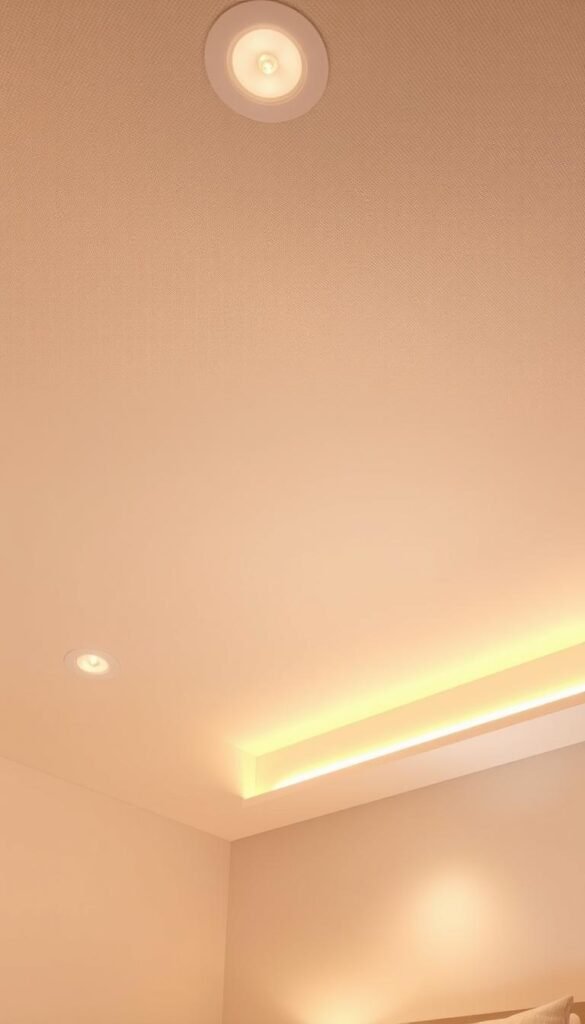
Your sleeping area’s dimensions greatly influence which overhead treatments work best. The right approach can either expand cozy spaces or enhance grand master suites.
Smart planning considers both floor area and vertical measurements. This ensures your overhead feature complements rather than competes with your room.
Different sizes demand different strategies for optimal results. Let’s explore how to maximize various bedroom proportions.
Illusion-Boosting Ideas for Smaller, Cozier Rooms
Compact spaces benefit from light-enhancing techniques. Bright white surfaces create airy atmospheres that feel more spacious.
Subtle textures or groove lines add interest without overwhelming. They provide visual depth while maintaining openness.
Coordinated elements throughout your room amplify this effect. Light-toned walls and minimalist furniture work together beautifully.
Sheer curtains maximize natural light during daytime hours. This creates consistent brightness from floor to ceiling.
Lighting choices complete the expanded feel. Recessed fixtures or simple pendants maintain clean sight lines.
These approaches work wonderfully in urban homes with limited square footage. They transform cramped areas into comfortable retreats.
Grand Statements Perfect for Master Bedrooms with High Ceilings
Spacious master suites offer incredible creative freedom. Elevated heights accommodate dramatic elements beautifully.
Tray designs create layered appearances with central recesses. They add visual excitement while maintaining clean aesthetics.
Vaulted surfaces maximize both height and drama. They make rooms feel expansive and luxurious.
Wooden beams highlight architectural lines and proportions. They add warmth to grand spaces.
Statement fixtures become stunning focal points. Luxurious chandeliers or multi-tiered designs command attention.
These elements work together to create impressive interiors. They transform large areas into truly special retreats.
| Room Size | Recommended Approach | Color Strategy | Lighting Solution |
|---|---|---|---|
| Small (under 120 sq ft) | Smooth white surfaces with subtle texture | Light, reflective colors | Recessed or minimalist pendant lights |
| Medium (120-200 sq ft) | Simple tray designs or wood accents | Neutral tones with slight contrast | Combination of recessed and accent lighting |
| Large (over 200 sq ft) | Vaulted or dramatic multi-level designs | Bold statements or natural materials | Grand chandeliers with supplemental lighting |
| High Ceilings (9+ ft) | Architectural beams or intricate patterns | Darker tones for intimacy or light for expansion | Layered lighting with statement fixtures |
Furniture placement should complement your overhead treatment. Lower profiles work well under dramatic designs.
Color choices significantly affect spatial perception. Lighter hues expand while darker tones create intimacy.
Your room’s unique character should guide final decisions. The perfect approach makes your space feel both comfortable and intentional.
Blending Your Ceiling with Your Overall Bedroom aesthetic
A cohesive room aesthetic creates a sense of intentionality and polish. Your overhead treatment should feel like a natural extension of your space’s character.
This integration makes your room feel complete and professionally designed. It’s about creating visual flow from floor to ceiling.
Ensuring Color and Style Harmony from Floor to Ceiling
Color continuity establishes visual cohesion throughout your space. Gentle neutrals create seamless transitions between surfaces.
White remains a powerful choice for creating harmony. It provides a clean backdrop that works with various color schemes.
Consider how colors interact throughout the day. Natural light changes how tones appear on different surfaces.
Texture matching creates depth without visual competition. Smooth panels complement sleek furniture finishes.
Wooden elements can echo similar materials elsewhere in the room. This repetition creates rhythm and balance.
Transitional elements like crown molding bridge wall and ceiling designs. They provide elegant finishing touches.
Using Your Ceiling to Complement Key Furniture Pieces
Your overhead treatment should enhance rather than overwhelm furniture. It acts as a supporting player to your key pieces.
Wooden surfaces naturally complement wooden furniture. This creates material consistency throughout your space.
White ceilings provide neutral backdrops for colorful furnishings. They let your furniture take center stage.
Consider scale and proportion when planning your approach. Large furniture needs adequate visual space above.
Black and white schemes create striking contrast when used intentionally. White plaster with black lines offers modern elegance.
Avoid making your overhead surface compete with statement furniture. The best designs work together harmoniously.
Common mistakes include ignoring existing decor elements. Always consider your room’s complete picture before deciding.
The Role of Color and Finish in Modern Ceiling Design
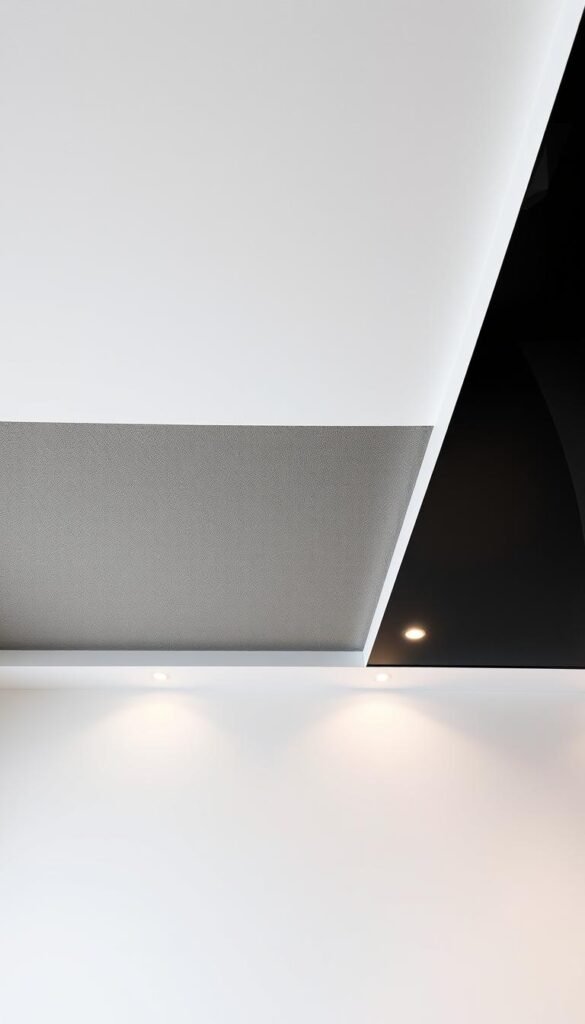
Your overhead surface’s color and finish dramatically affect your room’s atmosphere. These elements work together to create specific moods and visual effects.
Smart choices can make spaces feel larger, cozier, or more elegant. They influence how light behaves throughout your room.
Understanding these impacts helps you create your perfect personal retreat. Let’s explore how color and finish transform your space.
Why White and Neutrals Remain a Powerful Choice
White remains the most popular color for overhead surfaces. It reflects light beautifully, increasing brightness throughout your room.
This approach creates a clean, timeless look that works with various decor styles. It makes spaces feel larger and more open.
Neutral shades like off-white, cream, and light brown offer similar benefits. They provide crisp, tranquil backgrounds that complement most interiors.
These colors create seamless transitions between walls and overhead surfaces. The result feels harmonious and intentionally designed.
When and How to Successfully Use Darker Ceiling Hues
Darker colors create intimate, cozy atmospheres perfect for bedrooms. A deep forest green complements earthy tones throughout your space.
This approach works particularly well in rooms with ample height. It adds drama without overwhelming your decor.
Consider matching darker overhead colors with similar wall tones. This creates a cohesive, enveloping feeling throughout your room.
Dark hues make bold statements while maintaining simplicity. They work beautifully in modern, minimalist spaces.
Selecting a Finish: Matte, Glossy, or Textured?
Matte finishes provide soft, non-reflective surfaces that absorb light. They create subtle, sophisticated looks that minimize visual distractions.
Glossy options reflect illumination, making spaces appear larger. They add contemporary shine that works well in modern interiors.
Textured surfaces add visual interest and can hide imperfections. They introduce depth and dimension to your overhead treatment.
Velvety finishes with two-toned effects break up refined features beautifully. They elevate your overall design while adding character.
| Finish Type | Light Reflection | Room Effect | Best For |
|---|---|---|---|
| Matte | Low absorption | Soft, subtle | Minimalist spaces |
| Glossy | High reflection | Bright, expansive | Smaller rooms |
| Textured | Variable | Added dimension | Hiding imperfections |
| Velvet | Medium | Elegant depth | Statement spaces |
Consider your room’s natural light when selecting finishes. North-facing rooms benefit from brighter, more reflective options.
South-facing spaces can handle matte finishes without feeling dark. Always test samples at different times of day.
Your chosen finish should complement your overall decor style. Modern interiors often favor matte or lightly textured surfaces.
These elements work together to create your perfect personal sanctuary. The right combination makes your space truly special.
Modern vs. Traditional: Finding Your Ceiling Style
Your overhead treatment defines your room’s personality. It communicates your taste through materials, shapes, and details.
Some prefer crisp contemporary statements. Others lean toward classic elegance with timeless appeal.
The best choice reflects your personal preferences. It should feel authentic to your lifestyle and existing decor.
Characteristics of a Truly Modern Ceiling Design
Contemporary overhead treatments focus on simplicity and function. They embrace clean geometry and intentional minimalism.
Straight lines create visual order throughout your space. They establish a sense of calm and organization.
Integrated lighting becomes part of the architecture itself. Hidden LEDs and recessed fixtures maintain seamless appearances.
Materials like gypsum and PVC offer smooth, uniform surfaces. They provide durability with modern aesthetic appeal.
Geometric patterns add interest without overwhelming your room. They create focal points through subtle repetition.
Every element serves both practical and decorative purposes. Nothing exists purely for ornamentation.
Incorporating Traditional Elements in a Contemporary Way
You can enjoy classic charm without sacrificing modern sensibility. The key lies in selective adaptation.
Crown molding works beautifully when simplified. Choose streamlined profiles rather than elaborate carvings.
Wood beams gain fresh life with lighter finishes or metal accents. They add warmth while maintaining clean lines.
Classic patterns like fishbone structures create dramatic vaulted effects. They reference tradition through contemporary execution.
French-style embossed lines add elegance to false surfaces. They provide texture without visual clutter.
These blended approaches honor craftsmanship while embracing current trends. They create spaces that feel both timeless and current.
| Design Element | Traditional Approach | Modern Interpretation |
|---|---|---|
| Beams | Dark, ornate wooden beams | Light-toned or metal-finished beams |
| Molding | Intricate carved crown molding | Simple, streamlined profiles |
| Materials | Solid wood, plaster ornamentation | Gypsum, PVC, metal accents |
| Lighting | Chandeliers as standalone features | Integrated, hidden illumination |
| Patterns | Floral, elaborate designs | Geometric, repetitive motifs |
Your personal style should guide these decisions. Some prefer purely contemporary statements.
Others enjoy blending eras for unique character. Both approaches can create stunning results.
Current trends favor simplicity with thoughtful details. They focus on quality materials and clean execution.
The right balance makes your space feel intentionally designed. It reflects your taste while enhancing daily life.
Professional Installation vs. DIY Approaches
Deciding between doing it yourself and hiring experts is a crucial step in your overhead transformation journey. Your choice affects both your budget and the final quality of your space.
Several factors should guide your decision-making process. Consider your skill level, available time, and the complexity of your planned project.
Safety should always come first in any home improvement task. Some jobs simply require professional expertise to ensure proper execution.
Projects You Might Feel Confident Tackling Yourself
Many homeowners successfully handle simpler overhead treatments. Painting is one of the most accessible DIY options for most people.
Basic crown molding installation can be manageable with proper preparation. PVC panels offer relatively straightforward installation for confident DIYers.
Some lighting setups don’t require complex electrical work. Decorative elements that don’t involve structural changes are often DIY-friendly.
These projects typically need basic tools like paint rollers, measuring tapes, and simple cutting tools. Online tutorials can provide valuable guidance for these tasks.
When It’s Absolutely Worth Calling in a Professional
Complex false ceilings demand professional installation for safety reasons. Structural support requirements make these projects unsuitable for most DIY attempts.
Electrical work for integrated lighting systems needs licensed electricians. Heavy material installation like large wood beams requires specialized equipment and expertise.
Vaulted ceiling modifications often involve structural engineering considerations. Projects requiring permits or meeting specific building codes need professional handling.
Intricate plaster designs require skilled craftsmanship for proper finishing. Installations involving HVAC integration or complex electrical systems demand professional attention.
Gypsum and POP installations typically need expert hands for durability. Complex lighting with dimmers and smart home integration usually requires professional installation.
Cost comparisons show that while DIY saves on labor, mistakes can be expensive to fix. Professional work often comes with warranties that protect your investment.
Timeline considerations matter too – professionals complete projects faster typically. Insurance implications also differ between DIY and professionally installed features.
Finding qualified installers involves checking credentials and reviewing past work. Always verify licenses and insurance coverage before hiring any professional.
Your beautiful overhead feature deserves the right approach from the beginning. The choice between DIY and professional help ensures your space looks amazing and functions perfectly.
Maintaining and Caring for Your Beautiful New Ceiling
Your overhead feature deserves regular attention to maintain its stunning appearance. Proper care ensures your investment continues to enhance your space for years.
Different materials require specific approaches to cleaning and upkeep. Understanding these needs helps you preserve both beauty and functionality.
Easy Cleaning Tips for Different Materials
Gypsum and POP surfaces need gentle handling. Use a soft cloth or duster to remove dust regularly.
Avoid abrasive cleaners that might damage the smooth finish. These panels can be repainted when they need refreshing.
Wooden surfaces require regular dusting with a soft brush. Use wood-specific cleaners to maintain their natural beauty.
Always avoid excess moisture that could warp the material. Occasional refinishing keeps wood looking its best.
PVC options are among the easiest to maintain. A damp cloth wipes away most stains and dust.
Their moisture resistance makes them ideal for various homes. These panels require minimal effort to keep clean.
Long-Term Upkeep to Keep Your Ceiling Looking Fresh
Regular dusting prevents buildup that can dull surfaces. Address water stains promptly to prevent permanent marks.
Check periodically for cracks or sagging that might indicate issues. Maintain integrated lighting systems for consistent performance.
Touch up paint as needed to maintain a flawless look. Seasonal checks help catch small problems before they grow.
Consider these maintenance strategies for different materials:
- Gypsum/POP: Annual inspection for cracks, repaint every 3-5 years
- Wood: Seasonal dusting, refinish every 5-7 years depending on wear
- PVC: Quarterly cleaning, check for warping annually
- All materials: Immediate attention to water damage, regular lighting checks
Schedule professional inspections for complex installations. They can spot issues you might miss.
Monitor for structural changes over time. Update lighting components as technology advances.
Protective measures prevent most common problems. Proper care preserves both aesthetic appeal and practical function.
Your beautiful overhead feature will reward your attention with lasting elegance. It continues to enhance your space through proper maintenance.
Bringing Your Modern Bedroom Vision to Life
Your room’s overhead surface offers incredible potential to transform your space. With thoughtful choices, you create a personal sanctuary that reflects your unique style.
Simple approaches often deliver the most impact. Proper lighting and materials work together to enhance both beauty and function.
These elements add warmth and character to your home. They improve daily living while potentially increasing property value.
Your choices should express your personality and fit your lifestyle. Whether DIY or professional, the journey begins with inspiration.
Start exploring options that speak to you. Your perfect retreat awaits your creative touch.