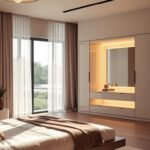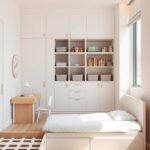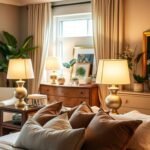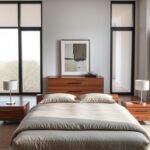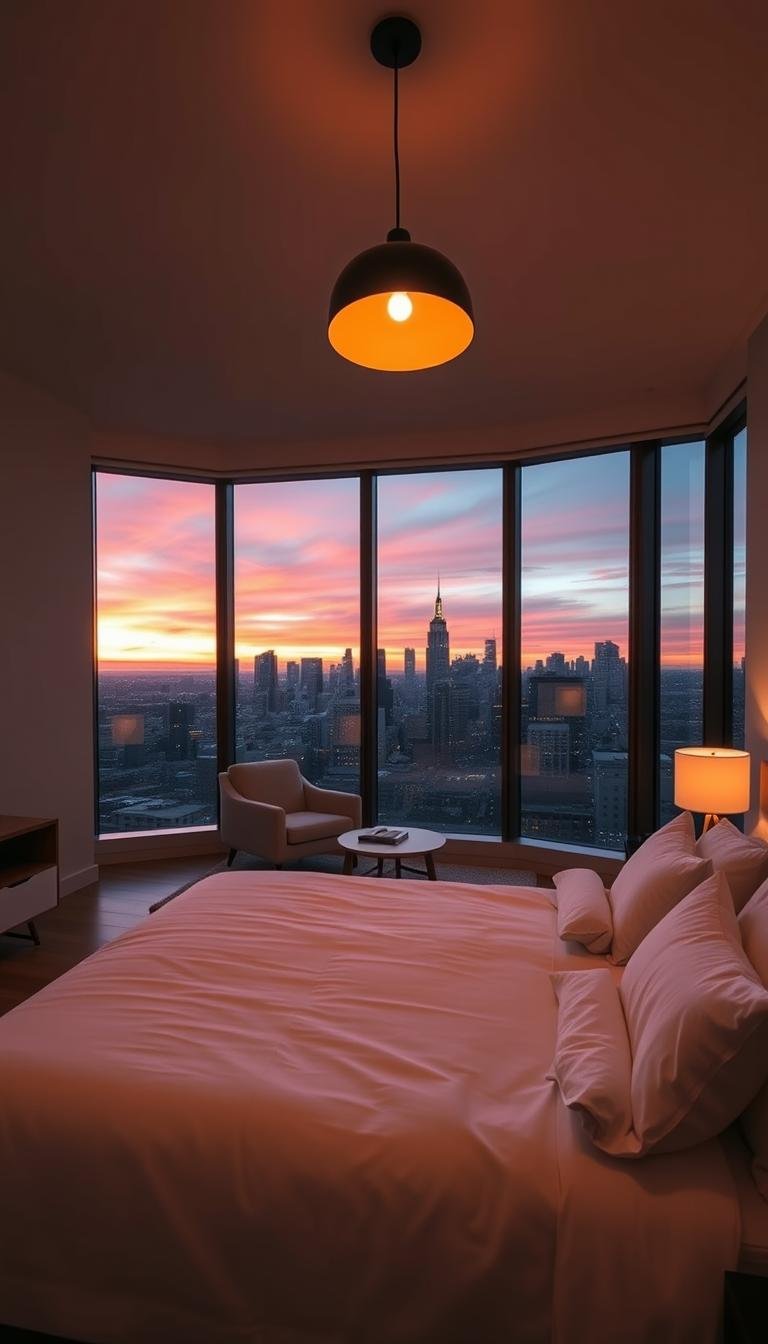
Your apartment bedroom should be a peaceful retreat. It needs to work well and look great. Good planning makes even a small room feel open and inviting.
Start by picking a clear style. Mid-century Modern or Scandinavian themes create a unified look. This choice guides your furniture, colors, and decor.
Think about how you use the space each day. Mark zones on the floor with tape before you buy anything. This ensures everything fits and flows nicely.
Lighting is key. Use layers—ceiling lights, lamps, and natural light—to avoid flat, harsh shadows. This adds warmth and makes the room more functional.
Smart storage and multifunctional pieces save space. The right colors and textures tie everything together. You can create a beautiful, practical room with these ideas.
Master the Art of Multifunctional Furniture
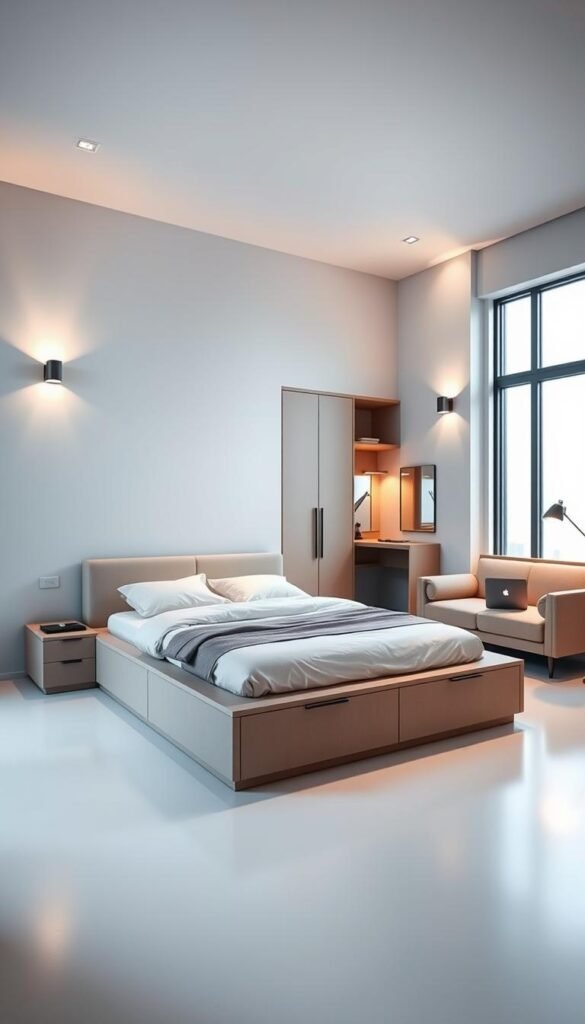
The secret to maximizing your living space lies in selecting pieces that serve multiple purposes. This approach transforms your personal retreat into a versatile environment that adapts to your daily needs.
Consider a Space-Saving Murphy Bed
A Murphy bed offers an excellent solution for small areas. It tucks neatly into the wall during daytime hours, freeing up valuable floor space.
Architect Michael K. Chen created a beautiful powder blue custom version. This clever piece allows the room to function as a home office or den when not used for sleeping.
Ready-made options are widely available if custom work exceeds your budget. Either choice provides serious space benefits without sacrificing comfort.
Opt for a Stylish Daybed
Daybeds deliver remarkable versatility for compact living situations. They serve as comfortable seating for daytime lounging and convert into sleeping space at night.
Designer Wendy Labrum demonstrated this approach beautifully. She used plush pillows and a cozy duvet to create a pattern-rich environment that works around the clock.
This furniture solution maximizes your square footage beautifully. It eliminates the need for separate seating and sleeping areas in one smart piece.
Other multifunctional options include desks with integrated storage drawers. These pieces tackle multiple tasks while reducing visual clutter in your environment.
Winsome Interior Design implemented this strategy in a North Carolina home. Their approach shows how thoughtful furniture selection creates more functional living areas.
| Furniture Type | Primary Function | Secondary Benefits | Best For |
|---|---|---|---|
| Murphy Bed | Sleeping | Creates daytime space for office or lounge | Rooms needing dual-purpose functionality |
| Daybed | Seating/Sleeping | Serves as couch and bed, saves space | Studios and small apartments |
| Storage Desk | Work Surface | Integrated drawers reduce clutter | Home offices in bedrooms |
| Ottoman with Storage | Seating/Footrest | Hidden space for blankets or pillows | Adding secret storage solutions |
These innovative approaches help you make the most of limited square footage. Your sleeping area becomes more adaptable and efficient with the right furniture choices.
Implementing these ideas is simpler than you might expect. Start with one multifunctional piece and notice how it transforms your daily experience.
Build Smart, Custom Storage Solutions
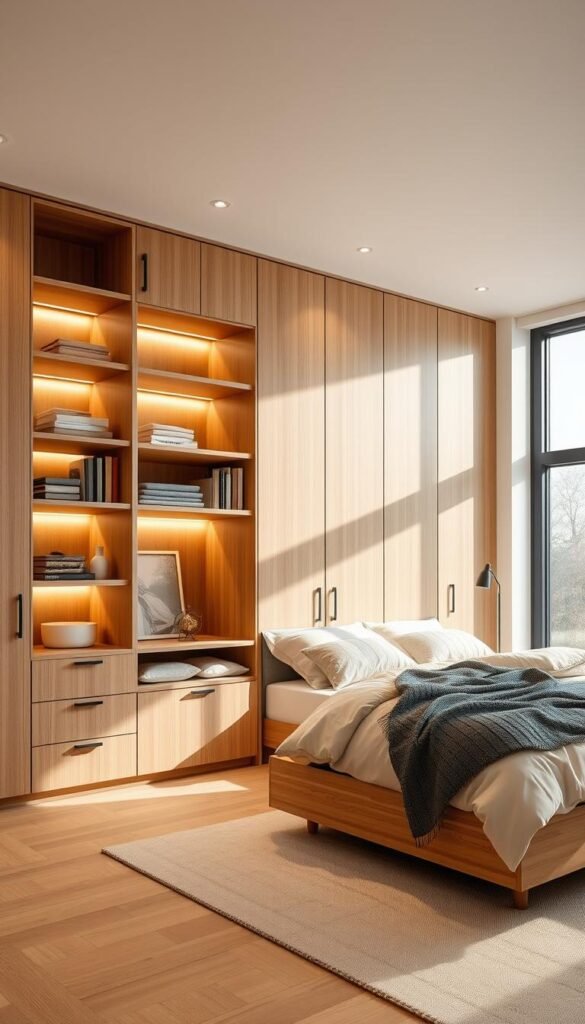
Smart storage turns cramped areas into organized retreats. Custom solutions make every inch work for you. They keep your space tidy while adding style.
Catherine and VW Fowlkes created brilliant built-in shelves. Their design hides radiators with custom covers. This approach saves precious floor space in any room.
Utilize Built-In Shelving and Headboards
Built-in shelves maximize vertical space on your walls. They hold books and decor without crowding. This creates a clean, uncluttered look in your home.
Tom Joyner’s Miami bedroom features a clever headboard. It conceals shoe storage on the reverse side. This innovative idea keeps essentials hidden but accessible.
Create Multiuse Storage like Stair-Drawers
Designer Samantha Struck transformed a bunk room with stair-drawers. Each step doubles as hidden storage. This maximizes functionality in compact areas.
Winsome Interior Design used vertical space above an alcove bed. Built-in shelving holds personal items neatly. Your room stays organized without feeling crowded.
These custom solutions adapt to your specific layout. They enhance both aesthetics and practicality. Start with one project to transform your space.
Embrace the Power of a Cohesive Color Palette
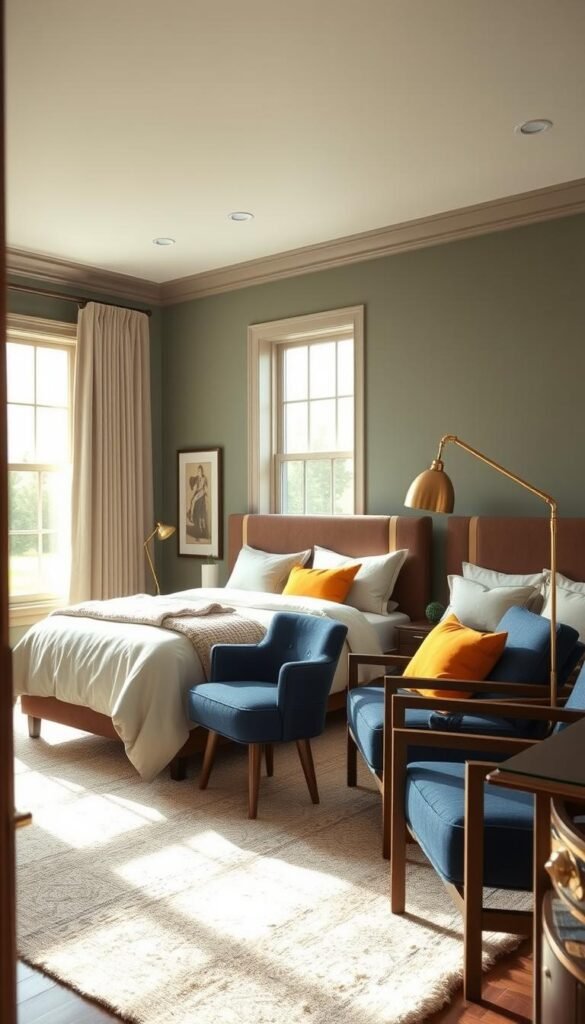
A thoughtful color scheme can make even compact spaces feel expansive. Your choices create visual harmony throughout your personal area. This approach ties everything together beautifully.
Color coordination affects both mood and perception. It helps your eyes move smoothly around the room. This creates a sense of calm and order in your daily life.
Draw Inspiration from Desaturated Tones
Desaturated colors offer a modern, calming atmosphere. Think soft yellows and muted greens like in Omar Aqeel’s Paris-inspired space. These tones create a sophisticated backdrop for living.
Add strategic pops of brighter color for interest. This maintains serenity while preventing monotony. Your space feels curated rather than boring.
Try a Sophisticated Dark Scheme for Cocooning
Dark colors create an intimate, cocooning effect. Tanner Sammons’ black walls demonstrate this dramatic approach. It makes your sleeping area feel cozy and protected.
This doesn’t mean your room must feel small. Proper lighting keeps the space from feeling closed in. The result is a sophisticated retreat for relaxation.
Neutral palettes provide timeless serenity. Clive Lonstein’s oyster-toned Connecticut bedroom shows this well. These shades create peaceful harmony throughout.
Using one dominant color with different finishes adds depth. Try matte paint on walls with satin bedding fabric. This creates subtle variation without visual clutter.
Your color choices impact your mental state daily. Cohesive palettes promote tranquility and visual rest. This makes your space truly feel like home.
Have fun experimenting with different combinations. Sample paints on your wall before committing fully. This creative process should feel enjoyable, not stressful.
Remember that colors interact with your existing furniture and decor. Consider how natural light changes tones throughout the day. Your final scheme should work in all conditions.
Layer Your Lighting for Ambiance and Function
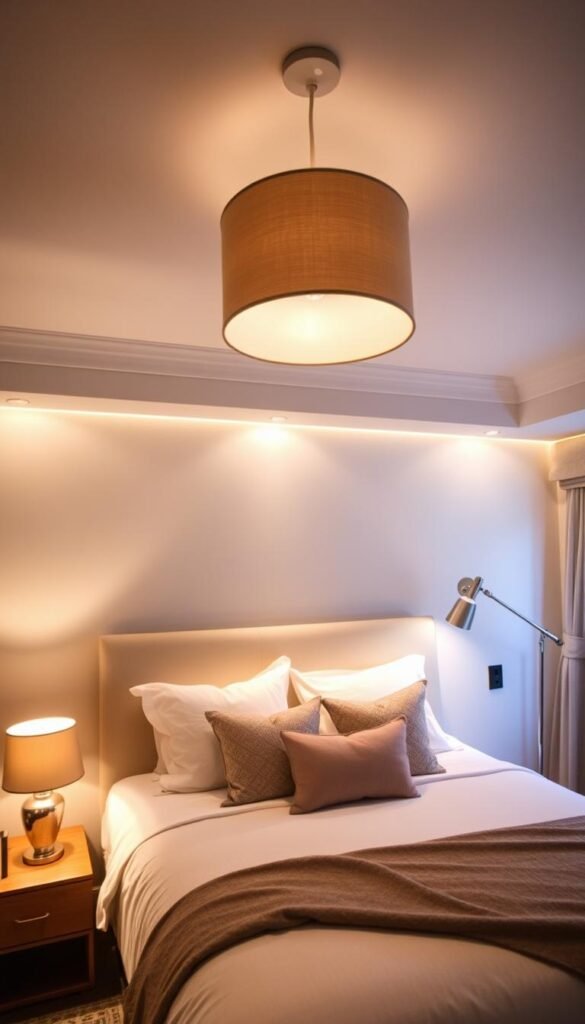
Great lighting transforms your personal space from ordinary to extraordinary. It creates mood while making your room work better for daily activities. The right approach combines different light sources for perfect results.
Think about how you use your space throughout the day. You need bright light for reading but soft glow for relaxing. Layered lighting solves this by offering multiple options in one room.
Install Space-Saving Wall Sconces
Wall sconces free up valuable surface area on nightstands and tables. Designer Ashley Maddox uses them to create ambient glow without floor lamps. They mount directly to your walls, saving precious floor space.
Hilary Walker demonstrates how sconces provide reading light right where you need it. These fixtures work beautifully on either side of your bed. They eliminate the need for bulky table lamps that consume surface area.
Choose sconces with adjustable arms for maximum flexibility. This lets you direct light exactly where you want it. Your room gains functionality without sacrificing style.
Incorporate Flexible, Plug-In Light Sources
Plug-in options offer incredible versatility without electrical work. Battery-powered LEDs and clip-on lamps create zone-specific illumination. You can move them around as your needs change.
These solutions work perfectly for rental apartments where permanent changes aren’t possible. Try plug-in pendants over nightstands or clip-on lights for reading nooks. They provide professional-looking results without complicated installation.
Look for lamps with dimmer switches for adjustable brightness. This lets you create the perfect mood for any time of day. Your space becomes more adaptable to different activities.
Consider smart bulbs that change color temperature throughout the day. Cool white light energizes your morning routine while warm tones relax you at night. This technology enhances both function and ambiance.
| Lighting Type | Primary Purpose | Best Placement | Bulb Recommendation |
|---|---|---|---|
| Wall Sconces | Task & Ambient Light | Beside bed, reading chairs | Warm White LED, 40-60W equivalent |
| Plug-In Pendants | Focal Lighting | Over nightstands, seating areas | Dimmable LED, 2700K temperature |
| Battery LEDs | Accent & Mood Lighting | Under shelves, behind headboard | RGB Color Changing LEDs |
| Clip-On Lamps | Task Lighting | Headboard, shelf edges | Adjustable Arm with 360° rotation |
Layer your lighting by combining ceiling mounts with other sources. Start with overhead lights for general illumination. Add task lighting for specific activities like reading or working.
Finish with accent lights to highlight architectural features or artwork. This approach prevents flat, harsh shadows throughout your space. It creates depth and dimension that makes your room feel more inviting.
Try indirect lighting techniques for cozy atmosphere. Uplights behind furniture or under-shelf LEDs accentuate finish changes. They create gentle glow that reduces eye strain and promotes relaxation.
Remember that bulb choice dramatically affects mood. Warm white bulbs (2700-3000K) create comforting ambiance. They make colors look richer and spaces feel more welcoming.
Experiment with different setups to find what works for your lifestyle. Lighting should be both beautiful and functional. Your efforts will transform how you experience your personal space every day.
Experiment with Texture for Added Depth
Texture brings your personal space to life without adding clutter. It gives your eyes interesting details to explore. This creates a rich, inviting atmosphere in your room.
Sarah Dray’s Parisian space shows how well this works. A bouclé headboard, soft rug, and elegant curtains add layers. These elements make the area feel cozy and complete.
Natural materials like wood bring warmth and calm. Matthew Harris used oak paneling in his Lisbon home. It adds both visual and tactile interest to the walls.
Try mixing fabrics and finishes for a custom look. A woven throw on your bed or a textured rug underfoot adds softness. These touches prevent flat, boring surfaces in any style.
Have fun playing with different combinations. Your efforts will make the space uniquely yours and wonderfully comfortable.