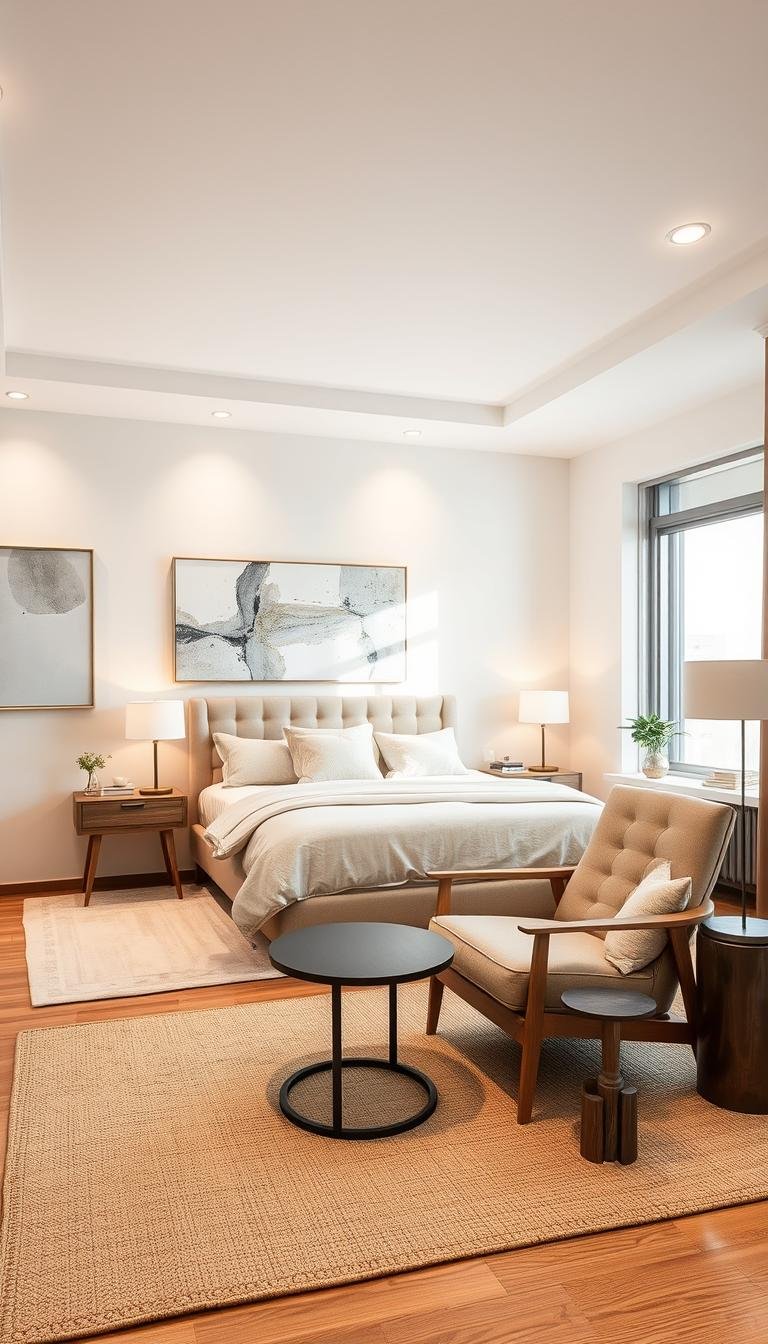
Welcome to your guide for creating the perfect personal retreat. We’ll show you how to transform your space into a calming oasis.
Neutral palettes have become the top choice for interior design. They create timeless, elegant spaces that never go out of style.
This combination of cozy elements with modern aesthetics creates perfect balance. You’ll discover how to achieve a restful environment in your home.
Our comprehensive guide walks through every aspect of designing your dream space. These practical ideas work for any room size and budget.
Learn why these design principles remain consistently popular. They can significantly increase your home’s overall aesthetic appeal while promoting better relaxation.
Why a Neutral Palette is Your Key to a Serene Retreat
Choosing the right color scheme transforms your personal space into a peaceful haven. A neutral palette creates harmony and balance throughout your room.
This approach works with various furniture styles and lighting setups. It helps your space feel more open and inviting every day.
Understanding Warm vs. Cool Neutrals
Warm neutrals include soft taupe, oatmeal, and cream tones. These colors create a cozy atmosphere that welcomes relaxation.
Cool neutrals feature light grays and soft whites. They make your room appear more spacious and airy.
Your choice depends on the natural light available and your personal preference. Both options work beautifully in any sleeping area.
The Psychological Benefits of a Calming Space
Neutral environments significantly reduce stress and anxiety levels. They provide a visual break from daily stimulation.
Research shows these color schemes improve sleep quality and mental clarity. You’ll wake up feeling more refreshed and focused.
This makes your bedroom the perfect retreat after a long day. The right tones promote better rest throughout the night.
Your wall color sets the foundation for other design elements. It complements your bedding, wood furniture, and decorative textures.
This flexibility allows you to change accents without repainting. You can easily update your look with new accessories.
Layering Light: The Foundation of a Cozy Atmosphere
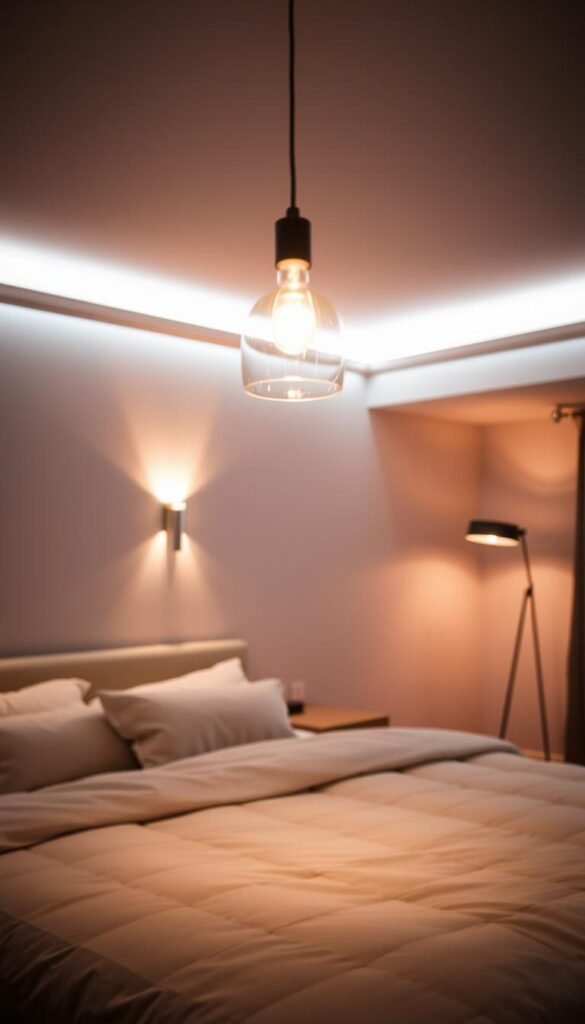
Light transforms your personal space more than any other element. Proper lighting creates depth and warmth throughout your room.
It enhances your chosen color scheme while adding functional beauty. You can achieve both practical illumination and dreamy ambiance.
Strategic placement highlights architectural details and textural elements. This approach brings visual interest to your entire space.
Harnessing and Softening Natural Light
Maximize daylight while creating a soft, diffused glow. Medium-sheer curtains filter sunlight beautifully without blocking it completely.
These window treatments maintain privacy while welcoming natural light. They prevent harsh shadows and reduce glare on screens.
Choose soft, neutral fabrics that complement your wall paint. This creates seamless visual flow from windows to other decor elements.
Choosing the Right Artificial Lighting
Select fixtures that enhance rather than compete with your palette. Sculptural pendant lights make elegant statements without overwhelming.
Consider these popular lighting options for different needs:
| Lighting Type | Best Placement | Ideal Purpose |
|---|---|---|
| Pendant Lights | Above nightstands | Ambient illumination |
| Wall Sconces | Flanking the bed | Reading light |
| Table Lamps | On dressers | Task lighting |
| Floor Lamps | Room corners | Accent lighting |
Mix these sources to create depth throughout your space. Each type serves different functions throughout your day.
The Magic of Dimmable Bulbs for Ambiance
Dimmable bulbs offer incredible flexibility for mood control. You can adjust brightness for reading, relaxing, or sleeping.
Choose warm white LEDs (2700-3000K) for your neutrals. This temperature range complements beige and gray tones perfectly.
Position lights to highlight artwork or architectural features. This technique adds dimension to your peaceful retreat.
Remember to layer multiple light sources at different heights. This creates the most inviting atmosphere for your personal space.
Mastering the Art of Textural Layering
Texture brings your space to life in ways color alone cannot achieve. It adds depth and dimension to your peaceful retreat.
This approach transforms flat surfaces into inviting experiences. You’ll create visual interest through thoughtful material combinations.
Mixing Soft Fabrics: Linens, Knits, and Throws
Start with your bedding as the foundation. Choose off-white sheets with subtle texture like waffle weave.
This prevents a sterile look while maintaining elegance. Add a chunky knit throw in warm oatmeal or cream tones.
Layer different fabrics for maximum comfort and style:
| Fabric Type | Best Placement | Texture Effect |
|---|---|---|
| Linen Sheets | Bed base layer | Breathable crispness |
| Velvet Pillows | Bed accents | Luxurious softness |
| Knit Throws | Bed foot or chair | Cozy warmth |
| Matelassé Coverlets | Middle layer | Subtle patterning |
Rough textures make your space feel more casual. Smooth fabrics add formal elegance to your room.
Incorporating Natural Elements: Wood, Rattan, and Jute
Natural materials bring organic warmth to your space. They complement neutral color schemes beautifully.
Wood furniture adds warmth and character to your room. Choose pieces with interesting grain patterns.
Rattan and jute introduce wonderful tactile elements. These materials work well together in any space.
Balance smooth and rough textures throughout your room. This creates a sensory experience that enhances relaxation.
Your textural choices define different zones within your space. Sleeping areas benefit from softer, comforting materials.
Selecting Furniture with Clean Lines and Warm Tones
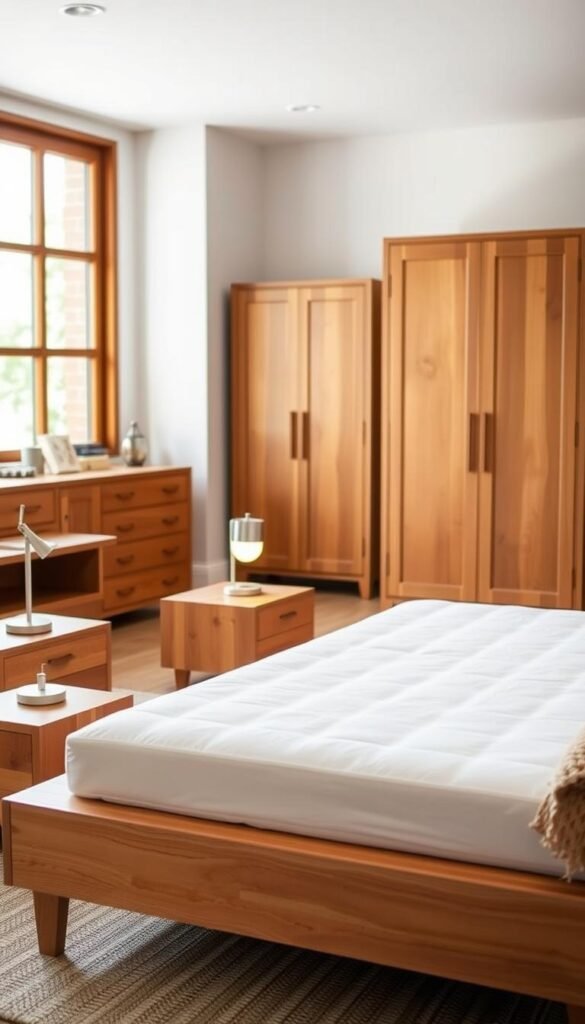
Your furniture choices define the entire character of your personal space. They establish the foundation for your peaceful retreat’s overall aesthetic.
Opt for pieces with simple silhouettes and minimal ornamentation. This approach creates visual harmony throughout your room.
The Impact of a Statement Wooden Headboard
A beautiful headboard instantly becomes your room’s focal point. It adds warmth and character to your sleeping area.
Choose a design that complements your overall style without overwhelming the space. Natural wood tones bring organic beauty to your neutrals.
Consider these popular options for different effects:
| Headboard Style | Wood Type | Room Impact |
|---|---|---|
| Platform | Light Oak | Modern and airy |
| Upholstered | Walnut Frame | Soft yet structured |
| Canopy | Dark Teak | Dramatic statement |
| Slatted | Natural Pine | Scandinavian simplicity |
Your headboard should harmonize with other wood furniture pieces. This creates a cohesive complete look throughout your space.
Choosing Nightstands and Dressers for Function and Flow
Storage pieces must balance practicality with beautiful design. They should offer ample space while maintaining visual lightness.
Low-profile pieces with clean lines work best in most bedroom layouts. They prevent visual clutter while providing essential functionality.
Consistency in furniture finishes creates harmony. Stick to one wood tone for all major pieces.
Measure your space carefully before selecting any pieces. Proper scale ensures comfortable movement throughout your room.
Multifunctional options like storage beds maximize small spaces. They provide hidden organization while maintaining sleek aesthetics.
Mix materials thoughtfully for visual interest. Metal accents or glass elements can complement your wood pieces beautifully.
These ideas help create a harmonious environment. Your furniture should support relaxation every way possible.
Your Bedding: The Heart of Comfort and Style
Your sleeping area’s comfort level begins with the layers you choose. These elements create the foundation for both relaxation and visual appeal.
Thoughtful bedding selections transform your space into a true sanctuary. They provide the tactile experience that makes your room special.
Building a Tonal, Layered Bed
Start with crisp white sheets as your base layer. Add a soft beige linen throw for warmth and texture.
This creates a classic cream-beige look that feels inviting. The combination prevents a sterile appearance in your sleeping space.
Choose off-white bedding with subtle texture patterns. Waffle weave or matelassé work beautifully for this purpose.
Enhance the arrangement with a chunky knit throw. Select a warm neutral hue like oatmeal or cream.
This approach creates depth through varying shades. Your bed becomes the room’s natural focal point.
Choosing the Right Sheets, Duvets, and Pillows
High-quality cotton sheets offer breathable comfort. They work well in various climates throughout the year.
Linen provides excellent temperature regulation properties. Bamboo options feel incredibly soft against your skin.
Your duvet should match your local weather conditions. Choose lighter weights for warmer regions.
Heavier comforters work best in colder environments. Always consider your personal sleeping preferences.
Pillow selection requires thoughtful consideration. Mix sleeping pillows with decorative shams for luxury.
The right bedding combination makes your room feel like a five-star retreat. It’s worth investing in quality pieces you’ll enjoy daily.
Mix textures through matelassé coverlets and knit throws. Embroidered details add subtle visual interest.
Color layering uses off-whites, beiges, and grays. This creates dimension without bold patterns.
Proper care keeps your bedding fresh and beautiful. Follow manufacturer instructions for best results.
Your choices significantly impact your room’s overall space feel. They complete your neutral bedroom‘s aesthetic perfectly.
Incorporating Subtle Pops of Earthy Color
Your peaceful retreat gains personality through carefully chosen accents. Earthy hues add warmth without disturbing your calm foundation.
This approach maintains serenity while introducing visual interest. You’ll create depth through strategic placement of natural tones.
Using Terracotta and Sage Green as Accents
Terracotta brings warm energy to your space. This rich clay tone complements beige and gray palettes beautifully.
Sage green introduces natural freshness. It evokes tranquil outdoor settings within your personal sanctuary.
Layer terracotta pillows over neutral bedding. Add a sage throw blanket for balanced color distribution.
These earthy tones work with various textures. They enhance rather than compete with your overall look.
How to Add Color Without Disrupting the Neutral Scheme
Follow the 60-30-10 rule for color balance. Sixty percent should be your dominant neutral shade.
Thirty percent becomes your secondary neutral tone. Reserve just ten percent for accent colors.
Place colorful elements throughout your room. Distribute them evenly rather than clustering in one area.
Use natural items to introduce color organically. Potted plants and dried flowers work perfectly.
Test accents with fabric swatches first. Temporary placement helps visualize the final effect.
Warm accents create coziness, while cool tones promote calm. Choose based on your desired atmosphere.
Artwork offers another color introduction method. Select pieces with muted earth tones that complement your wall color.
Remember that accents should enhance relaxation. They must not overwhelm your serene environment.
Your lighting affects how colors appear. Test accents under both natural and artificial light.
This careful approach ensures harmonious results. Your space remains peaceful while gaining character.
Creating a Focal Point in Your Peaceful Space
Every great room design needs a central element that draws the eye and creates harmony. This anchor point organizes your space and gives it purpose.
Your focal point becomes the heart of your personal retreat. It guides all other design decisions throughout the room.
A well-chosen centerpiece adds visual interest without clutter. It creates natural flow that enhances relaxation.
This approach works in various room sizes and layouts. Even small bedrooms benefit from thoughtful focal points.
Designing Around a Statement Headboard or Art Piece
Your headboard can become the anchor for your entire design. Choose one that complements your neutral palette while making a statement.
Oversized artwork creates immediate impact. Select pieces with subtle earth tones that enhance your serene environment.
Consider these art selection strategies for your peaceful retreat:
- Large-scale paintings with textured surfaces
- Black and white photography in simple frames
- Sculptural wall elements that cast interesting shadows
- Gallery walls with consistent spacing and framing
Position your statement piece where natural light highlights it best. This creates changing visual effects throughout the day.
The Power of an Accent Wall with Textured Wallpaper
An accent wall transforms your space with minimal effort. It adds depth without overwhelming your calm neutrals.
Textured wallpaper brings tactile quality to your room. Choose patterns that complement rather than compete with your decor.
Excellent wallpaper choices include:
- Grasscloth with natural fiber texture
- Subtle geometric patterns in tone-on-tone colors
- Flocked designs that add soft dimension
- Metallic finishes that reflect light beautifully
Install your feature wall behind the bed for maximum impact. This placement naturally draws attention to your sleeping area.
Use paint for a simpler approach to accent walls. Choose a color two shades darker than your main walls.
Lighting enhances your focal point dramatically. Install pendant lights or directed spots to highlight your feature wall.
Balance is crucial in any bedroom design. Your focal point should stand out without dominating the entire space.
The right focal point gives your eyes a place to rest while adding personality to your neutral scheme.
Consider room proportions when planning your centerpiece. Large master suites can handle bigger statements than compact rooms.
Your focal point should reflect your personal style while maintaining serenity. It completes your peaceful retreat perfectly.
Modern Neutral Bedroom Ideas for a Minimalist Feel
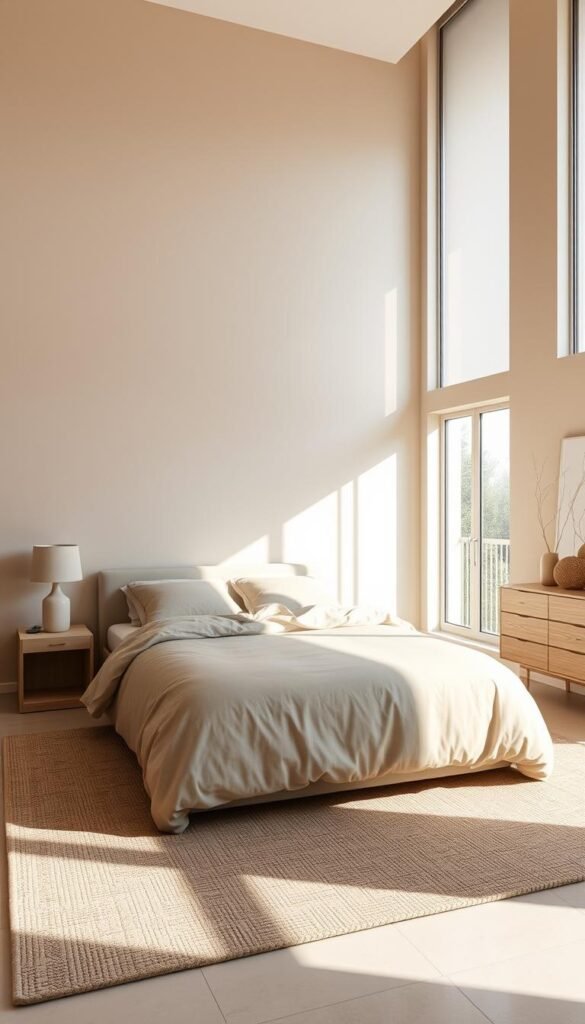
Minimalism brings a refreshing clarity to your personal space. It focuses on simplicity, function, and serene beauty.
This style eliminates visual noise and promotes mental calm. You create a sanctuary that feels both open and intimate.
Every item in your room serves a purpose or brings joy. This intentional approach transforms your daily experience.
Embracing a Monochromatic Color Story
A monochromatic scheme uses various shades of one neutral color. This creates harmony and sophistication throughout your space.
Start with light gray paint for your bedroom wall. Add softer tones through your bedding and accessories.
Vary intensities to add depth without introducing new hues. Your room gains visual interest through subtle gradations.
This approach feels cohesive and carefully curated. It establishes a calm, unified environment for rest.
Selecting Low-Profile, Functional Furniture
Choose pieces that sit close to the ground with clean lines. This creates an airy, spacious feel in your bedroom.
Your furniture should prioritize utility over decoration. Each piece must serve a clear practical purpose.
Opt for streamlined designs without ornate details. This maintains the clean aesthetic essential to minimalism.
Consider these options for your minimalist bedroom:
| Furniture Type | Key Features | Space Impact |
|---|---|---|
| Platform Bed | Low height, hidden storage | Maximizes floor space |
| Floating Nightstands | Wall-mounted, slim profile | Creates open feeling |
| Dresser with Integrated Mirror | Multifunctional, clean lines | Reduces visual clutter |
| Bench with Storage | Dual purpose, minimalist design | Adds seating and organization |
Select wood finishes that complement your color palette. Lighter tones enhance the airy quality of your space.
Keep surfaces clear of unnecessary items. This maintains the tranquil atmosphere you’ve created.
Your choices should support both form and function. This balance defines successful minimalist design.
Infusing Bohemian Charm into Your Neutral Haven
Bohemian style brings wonderful personality to your peaceful space. It combines free-spirited elements with your calming neutral foundation.
This approach adds character without sacrificing serenity. You’ll achieve a collected look that feels both intentional and effortless.
Adding Macramé, Woven Rugs, and Plants
Handcrafted elements create authentic bohemian warmth. A macramé wall hanging adds beautiful texture above your bed.
Natural fiber rugs ground your space beautifully. Jute or sisal options bring earthy tones to your floor.
Plants introduce life and freshness to your room. Choose air-purifying varieties that thrive in indoor conditions.
Consider these popular choices for your bedroom:
- Snake plants for low-light corners
- Peace lilies for humidity balance
- Spider plants for air purification
- Pothos for trailing visual interest
Wicker furniture complements natural textures perfectly. A bamboo chair completes your bohemian design beautifully.
Mixing Muted Patterns for a Collected Look
Pattern mixing adds visual depth to your neutral palette. Choose tonal designs that complement rather than compete.
Start with a base of solid neutrals for larger items. Add patterned accents through pillows and textiles.
A chunky knit throw creates wonderful texture on your bed. Layer it with muted patterned cushions for interest.
This approach helps create cozy moments throughout your space. It maintains serenity while adding personality.
Vintage finds tell your personal story over time. Travel souvenirs and artisan ceramics add unique character.
The best bohemian spaces feel collected rather than decorated. They reflect your journey and personal experiences.
Balance is key to successful pattern mixing. Keep 70% of your room in solid neutrals.
Use 30% for patterns and textures. This maintains visual calm while adding interest.
Your wood furniture with clean lines provides structure. Natural wood tones complement boho elements perfectly.
This combination creates a harmonious complete look. Your retreat feels both serene and personally expressive.
These ideas work with any bedroom size or layout. They add bohemian charm in a thoughtful way.
Your paint color forms the perfect neutral backdrop. It allows your decor and art to shine beautifully.
Enjoy creating a space that reflects your spirit. It will feel welcoming every day.
The Role of Art and Decor in a Neutral Setting
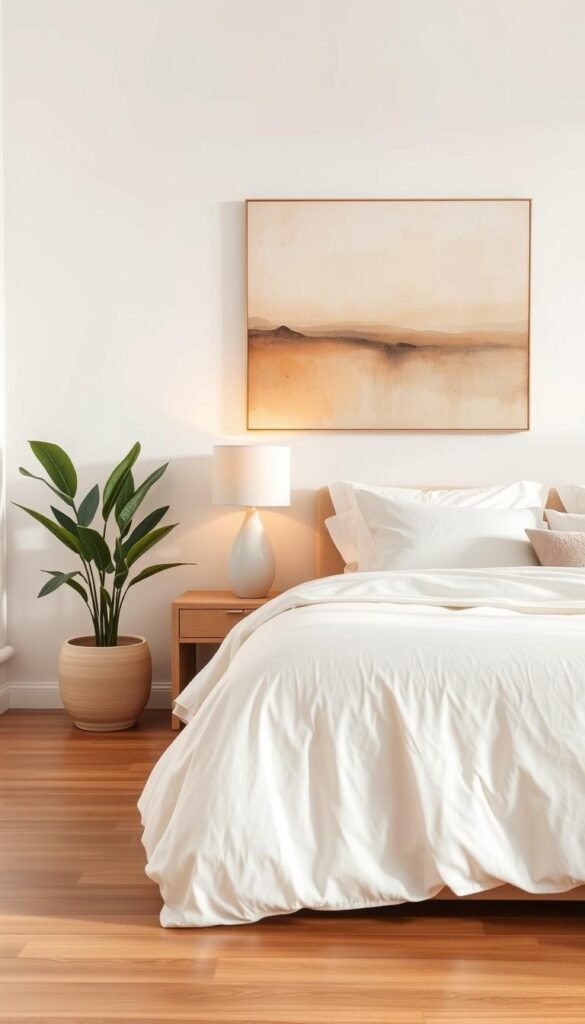
Art and decor serve as the finishing touches that complete your peaceful sanctuary. They add personality without disrupting the calm atmosphere you’ve created.
In neutral spaces, these elements function differently than in colorful rooms. They provide subtle enhancements rather than bold statements.
Your selections should complement rather than compete with your overall scheme. This approach maintains serenity while adding visual depth.
Thoughtful placement creates balance throughout your space. It guides the eye naturally from one area to another.
Choosing Artwork in Beige, Gray, and Sepia Tones
Select pieces that harmonize with your room’s soft color palette. Beige, gray, and sepia tones work beautifully together.
Abstract prints offer wonderful versatility in neutral settings. They add movement and energy without introducing bright colors.
Minimalist line drawings provide understated elegance. Their simplicity complements your serene environment perfectly.
Consider these art styles for your bedroom:
- Black and white photography with matte finishes
- Textured canvas art in tonal variations
- Botanical prints with neutral backgrounds
- Geometric patterns in subtle earth tones
Your artwork should reflect your personal taste while maintaining cohesion. It becomes part of your room’s overall story.
Selecting Frames and Sculptural Decor Pieces
Frame selection significantly impacts your art’s presentation. Light wood or off-white frames create seamless integration.
Black frames offer striking contrast as accent pieces. They draw attention to specific works without overwhelming.
Pastel-colored frames provide subtle color introduction. They add gentle personality to your neutral scheme.
Sculptural decor pieces add dimension through form rather than color. Choose items with interesting shapes and textures.
Consider these placement techniques for optimal effect:
- Group smaller pieces in curated arrangements
- Leave adequate negative space around each item
- Position pieces where natural light enhances them
- Create height variation through staggered placement
The right decor tells your personal story while maintaining visual calm. It should feel collected rather than decorated.
Your choices should create flow throughout the space. They enhance rather than disrupt your peaceful environment.
Remember that less often means more in neutral settings. Allow each piece room to breathe and be appreciated.
Strategic Lighting Choices to Elevate Your Room
Lighting transforms your space more dramatically than any single design element. It creates atmosphere and defines how you experience your personal retreat.
Your lighting serves both practical and decorative purposes. The right approach enhances your room’s beauty while providing essential illumination.
Thoughtful lighting selection complements your existing decor. It works with your wall color, wood furniture, and bedding tones.
This strategic approach creates layers of light throughout your space. You’ll achieve both functionality and beautiful ambiance.
Making a Statement with a Sculptural Pendant Light
An oversized pendant light becomes an instant focal point in your room. It adds architectural interest while providing essential overhead lighting.
Choose fixtures that complement your overall design aesthetic. Rattan pendants bring natural texture, while metal designs offer sleek modernity.
Consider these popular pendant options for different styles:
| Pendant Style | Best For | Visual Impact |
|---|---|---|
| Oversized Rattan | Bohemian spaces | Organic texture |
| Minimalist Metal | Modern rooms | Clean lines |
| Glass Globe | Transitional decor | Diffused light |
| Multi-Light Cluster | Large bedrooms | Dramatic statement |
Your fixture’s finish should harmonize with other elements in the room. Warm brass complements wood tones, while matte black offers striking contrast.
Position your pendant centered above the bed for balanced illumination. This placement creates a beautiful visual anchor for your space.
Using Sconces and Lamps for Task and Mood Lighting
Wall sconces provide excellent bedside lighting without consuming surface space. They free up your nightstands for essential items and decor.
Choose adjustable sconces for reading flexibility. Swing-arm designs allow you to direct light exactly where needed.
Table lamps offer both task lighting and decorative appeal. Select bases that complement your furniture’s material and color.
Consider these lighting options for different functions:
| Light Type | Primary Function | Ideal Placement |
|---|---|---|
| Wall Sconces | Reading light | Bedside walls |
| Table Lamps | Task lighting | Nightstands |
| Floor Lamps | Ambient glow | Room corners |
| Smart Lights | Mood control | Throughout room |
Dimmable bulbs provide ultimate control over your room’s atmosphere. They allow you to adjust brightness for different activities and times of day.
Smart lighting systems offer additional flexibility through phone control. You can adjust color temperature and brightness without leaving your bed.
Layer multiple light sources at different heights throughout your room. This creates depth and allows for various lighting scenarios.
The right lighting combination makes your room functional during the day and magical at night. It’s worth investing in quality fixtures you’ll enjoy for years.
Your lighting choices should enhance relaxation and practicality. They complete your room’s design while serving essential daily functions.
Layering Rugs for Added Warmth and Dimension
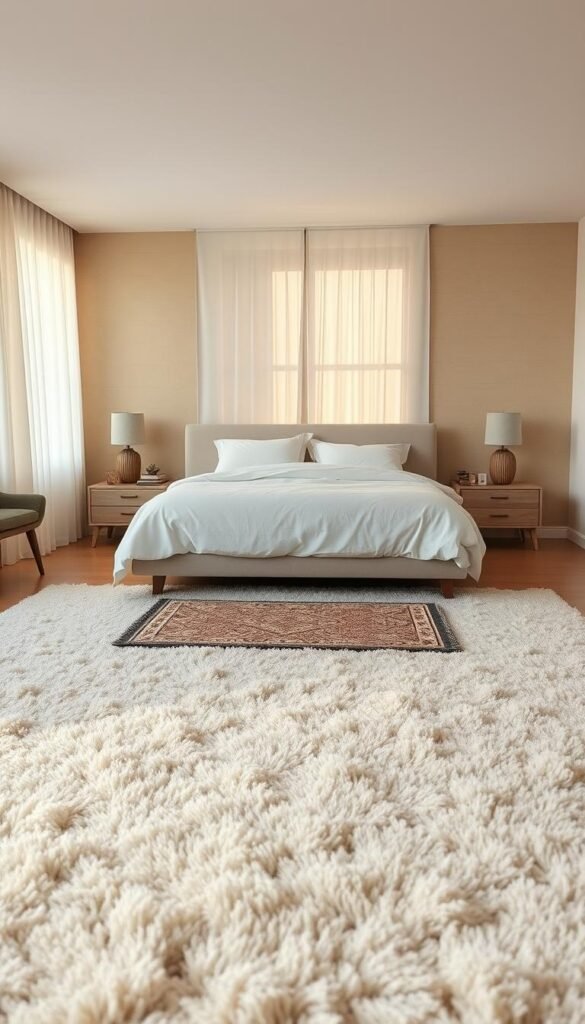
Floor coverings create instant comfort underfoot while adding visual depth to your space. This technique transforms hard surfaces into inviting areas for relaxation.
Rug layering combines practical function with beautiful design. You achieve both texture and warmth throughout your room.
This approach works with various flooring types from hardwood to concrete. It protects your floors while enhancing your overall color palette.
Starting with a Natural Base Layer: Sisal or Jute
Begin with a larger natural fiber rug as your foundation. Sisal or jute options provide excellent durability and texture.
These materials offer wonderful neutral tones that complement your wall color. They create a cohesive look throughout your space.
Your base layer should extend beyond your furniture edges. This establishes proper scale and visual balance.
Natural fibers work beautifully with wood furniture finishes. They bring organic warmth to your room’s design.
Topping with a Soft, Decorative Wool or Shag Rug
Add a smaller plush rug over your natural base layer. Wool or shag options create wonderful softness underfoot.
This top layer introduces contrasting texture to your space. It becomes a focal point that draws attention to your bed area.
Choose colors that match other elements like bedding or throws. Cream or beige tones maintain your serene atmosphere.
The combination creates instant depth and visual interest. You’ll enjoy both physical comfort and beautiful design.
Proper sizing ensures your layers work together harmoniously. For a standard area rug, use a smaller top piece.
This technique helps define different zones in larger rooms. It creates clear sleeping, sitting, and dressing areas.
Always use rug pads beneath both layers for safety and comfort. They prevent slipping and extend your rugs’ lifespan.
Layering rugs transforms your floor into a textural experience that enhances both comfort and style.
Regular cleaning maintains freshness and hygiene. Vacuum natural fibers gently and spot clean plush tops.
This approach works with existing carpeting too. Simply choose thinner base layers that won’t create tripping hazards.
Your layered rugs complete your room’s cozy atmosphere. They add the final touch to your peaceful retreat.
For more detailed guidance on rug selection and placement, explore our comprehensive guide to bedroom rug layering techniques.
Smart Storage Solutions for a Clutter-Free Environment
A peaceful bedroom environment requires smart organization. Hidden storage keeps your space looking clean while maintaining functionality.
Thoughtful storage choices enhance your room’s serene atmosphere. They eliminate visual distractions that disrupt relaxation.
Your storage should complement your overall design aesthetic. It maintains the calm feeling you’ve worked hard to create.
These ideas help you organize without sacrificing style. You’ll enjoy a more restful space every day.
Choosing Furniture with Built-In Drawers
Nightstands with drawers keep essentials within reach but out of sight. They prevent surface clutter from accumulating beside your bed.
Select pieces with clean lines that match your wood furniture style. Consistent wood tones create harmony throughout your room.
Storage beds offer excellent hidden organization solutions. They utilize often-wasted space beneath your mattress.
Dressers with multiple drawers provide ample clothing storage. Choose designs that complement your palette and overall style.
Consider these features when selecting storage furniture:
- Soft-close drawers that operate quietly
- Full-extension slides for easy access
- Integrated dividers for organized contents
- Breathable materials that protect stored items
Your furniture should support your complete look while being practical. It makes your retreat both beautiful and functional.
Incorporating Multifunctional Pieces like Storage Ottomans
Storage ottomans serve dual purposes throughout your bedroom. They provide seating while concealing items inside.
Place one at the foot of your bed for extra blanket storage. It becomes a convenient spot for putting on shoes too.
Choose neutral-colored ottomans that blend with your decor. They maintain visual calm while adding functionality.
Bench seats with hidden compartments work beautifully too. They offer surface space for folded clothes or decorative trays.
Trunks and chests make excellent statement storage pieces. Their substantial presence adds character to your room.
Consider these multifunctional options for different needs:
| Piece Type | Storage Capacity | Additional Function |
|---|---|---|
| Storage Ottoman | Medium | Extra seating |
| Blanket Chest | Large | Surface area |
| Storage Bench | Medium-Large | Bed foot decor |
| Side Table with Lid | Small | Nightstand alternative |
These pieces help you create cozy moments throughout your space. They combine beauty with practical organization.
Decorative baskets offer attractive open storage solutions. They corral items while adding natural texture.
Use them for holding extra pillows or chunky knit throws. Woven materials complement neutrals beautifully.
Beautiful boxes keep smaller items organized on surfaces. They turn necessities into part of your decor.
Regular editing prevents accumulation of unused items. It maintains the peaceful atmosphere of your personal sanctuary.
The most serene bedrooms balance beautiful design with practical organization. Smart storage makes this possible.
Your paint color provides the perfect backdrop for organized spaces. It helps everything feel cohesive and intentional.
These solutions work for various bedrooms sizes and layouts. They maintain visual calm while providing essential function.
Enjoy your clutter-free environment every single day. It enhances relaxation and improves your overall experience.
Blending Styles: Transitional and Scandinavian Inspirations
Combining design approaches creates a unique personal space that reflects your taste. You can achieve harmony between different aesthetics while maintaining a calm atmosphere.
Transitional style bridges classic and contemporary elements beautifully. Scandinavian design emphasizes function and simplicity above all else.
Both approaches work wonderfully within neutral color schemes. They help create a restful environment that feels both current and timeless.
Your room becomes a true reflection of personal preferences. It balances elegance with everyday practicality perfectly.
Mixing Modern and Traditional Elements
Transitional design carefully balances old and new elements. It creates spaces that feel both familiar and fresh.
Start with classic furniture shapes in updated materials. A traditional bed frame in light oak works beautifully.
Pair it with contemporary lighting fixtures for contrast. This combination creates wonderful visual interest.
Choose pieces that share common design elements. Similar wood tones or metal finishes create cohesion.
Consider these successful combinations for your space:
| Traditional Element | Modern Counterpart | Unifying Feature |
|---|---|---|
| Tufted headboard | Minimalist nightstands | Matte black hardware |
| Classic dresser | Sleek pendant light | Walnut wood tone |
| Oriental rug pattern | Simple window treatments | Beige color palette |
| Canopy bed frame | Geometric art pieces | Brass accents |
Your color palette provides the common thread throughout. It helps different styles feel intentional rather than random.
This approach lets you incorporate cherished heirlooms alongside new pieces. Your room tells a personal story over time.
Achieving Scandinavian Functional Simplicity
Scandinavian design prioritizes clean lines and practical solutions. It creates spaces that feel open and organized.
The concept of “lagom” means finding perfect balance. Your room should have everything you need and nothing extra.
Start with light walls and pale wood furniture. This combination makes your space feel airy and bright.
Choose multifunctional pieces that serve multiple purposes. A storage bench provides seating and organization.
Natural light plays a crucial role in this aesthetic. Keep window treatments simple to maximize daylight.
Textiles add warmth and comfort to minimalist spaces. Layer rugs and throws in complementary neutral tones.
The hygge concept emphasizes cozy contentment. Create inviting spots for relaxation throughout your room.
Your decor should combine beauty with purpose. Every item deserves its place in your peaceful retreat.
Final Touches: Personalizing Your Serene Sanctuary
Your bedroom becomes truly yours when you add personal elements that reflect your journey. These finishing touches transform a beautiful space into your personal haven.
Thoughtful accessories bring warmth and character to your design. They tell your story while maintaining the calm atmosphere you’ve created.
Select items that serve both decorative and practical purposes. This approach keeps your space functional and beautiful.
Curating Functional Yet Beautiful Accessories
Choose accessories that enhance daily life in your room. A stylish tray on your dresser corrals everyday items beautifully.
Decorative boxes offer hidden storage for small necessities. They keep surfaces clear while adding visual interest.
Consider these multifunctional pieces for your space:
| Accessory Type | Practical Function | Decorative Value |
|---|---|---|
| Storage Ottoman | Blanket storage | Extra seating surface |
| Decorative Tray | Organizes small items | Adds metallic accent |
| Woven Baskets | Holds extra pillows | Provides natural texture |
| Books | Evening reading | Adds personal interest |
Your choices should complement existing elements like bedding and furniture. They create cohesion throughout the room.
Edit accessories regularly to prevent visual clutter. Less often creates more impact in a neutral setting.
Adding Elements that Reflect Your Personal Style
Incorporate items that hold special meaning or memories. Travel souvenirs make wonderful conversation pieces.
Family photographs in simple frames add personal warmth. Choose black and white images for a cohesive look.
Display collections that bring you joy. Seashells, pottery, or vintage finds tell your unique story.
Consider these subtle ways to add personality:
- Favorite books stacked on nightstands
- Artwork from local artists you admire
- Handmade items from craft fairs or markets
- Natural elements like driftwood or stones
Seasonal changes keep your space feeling fresh year-round. Switch lightweight linens for warmer bedding in winter.
Add seasonal natural elements like pine cones or dried flowers. These small changes refresh your space easily.
The most personalized spaces feel collected over time rather than decorated all at once. Allow your room to evolve with your experiences.
Your lighting should highlight these special elements. Use focused light to create beautiful shadows and highlights.
This thoughtful approach makes your sanctuary uniquely yours. It remains serene while reflecting your personality perfectly.
Begin Your Journey to a Cozy and Modern Neutral Bedroom
Your personal transformation starts with a single step. Begin with one element that speaks to you most.
Maybe it’s new bedding or improved lighting. Small changes create big impact over time.
Remember that your space should reflect your unique style. Trust your instincts within the neutral framework.
Professional guidance can help maximize your palette‘s potential. Consider booking a design consultation for personalized ideas.
Explore inspiration galleries for fresh perspectives. Your perfect retreat awaits your personal touch.
This journey unfolds at your own pace. Each choice brings you closer to serenity.