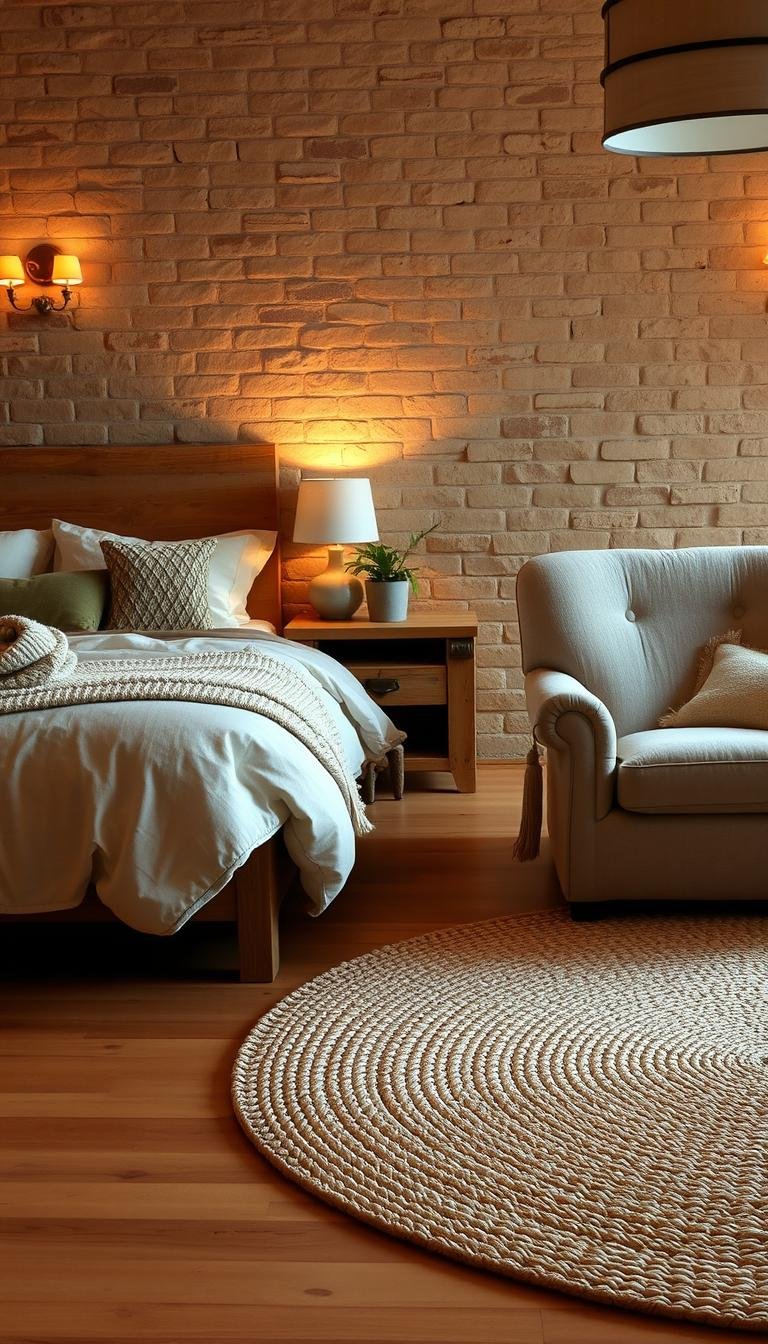
Imagine walking into a personal sanctuary that instantly melts away your stress. This is what an earthy bedroom offers – a retreat inspired by nature’s calming embrace.
These spaces use warm tones and natural materials to create a welcoming atmosphere. Think rich browns, soft greens, and warm neutrals that make your room feel like a peaceful haven.
Natural elements like wood furniture, textured bedding, and organic accents bring the outdoors inside. These features work together to create a space that promotes deep relaxation and restful sleep.
Throughout this guide, we’ll explore practical ideas for transforming your space. From color foundations to natural accessories, discover how to create a timeless retreat you’ll love spending time in.
Why an Earthy Bedroom is Your Perfect Sanctuary
In our fast-paced digital world, your bedroom becomes more than just a place to sleep—it transforms into a vital retreat for mental restoration. This space offers a necessary escape from constant notifications and daily pressures.
Natural design elements actively reduce stress through subtle psychological cues. Warm wood tones, organic textures, and plant life trigger our innate connection to the natural world. This approach, known as biophilic design, scientifically improves mood and productivity.
The emotional benefits are immediate and profound. You’ll feel more grounded and peaceful in an environment that celebrates nature’s imperfections. Raw materials and layered textures create authentic character that mass-produced items cannot replicate.
These spaces masterfully balance beauty with practical comfort. The look combines luxury with simplicity through thoughtful material choices. Every element serves both aesthetic and functional purposes.
| Natural Element | Sanctuary Benefit | Implementation Idea |
|---|---|---|
| Wood Accents | Creates warmth and stability | Solid wood nightstands or bed frame |
| Textured Fabrics | Adds tactile comfort | Linen bedding and wool throws |
| Living Plants | Improves air quality and mood | Low-light tolerant varieties like snake plants |
| Natural Lighting | Regulates circadian rhythm | Sheer curtains that filter morning light |
| Earthen Colors | Promotes relaxation | Warm neutrals and muted greens |
Investing in this design approach creates a timeless personal retreat. The decor ideas focus on quality materials that age beautifully rather than follow fleeting trends. Your room becomes a sanctuary that supports well-being for years to come.
This space should feel like your personal haven for unwinding and recharging. The overall atmosphere feels like a gentle embrace after demanding days. Embrace these design principles to create your perfect restorative environment.
The Foundation: Crafting Your Earth-Toned Color Palette
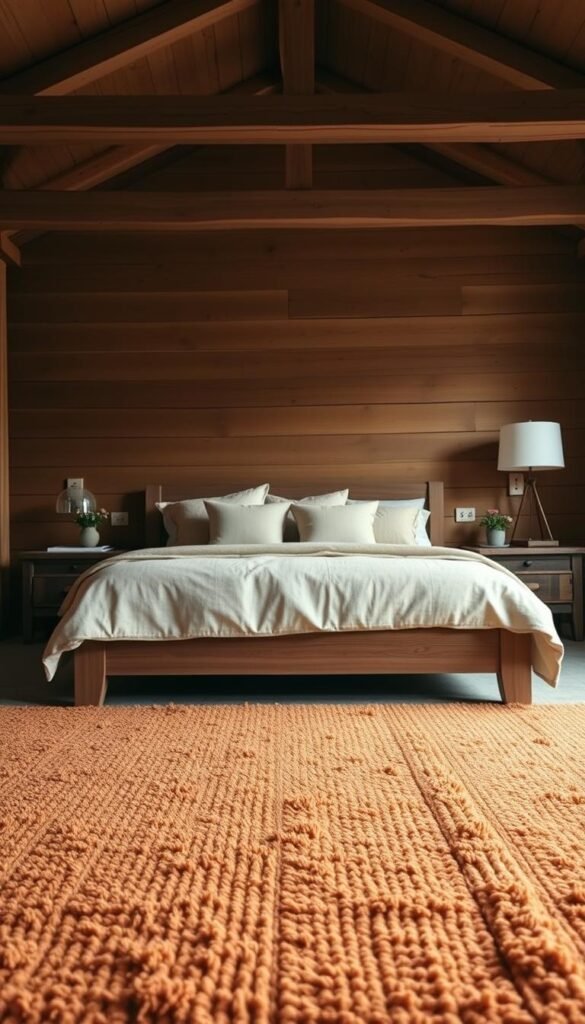
Color selection forms the cornerstone of any successful earth-inspired bedroom design. Your palette establishes the mood and connects your space to nature’s harmonious beauty.
A cohesive color scheme creates visual harmony throughout your room. This foundation allows other natural elements to shine while maintaining balance.
Natural hues work together to create a serene environment. They evoke feelings of stability and connection to the outdoors.
Warm and Neutral Base Colors
Start with warm neutrals as your foundation. These colors provide a soothing backdrop for your entire space.
Beige, taupe, and cream offer versatile base options. Warm white creates a clean canvas that feels inviting rather than sterile.
These neutral tones work well in any light condition. They make your room feel larger while maintaining coziness.
“The right neutral foundation allows accent colors to tell their story without competing for attention.”
Incorporating Muted Greens and Blues
Add depth with nature-inspired muted greens. Sage green brings calming forest energy into your space.
Olive tones offer richer green options with earthy warmth. Soft blues mimic sky and water elements for tranquility.
These colors work beautifully with neutral bases. They create visual interest without overwhelming your senses.
Adding Pops of Rich Accent Colors
Introduce warmth with strategic accent colors. Terra-cotta adds earthy richness reminiscent of clay pottery.
Mustard yellow brings sunny warmth without being overpowering. Burnt orange creates cozy autumnal vibes throughout your room.
Use these accents in moderation for maximum impact. They should complement rather than dominate your color story.
| Color Combination | Mood Created | Best For |
|---|---|---|
| Taupe + Sage + Cream | Serene and balanced | Meditation spaces |
| Warm white + Olive + Terra-cotta | Warm and inviting | Social bedrooms |
| Beige + Soft blue + Mustard | Fresh yet cozy | Morning light rooms |
| Cream + Burnt orange + Sage | Energy and calm balance | Creative spaces |
Test colors in your actual space before committing. Natural light changes how colors appear throughout the day.
Sample paints on large boards you can move around. Observe them at different times to see true color behavior.
Consider your room’s size and ceiling height. Lighter tones can make small spaces feel more expansive.
Experiment with personal preferences while staying true to earth-toned principles. Your palette should reflect your unique connection to nature.
Balance multiple shades for professional-looking results. Layer similar tones for depth without visual chaos.
Embracing Natural Textures for Ultimate Coziness
Touch transforms your space into a true sanctuary. Natural textures create depth and warmth that visual elements alone cannot achieve.
These elements invite physical interaction with your environment. They make your room feel lived-in and genuinely comforting.
Layering different materials creates a rich sensory experience. This approach makes your space feel professionally designed yet completely personal.
Luxurious Bedding and Throw Materials
Start with high-quality bedding as your foundation. Natural fabrics like linen and cotton offer breathable comfort year-round.
Bamboo viscose provides silky softness with eco-friendly benefits. These materials feel wonderful against your skin during rest.
Add dimension with thoughtfully chosen throws and pillows. A chunky knit blanket brings wonderful tactile interest to your bed.
Faux fur accents offer plush softness without animal products. Wool throws provide genuine warmth during cooler months.
Mix these elements for visual and physical comfort. Varying heights and densities create appealing layers.
Woven and Natural Fiber Accents
Incorporate organic elements throughout your space. A jute rug adds earthy texture underfoot while defining your sleeping area.
Rattan baskets offer stylish storage with natural charm. Macramé wall hangings introduce handcrafted beauty to your walls.
These accents bring authentic character to your room. They reference nature’s imperfect beauty through their construction.
Balance these natural textures with smoother surfaces. Too many rough elements can feel overwhelming rather than relaxing.
Consider these popular texture combinations:
- Linen bedding with a chunky knit throw
- Jute rug paired with smooth wooden furniture
- Faux fur pillows against crisp cotton sheets
- Rattan nightstand with ceramic lamp base
Always choose materials that feel good to your touch. Your personal comfort should guide every selection.
For more inspiration on incorporating rustic elements, explore these rustic bedroom ideas that balance texture and comfort.
Selecting Furniture That Grounds Your Space
Your bedroom’s foundation begins with carefully chosen pieces that anchor the entire design. Natural materials create stability and connection to the outdoors.
These elements establish the room’s character while providing essential function. They work together to form a harmonious environment.
The Beauty of Wood Bed Frames and Nightstands
Solid wood furniture brings warmth and durability to your sleeping space. A well-crafted bed frame becomes the room’s focal point.
Different wood tones create distinct moods for your sanctuary. Light blonde woods feel airy and modern.
Rich brown tones offer deeper, more traditional warmth. Each piece tells a story through its unique grain patterns.
Nightstands provide both style and practicality beside your bed. Choose pieces with visible wood grain for authentic character.
These elements work beautifully with various design styles. They age gracefully, developing richer patina over time.
Incorporating Rattan and Wicker Pieces
Rattan introduces lightweight texture and organic charm. This material works wonderfully as a headboard or accent chair.
Wicker baskets offer stylish storage solutions throughout the room. They keep essentials organized while adding visual interest.
These natural pieces complement wood furniture beautifully. The combination creates depth and dimension.
Consider a rattan side table for soft lighting or morning coffee. The open weave pattern allows light to filter through beautifully.
Mixing materials creates a collected-over-time aesthetic. Balance substantial wood items with airier rattan accents.
Place larger pieces against walls to maximize floor space. Allow breathing room between furniture for comfortable movement.
Choose functional items that also serve as decorative elements. Every piece should contribute to both comfort and style.
Illuminating Your Retreat with Warm, Layered Lighting
Light transforms your bedroom from a simple room into a personal haven. The right approach creates a welcoming atmosphere that invites relaxation.
Layered lighting combines different sources for both beauty and function. This strategy allows you to adjust the mood throughout your day.
Natural materials in your fixtures enhance the earthy aesthetic. Woven pendants and fabric shades add texture while softening the glow.
Soft Ambient Light Sources
Start with gentle overhead illumination as your foundation. Choose fixtures with dimmers to control brightness levels.
Soft white bulbs create a warm atmosphere throughout the space. Avoid cool tones that feel harsh or clinical.
Consider a rattan pendant light for organic charm. Its natural weave pattern diffuses light beautifully.
Task and Accent Lighting for Atmosphere
Bedside lamps provide focused light for reading and other activities. Select models with fabric shades for a softer light quality.
Wall sconces save space while adding decorative accents. They highlight artwork or architectural features.
Candles introduce flickering ambiance for ultimate relaxation. Their gentle movement creates dynamic shadows.
Layer these elements to achieve balanced lighting. Combine overhead, task, and accent sources.
Placement matters for both function and mood. Position lights to highlight textures and create depth.
Choose bulbs between 2700-3000 Kelvin for optimal warmth. This range complements earthy tones beautifully.
View lighting as an essential design element. It enhances both the beauty and comfort of your personal retreat.
Bringing the Outdoors In with Plants and Greenery
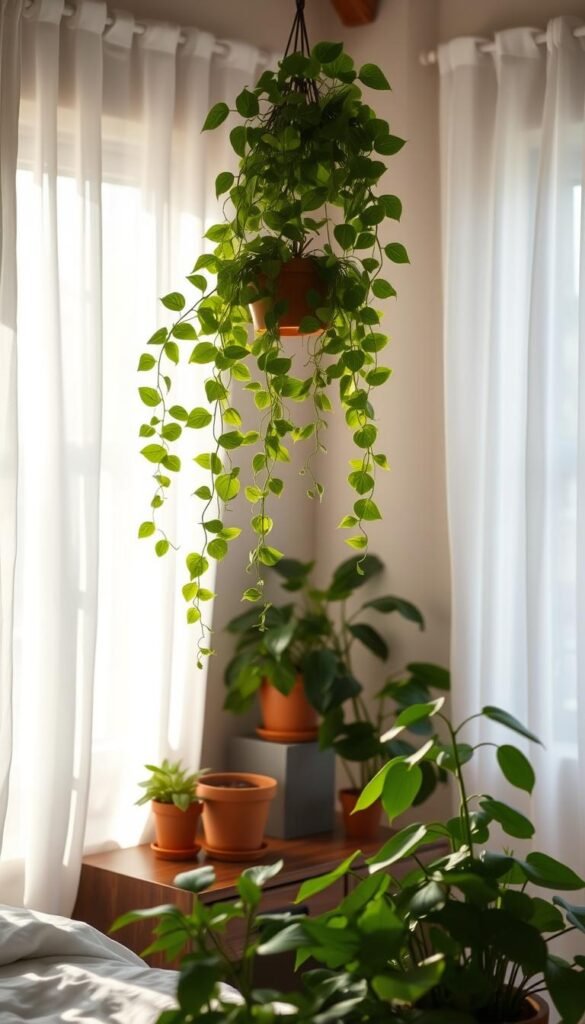
Living greenery breathes life into your personal retreat with vibrant energy. These natural elements purify your air while creating a deeper connection to the outdoors.
Botanical features add dynamic texture and organic movement throughout your space. They complement earthy tones and natural materials beautifully.
Choosing the Right Plants for Your Space
Consider your room’s light conditions before selecting any plant. North-facing windows work well with low-light varieties.
Snake plants thrive in almost any lighting situation. They’re remarkably forgiving if you forget watering occasionally.
Pothos vines adapt well to various environments. Their trailing habit creates beautiful green cascades from shelves.
Peace lilies offer elegant white blooms alongside air-purifying benefits. They indicate when they need water by slightly drooping.
“Start with one resilient plant and learn its rhythms before expanding your collection.”
Creative Display Ideas for Greenery
Macramé hangers create floating gardens near windows. They maximize vertical space while adding bohemian charm.
Group several plants together on a dedicated shelf. Varying heights and leaf shapes create visual interest.
Woven baskets conceal plastic nursery pots beautifully. They integrate green elements seamlessly into your decor.
Consider a statement fiddle-leaf fig in an empty corner. Large plant specimens make dramatic natural accents.
Mix real and quality faux plants for consistent appearance. Artificial varieties work well in extremely dark corners.
Dried flowers and grasses add texture without maintenance. They bring elements of nature that last through seasons.
Creating a Feature Wall with Earthy Character
A focal point wall transforms your space into a design masterpiece. This single surface draws attention and establishes the room’s entire mood.
Feature walls add architectural interest without overwhelming your sanctuary. They create depth through texture, color, or pattern.
These treatments ground your space with artistic expression. They complement natural materials and organic shapes throughout the room.
Consider your existing color scheme when planning this element. The wall should harmonize with furnishings and decor accents.
Botanical and Nature-Inspired Wallpaper
Wallpaper brings nature’s beauty directly onto your surfaces. Botanical prints feature leaves, flowers, or organic patterns.
Subtle designs work well for creating a calming backdrop. Bold patterns make dramatic statements as focal points.
Many options feature eco-friendly materials and printing processes. These sustainable choices align with natural design principles.
Removable wallpaper offers flexibility for renters or changing tastes. It installs easily without damaging existing walls.
Wood Slat and Textured Paneling Accents
Wood slats introduce warmth and organic texture vertically. This treatment creates rhythm through repeating lines.
Natural wood tones complement earthy color palettes beautifully. Different stains allow customization to match your decor.
Textured paneling adds depth through three-dimensional interest. Shiplap or board-and-batten styles provide rustic charm.
These installations work well behind beds as headboard alternatives. They frame sleeping areas with natural material warmth.
Limewashing creates soft, muddied color effects on surfaces. This technique adds character through subtle variation.
Consider green or brown tones for your feature treatment. These hues reinforce connections to the natural world.
Balance bold walls with simpler surrounding surfaces. Let this element shine without visual competition.
Professional installation ensures flawless results for complex treatments. DIY options exist for simpler projects.
Your feature wall should reflect personal style while enhancing comfort. Choose treatments that make your space feel uniquely welcoming.
Dressing Your Bed for Comfort and Style

Your sleeping area becomes the heart of your personal retreat. The right approach combines visual appeal with physical comfort for daily rejuvenation.
Thoughtful bedding choices transform your space into a welcoming haven. These elements work together to create an inviting atmosphere.
Quality materials ensure both durability and sensory pleasure. They contribute to restful sleep and peaceful mornings.
Layering Bedding for Texture and Warmth
Begin with a foundation of high-quality sheets. Linen offers breathable comfort that adapts to seasonal changes.
Cotton provides crisp softness for year-round use. Bamboo viscose brings silky smoothness with eco-friendly benefits.
Add a duvet or comforter for adjustable warmth. Choose natural fills like wool or cotton for temperature regulation.
Introduce visual interest with textured throws. A chunky knit blanket adds wonderful dimension to your bed.
Layer multiple pillows in varying sizes and fabrics. This creates depth while providing support for reading or relaxing.
Consider these popular layering combinations:
- Linen sheets with a cotton duvet cover
- Bamboo sheets topped with a wool blanket
- Cotton percale with a chunky knit throw
- Mixed pillow sizes in complementary fabrics
Adjust layers based on seasonal needs. Lighter weights work for summer while heavier options provide winter warmth.
Selecting Nature-Inspired Prints and Patterns
Botanical motifs bring organic beauty to your sleeping space. Leaf patterns and floral designs reference natural elements.
Geometric patterns in earth tones create modern rustic appeal. These designs feel contemporary while maintaining natural connections.
Paisley and tribal patterns offer global bohemian flavor. They add visual interest without overwhelming your space.
Mix solids and patterns for balanced visual appeal. Choose one dominant pattern complemented by coordinating solids.
Terracotta bedding sets create warm autumnal vibes. Sage green patterns enhance biophilic design principles.
Neutral bases allow patterned accents to shine. They prevent visual chaos while maintaining design cohesion.
Your bedding look should reflect personal style preferences. Choose patterns that bring you joy and relaxation.
Invest in quality pieces that maintain their beauty through washing. Good materials develop character over time.
These choices contribute significantly to room aesthetics. They complete the natural sanctuary you’ve created.
Choosing the Perfect Earthy Rug for Your Floor
A well-chosen floor covering anchors your entire room design. It brings warmth and comfort while enhancing the natural aesthetic.
Natural fiber options offer both beauty and durability. They create a foundation that ties all elements together.
Materials like jute and wool provide wonderful textures underfoot. These natural textures add depth and character to your space.
Bamboo rugs offer sustainable choices with silky smoothness. They work well in various design styles from modern to rustic.
Color selection matters for visual harmony. Earth tones like beige, brown, and sage green complement your palette.
Geometric patterns in muted colors add modern flair. They provide visual interest without overwhelming the room.
Consider a faux fur option for ultimate softness. This material creates incredible coziness beside your bed.
Proper sizing ensures your rug fits the room layout. A larger piece under the bed grounds the sleeping area.
Smaller rugs work well in seating nooks or pathways. They define spaces while adding comfort underfoot.
Leave equal border space around the rug edges. This creates balanced proportions throughout the room.
Maintenance keeps natural fiber rugs looking fresh. Regular vacuuming prevents dirt buildup in the fibers.
Spot clean spills immediately with mild solutions. Avoid harsh chemicals that might damage natural materials.
Rotate your rug periodically to ensure even wear. This extends its lifespan and maintains appearance.
The tactile experience enhances daily comfort. Soft textures underfoot make mornings more pleasant.
These elements contribute to the overall cozy atmosphere. They complete your personal retreat with style and function.
Choose a piece that reflects your personal taste. Your selection should bring joy every time you enter the room.
Accessorizing with Nature-Driven Decor
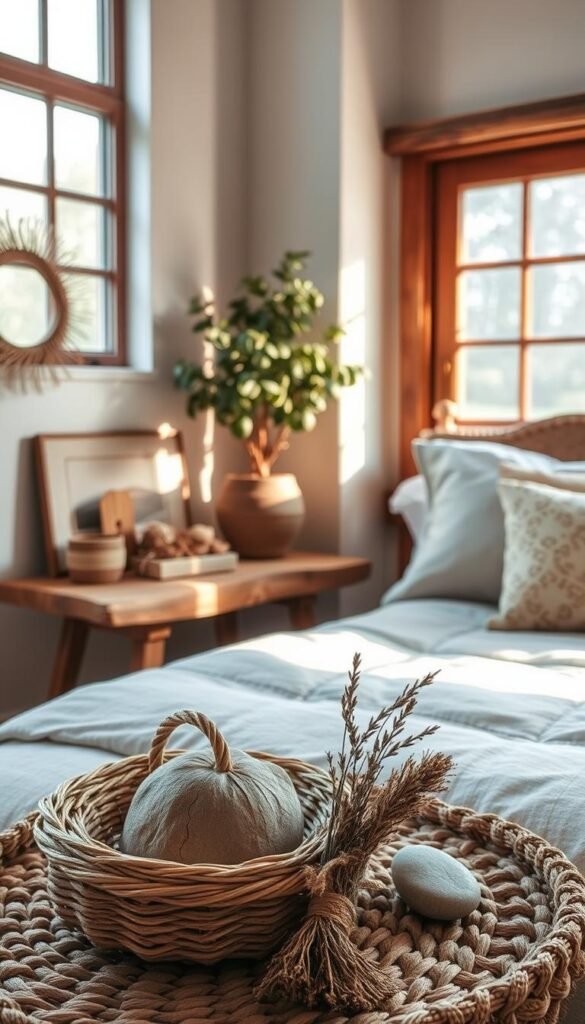
Final touches transform your room into a complete sanctuary. Thoughtful accessories add personality and reinforce connections to the natural world.
These elements introduce visual interest and personal stories. They make your space feel curated rather than decorated.
Handcrafted items bring authenticity and soul to your design. Their imperfections celebrate natural beauty and human craftsmanship.
Ceramics, Pottery, and Artisanal Pieces
Handmade ceramics add wonderful texture and organic forms. Each piece carries unique character through slight variations.
Terracotta pots and vases introduce warm earth tones. Their natural color complements wooden furniture and green plants.
Artisanal pottery showcases beautiful craftsmanship and personal touch. These pieces become conversation starters in your space.
Display hand-thrown bowls on nightstands for small item storage. Use larger vessels for holding dried grasses or fresh cuttings.
Mix different ceramic finishes for collected appeal. Combine matte glazes with rough textured surfaces.
Botanical Art and Prints
Nature-inspired artwork brings the outdoors onto your walls. Leaf prints and floral illustrations reinforce organic themes.
Botanical prints offer scientific beauty with educational charm. Framed herbarium specimens create timeless elegance.
Landscape paintings evoke peaceful natural settings. Choose scenes that resonate with your personal connection to nature.
Create gallery walls mixing different art styles and sizes. Combine pressed flower displays with modern nature photography.
Consider these display ideas for visual impact:
- Group small prints above your nightstand
- Place a large statement piece above your bed
- Create a shelf display with leaning artwork
- Mix framed and unframed pieces for texture
| Accessory Type | Design Impact | Display Suggestions |
|---|---|---|
| Handmade Ceramics | Adds organic texture and warmth | Nightstand decor or shelf displays |
| Artisanal Baskets | Provides natural storage solutions | Wall hanging or blanket storage |
| Botanical Art | Enhances nature connection | Gallery walls or single statement pieces |
| Dried Arrangements | Adds texture without maintenance | Ceramic vases or woven containers |
| Mixed Materials | Creates collected-over-time look | Grouped on shelves or scattered throughout |
Rotate accessories with seasons to keep your space feeling fresh. Spring might feature fresh cuttings while autumn showcases dried elements.
Choose items that reflect your personal story and style. Your space should feel authentically yours rather than perfectly matched.
These final accents complete your natural sanctuary beautifully. They add the finishing touches that make your room uniquely welcoming.
Incorporating Organic Shapes and Forms
Nature rarely follows straight lines, and your bedroom shouldn’t either. Organic shapes bring softness and movement into your personal space.
These flowing forms create visual harmony that feels instinctively comforting. They break up rigid geometry found in most rooms.
Curved furniture introduces gentle lines that welcome relaxation. A rounded headboard frames your bed with soft elegance.
Asymmetrical pieces add artistic interest throughout the room. They create dynamic visual flow that feels both intentional and natural.
Handcrafted items showcase beautiful imperfections. These unique accents tell stories through their irregular forms.
“Curved shapes in interior design reduce visual tension and promote feelings of safety and comfort.”
Consider these organic elements for your space:
- Arched mirrors that reflect light beautifully
- Free-form ceramic vases for floral displays
- Wavy-edged rugs that define spaces softly
- Asymmetrical wall art that breaks conventional patterns
Balance remains important when working with organic shapes. Pair curved elements with some straight lines for harmony.
A rounded nightstand might sit beside a rectangular bed. This combination creates visual interest without chaos.
Architectural details offer permanent organic solutions. Consider arched doorways or curved built-in shelving.
These elements mimic forms found throughout nature. They reinforce connections to the natural world.
Psychological benefits make these shapes particularly valuable. Curved forms feel more welcoming and less confrontational.
They encourage relaxation through their gentle appearance. Your eyes follow smooth lines rather than sharp angles.
| Organic Element | Design Impact | Implementation Idea |
|---|---|---|
| Rounded Furniture | Creates soft visual flow | Oval coffee table or curved bench |
| Asymmetrical Decor | Adds artistic interest | Free-form sculpture or abstract art |
| Curved Textiles | Introduces gentle movement | Round pillows or draped fabric |
| Organic Architecture | Defines space softly | Arched niches or rounded corners |
| Handcrafted Items | Adds unique character | Pottery with irregular edges |
Affordable options make organic shapes accessible to everyone. Look for secondhand pieces with interesting curves.
DIY projects can introduce custom organic elements. Create your own asymmetrical wall hanging or curved shelf.
Experiment with shapes that feel personally meaningful. Your choices should reflect your connection to natural forms.
These elements complete your sanctuary’s look with graceful elegance. They make your space feel truly inviting.
Earthy Bedroom Ideas for Every Design Style
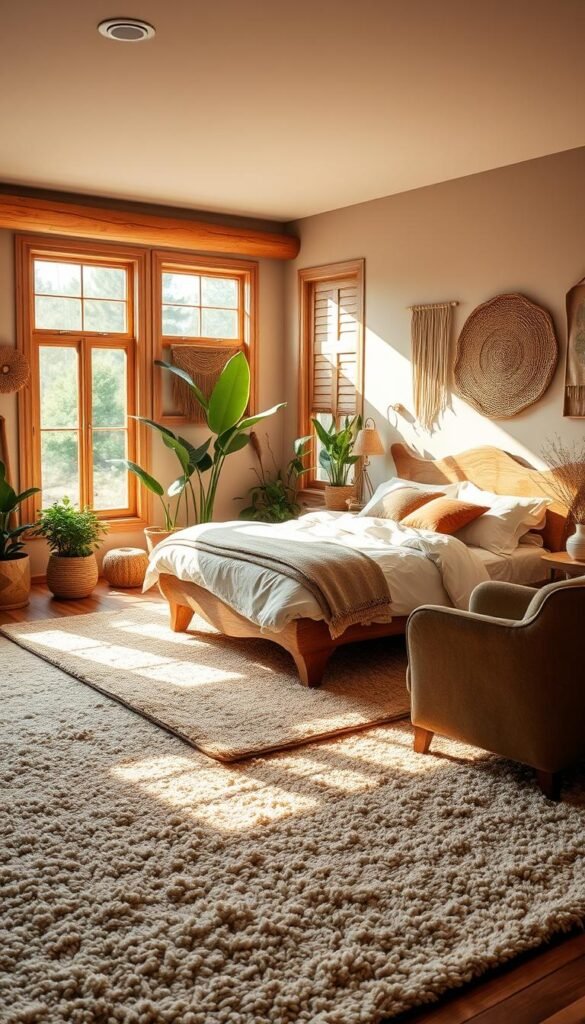
Three distinct styles demonstrate how natural elements adapt to different design sensibilities. Each approach creates a unique atmosphere while maintaining connections to nature.
These bedroom ideas suit various personal preferences and existing spaces. You can mix elements from different styles for a personalized look.
Desert Modern Minimalism
This style combines clean lines with warm earth tones for a serene environment. The palette focuses on sand, terracotta, and muted clay colors.
Furniture features simple silhouettes with natural materials. Think low-profile platform beds and streamlined wooden nightstands.
Textures add warmth without visual clutter. A taupe bedding set with linen textures creates understated luxury.
Accessories remain minimal but meaningful. A single ceramic vase or woven tray serves both function and beauty.
Lighting enhances the clean aesthetic. Recessed lights and simple pendant fixtures maintain the uncluttered feel.
Biophilic Boho Luxury
This approach celebrates nature through abundant greenery and layered textures. Plants become the main decorative elements throughout the space.
The color scheme incorporates various green shades alongside warm neutrals. Sage green walls create a calming backdrop for lush vegetation.
Natural materials mix freely for collected charm. Rattan furniture pairs with macramé wall hangings and wool rugs.
Bedding features organic patterns and rich textures. A green sets with botanical prints enhances the nature connection.
Decor includes handcrafted items and natural curiosities. Dried flowers, crystals, and artisanal pottery complete the decor.
Moody Stone and Shadow Drama
This style embraces darker earth tones for a sophisticated retreat. Deep charcoal, slate blue, and rich brown create dramatic atmosphere.
Materials feel substantial and textured. Stone accent walls, heavy linen drapes, and leather accents add depth.
Lighting creates intentional pools of illumination. Directional sconces and dimmable fixtures enhance the moody ambiance.
Furniture features solid, grounded forms. A platform bed with a stone or wood headboard anchors the space.
Metallic accents provide subtle reflection. Bronze lamps and iron hardware complement the rich color scheme.
Each style offers distinct ideas for creating your perfect natural retreat. Consider which approach resonates with your personal aesthetic.
Budget-friendly alternatives make these styles accessible. Look for affordable rattan pieces or paint existing furniture in sage tones.
Mixing elements from different styles creates unique personalized spaces. Your bedroom should reflect your individual connection to nature.
How to Mix, Match, and Layer Like a Designer
Professional designers master the art of blending elements to create spaces that feel both intentional and effortlessly collected. This approach brings depth and personality to your personal retreat.
Successful mixing involves balancing colors, textures, and materials. The goal is a harmonious space that reflects your unique style.
Start with your established color palette as the foundation. Build upon neutral bases with strategic accent colors for visual interest.
Layer similar tones for sophisticated depth. Combine light beige walls with darker taupe accents throughout the space.
Introduce contrasting elements for dynamic appeal. A smooth ceramic vase might sit beside a rough wooden tray.
Consider these professional layering techniques:
- Vary pillows in size, texture, and pattern on your bed
- Combine different wood tones in furniture pieces
- Layer rugs for added texture underfoot
- Mix metallic finishes for collected charm
Your bedding offers excellent layering opportunities. Start with quality sheets, add a textured coverlet, then finish with throw blankets.
Incorporate imperfect or vintage pieces for authenticity. These items add character that new mass-produced items cannot replicate.
Balance remains crucial throughout the process. Step back periodically to assess visual weight and distribution.
Trust your instincts and enjoy the creative journey. Your personal sanctuary should reflect what brings you comfort and joy.
Maintaining a Clutter-Free and Serene Environment
A calm bedroom starts with thoughtful organization. Your personal retreat should feel peaceful and welcoming every time you enter.
Clutter creates visual noise that disrupts relaxation. A tidy space supports mental clarity and better sleep quality.
Smart storage solutions keep essentials hidden but accessible. Woven baskets blend beautifully with natural decor while holding items.
Under-bed containers maximize unused space efficiently. They store off-season clothing or extra bedding neatly.
Multi-functional furniture serves dual purposes beautifully. An ottoman with storage holds blankets while providing seating.
Minimalism focuses on quality pieces that spark joy. This approach creates a polished look that feels intentional.
“Have nothing in your house that you do not know to be useful or believe to be beautiful.”
Daily habits maintain your room’s tranquil atmosphere. Making your bed each morning sets a tone of order.
Weekly decluttering sessions prevent accumulation. Sort items into keep, donate, or discard piles regularly.
Digital decluttering improves sleep quality significantly. Charge devices outside the bedroom to reduce blue light exposure.
Psychological benefits of clean spaces are profound. Reduced visual stress promotes mindfulness and relaxation.
Intentional decor choices maintain visual harmony. Each item should contribute to the room’s peaceful vibe.
Consider these organization ideas for your space:
- Floating shelves for displaying meaningful items
- Bedside caddies for books and reading glasses
- Vertical storage for small rooms
- Labeled containers for easy identification
| Storage Solution | Benefits | Best For |
|---|---|---|
| Woven Baskets | Adds texture while concealing items | Blankets, pillows, and magazines |
| Under-bed Storage | Utilizes unused space effectively | Seasonal clothing and extra linens |
| Multi-functional Furniture | Saves space and reduces clutter | Small rooms and studio apartments |
| Wall Hooks | Keeps items off surfaces | Robes, jewelry, and everyday bags |
| Drawer Organizers | Maintains order in small spaces | Accessories and personal items |
Your bedroom should feel like a true sanctuary. These habits maintain the peaceful environment you’ve created.
Embrace routines that support tranquility and order. Your personal oasis deserves consistent care and attention.
Your Journey to Creating a Personal Earthy Oasis
Transforming your personal retreat is a rewarding process that reflects your connection to the natural world. This approach creates a space that feels like a true sanctuary for relaxation.
Begin with small changes that make a big impact. Add a plant or switch to bedding with natural textures. These simple steps build toward your ideal room over time.
Remember that this process evolves with your preferences. The best ideas grow from personal experimentation and joy.
An earthy oasis offers lasting benefits for well-being. This timeless look provides comfort and peace for years to come.
Explore nature and design resources for ongoing inspiration. Your unique vision creates a bedroom that truly reflects your style.
Share your progress and discoveries with others. This journey leads to a space you’ll cherish every day.