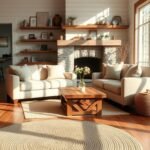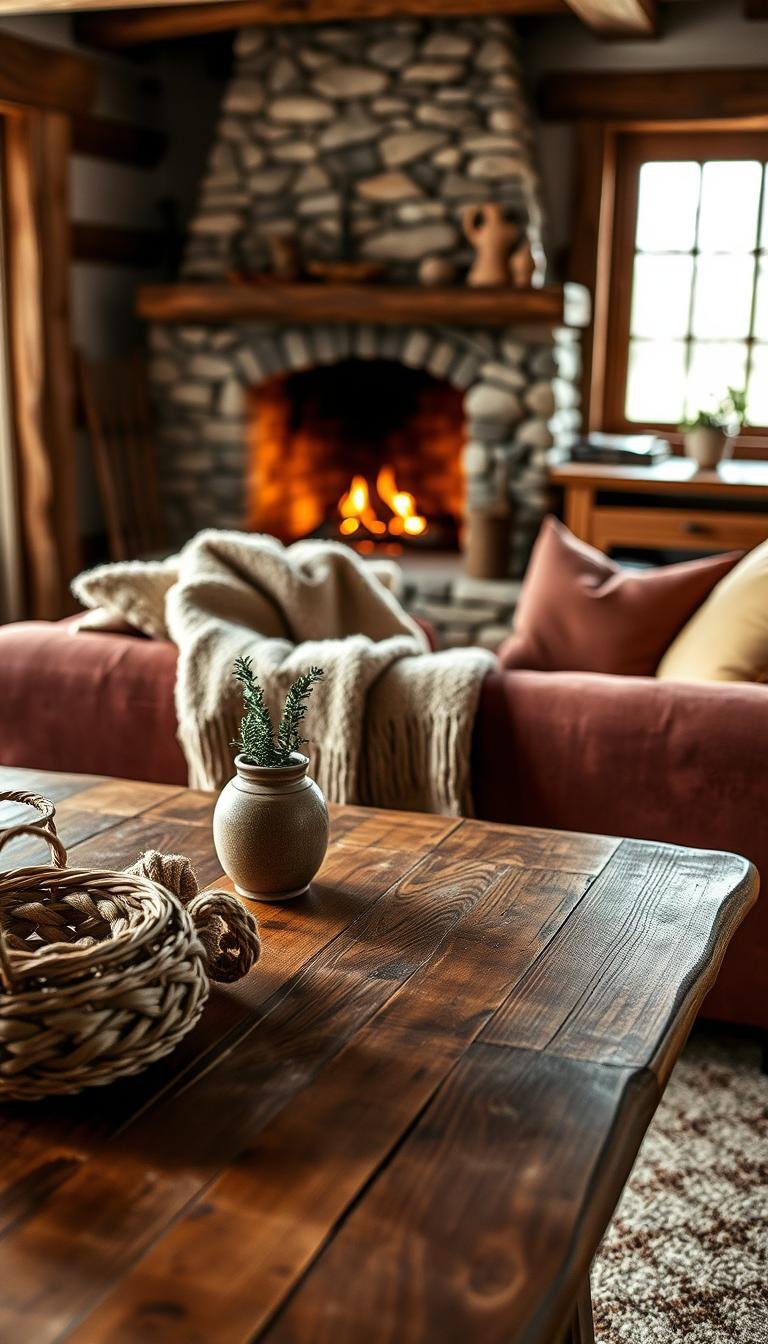
A rustic atmosphere comes from the way natural materials, soft textures, and useful pieces work together, not from making every surface look old. Rustic living room inspiration can help you turn the home you have into a welcoming retreat, whether you live in a city apartment, a cottage, or a house with original timber and stone.
You do not need a full renovation or a matching furniture set. A few thoughtful ideas can make your space feel personal and comfortable: a sturdy table beside a soft chair, a well-used textile against a smooth wall, or a modern sofa near old beams. The mix should feel useful, not staged.
Patina is the visible character created by age, wear, and changes to a material’s surface. You can keep that character while choosing pieces that suit your everyday life. Start with one feature you already like, such as a wood table, a stone hearth, or a favorite textile.
Rustic Living Room Inspiration Starts With the Architecture
A hearth or stove can give the furniture a natural center, but a strong architectural detail can do the same job in a home without one. Let that feature become the focal point, then keep the rest of the living room comfortable and easy to use.
Arrange the main seats toward the feature, while keeping a clear route through the room. A fireplace does not need an elaborate mantel display to feel important; its stone, brick, or shape may already draw the eye.
Let a fireplace or stove anchor the seating
In a 300-year-old Connecticut home, seating centers on a hearth opening seven feet wide and six feet tall. That scale makes the fireplace the room’s natural visual center. A Maryland home extends a fieldstone fireplace into a half-wall and uses a reclaimed log-cabin beam as its mantel.
A Wyoming ranch pairs a wood-burning stove with beams salvaged from an Illinois barn. Another home uses a mantel made from a tree felled on site above white Zellige tile. Moss-rock fireplaces with carved stone corbels show how the material itself can bring presence without extra decoration.
Work with the features your home already has
Exposed timber beams and stone accents can support modern seating, so you do not have to make every piece look old. A Maine barn built in 1819 was reassembled in 1999, with Maine granite and brick used in its fireplace. These choices give the room a connection to its structure and setting.
If your home has no fireplace, use a substantial wood piece, large artwork, or a view as the anchor instead. A designer’s advice on focal points also includes bookcases, windows, and statement furniture. Exposed beams and stone accents can give modern seating a rustic base.
A fireplace is not essential; one clear architectural or decorative feature can anchor the room.
Keep combustible objects and furniture within the clearances specified for your fireplace or stove.
Choose Natural Materials That Ground the Space
Choose two or three materials to carry through the room, then use a contrasting texture to keep each one noticeable. Wood, stone, leather, and iron offer a grounded starting point for natural materials without making the room feel heavy.
Visible grain adds warmth, while a different surface beside it keeps the materials distinct. Rustic country rooms can also include terracotta, linen, wicker, and handcrafted ceramics. You do not need every material in one space; choose the ones that make sense with your home and daily use.
| Material | Rustic character | Useful pairing |
|---|---|---|
| Wood | Visible grain and warmth | Stone |
| Stone | Rough or varied surface | Linen |
| Leather | Smooth and timeworn | Wood |
| Iron | Dark contrast | Handcrafted ceramics |
Prominent wooden furniture with visible grain can give a room its rustic character. A Mississippi barn used local wood sourced from a nearby military depot, showing how reclaimed wood can tie a building to its surroundings. One room used an eight-foot knotty-pine ceiling and wall treatment protected with clear polyurethane.
Rustic home interiors can pair original materials with contemporary furniture. A clean-lined chair against a textured wall keeps the old and new in balance. The same approach works when you build a living room with clean-lined furniture and natural surfaces.
Avoid repeating one wood finish on every surface, since the room can start to feel flat. A mix of grain, sheen, and texture gives the eye more to notice without adding clutter. Keep the overall group small enough that each material has room to register.
Check reclaimed boards for loose splinters and damage before using them indoors.
Balance Scale in Small and High-Ceiling Spaces
A compact room benefits from a clear focal point and open floor space, while a high ceiling needs details that connect its height to the furniture below. The right room ideas depend on whether your living space feels crowded or visually empty.
Use a few substantial pieces in a small living room, and repeat details at different heights in a tall one. The goal is balance, not filling every blank spot with decor.
Keep a small room open and purposeful
Choose a small number of useful furniture pieces, lighter wall colors, and vertical details that draw the eye upward. Diagonal paneling in one small living room creates that upward movement without relying on many little accessories. A few strong shapes often make a small living space feel more considered.
Dark wood is not automatically wrong in a small room. Daylight and lighter surfaces can balance its weight, so you can keep a dark table or beam that you love. A simple, open living room layout can also help you make the most of limited floor area.
Give a tall room details that meet its scale
A room with a 22-foot cathedral ceiling or a separate space reaching 25 feet high needs more than low furniture to feel complete. Repeat the wood tone at more than one height, such as in a beam and a lower table. That visual link helps the upper volume relate to the seating area.
In the 25-foot room, white-painted poplar planks and a cast-iron pellet stove create a clear rustic base. A large light fixture or tall plant can also connect the upper room to the furniture below. Choose a form that feels substantial without blocking the view across the room.
Keep the floor area purposeful rather than scattering small objects through it. Vertical lines, a well-chosen feature, and open space can make a room feel intentional at either scale. The same design detail may read very differently from the doorway and the sofa.
Test the scale of a large fixture or plant from the main seating position before committing to it.
Use Color to Warm Up Wood and Stone
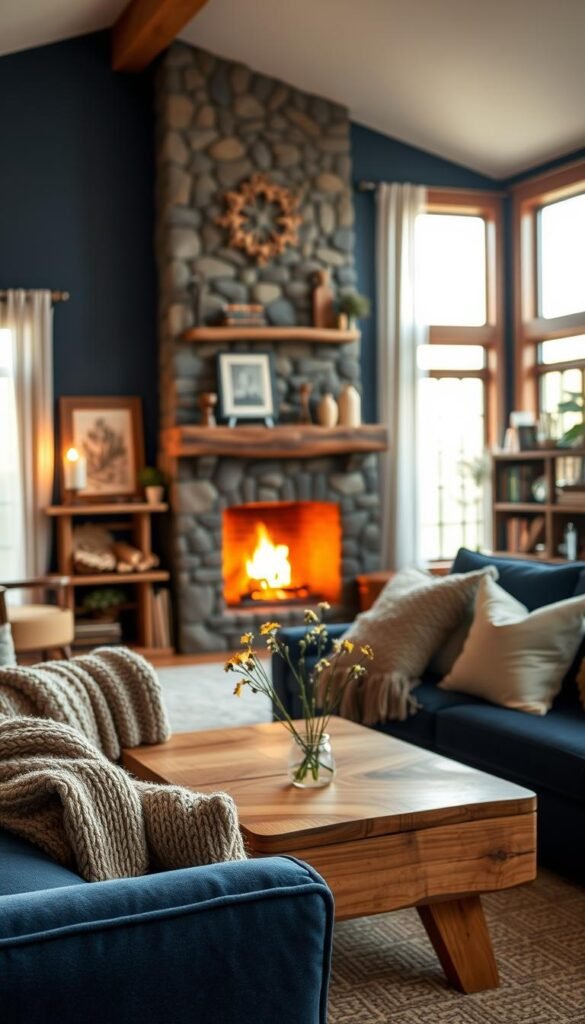
A warm neutral backdrop is a reliable starting point, but muted blue, green, or navy can bring out the character of timber and stone. Your color palette can include more than earth tones, especially when a small painted feature balances substantial wood.
Choose colors that relate to the room’s materials, then test them where you plan to use them. The same paint can look different beside worn floorboards, pale stone, or deep wood trim.
| Palette | Materials it complements | Where to introduce it |
|---|---|---|
| Cream and warm brown | Wood and stone | Walls and upholstery |
| Navy and warm wood | Worn floors and a mantel | Walls or a single large textile |
| Muted blue and green | Pine paneling | Chairs or a daybed |
An 1800s Colonial uses 18th-century-inspired floral wallpaper and wood millwork around an original fireplace. In another room, saturated navy walls set off worn floorboards and a mantel. These examples show how color can give age-worn materials a different kind of presence.
Blue on a fireplace and fabrics can balance natural wood without making the room feel cold. A lake-view room pairs pine paneling with blue-and-white chairs and a green-blue daybed. You can bring a similar accent into a room through upholstery, a large textile, or one painted feature.
Do not choose paint from a screen alone. A digital swatch cannot show exactly how a color will look against your walls or change through the day. Check a sample in both natural light and the evening light you use most often.
View a paint sample at different times of day before painting an entire wall.
Arrange Seating for Conversation and Clear Walkways
Arrange the largest seats first, then check whether people can cross the room without weaving around them. Face the seating inward for conversation, while turning one chair or sofa toward the fireplace or view if that suits the room.
Leave 30″-36″ for a walkway between large furniture pieces when the room allows, or 18″-24″ when it does not. These targets help you keep a usable path without sacrificing the conversation area.
| Layout detail | Comfortable target | When space is tight |
|---|---|---|
| Walkway between large furniture pieces | 30″-36″ | 18″-24″ |
| Spacing between seats | 3.5′-10′ | Keep seats within that range while preserving a usable path |
| Sofa position | 3″-5″ from the wall when possible | Move it closer if needed to preserve circulation |
Keep seats 3.5′-10′ apart when possible. That range supports conversation without making people feel crowded or forcing them to raise their voices. In a 100-year-old home, wingback and spool chairs sit around a fireplace, showing how different chair styles can still form one gathering spot.
A sofa does not always need to sit directly against a wall. Pulling it a few inches forward can give the arrangement a more deliberate feel, if you can still move easily around it. Make the main route through the living room clear before adding small furniture.
Comfortable seating and walkway targets can help you compare your layout with the room’s available space. A workable arrangement also makes daily tasks easier, from carrying a drink to passing through with laundry. Keep the path connected rather than squeezing between isolated furniture pieces.
Measure the main path from furniture edge to furniture edge before settling on the final layout.
Mix Modern and Rustic Furniture Without Losing Warmth
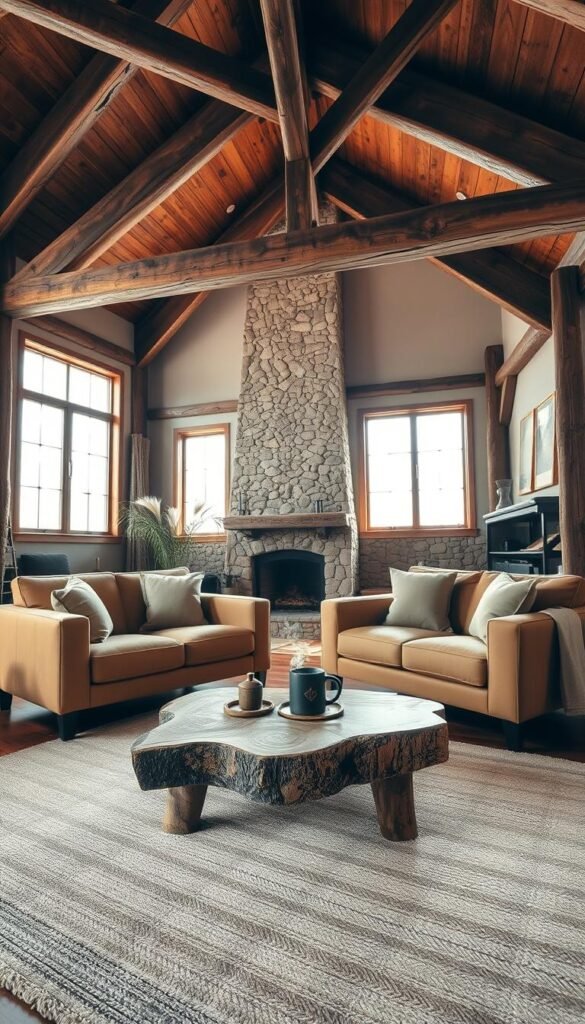
Yes, you can mix rustic with modern when one or two materials connect the older-looking details to the cleaner furniture. A simple sofa or chair silhouette can sit comfortably beside visibly grained wood, stone, leather, or metal.
Repeat a material or color across contrasting pieces to make the combination feel cohesive. That small connection helps modern rustic design feel collected rather than divided into old and new halves.
Pair clean lines with visible natural texture
Clean-lined furniture can work in a combined lounge, dining, and game space because it does not compete with every activity. A plain sofa can sit beside a wood table, while stone or iron adds another texture. Let one or two surfaces carry the rustic character instead of adding them everywhere.
If your room already has heavy wood and stone, cleaner furniture and fewer accessories can keep it from feeling overloaded. Plush seating and a soft rug can balance exposed beams without hiding them. For another approach, explore modern rustic furniture and material combinations.
Mix older pieces with comfortable contemporary seating
A 100-year-old home pairs wingback and spool chairs around a fireplace. Their different shapes make the arrangement feel personal, while the shared setting ties them together. Modern rustic living room inspiration can come from the same idea: mix pieces with distinct histories, then give them a common visual thread.
Exposed timber beams and stone accents can also work with comfortable, contemporary seating. A leather sofa adds a smooth texture against rough stone, and a simple chair can keep the room from feeling too formal. If you enjoy that contrast elsewhere in the home, mid-century furniture with natural materials offers another useful reference.
Modern rustic style does not require an exact match between furniture pieces. A repeated wood tone, metal detail, or accent color can link an older chair to a modern sofa. Keep the link easy to spot, but let the furniture retain its own shape and character.
Repeat a wood tone or accent color at least twice so the contrasting pieces feel related.
Make Small Rooms Work Harder With Multifunctional Pieces
Choose a piece that solves a real everyday problem, such as storing throws or making room for an overnight guest. Multifunctional furniture can free up space in small living rooms without filling the floor with single-use pieces.
Pick storage or flexible seating that you will use often, not just furniture with extra features. The best choice depends on whether you need a place for guests, hidden storage, or a layout that changes.
- A storage ottoman used as a coffee table
- A sofa bed for occasional guests
- A modular sectional that can be rearranged
- A console table with hidden compartments
Solid wood, rattan, and organic fabrics appear among living-room furniture trends in 2026. Materials like these can bring warmth to a practical piece without making it feel purely utilitarian. Choose a finish and shape that suit the rest of your room furniture.
A built-in banquette can add seats and concealed storage beneath the seat. It works well when you want a defined corner for reading, games, or meals. A built-in makes less sense if you need to change the room layout often, since it stays in one place.
A few movable ottomans or side tables can adjust to visitors. Use them as footrests, extra seats, or surfaces for drinks, then move them aside when the room needs more open floor space. In a compact home, this flexibility can matter more than adding another fixed chair.
Hidden compartments can keep everyday items close without putting them on display. Think about what you will store before choosing a piece, since a compartment that is too small may not solve the problem. Leave enough space around the furniture for its doors, lids, or bed mechanism.
Leave enough space to open hidden compartments and pull out any sleeper bed.
Choose Coffee and Side Tables That Fit the Seating
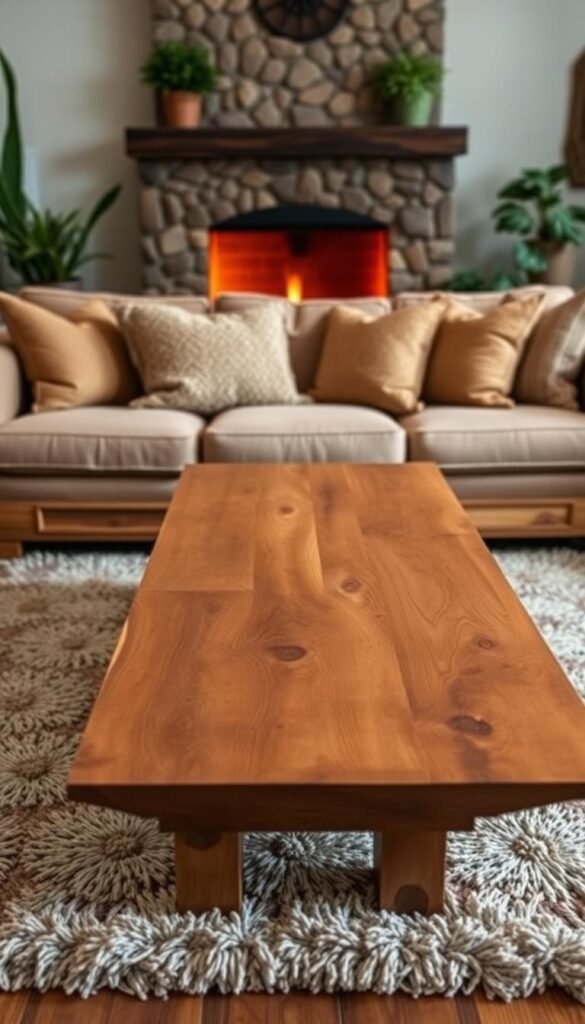
A well-sized coffee table should relate to the sofa’s length and seat height, not just the open floor area. Measure the sofa before you choose a table, so the furniture feels balanced and easy to use.
Choose a coffee table at least half the sofa’s length, with its top within 4″ above or below the seat cushion. These proportions give you useful surface area without making the table feel oversized.
Measure your sofa from one end to the other, then compare that number with the table’s length. A sturdy, straight-lined wood table can add rustic texture beside a detailed sofa or patterned rug. Its simple shape can keep the room from feeling busy.
A round or oval coffee table can be easier to navigate around when the seating area is tight. Curved edges may also suit a room with several seats arranged close together. The right shape depends on how people move through the space and where the table will sit.
A side table should be close enough for a drink or book, usually within 2″-3″ of the chair or sofa arm height. That small reach difference can make it more comfortable to use without leaning. Check the table beside the actual seat, not only against a product image.
For more sizing and shape guidance, see coffee table rules from Emily Henderson. A table’s materials can also add character: visible wood grain brings a natural note, while metal details create contrast. Keep the surface practical for the way you use the room.
Check the table’s height while seated, since a comfortable reach matters as much as its appearance.
Anchor the Seating With the Right Area Rug
A rug should connect the main seats into one area rather than sit like a small island in the middle. Choose an area rug large enough to gather the sofa and chairs visually, so the living room feels more settled.
At minimum, the sofa’s front legs and all chairs should rest on the rug. That placement brings the main furniture together and gives the room a clear center.
- Measure the seating footprint.
- Make sure the sofa’s front legs and all chairs can rest on the rug.
- Check the wall margin after centering it.
In a large living room, leave about 24″ between the rug and wall. A smaller living room can leave 10″-18″. The right wall margin depends on the floor area and furniture, but centering the rug helps the whole arrangement look deliberate.
A patterned rug can add color beneath neutral furniture, while a quieter rug lets a detailed sofa or fireplace stand out. An earth-toned area rug can also add a softer look to a wood floor. Choose a pattern that supports the room’s main visual feature, rather than competing with it.
A smaller rug can still define a reading nook if it is not expected to anchor the whole seating group. It may sit under a single chair and lamp, giving that corner its own boundary. Keep that smaller purpose clear instead of trying to stretch it across the entire living area.
Check that the rug’s edges do not curl or catch when people walk past. A stable edge matters where the rug meets the walkway, especially in a room used by children or older adults. The right pad can also help protect the floor beneath it.
Secure the rug with a suitable nonslip pad, especially where its edge meets a walkway.
Layer Textures for a Lived-In Feel
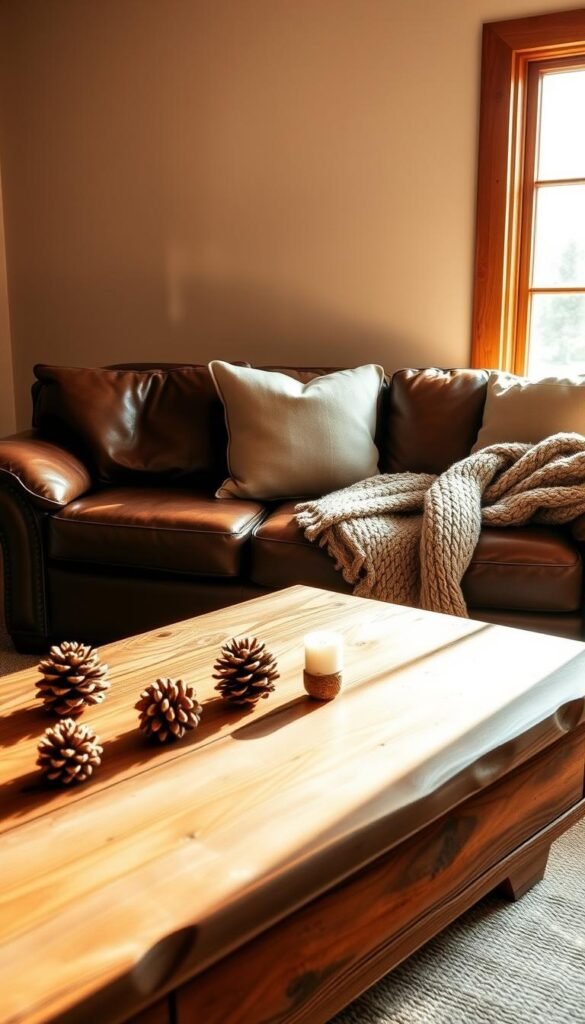
A few contrasting textures can soften stone and timber without hiding the materials that give the room its character. Pair smooth and rough surfaces so your decor feels inviting instead of overly coordinated.
Combine leather or wood furniture with softer textiles and a few handcrafted surfaces. That contrast gives the room a tactile quality while keeping its strongest materials visible.
Soften wood and stone with textiles
Try linen cushions on a leather sofa, a knitted throw over a chair, or woven baskets near the seating. Soft throws can make a hard room feel more comfortable without covering the wood or stone. An earth-toned rug can add another layer underfoot.
One wood-wrapped room pairs two leather sofas with pillows and blankets. The mix lets the furniture stay sturdy while the fabrics bring softness. You can use the same balance with one leather sofa, linen cushions, and a throw that feels good against your skin.
Combine smooth, woven, and handcrafted surfaces
Handcrafted ceramics can add a subtle contrast to iron, wood, or woven baskets. Choose pieces with different finishes rather than giving every accessory the same texture. Smooth leather beside a rough woven surface, for example, keeps both materials noticeable.
A Mississippi barn uses local wood on its walls and ceiling, with large windows and evening chandelier and sconce light. That setting shows how natural surfaces can feel comfortable without needing to be hidden. To extend a similar mix to another room, see rustic modern materials and layered textures.
Too many bulky throws and cushions can make a small sofa uncomfortable to use. Keep the soft furnishings easy to move, and avoid piling them where someone needs to sit. A room can feel warm without asking you to shift several pillows before you relax.
Keep one seat relatively clear of pillows and throws so it remains ready for everyday use.
Plan Warm Ambient and Reading Light
Plan light around what you do in the room, then use warm-toned sources to keep wood and stone from feeling stark at night. Ambient light brightens the whole living room, while a task lamp directs light where you read or work.
A sitting room generally needs around 10-20 lumens per square foot, and a reading task needs at least 450 lumens. A 10-by-10-foot room therefore needs around 1,000-2,000 lumens in total.
- A ceiling fixture or sconces for ambient light
- A floor or table lamp for reading
- A dimmable source or smaller lamp for a softer evening glow
Use ambient light to make the full room comfortable after dark. A ceiling fixture or wall sconces can spread light across a wider area than one reading lamp. Warm-toned bulbs and lamps made with metal or glass can suit rustic materials without making them feel harsh.
A task lamp should aim light toward the page or project, not into your eyes. A floor lamp beside a reading chair keeps the light close to where you need it. Room size, shades, and dark finishes affect how bright a space feels, so adjust the lamps in place.
A smaller lamp or dimmable source can soften the room in the evening. This gives you an option between bright general light and a dark room, which can make a living space easier to use at different times. Try switching off one source at a time to see what each adds.
Read in your usual chair after dark and adjust the lamp until the page is bright without glare.
Decorate Walls With Wood, Art, and Collected Details
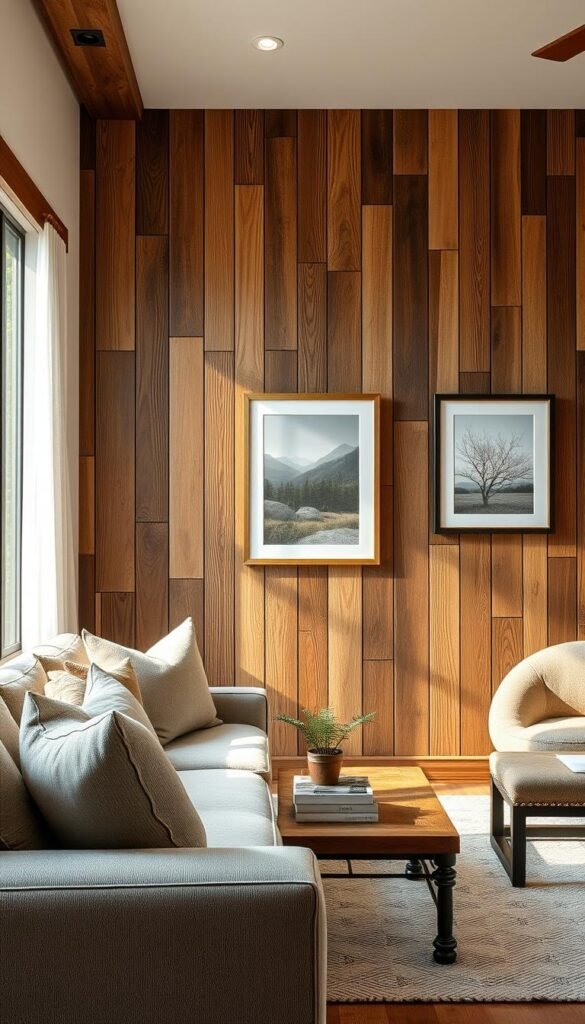
Treat one wall as a deliberate feature, then let the rest of the room give it visual breathing space. A single choice can add character without making every surface compete for attention.
Use wood, wallpaper, or art in a focused area rather than covering every wall. That restraint lets the furniture and the room’s other details remain easy to see.
- A single wood-clad accent wall
- Wallpaper or millwork around an architectural feature
- One mirror or artwork above a focal point
- A restrained gallery arrangement
An 1800s Colonial uses floral wallpaper and wood millwork to add texture around an original fireplace. Reclaimed-oak paneling gives a double-height Los Angeles living room a rustic character. Both examples show how a wall can make a statement without requiring wood across the entire room.
A 1940s sunflower mirror hangs above a farmhouse fireplace, where its shape brings a vintage note. One mirror or artwork can create a clear focal point, while a small gallery can add a more personal collection. Keep the display connected to the furniture beneath it.
A large art piece hung too high can feel disconnected from the seating below. View the wall from the sofa before you hang it, and think about how the picture relates to the furniture. The art should feel part of the room, not like an object floating near the ceiling.
Keep the display calm enough that the room’s other details still have space. Wallpaper, wood paneling, and frames each bring texture, so use them with care when a room already has strong architectural features. A few well-placed wall details can say more than an all-over treatment.
Lay out gallery frames on the floor first and confirm their overall width against the furniture beneath them.
Find a Sofa That Fits Your Space and Household
Choose a sofa by its real footprint and daily use first, then consider which upholstery gives your rustic scheme the right texture. Leather, linen, and velvet each bring a different feel to the living room.
Compare the sofa’s dimensions, storage, fabric, and flexibility with your household’s needs. Price alone does not show whether a sofa will fit your space or stand up to daily use.
| Brand | Starting price | Noted fit | What to weigh in your room |
|---|---|---|---|
| Burrow | $1,149+ | Small spaces | Measure the footprint |
| Home Reserve | $716+ | Built-in storage | Check the storage configuration |
| Sabai | $1,295+ | Nontoxic velvet | Check the fabric care guidance |
| Homebody | $3,740+ | Modular couches | Confirm the pieces fit your layout |
| Joybird | $784+ | Pet-friendly sofas | Check the specific upholstery and care details |
A leather sofa adds a smooth, durable-looking surface, while linen gives the seating a more relaxed texture. Velvet can bring a deeper color and a softer feel. Think about how each fabric suits the room and the way you live, not only how it looks in a picture.
A smaller-space option may suit a narrow room, while built-in storage can help if you need a place for extra items. A modular sofa can adapt to a changing layout, but only if its pieces fit the room in the positions you want. Check the full footprint before choosing a style.
Burrow couches start at $1,149+, Home Reserve at $716+, Sabai at $1,295+, Homebody at $3,740+, and Joybird at $784+. The listed fit differs by brand, from storage to modular layouts. Starting prices and sofa categories offer a point of comparison, not a guarantee of fit.
Check the current price, fabric details, and dimensions before making a purchase.
Turn Saved Images Into a Realistic Decorating Plan
Save examples for the specific problem you need to solve, such as a dark wall, an empty corner, or a seating layout. Sorting rustic living room inspiration by the decisions it helps you make can keep your saved ideas practical.
Group images by materials, color, and layout, then mark the features that recur. Repeated details may point to what you truly like, while one striking image may not suit your home.
On Pinterest, place images into three groups: materials, color, and layout. Look for features that appear more than once, such as exposed beams, a certain kind of seating, or a simple wall treatment. Those patterns can give your living room ideas a clear starting direction.
Simple rustic living room inspiration can start with a wood accent, comfortable seating, and one soft textile. That combination adds a natural feature and a useful place to sit without asking you to copy a whole room. Keep the choices grounded in your own space.
Modern rustic living room ideas on Pinterest can translate well when you keep the cleaner furniture shape and choose natural textures that suit your home. Exposed beams, stone, and plush seating can work with contemporary furniture. For another style reference, explore modern farmhouse materials and collected details, then adapt the ideas for your living room.
Images with tall ceilings or expansive windows may not translate directly to a small or shaded space. Pay attention to the conditions that make an image work, not only the furnishings within it. Your room’s daylight and existing finishes may call for a different version of the same idea.
Before buying anything, compare your saved ideas with the room’s daylight, dimensions, and existing finishes.
Add Vintage Details Without Overstyling
One distinctive secondhand piece can give a room a collected feel more naturally than a shelf filled with unrelated ornaments. Choose vintage or secondhand finds that have a purpose and feel right for your home.
Pick a few meaningful pieces, and let their color, material, or period details connect them. They do not need to match exactly to look at home together.
- One secondhand cupboard or cabinet
- A vintage mirror
- A small collection of framed art
- A handmade ceramic or basket
A blue-and-yellow cupboard found on Facebook Marketplace adds a distinctive accent to a rustic room. A Wyoming log cabin uses unpainted log walls and accessories collected over time. Those spaces show how a few specific finds can reflect the people who live there.
A country home displays 19th-century English paintings, while a 1940s sunflower mirror adds a vintage focal detail in another room. You can mix objects from different periods when they share a color, material, or design detail. That connection can be subtle, such as warm wood frames or a repeated blue.
Collected vintage and artisan accents can bring personality to a rustic space without making it feel staged. Keep the objects you use where you can see and enjoy them. A fragile antique may be better displayed outside a busy walkway or children’s play area.
A vintage find should add character without making the room harder to use.
Check a secondhand item for stability, pests, and damage before bringing it into your home.
Choose the Details That Make the Room Yours
A warm, authentic-feeling room is built from choices that suit your home and the people who use it. You do not need every surface or furnishing to tell the same story. A few personal details can make the space feel finished without turning it into a staged set.
Keep enough clear space for everyday life, and choose details that support the way you relax, gather, or read. One small change can make the room feel more like yours. Choose one change you can make this week, such as rearranging a chair, adding a soft throw, or bringing in a natural material.