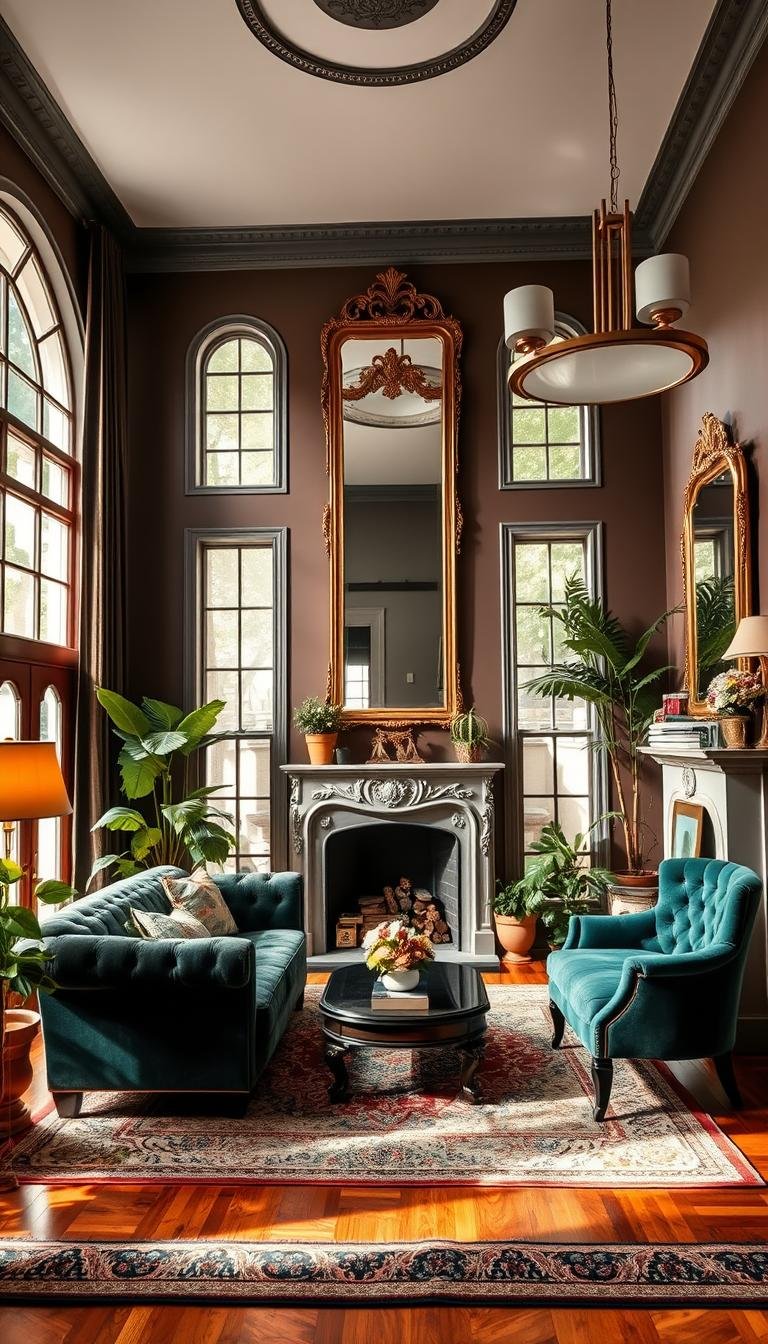
Welcome to your journey of creating a stunning space that blends historical elegance with contemporary comfort. This unique design approach honors Victorian traditions while embracing today’s sensibilities.
You’ll discover how to transform your home into a sophisticated sanctuary. Learn practical tips that balance ornate charm with clean aesthetics.
Expert designers like Mona Ying Reeves of Re:modern show how historical influences merge beautifully with current trends. Victorian design maintains its timeless appeal while adapting to modern living.
Get ready to explore rich colors, luxurious textures, and intricate details. You’ll learn to select furniture and accessories that fuse different eras seamlessly.
Create a cohesive and inviting space that feels both opulent and functional. Your room will honor the past while perfectly suiting your present lifestyle.
Introduction to Modern Victorian Living Room Decor Ideas
The Victorian aesthetic, born during Queen Victoria’s reign, continues to captivate homeowners today. This distinctive approach to interior design emerged in the 1830s and has maintained its popularity through changing trends.
Original spaces from this period celebrated exquisite craftsmanship and abundant ornamentation. Historical influences shaped every detail, creating rooms filled with character and charm.
Traditional layouts often featured compartmentalized areas that could feel somewhat confined. These spaces sometimes lacked natural light, creating a darker atmosphere that might not suit contemporary preferences.
Designer Mona Ying Reeves of Re:modern explains the adaptation process:
“The key lies in preserving historical sensibility while embracing current aesthetics. We honor the past without sacrificing modern comfort.”
You can overcome these challenges with thoughtful design solutions. The goal is maintaining that characteristic elegance while ensuring your area feels open and bright.
This balance creates a captivating environment that bridges different eras beautifully. Your space will honor historical craftsmanship while providing contemporary functionality.
Consider these differences between traditional and updated approaches:
| Traditional Victorian Features | Modern Adaptations |
|---|---|
| Compartmentalized room divisions | Open concept flow with defined zones |
| Heavy, dark color schemes | Rich hues balanced with lighter neutrals |
| Minimal natural light emphasis | Strategic lighting enhancing brightness |
| Formal, less functional layouts | Practical arrangements for daily living |
| Ornate details throughout | Selective decorative elements |
The transformation creates a sophisticated sanctuary that feels both opulent and functional. You’ll achieve a perfect blend of historical charm and present-day living needs.
This design philosophy respects the past while perfectly suiting your current lifestyle. Your home becomes a testament to timeless elegance meeting contemporary comfort.
1. Establish Your Foundation with a Rich Color Palette
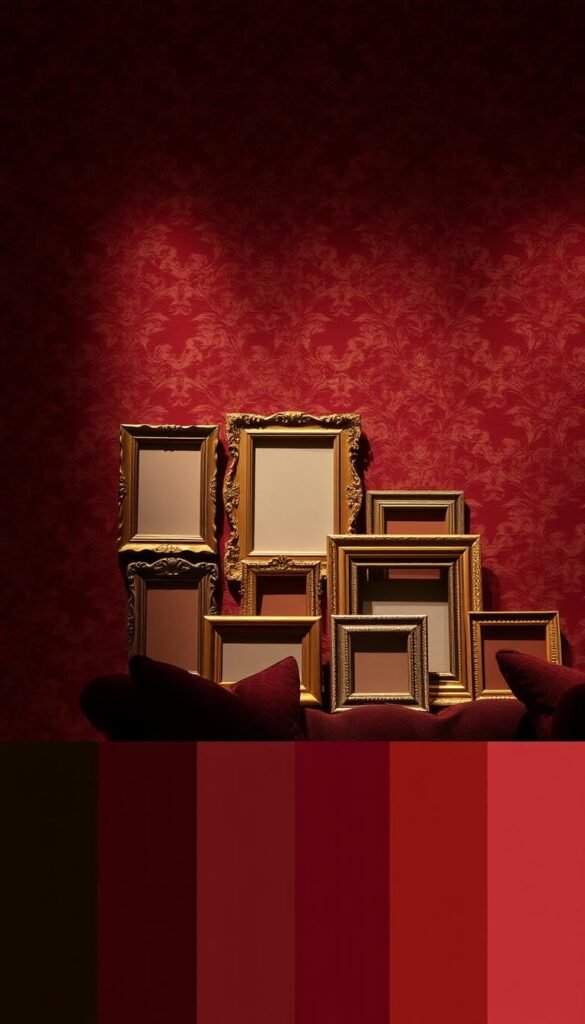
Your color choices set the stage for your entire aesthetic journey. They create the atmosphere that defines your personal sanctuary.
Thoughtful color selection bridges historical grandeur with contemporary sensibilities. You’ll achieve a harmonious blend that feels both luxurious and livable.
Choosing Deep, Opulent Hues
Rich, saturated colors form the heart of this distinctive approach. They capture the essence of historical luxury while making a bold statement.
Consider royal blue for its regal presence. Emerald green brings natural sophistication. Burgundy adds warmth and depth to your environment.
These intense shades create a sense of opulence that characterized the original period. They work beautifully in today’s settings when applied strategically.
Balancing Colors with Neutrals
Neutral tones provide essential balance against dramatic hues. They prevent your space from feeling overwhelming or too dark.
Cream, beige, and taupe offer perfect calming counterparts. They allow your rich colors to shine while maintaining visual comfort.
This balance creates rooms that feel both grand and inviting. You achieve historical character without sacrificing contemporary brightness.
Expert designers recommend the 60-30-10 rule: 60% neutral, 30% main color, 10% accent. This formula ensures harmonious distribution throughout your area.
“Color establishes mood before a single piece of furniture enters the space. It’s the silent language that speaks volumes about your aesthetic intentions.”
Beyond walls, introduce color through textiles and architectural details. Draperies, pillows, and moldings offer excellent opportunities for hue integration.
Your color choices influence how spacious your area feels. Darker tones create intimacy, while lighter shades enhance openness.
This careful balance honors historical traditions while meeting modern living needs. Your home becomes a testament to timeless elegance meeting present-day comfort.
2. Select Furniture that Fuses Eras
Your furniture choices become the bridge between centuries. They create harmony between ornate traditions and clean contemporary lines.
This careful selection process transforms your area into a cohesive masterpiece. You’ll achieve a balanced aesthetic that honors both past and present.
Incorporating Classic Victorian Shapes
Look for pieces with distinctive historical characteristics. Elaborate woodwork shows exceptional craftsmanship from another era.
Carved details and turned legs add beautiful ornamentation. Tufted upholstery with button accents provides traditional comfort.
These elements bring authentic character to your space. They serve as foundation pieces that establish your design theme.
Mixing with Modern, Sleeker Pieces
Balance substantial historical items with lighter contemporary options. Sleek tables and minimalist chairs create visual contrast.
This combination prevents your room from feeling too heavy. It maintains openness while preserving historical charm.
Your furniture arrangement should facilitate easy movement. Create intimate conversation areas that feel both cozy and functional.
“The magic happens when centuries converse through furniture. A Victorian sofa paired with a modern table creates dialogue between eras.”
Evaluate construction quality when selecting pieces. Solid wood frames and hand-finished details ensure longevity.
Your choices should provide both beauty and comfort. Every piece should serve your daily living needs beautifully.
This thoughtful approach creates a space that feels both luxurious and livable. You’ll enjoy historical elegance with contemporary functionality.
3. Adorn Your Walls with Pattern and Detail
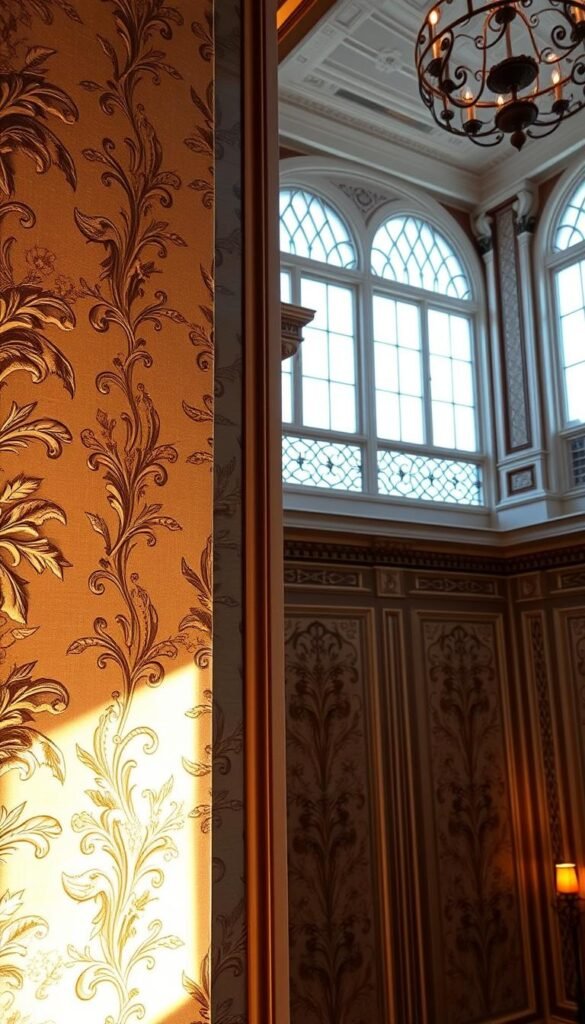
Your walls offer a perfect canvas for expressing historical elegance. They become the backdrop that ties your entire aesthetic together.
Thoughtful wall treatments create depth and character throughout your space. You’ll achieve that perfect blend of ornate tradition and contemporary comfort.
Using Damask and Floral Wallpapers
Patterned wallcoverings bring authentic character to your home. They capture the essence of historical luxury in a modern context.
Damask patterns offer timeless sophistication. Floral prints bring natural beauty indoors. Intricate geometric designs add visual interest without overwhelming.
These elements create focal points that draw the eye beautifully. They work with your existing color scheme to enhance overall harmony.
Contemporary wallpaper materials make installation surprisingly easy. Many options feature peel-and-stick technology for simple updates.
Highlighting Intricate Molding and Panels
Architectural details transform plain surfaces into works of art. They add depth and texture that plain walls cannot achieve.
Crown molding creates elegant transitions between walls and ceilings. Chair rails protect surfaces while adding horizontal interest.
Wall panels with intricate designs bring sophisticated elegance. They create visual breaks that make large areas feel more intimate.
These elements work together to establish your distinctive style. They provide that essential touch of historical charm.
“Wall treatments should complement rather than compete. Your patterns and details should enhance furniture, not overwhelm it.”
Balance bold patterns with solid colors for visual comfort. Use dramatic wallcoverings on accent walls only.
Keep other surfaces in calming neutrals. This approach prevents sensory overload while maintaining character.
| Traditional Wall Elements | Contemporary Adaptations |
|---|---|
| Full-room patterned wallpaper | Accent walls with removable papers |
| Heavy, dark wood molding | Lighter finishes with crisp profiles |
| Ornate plaster details | Lightweight polyurethane alternatives |
| Formal paneling throughout | Strategic panel accents on feature walls |
| Fixed architectural elements | Modular systems for flexible design |
Your wall treatments become the silent foundation of your design. They create atmosphere without demanding attention.
This careful balance honors historical traditions while meeting today’s needs. Your space feels both opulent and perfectly livable.
4. Create a Grand Focal Point
Every great space needs a captivating centerpiece that draws the eye. Your focal point establishes the room’s visual hierarchy and sets the tone for all other decorative choices.
This central feature becomes the heart of your design story. It creates immediate impact while serving practical modern needs.
Designing Around a Statement Fireplace
A magnificent fireplace with intricate details makes a perfect centerpiece. Elaborately carved mantelpieces provide stunning backdrops for this architectural feature.
Select mantels with beautiful woodwork or marble finishes. These pieces showcase exceptional craftsmanship from another era.
Modern fireplace inserts offer improved efficiency while preserving historical charm. You enjoy cozy warmth without sacrificing period authenticity.
Position your seating to face this natural gathering spot. Create intimate conversation areas that feel both cozy and functional.
Accessorize mantels with appropriate Victorian-style elements. Antique clocks, figurines, and decorative items add personal touches.
Utilizing a Gilded Mirror or Artwork
Gilded mirrors with intricate frames reflect light beautifully. They add glamour while creating the illusion of more space.
Oversized artwork makes an excellent alternative when fireplaces aren’t available. Choose pieces with rich colors and ornate frames.
Position these statement pieces to maximize their visual impact. Ensure they complement rather than compete with other elements.
These reflective surfaces enhance natural and artificial lighting. They brighten your area while adding sophisticated elegance.
“A well-chosen focal point anchors the entire space. It provides that essential touch of grandeur while establishing design continuity.”
Consider these placement strategies for different focal elements:
| Focal Element | Optimal Placement | Visual Impact |
|---|---|---|
| Statement Fireplace | Central wall, facing seating | Creates natural gathering point |
| Oversized Mirror | Opposite windows or artwork | Enhances light and space perception |
| Grand Artwork | Eye-level on feature wall | Establishes color and style theme |
| Antique Cabinet | Against longest wall | Adds storage and display space |
| Grand Piano | Corner or room division | Provides functional elegance |
Your focal point should balance beauty with practicality. It becomes the unforgettable feature that makes your space uniquely yours.
This approach honors historical traditions while meeting contemporary living needs. You create a captivating environment that feels both opulent and perfectly functional.
5. Layer Luxurious Upholstery and Textiles
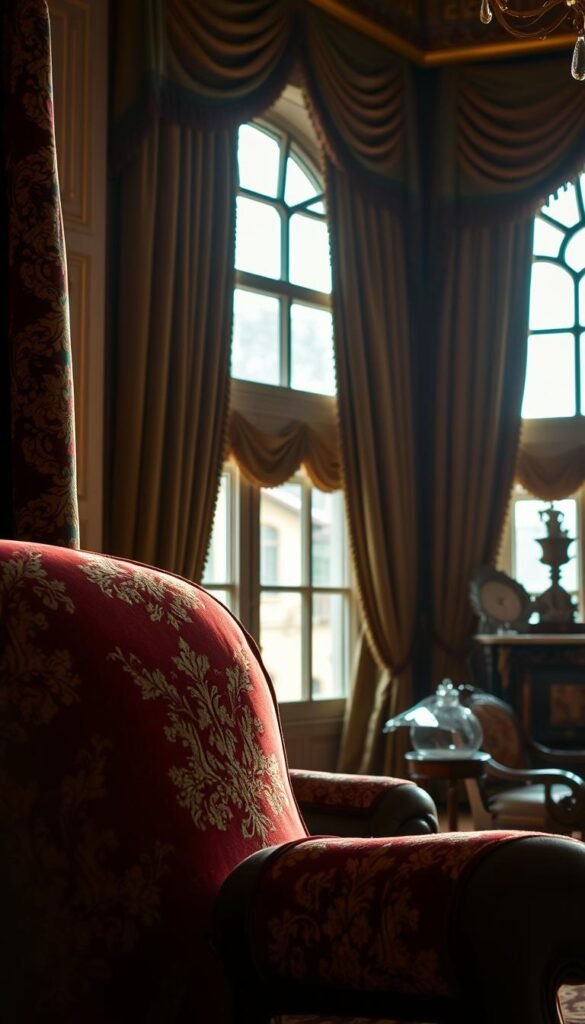
Your fabric choices bring warmth and character to every surface. They transform furniture into inviting pieces that beg to be touched.
Textiles create that essential sensory experience in your home. They add depth and personality throughout your area.
These materials honor historical traditions while meeting today’s needs. You achieve both beauty and practicality in your selections.
The Opulence of Velvet and Brocade
Velvet offers a sumptuous feel under your fingertips. Its rich texture catches light beautifully throughout the day.
This fabric brings instant elegance to any piece it covers. Choose deep jewel tones for maximum visual impact.
Brocade features intricate raised patterns woven into the material. These designs often incorporate metallic threads for extra shimmer.
Both fabrics work wonderfully on statement furniture pieces. They create focal points that draw admiring glances.
“The right textile doesn’t just cover furniture—it tells a story. Velvet whispers luxury while brocade shouts artistry.”
Contemporary versions offer improved durability and easier cleaning. You enjoy historical beauty without high maintenance.
Adding Texture with Tassels and Fringes
Decorative trims bring movement and detail to soft furnishings. They add that final touch of authenticity to your look.
Tassels dance along curtain edges and pillow corners. They create visual interest while honoring traditional craftsmanship.
Fringes provide elegant finishes on upholstery skirts and throws. These elements catch the eye without overwhelming the space.
Use these accents sparingly for maximum effect. Too many can create visual clutter rather than charm.
Modern trims often feature synthetic materials for easier care. They maintain the look while simplifying upkeep.
Understanding fabric combinations helps create harmonious layers. This table shows successful pairings for different effects:
| Primary Fabric | Complementary Textile | Visual Effect | Best Use |
|---|---|---|---|
| Heavy Velvet | Silk Sheers | Rich contrast | Curtain layers |
| Brocade | Linen Blend | Pattern balance | Accent chairs |
| Embroidered Cotton | Leather Accents | Texture mix | Pillow combinations |
| Wool Tweed | Fringed Velvet | Tactile interest | Throw blankets |
| Patterned Damask | Solid Chenille | Visual relief | Sofa upholstery |
Your textile selections influence both comfort and acoustics. Plush fabrics absorb sound while creating cozy atmospheres.
Layering different materials creates depth throughout your area. You achieve that rich, inviting feel characteristic of the era.
Choose fabrics that suit your daily lifestyle needs. Beautiful materials should also withstand everyday use gracefully.
This approach brings historical charm into your present-day home. You create spaces that feel both opulent and perfectly livable.
6. Illuminate with Elegant Victorian Lighting
Proper illumination transforms your area from simply functional to truly magical. The right fixtures create atmosphere while highlighting your beautiful design elements.
Your lighting choices affect how you experience colors and textures. They establish mood for different times of day and activities.
The Centerpiece: A Stunning Chandelier
A magnificent chandelier becomes the jewel of your ceiling. Choose pieces with crystal droplets or intricate metalwork.
These fixtures capture historical craftsmanship while providing ample illumination. Position them above seating areas or central tables.
Modern versions often feature energy-efficient LED bulbs. You get period-appropriate look with contemporary performance.
Ambiance with Sconces and Table Lamps
Wall sconces provide soft, indirect light that enhances architectural details. Their ornate designs add elegance without occupying floor space.
Table lamps with decorated bases offer both task lighting and decorative appeal. Place them beside reading chairs or on console tables.
“Layered lighting creates depth and dimension that single sources cannot achieve. Your space should have multiple light points for different needs.”
Dimmer switches allow you to adjust brightness throughout the day. Create bright light for activities and soft glow for relaxation.
Consider these lighting strategies for different effects:
| Lighting Type | Best Placement | Primary Function |
|---|---|---|
| Chandelier | Room center | General illumination |
| Wall Sconces | Either side of fireplace | Ambiance enhancement |
| Table Lamps | Side tables | Task lighting |
| Floor Lamps | Reading corners | Focused light |
Balance artificial and natural light sources throughout your space. Sheer curtains allow daylight while maintaining privacy.
Warmer bulb temperatures (2700K-3000K) create cozy atmosphere. They make rich colors appear more vibrant and inviting.
Your lighting should serve both practical and aesthetic purposes. It completes your design while making your home truly functional.
7. Choose Timeless and Ornate Flooring
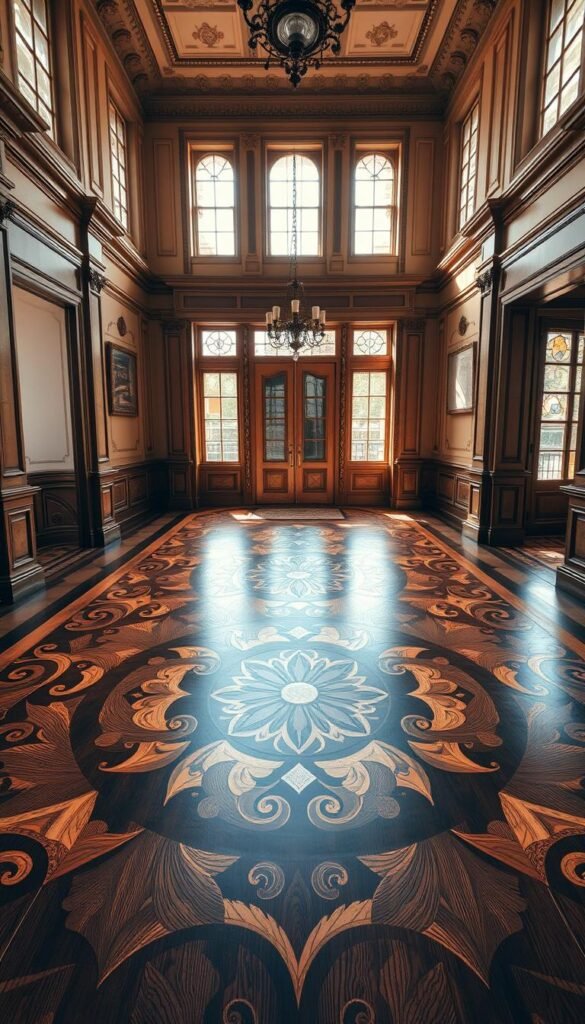
Your floor forms the foundation that ties everything together beautifully. It provides both historical authenticity and modern practicality in your space.
Thoughtful selections honor traditional craftsmanship while meeting today’s needs. You’ll create surfaces that feel both luxurious and perfectly livable.
The Warmth of Hardwood and Parquet
Dark-stained wood brings rich character underfoot. These surfaces capture the essence of historical luxury beautifully.
Intricate patterns add visual interest throughout your area. They create depth that plain floors cannot achieve.
Parquet options offer geometric designs characteristic of upscale interiors. Their interlocking pieces showcase exceptional craftsmanship.
Modern materials replicate historical finishes with improved durability. You enjoy period-appropriate look with easier maintenance.
Layering with Oriental and Plush Rugs
Area rugs add warmth and texture over hard surfaces. They provide acoustic softening while defining zones.
Oriental motifs bring traditional elegance to your decor. Persian patterns offer intricate details that catch the eye.
Plush options like faux fur shaggy rugs create cozy underfoot feel. Their fluffy texture invites relaxation and comfort.
Layering different styles creates depth while maintaining cohesive design. You achieve both visual interest and functional benefits.
“Flooring establishes the stage upon which your entire design story unfolds. It should whisper history while supporting modern living.”
Your choices influence decisions about furniture and accessories. They establish the foundation for your color scheme.
This approach brings historical charm into your present-day home. You create spaces that feel both opulent and perfectly functional.
8. Dress Your Windows for Drama
Your window treatments create a powerful first impression. They frame your view while establishing the room’s character.
These elements balance historical grandeur with practical modern needs. You achieve both beauty and functionality in your selections.
Floor-Length Velvet or Silk Curtains
Heavy fabrics drape beautifully from rod to floor. They add luxurious texture that catches light throughout the day.
Velvet offers sumptuous richness under your fingertips. Silk provides elegant sheen that enhances natural brightness.
Choose colors that complement your overall scheme perfectly. Deep jewel tones make a bold statement against lighter walls.
These materials honor traditional craftsmanship while offering contemporary durability. You enjoy historical beauty with easier maintenance.
“The right curtain doesn’t just cover glass—it transforms the entire wall into a work of art. Fabric choice determines whether your window whispers or sings.”
Consider adding decorative trims for extra luxury. Tassels and fringes bring authentic detail to your treatments.
Elaborate tiebacks create beautiful fabric cascades. They allow maximum light while maintaining elegant appearance.
Complementing with Decorative Shutters
Shutters provide excellent light control and privacy options. Their adjustable louvers let you manage brightness throughout the day.
Ornate designs maintain historical character beautifully. Intricate cutouts and carved details add architectural interest.
These elements work wonderfully alongside fabric treatments. They offer practical benefits while enhancing overall aesthetics.
Modern versions feature improved operation mechanisms. You get period-appropriate look with smoother functionality.
Layered approaches combine the best of both worlds. Fabric softness pairs perfectly with shutter structure.
This balance creates windows that feel both opulent and functional. Your treatments honor the past while serving present needs.
9. Accessorize with Artistic and Antique Details
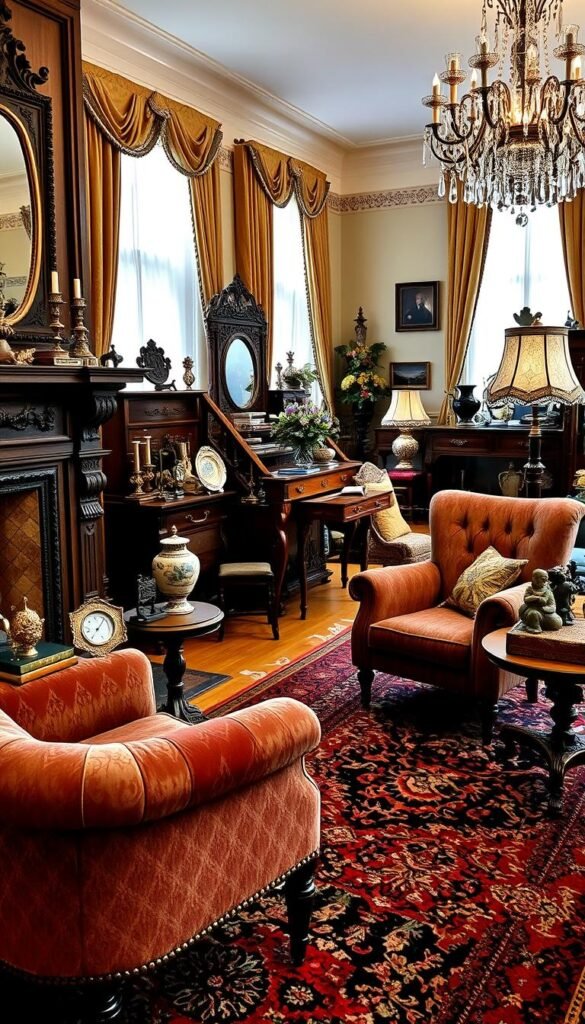
Your final decorative touches bring personality and history into your home. These carefully chosen items complete your aesthetic story beautifully.
Thoughtful accessories add that essential personal touch. They transform your area from decorated to truly lived-in.
Select pieces that reflect your taste while honoring historical elegance. Your choices should feel both curated and comfortable.
Displaying Oil Paintings and Gilded Frames
Artwork with rich colors adds depth to your walls. Choose pieces with detailed brushwork that captures the eye.
Gilded frames bring extra glamour to your displays. Their golden tones catch light throughout the day.
Group smaller pieces together for greater impact. Create visual interest through thoughtful arrangement.
These artistic elements tell stories about your interests. They become conversation starters for guests.
Incorporating Antique Clocks and Vases
Functional antiques serve practical and decorative purposes. They blend usefulness with beautiful design.
Intricate clock faces show craftsmanship from another era. Their gentle ticking adds comforting ambiance.
Crystal vases filled with fresh flowers bring natural elegance. They combine organic beauty with man-made artistry.
These pieces add authenticity without overwhelming your space. They provide focal points that draw admiring glances.
“The best accessories feel collected rather than decorated. Each piece should have meaning beyond mere decoration.”
Balance ornate items with simpler elements. This prevents visual overload while maintaining richness.
Edit your collections regularly to maintain freshness. Remove items that no longer serve your aesthetic.
Mix genuine antiques with quality reproductions. This approach achieves character within budget constraints.
| Accessory Type | Best Placement | Visual Impact | Functional Benefit |
|---|---|---|---|
| Oil Paintings | Eye-level on feature walls | Adds color and artistry | Personal expression |
| Gilded Frames | Grouped in arrangements | Enhances light reflection | Protects artwork |
| Antique Clocks | Mantels or console tables | Shows craftsmanship | Timekeeping function |
| Crystal Vases | Center tables or shelves | Adds sparkle and elegance | Holds floral arrangements |
| Ornate Boxes | Side tables or bookshelves | Adds decorative detail | Storage solution |
Your accessories should reflect your personal journey. They make your space uniquely yours over time.
This approach brings historical charm into your present-day home. You create an environment that feels both curated and comfortable.
10. Elevate Your Ceiling with Architectural Interest
Your fifth wall offers incredible potential for adding character overhead. Often overlooked, the ceiling becomes a canvas for dramatic architectural details that complete your aesthetic vision.
These overhead elements create a truly immersive experience. They draw the eye upward and add that final touch of historical authenticity.
Thoughtful ceiling treatments influence how spacious your area feels. They can make rooms appear more grand and expansive than their actual dimensions.
Installing a Decorative Medallion
Ceiling medallions serve as elegant backdrops for lighting fixtures. These ornamental pieces add historical character right above your head.
Traditional plaster options showcase exceptional craftsmanship. Modern polyurethane alternatives offer lighter weight and easier installation.
Choose a size proportional to your room’s dimensions. A properly scaled medallion enhances rather than overwhelms your space.
Position it centered above your main seating area. This creates a focal point that complements your chandelier beautifully.
Highlighting Cornicing and Crown Molding
Crown molding creates elegant transitions between walls and ceiling. These details add sophistication throughout your home.
Traditional Victorian cornice features intricate profiles and patterns. Preserve these elements to maintain historical authenticity.
Consider painting moldings in contrasting colors or metallic finishes. This technique emphasizes their beautiful designs and craftsmanship.
Proper lighting enhances these architectural elements dramatically. Use subtle uplighting to create beautiful shadow patterns.
“The ceiling should whisper elegance rather than shout ornamentation. Your overhead details should complement rather than compete with other elements.”
Understanding material options helps you make informed choices. This table compares traditional and contemporary ceiling treatments:
| Traditional Materials | Modern Alternatives | Installation Ease | Cost Consideration |
|---|---|---|---|
| Plaster medallions | Polyurethane replicas | Easier installation | More affordable |
| Solid wood molding | MDF options | Lighter weight | Budget-friendly |
| Hand-carved details | Pre-cast elements | Quick application | Reduced labor cost |
| Custom plasterwork | Modular systems | DIY possible | Significant savings |
| Gold leaf finishes | Metallic paints | Simpler maintenance | More accessible |
Balance ornate ceiling treatments with other architectural elements. Your overhead details should create harmony throughout your space.
Consider your room’s proportions when selecting complexity. Larger areas can handle more intricate designs beautifully.
These finishing touches complete your aesthetic journey upward. They add that essential sense of historical elegance overhead.
11. Design a Cozy and Sophisticated Reading Nook
Every home deserves a special corner where you can escape with a good book. This personal retreat combines comfort with beautiful design elements from another era.
Your reading nook becomes a sanctuary within your larger space. It offers quiet relaxation without complete isolation from family activities.
Thoughtful planning creates an area that feels both intimate and inviting. You’ll achieve perfect balance between cozy enclosure and open flow.
Selecting a Plush Wingback Chair
Choose a wingback chair for its classic silhouette and exceptional comfort. High backs and upholstered sides provide wonderful support during long reading sessions.
Look for quality construction with comfortable cushioning. Tufted details add authentic character while enhancing visual appeal.
Position your chair to take advantage of natural light during daytime hours. Place it near windows but avoid direct glare on your reading material.
Add a small side table within easy reach. This surface holds beverages, reading glasses, and your current book selection.
Creating Ambiance with a Floor Lamp
Proper lighting prevents eye strain while setting the perfect mood. A floor lamp with adjustable height offers ideal illumination for reading activities.
Choose a style that complements your overall aesthetic. Ornate bases with fabric shades blend historical elegance with modern functionality.
Position the lamp behind your shoulder to avoid casting shadows on pages. This placement provides adequate light without creating uncomfortable glare.
Consider adding a dimmer switch for adjustable brightness. You can create brighter light for serious reading and softer glow for relaxed browsing.
“A well-designed reading nook becomes your personal escape within the home. It should feel both luxurious and perfectly practical for daily use.”
Accessorize with supportive cushions and warm throw blankets. These textiles add comfort while enhancing the cozy atmosphere.
Incorporate storage solutions like a small bookcase or magazine rack. Keep your favorite reads organized and easily accessible.
Your reading nook becomes a testament to thoughtful design meeting personal needs. It creates that perfect balance of historical elegance and present-day comfort.
12. Integrate Modern Technology Discreetly
Your home deserves both historical charm and today’s conveniences. You can enjoy modern technology while preserving authentic character throughout your space.
This approach requires thoughtful planning and clever solutions. You’ll maintain visual harmony while accessing all your favorite devices.
Concealing TVs in Ornate Cabinets
Televisions often disrupt traditional aesthetics with their sleek appearance. You can hide them beautifully within custom cabinetry.
Choose armoires with intricate carvings and period-appropriate hardware. These pieces should match your existing furniture perfectly.
Consider adding lift mechanisms that raise screens when needed. They disappear seamlessly when not in use.
Built-in units offer excellent alternatives for larger spaces. They provide storage while maintaining cohesive design.
“Technology should serve your lifestyle without dominating your decor. The best integrations are those you notice only when needed.”
Using Smart Home Devices Unobtrusively
Smart technology brings convenience to daily living. You can control lighting, temperature, and entertainment discreetly.
Choose voice-activated assistants with subtle designs. Place them on bookshelves or inside cabinets.
Smart thermostats often feature classic interface options. They maintain traditional appearance while offering modern functionality.
Consider these integration strategies for different technologies:
| Technology Type | Concealment Method | Visual Impact | Functional Benefit |
|---|---|---|---|
| Television | Behind sliding artwork | Completely hidden | Large screen viewing |
| Sound System | Within cabinet bases | Invisible speakers | Immersive audio |
| Smart Hub | Decorated box on shelf | Disguised as decor | Central control |
| Charging Station | Drawer with cutouts | Completely concealed | Organized power access |
| Lighting Control | Wall panel behind painting | Fully hidden | Scene customization |
Plan your technology integration during initial design stages. This prevents awkward additions later.
Wire management deserves special attention. Use cord covers that match your trim color perfectly.
Wireless solutions reduce visible clutter throughout your area. They maintain clean lines characteristic of good design.
Your technology should enhance rather than detract from your aesthetic. You create a space that honors the past while embracing the present.
13. Incorporate Natural Elements for Life and Balance
Nature’s beauty brings wonderful vitality to your elegant interior. These organic touches soften ornate details while adding freshness throughout your area.
Living elements create harmony between historical grandeur and everyday comfort. You’ll achieve a welcoming atmosphere that feels both refined and relaxed.
Arranging Fresh Flowers and Potted Plants
Cut flowers add seasonal color and pleasant fragrance to your surfaces. Choose blooms that complement your rich color scheme beautifully.
Place arrangements on side tables, mantels, and console surfaces. Their organic shapes provide lovely contrast against structured furnishings.
Potted greenery brings lasting life to corners and empty spaces. Ferns and ivies work particularly well in lower light conditions.
Rotate plants seasonally to maintain visual interest year-round. This approach keeps your space feeling fresh and dynamic.
“A single flowering branch can transform an entire room’s energy. Nature’s imperfections add warmth to precise Victorian aesthetics.”
Consider these plant options for different lighting situations:
| Light Condition | Plant Suggestions | Care Level |
|---|---|---|
| Bright Indirect | Orchids, Rubber Plants | Moderate |
| Medium Light | Peace Lilies, Philodendrons | Easy |
| Low Light | Snake Plants, ZZ Plants | Very Easy |
Using Natural Materials like Wood and Wicker
Natural fibers add warmth and texture to your elegant space. They create visual interest while maintaining historical character.
Wicker baskets provide stylish storage solutions throughout your home. Use them for blankets, magazines, or remote controls.
Wooden bowls filled with fruit bring organic beauty to tabletops. They add color and life while remaining functional.
Rattan furniture pieces offer lightweight seating options. Their woven patterns complement intricate Victorian designs beautifully.
These elements reference the historical interest in natural history. They connect your interior to the outdoors in subtle ways.
Your space gains improved air quality from living plants. They also provide sensory pleasure through fragrance and texture.
Balance maintenance needs with your lifestyle preferences. Choose low-care options if you have limited time for plant care.
This approach creates a more welcoming, lived-in atmosphere. Your home feels both elegant and perfectly comfortable.
14. Build In Display Spaces for Collections
Your cherished treasures deserve beautiful settings that highlight their stories. Thoughtful display areas add personality while honoring historical craftsmanship.
These special spots become conversation starters throughout your home. They showcase your passions while enhancing overall aesthetic appeal.
Designing Glass-Front Bookcases and Cabinets
Glass-front units protect delicate items from dust and damage. They allow visual access while keeping your pieces secure.
Look for cabinetry with intricate woodwork and beautiful hardware. Carved details add that authentic touch from another era.
Consider built-in options for a seamless, custom appearance. These solutions maximize your available space efficiently.
Freestanding pieces offer flexibility for future rearrangements. You can move them as your needs change over time.
“The right display case doesn’t just store—it celebrates. Your collections become living art when properly showcased.”
Choose appropriate sizes based on your room’s proportions. Oversized units can overwhelm smaller areas.
Consider these factors when selecting display furniture:
| Collection Type | Ideal Cabinet Style | Glass Type | Lighting Needs |
|---|---|---|---|
| Fine China | Wall-mounted with shelves | Tempered glass | Overhead LED strips |
| Book Collections | Freestanding bookcase | Clear glass panels | Adjustable spotlights |
| Small Sculptures | Curio cabinet with doors | Beveled glass | Integrated interior lights |
| Family Heirlooms | Display table with dome | Anti-reflective glass | Directional track lighting |
| Art Glass | Corner cabinet | UV-protective glass | Dimmable ambient lighting |
Creating Visually Appealing Vignettes
Group related items together to tell cohesive stories. These arrangements create focal points that draw the eye naturally.
Vary heights and textures for dynamic visual interest. Use stands and risers to create dimensional displays.
Include odd numbers of items for balanced compositions. Groups of three or five often work particularly well.
Leave breathing room between your arrangements. Empty space prevents visual clutter and emphasizes your pieces.
Rotate collections seasonally to keep your displays fresh. This approach maintains engagement over time.
Edit your arrangements regularly to remove less meaningful pieces. Quality always triumphs over quantity in good design.
Your display spaces become personal expressions of your journey. They make your home uniquely yours while honoring beautiful traditions.
15. Achieve Harmony in an Open Concept Space
Open floor plans present exciting opportunities for blending different aesthetics. You can create distinct zones while maintaining a cohesive flow throughout your home.
This approach allows you to honor historical traditions while embracing contemporary living. Your space feels both connected and thoughtfully organized.
Strategic planning ensures each area maintains its unique character. You’ll achieve perfect balance between openness and definition.
Blending Styles with Strategic Furniture Placement
Your furniture arrangement creates natural transitions between different zones. Position pieces to guide movement while defining functional areas.
Use sofas and bookshelves as subtle room dividers. These elements establish boundaries without blocking sightlines.
Mix traditional and contemporary pieces throughout your layout. This creates visual interest while maintaining overall harmony.
Consider traffic patterns when arranging your furniture. Ensure easy movement between cooking, dining, and relaxation areas.
“Furniture placement should feel intentional yet effortless. Your arrangement should guide the eye while facilitating daily life.”
Using Area Rugs to Define Victorian Zones
Rugs create visual boundaries without physical barriers. They anchor furniture groupings while adding texture underfoot.
Choose patterns that complement your overall color scheme. Oriental designs work beautifully with rich Victorian palettes.
Layer rugs of different sizes for added dimension. This technique adds warmth while defining specific functional areas.
Position rugs to create intimate conversation spots. These defined spaces maintain that cherished sense of coziness.
Your floor coverings become the foundation for each zone’s identity. They establish character while contributing to overall flow.
Lighting strategies enhance your zonal definitions beautifully. Use different fixture types to reinforce each area’s purpose.
Architectural elements like columns or archways provide natural divisions. They add character while creating subtle transitions.
Your color palette should flow seamlessly throughout the space. Use accent colors to differentiate areas while maintaining cohesion.
This thoughtful approach honors historical elegance while supporting modern living. Your home feels both opulent and perfectly functional.
16. Your Journey to a Sophisticated Modern Victorian Sanctuary
You’ve now explored how to blend historical charm with today’s comforts. Your space reflects a personal journey where every choice matters.
From rich colors to thoughtful furniture, each element contributes to your unique atmosphere. You’ve created harmony between eras.
Remember that your home continues to evolve with your tastes. New pieces and arrangements will keep it fresh and meaningful.
Enjoy the elegant yet functional environment you’ve crafted. It honors tradition while perfectly suiting your daily life.
For more inspiration on rich color palettes and period details, explore classic Victorian living rooms.