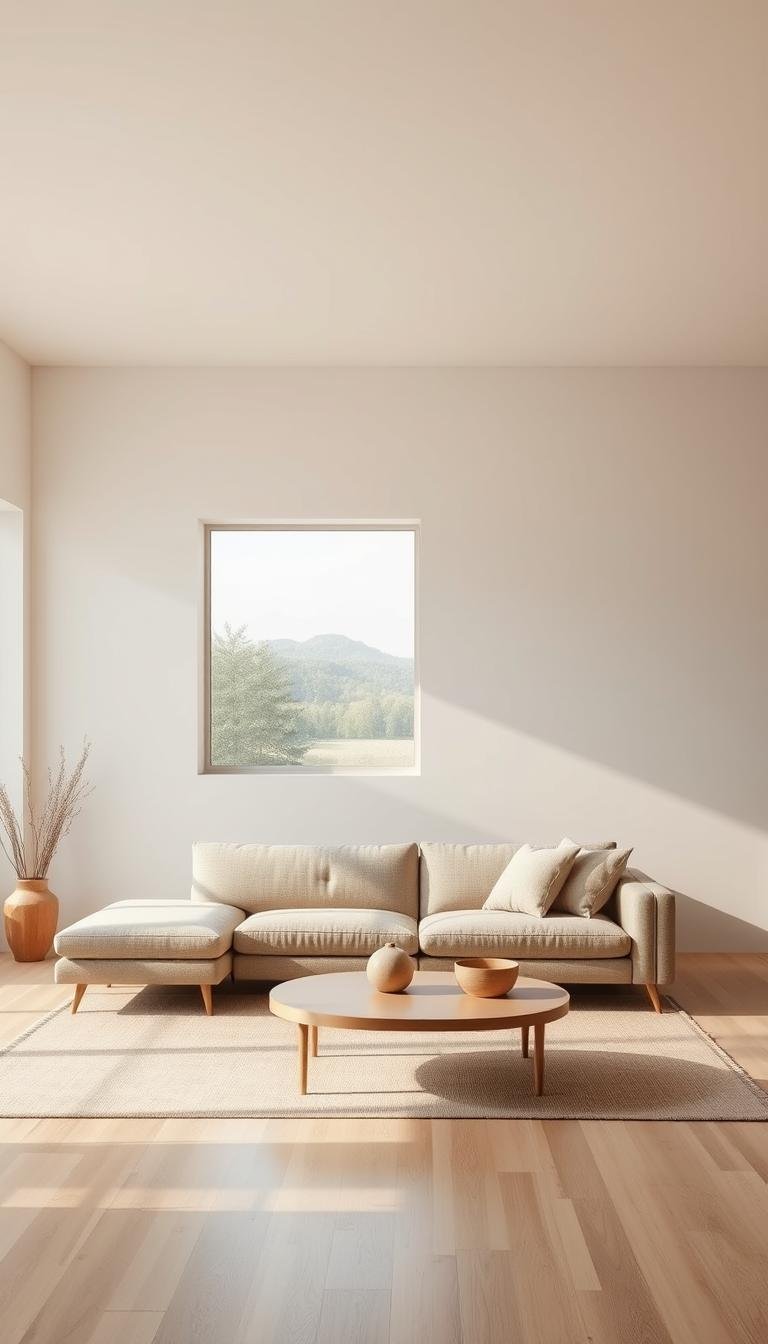
Have you ever walked into a space that instantly made you feel calm and relaxed? That peaceful feeling often comes from a thoughtful approach to your surroundings.
This style focuses on what truly matters in your home. It draws inspiration from Scandinavian functionality and Japanese appreciation for simplicity.
The result is a living area that feels both stylish and purposeful. You create an environment that reduces visual noise and daily stress.
This approach isn’t about empty rooms or cold spaces. It’s about choosing pieces with intention and creating a warm, welcoming atmosphere.
You’ll discover how to transform your space using these principles. We’ll explore color choices, furniture selection, and smart storage ideas.
Get ready to create a sanctuary that reflects your best life. A place where every element serves a purpose and brings you joy.
1. Embrace the “Less is More” Philosophy for a Calmer Home
What if your daily environment could actively reduce stress instead of adding to it? This powerful idea lies at the heart of the “less is more” approach.
This philosophy helps you create a peaceful living room by removing visual noise. Fewer items mean less mental clutter and more breathing room.
Scandinavian principles inspire this thinking. They value simplicity and connection to nature. Your space becomes grounded and functional.
Start with a decluttering session. Ask yourself about each item: “Does this serve a purpose or bring me joy?” Remove anything that doesn’t meet these criteria.
Don’t worry about losing personality. Intentional choices actually enhance your unique style. You’re curating rather than eliminating.
This mindset aligns with 2025 trends focusing on quality over quantity. Invest in pieces that last and matter.
Maintain your calm home by regularly evaluating your space. Keep only what adds value to your daily life.
A simplified environment supports your well-being. It reduces stress and makes everyday living more enjoyable.
Think of your living area as a personal retreat. Every element should contribute to peace and simplicity. Your home becomes a sanctuary that truly serves you.
2. Choose a Neutral Color Palette as Your Foundation
Colors shape how you experience your home. They set the mood before you even sit down.
A neutral palette creates a peaceful backdrop for your life. It lets your favorite pieces shine without competition.
These soft hues make any area seem larger and brighter. They reflect light beautifully throughout the day.
Stick to Beige, White, and Soft Earthy Tones
Think of beige as warm and welcoming. It adds coziness without overwhelming your senses.
White opens up your area and makes it feel fresh. Choose warm whites like alabaster for a soft glow.
Earthy tones bring nature indoors. They create harmony between your furniture and surroundings.
Test your paint choices at different times. Natural light changes how colors appear throughout the day.
Use a Monochromatic Scheme for a Bold Statement
One color family creates instant harmony. Variations in tone add depth without clutter.
Try different shades of beige or gray. Layer them through your upholstery and artwork.
This approach feels sophisticated and intentional. Your room tells a cohesive color story.
Balance your walls with textured materials. Wood accents or woven textiles prevent a flat look.
This warmth makes your space inviting. You create a lived-in feeling that still feels clean.
Your color choices should reflect your personal style. Experiment within neutral ranges to find what you love.
A consistent palette ties everything together beautifully. It makes your intentional selections stand out.
3. Maximize Natural Light to Open Up Your Space
Imagine sunlight dancing across your floors, creating a bright and airy atmosphere. This beautiful effect transforms how you experience your home.
Natural illumination serves as a cornerstone of thoughtful interior planning. It makes areas feel more expansive and welcoming.
Strategic approaches to window placement and furniture arrangement can dramatically enhance this effect. You’ll create an environment that feels both spacious and serene.
Select Sheer or Minimal Window Treatments
Choose window coverings that balance privacy with brightness. Sheer fabrics filter sunlight beautifully while maintaining your view.
Translucent curtains work wonderfully for this purpose. They soften harsh rays without blocking precious illumination.
Consider simple roller shades or slim blinds for a clean look. These options provide control without visual heaviness.
Match your treatments to your window orientation. South-facing windows might need light filtering, while north-facing ones can use brighter options.
Position Furniture to Not Block Windows
Arrange your seating and tables to preserve light pathways. Keep larger pieces away from window areas.
Float sofas and chairs rather than pushing them against walls. This creates breathing room around glass surfaces.
Low-profile furniture works best near windows. It allows illumination to travel deeper into your area.
Consider the sun’s path throughout the day. Observe how light moves and arrange accordingly.
Mirrors strategically placed opposite windows work wonders. They bounce illumination around, making everything feel brighter.
This approach reduces your need for artificial lighting during daytime hours. You’ll enjoy both energy savings and better mood.
Your neutral color palette will glow under natural illumination. Soft tones become more dynamic and warm.
Many current layouts feature floor-to-ceiling glass elements. They create beautiful connections between indoor and outdoor areas.
Make light a priority in your layout decisions. This focus will reward you with a brighter, more joyful home.
4. Invest in High-Quality, Essential Furniture Pieces
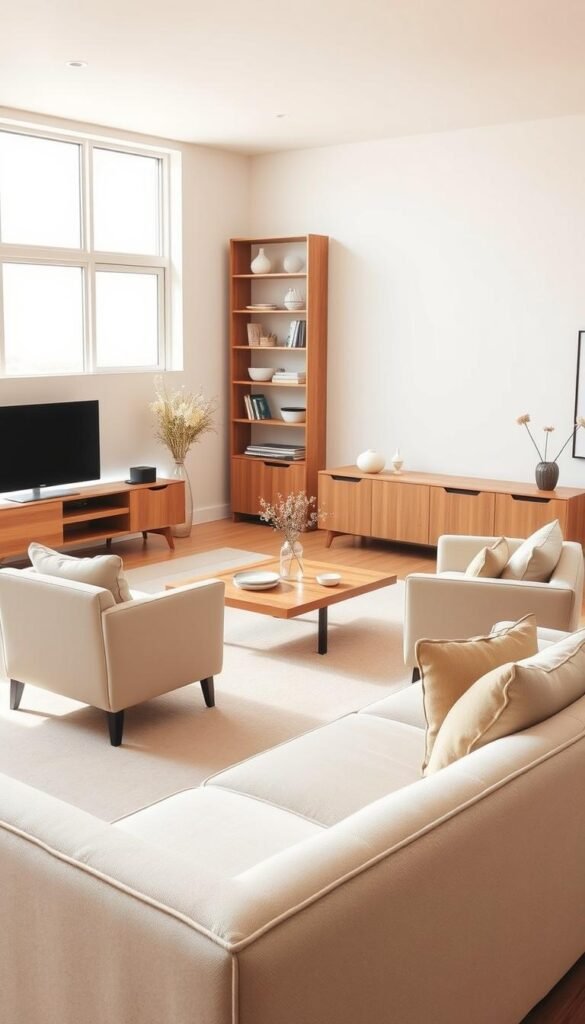
Quality pieces become the foundation of your daily comfort and style. They anchor your space while serving practical needs.
Choosing the right items means thinking long-term. You want things that last and bring you joy every day.
Focus on versatile pieces that work hard for you. Multi-functional items reduce clutter while maximizing utility.
Look for durable construction and timeless appeal. These characteristics ensure your investment pays off for years.
Opt for a Low-Profile Sofa with Clean Lines
Your main seating should offer comfort without bulk. Low-profile designs create an open, airy feeling.
Clean lines contribute to visual harmony. They prevent visual clutter while maintaining elegance.
Consider sectionals with simple silhouettes. They provide ample seating without dominating the space.
Midcentury-inspired sofas work beautifully here. Their tapered legs and streamlined shapes add sophistication.
Select a Functional and Sleek Coffee Table
Your coffee table serves as the room’s centerpiece. Choose one that balances form and function perfectly.
Round wooden tables create soft visual flow. They prevent sharp corners while offering surface space.
Look for hidden storage compartments. These keep remotes and magazines out of sight but within reach.
Materials matter for both look and feel. Solid wood or metal frames offer durability and character.
| Material | Benefits | Considerations |
|---|---|---|
| Solid Wood | Natural warmth, durability, ages beautifully | Higher cost, requires occasional maintenance |
| Metal | Sleek look, very durable, easy to clean | Can feel cold, may show fingerprints |
| Glass | Light appearance, makes space feel larger | Shows smudges, requires frequent cleaning |
| Composite | Affordable, versatile styles available | Less durable, may not age as well |
Remember that fewer, better pieces create cohesion. Your space feels intentional rather than accidental.
Trust your personal taste while prioritizing quality. You’ll create a home that truly reflects your best life.
5. Incorporate Smart and Discreet Storage Solutions
Imagine opening your door to a space where everything has its perfect place. Smart storage keeps your area organized without sacrificing style.
These solutions help maintain visual calm throughout your home. They ensure your favorite items remain accessible yet out of sight.
Utilize Built-In Shelves and Sideboards
Built-in units blend seamlessly with your walls and architecture. They create a custom look that enhances your room’s flow.
Sideboards offer excellent concealed storage for dining essentials or media equipment. Their clean lines maintain your aesthetic while providing function.
Consider floor-to-ceiling shelving for books and decorative pieces. This approach maximizes vertical space without crowding your floor area.
Choose Furniture with Hidden Storage Compartments
Many contemporary pieces offer secret storage spaces. Ottomans with lift-up tops store blankets and pillows perfectly.
Coffee tables with drawers or shelves keep remote controls and magazines organized. These features help maintain clear surfaces throughout your day.
Look for beds with underneath storage for seasonal items. This smart use of space reduces closet clutter significantly.
Assess your lifestyle needs before selecting storage options. Consider what items you use daily versus occasionally.
Multifunctional furniture works wonderfully in compact areas. It maximizes utility without adding extra pieces.
| Storage Type | Best For | Space Impact |
|---|---|---|
| Built-in shelving | Books, decor, display items | Permanent but space-efficient |
| Storage ottomans | Blankets, pillows, miscellaneous items | Dual-purpose seating and storage |
| Sideboards with doors | Dinnerware, media equipment | Discreet horizontal storage |
| Coffee tables with drawers | Remote controls, magazines, small items | Central storage without bulk |
Regularly edit your stored items to prevent accumulation. Ask yourself if each thing still serves a purpose or brings joy.
Good storage solutions make daily living more enjoyable. They help create that peaceful environment you deserve.
6. Add Warmth and Texture with Natural Materials

Have you noticed how some spaces feel instantly welcoming while others seem cold? The secret often lies in the materials you choose for your home.
Natural elements bring organic warmth and visual interest to any area. They prevent that sterile feeling sometimes associated with simplified interiors.
These materials create a tactile experience that engages your senses. You’ll enjoy both the look and feel of your thoughtfully curated space.
Introduce Wood Elements Through Furniture and Accents
Wood brings immediate warmth and character to your environment. Its natural grain patterns add visual depth without clutter.
Light wood tones work particularly well for creating peaceful atmospheres. Think oak, ash, or maple for furniture pieces and accents.
A wooden coffee table becomes both functional and beautiful. It serves as a natural centerpiece that grounds your seating area.
Consider open shelving units in light wood finishes. They display your favorite items while adding warmth to walls.
Smaller wood accents make big impacts too. Try a beautiful cutting board on your counter or wooden frames for artwork.
Layer in Textiles like Wool, Linen, and Mohair
Soft textiles add comfort and coziness to your simplified space. They create that lived-in feeling while maintaining clean lines.
Wool throws offer wonderful texture and warmth during cooler months. Their natural fibers feel luxurious against your skin.
Linen brings a relaxed, casual elegance to any room. Its slight crinkle adds visual interest without looking messy.
Mohair blankets provide incredible softness and depth. Their fuzzy texture creates beautiful contrast against smoother surfaces.
Start with one textured throw on your sofa. Add pillows in complementary fabrics for layered comfort.
These natural materials connect your interior to the outdoors. They enhance the calming effect of your thoughtfully arranged space.
Balance is key when working with multiple textures. Too many competing elements can feel overwhelming rather than harmonious.
| Material | Best Uses | Special Qualities |
|---|---|---|
| Wood | Furniture, shelving, decorative accents | Adds warmth, natural grain patterns, durability |
| Wool | Throws, area rugs, upholstery | Excellent insulation, natural texture, durable |
| Linen | Curtains, pillow covers, slipcovers | Breathable, casual elegance, improves with age |
| Mohair | Blankets, accent pillows, upholstery | Extremely soft, luxurious feel, visual depth |
Earthy materials continue gaining popularity for good reason. They reflect our growing appreciation for comfort and sustainability.
Don’t be afraid to mix materials for added interest. Combine wood with metal accents or layer different textiles together.
Your space should feel both intentional and inviting. Natural materials help you achieve that perfect balance.
7. Create Definition with Strategic Room Dividers
How do you maintain openness while creating clear zones in your home? Strategic dividers offer the perfect solution for defining areas without building walls.
These elements help organize your layout with elegance and purpose. They guide movement while preserving that airy feeling you love.
Use Wood Slat Panels for an Airy Separation
Wood slat panels create beautiful visual separation without closing things off. Their vertical lines add rhythm and texture to your space.
These dividers work wonderfully between living and dining areas. They provide definition while maintaining sightlines and light flow.
Many contemporary examples show panels doing double duty. Some incorporate shelving for books or display items.
Others serve as artistic backdrops for your favorite decor pieces. This multifunctional approach maximizes both form and function.
Consider your room’s layout when placing dividers. Position them to enhance traffic patterns and conversation areas.
Think about light conditions too. Slat designs allow illumination to filter through beautifully.
These elements contribute to overall balance through clean lines and natural materials. They create cohesion with your existing furniture and style.
You have options for installation depending on your comfort level. DIY kits offer customizable solutions for handy homeowners.
Professional installation ensures perfect alignment with your architecture. Either way, maintain those minimalist aesthetics you appreciate.
Architectural elements like these add structure without heaviness. They represent current trends toward purposeful details.
Think of dividers as both functional and decorative. They enhance your overall design while solving practical needs.
Feel free to experiment with different divider styles. Find what works best for your particular room configuration.
You might try partial-height panels or full-room screens. Each option creates unique effects and functions.
| Divider Type | Best Placement | Visual Impact |
|---|---|---|
| Full-height wood slats | Between distinct zones | Strong definition, maintains airflow |
| Partial-height panels | Creating subtle separation | Open feeling, maintains sightlines |
| Mobile screens | Flexible room arrangements | Temporary definition, versatile use |
| Combined with storage | High-traffic areas | Multifunctional, space-efficient |
Strategic dividers truly transform how you experience your home. They create order without sacrificing that open, airy quality.
Your space gains both practicality and beauty. That’s the perfect combination for joyful daily living.
8. Follow Modern Minimalist Living Room Design Tips for a Cohesive Look
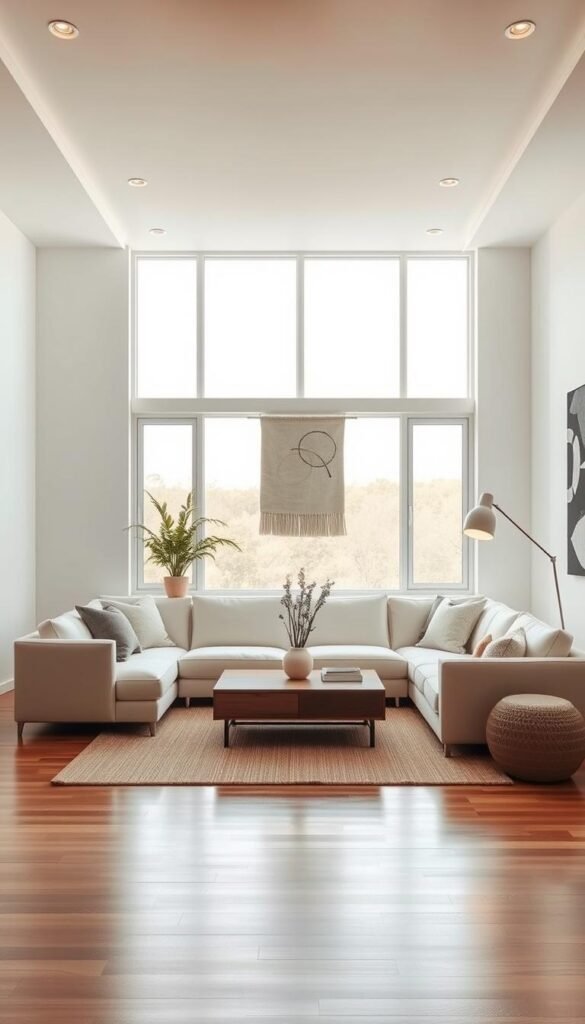
When everything in your home works together beautifully, you create a special kind of harmony. This unified approach makes your space feel both intentional and inviting.
Cohesive design balances simplicity with comfort perfectly. You achieve this through a restrained palette and thoughtful furniture selections.
Combining elements like color, furniture, and storage creates a unified environment. Each piece should complement the others without competing for attention.
Midcentury spaces demonstrate this principle wonderfully. They show how clean lines and natural materials create timeless appeal.
Consistency in materials and colors ensures all elements work together. Stick to two or three main materials throughout your area.
Your neutral foundation makes this easier to achieve. Build upon it with complementary textures and accents.
Review your choices periodically as your needs evolve. What worked last year might need adjustment today.
Draw inspiration from established design movements for lasting results. Bauhaus principles emphasize function and form working together.
Japanese traditions show how empty space can feel full of meaning. Both approaches create environments that stand the test of time.
This cohesion reduces visual stress significantly. Your eyes can rest instead of constantly processing clutter.
Planning tools help maintain this harmonious approach. Try mood boards or design apps before making changes.
Cohesion doesn’t mean sacrificing personality. You can still include personal touches within your framework.
Your space should reflect your unique story while maintaining peace. That balance creates true comfort and joy.
| Design Element | Cohesion Strategy | Visual Impact |
|---|---|---|
| Color Palette | Stick to 3-4 main colors throughout | Creates harmony and flow between areas |
| Materials | Repeat 2-3 materials in different applications | Adds depth while maintaining unity |
| Furniture Style | Choose pieces with similar design language | Ensures everything feels intentionally selected |
| Lighting | Use consistent temperature and style | Creates mood continuity throughout the day |
Trust your instincts when creating your harmonious home. You know what feels right for your daily life.
These approaches help you build a space that truly serves you. Every day becomes more peaceful and enjoyable.
9. Select a Single Piece of Art for a Focused Accent
Have you considered how one carefully chosen artwork can transform your entire living space? This intentional approach creates a powerful focal point without visual clutter.
Choose one exceptional piece that commands attention. This strategy makes your selection feel purposeful rather than accidental.
A vibrant red abstract painting creates wonderful contrast against neutral walls. It adds personality without overwhelming your serene environment.
Your artwork should complement your existing color palette and overall style. It should enhance your space rather than distract from it.
Center your chosen piece on a main wall for maximum impact. Alternatively, use it to balance other elements in your layout.
Current trends favor meaningful art that reflects personal taste. Your selection should contribute to your room’s unique story.
Opt for a simple frame or clean mounting method. This keeps the focus on the art itself rather than its presentation.
Invest in quality pieces that you genuinely love. Your artwork becomes a lasting accent that grows with you.
Start with just one piece and observe its effect. You might find additional artwork unnecessary once you see how complete your space feels.
Even a single well-chosen artwork creates a curated, finished look. It demonstrates that thoughtful simplicity always triumphs over excess.
10. Incorporate Plants for a Touch of Organic Life
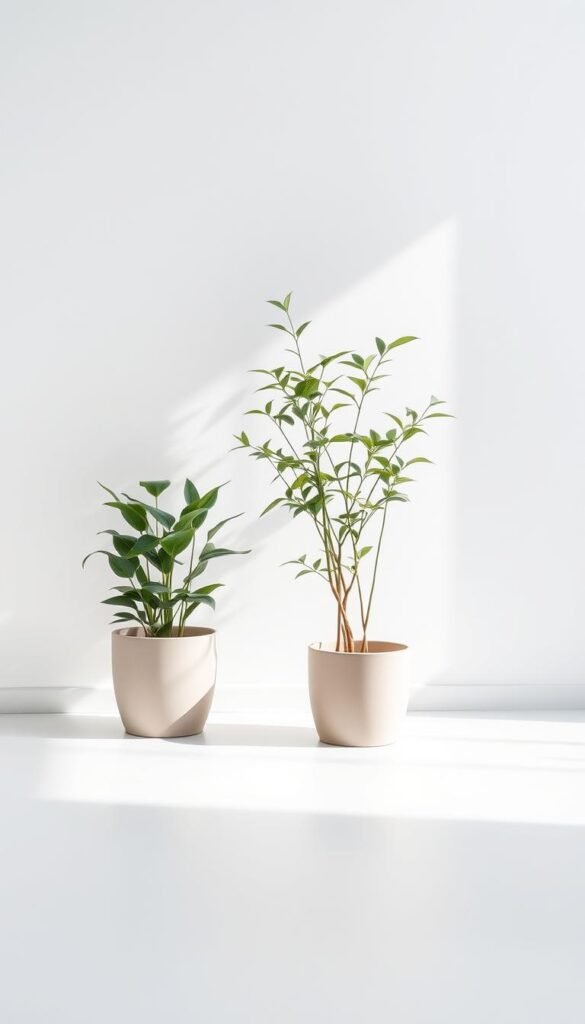
Have you thought about how living greenery can transform the energy of your home? These natural elements bring vitality and freshness to your surroundings.
Plants improve air quality by filtering pollutants and releasing oxygen. They create a healthier environment for you and your family.
Greenery adds a soft, organic element that beautifully contrasts with clean lines. It prevents your area from feeling too sterile or cold.
Think about a large potted tree in a neutral-toned area. This single element adds life without creating visual chaos.
Some excellent choices thrive indoors with minimal care:
- Snake plants tolerate low light and irregular watering
- ZZ plants handle various light conditions gracefully
- Pothos vines add trailing beauty to shelves
- Succulents offer interesting shapes and textures
Place your greenery thoughtfully to fill empty corners or accent surfaces. Avoid overcrowding – let each plant have breathing room.
This approach connects to biophilic design trends. Bringing nature inside enhances well-being and creates calming environments.
Choose planters in neutral materials like terracotta, concrete, or simple ceramics. These maintain your aesthetic while showcasing the plants.
Start with just one or two green companions. See how they affect your room feel before adding more.
Even small plants make a big impact on your space’s ambiance. A single succulent on a side table adds life and personality.
Your area becomes more welcoming and lived-in with these natural touches. They remind you of the beauty found in simple, growing things.
11. Prioritize Clean Lines and Interesting Silhouettes
Have you ever noticed how some furniture seems to command attention through its shape alone? The visual power of strong silhouettes creates instant impact in your home.
These intentional shapes guide your eye through the space beautifully. They create rhythm without adding extra items or clutter.
Your furniture pieces should work together like a well-choreographed dance. Each element contributes to the overall harmony through its form.
Mix Straight Lines with Subtle Curves for Balance
Combining different line types prevents your space from feeling too rigid. Straight edges offer crispness while curves add softness.
Think about pairing a angular sofa with a round coffee table. This combination feels both structured and inviting.
Many contemporary examples show this balanced approach. You’ll notice how curved elements soften sharper architectural details.
This mix creates visual interest without overwhelming your senses. Your eyes enjoy moving between different shapes.
Consider the flow between your furniture selections. Ensure they complement rather than compete with each other.
Even small curved accents make a difference. A rounded vase or oval mirror can soften a room full of straight lines.
Strong silhouettes help your pieces stand out as intentional choices. They demonstrate thoughtful selection rather than random accumulation.
Evaluate your current furniture for line consistency. Make sure everything supports your overall aesthetic vision.
Architectural details continue trending for good reason. They add character without requiring additional decorations.
Feel free to play with proportions and shapes. Your personal touch makes the space uniquely yours.
This balance between straight and curved elements creates comfort. Your home feels both structured and welcoming.
| Line Type | Best Applications | Visual Effect |
|---|---|---|
| Straight lines | Sofas, shelving, tables | Creates structure and order |
| Gentle curves | Chairs, lamps, accessories | Adds softness and movement |
| Geometric shapes | Rugs, artwork, lighting | Provides modern appeal |
| Organic forms | Vases, bowls, natural elements | Brings natural warmth |
This approach draws inspiration from various design movements. Bauhaus principles show how form and function work together perfectly.
Your space becomes more engaging through this thoughtful balance. Every day feels more comfortable and visually pleasing.
Trust your instincts when arranging these elements. You’ll create a home that truly reflects your personal style.
12. Use an Area Rug to Anchor Your Living Space
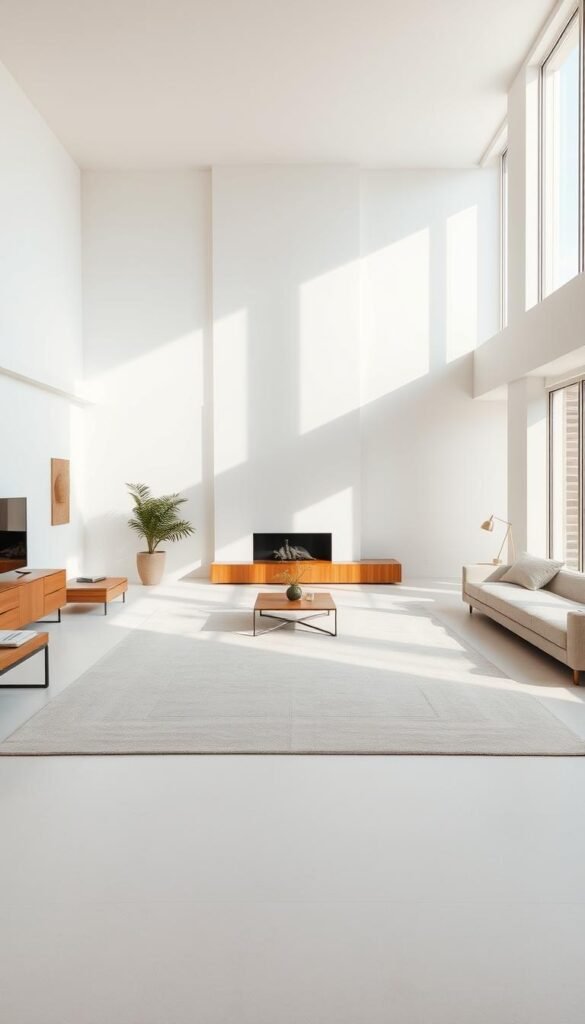
Have you ever noticed how a beautiful floor covering can completely transform how you experience your home? The right choice creates visual harmony while adding comfort underfoot.
Your floor covering serves as the foundation for your furniture arrangement. It defines conversation zones and creates a sense of order.
Natural fiber options like jute or wool add wonderful texture without overwhelming your aesthetic. They complement neutral palettes beautifully while providing warmth.
Consider these benefits when selecting your perfect piece:
- Creates visual boundaries for seating arrangements
- Adds softness and comfort underfoot
- Introduces subtle pattern or texture interest
- Protects flooring while enhancing acoustics
Size matters when choosing your floor covering. Ensure it fits your room proportions properly.
For most seating arrangements, select a size that allows all furniture legs to rest comfortably on the surface. This creates a cohesive, anchored look.
Neutral colors work best for maintaining visual calm. Stick to beige, gray, or natural fiber tones that complement your existing palette.
Many homeowners prefer easy-to-clean options for practical daily living. Low-pile wool or synthetic blends offer durability and simple maintenance.
Current trends favor sustainable materials that align with thoughtful consumption. Natural fibers like jute, sisal, and wool continue gaining popularity.
Center your selection properly within your seating arrangement. This placement ties everything together beautifully.
For added interest, consider layering a smaller patterned rug over a larger neutral one. This technique works well if it fits your overall approach.
A well-chosen floor covering makes your space feel complete and intentional. It’s that final touch that brings everything together harmoniously.
13. Illuminate Your Space with Thoughtful Lighting
Have you ever felt how the right glow can completely change your mood at home? Lighting transforms your area from functional to magical with just the flip of a switch.
Your illumination choices affect both practicality and atmosphere. They create warmth while highlighting your favorite elements.
Layered lighting makes your area versatile for different needs. You’ll enjoy both bright task lighting and soft ambient glows.
This approach combines fixed fixtures with movable options. Each type serves a specific purpose in your daily life.
Utilize a Statement Pendant Light as a Focal Point
A single striking pendant becomes an artistic centerpiece. It draws attention upward while providing essential overhead illumination.
Choose fixtures with clean shapes and neutral finishes. Chrome or brushed metal options add focus without overwhelming your aesthetic.
Position your statement piece above key areas like seating groups. This creates visual hierarchy and functional brightness.
Many current examples show how one dramatic fixture anchors a room. It demonstrates that less can indeed be more impactful.
Add Warmth with Portable Table and Floor Lamps
Movable lamps offer wonderful flexibility throughout your space. You can adjust them seasonally or for different activities.
These portable options create cozy pools of light where you need them. They make reading or relaxing more comfortable and inviting.
Look for designs like the Grasp lamp that combine beauty and function. Their clean lines maintain your preferred style while providing practicality.
Place floor lamps beside seating areas for soft illumination. Table lamps work beautifully on surfaces for targeted task lighting.
Dimmable options give you complete control over ambiance. You can adjust brightness to match your mood or time of day.
Energy-efficient bulbs align with thoughtful consumption values. They reduce environmental impact while providing excellent illumination.
Natural daylight remains your primary source during daytime hours. Artificial lighting takes over gracefully as evening approaches.
Position lights to highlight special areas like artwork or architectural details. This creates depth and interest without adding physical items.
| Lighting Type | Primary Function | Best Placement |
|---|---|---|
| Statement Pendant | Ambient illumination, focal point | Above seating areas or room center |
| Floor Lamps | Task lighting, accent illumination | Beside chairs or in room corners |
| Table Lamps | Task lighting, surface illumination | On side tables or console surfaces |
| Dimmable Options | Adjustable ambiance control | Throughout space for flexibility |
Your lighting should feel intentional rather than accidental. Each fixture contributes to both function and beauty.
Experiment with different bulb temperatures for varied effects. Warmer tones create coziness while cooler ones offer clarity.
This thoughtful approach makes your home adaptable to any occasion. You’ll enjoy both bright gatherings and quiet evenings equally.
Good lighting truly completes your carefully curated environment. It adds that final layer of comfort and functionality.
14. Maintain a Clutter-Free Surface Policy
Imagine walking into your home and seeing only clear, inviting surfaces. This simple practice transforms how you experience your space every day.
A clutter-free approach keeps your room feeling open and peaceful. It reduces visual noise and makes cleaning much easier.
Studies show that tidy surfaces promote mental clarity and reduce stress. Your mind can relax when your environment feels orderly.
Start with your coffee table and shelves. Keep only essential or beautiful items on display. Everything else should have a proper home.
Hidden storage solutions work wonders for maintaining this policy. As BHG suggests, built-ins and smart furniture keep necessities out of sight but accessible.
Develop simple daily habits to prevent accumulation. Put things away immediately after use. This small effort prevents big messes later.
Use trays or organizers for items you need regularly. Keep remote controls, magazines, or reading glasses neatly contained. This maintains intention while reducing visual chaos.
Digital minimalism helps reduce physical paperwork. Opt for digital bills and statements when possible. Fewer papers mean less surface clutter.
Regularly audit your surfaces throughout the week. Ask yourself: “Does this item serve a purpose or bring joy?” Remove anything that doesn’t meet these criteria.
This policy supports low-maintenance living beautifully. You spend less time cleaning and more time enjoying your peaceful environment.
Remember that small consistent efforts create big results. Your clear surfaces will become a source of daily calm and satisfaction.
15. Embrace Warm Minimalism for a Lived-In Feel
What if your peaceful space could feel both simple and wonderfully cozy? This beautiful balance defines the essence of warm minimalism.
This approach combines clean principles with inviting comfort. It creates a room feel that’s both organized and welcoming.
Warm minimalism uses soft textures and earthy colors to add depth. Think linen throws, mohair pillows, and warm beige tones.
These elements replace starkness with gentle character. Your space becomes more habitable while maintaining its clean foundation.
Many designers now favor this softer approach over cold austerity. It makes simplified living more accessible and enjoyable for everyone.
Japanese traditions greatly influence this style. They value harmony with natural materials and thoughtful simplicity.
Start by adding one cozy element at a time. A wooden bowl on your table or a soft throw on your sofa makes a difference.
Consider these warm additions for your space:
- Plaster walls with subtle texture variations
- Rich wood tones in furniture and accents
- Soft lighting that creates gentle pools of warmth
- Natural fiber rugs underfoot
This approach supports your well-being beautifully. Your space becomes a true retreat that nurtures rather than restricts.
Evaluate your area for warmth opportunities. Look at lighting, textiles, and natural materials that could enhance comfort.
Remember that warm minimalism still values clutter-free living. It simply adds a softer, more inviting touch to your environment.
| Element | Warmth Contribution | Implementation Tip |
|---|---|---|
| Textiles | Adds softness and tactile comfort | Layer linen and mohair in neutral tones |
| Wood Accents | Brings natural warmth and character | Choose pieces with visible grain patterns |
| Lighting | Creates cozy ambiance and mood | Use warm-white bulbs in dimmable fixtures |
| Color Palette | Sets overall warm foundation | Stick to beige, cream, and soft earth tones |
This design philosophy makes your home feel lived-in and loved. It proves that simplicity and comfort can coexist beautifully.
Your space becomes a sanctuary that truly reflects balanced living. Every day feels more peaceful and inviting.
16. Enjoy Your Peaceful and Stylish Clutter-Free Retreat
Your transformed area now serves as a personal sanctuary. It reflects thoughtful choices from color to storage solutions.
This approach reduces daily stress and maintenance. Your home supports well-being through simplicity and order.
Remember to periodically evaluate your space. Mindful additions keep it fresh yet intentional.
Host gatherings or relax in your calm environment. It showcases your unique taste within a clean framework.
Share your success and continue exploring these principles elsewhere. Your journey toward simpler living has just begun!