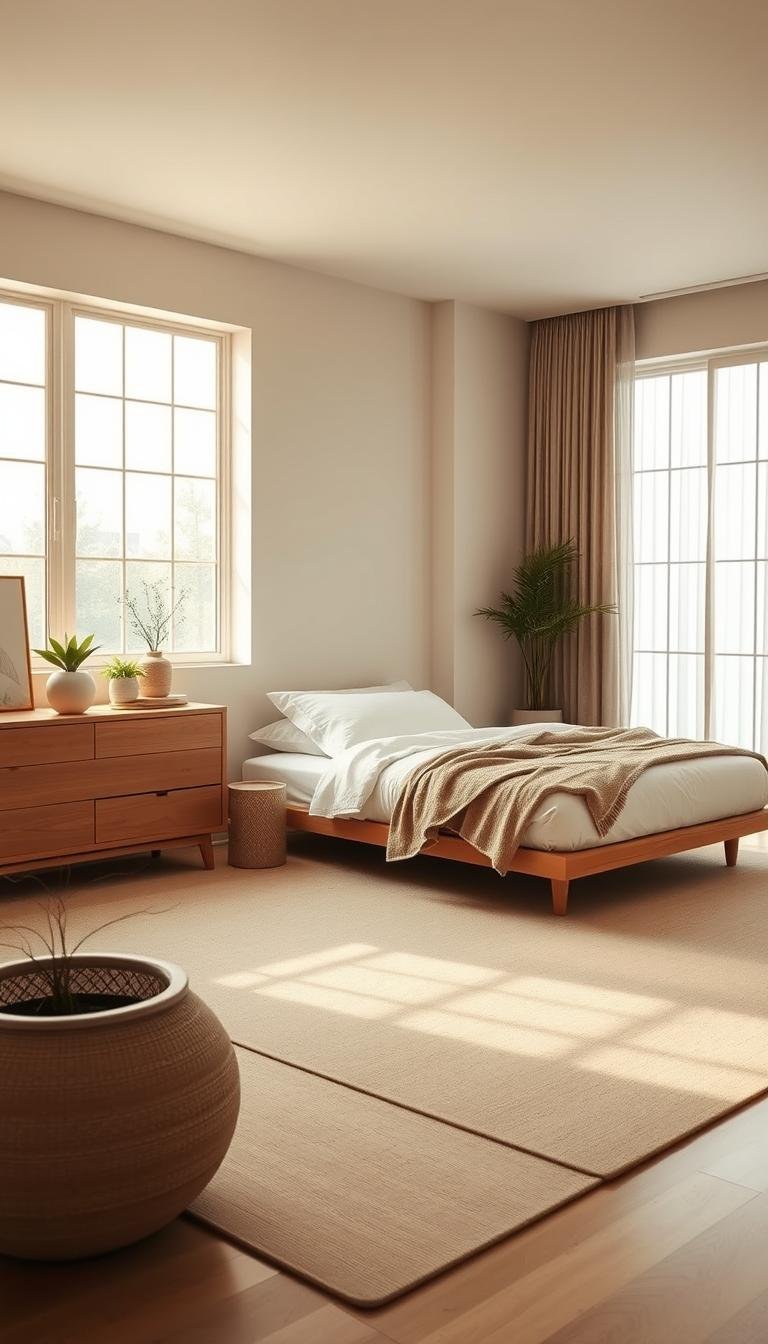
Imagine a space where Japanese minimalism meets Scandinavian warmth. This beautiful fusion creates a peaceful retreat for your home.
This design approach blends simplicity with natural materials. It focuses on functionality while creating a haven for relaxation.
The popularity of this aesthetic continues to grow. Its timeless principles are rooted in nature and calm.
Your sleeping area can become more than just a place to rest. It can transform into your personal sanctuary for rejuvenation.
This versatile approach works with various room sizes and layouts. You can tailor it to match your unique preferences.
We’ll explore color palettes, textures, and accent walls in upcoming sections. Let’s begin this journey toward creating your perfect retreat.
1. What Is Japandi Design and Why It’s Perfect for Your Bedroom
At its heart, this aesthetic represents a thoughtful blend of Eastern simplicity and Nordic comfort. It brings together two distinct approaches to create something truly special for your living space.
The japandi design philosophy merges Japanese minimalism with Scandinavian functionality. Both traditions share a deep respect for natural materials and clean lines.
Core principles focus on creating a calming atmosphere through uncluttered spaces. This approach values quality over quantity in every element.
Your sleeping area benefits greatly from this philosophy. The emphasis on organic elements promotes true relaxation and rest.
This bedroom design approach balances beauty with practicality. Every piece serves a purpose while contributing to the overall aesthetic.
The cultural roots run deep with Japanese Zen philosophy and Scandinavian hygge. Both traditions emphasize comfort and tranquility in daily life.
You’ll notice a distinct absence of excess ornamentation. Form follows function in this elegant approach to decor.
Sustainability plays a key role through reclaimed or eco-friendly materials. This makes your space not only beautiful but environmentally conscious.
The timeless nature of this aesthetic ensures it won’t date quickly. Both Japanese and Scandinavian influences have proven their lasting appeal.
Earth tones, natural textures, and minimalist decor create a cohesive look. Everything works together to establish a harmonious feel.
This way of designing transforms your personal space into a serene retreat. It adapts perfectly to contemporary living while maintaining its peaceful essence.
Your sleeping environment becomes more than just a room. It evolves into a sanctuary tailored to your need for calm and rejuvenation.
2. Combine Neutral and Natural Tones for a Warm, Inviting Feel
Colors create the foundation for your peaceful retreat. They set the mood before you even add furniture or decor.
The right combination brings harmony to your space. It blends Scandinavian lightness with Japanese earthiness beautifully.
Choose a Muted Color Palette
Begin with soft, neutral bases for your walls and larger pieces. Off-whites, creams, and gentle grays establish calm.
These tones create an airy foundation. They make your space feel larger and more open.
Designer Julee Wray of Truss Interiors recommends this approach. She uses muted tones as the canvas for deeper accents.
Your colour palette should whisper rather than shout. Soft shades promote relaxation and mental clarity.
Incorporate Earthy Hues Like Deep Browns and Soft Greens
Add nature-inspired colors for depth and character. Deep browns, soft greens, and subtle pinks work wonderfully.
These earthy tones bring warmth to your neutral base. They create visual interest without overwhelming your senses.
Consider the psychological effects of each hue. Greens and browns promote relaxation and connection to nature.
Layer shades within the same color family for subtle variation. This creates richness while maintaining simplicity.
Draw inspiration from outdoor elements like soil, foliage, and sky. Your space will feel grounded and peaceful.
| Color Type | Examples | Best Uses | Psychological Effect |
|---|---|---|---|
| Neutral Bases | Off-whites, creams, light grays | Walls, large furniture | Creates airy, open feeling |
| Earthy Accents | Deep browns, soft greens, light blues | Bedding, decor, accent walls | Promotes relaxation |
| Natural Tones | Subtle pinks, gray-ish greens | Textiles, artwork | Adds warmth and depth |
| Wood Tones | Light oak, walnut, ash | Furniture, flooring | Brings organic warmth |
Test your color choices in your actual bedroom lighting. Colors change throughout the day with natural light.
Remember that your palette sets the tone for everything else. It enhances all other elements in your space.
Avoid bright or bold colors that disrupt tranquility. Stick with tones that evoke simplicity and peace.
Your carefully chosen colors work with natural materials like wood. Together they create that perfect warmth you desire.
This approach transforms your bedroom into a true sanctuary. It becomes a place where you can truly unwind and recharge.
3. Incorporate Different Wood Tones to Add Depth and Interest
Playing with various wood tones creates visual depth that elevates your personal sanctuary. This approach brings natural warmth and organic beauty to your space.
Mixing different stains and finishes adds character without overwhelming your senses. It creates a layered look that feels both intentional and effortless.
Mix Light and Dark Wood Stains
Combine light woods like white oak or ash with darker varieties. Walnut and cherry stains create beautiful contrast against lighter tones.
This mixing technique prevents your space from feeling too uniform. It adds visual interest while maintaining harmony.
Truss Interiors demonstrates this beautifully with their patterned wood dresser. The combination creates rhythm and movement in the space.
Consider these combinations for your key furniture pieces:
- Light oak bed frame with walnut nightstands
- Ash dresser paired with cherry wood accents
- Mixed wood tones in shelving or storage units
Use Raw Materials for an Authentic Look
Unfinished wood brings natural texture and authenticity to your design. It celebrates the material’s inherent beauty and character.
Raw wood elements work beautifully with other natural materials. Stone surfaces and linen textiles complement unfinished wood perfectly.
This approach aligns with sustainable principles too. Reclaimed wood adds history and eco-friendly appeal to your space.
Japanese architecture often features exposed wood in minimalist designs. Draw inspiration from this tradition for an authentic feel.
Remember to balance wood tones with neutral colors. This prevents the space from feeling too heavy while maintaining warmth.
Your wood elements should work together to create a cozy, grounded atmosphere. They become the foundation of your peaceful retreat.
4. Layer Different Textures for a Tactile and Tranquil Aesthetic
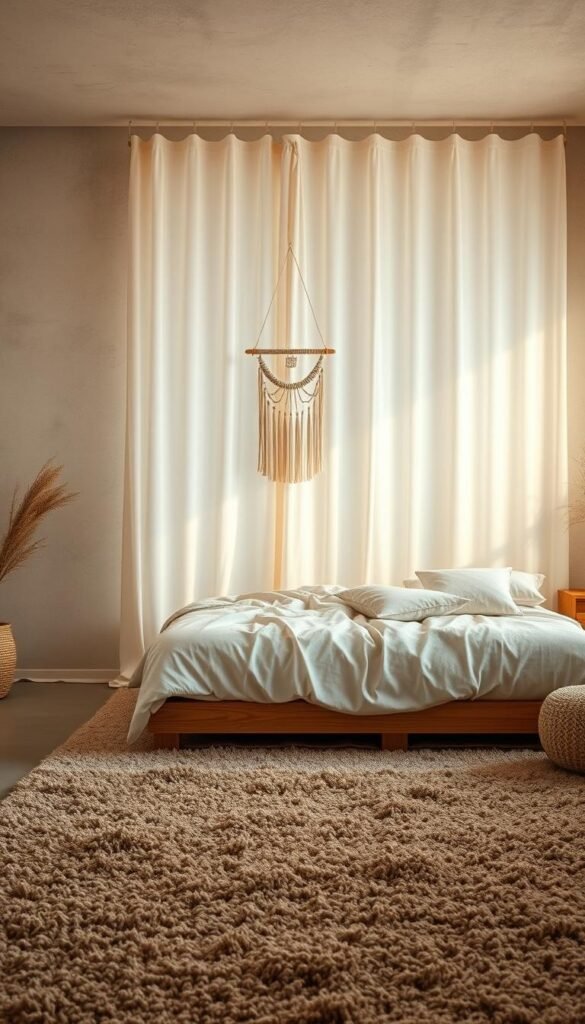
Texture creates depth and character in your personal space. It adds richness without needing bold colors or patterns.
Thoughtful layering makes your room feel inviting and complete. It balances visual interest with the calm you want.
Truss Interiors shows how mixing materials works beautifully. They blend soft quilts with structured wood elements.
This approach creates a space that feels both cozy and refined. Every texture has a purpose in your overall design.
Combine Soft Fabrics with Structured Elements
Pair plush textiles with firm surfaces for perfect balance. Linen, cotton, or wool work well against wood or metal.
This contrast makes your bedroom feel both comfortable and intentional. It prevents the space from feeling too soft or too harsh.
Try a sleek wooden bench with a nubby knit pillow. Or place ceramic vases beside rattan baskets.
Your choices should create harmony between different elements. Everything works together to enhance the peaceful feel.
Add a Fluffy Quilt or Woven Throw
Bedding becomes an opportunity for texture play. Layer crisp linen sheets with a chunky knit blanket.
Add a fluffy quilt for comfort and visual warmth. Woven throws introduce tactile interest at the foot of your bed.
These elements make your sleeping area irresistibly cozy. They invite you to relax and unwind completely.
Choose decor items with varied finishes too. Metal lamps and stone accents add to the layered look.
Remember that texture adds depth without color. It enhances the minimalist yet rich vibe perfectly.
5. Use Nature Motifs to Bring the Outdoors Inside
Nature-inspired elements create a soothing connection to the natural world. They transform your personal space into a peaceful sanctuary.
This approach uses subtle references to outdoor beauty. It brings calm energy through organic shapes and patterns.
Julee Wray demonstrates this beautifully with botanical prints behind the bed. Her work shows how nature motifs enhance tranquility.
Your space gains depth through these thoughtful touches. They create visual interest without overwhelming your senses.
Opt for Botanical Prints in Drapery or Art
Choose curtains with fern patterns or bedding with leaf designs. These elements whisper nature rather than shouting it.
Wall art featuring abstract landscapes works wonderfully. Look for pieces with muted greens and soft browns.
This way of decorating maintains minimalist principles. It adds character while keeping things serene.
Choose Decor Inspired by Natural Forms
Select ceramics shaped like leaves or sculptures resembling branches. These pieces bring organic beauty to shelves and surfaces.
Consider natural materials like stone coasters or wooden bowls. They add texture while staying true to the aesthetic.
Jute rugs introduce earthy warmth underfoot. They complement other elements beautifully.
Living plants improve air quality and enhance the organic feel. Choose varieties with clean lines like snake plants or peace lilies.
Arrange your decor in asymmetrical layouts. This reflects nature’s imperfect beauty perfectly.
Your bedroom becomes a calming retreat through these touches. They promote relaxation and connection.
Draw inspiration from Japanese art traditions. They often feature minimalist representations of natural elements.
Remember to keep patterns subtle and colors muted. This maintains the peaceful atmosphere you want.
Every choice should contribute to your overall design vision. They work together to create harmony.
6. Streamline Your Belongings with Japanese Minimalism
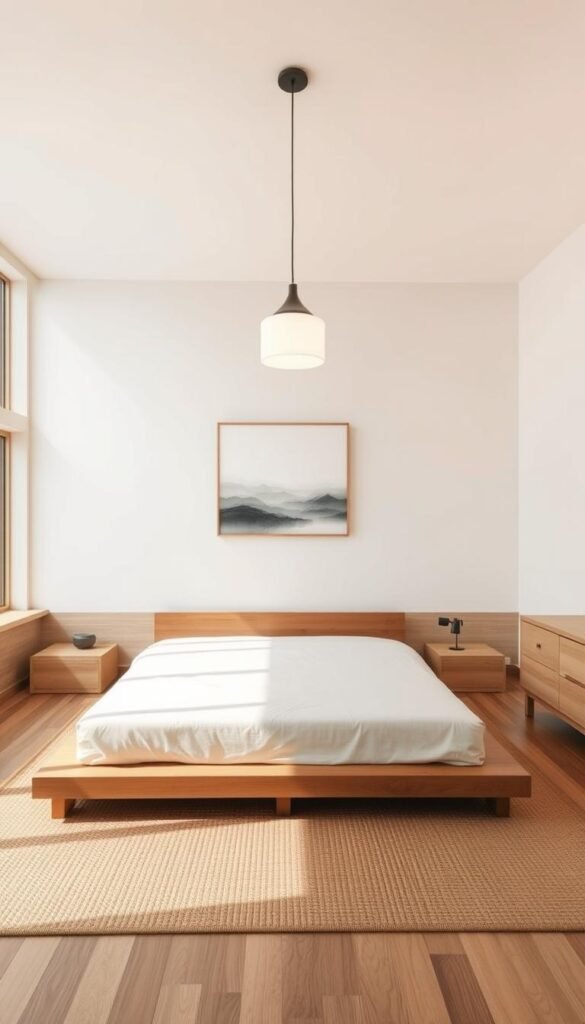
Japanese minimalism teaches us that less truly becomes more in our living environment. This philosophy creates mental clarity through physical simplicity in your personal space.
Erin Roberts demonstrates this beautifully with her approach to essential pieces. She maintains balance using muted colors and carefully chosen items.
Keep Surfaces Clear and Clutter-Free
Start with your nightstands and dressers—keep them completely clear. This simple practice immediately creates visual peace in your room.
Hidden storage solutions work wonders for maintaining cleanliness. Consider under-bed drawers or built-in cabinets for items you need but don’t display.
Embrace the concept of “ma” or negative space in your arrangement. Allow breathing room between objects for tranquility and movement.
Regular editing becomes part of your routine. Donate or store items that aren’t used daily to maintain simplicity.
Focus on Essential Pieces Only
Choose furniture that serves multiple purposes whenever possible. A stool that doubles as a side table reduces your item count effectively.
Select decor with clear intention and purpose. Each piece should contribute to your room’s serenity and function.
When it comes to wall art, less definitely makes more impact. One meaningful piece creates stronger presence than multiple small ones.
Draw from Scandinavian simplicity by prioritizing quality over quantity. Better materials and craftsmanship make fewer pieces feel complete.
This minimalist approach reduces stress and creates truly restful environments. Your home becomes a sanctuary through thoughtful editing.
7. Maximize Natural Light to Create a Warm and Airy Space
Thoughtful daylight utilization creates an atmosphere of peaceful rejuvenation in your personal space. Natural illumination serves as the foundation for that inviting atmosphere you crave.
Designer Erin Roberts demonstrates this beautifully by layering soft desert hues with natural textures. Her approach emphasizes both warmth and illumination in equal measure.
Use Sheer Curtains to Filter Light Softly
Choose lightweight fabrics that diffuse sunlight gently throughout your room. Sheer materials prevent harsh glare while maintaining brightness.
Simple rods or hidden tracks keep window treatments minimal and elegant. This approach allows maximum light entry without visual clutter.
Adjustable bamboo shades offer another excellent option. They provide control while maintaining that airy feel you want.
Position Your Bed to Capture Morning Sun
Place your sleeping area near east-facing windows to greet the day naturally. Morning sunlight enhances the room’s energy and warmth beautifully.
Consider window direction when arranging your furniture layout. East-facing windows capture morning light, while west-facing ones offer evening warmth.
This strategic placement creates a natural rhythm to your days. You’ll wake gently with the rising sun each morning.
| Window Treatment | Light Control | Best For | Aesthetic Impact |
|---|---|---|---|
| Sheer Curtains | Soft diffusion | All-day gentle light | Airy, elegant look |
| Bamboo Shades | Adjustable filtration | Light and privacy balance | Natural texture |
| Minimal Rods | Maximum entry | Small windows | Clean, simple lines |
| Hidden Tracks | Full exposure | Large window areas | Seamless appearance |
Light-colored walls and furnishings reflect illumination effectively. They make your area feel more spacious and open.
Strategic mirror placement bounces light into darker corners. This technique brightens the entire environment naturally.
Remember that natural illumination improves mood significantly. It makes your personal retreat feel more inviting and serene.
8. Add Interest with Art That Complements the Japandi Style
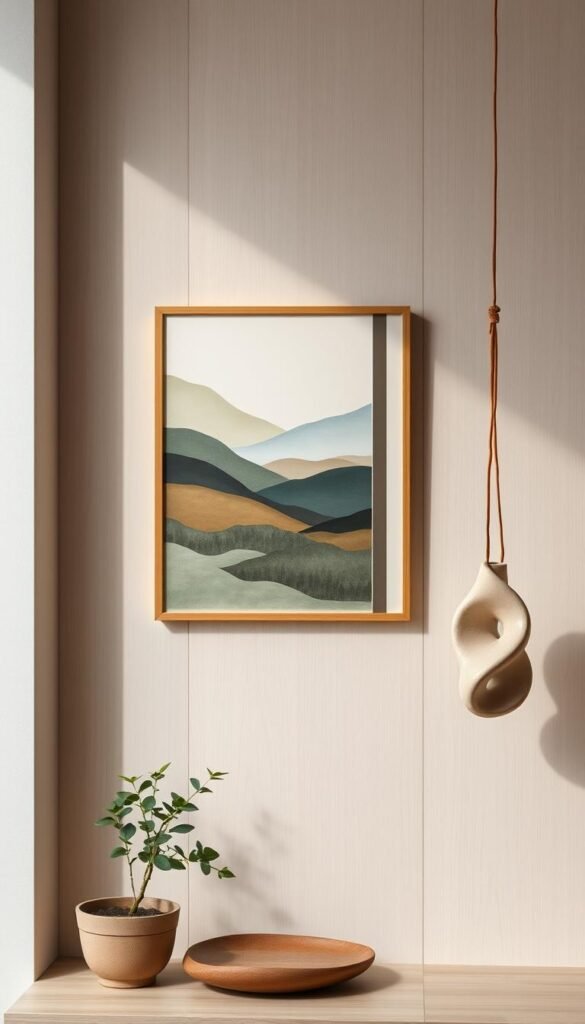
Thoughtful artwork transforms your space from simple to serene. It adds personality while maintaining that peaceful atmosphere you love.
The right pieces create visual interest without overwhelming your senses. They become focal points that enhance your overall design.
Daytrip Studio demonstrates this beautifully with their abstract wall piece. It provides depth while keeping the minimalist vibe intact.
Choose Abstract or Nature-Inspired Pieces
Select artwork that evokes calmness through soft lines and forms. Abstract creations work wonderfully because they suggest rather than declare.
Nature-inspired art brings outdoor beauty inside gently. Landscapes or botanical sketches in muted colors create tranquility.
These choices maintain the aesthetic’s peaceful principles. They add character without disrupting the serene environment.
Opt for Art with Organic Shapes and Neutral Tones
Look for pieces with curved lines and irregular patterns. These organic shapes reflect nature’s imperfect beauty perfectly.
Stick with neutral tones like beige, gray, or soft green. These colors blend seamlessly with your existing palette.
Consider textural options like woven tapestries or ceramic sculptures. They add depth through tactile elements rather than bold colors.
Keep frames simple and minimal—thin black metal or light wood. Frameless canvases also work beautifully for a clean look.
Place your chosen art strategically above the bed or on a prominent wall. This creates a focal point that anchors the room.
Avoid overcrowding your walls with too many pieces. One large statement work or a small curated collection works best.
Your bedroom decor should enhance serenity rather than distract from it. Every choice should contribute to that peaceful vibe you want.
9. Choose a Low, Wooden Bed Frame for a Cozy and Modern Look
Your bed serves as the heart of your sleeping space. It sets the tone for comfort and style in your personal retreat.
A low-profile platform design fosters stability and openness. This approach makes your room feel more spacious and calm.
Iwan Halstead of Daytrip Studio recommends this approach. He notes how it creates that cozy atmosphere you desire.
Select a Frame Made from Light Oak or Similar Wood
Choose natural materials like solid oak or ash for your frame. These light woods bring organic warmth to your space.
Avoid laminated options that lack authentic character. Solid wood offers durability and timeless beauty.
This bed frame choice aligns perfectly with minimalist principles. Clean lines create visual harmony throughout your bedroom.
Consider platform beds with natural materials for added stability. They provide excellent support without bulky foundations.
Pair with Linen Bedding for Added Warmth
Layer crisp sheets with soft duvets in neutral tones. This combination adds both comfort and visual appeal.
Incorporate textured throws for extra coziness. Woven or knit designs introduce pleasant tactile elements.
Your bedding choices significantly impact the overall feel. They contribute to that inviting warmth you want to achieve.
Keep pillows in complementary textures for complete harmony. Everything works together to enhance your sleeping experience.
This thoughtful design approach transforms your bed into a sanctuary. It becomes your favorite place to unwind and rest.
10. Include Rustic Elements to Enhance the Earthy Vibe
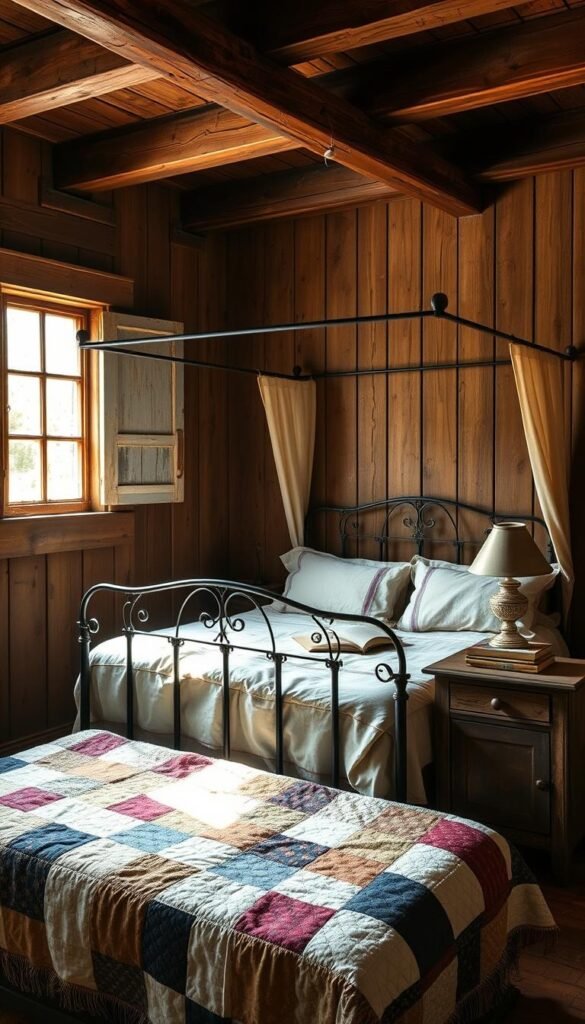
Rustic touches bring authentic character to your personal space. They introduce natural charm through handcrafted details and organic forms.
These elements create warmth and texture in your room. They work beautifully with the minimalist foundation you’ve established.
Daytrip Studio shows how wooden stools add earthy appeal. Their approach balances rustic charm with clean lines perfectly.
Add Handcrafted Stools or Decor
Choose artisan-made pieces that showcase natural beauty. Wooden stools with visible grain patterns add functional charm.
Pottery with imperfect shapes brings organic appeal. These items tell stories through their unique craftsmanship.
Place these accents thoughtfully throughout your space. A hand-carved stool beside your bed creates visual interest.
Select items with rough-hewn textures or hammered metal details. These finishes celebrate natural imperfections beautifully.
Remember to keep quantities limited for balance. One or two handmade pieces per area maintains serenity.
Use Natural Materials Like Stone or Clay
Incorporate stone bowls or clay vases for earthy texture. These materials connect your space to nature directly.
Rattan trays or lamps introduce woven warmth. They complement other natural elements in your room.
Unglazed ceramics show raw beauty through their matte surfaces. They work well with light wood tones and neutral palettes.
Consider reclaimed wood furniture for sustainable charm. These pieces add history and character to your design.
Draw inspiration from wabi-sabi principles of imperfect beauty. Embrace natural aging and unique flaws in your selections.
Your bedroom gains depth through these thoughtful additions. They enhance the earthy vibe without overwhelming.
Every rustic piece should complement your overall aesthetic. They contribute to a cohesive and peaceful environment.
11. Create a Multi-Purpose Space for Flexibility and Function
Versatile living areas maximize your available square footage beautifully. They transform limited areas into highly functional personal retreats.
This approach follows smart design principles that prioritize adaptability. Your sleeping area can serve multiple purposes throughout the day.
Erik Munro demonstrates this concept with his innovative projects. He creates dual-purpose environments that feel both practical and peaceful.
Incorporate a Folding Bed for Versatility
Choose a wall bed or sofa bed that tucks away neatly. This allows your room to transform for different activities.
Your sleeping area can become a meditation space or exercise zone. Foldable furniture makes these transitions smooth and easy.
Look for options with clean lines and natural materials. They maintain the aesthetic while providing excellent functionality.
Design Zones for Relaxation and Activity
Create distinct areas within your bedroom for various needs. A comfortable chair with a soft rug defines a reading nook.
Keep an open area for yoga or gentle stretching exercises. Use simple mats that roll up for storage when not in use.
Modular furniture adapts to your changing requirements. Lightweight pieces can be rearranged based on your daily routine.
Smart storage solutions keep clutter out of sight. Ottomans with hidden compartments work wonderfully for this purpose.
Wall-mounted shelves display items without consuming floor space. They maintain that clean, uncluttered feeling you want.
Wood slat screens separate zones without closing off the room. They provide visual division while maintaining airflow.
Draw inspiration from traditional Japanese home design. Rooms often serve multiple functions through flexible arrangements.
Each zone should maintain the same calming aesthetic. Use neutral colors and natural materials throughout your space.
This approach makes smaller areas feel more practical and spacious. Your personal retreat becomes truly versatile without losing serenity.
Balance functionality with that peaceful atmosphere you love. Your multi-purpose room remains a calming sanctuary.
12. Balance Is Key: Blend Black Features with Light Tones
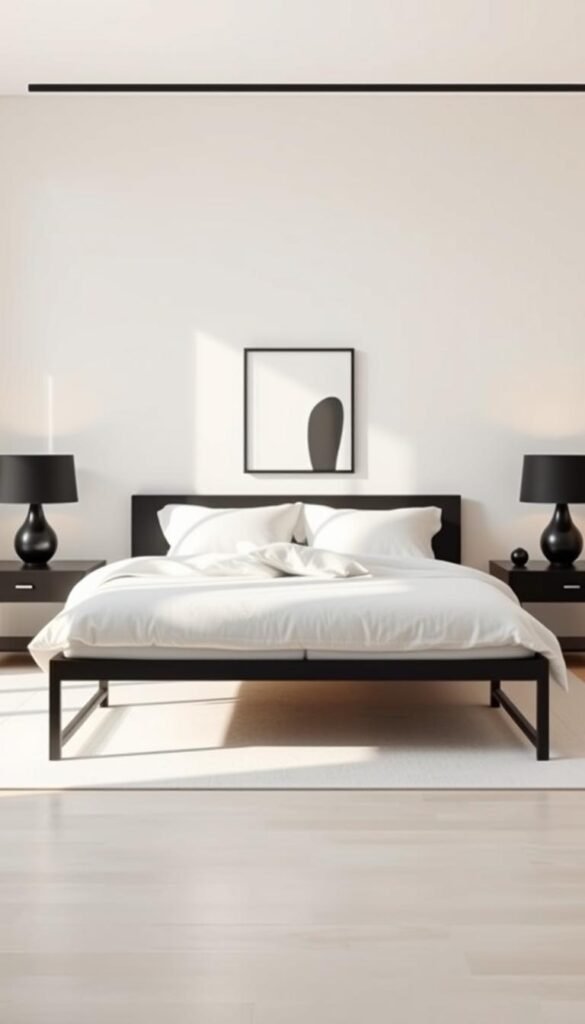
Strategic contrast brings sophistication to your personal retreat. It creates depth while maintaining that peaceful atmosphere you love.
Erik Munro advises balancing dark features with light neutrals. This approach builds a structured yet serene environment.
Black accents provide definition against softer backgrounds. They anchor your space with elegant contrast.
Follow core design principles of proportion and harmony. Your choices should feel intentional and balanced.
Use Black Accents Like Curtain Poles or Bench
Introduce dark tones through functional elements. Curtain rods, light fixtures, or furniture legs work beautifully.
Choose pieces with natural materials for authenticity. A black wrought iron lamp or dark wood stool adds character.
Frame mirrors or artwork with thin black borders. This creates visual interest without overwhelming.
Test these items in your actual lighting conditions. Ensure they enhance rather than darken your space.
Pair with Off-Whites and Creams for Serenity
Combine black accents with soft neutral backgrounds. Off-whites, creams, and beiges maintain brightness.
This combination reflects the yin-yang concept perfectly. Opposites create harmony and dynamic balance.
Your bedroom gains sophistication through this contrast. It feels both grounded and airy simultaneously.
Avoid large black surfaces that might feel heavy. Use dark tones as accents rather than main features.
Every piece should contribute to overall tranquility. Black elements should complement rather than dominate.
This thoughtful approach creates a cohesive and calming environment. Your personal sanctuary becomes truly refined.
13. Japandi Style Modern Bedroom Inspiration: Accent Wall Ideas to Try
An accent wall can transform your sleeping area into a true sanctuary. It adds depth and character without overwhelming your peaceful environment.
These creative solutions bring visual interest to your personal retreat. They work beautifully with the minimalist principles you already love.
Install Wood Slat Paneling for a Natural Focal Point
Wood slat paneling creates rhythm and warmth behind your bed. You can install it horizontally or vertically for different effects.
Choose reclaimed or sustainable materials for eco-friendly appeal. Light stains like oak maintain that airy feeling you want.
This approach adds texture while keeping things simple. The natural grain patterns bring organic beauty to your space.
Consider adding indirect lighting between the slats. It casts soothing shadows that enhance the calming atmosphere.
Use Shoji Screens for Soft Light and Cultural Richness
Shoji screens made of rice paper and wood frames filter light beautifully. They add cultural authenticity to your design.
Position them as room dividers or wall accents. Light-toned frames maintain harmony with your existing palette.
These screens create soft, diffused illumination throughout the day. They prevent harsh glare while maintaining brightness.
The traditional craftsmanship adds thoughtful detail to your room. It celebrates Japanese design principles authentically.
Apply Japandi-Themed Wallpaper with Subtle Motifs
Choose wallpaper with abstract nature motifs or geometric shapes. These patterns add interest without overwhelming your senses.
Linen-textured options work particularly well. They complement other natural elements in your space.
Peel-and-stick varieties make application easy and temporary. Use it on just one wall to avoid visual clutter.
Your accent wall should complement other elements in the room. It enhances rather than dominates your peaceful retreat.
Remember that these ideas add depth without excess decoration. They maintain the serene aesthetic you’ve worked to create.
14. Embrace the Japandi Journey and Make Your Bedroom Your Own
Your journey to a serene space blends neutral tones with natural materials. This creates a peaceful atmosphere for rest and renewal.
Personalize your approach with thoughtful decor and color choices. Your space should reflect your unique taste and needs.
Remember, balance is key. Combine simplicity with warmth and function with beauty.
Start small if you prefer. Add a wooden bed frame or accent wall first.
This design philosophy is timeless. Your room will stay stylish for years.
Enjoy making your bedroom a true haven. It should feel calming and uniquely yours.