Your personal space should be a true sanctuary. In 2026, bedroom trends are shifting toward unique, collected looks that reflect your personality.
Gone are the days of cookie-cutter layouts. Today’s interior design celebrates individuality and comfort.
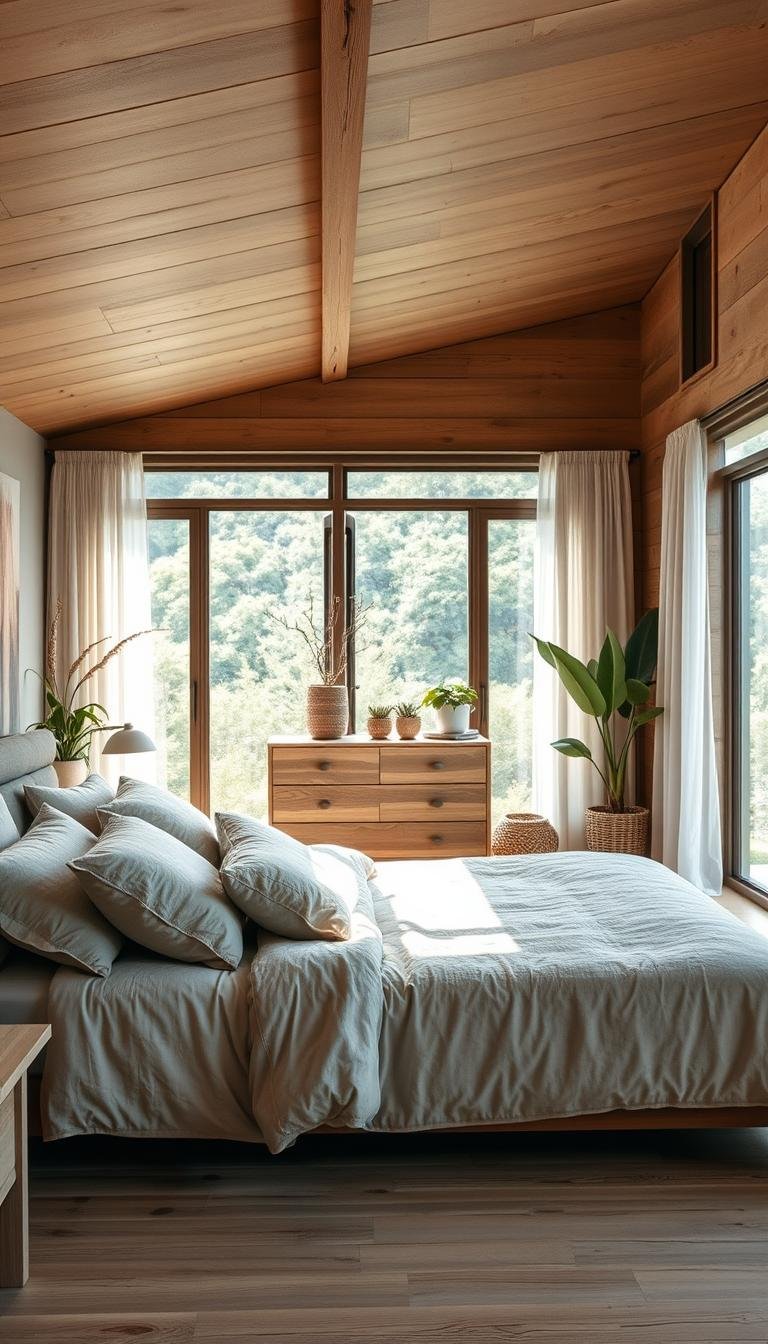
This approach blends nature with contemporary style. It uses earth tones and natural materials to craft a warm, inviting atmosphere.
Your room can serve multiple purposes—rest, work, or relaxation. Thoughtful furniture choices make this possible.
Breaking traditional rules is encouraged. Personal objects and vintage pieces make the space truly yours.
According to Martha Stewart, designers are embracing rich neutrals and tactile surfaces. Biophilic design is growing in importance.
This guide will help you achieve a balanced, personalized home environment. Let’s explore ideas that promote well-being through smart design.
Understanding the Modern Earthy Aesthetic for 2026
This design philosophy merges organic inspiration with current sensibilities. It creates spaces that feel both grounded and forward-thinking.
Natural elements meet clean, contemporary lines. The result is a balanced look that soothes your senses.
Blending Nature with Contemporary Design
This style combines raw materials with modern finishes. Think wood with metal accents or stone with sleek lighting.
Earth-toned colors form the foundation. They work alongside minimalist furniture shapes.
Texture plays a key role here. Rough linen against smooth plaster walls adds depth.
This approach differs from traditional rustic decor. It feels curated rather than casual.
Why an Earthy Bedroom is Your Perfect Sanctuary
Your sleeping space becomes a retreat from daily stress. Natural materials promote calm through tactile experiences.
Studies show that earth-inspired interior design reduces anxiety. It can improve your sleep quality too.
Biophilic principles evolve for 2026. They focus on deeper connections with nature through art and materials.
Performance fabrics and smart lighting enhance the aesthetic. They add convenience without sacrificing style.
This personal sanctuary supports multiple activities. It’s a place for rest, reflection, and rejuvenation.
The right color palette makes all the difference. So does thoughtful arrangement of your space.
Explore various ways to incorporate natural elements. From wallpaper to organic textiles, options abound.
Your bedroom ideas should reflect your unique personality. This way, the space truly feels like yours.
Start with Your Earth-Toned Color Palette
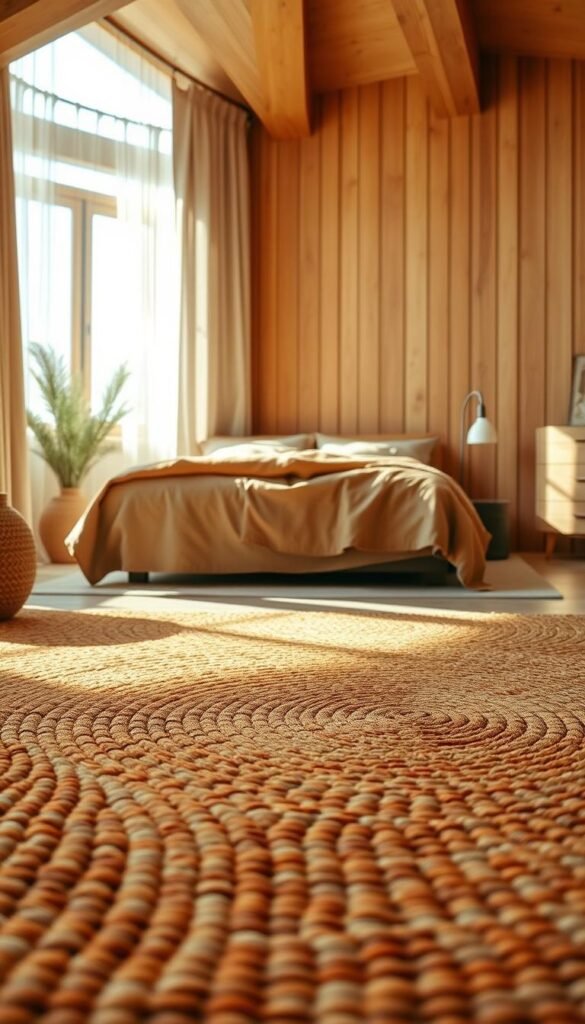
Color sets the mood before you even choose furniture. Your palette becomes the foundation for everything else.
Think of it as the backdrop for your personal retreat. Earthy tones create warmth and connection to nature.
These colors work beautifully in various bedrooms. They bring calm to your sleeping space.
Grounding Hues: Behr’s Hidden Gem and Valspar’s Warm Eucalyptus
Behr’s “Hidden Gem” offers a smoky blue-green that feels both serene and sophisticated. It works wonderfully on accent walls or built-in shelving.
Valspar’s “Warm Eucalyptus” brings nature indoors with soft green-gray undertones. This shade complements natural wood finishes perfectly.
Both colors represent 2026’s move toward richer, more complex neutrals. They provide depth without overwhelming your space.
Complementary Colors: Terracotta, Ochre, and Sandy Neutrals
Build your scheme with complementary accents. Terracotta adds warmth through clay-inspired richness.
Ochre brings golden-yellow undertones that catch light beautifully. Sandy neutrals keep everything balanced and grounded.
These colors work across your bedding, fabrics, and accessories. They create visual harmony throughout your room.
How to Test and Choose Your Perfect Shades
Always test colors in your actual space. Lighting changes how paints appear throughout the day.
North-facing rooms need warmer undertones. South-facing spaces can handle cooler variations.
Consider multi-tonal schemes for added depth. Use this table to guide your selections:
| Room Size | Primary Color | Accent Color | Neutral Base |
|---|---|---|---|
| Small | Light Warm Eucalyptus | Soft Terracotta | Sandy Beige |
| Medium | Hidden Gem | Muted Ochre | Warm Taupe |
| Large | Deep Warm Eucalyptus | Rich Terracotta | Creamy White |
Incorporate color through pattern and texture too. A linen headboard or textured throw pillows add interest.
Your decorating approach should feel personal. Choose colors that make you feel truly at rest.
Remember that earthy interiors balance boldness with tranquility. The right combination supports both style and relaxation.
Selecting Sustainable and Natural Materials
Material choices define your space’s character and environmental impact. Sustainable selections bring authenticity and warmth to your personal retreat.
These options connect you with nature while supporting eco-conscious living. They create spaces that feel both grounded and intentional.
The Revival of Pine, Cork, and Bamboo
Pine wood makes a strong comeback with its pale tones and soft grain. It works beautifully in Scandinavian-inspired spaces and modern rustic styles.
This softer wood is ideal for custom furniture projects. It brings warmth without overwhelming your room’s aesthetic.
Cork offers unique textures and natural insulation properties. Bamboo provides rapid renewal and elegant visual appeal.
Both materials carry excellent eco-friendly credentials. They represent smart choices for environmentally conscious designers.
Incorporating Wood, Linen, Rattan, and Stone
Mix different wood types for varied grain patterns and hues. This approach adds depth and visual interest throughout your space.
Linen brings breathable comfort to bedding and window treatments. Rattan introduces organic shapes through furniture and accessories.
Stone elements provide solid, grounding energy. Consider a small side table or decorative objects.
These materials work together to create rich tactile experiences. They engage your senses throughout the day.
Choosing Fabrics: Velvet, Boucle, and Coarse Knits
Select fabrics that combine comfort with sustainability. Velvet offers luxurious softness in rich, earthy tones.
Boucle textiles provide wonderful texture and visual warmth. Coarse knits bring handmade charm to throws and pillows.
Look for organic cotton and wool blends for bedding. These natural fibers regulate temperature and feel gentle against skin.
Consider performance fabrics for easy maintenance. Many now offer sustainable production methods.
When mixing materials, keep your overall color scheme in mind. Warm neutrals like cream and taupe create harmonious backgrounds.
Proper care ensures your natural materials last for years. Regular dusting and occasional conditioning maintain their beauty.
Your selections should reflect both personal style and environmental values. This balance creates spaces that feel truly special.
How to Create a Modern Earthy Bedroom in 2026 with Key Furniture
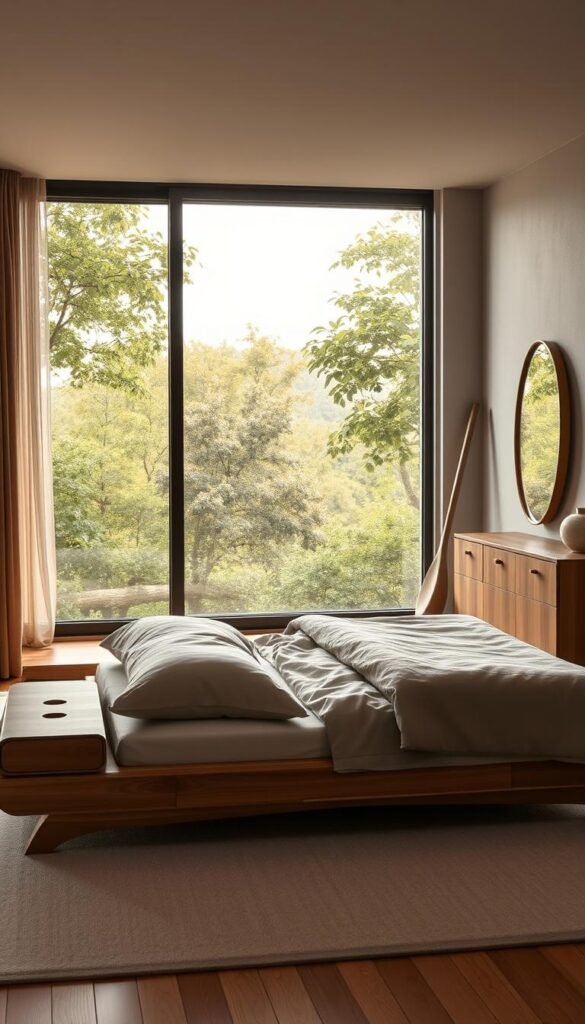
Your furniture choices anchor the entire room’s atmosphere. They blend function with personal expression.
This year brings exciting shifts in storage and sleeping solutions. These changes reflect our desire for flexibility and comfort.
The Return of Free-Standing Armoires and Dressers
Built-in storage dominated for years. Now, standalone pieces offer fresh possibilities.
Armoires and dressers provide movable storage solutions. You can rearrange them as your needs change.
These pieces work beautifully in various room layouts. They bring character that built-ins often lack.
Consider these advantages:
- Easy relocation during room refreshes
- Potential for resale value retention
- Mix-and-match possibilities with existing decor
Your storage becomes part of your personal style story. Each piece adds its own unique voice.
Sculptural and Curved Bed Frames as a Focal Point
Your sleeping area deserves special attention. The right frame transforms the entire space.
Curved designs create soft, inviting energy. They contrast beautifully with straight walls and angular pieces.
Organic shapes dominate current trends. They bring natural flow to your personal sanctuary.
These frames often feature rounded headboards and gentle curves. They make your bed the room’s beautiful centerpiece.
Choose materials that complement your overall aesthetic. Wood and upholstered options both work wonderfully.
Rounded-Front Dressers for a Softened Look
Furniture edges are getting softer. Rounded fronts create gentle visual flow.
These designs prevent sharp corners in tight spaces. They’re both practical and pleasing to the eye.
The curved fronts align with organic style movements. They bring tactile warmth to your room.
Consider these placement tips:
- Allow adequate walking space around each piece
- Mix heights for visual interest
- Use similar wood tones throughout for cohesion
Your furniture should serve multiple purposes. Storage meets beauty in these thoughtful designs.
These selections help create your perfect modern bedroom. They balance current trends 2026 with timeless appeal.
Your overall bedroom design benefits from these intentional choices. They support both relaxation and personal expression.
Designing Your Walls for Maximum Impact
Your walls form the canvas for your entire room’s atmosphere. They offer incredible potential to transform your personal retreat.
Thoughtful wall treatments create depth and character. They establish the mood before you even add furniture.
This year brings exciting innovations in surface design. From dramatic patterns to textured finishes, options abound.
The “Wallpaper Box” Trend: Ceiling and Walls in One Pattern
Imagine wrapping your entire sleeping space in a single beautiful pattern. This creates a cocoon-like effect that feels both dramatic and cozy.
The wallpaper box trend covers walls and ceiling seamlessly. It turns your bedroom into a carefully designed environment.
For 2026, look beyond traditional florals and geometrics. Consider sketched botanicals or subtle bird motifs.
Tonal stripes and metallic line work add contemporary flair. These patterns complement earthy color schemes beautifully.
Successful implementation requires careful pattern selection. Use this table to choose the right approach:
| Room Size | Pattern Scale | Color Intensity | Installation Complexity |
|---|---|---|---|
| Small | Small to medium | Light to medium | Moderate |
| Medium | Medium | Medium | Moderate to complex |
| Large | Large scale | Medium to bold | Professional recommended |
Balance bold patterns with neutral furniture and textiles. This prevents overwhelming your senses.
Textured Plaster and Fabric Wall Treatments
Texture adds tactile richness to your personal home environment. Plaster walls create beautiful, organic surfaces.
These finishes catch light differently throughout the day. They add depth without strong patterns.
Fabric wall coverings bring softness and acoustic benefits. They work wonderfully behind beds or in reading nooks.
Paper wallpapers with relief patterns offer visual interest. They create shadow play that changes with lighting.
Consider these practical aspects before choosing:
- Plaster requires professional installation for best results
- Fabric walls need proper framing and tensioning
- Textured papers work well in low-moisture environments
These treatments complement natural materials throughout your room. They enhance the earthy atmosphere perfectly.
Wood Slat and Paneled Accent Walls
Wood elements bring warmth and organic beauty to any interior. Slat walls create rhythm and visual movement.
This approach works beautifully in Japandi-style spaces. It balances simplicity with natural texture.
Paneled walls offer classic elegance with modern appeal. They provide architectural interest without major construction.
Complement wood walls with neutral bedding and organic decor. This creates harmonious, tranquil environments.
Installation options vary by skill level:
- Pre-fabricated wood panels offer DIY-friendly solutions
- Custom slat walls may require professional assistance
- Peel-and-stick options provide temporary transformations
Your wall design should reflect your personal style while enhancing relaxation. These ideas help create spaces that feel truly special.
Layering Textures with Bedding and Textiles
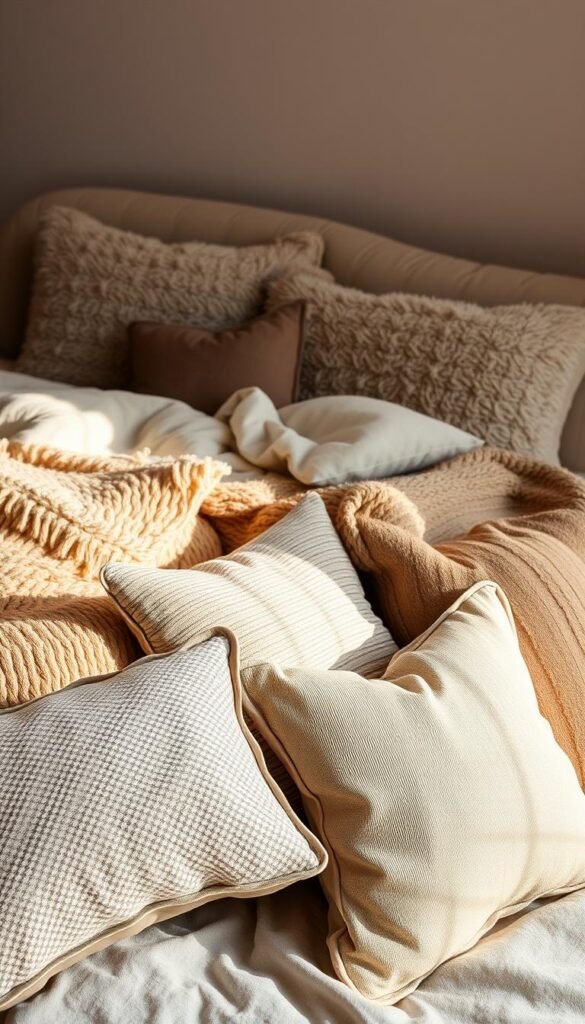
Textiles transform your space from basic to breathtaking. They add warmth and personality through thoughtful combinations.
Layering creates visual depth and tactile comfort. It’s a key way to achieve that collected, personal look.
Your choices affect both style and sensory experience. They make your room feel truly inviting.
Performance Bedding for Comfort and Health
Sleep technology reaches new heights with smart fabrics. These materials actively work to improve your rest.
Memory foam contours to your body shape. Gel-infused layers help regulate temperature throughout the night.
Moisture-wicking textiles keep you dry and comfortable. They pull sweat away from your skin.
These innovations support better sleep quality. You wake feeling more refreshed and energized.
Many performance fabrics now offer sustainable options. Look for organic certifications and eco-friendly production.
The Art of Layering: Linens, Throws, and Macramé
Start with a solid base of quality sheets. Add dimension with textured coverlets and quilts.
Throws provide both visual interest and practical warmth. Drape them across the foot of your bed or chair.
Macramé pieces bring beautiful handcrafted detail. Oversized knots and multi-tone fibers create rich texture.
They work wonderfully against solid colors. The pattern stands out without overwhelming.
Consider these layering ways:
- Mix coarse knits with smooth linens
- Combine different weights for seasonal flexibility
- Vary pile heights for visual rhythm
Your bedding becomes a personal expression. It reflects your unique style through careful curation.
Choosing the Right Rugs: Illustrated Statements and Natural Fibers
Floor coverings anchor your entire space. They define areas while adding comfort underfoot.
Illustrated statement rugs make bold artistic expressions. Think brush-stroke art or abstract shapes woven into soft textures.
These pieces serve as functional art for your floor. They create conversation starters in your personal retreat.
Natural fiber options include:
- Jute for rustic texture
- Wool for soft warmth
- Seagrass for organic pattern
These materials complement earthy interior design perfectly. They bring nature’s beauty indoors.
Maintenance varies by material type. Some require professional cleaning while others handle gentle vacuuming.
Your rug should fit both your style and practical needs. It completes the room while providing daily comfort.
These textile choices help realize your best bedroom ideas. They create spaces that feel both beautiful and personally yours.
Illuminating Your Space with Warm, Earthy Lighting
Lighting transforms your room from ordinary to extraordinary. It sets the mood and enhances every design element.
The right illumination brings warmth and depth to your personal retreat. It highlights textures and creates inviting shadows.
Your lighting choices should complement your overall palette. They work with natural materials to complete the atmosphere.
Creating Mood Lighting with Orb Lights and Pendants
Orb lights offer incredible versatility for any sleeping space. These spherical designs provide soft, diffused illumination.
Cluster several orbs together for dramatic effect. Place single units on shelves as glowing accents.
Many models feature portability and dimming options. They adapt to your changing needs throughout the evening.
Pendant lights create beautiful focal points above bedside tables. Choose designs with natural materials for earthy appeal.
Consider these placement strategies:
- Group orbs in corners for cozy reading nooks
- Hang pendants at varying heights for visual interest
- Use dimmers to control intensity for different activities
Incorporating Rattan and Fabric Shades
Natural materials extend beautifully to your lighting choices. Rattan shades bring organic texture and warmth.
These woven elements filter light beautifully. They create soft patterns that enhance your room’s character.
Fabric shades offer another wonderful option. They provide gentle diffusion and complement your fabrics.
Both choices work with various bulb types. They help create that collected, personal look you desire.
This table helps select the right shade material:
| Lighting Need | Rattan Benefits | Fabric Benefits | Best Placement |
|---|---|---|---|
| Ambient Lighting | Natural texture | Soft diffusion | Central fixtures |
| Task Lighting | Pattern interest | Minimal glare | Bedside lamps |
| Accent Lighting | Visual warmth | Color options | Reading corners |
Strategic Placement for a Cozy Atmosphere
Light placement affects how you experience your room. Multiple sources prevent harsh shadows and dark corners.
Layer different types for full coverage. Combine overhead, task, and accent lighting.
Warm light temperatures between 2700K-3000K work best. They enhance earthy tones and create relaxation.
Highlight architectural features with carefully aimed lights. Use sconces to wash walls with gentle illumination.
Smart lighting systems offer incredible flexibility. Program scenes for reading, relaxing, or sleeping.
Energy-efficient LEDs provide quality light with lower consumption. They last longer and reduce environmental impact.
Your lighting should feel intuitive and comforting. It completes your personal sanctuary beautifully.
Incorporating Greenery and Botanical Elements
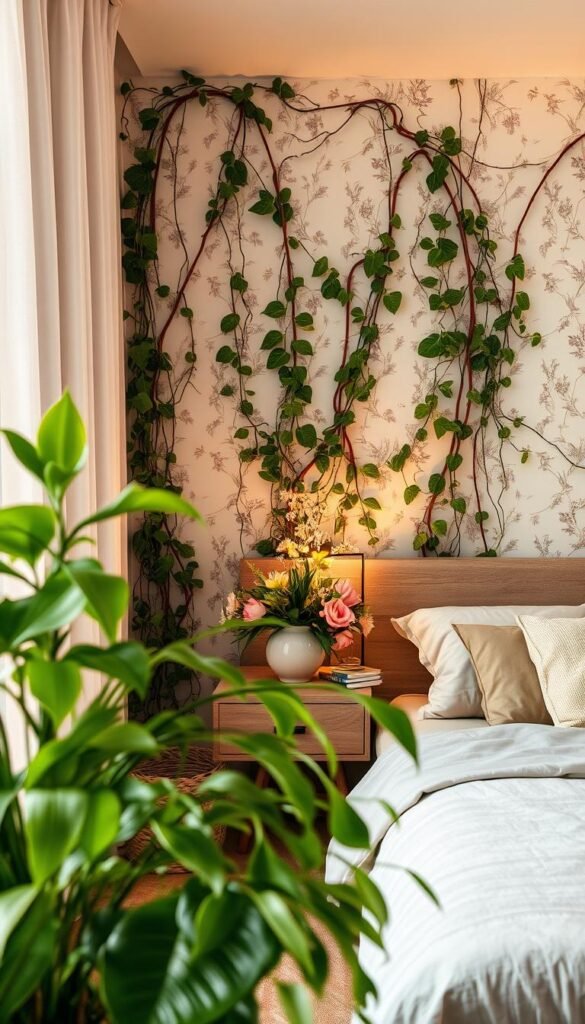
Plants bring life and energy to your personal retreat. They connect you with the outdoors while enhancing your room’s aesthetic.
Greenery introduces beautiful organic shapes and varied hues. These elements complement your earthy color scheme perfectly.
Living plants support biophilic design principles. They improve air quality and create calming visual interest.
Many designers recommend integrating plants throughout your space. This approach brings nature directly into your daily environment.
Choosing the Best Plants for Your Bedroom
Select plants that thrive in your specific light conditions. Consider maintenance requirements too.
Low-light options include snake plants and peace lilies. These varieties tolerate indirect light beautifully.
Trailing pothos and ferns work well in brighter spaces. They add movement and softness to your decor.
Always keep safety in mind when selecting plants. Some varieties may not be pet-friendly.
Scale your plant choices to match your room size. A large space can handle multiple statement plants.
Smaller rooms benefit from compact varieties. They add life without overwhelming the area.
Innovative Planters: Shallow Ledges and Hanging Vines
Shallow ledges offer brilliant planting solutions. They integrate greenery into your architecture seamlessly.
Install these ledges under windows or above door frames. They create floating gardens that save floor space.
Hanging planters bring vertical interest to your room. Macramé hangers complement natural textures wonderfully.
Consider these placement ideas:
- Window ledges for optimal light exposure
- Headboard integrations for bedtime greenery
- Ceiling hooks for trailing vine displays
These solutions work throughout your day. They keep plants accessible yet out of the way.
Using Botanical Prints and Dried Florals
Botanical prints bring nature’s beauty to your walls. They create artistic connections to the outdoors.
Choose prints with earthy cream backgrounds. These neutral bases let green elements shine.
Dried florals offer sustainable decorative options. They provide wonderful texture and lasting beauty.
Incorporate these elements through various accessories. Think throw pillows, artwork, and decorative objects.
Mix dried arrangements with living plants. This creates depth and visual variety in your space.
Your botanical elements should feel cohesive. They complete your personal sanctuary beautifully.
Zoning Your Bedroom for Multifunctionality
Your sleeping space deserves smart organization. Clever zoning creates separate areas for different activities.
This approach maintains peace while adding function. It reflects current trends for versatile living.
Your room can handle work, rest, and relaxation. Strategic planning makes everything flow beautifully.
Creating a Separate Workspace with Fold-Away Desks
Compact desks offer brilliant solutions for small areas. They disappear when not in use.
Wall-mounted options save precious floor space. Some fold flat against your wall.
Consider these features:
- Integrated cable management for neat appearance
- Adjustable height settings for comfort
- Natural wood finishes that match your decor
Your workspace should feel intentional yet temporary. It supports productivity without dominating.
Using Plants and Modular Partitions as Dividers
Tall greenery creates natural separation between zones. Large plants like fiddle leaf figs work wonderfully.
They purify air while defining different spaces. This approach brings nature indoors beautifully.
Modular partitions offer flexible solutions. You can rearrange them as needs change.
Consider these options:
- Sliding screens with natural materials
- Open shelving units that display decorative items
- Textured panels that complement your style
These dividers maintain visual connection throughout your room. They create separation without isolation.
Furniture Placement to Define Relaxation Zones
Your bed remains the primary focus for rest. Position it away from activity areas.
Create a reading nook with comfortable seating. Place it near natural light sources.
Area rugs help define different zones visually. They anchor furniture groupings beautifully.
Keep pathways clear between areas. This maintains easy movement throughout your space.
Your overall bedroom design benefits from thoughtful zoning. It supports both function and relaxation.
These trends 2026 emphasize smart space utilization. They help create your perfect modern bedroom.
Selecting Art and Personal Decor
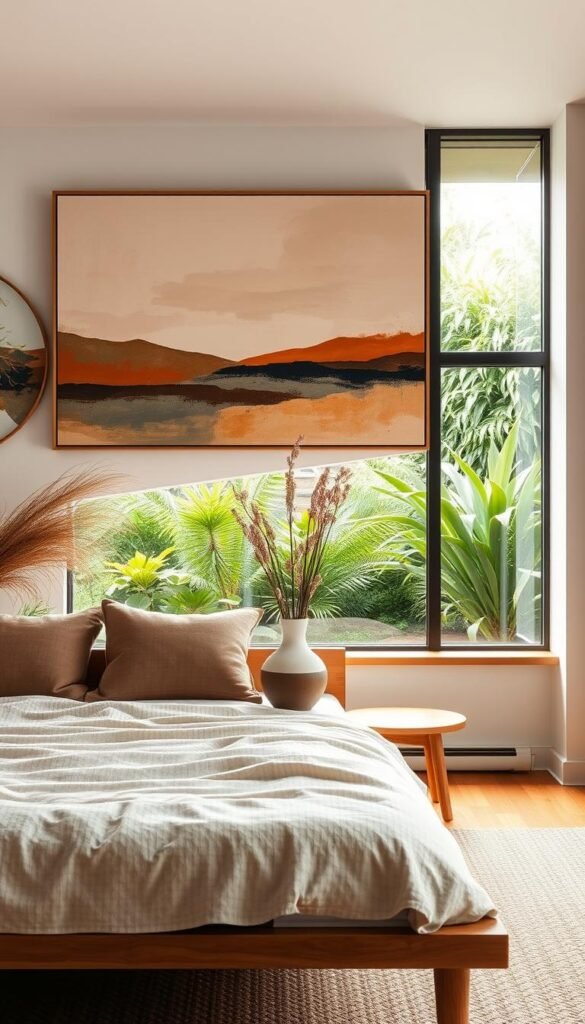
Art transforms your room from a sleeping area into a personal gallery. It adds the final layer that ties all elements together beautifully.
Your choices reflect individual taste while enhancing the overall atmosphere. They bring visual interest and emotional connection to your space.
Making a Statement with Oversized Artwork Above the Bed
Large-scale pieces create instant drama and focus. They anchor your sleeping area with powerful presence.
Oversized art balances the horizontal line of your bed. It draws eyes upward, making ceilings feel higher.
Choose pieces that complement your color scheme. Earth-toned abstracts or nature photography work wonderfully.
Proper installation ensures safety and visual impact. Use appropriate hardware for your wall type.
Consider these sizing guidelines:
- Art should span two-thirds of your bed’s width
- Leave 6-8 inches between frame and headboard
- Center the piece perfectly above your bed
Your statement piece becomes the room’s focal point. It sets the tone for your entire decor scheme.
Choosing Nature-Inspired and Textural Pieces
Natural themes reinforce your earthy aesthetic beautifully. They create harmony with other organic elements.
Textural art adds tactile dimension to your walls. Plaster reliefs and woven hangings invite touch.
These pieces work with minimalist furniture arrangements. They provide visual weight without clutter.
Consider these nature-inspired options:
- Botanical prints with neutral backgrounds
- Stone or wood wall sculptures
- Fabric art with natural fiber textures
Your selections should feel cohesive with other materials. They enhance rather than compete with your design.
Displaying Personal Items for a Collected Look
Personal objects tell your unique story throughout the room. They transform generic spaces into individual sanctuaries.
Curate items that hold meaning or memory. Display them intentionally rather than randomly.
Group similar objects for greater impact. Vary heights and textures within your arrangements.
Consider these display techniques:
- Floating shelves for small sculptures
- Shadow boxes for dimensional items
- Tabletop groupings with varied heights
Your personal decor makes the space truly yours. It completes the collected, lived-in look perfectly.
Integrating 2026’s Hottest Trends
Keeping your space fresh means embracing what’s new while staying true to your style. The coming year brings exciting directions that blend innovation with comfort.
These trends focus on organic forms, eco-conscious choices, and personal expression. They help create rooms that feel both current and timeless.
Organic Shapes in Furniture and Decor
Curved forms dominate bedroom ideas for the near future. Think rounded loveseats and deeply cushioned bubble chairs.
These pieces break up straight lines of walls and beds beautifully. They serve as both functional features and design statements.
Incorporate organic shapes through various elements:
- Rounded nightstands with soft edges
- Curved headboards in upholstered designs
- Sculptural lighting fixtures with flowing forms
This approach creates visual movement throughout your space. It feels both playful and sophisticated.
Eco-Friendly and Biophilic Design Choices
Sustainability remains central to forward-thinking interior design. Choose materials with low environmental impact.
Biophilic principles connect your space with nature deeply. They use organic shapes and tactile textures throughout.
Consider these eco-friendly options:
- Furniture from reclaimed or rapidly renewable materials
- Non-toxic finishes and natural fiber textiles
- Energy-efficient smart home integrations
These choices support planetary health while enhancing your comfort. They create spaces that feel responsible and refreshing.
Mixing Eras for an Intentional Eclectic Style
Combining different periods creates collected, personal environments. A mid-century dresser beside a contemporary bed feels curated.
Free-standing furniture makes this mixing easier. You can rearrange pieces as your taste evolves.
Follow these guidelines for cohesive results:
- Maintain a consistent color palette across eras
- Repeat materials or finishes for visual harmony
- Balance proportions so no single piece overwhelms
Your space becomes a timeline of beautiful design moments. It tells your unique story through thoughtful combinations.
When adopting trends, choose pieces with lasting appeal. Quality construction and timeless colors ensure longevity.
Budget-friendly updates include statement art and new textiles. These changes refresh your room without full renovation.
Personal expression remains most important. Select trends that truly resonate with your lifestyle.
Smart technology integrates subtly with earthy foundations. Voice-controlled lighting and climate systems add convenience.
Your room should evolve with you while maintaining its peaceful essence. These ways of blending trends create spaces you’ll love for years.
Final Touches: Accessories and Finishing Details
Thoughtful accessories complete your space with personality and polish. They transform rooms from simply decorated to truly designed.
These final elements add depth and character to your personal retreat. They reinforce your aesthetic while making the space feel lived-in.
Curating a Selection of Artisanal Accessories
Handcrafted pieces bring unique charm to your sleeping area. They tell stories through their imperfections and craftsmanship.
Look for locally made ceramics and woven baskets. These items support small businesses while adding authenticity.
Consider these artisanal options:
- Hand-thrown pottery in earthy tones
- Wrought iron candle holders with organic shapes
- Textured pottery with natural glaze variations
Your selections should complement your overall color palette. They enhance rather than compete with other elements.
Edit your collection seasonally to keep things fresh. Rotate pieces that reflect changing light and moods.
The Importance of Tactile Beauty: Throws and Pillows
Soft textiles provide comfort while adding visual warmth. They invite touch and create cozy moments throughout your day.
Choose fabrics that feel wonderful against your skin. Chunky knits and soft linen work beautifully.
Layer different textures for depth and interest. Combine smooth velvet with nubby wool throws.
Your bedding benefits from these tactile additions. They make your sleeping space feel more inviting.
Consider this approach for pillow combinations:
- Two standard sleeping pillows for support
- One lumbar pillow for reading comfort
- Two decorative shams for visual appeal
These elements complete your personal sanctuary beautifully.
Ensuring Your Room Feels Balanced and Cohesive
Step back periodically to assess your overall arrangement. Look for visual weight distribution throughout the space.
Negative space allows your eyes to rest between elements. It prevents your room from feeling cluttered or overwhelming.
Edit your accessories until everything feels intentional. Remove pieces that don’t serve a purpose or bring joy.
Your decorating approach should feel harmonious. All elements should work together seamlessly.
Consider these final adjustment techniques:
- Group items in odd numbers for visual interest
- Vary heights within arrangements
- Repeat colors and materials throughout the space
Your finished room should reflect your personal style while maintaining peace. These final touches make all the difference.
Bringing Your Modern Earthy Bedroom Vision to Life
Transforming your space becomes an exciting journey of self-expression. You blend natural elements with personal touches to craft a unique sanctuary.
Keep your favorite hues and textures in mind throughout the process. Trust your instincts while following basic design principles.
Start with foundational pieces like bedding and paint. Then layer in accessories and greenery over time.
Your room will evolve beautifully through each day. Small changes make big impacts on your overall comfort.
Remember that professional designers offer great inspiration. But your personal connection to nature matters most.
Embrace organic shapes and soft cream tones. They create harmony from floor to ceiling.
Your finished space will welcome you with open arms. It becomes a peaceful retreat for rest and renewal.