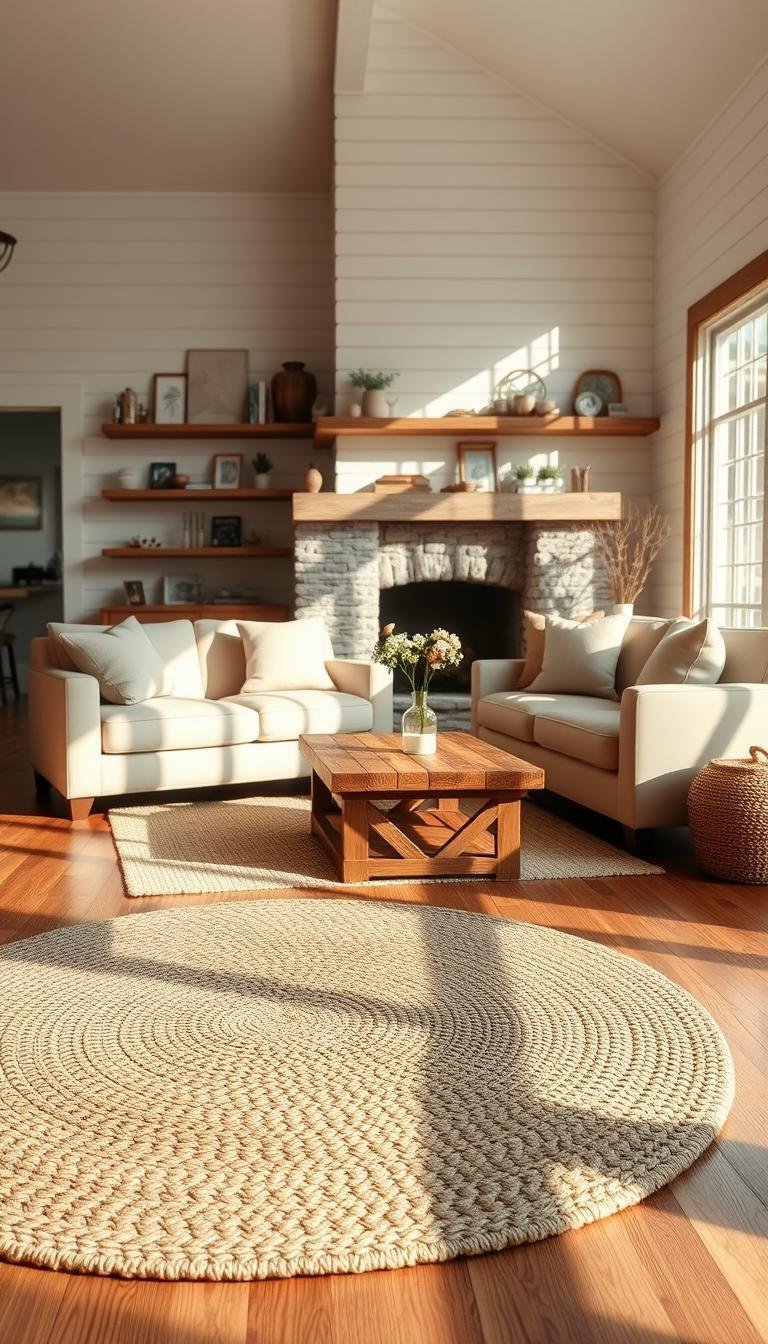
A welcoming modern farmhouse look can feel both relaxed and refined when you pair natural warmth with clean, simple shapes. That balance is the heart of modern farmhouse living room inspiration, whether your home has one compact room or a generous open plan. Comfortable pieces, natural textures, and personal details give you a practical place to begin.
You do not need a room full of themed accessories to make the style feel recognizable. A few well-chosen materials and shapes can create a home that feels polished without losing its ease. The ideas here can help you make thoughtful choices for how you live, from quiet evenings to casual gatherings.
Use the suggestions as starting points, not rules. Your room’s architecture, light, and daily routines matter more than copying a finished picture exactly. Choose the ideas that fit your home and everyday routines, not just the ones that look good in a picture.
Modern Farmhouse Living Room Inspiration for a Relaxed, Current Look
A modern farmhouse living room feels current when rustic materials support, rather than overwhelm, clean-lined furniture. Warm wood, simple silhouettes, and a few vintage finds give a farmhouse living room character without making it feel like a period set.
Keep the mix edited: pair contemporary shapes with one or two pieces that show age or history. A wood coffee table beside a streamlined sofa can do more than a collection of distressed furniture. The room feels collected, not themed.
A concise set of farmhouse living room ideas can start with clean lines, warm wood, and one collected vintage accent. Those elements work in a traditional home, a contemporary space, or an open-plan living area. Choose materials and shapes that relate to your architecture rather than forcing a country look into every corner.
Keep one or two unmistakably rustic elements and let the rest of the room feel edited and contemporary.
For more ways to combine the two sides of the style, explore cozy farmhouse living room ideas. The same balance can also help you compare farmhouse design with other approaches, including a clean-lined mid-century living room.
Today’s version leans more modern and less farmhouse, with less reliance on shiplap and heavily distressed painted furniture. A 2025 direction also paired creamy colors and natural wood with clean-lined furniture and restrained vintage accents. Keep the rustic details meaningful, and the room will feel like your home rather than a display.
Farmhouse living can adapt to the furniture and architecture you already own. A traditional home may call for a vintage wood piece, while a newer open plan might need just a textured accent. Keep one or two unmistakably rustic elements and let the rest of the room feel edited and contemporary.
Choose a Warm, Layered Color Palette
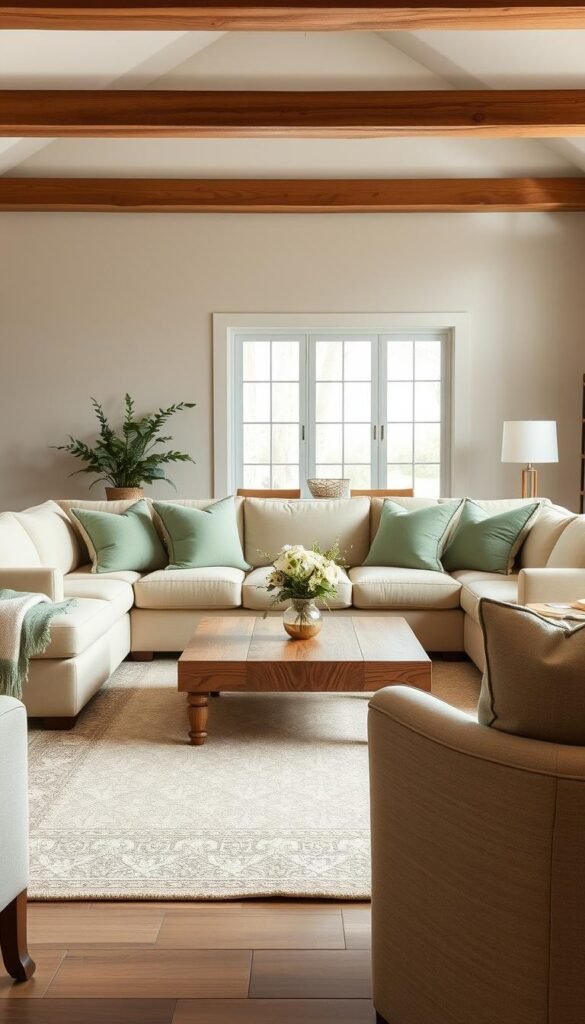
A warm off-white, cream, beige, or greige gives you a calm foundation that can carry both wood tones and deeper accents. Light Reflectance Value (LRV) is a 0-to-100 measure of how much visible light a color reflects, with higher values indicating a lighter-looking color.
Use a flexible neutral base, then add wood and one or two grounded accent colors. Oak, walnut, or light natural wood can bring definition to warm white, cream, beige, greige, or taupe. Sage, muted blue, clay, olive, and dark brown make useful accents without overwhelming the room.
Start with a soft neutral foundation
Warm neutrals are forgiving across different styles of furniture and decor. Sherwin-Williams Alabaster (SW 7008), with an LRV of 82, is a warm off-white option. For a farmhouse living room, a soft base also helps wood grain and textiles stand out without competing for attention.
Look at your room in daylight and after dark before settling on a neutral. A color that appears creamy beside a window can read differently under a lamp. Tie the base to a surface that will stay, such as wood flooring or a stone fireplace surround.
Add earthy accents for contrast
A small amount of contrast can keep a neutral palette from feeling flat. Muted mushroom, stormy dark green, burgundy and oxblood, sable brown, beige, tan, greige, and taupe all suit the 2026 modern farmhouse palette. Choose one or two accent tones rather than trying to use them all.
If you want a calmer effect, let an accent appear in a pillow, throw, or painted detail. A deeper color can also anchor one visual area, while surrounding surfaces stay quiet. Keep wood tones in view as part of the palette, not as an afterthought.
Compare farmhouse paint shades by role
HGTV Home by Sherwin-Williams’ Rustic Farmhouse collection includes a range of whites, neutrals, greens, blues, and grays. The shades below are useful examples, not the only colors that can suit a modern farmhouse palette.
| Color | Collection name or code | Suggested role |
|---|---|---|
| Alabaster | HGSW7008 | Warm off-white base |
| Extra White | HGSW7006 | Crisp white trim |
| Dried Thyme | HGSW6186 | Muted green accent |
| Hopsack | HGSW6109 | Warm neutral |
| Bunglehouse Blue | HGSW0048 | Muted blue accent |
Other Rustic Farmhouse collection shades include Sealskin, Utterly Beige, Adaptive Shade, Liveable Green, Rare Gray, Ivoire, Casa Blanca, Slate Tile, Kilim Beige, Gray Screen, and Interesting Aqua. Test paint samples in the room’s natural and evening light before committing to a wall color.
Give the Walls a Focal Point Without Overdoing It
One distinctive wall feature can add farmhouse character without turning the whole space into a theme set. One measured treatment can bring texture and visual interest while letting the rest of your design stay calm.
Use a single feature instead of repeating the same treatment across every wall. Shiplap can add texture, but modern farmhouse style relies on it less as a defining feature. Small rooms often benefit from one restrained surface rather than several treatments competing for attention.
Add texture with a measured wall treatment
Choose a wall treatment that makes sense with the room’s architecture and scale. Shiplap, board and batten, and reclaimed wood each have a distinct look; none needs to cover every surface to register as farmhouse.
- A single shiplap accent on one wall
- Board and batten in a limited area
- A reclaimed-wood detail with visible grain
- Plain painted walls paired with a strong focal feature
Plain walls are a real option, not an unfinished compromise. A fireplace, a substantial mirror, or a single large piece of art can hold attention without adding another layer of cladding. If you want more wall ideas, see modern farmhouse wall decor ideas.
Make one feature the visual anchor
Let the room’s strongest architectural element set the visual direction. A treatment behind the main sofa can provide a clear backdrop, while detailing on a less visible wall may go unnoticed. The goal is a focal feature, not a surface-by-surface checklist.
Before adding boards or reclaimed timber, look at what is already present. Repeated details on walls, furniture, and accessories can make a room feel more like a themed set than a layered home. If the room already has strong beams, a fireplace, or visible wood grain, let those details carry the architectural interest.
Pick Comfortable Furniture With Natural Character
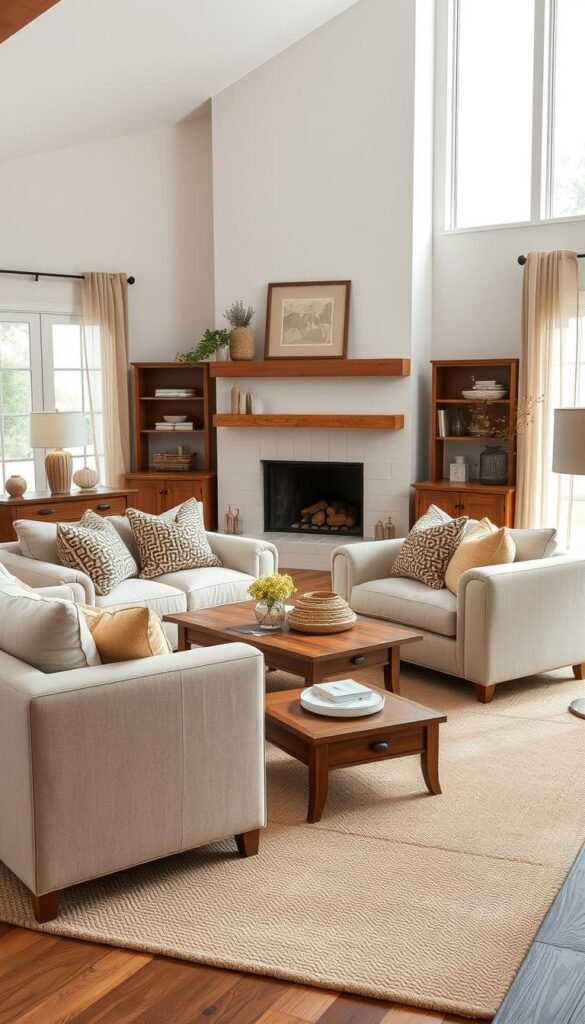
Choose the sofa for how you sit, lounge, and host, then use wood accents to bring in farmhouse warmth. Everyday comfort matters more than a silhouette that looks good but never invites you to settle in.
Prioritize supportive seating and practical storage with simple shapes. Slipcovered or easy-care upholstery suits a busy home, while oak, walnut, pine, or elm can introduce natural grain without making the furniture feel ornate.
Choose seating that suits daily use
A compact sofa can fit a smaller home without sacrificing a comfortable seat. When the seating zone allows, a larger sofa or sectional gives you more room to stretch out or host friends. Check the way you use the sofa, including whether you sit upright, curl up, or share it with pets.
The Alice sofa is available in 72-inch and 96-inch lengths, offering different options for different rooms. Neither size is a universal pick; the best fit depends on the space and how much seating you need. Choose upholstery you can live with, not just a fabric that looks crisp on day one.
Add wood and closed storage
Visible grain brings character to a clean silhouette. A reclaimed-wood table or an oak cabinet can add texture without adding another decorative motif. If you want a warm media piece that keeps clutter tucked away, the POVISON Eos-71-inch Tambour Door TV Stand pairs a walnut texture with closed storage.
Closed doors help hide remotes, game accessories, and other items you use often. Let wood be the detail that adds depth, rather than choosing several large pieces with competing finishes. Prioritize supportive everyday seating and storage that keeps frequently used items close but out of sight.
Arrange Seating for Conversation and Easy Movement
A useful layout gives people a comfortable route through the room and a natural distance for conversation. Clear paths help the living room work for everyday movement as well as visits from friends.
Aim for a 30-36-inch main walkway when the room allows, or 18-24 inches in a tighter space. Keep 3.5-10 feet between seats for conversation, and leave a 3-5-inch gap between the sofa and wall rather than pushing it flush.
Set clearances between furniture
Walkways matter more than a perfectly symmetrical arrangement. A narrow room may not allow generous space everywhere, so protect the route people use most. A sofa a few inches away from the wall can feel less pressed into place, even when the room is compact.
| Layout check | Recommended measurement | Condition |
|---|---|---|
| Main walkway | 30-36 inches | When room allows |
| Tighter walkway | 18-24 inches | When space is limited |
| Distance between seating | 3.5-10 feet | Conversational arrangement |
| Sofa-to-wall gap | 3-5 inches | Avoid a flush placement |
| Face-to-face sofas | Two 72-inch sofas | Balance with a large coffee table |
Try a face-to-face seating plan
Two 72-inch sofas can face each other to create a clear conversation area, with a large coffee table balancing their scale. This arrangement can suit a longer room where chairs alone feel scattered. The Alice sofa also comes in a 96-inch length, giving you another available size to consider.
If a pair of sofas crowds the room, use one sofa and one or two chairs instead. Keep the seats close enough for conversation without making people pass through the middle of a discussion. Walk the main path before settling the layout, and adjust any arrangement that makes people squeeze past a seat.
Get Coffee and Side Tables to the Right Scale
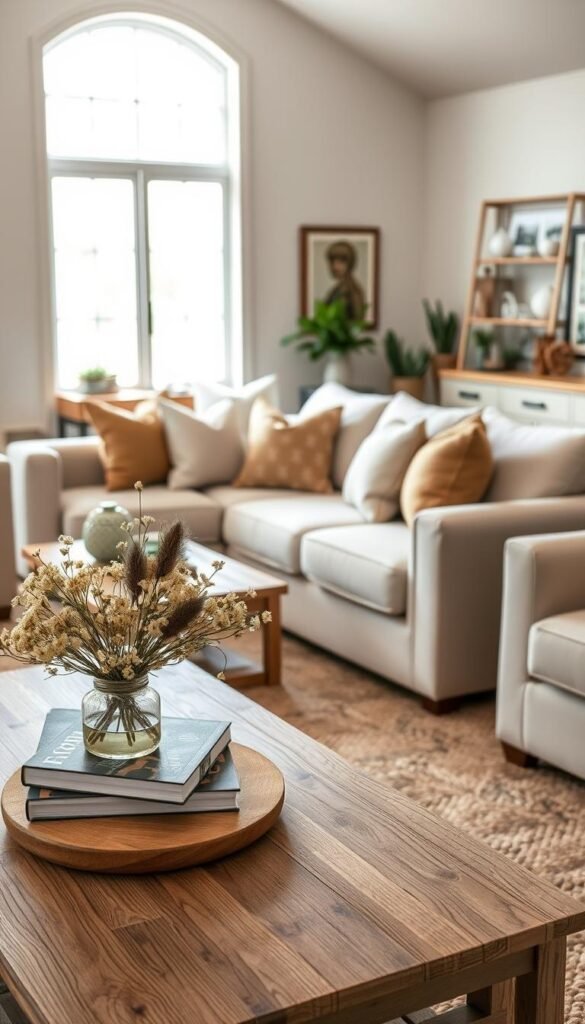
A coffee table should feel easy to reach from the sofa without overpowering the seating zone. Proportion matters because the table needs to serve people seated around it, not just fill empty floor.
Choose a coffee table at least half as long as the sofa, with a height within 4 inches of the seat cushions. These are practical guides, not rigid design laws, so use the sofa’s actual cushion height as your starting point.
A table that is too short can feel disconnected from the sofa, while one that is too tall may interrupt the view across the room. Measure the sofa from end to end before choosing a table. A half-length table gives you a useful proportion to compare with the available options.
For height, measure from the floor to the top of the seat cushions, not to the sofa frame. A table within 4 inches of that point is usually easier to use. A deep seat can change your reach, so check the distance from where you actually sit.
Side tables need to sit close enough for a drink or book to be easy to grab. Their height typically sits 2-3 inches from the sofa arm height. Measure from the floor to the arm rather than guessing from a product photo, especially if your sofa has low or unusually broad arms.
The arrangement should let you set something down without stretching across a cushion or twisting around a chair. Check your measurements against the table’s surface, not just its overall frame. Measure the sofa and cushions before choosing a table, especially when the seat has a deep profile.
Choose an Area Rug That Fits the Seating Zone
A rug looks more connected to the seating when the front sofa legs and every chair sit on it. Furniture placement helps the area rug gather the seating zone instead of appearing to float on its own.
For a small living room, consider a 4-by-6-foot or 5-by-8-foot rug; an 8-by-10-foot rug can suit a larger room. The right size depends on the furniture footprint and how much floor you want visible around the rug.
Size the rug for the room
A smaller rug can work when it gathers the main seating without crowding the walls. A larger room often needs a larger area rug to connect the sofa and chairs visually. In a spacious living room, leaving about 24 inches between the wall and rug can preserve a visible border; in a smaller room, 10-18 inches can work.
Use the rug’s outline as a guide before buying. Mark the proposed edges on the floor with tape, then check how the sofa and chairs sit in relation to it. The layout should feel gathered, not as if each piece belongs to a separate island.
Place furniture on the rug
Keep at least the front legs of the sofa and all chairs on the area rug. That shared placement ties the seats together even if the sofa’s back legs remain off the rug. A rug that sits only under the coffee table can leave the seating arrangement looking disconnected.
| Rug | Listed price | Relevant feature |
|---|---|---|
| Herstmonceux Area Rug | $149 | Named area rug |
| Parkerfield Area Rug | $159 | 1,260 reviews |
| Malamote Vintage Flat Pile Washable Rug | $139 | Washable |
| Ezri Cream Washable Area Rug | $79 | Washable |
| Herndon Braided Jute Rug | $89 | Braided jute |
Listed prices and review counts can change. These examples show different price points and features, but the rug still needs to fit the furniture you own. Check the rug outline against the actual furniture footprint before ordering a size.
Select Rug Materials for Comfort and Everyday Cleanup
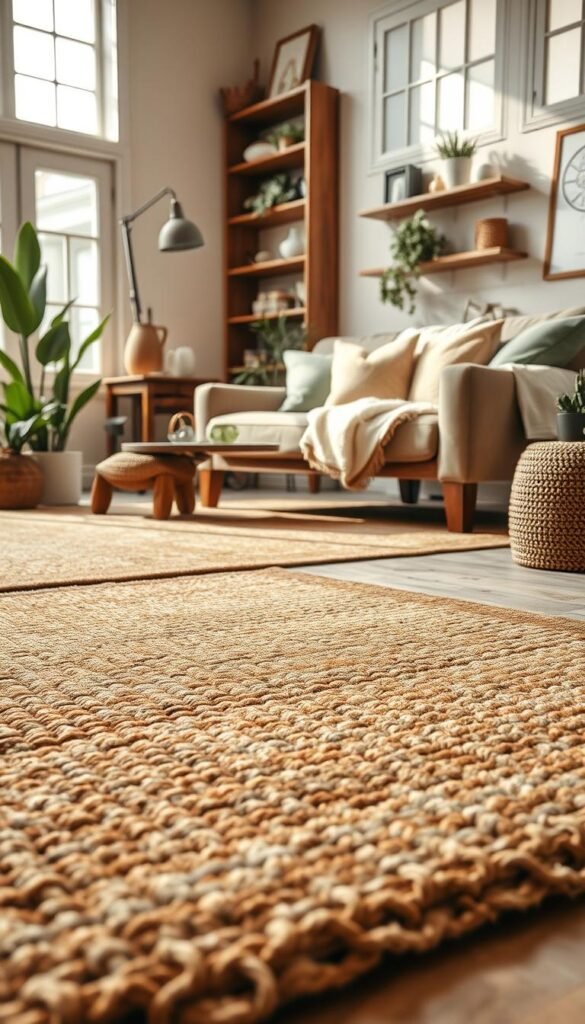
The best rug material for your home depends on whether comfort, natural texture, or simple spot cleanup matters most. Daily use should guide your choice, since a surface that suits your routine is easier to keep in service.
Jute or sisal offers a natural-fiber texture, washable rugs simplify some cleanup, and modular tiles let you replace individual pieces. Each option feels and functions differently underfoot, so match the material to the way your household uses the room.
Match the surface to the way you live
Natural fibers such as jute and sisal bring a distinct woven texture. The Herndon Braided Jute Rug is listed at $89. A washable option may suit a household that expects regular spills; the Olive Holi-2304 Washable Area Rug is listed at $89.
Rug texture changes the feel of a room as well as the cleanup routine. A woven natural fiber has a more pronounced surface, while a washable rug can be easier to manage when messes are part of everyday life. The Minoa Area Rug is listed at $159 and has 1,260 reviews.
Consider washable and modular options
FLOR farmhouse rugs use carpet tiles that can be removed, cleaned, and replaced individually when soiled. The tile format can also be customized for awkwardly shaped spaces. That flexibility can help when a standard single rug does not suit the room’s layout.
| Rug option | Listed price | Care or feature |
|---|---|---|
| Herndon Braided Jute Rug | $89 | Natural-fiber texture |
| Olive Holi-2304 Washable Area Rug | $89 | Washable |
| Minoa Area Rug | $159 | 1,260 reviews |
FLOR also has a Return & Recycle program for used tiles. Modular pieces can be removed one at a time, which differs from cleaning one large rug as a single surface. Listed prices and review counts can change, so treat them as details that may shift over time.
Think about how you handle spills, dirt, and wear before settling on a material. A beautiful rug that needs more care than you can give may become a source of frustration. Choose a surface you can realistically maintain, not only one that suits the room’s palette.
Layer Lighting and Keep Natural Light Moving
A room feels more comfortable when its light works for daytime tasks as well as relaxed evenings. Three layers of residential lighting, ambient, task, and accent, help you avoid relying on a single bright overhead fixture.
Combine useful overhead light with lamps and window treatments that let daylight through. Warm-toned bulbs support an easy evening mood, while open space around the windows helps natural light move through the room.
Use this checklist to cover the main needs without filling every corner with fixtures:
- Overhead ambient light for general use
- A reading or task lamp beside a seat
- An accent lamp or sconce for a softer glow
- Window treatments that do not block daylight
A lantern-style pendant or a metal fixture can suit farmhouse style, but neither is required. Choose a shape that fits the room and provides the light you need. A reading lamp near a sofa can make a quiet corner more useful without turning on every fixture in the room.
Sheer or light-colored curtains help daylight reach deeper into the space. Avoid blocking the window with tall furniture when you can, and leave enough clear area for the light to feel open. Natural light can make a room feel brighter without adding another lamp.
Turn on every light source after sunset to see how the room works in the evening. A corner that looks fine in daylight may feel dim once the sun goes down. Turn on every light source after sunset to check for dark corners before deciding the room is finished.
Build Cozy Texture With Textiles and Collected Details
Layered texture is what makes a neutral room feel lived in rather than flat. Soft and tactile details can balance clean furniture without adding more large pieces.
Mix a few distinct surfaces while keeping the colors connected. Linen, cotton, knits, woven materials, and natural wood each feel different to the touch, giving the room depth without adding visual noise.
Try these five accessory types in a relaxed mix:
- Linen or cotton pillows
- A knit throw
- A woven basket
- A small vintage object
- A plant or vase of flowers
Use pillows to soften a firm sofa and a throw for an extra layer on cool evenings. A woven basket can hold blankets, while a plant or flowers add a living detail. Keep the colors related so the varied textures feel like part of one room.
A single well-chosen vintage object can feel more personal than several matching faux-antique accessories. It might be a small item with family history or a secondhand find that caught your eye. For more ideas on using natural materials and collected touches, explore coastal farmhouse textures and details.
Let each item have room to show its shape and surface. An overfilled sofa or shelf can make even attractive pieces hard to notice. Leave a little open surface so the details can be appreciated instead of competing for attention.
Add a Hearth or Architectural Detail for Extra Warmth
A hearth or substantial wood detail can give the room a natural gathering point, but it is not a requirement. Architectural character can come from a fireplace, visible beams, or a simple mantel-style beam on a suitable wall.
A decorative mantel beam can add warmth even when there is no working fireplace. The room does not need a fire to feel farmhouse; choose a feature that looks connected to the home rather than added for a theme.
Three approaches can give the room a grounded feature:
- Emphasize an existing fireplace with a simple mantel.
- Add a mantel-style beam to a suitable empty wall.
- Use exposed beams or an existing brick or stone feature.
A reclaimed-wood mantel can add visible grain above a fireplace without needing an elaborate display. A stone or brick surround has its own texture and presence, so keep nearby details simple. If the home already has exposed wood beams, let their lines contribute to the room’s character.
A mantel-style beam can be decorative even without a working fire. It can give one wall a sense of weight and provide a natural visual anchor, as long as it suits the architecture. A fireplace is not a requirement for farmhouse living, and a room can feel complete without one.
Choose a detail that feels believable in your home, rather than trying to add several architectural features at once. A single substantial element can provide enough character. Keep any mantel styling low and restrained so the architectural feature remains the focus.
Make a Small Farmhouse Living Room Feel Open and Cozy
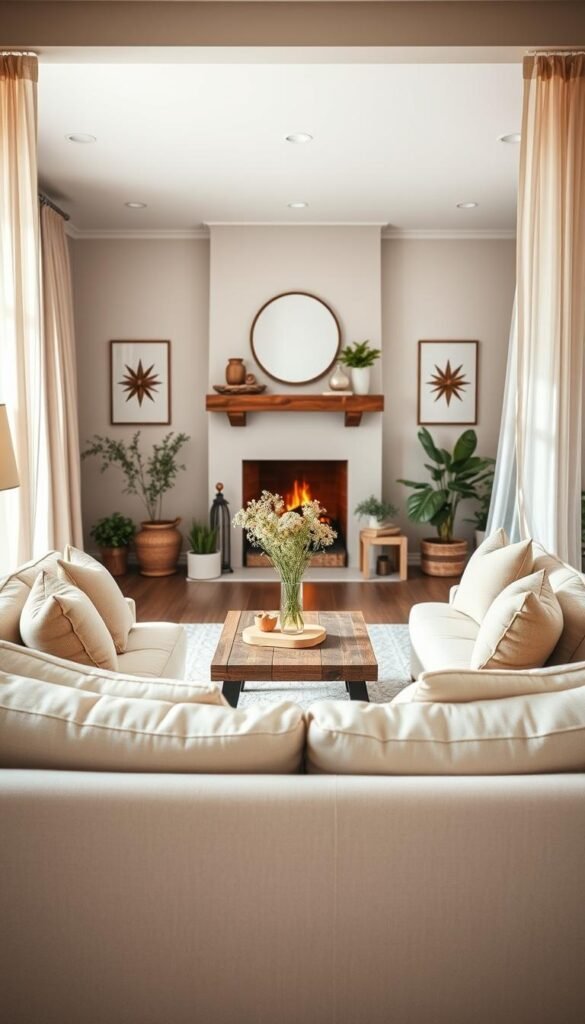
A small farmhouse living room can still feel generous when the biggest pieces leave a clear path through the space. Fewer, flexible pieces can make the room easier to use than oversized furniture packed into every corner.
Choose a compact sofa or loveseat, then protect a clear route through the room. A loveseat typically seats two people, while a standard sofa typically seats three, so choose based on who uses the space most often.
Scale seating to the available floor area
Small modern farmhouse living room inspiration can start with a compact sofa or loveseat, a few flexible pieces, light window treatments, and a rug that ties the seats together. Those small farmhouse living room ideas leave room for daily movement without making the space feel bare.
Keep the sofa supportive, but avoid choosing a deep, oversized shape just because it looks inviting. A few pillows and a throw can add softness without requiring larger furniture. A chair that can move when needed may work harder than a second bulky sofa.
Use light, flexible pieces
Light curtains can let daylight into a compact room, while a rug gathers the seating in one visual area. Open legs on furniture can show more floor beneath the pieces and keep the arrangement from feeling heavy. Choose a small number of items that serve more than one purpose when possible.
Use vertical storage or one wall focal point rather than several bulky storage pieces. A tall, narrow shelf can hold useful items without taking up as much floor area as a wide cabinet. Keep smaller objects grouped so the room still feels personal.
A small room can feel cozy without being crowded. Make sure the route from the entrance to the main seat stays usable, even when the room is set up for a gathering. Keep the floor plan simple enough that you can enter, sit down, and move around without shifting furniture.
Get the Farmhouse Look on a Budget
You can refresh the farmhouse look without replacing every large piece at once. Small changes can shift the feel of a room while helping you avoid spending on items that do not solve a real problem.
Prioritize seating comfort, a well-sized area rug, and lighting before decorative extras. The price of each choice depends on its materials, size, and condition, so set your own limit before comparing options.
Spend first on the pieces you use most
Use these five steps to decide where a change will matter most:
- Decide which existing item must be replaced.
- Improve the layout with furniture you already own.
- Refresh paint or textiles for a lower-commitment change.
- Look for secondhand vintage accents that feel personal.
- Upgrade one frequently used item first.
A sofa that no longer supports you may deserve attention before a decorative object. If the seating works, changing its position can make the room feel different without buying anything. A new lamp or a fresh throw can also make a visible shift without replacing every large piece.
Refresh with low-commitment changes
Paint and textiles can update the feel of a room without asking you to change its structure. Repainting a wall or using different pillow covers can test a new direction before you make a larger commitment. Secondhand accessories may add character, especially when you choose pieces for their usefulness or story.
Keep a short list of what you want to improve, then compare it with what the room already has. A chair may need a new position more than a replacement, and a plain wall may need only one personal detail. Set a spending limit before shopping and reserve part of it for the item you use every day.
Choose Wall Decor That Feels Personal
One personal, well-scaled wall feature usually makes a stronger impression than a cluster of unrelated signs. A meaningful focal point can bring character to the room without making the decor feel over-themed.
Choose one focal work that fits the wall and relates to the furniture beneath it. A large framed print, round mirror, woven piece, or pair of simple sconces can each provide visual interest without relying on multiple themed signs.
Modern farmhouse living room wall decor can feel individual when you use family photographs or objects with meaning. A single large piece can suit a broad wall, while a smaller feature may fit above a narrow console. Think about the wall’s scale before choosing the item’s shape.
A round mirror can soften the straight lines of furniture, while a woven piece adds a tactile detail. A framed print can show a subject you enjoy, and sconces can add a simple outline around a seating area. Choose a feature because it belongs in your home, not just because it matches a theme.
Teri James’ modern farmhouse canvas pieces start at $65, and panoramic pieces start at $150. Those prices do not make any one piece a required choice; family photos, collected objects, and art from other makers can work just as well.
Leave some open wall around the focal piece so its shape reads clearly. A collection can work when it feels connected, but unrelated objects may pull attention in several directions. Center the chosen piece in relation to the furniture beneath it, not simply to the nearest corner.
Turn Inspiration Into a Room That Feels Like Yours
A few consistent references can help you make decisions without copying someone else’s whole room. Choose a clear direction by starting with one base color, one wood tone, and one contrasting accent.
A focused Pinterest board can keep your references tied to those three anchors. Save a small selection of images, then look for repeated colors, materials, and furniture shapes before you buy anything.
Modern farmhouse living room inspiration on Pinterest can come from a few images that share a similar feel. A smaller board is easier to use than a collection of every room you like. Keep images that connect with your home’s existing light and furniture, even if they are not identical in style.
Notice which details keep appearing. Maybe the references share a warm wood tone, simple sofa shapes, or one muted accent. Those patterns can help you sort useful ideas from details that only look appealing in a particular photograph.
A saved room is a reference, not a set of instructions. Your room has its own scale, light, and everyday needs.
A picture may show furniture that would crowd your floor plan or a color that reads differently in your natural light. Treat the image as a way to identify a detail you like, then adapt that detail to your own space. A Pinterest board is most useful when it guides choices instead of dictating a full-room copy.
Before buying anything new, compare your saved ideas with the colors, furniture, and natural light you already have.
Bring the Warmth Together With a Few Intentional Choices
A welcoming farmhouse look grows from a few choices that work together, not from filling every corner. Comfort and natural texture matter more than copying a trend exactly, and a restrained mix of old and new can make the room feel like yours.
Start with one practical step: choose the room’s base color and measure the seating zone before shopping for a rug or table. That small check can help you make a choice that fits what you already own. Start with one measured change this week, then build the room around what makes your home comfortable.