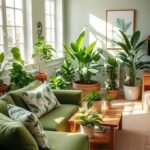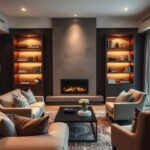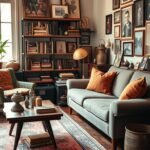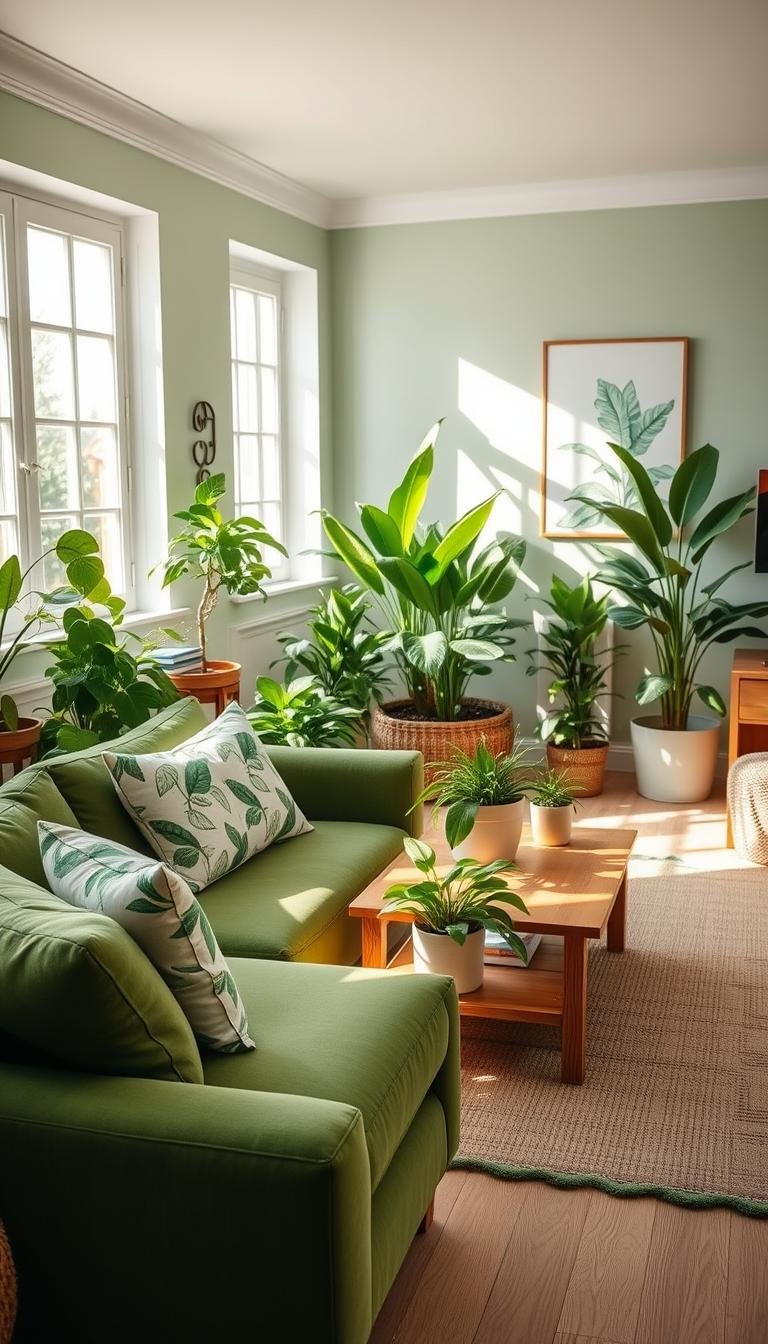
Green can feel airy, earthy, or deeply cocooning, depending on the shade and where you use it. If your home needs a lift, green offers more than a paint color: it can add a quieter mood, a natural note, or a confident focal point. The right choice can make your space feel connected to the outdoors without turning it into a theme room.
These living room designs green inspiration can help you decide how much color suits your room, whether you rent or own, and how your light changes the result. You’ll find practical ways to use green beyond painted walls, then bring in natural textures for warmth and depth. You can start with one green surface, one piece of furniture, or a few well-placed natural accents.
How to Choose a Green That Works With Your Light
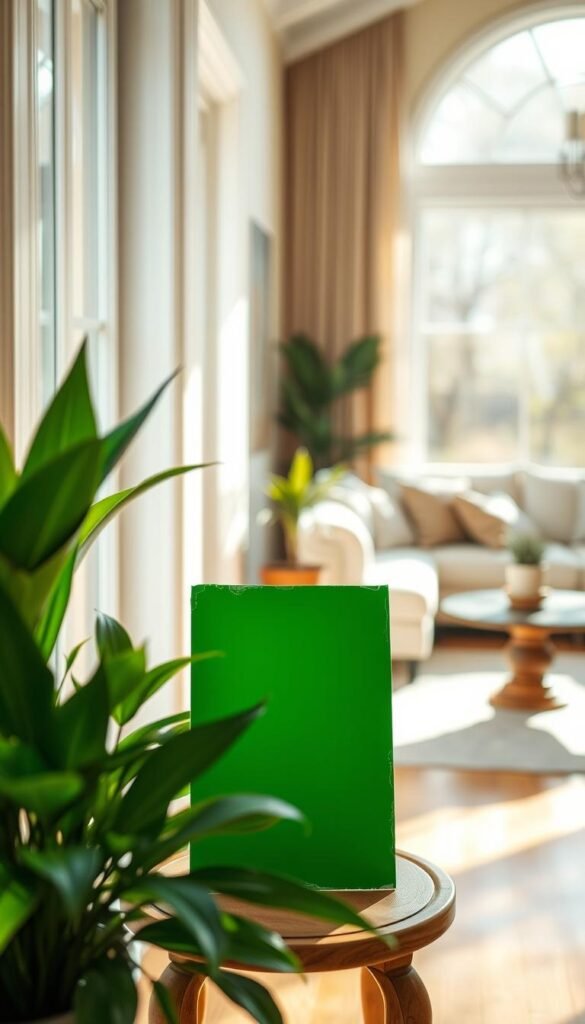
Start by checking whether the green leans yellow, gray or blue, since that undertone shapes its warmth. LRV means Light Reflectance Value, a scale from 0 to 100 that indicates how much light a paint reflects, with higher values reflecting more of the light the paint receives. A higher LRV reflects more light, but cannot brighten a room beyond the light it receives.
Green is a secondary color made from blue and yellow. Yellow-green often feels warmer, gray-green more muted, and blue-green cooler or fresher. A warm green for a living room can look golden under 2700K warm-white bulbs, then sharper and grayer beneath 4000K-and-higher cool daylight bulbs.
Judge a green paint sample in the room’s morning and evening light, not by its appearance on a store card.
Read the undertones before choosing a shade
Look at the color next to your fixed finishes, such as flooring, stone, and a sofa you plan to keep. A yellow undertone can make a cool gray floor feel more pronounced, while blue-green may look crisp beside warm wood. Sherwin-Williams Softened Green (SW 6177), with an approximate LRV of 53, can keep a low-light or north-facing living room feeling open and restful.
Test the color under your room’s lighting
Paint large samples on different walls and check them in daylight and under your electric light. A bedroom color-testing method also works in a living room: view large paint samples at different times before settling on a hue. Compare a sample in the room’s actual light before committing to all four walls.
Living Room Designs Green: Paint Shades for Every Mood
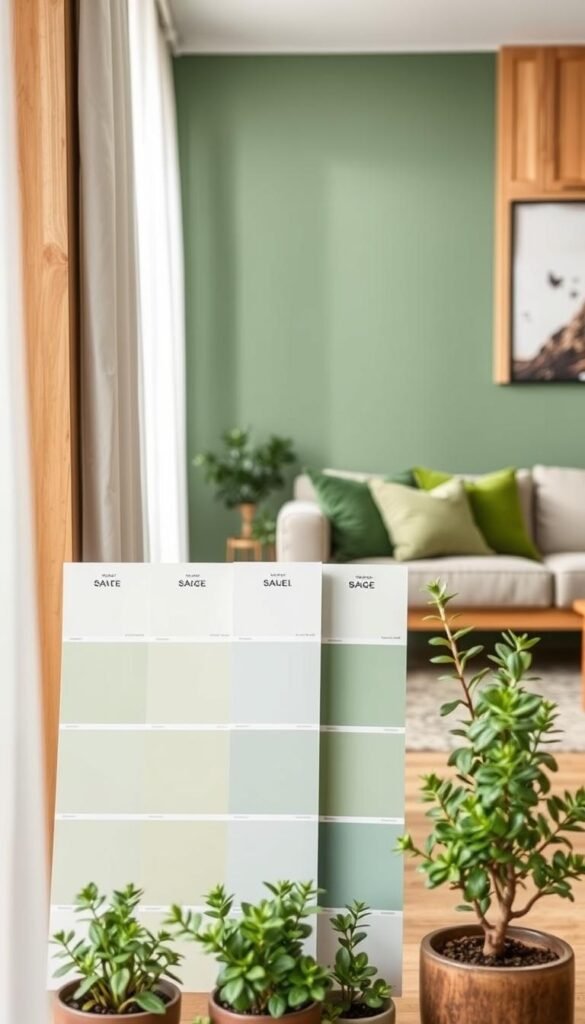
For a bright, airy look, Sea Salt is the lightest of the five listed options, with an LRV of 63.233. Its soft coastal character comes from a green-gray-blue blend, making it a natural fit for a relaxed green living room. A light sage green with an LRV in the 40s or higher can help keep a living room bright.
Use this table to compare shades by depth and likely role. The numbers make it easier to narrow your choices, but the color on your wall will still respond to the room around it.
| Shade and maker | LRV | Undertone or depth | Suggested use |
|---|---|---|---|
| Sea Salt, Sherwin-Williams SW 6204 | 63.233 | Soft coastal green-gray-blue | Airy living room walls |
| Clary Sage, Sherwin-Williams SW 6178 | 40.959 | Warm gray-green | Whole rooms or feature walls |
| Evergreen Fog, Sherwin-Williams SW 9130 | 30.402 | Muted gray-green | Accent walls or studies |
| Pewter Green, Sherwin-Williams SW 6208 | 11.826 | Deep gray-green | Dramatic accents or cabinetry |
| Saybrook Sage, Benjamin Moore HC-114 | 45.46 | Balanced mid-sage green | Flexible mid-tone walls |
Clary Sage can read almost like a warm neutral across a whole room, while Evergreen Fog makes a more noticeable feature surface. Pewter Green gives a fireplace or cabinet a stronger sense of depth. For another warm sage option, Benjamin Moore October Mist (1495) is a soft shade that glows under lamplight and has an LRV of 46.
If you want more paint-color examples, compare soothing green and beige palettes and consider how a soft blue-green like Sea Salt might fit your room. Choose the shade that suits your preferred mood, then judge its appearance from a sample on your own wall.
Take Green Beyond the Walls
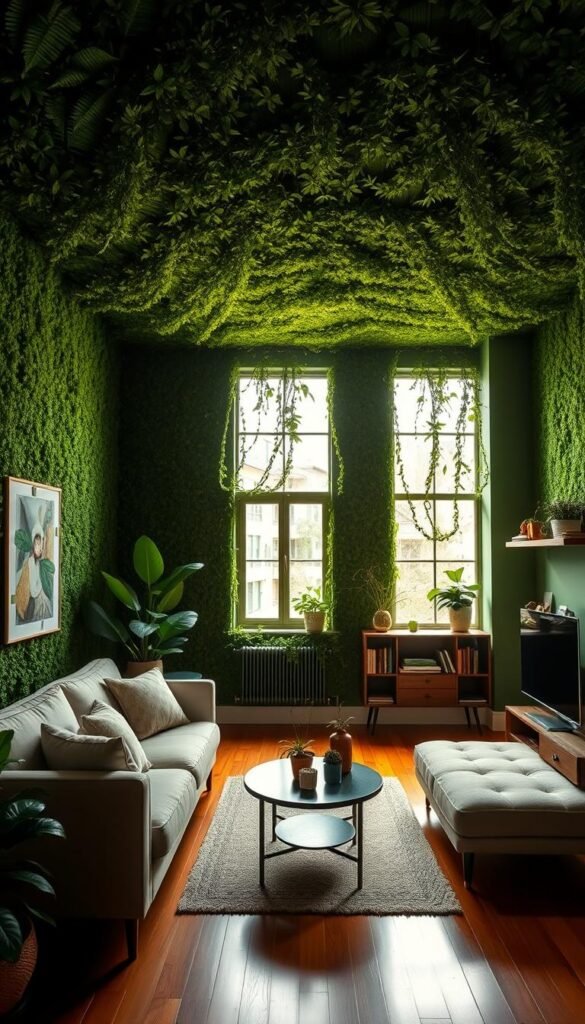
A green ceiling can make the color feel intentional from floor to roof without requiring every surface to match. A continuous color field can draw the eye upward and make the walls feel more enveloping. Green can continue from walls onto trim or a ceiling for a cohesive room.
Living room designs with green walls can feel especially unified when the trim shares their color. You might paint the ceiling the same shade for a full-color scheme, or use a nearby green to keep subtle variation. Wood paneling can break up the painted surfaces and introduce a different texture.
Carry the color onto the ceiling
Repeating the wall color overhead can make a living room feel wrapped in one deliberate choice. The approach works with muted greens as well as deeper shades, though the finish and amount of daylight affect how enclosed the room feels. Keep the transition clean at the edge of the ceiling for a crisp result.
Use paneling and trim to shape the color
Paneling gives a broad stretch of green walls a visible break, particularly when the boards are stained wood or painted a separate shade. For a named organic pairing, the 2026 HGTV Home by Sherwin-Williams Honest Essentials collection includes Secret Garden (HGSW6181) and Universal Khaki (HGSW6150) in its Conscious Color trend. Benjamin Moore Knoxville Gray has also been used across walls, trim, and fireplace brick for a unified painted finish.
That all-over treatment creates a strong impression, so decide where you want the eye to pause. If you want more contrast, keep the ceiling or paneling a separate, quieter color.
Make the Fireplace or Built-Ins the Focal Point
A fireplace or built-in is a natural place to concentrate a stronger green without covering every wall. One clear focal point helps your living room feel intentional while leaving other surfaces quieter. Choose one architectural feature to carry the strongest color or botanical detail.
Sherwin-Williams Evergreen Fog (SW 9130) is a smoky gray-green that can work behind a sofa or around a fireplace. On a fireplace wall, the shade can frame the opening; on an accent wall, it can give the seating area a calmer backdrop.
- A fireplace wall painted smoky green
- Built-in shelves with green backs or trim
- A paneled accent wall behind the sofa
- Botanical wallpaper or a gallery wall of plant art
Botanical wallpaper adds pattern without relying on more paint, while framed botanical art can bring a lighter note beside dark green walls. A gallery of leaf drawings or prints also gives the eye a smaller-scale detail against a broad, deep surface.
For more display approaches, explore botanical wall decor and greenery ideas that can frame a fireplace or add foliage to a compact room. Keep the objects on open shelves edited so the accent remains visible.
Ground Green With Natural Materials
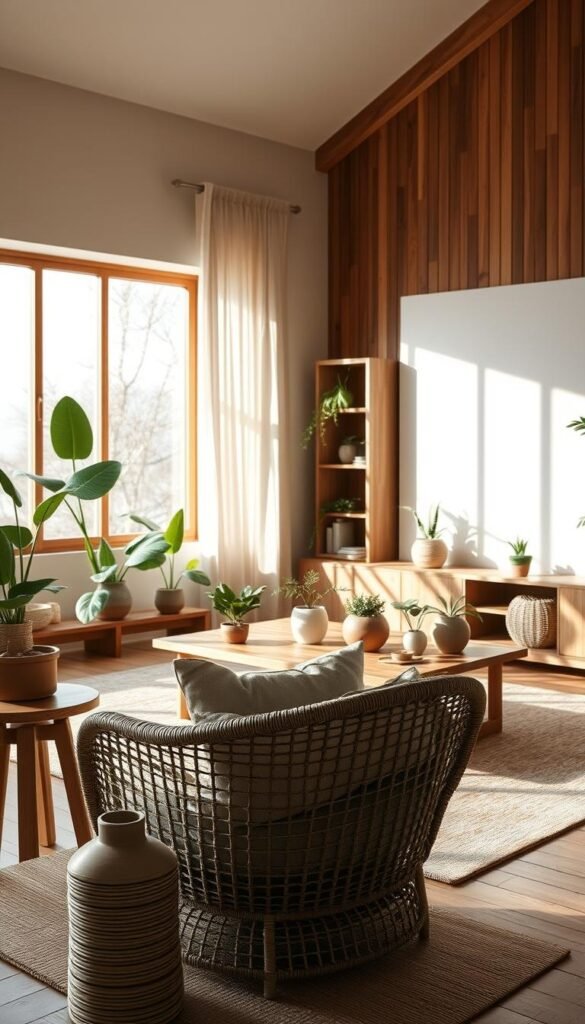
Warm wood is an easy counterpoint to green because its grain adds variation without introducing another strong color. The natural pattern keeps a green palette from feeling flat, whether the room has sage walls or a deeper feature surface. Repeat tactile materials to make green feel settled rather than stark.
Wood can make a pale green feel more grounded, while a metal detail gives a deeper shade a little polish. Sage green decor for a living room can lean relaxed with woven pieces or feel more tailored with warm metals and clean-lined furniture.
- White oak or walnut beside sage paint or upholstery
- Cream or warm-white textiles with rattan
- Jute paired with terracotta or clay
- Brass or aged bronze beside deep green
- Leather with warm wood for a richer, rustic note
Wicker, raw wood, clay, and leather also work beside green, including brighter Kelly green. A Kelly green cushion against a wooden chair can feel fresh and rustic, while a walnut table and leather seat bring a quieter contrast.
Try one material in more than one scale, such as a walnut table and a small walnut frame. This gives the room a visual thread without making every piece match. Repeat one natural material in at least two places to make the palette feel connected.
Bring Green In Through Furniture and Decor
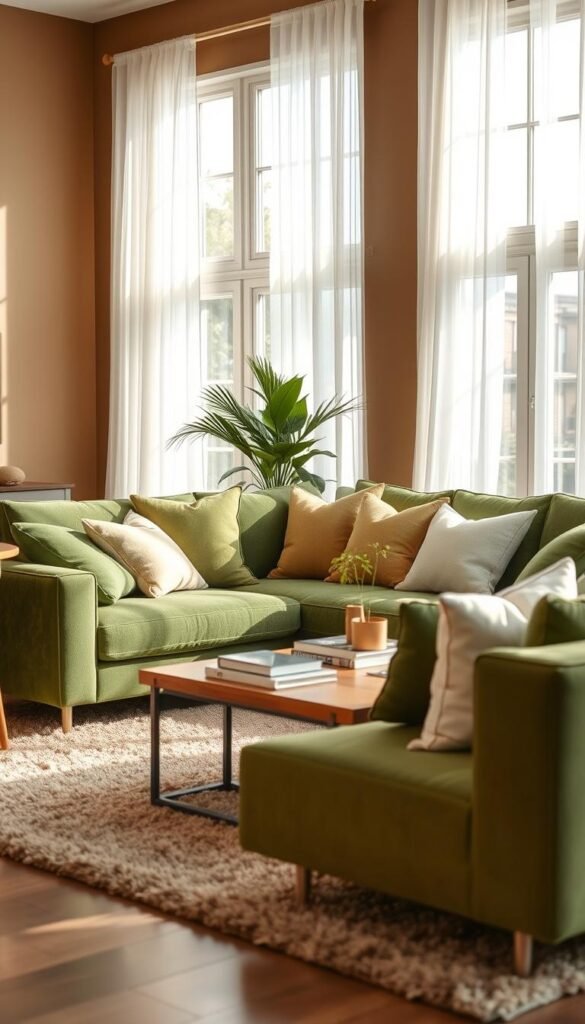
A green sofa can make the palette feel deliberate even when the walls stay neutral. One substantial piece can anchor a room, while a few smaller accents let you try the color with less commitment. You can bring green into a living room without painting its walls.
Sage green decor for a living room can appear in upholstery, not only on painted surfaces. A green sofa is a larger commitment than a cushion, but it can become the room’s main color note. For a gentler change, add a green accent chair or a pair of cushions.
- Choose a green sofa or accent chair as the main color statement.
- Add green cushions or curtains to a neutral seating area.
- Hang green artwork to bring color to an open wall.
- Use green planters or tabletop accents for small, movable touches.
Curtains can introduce a tall band of color without changing the wall finish. Artwork is even easier to swap, and a planter or tray can test a hue with little effort. These choices suit a modern living room where one statement object can do more than many small decorations.
A Noguchi table can sit among other statement furniture without competing with a green sofa or artwork. Before choosing a large piece, check the fabric or finish beside your existing rug and wood tones.
Add Houseplants That Fit Your Light
Match a plant to the window or electric light in the room rather than choosing by leaf shape alone. Low-light tolerance is not no-light tolerance; every indoor plant needs at least some light to survive. Check the actual light at the plant’s display spot, not just the room’s brightest window.
Trailing foliage softens a shelf or mantel, while upright leaves give an end table or bookcase a more structured look. Pothos can trail from a hanging planter, shelf, or mantel. Chinese evergreen has a more upright shape and can grow in rooms with artificial lighting.
| Plant | Suitable light | Display spot | Care caveat |
|---|---|---|---|
| Pothos, Epipremnum aureum | Range of light conditions | Hanging planter, shelf, or mantel | Needs some light to survive |
| Chinese evergreen, Aglaonema | Low light or artificial lighting | End table or bookcase | Artificial light must still be present |
| Bird’s nest fern, Asplenium antiquum | Bright indirect light; tolerates low light | Table near a window | Best growth comes with bright indirect light |
| Monstera adansonii | Bright indirect light; tolerates low light | Shelf or plant stand | Growth may be slower in low light |
| Prayer plant, Calathea louisae | Medium light; tolerates low light | End table or bookcase | Leaf color may fade in low light |
For a north-facing window, Fittonia suits high humidity and moderate moisture. Asplenium difforme x dimorphum also suits a north-facing window, with average moisture and rich, well-drained soil. Those needs matter as much as the look of their leaves.
A plant display can bring a little more life to a room; see these plant choices for different light needs for more examples of matching foliage to a space. Check the light where the plant will sit, since a bright window across the room may not light a shaded shelf.
Make Green Work in a Small or Open-Plan Layout
In a small room, deep green can still work when you concentrate it on one surface rather than every wall. A contained dark accent can bring depth without swallowing the whole space. Reserve deep Pewter Green for one accent plane or built-in shelves in a compact living room.
Small living room designs in green can use a single dark surface, then keep the rest of the room visually open. Furniture should suit the room’s scale, though one oversized piece can work if other items leave enough circulation space. In an open-plan living room and kitchen, the sofa can help mark the seating zone.
Keep a small room open without avoiding deep green
A large sofa may be comfortable and useful, but it needs breathing room around it. Measure the actual route people use to cross the living room before adding another chair or cabinet. A coffee table commonly sits about 14-18 inches from the sofa, close enough to reach without crowding the seat.
Use the sofa to define an open-plan living area
In a combined living and dining space, placing the sofa with its back toward the dining table helps separate the two areas. The sofa acts as a boundary without blocking the entire room. Use its position to create a clear seating zone rather than relying on a divider.
- Measure the main walkway and protect its clear route.
- Keep the sofa proportionate to the seating zone.
- Face the sofa back toward the dining area to define an open plan.
- Leave practical space around the coffee table, usually 14-18 inches from the sofa.
A main walkway is typically about 30-36 inches wide, giving people room to move through the space. Keep the main route through the room clear before adding another chair or side table.
Pair Green With Colors That Add Contrast
A companion color can soften green, sharpen it or make its undertone more noticeable. The contrast you choose can be a small accent or a broad surface, depending on how bold you want the room to feel. Use a warm neutral on a larger surface when two strong colors compete.
Coral, blue, gold, and warm white each create a different relationship with green. Farrow & Ball Old White is a dirty white with green pigment, so it can bring an earthy quality to a living room without reading as stark white.
| Green direction | Companion color | Useful example | Visual effect |
|---|---|---|---|
| Deep moss | Coral | Coral cushions against deep green | Warm, lively contrast |
| Sage | Blue | Blue upholstery or a blue rug | Cooler, layered color |
| Green | Gold | Gold frames or small details | Bright, polished accent |
| Pale green | Warm white | White sofa beside pale green walls | Light, gentle separation |
Blue upholstery or a rug can add another cool note beside sage. Gold details bring warmth in smaller amounts, while pale green against a white sofa keeps the seating area bright. Deep green can also sit comfortably beside dusty rose for a softer, less expected contrast.
Old White offers a more grounded alternative to a bright white, with its green pigment linking it to the main color. Place it on a wider surface if the room already has several strong accents. If two bold colors compete, use a warm neutral on a larger surface to give the eye a place to rest.
Match the Green Palette to Your Decorating Style
The same green can feel contemporary, mid-century, or traditional depending on its finish, companions, and surrounding materials. Style comes from the full room, not from a paint name alone. Choose colors and finishes that support the furniture and materials you already want to keep.
Modern living room designs in green can use crisp color blocks or a restrained monochrome scheme. A clean edge between green and a neutral can make the color feel graphic, while repeating green in a few different strengths keeps the palette calm. Both approaches suit modern living rooms when the shapes and finishes stay considered.
Modern rooms with clean color blocks
For a color-blocked room, give green one clear job: a painted wall, a sofa, or a large piece of art. Keep the remaining pieces simple enough to let that decision read clearly. A monochrome scheme can use pale, mid-tone, and deep greens together, with changes in texture providing the variation.
Mid-century rooms with olive and warm accents
Mid-century palettes often pair olive or teal with natural wood, mustard, or burnt orange. Walnut and teak furnishings give the colors a period-friendly warmth, while textured fabric can soften hard-edged furniture. For more ideas on furniture and flow, explore mid-century living room layouts and palettes.
Serpentine No.192, a pale olive shade, paired with Freegrove Mustard offers one way to bring a more unusual green-and-yellow pairing into this style. Keep the mustard in a smaller accent if you want the wood and olive to remain the room’s main impression.
Rustic and heritage rooms with deeper greens
Rustic and heritage rooms can combine stone, wood, paneling, and deeper green. These materials give dark color a familiar setting rather than making it feel severe. Deep, pigment-rich greens can also create a cocooning, comforting effect when you use them in a contained area.
For green living room ideas for 2025, lasting choices are more useful than a color picked only for a short-lived trend. Secret Garden with Universal Khaki is one organic green-and-neutral pairing; natural materials and familiar furniture can keep a similar palette relevant over time. For a cocooning feel, choose a deep, pigment-rich green for a contained area and balance it with a few lighter surfaces.
Deep green works best as a deliberate choice: give it a contained area, then let lighter surfaces preserve balance.
Choose One Green Idea and Test It at Home
A green room can begin with one thoughtful change instead of a complete redesign. Start with the mood you want, whether that means a fresh note or a more enclosed feel. Then let your room’s light and existing materials guide the supporting colors.
Your first step can be a paint sample on one wall or a green cushion moved into the seating area. Notice how it looks in daylight and under your electric light before adding more. Place one sample or accent in the room and live with it through different lighting before expanding the scheme.