A room can feel like a place to exhale even before you change a single major piece. If your living room feels busy, uncomfortable, or unlike you, a few thoughtful choices can make home feel more welcoming.
Cozy living room designs inspiration can help you refresh a small apartment or rethink a large family room. Comfort comes from choices that suit your routines, not from buying a matching furniture set. A well-used chair, clear walkway, and favorite object can matter more than another decorative item.
In the ideas ahead, you’ll find practical ways to arrange furniture, soften the light, choose color, and add character. Each decision can make the room feel more personal without crowding the floor or every surface.
Start with the way you want to spend time at home, then let comfort and personality guide each choice.
How to Turn Cozy Living Room Designs Inspiration Into a Practical Plan
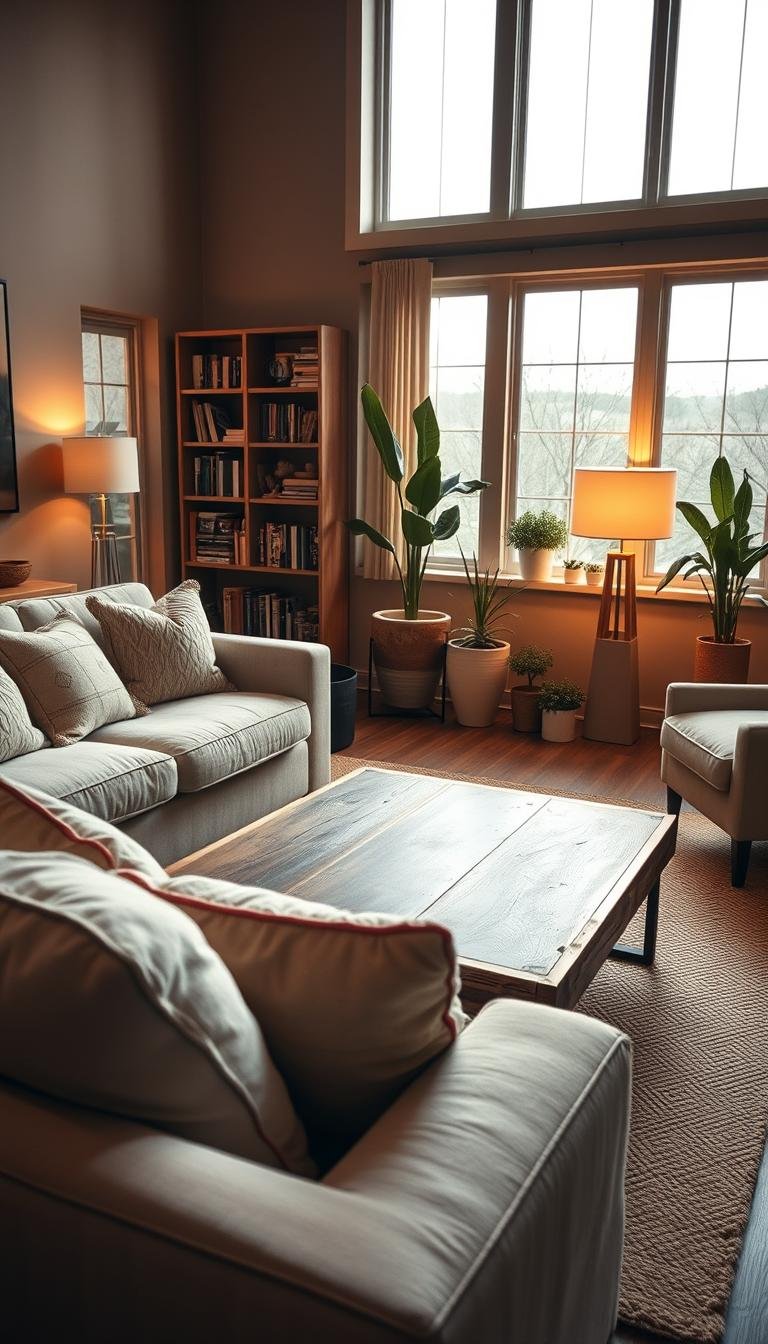
A cozy room balances what your body feels with what your eyes notice. Comfort begins with tactile softness, a warm glow, personal objects, and enough breathing room to move easily.
Visual weight means how much a furnishing draws the eye relative to its apparent size and transparency. An oatmeal linen sofa feels soft and grounded, while woven fibers and soft ivory curtains add texture. A Lucite coffee table gives you a useful surface without adding much visual weight.
Those layers work because they bring different textures into the same living space. Woven fibers feel substantial, while sheer-looking materials can keep the room from seeming crowded. A soft, comfortable living room can feel polished without relying on a pile of accessories.
Keep one open surface or patch of floor visible so the layers still have room to breathe.
That clear area might be a section of floor beside the sofa or a coffee table left mostly bare. The open space gives your eye a resting place and makes the room easier to use.
- Tactile softness: linen upholstery or a plush throw.
- A warm glow: light that feels gentle after sunset.
- Personal objects: a favorite book or a family keepsake.
- Breathing room: an open surface or clear patch of floor.
Throws can be made from alpaca, cashmere, or microfiber, depending on the feel you like. A rattan basket can hold extra blankets within reach without leaving them in a heap.
Set Walkways That Feel Easy to Use
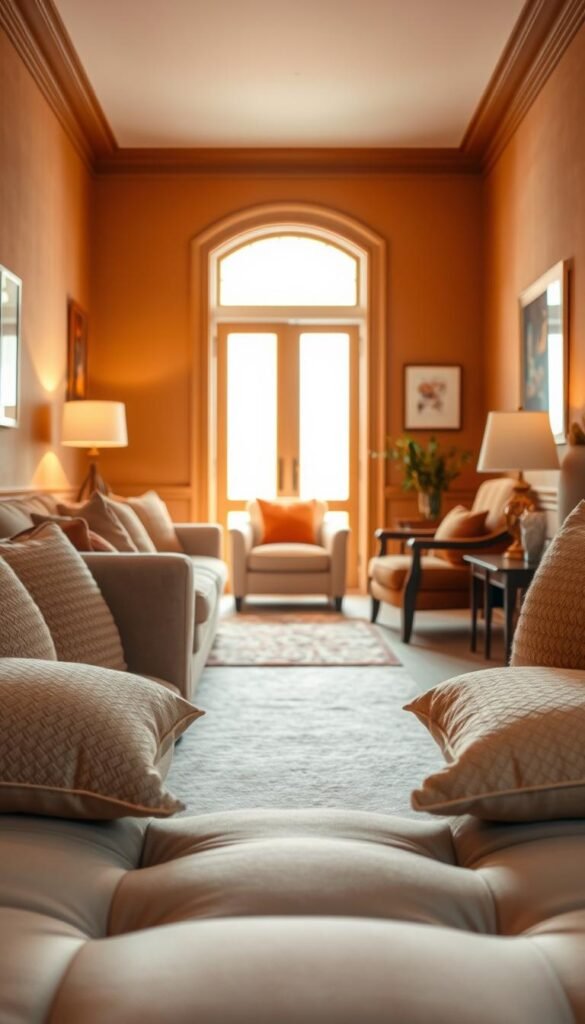
A primary route through your seating area needs about 36 inches of clear space. That main path lets people move through the living room without squeezing between furniture.
Aim for 36 inches on a primary walkway; 30 inches may work for a secondary route in a tight room. Movement feels tighter on the smaller route, while spacious or high-traffic rooms benefit from 42-48 inches.
| Route | Clear space | When it fits |
|---|---|---|
| Primary walkway | 36 inches | Everyday main route |
| Secondary route in a tight room | 30 inches | Tighter movement |
| Spacious or high-traffic route | 42-48 inches | Extra room to pass |
Clearance narrower than 30 inches restricts movement. The best check is a real one: measure between furniture edges, not just between the center points of your pieces.
Pay close attention to corners, where a route can narrow as you turn. Include door swings in the measurement, since an open door may take up the space you planned to use.
A recliner changes its footprint when the footrest is extended. For a 36-inch primary walkway, check the narrowest point beside the fully extended chair, not only its closed position.
Measure the route at its tightest point, especially where furniture corners meet. Walk the route with doors open and recliners extended before settling on the arrangement.
Choose an Area Rug That Grounds the Seating
Start by comparing the rug’s width with the sofa, then check how it meets the other furniture. A useful rug visually connects the seating without blocking the route through the room.
Average living-room area rugs are 8’x10′ and 9’x12′, and a rug should extend at least 6 inches beyond each sofa side. Eight inches on each side is ideal when the room allows it.
| Room or constraint | Rug orientation or placement | Practical result |
|---|---|---|
| Long, narrow room | Lengthwise | Follows the room’s shape |
| Compact room | Horizontal may work better | Suits the shorter footprint |
| Sofa against a wall with a tight budget | Rug floats in front | Grounds seating without reaching under all furniture |
When not every piece can fit on the rug, keep all furniture legs either on it or off it. That clear choice helps the seating read as one grouping instead of a collection of unrelated pieces.
A larger gap of 30-36 inches between large furniture pieces may not fit every room. When it will not, 18-24 inches is the suggested minimum clearance.
In a small room with a sofa against a wall, a rug can float in front of the furniture. This placement can ground the seating without requiring the rug to run beneath every piece.
For more help with placement, see these area rug ideas for a living room. Before buying, mark the intended rug edge on the floor and make sure the route around it remains usable.
Pick Furniture That Fits the Way You Live
Choose each large piece for a specific job, such as lounging, hosting, or hiding everyday clutter. Furniture should fit your room and routines, rather than forcing you to work around it.
Choose pieces that let you sit comfortably while keeping the route and important sightlines clear. A furniture plan works best when the sofa, chairs, and tables each support a real activity.
Modern Living Room Furniture Ideas That Keep the Room Comfortable
Modern living room furniture ideas work best when clean lines and comfortable upholstery serve how you use the room. A curved chair can soften a boxy layout, and low-profile shapes can preserve a broad view across the space.
Neither shape is a universal rule. If you read on the sofa or host family often, prioritize a seat that feels good for those activities. A room furniture design plan can balance comfort, scale, and function without making every piece match.
Compact Sofas and Loveseats for Small Footprints
Compact sofas and loveseats with clean lines and slim profiles can keep a small living room from feeling overwhelmed. Their footprint can leave more space for a chair or an easier route around the seating area.
If your room has enough space, a low-back sectional measuring 10 by 10 feet can preserve sightlines. Its lower back makes the large seating piece feel less like a wall across the room.
Tables and Ottomans That Do More Than One Job
A storage ottoman gives you a place to rest your feet while keeping small items out of view. A storage coffee table offers a work surface with a hidden place for things you use often.
Nesting tables can spread out when guests need extra surfaces, then tuck away when you want more open floor. A simple selection checklist can keep the choice practical:
- Sitting comfort: try the depth and back support.
- Clear route: preserve an easy way through the room.
- Needed storage: choose a piece with useful capacity.
- Unobstructed sightlines: consider the view across the space.
Sit on a sofa before committing, since its depth and back height shape how you will use the room.
Layer Lighting for a Softer Evening Glow
A single bright ceiling fixture rarely makes every corner comfortable at night. Several light sources give your living room general illumination, light for close activities, and a softer accent.
Use ambient, task, and accent lighting instead of relying on one overhead source. A dimmable central fixture provides ambient light, while lamps beside seating help with reading or other close activities.
| Lighting layer | Example fixture | Job |
|---|---|---|
| Ambient | Dimmable central ceiling fixture | General room light |
| Task | Floor or table lamp beside seating | Reading or close activity |
| Accent | Sconce or picture light | Highlight artwork or a wall detail |
Shades made from linen, frosted glass, or paper diffuse light more softly than clear glass. A pendant above a seating area can hang just above seated eye level, so it lights the area without dominating your view.
For a 14-by-18-foot room, a chandelier about 32 inches across is a useful starting point. That estimate adds the room’s length and width in feet, then uses the total as the fixture diameter in inches.
Pinterest’s 2026 trend data showed searches for pendant lamps rising 40 percent year over year. Treat that interest as a style cue, not a reason to choose a fixture that does not suit your seating.
A layered lighting approach can make an evening room feel gentler without losing useful light. Turn on each layer separately to confirm that no seat is left in harsh glare or deep shadow.
Use Color to Make the Room Feel Calm and Personal
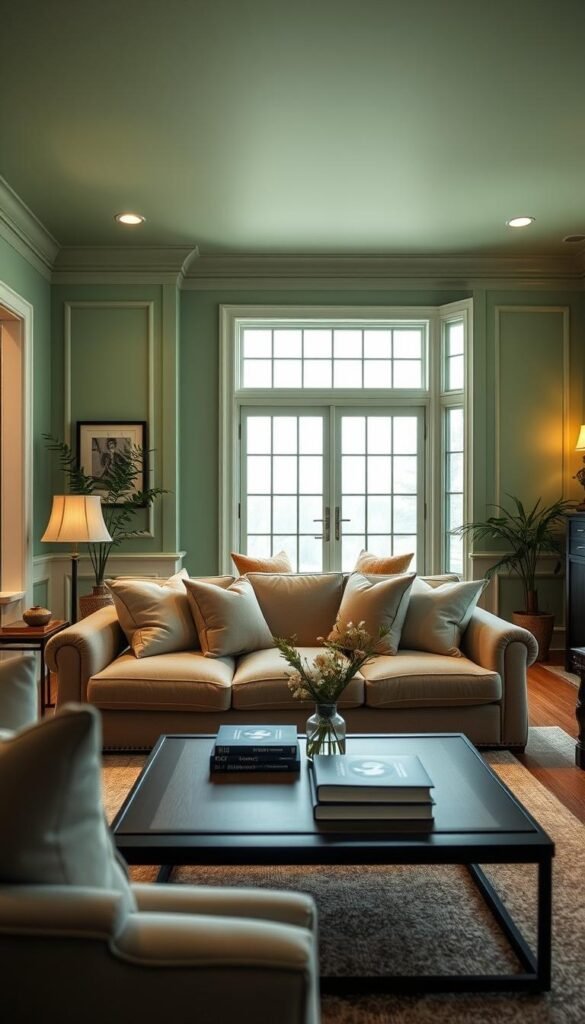
A small room can feel intimate in a deep color or soft and calm in a carefully tested light shade. Color can shape the mood without dictating every furnishing or object.
A saturated, continuous color can feel enveloping rather than visually fragmented. Pale colors can also work well, but their appearance changes with the light in your room.
| Paint | Mood or use | Application or condition |
|---|---|---|
| Farrow & Ball Cromarty | Monochromatic | Walls, ceiling, and millwork |
| Farrow & Ball Card Room Green or Salon Drab | Cocooning | Walls, trim, and doors |
| Benjamin Moore Onyx White OC-74 | Soft light color | Matte finish; test in the room |
| Benjamin Moore Gravel Gray | Deep and cocooning | Small den or powder room |
| Sherwin-Williams choices | Cozy or subdued | Anonymous and Sweater Weather for warm depth; Dover White for dim rooms; Charcoal Blue for a subdued mood |
Cromarty can cover walls, ceilings, and millwork for a monochromatic effect. Card Room Green or Salon Drab can continue across walls, trim, and doors to create a cocooning effect.
Benjamin Moore Onyx White OC-74 is recommended in a matte finish rather than a flat finish. Its appearance changes with the light, so test Onyx White in the room where you plan to use it.
Gravel Gray is a deep, cocooning option for a small den or powder room. Sherwin-Williams Anonymous is a deep brown neutral, while Sweater Weather is a warm green-gray.
Dover White is an option for dim rooms, and Charcoal Blue offers a subdued mood. Paint a sample where you will use it and check it in both daylight and evening light.
Borrow 2026 Trends Without Losing a Cozy Feel
Treat a trend as a source of one useful detail, not a requirement to redesign the whole room. Selective inspiration lets your own comfort and taste stay in charge.
Choose trends for one detail that supports the room, not a complete look you have to copy. Pinterest’s 2026 home-trend forecast includes styles ranging from theatrical decor to unexpected, space-inspired finishes.
Five Trend Directions to Consider
The five forecast aesthetics are NeoDeco, FunHaus, Afrohemian, Extra Celestial, and Opera Aesthetic. Cozy living room designs inspiration on Pinterest can be sorted by color, material, or feeling instead of copied as a complete room.
You might save images for their warm tones, then leave out the dramatic shapes. Or you could borrow a sculptural form while keeping the rest of your room familiar and calm.
Warm Materials and Modern Heritage
Warm minimalism pairs simple forms with natural textures, soft neutrals, and tactile materials. A wood coffee table, linen upholstery, or stone surface can bring warmth without filling every corner with objects.
Modern Heritage brings traditional details, such as classic moldings and historical silhouettes, together with modern materials, furnishings, and updated colors. Mixed wood tones can bring depth: white oak flooring, walnut cabinetry, and pine or ash furniture can share a room.
Fluted or reeded surfaces can appear on a fireplace surround, feature wall, or furniture. Newer treatments include wider spacing and deeper grooves, which give the surface a stronger pattern. For another way to use natural materials, consider natural wood in a warm minimalist room.
Metallic Sheen and Otherworldly Details
Pinterest searches for leather banquettes and brass aesthetic each rose 35 percent year over year in its 2026 trend data. Searches for alien-core aesthetics rose 80 percent, while opalescent finishes rose 115 percent.
These figures signal interest in expressive materials, not a need to use all of them together. Brass can add a small glint, and an opalescent finish can change in the light.
Choose a single trend element that supports the room’s existing color and comfort.
Give Art and Personal Collections a Clear Place
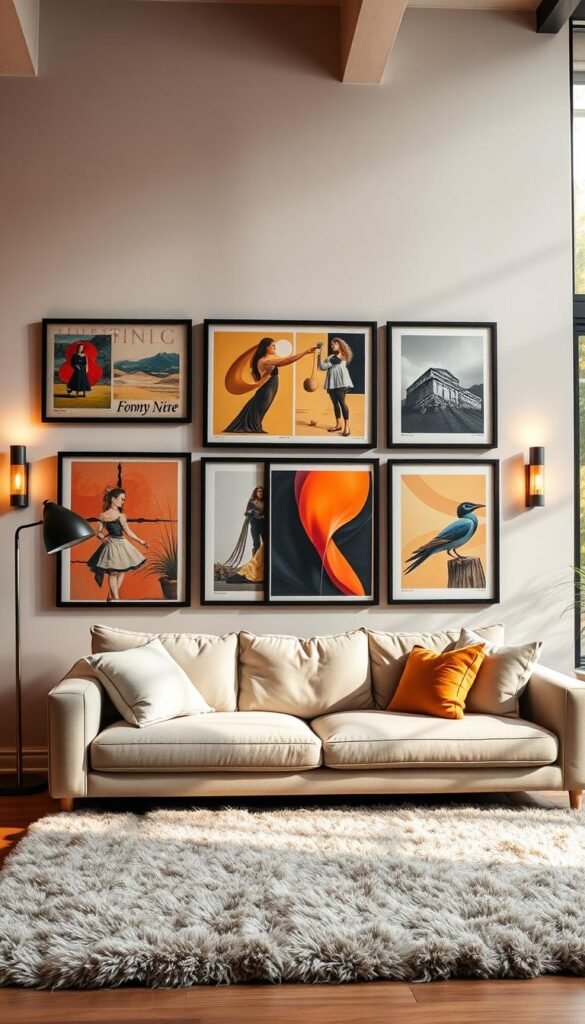
A personal focal point gives the eye somewhere to land and tells guests something about the people who live there. One clear display can anchor a view without using floor space.
Choose one large artwork, a curated gallery wall, or a meaningful collection as the room’s visual anchor. Museum posters by Alice Neel and Egon Schiele, for example, can form part of a gallery wall.
Distinct art and textile traditions should keep their names and maker context. Treating them as interchangeable motifs strips away the people and practices behind them.
Pinterest’s 2026 trend data showed searches for antique bar carts rising 100 percent year over year. An antique bar cart can make a decorative focal point while giving you a useful place to support hosting.
Use a few simple actions to edit your display:
- Choose a focal object you want people to notice.
- Group related pieces by subject, color, or scale.
- Leave breathing room around the display.
- Rotate items that are not currently on view.
These decisions help a personal collection feel intentional rather than scattered across every surface. Keep the display to the pieces you genuinely want to see every day.
Bring in Natural Materials and Tactile Finishes
A room feels more welcoming when smooth, soft, and visibly natural finishes sit together. Texture adds warmth without requiring a busy color palette.
Balance wood, stone, woven materials, velvet, and soft upholstery rather than making every surface feel the same. A wood coffee table can sit beside a woven basket and a comfortable upholstered seat.
Wood brings visible grain, while stone adds a cooler, firmer surface. Velvet can make a chair feel plush, and woven fibers give a basket or accent chair a more open look.
Rattan accent chairs and bamboo details are optional touches, not a theme you need to carry throughout the room. Pinterest’s 2026 trend data showed searches for rattan accent chairs rising 50 percent year over year and bamboo beaded curtains rising 60 percent.
A restrained natural palette might combine wood paneling, green accents, and a stone fireplace. Natural materials also complement colorful rooms, where they can give bold upholstery or walls a calmer neighbor.
For a wider mix of materials, explore modern living room layout ideas that use wood, texture, and clean lines. Repeat one natural material in at least two places so the room feels connected rather than themed.
Make Storage Part of the Design
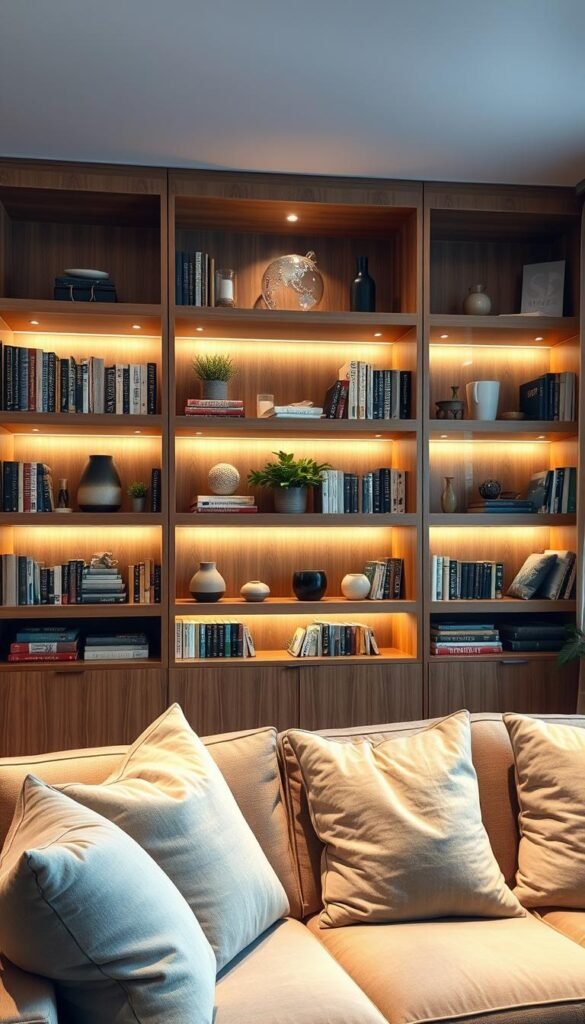
Storage works best when the things you use most have a nearby, predictable home. Easy-to-reach storage can keep everyday objects accessible while reducing visible clutter.
Give frequently used items a specific place close to where you use them. A shelf can display a few meaningful objects, while a closed compartment can keep practical items out of sight.
Built-In Shelves for Books and Display
Built-in or freestanding bookshelves can hold your books and a few meaningful objects. An arched built-in shelf can also include an overhead light, combining a soft glow with a place to display favorite pieces.
Keep the arrangement useful as well as personal. Shelves near a seat can keep books easy to reach, while a higher shelf can hold objects you do not handle every day.
Hidden Storage for Everyday Clutter
A storage ottoman hides items while giving you a place to rest your feet. A storage coffee table offers a surface for daily use and a compartment for things you would rather not leave out.
Either piece can help a living space feel more orderly without adding a separate storage unit. Choose the one that fits the way you use the seating area.
Small Surfaces That Keep Essentials Handy
Nesting tables can provide extra surfaces when you need them and tuck together when you do not. A small table beside a chair can keep a drink or book close without filling the main route.
A quick reset can give common objects a home:
- Books: place them on a shelf or beside your reading seat.
- Throws: fold them in a basket or storage ottoman.
- Remotes: keep them in one tray or drawer.
- Games: store them together where you can reach them.
Leave some shelf space empty so storage does not become another crowded display.
Mix Vintage Character With Modern Comfort
A room can feel both current and collected when one period does not dominate every surface. A thoughtful mix of old and new gives your decor character without making the space feel like a set.
Pair a vintage silhouette or heirloom with clean-lined modern furnishings and soft seating. Each piece can stand out while still serving the way you use the living room.
Modern Cozy Living Room Designs Inspiration With Collected Details
Modern cozy living room designs inspiration can start with one meaningful older piece. A collected room might pair an antique Japanese screen, a vintage Swedish rug, and contemporary ceramics.
Let the materials and shapes relate without matching. A clean-lined sofa can make an ornate screen feel at home, while soft seating keeps a collection from seeming formal.
Modern Living Room Decor Ideas With Playful Patterns
Modern living room decor ideas can include one bold motif, a striped ceiling, or a theatrical accent. A single playful choice can add personality without turning the whole living room into a theme.
Pinterest’s 2026 trend data showed searches for vintage circus aesthetic rising 70 percent year over year, and big-top-style striped ceilings rising 40 percent. Searches for opera theatre rose 35 percent, while masquerade decor and wedding ceiling draping each rose 40 percent; midnight masquerades rose 95 percent.
Those numbers show signals of interest, not instructions to copy a trend. A bold ceiling or unusual antique can work best when quieter pieces surround it.
Pair the boldest pattern or antique with quieter surroundings so comfort remains the first impression.
Make a Small Living Room Feel Welcoming and Open
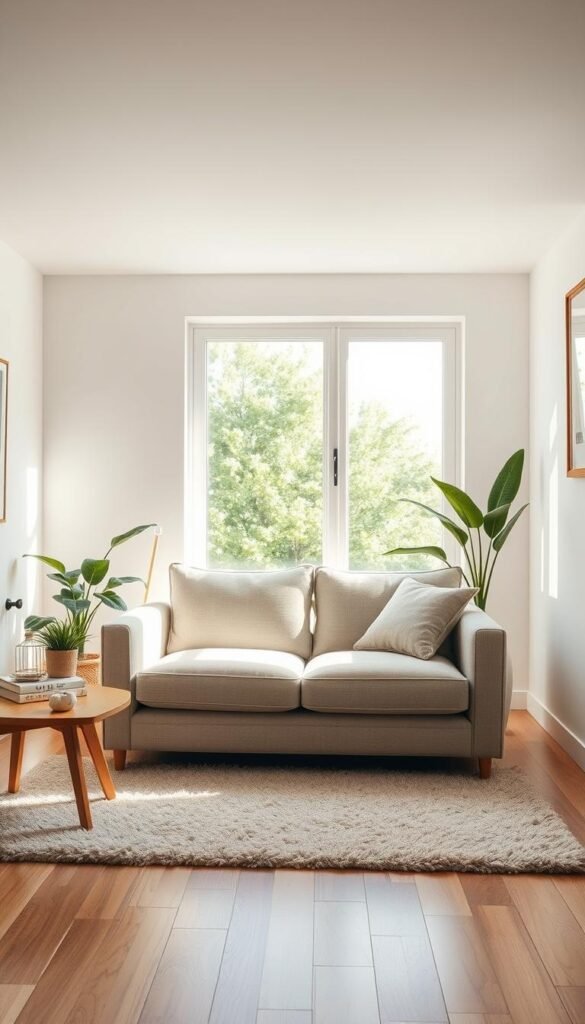
In a compact room, a few well-scaled pieces usually feel more generous than a crowd of undersized ones. Leave room to move while giving the eye one clear place to land.
Choose a visual anchor, protect the main route, and use soft layers selectively. Those choices can make a small living room feel inviting without making it feel packed.
Small Cozy Living Room Designs That Preserve Open Floor Space
Small cozy living room designs inspiration can be adapted to your own layout by choosing one visual anchor. That might be a sofa, a fireplace, or one large piece of art.
Use soft details where you will feel them most, rather than spreading accessories over every surface. A throw on the sofa can make the seating feel inviting without occupying another patch of floor.
Modern Living Room Design for a Small House
Modern living room design for a small house often works well with slim-profile furniture, a low visual profile, and pieces that serve more than one use. This approach can leave the space feeling open while giving each furnishing a clear purpose.
A sleeper sofa can turn a sitting area into a guest bedroom. Choose it when the extra sleeping space matters to your household, not just because it offers another function.
Elegant Small Living Room Ideas With a Light Touch
Elegant small living room ideas can rely on reflective surfaces and a few deliberate details instead of many small objects. A mirrored coffee table is one option, not a requirement, and can add a reflective surface to the room.
A polished, comfortable room design can still leave open space around the furniture. If a piece blocks the path or hides the room’s best light, reconsider its position before replacing it.
Refresh the Room With Simple, Personal Changes
A useful refresh can begin with moving one chair or editing one tabletop. Small changes can give your home a different feel without requiring new furniture.
Rearrange the objects and furnishings you already have before adding anything. A simple change can make a living room feel warmer or more personal when it supports how you use the space.
How to Decorate a Living Room With Simple Things
How to decorate a living room with simple things begins with arranging books, personal objects, throws, and plants with intention. A group of favorite books can turn an end table into a small curated display.
Ceiling-high curtains can draw the eye upward, while a tall plant adds dimension beside the seating. A 1940s Finnish rug can bring a distinct vintage note as one characterful item.
A No-Purchase Reset for a Different Feel
A no-purchase reset can start with a chair moved toward a different view. You can also change the angle of a small display or raise curtain panels to make the room feel new.
Try these steps before introducing another object:
- Clear one surface.
- Group a few meaningful objects.
- Move one piece to test a new arrangement.
- Live with the change before adding anything.
Give a new arrangement a few days of everyday use before deciding it needs another object.
Shape the Seating Around Reading and Conversation
The best seating arrangement depends on whether you want a quiet retreat, a place to talk, or both. Let the activity lead so each seat feels useful rather than simply filling an empty spot.
A reading nook and a conversation group can share a room when each has a clear purpose. That distinction matters in a large living room, where separate seating areas can support different routines.
A Quiet Corner for Reading
A chaise can make a comfortable reading or lounging spot. Keep a nearby surface for your book, then choose a comfortable light source that lets you read without needing to move into the main seating group.
A quieter corner gives you somewhere to retreat when the rest of the room is busy. In a larger layout, place it outside the main gathering area so both zones have room to work.
A Conversation Group for Company
Facing seats make it easier to talk because people can turn toward one another. Pairs of chairs and poufs create symmetry while giving you flexible seating that can shift when guests arrive.
A sofa can anchor the gathering area, with chairs or poufs arranged to welcome conversation. Keep the reading nook separate in purpose, even if both zones share a rug or open view.
Furniture should support how you spend time together, not make people shout across the room. Check that people can turn toward one another without blocking the route through the room.
Make the Fireplace Feel Soft and Connected
A fireplace feels more inviting when its finish belongs to the same material and color story as the seating area. The surround matters because a hard surface can otherwise feel disconnected from comfortable furniture.
Unglazed zellige and marble create different effects, but either can work with a considered palette and comfortable seating. A warm hue or organic finish can soften a fireplace visually, even in a modern room.
Unglazed zellige has a tactile, irregular look. Eight-by-eight-inch tiles offer one example of scale, not a rule for every fireplace surround.
A marble fireplace wall makes a quieter statement through its broad surface. An Azura marble wall can be paired with facing sofas, giving the seating a clear relationship to the fireplace.
Choose the finish with the rest of the room in mind, including the sofa and area rug. A warm, organic surface can feel at home beside modern furnishings when its colors connect with them.
View a finish sample beside the sofa and rug before committing to a surround.
Compare the sample in the room, where nearby materials can change how it looks. That check can help you judge whether the fireplace feels connected to the seating.
Keep the Room Ready for Real Life
A welcoming room is one that makes your everyday routines feel easier and more enjoyable. One comfortable seat, a usable route, and a personal detail can make the room feel complete without filling every corner.
Your needs can shift over time, so let the living room change with them. A seat that once worked for reading might become the place where you unwind after work.
Choose the spot where you most want to relax, then adjust one nearby item to support that use. Pick one seat you want to use more often today and make a small change around it.