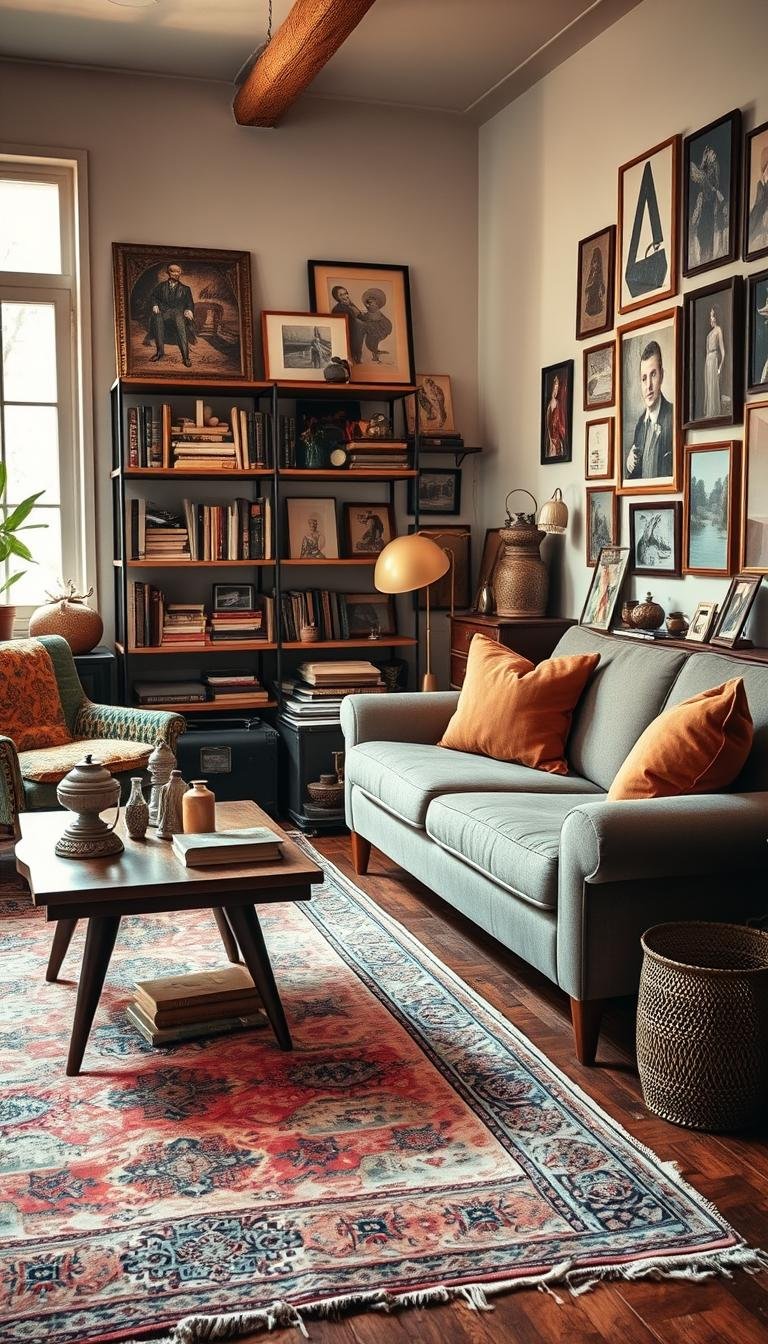
A room can feel connected to the past without looking like a set from another decade. Vintage living room designs work best when old details feel personal and everyday comforts still fit your life. If you are planning living room designs vintage, think of them as a starting point, not a strict period checklist.
Patina is the visible surface wear and finish changes that build up through age and use. A worn tabletop or faded fabric can tell a story, while newer seating, useful storage, and good lighting make the room comfortable today. The right mix can suit a compact apartment, a spacious home, or a room that already has its own style.
You will find practical ways to bring together personal finds, familiar shapes, warm color, and contemporary comfort. The most convincing results come from choosing details that feel meaningful to you, then giving them room to breathe.
Living Room Designs Vintage: Choose an Era and a Starting Point
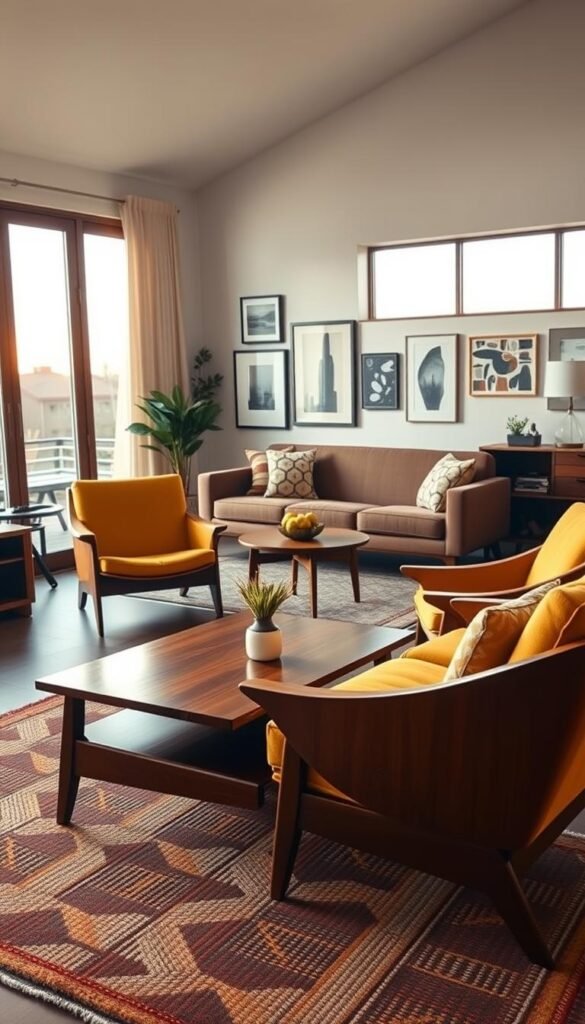
Start by choosing the period whose shapes, colors, or memories you would most like to live with every day. Your favorite details make a stronger starting point than trying to recreate every feature of a past decade.
Choose one dominant era, then borrow selectively from others. Art Deco, Victorian or French Provincial, mid-century modern, and 1970s-inspired rooms each offer distinct materials and silhouettes. A shared color or finish can make two periods feel connected rather than jumbled.
Art Deco and Victorian Details
Art Deco gives a living room geometric forms, velvet upholstery, and metallic gold accents. Look for stepped shapes, strong symmetry, and repeated patterns in smaller doses. Victorian or French Provincial details take a softer route, with carved wood, buttoned upholstery, and shaped furniture legs.
In the 1920s, a living room could center on family time by the fireplace. By 1930, the radio had become a gathering point in many homes. Those details remind you that rooms have always changed around the ways people spend time together.
Mid-Century Modern Shapes
Mid-century modern furniture often has tapered wood legs and clean, open lines. A sofa or armchair with a simple profile lets carved details elsewhere hold attention. For more layout inspiration, explore mid-century living room layout ideas that keep seating useful and open.
A 1957 living room might feature red-check furniture, a bold pattern that can still work when balanced with quieter surfaces. Late-1940s television gatherings and 1980s entertainment centers also show how home technology reshaped the living room. You can nod to those shifts without making old equipment the room’s centerpiece.
The Bold Colors of the 1970s
Rooms inspired by the 1970s often use orange and avocado accents with shag carpet. You can keep that playful character by limiting strong colors to a chair, pillow, or a few accessories. A single textured surface can suggest the decade without covering every floor and wall.
Limit the room to one dominant era, and use other periods as accents so the mix feels intentional.
Combining periods works best when one shared detail links them. Repeat a warm metal, a wood finish, or one geometric shape across furnishings and decor. That small connection gives the room a point of view without requiring every piece to match.
Build the Room Around One Vintage Focal Piece
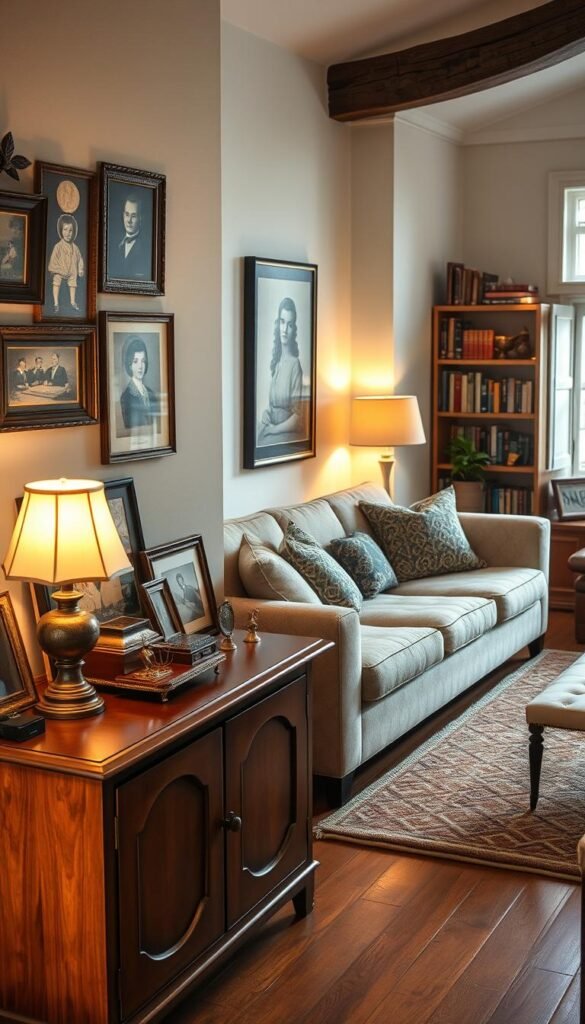
A single secondhand sofa, sideboard or coffee table can give you a clear direction without asking you to replace everything. One well-chosen piece adds personality while leaving room for the furniture you already use.
A vintage find can sit comfortably beside new furnishings. Age alone does not decide whether a piece is useful or desirable. An antique is at least 100 years old, while a vintage item can be younger and still carry the look or character you want.
Condition matters just as much as age. A damaged old table may need costly work, while a newer, well-made piece may serve the room better. Look for furniture at antique fairs, auctions, and local secondhand listings, where you can compare shapes and materials in person.
- Choose the focal piece you want the room to gather around.
- Note its shape, wood, metal, fabric, and other visible materials.
- Pick two colors or finishes to repeat elsewhere in the room.
- Add supporting items gradually, keeping the piece’s character in view.
The focal point might be a sideboard with graceful legs, a compact sofa in a memorable fabric, or a coffee table with an unusual top. Let its details guide your choices, rather than buying several unrelated old objects at once. A comfortable new sofa can sit beside an older sideboard without making the room feel like a showroom.
For a collected mix of old and new, try vintage-modern living room decor that uses one standout find as an anchor. This approach helps your home feel personal instead of themed. It also gives you time to decide what the room needs before adding more pieces.
Before buying, check that the focal piece fits through the room’s entrances and leaves a comfortable route around it.
Mix Vintage Furniture With Modern Comfort
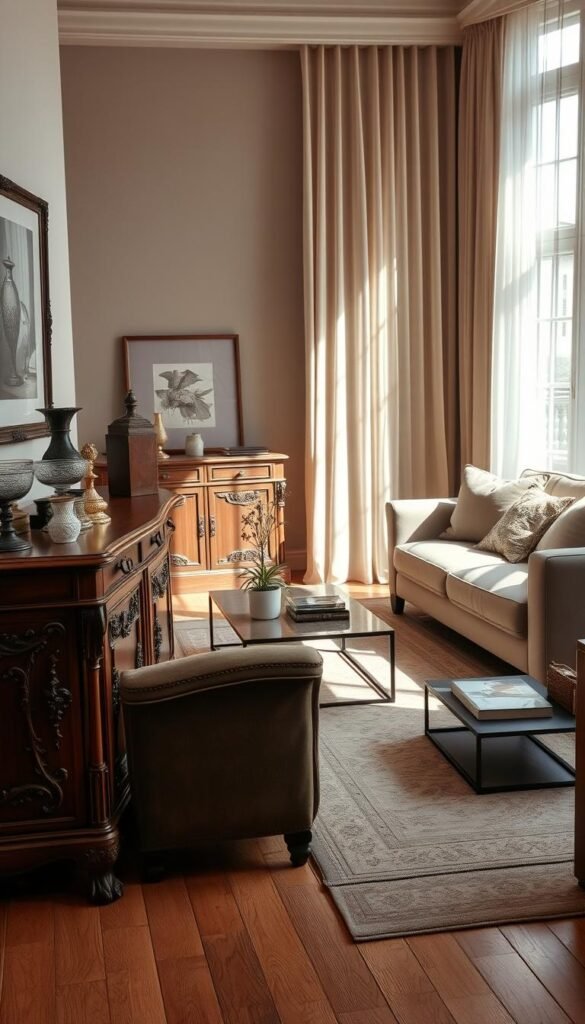
Pairing a vintage sideboard with a newly made sofa is a straightforward way to get character without giving up everyday comfort. A comfortable seat can balance older case goods, while different periods keep the room from feeling too formal.
Choose furniture for how you use it, not for a label alone. New, vintage, and collectible pieces can all work, but their features and condition differ. Compare the specific item in front of you rather than assuming a brand guarantees quality or a certain state of repair.
| Maker | Availability | Signature furniture | Key feature or check |
|---|---|---|---|
| Herman Miller | New and vintage | Licensed designs linked to Charles and Ray Eames, George Nelson, and Isamu Noguchi | Compare the specific design, materials, and condition |
| Knoll | New and vintage | Furniture associated with Florence Knoll, Eero Saarinen, and Harry Bertoia | Check the individual piece and its present condition |
| Lane | Vintage | Wood dressers, chests, sideboards, and occasional tables | Inspect veneer, refinishing, hardware, and maker markings |
| Dunbar | Vintage and collectible | Edward Wormley sofas and credenzas | Compare provenance, condition, and restoration history |
| Joybird and Burrow | New | Joybird offers customizable fabrics and finishes; Burrow offers modular sofas | Burrow sofas can rearrange or expand, with pet-friendly and stain-resistant upholstery options |
New Pieces With Mid-Century Lines
New furniture can give you a familiar silhouette with upholstery or features that suit daily use. Joybird offers mid-century-inspired pieces with customizable fabrics and finishes. Burrow’s modular sofas can rearrange or expand, and some upholstery options are pet-friendly and stain-resistant.
These are different choices, not promises that a particular sofa will suit every household. Check dimensions, comfort, and the fabric or finish offered for the specific model. A clean-lined modern sofa can soften the visual weight of an older sideboard or armchair.
Vintage Furniture and Condition Checks
Lane case goods can show veneer damage, refinishing, replaced hardware, or maker markings. Look closely at all four, since past repairs may change both the look and value of a particular item. For Dunbar furniture, provenance, current condition, and restoration history all affect comparisons between pieces.
Traditional architecture and modern furnishings can share a room without competing. For a broader approach, see modern classic living room decor for ideas that pair clean lines with older details. Ask for close-up photographs of a used piece’s joints, upholstery and repaired areas before arranging a purchase.
Choose Nostalgic Colors That Keep the Room Feeling Fresh
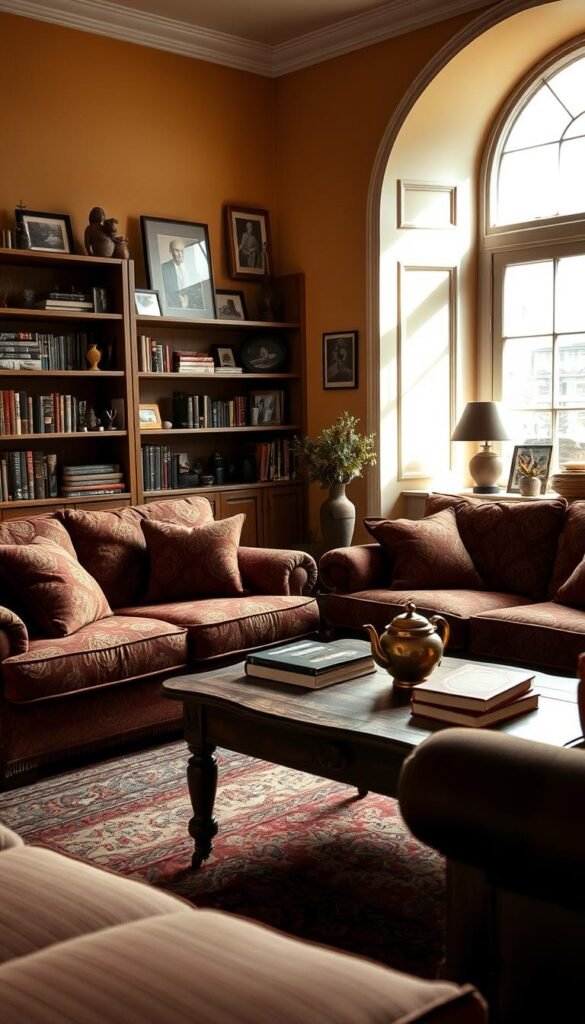
A warm neutral wall color gives ornate frames, dark wood and patterned upholstery space to stand out. A quiet backdrop lets stronger colors feel deliberate instead of overwhelming.
Use a grounding wall shade, then bring deeper color into smaller areas. Warm stone or muted green can support red, navy, or blue-gray upholstery and accents. In a small, dim room, several dark colors across the walls and large furniture may feel heavy.
Start With a Grounding Wall Color
Historical paint collections offer useful examples, not a fixed palette you have to follow. Sherwin-Williams includes Polished Mahogany SW 2838, Downing Sand SW 2822, and Rookwood Dark Red SW 2801 in its historic collection. Its Colonial Revival period spans the 1870s-1900s.
Benjamin Moore’s Historical Color Collection includes Hale Navy HC-154, Van Deusen Blue HC-156, Brewster Gray HC-162, and Revere Pewter HC-172. A deep shade can add presence on one wall or in a trim detail. A softer color may be easier to live with across the whole room.
Add Color Through Upholstery and Small Details
Bring stronger shades into a chair, cushion, lampshade, or other smaller detail. A few repeats can help furnishings from different periods feel related. For inspiration with another nostalgic palette, explore earthy vintage colors and patterns and adapt the ideas to your living space.
Modern Heritage, a 2026 interior design look, pairs classic moldings, traditional millwork, and historical silhouettes with modern materials, furnishings, and updated color palettes. That mix lets you keep architectural character while choosing contemporary pieces. Your room does not need to copy a historical palette to feel rooted in the past.
Even a good paint sample can look different when daylight fades. Test paint samples in the room’s morning and evening light before settling on a wall color.
Layer Rugs, Wood, and Textiles for a Comfortable Layout
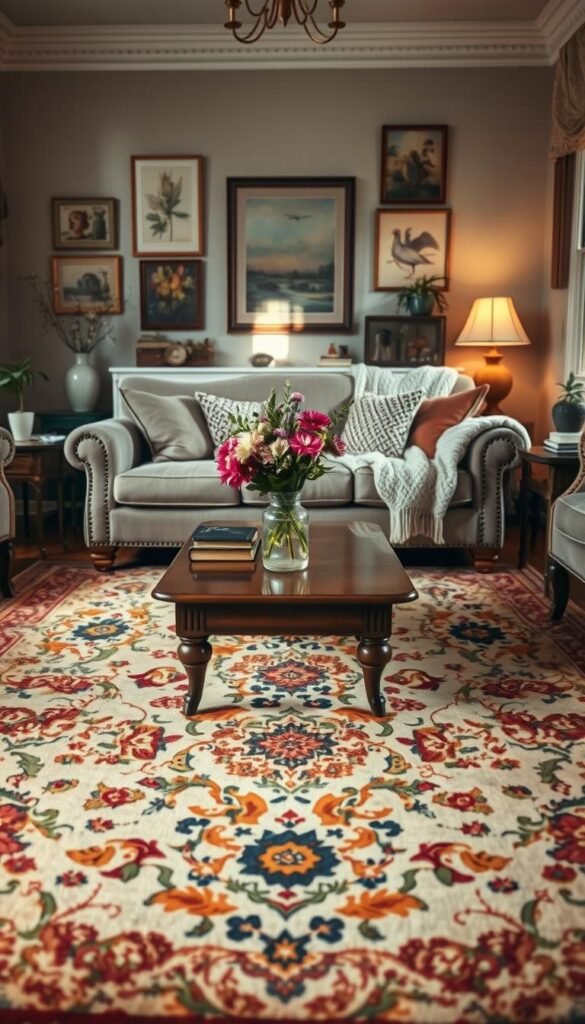
For many seating areas, an 8’x10’ or 9’x12’ rug is a useful starting size, but the sofa and walkways decide the final fit. Available floor area matters as much as the rug’s pattern.
A rug should extend at least 6 inches beyond the sofa on both sides, with 8 inches ideal. A 10’x14’ rug is another common living room size. Furniture-leg placement also matters: keep all the legs on the rug or all of them off for a consistent look.
Rugs usually sit lengthwise with the sofa, following the main seating arrangement. The best size depends on the sofa width, the placement of nearby furniture, and the floor you want to leave visible. Outline a proposed rug size with painter’s tape before you buy, then check the shape from the doorway and each seat.
Walkways between large furniture pieces commonly allow 30-36 inches when the room permits. In a tighter room, 18-24 inches can provide a more workable route. Keep the path people use most in mind, especially between the sofa and an entry or doorway.
A smaller rug can float in front of the furniture when the room is tight or your budget is limited. That option works particularly well when the sofa sits against a wall. A too-small vintage rug can also sit over a larger sisal, jute, or seagrass rug.
Layering gives a treasured small rug a place in the room without forcing it to cover the whole seating area. A patterned Persian-style rug can add visual warmth, and it does not need to match every other print. Let one detail, such as a color or a loose pattern, connect it to nearby textiles.
Wood, woven fibers, and upholstery can each bring a different texture underfoot or within reach. The room feels more considered when materials repeat in a few places, rather than appearing once and then disappearing. Keep the route between the main seating pieces clear before adding a second layer of textiles.
Give Walls Character With Wallpaper, Art, and a Gallery Wall
A gallery wall feels more collected when its frames and images vary but share a color, subject or finish. A little variation makes a display feel personal without turning it into a random collection.
Size artwork to about 60%-75% of the open wall space. Open wall means the area not covered by furniture or moldings. Keep the art visually connected to the seating below, so the display feels part of the room rather than a separate band near the ceiling.
Floral wallpaper can make a room feel soft and nostalgic, while geometric patterns add a sharper period note. Vintage posters, family photographs, and collected prints each bring a different kind of history. Modern art can sit beside vintage images when a color or frame finish ties the pieces together.
- A single large print gives one strong image room to stand out.
- A small grouping of vintage posters adds a focused, period-specific note.
- A mixed-frame gallery wall brings together photographs, prints, and changing shapes.
- One patterned wallpaper feature wall adds texture without covering every surface.
Oval frames can loosen a display built mostly from rectangles. Combine different frame shapes or widths, but repeat a finish or color so the wall still feels connected. Family photographs can bring a private story into the mix without needing to match the age of every print.
A common mistake is hanging the gallery wall too high to relate visually to the seating below. Judge the arrangement from the sofa, not only from the middle of the room. That view helps you see whether the pictures feel connected to the furniture.
Wallpaper and artwork do not need to use identical patterns. A shared color can connect a floral wall covering with a geometric print or a contemporary painting. For more ideas on using botanical motifs and collected images, browse vintage ideas with collected art and adapt the pieces to your own walls.
Lay the frame arrangement on the floor first, then transfer the spacing to the wall.
Choose Vintage Lighting That Is Safe and Atmospheric
A vintage lamp can add a soft pool of light, but inspect its wiring before you plug it in. Good atmosphere depends on a fixture that works safely as well as looks right.
Never use a bulb that exceeds the wattage listed on the socket. Hardwired fixtures connect to the home’s electrical system, while vintage table lamps plug into an outlet. UL 1598 covers hardwired lighting fixtures with socketed bases installed indoors on branch circuits up to 600 volts.
Custom, vintage, and European fixtures can undergo UL certification when they are rebuilt, rewired, or custom-built with UL-listed components. A refurbishment can remove old electrical parts, install new traceable wiring, test the fixture, and add safety and UL decals with unique traceability. A lamp’s old-fashioned appearance alone says nothing about its wiring.
- Frayed or brittle cords need inspection or rewiring before use.
- An ungrounded two-prong plug calls for a safety check.
- A worn switch or socket should be inspected before the lamp is used.
- Cloth-covered wiring should be checked by a qualified professional.
Vintage lamp rewiring by an electrician or lamp-repair shop typically costs $30-$75, depending on complexity. Professional work can update the plug, socket, and switch. If a replacement cord is needed, choose one rated by UL rather than relying on a cord’s appearance.
Hardwired fixtures and plug-in lamps need different installation steps, so do not treat them as interchangeable. Certification applies to a fixture rebuilt or wired under the relevant process, not simply to an old design. New traceable wiring and testing help identify a fixture that has gone through that work.
Some fixtures need more than a new bulb or a quick visual check. Keep a lamp unplugged until a qualified electrician or lamp-repair professional has checked any damaged wiring.
Finish With Architectural Details and Mixed Wood Tones
Crown molding or wood paneling can make a room feel rooted in its architecture without requiring every furnishing to look old. One architectural detail can add character while contemporary pieces keep the room relaxed.
Mix light, medium, and dark wood finishes instead of matching every piece exactly. A shared undertone or a repeated finish can make those tones feel related. The combination is a prominent interior design look in 2026.
Let Millwork and Paneling Add Period Character
Crown molding, traditional millwork, wood paneling, and carefully chosen ceiling details can draw attention to a home’s architecture. They do not need to spread across every surface. A single paneled wall can set the tone while simpler furnishings preserve breathing room.
Older-looking paneling can feel more current beside leather, curved seating, or lighter textiles. In a 19th-century home, traditional architectural features can balance mid-century furnishings. That contrast lets the home’s history stay visible without asking the furniture to copy it.
Combine Wood Finishes Without Matching Everything
Look at the undertones in the wood before combining pieces. Warm, golden finishes may connect, as can cooler or deeper browns. Repeat one finish in a frame, table, or cabinet detail so the mix feels intentional rather than accidental.
Stand at the entrance and remove one detail if the architectural accents, wood finishes, and accessories compete for attention.
A 1940s-inspired kidney-shaped sofa, a form associated with designs inspired by Vladimir Kagan, can bring a curved silhouette into a traditional room. Add family photographs, books, souvenirs, or an antique mirror for a more personal finish. Give each object enough space to be noticed rather than grouping every keepsake together.
Make the Room Feel Like Yours, Not a Set
A room feels most nostalgic when its objects connect to your life, not just to a decade. Personal meaning can carry more weight than matching every feature to a period.
One or two meaningful old pieces can set the mood, while contemporary comfort keeps the room useful. Let the furniture you rely on every day work alongside the objects you want to remember.
Choose one piece you already own, write down two details you love about it, and use those as your first design decisions.