A room can feel refined and welcoming at the same time when each choice has a clear purpose. Your living room may need to host family evenings, quiet mornings, and the occasional crowd, all while reflecting your taste. A polished look does not come from filling the space with expensive-looking objects. It comes from choosing what supports your daily life and editing out what does not.
Layered lighting means using ambient, task, and accent light together so a room supports everyday activities while highlighting selected features. That same sense of intention can shape your furniture, materials, art, and personal details. The result can feel luxurious without losing comfort or warmth.
You will find practical ways to shape the room, whether you are refreshing a few pieces or rethinking the whole space. Color, light, seating, and texture can work together to create a home that feels distinctly yours. Start with the part of your home you use most, then let the design grow around it.
12 Luxury Living Room Designs Modern Interiors Can Adapt
A restrained palette and one memorable material can make a room feel more considered than a collection of matching statement pieces. Simple luxury comes from choosing details that suit your routine, not from adding ornament to every surface.
Modern luxury living room design pairs comfort with considered materials rather than crowding the room with decoration. Warm minimalism, for example, combines clean silhouettes with natural textures, soft neutrals, and tactile materials.
Start with a recognizable style
Choose a clear direction, then adapt it to your home. These four ideas offer different starting points for a luxury living room:
- Add gold accents beside a sculptural coffee table for a focused statement.
- Pair a black-and-white palette with velvet upholstery and monochrome art.
- Layer throws, tactile upholstery, and an area rug to soften clean-lined furniture.
- Combine Parisian-inspired moldings with contemporary furniture for an old-meets-new feel.
A black-and-white room can gain depth through velvet, glossy surfaces, and monochrome art. Art Deco offers another expressive direction, using geometric patterns, rich colors, brass, and glass. For more ideas built around natural materials and clean lines, explore modern mid-century living room layouts.
Mix references without copying a showroom
Simple luxury living room designs for modern interiors can keep the base restrained while giving one expressive detail room to lead. That detail might be an unusual table, a distinctive art piece, or a bold fabric. Let the rest of the furniture support it rather than compete for attention.
Luxury living room designs for modern interiors on Pinterest work best as references for individual details, not as templates to copy whole. A molding profile or a useful furniture shape may suit your home even when the full room does not. Choose the style that fits how you spend time at home, not just the one that looks striking in a saved image.
Use inspiration as a source of individual details, not as a room-by-room script. Your furniture and finishes should make sense together and suit the way you live.
That approach leaves room for personal character. Choose the style that fits how you spend time at home, not just the one that looks striking in a saved image.
Choose Colors That Look Rich in Your Light
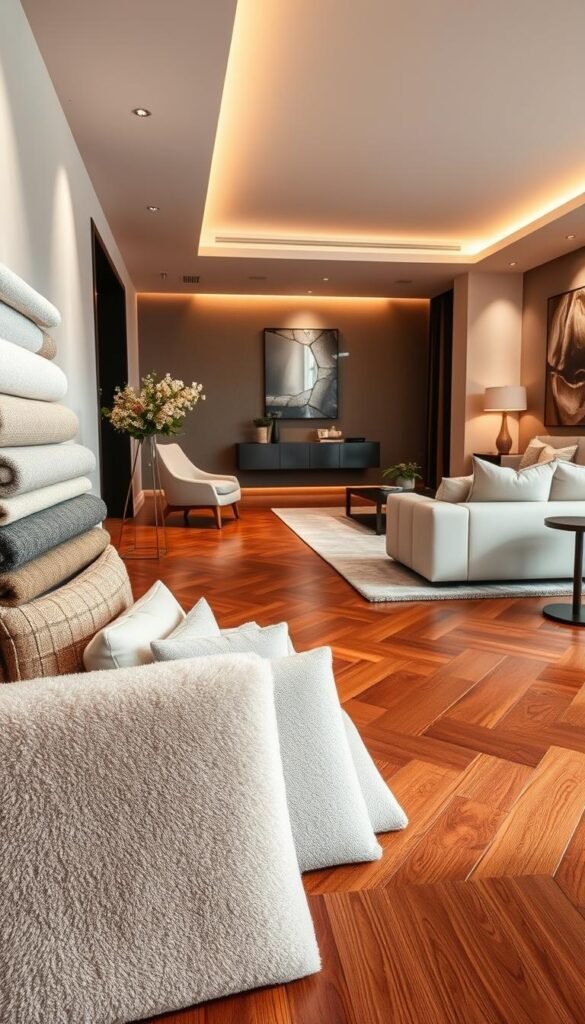
A paint color earns its place when it works with your flooring, upholstery, and the light your home actually gets. Start with the surfaces that will stay, then select wall tones that make those materials feel at home.
Test paint in swatches at least 12×12 inches on the actual wall, and observe them for at least 48 hours in different lighting conditions. A color that looks calm in a store can read differently across a full wall, in daylight, and under evening lamps.
Build a flexible base palette
A flexible palette can support several rooms, furniture styles, and wood finishes without forcing everything to match. These options range from warm neutrals to deeper color, with pairings that help you picture how each might work.
| Paint | Color character | Useful pairings |
|---|---|---|
| Sherwin-Williams Accessible Beige | Warm neutral | Varied furniture colors, wood tones, and flooring |
| Benjamin Moore White Dove | Warm off-white | Natural wood, linen, warm brass, and stone |
| Benjamin Moore Dry Sage | Muted dusty sage | Warm wood, cream, and terracotta |
| Benjamin Moore Hale Navy | Deep navy | White trim, natural linen, and neutral upholstery |
| Farrow & Ball Stirabout | Earthy oatmeal with subtle gray undertones | Use as a neutral base |
Sherwin-Williams Wool Skein is a creamy khaki with subtle olive undertones that changes with natural light. For a room with several adjoining spaces, try your colors near doorways and trim, where one wall’s tone meets another.
Test paint where it will live
Paint samples can look lighter or darker as the sun moves and your lamps come on. Keep the sample near the sofa, flooring, and other materials that will stay. A small card may not show how the color behaves across a whole wall.
For a broader look at warm neutrals and higher-contrast choices, see these modern chic living room ideas. Check whether the shade still feels right beside your main furniture, not just by itself. View the swatches at different times of day before choosing a whole-room color.
Layer Lighting for Comfort and Drama
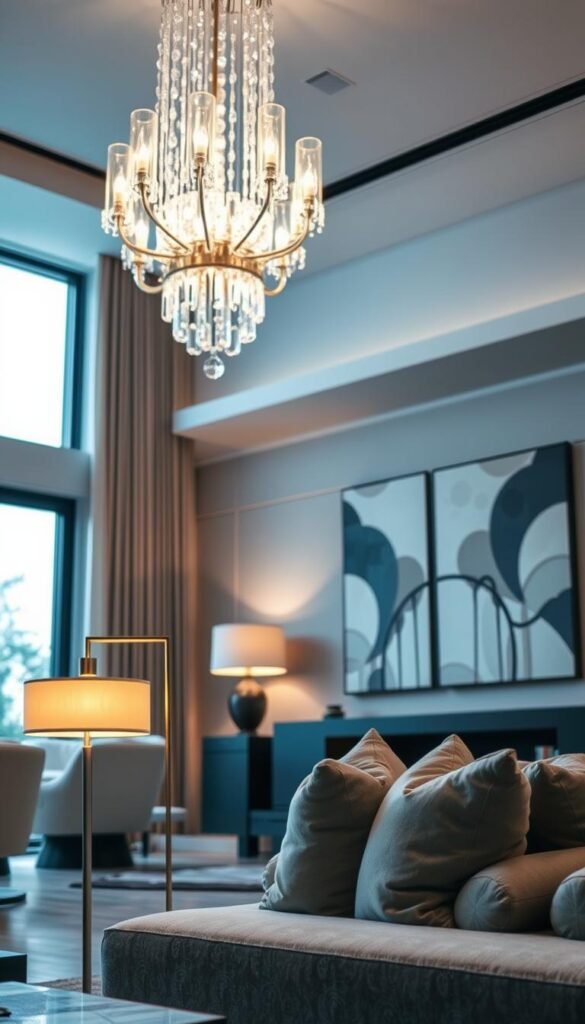
A single bright ceiling fixture rarely gives you the right light for reading, relaxing, and seeing artwork clearly. Several sources let you adjust the room for different activities without asking one fixture to do every job.
Layered lighting combines ambient light for overall illumination, task lighting for activities such as reading, and accent lighting for art or architectural features. A living room should have at least 2-3 light sources, ideally including ambient, task, and accent lighting.
Combine light for different jobs
Ambient lighting gives you general background light. Task lighting directs light where you read or work, while accent lighting draws attention to art or a feature. A floor lamp beside a chair, for instance, can provide reading light while picture lighting gives a painting more presence.
| Fixture | Recommended color temperature | Recommended output | Control or condition |
|---|---|---|---|
| Chandelier | 2700K | 450-800 lumens | Output depends on bulb count |
| Recessed lights | 3000K | 450-800 lumens | Use dimmers |
| Exposed-bulb pendant or unshaded sconce | 2700K | 400-500 lumens maximum | Keep the visible bulb at low output |
Warm lighting falls in the 2,700K-3,000K range. Light above 3,000K can feel cool and clinical, so consider the mood you want before choosing bulbs.
Match bulb warmth and brightness to the fixture
A visible bulb needs particular care because you see its brightness directly. Keep an exposed bulb at low output, especially in a pendant or an unshaded sconce. A dimmer can also help a room shift from brighter daytime use to a softer evening setting.
Fixture finishes do not all need to match. You can combine two main metal finishes in a 60/40 or 70/30 balance, using one as the lead and the other as an accent. For more ways to combine fixtures and atmosphere, browse warm luxury living room decor ideas. Put a dimmer on lights that need to serve both daytime and evening moods.
Choose Seating and Styling That Invite You In
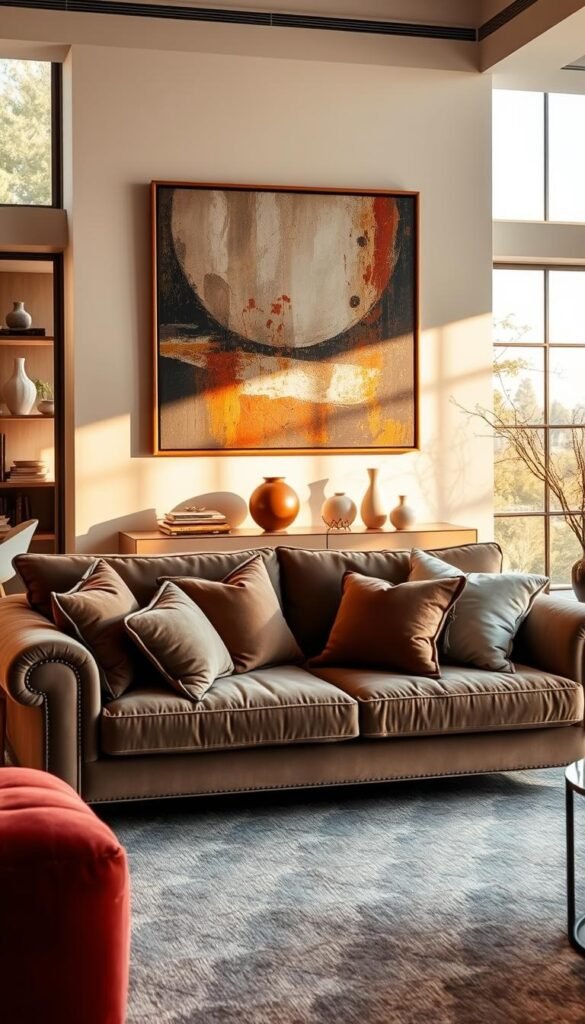
A good seating plan starts with what you do there, whether that is movie nights, conversation, or quiet reading. Let your routine lead, then choose sofas and chairs that support it without filling every open spot.
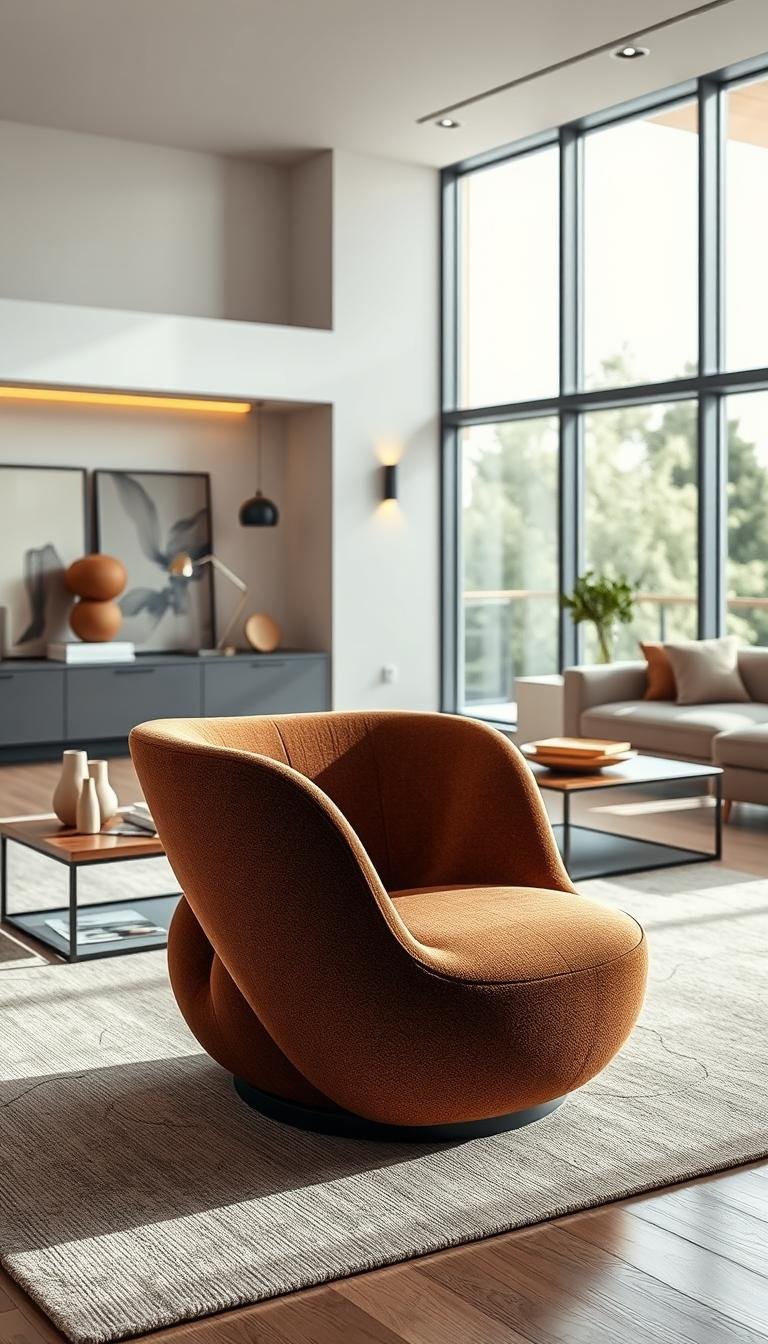
Comfort, circulation, and the number of people who typically gather matter more than having a seat in every corner. A sculptural statement chair can add personality, while a curved or low-profile sofa can suit the way you use the room.
Fit the seating to the way you gather
These four ideas can help you select the main pieces and give the room a natural starting point:
- Use a sculptural statement chair as a personality piece.
- Select a curved or low-profile sofa that suits your gathering habits.
- Pair a tactile sofa with a simple coffee table.
- Use a colorful sofa or artwork as the starting point for the palette.
A sofa that looks inviting but feels stiff will not earn much use. Try the seat depth and back support in person, and consider whether the shape suits conversation or lounging. If you are choosing for a condo or a smaller home, these modern luxury condo living room ideas offer examples of flexible seating and statement pieces.
Use small groupings to make details feel intentional
The 3-5-7 styling rule groups decor in odd numbers of three, five, or seven to create visual rhythm and balance. The number is a helpful starting point, not a requirement to fill every surface. A small cluster of objects can feel composed when their heights or materials vary.
Three throw pillows can create an intentional, modern sofa arrangement, while five can suit a larger sectional. Choose a mix of sizes or textures so the grouping looks collected rather than uniform. The 3-5-7 styling rule works best when the arrangement still leaves room to sit comfortably.
Think about how the sofa, chairs, and coffee tables work together when you move around the room. Keep the pieces you use close at hand, and leave enough open floor for people to pass without turning sideways. Sit on the furniture before committing, and check that the arrangement leaves a comfortable route through the room.
Add Depth with Art, Texture, and Contrasting Materials
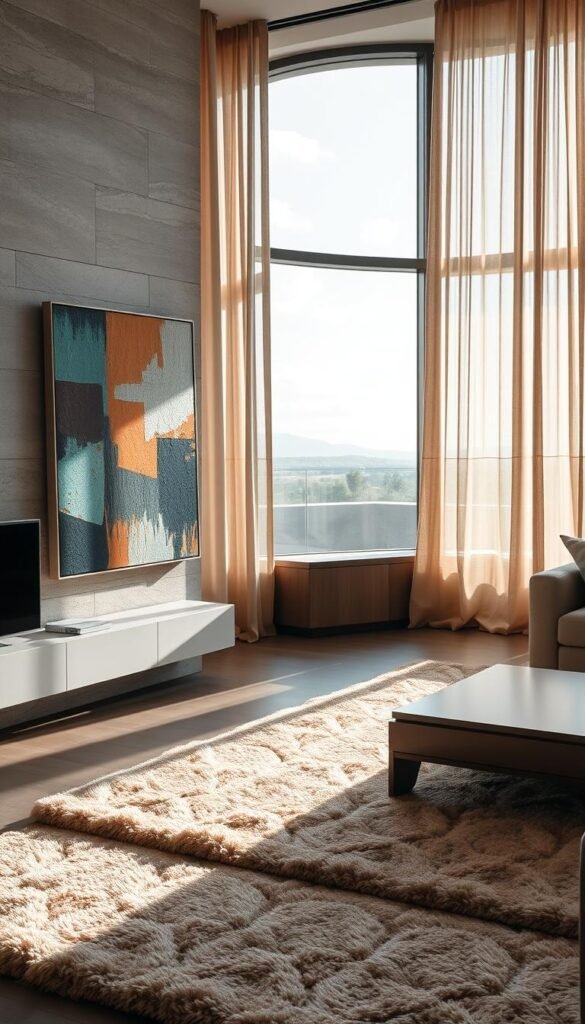
A room feels richer when a smooth stone surface sits beside something soft, textured, or visibly handmade. That contrast gives your living rooms depth without relying on a matched furniture set.
Natural wood, stone, velvet, linen, and a tactile area rug can sit together when each material has space to stand out. Let one surface catch the eye, then use quieter textures nearby to balance it.
Balance hard surfaces with tactile layers
A warm-minimalist sitting room can pair Roman clay walls with an Italian viola marble fireplace. The soft wall finish and expressive stone create contrast while sharing a natural feel. In an industrial-leaning room, a plush wool-and-silk area rug can soften metal, concrete, or other harder materials.
Use texture to connect pieces that do not match exactly. Linen can ease the formality of velvet, while wood can warm up a stone surface. A rug also helps define the seating area and gives the furniture a more grounded look.
Let art and personal pieces hold attention
Art can set the direction for an entire room, from its colors to the mood of its furniture. If a painting or print matters to you, let it take the lead instead of building a display around a set of matching accessories. For wall treatments and ways to feature meaningful objects, consider these modern luxury wall decor ideas.
Luxury living room design photos are most useful when you notice how the art, rug, and finishes relate rather than trying to reproduce every object. Modern luxury living room design photos can show useful relationships: a dark frame against a pale wall, or a textured rug under a simple table.
Too much matching, clutter, or unrelated shiny accents can make a home look cheap. Edit down to a few pieces with personal meaning, such as a collected object or artwork you chose yourself. Leave some breathing room around the artwork and objects you most want people to notice.
Make a Small Living Room Work Around Its Focal Point
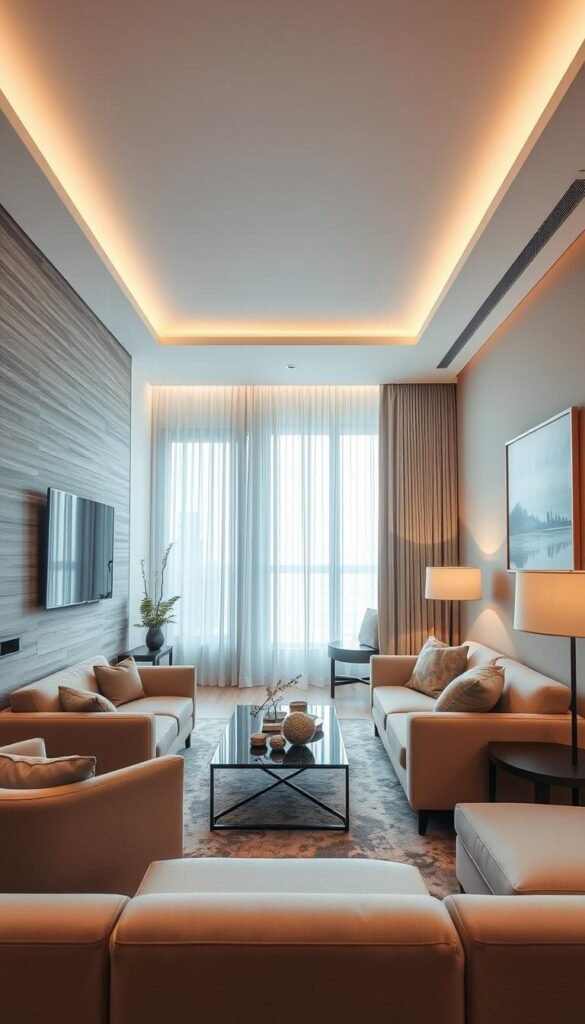
In a compact space, the best layout is the one that gives the main activity a clear place without turning walkways into obstacles. Start with the focal point, then arrange seating around conversation, viewing, or both.
Furniture placement should account for the room’s focal point, conversation or viewing needs, and walkways. Modern living room design for a small house depends on the available footprint and how you use the room, not on shrinking every piece of furniture.
Use compact seating without crowding the room
A banquette can provide living-room seating while taking up less space than an overstuffed sofa. It may suit a narrow room or an awkward corner where a full sofa would press into the walkway. Choose it because it fits the footprint and your routine, not just because it looks compact.
- Make the television or fireplace the clear focal point.
- Choose a banquette when it suits the footprint better than an overstuffed sofa.
- Place a slim console between banquettes for glassware and spirits.
- Preserve walkways and orient seats for conversation or viewing.
Plan the television and walkways together
A luxury living room with a TV can still feel composed when the screen has a deliberate position and seating faces it without blocking circulation. Decide whether the room is mainly for viewing or conversation, then make the primary seating support that activity.
A slim console between banquettes can store glassware and spirits while serving as a small-space bar. Keep its top useful rather than treating it as another surface to decorate. This gives the living space a second function without adding a deep cabinet.
For more ideas on scale, storage, and clear paths, see these small modern living room ideas. Before you move a sofa or bring in new armchairs, make sure the focal point remains visible from the seats you use most. Before moving heavy furniture, mark the intended seating and walking paths on the floor.
Get a More Expensive Look Without Replacing Everything
The most useful refresh may be changing what surrounds a good sofa instead of buying another one. Keep what works, then focus on the detail that will make the room feel different in daily use.
You can refresh a living room by rearranging furniture, updating throw pillows or a rug, framing art you already own, and choosing one focal piece. Those changes can shift the design without making a functional space feel like a temporary showroom.
Start by moving existing furniture into a new arrangement. Turning a chair toward a window or pulling a table closer to the sofa can change how the room works. You may also discover that a piece you thought you needed is not necessary after the layout improves.
Fresh throw pillows or a new rug can change the balance of color and texture. Use a rug to anchor a seating area, or choose pillows that connect the sofa to artwork already on the wall. Frame art you own but have not displayed; a simple frame can make a familiar piece feel intentional.
A single sofa or piece of art can establish the room’s design direction. Choose one focal piece, then let the remaining furniture and accessories support it. If a lamp, chair, or table already has character, keep it in the mix rather than replacing it to create a perfectly matched set.
Neutral upholstery can remain useful through a move or a future palette change. You can give a neutral sofa a new feel with a different rug, artwork, or throw pillows, while keeping the larger piece that still fits your needs.
Luxury living room ideas on a budget begin with editing and rearranging, not with a fixed shopping list. Replacing a functional piece just to imitate a trend can cost more while making the room less personal. Spend first on the change you will notice and use every day, not on a trend you may tire of quickly.
Bring in 2026 Trends with a Light Touch
The new look for 2026 is less about a single style than about warm foundations mixed with tactile details and selective color. Use trends sparingly so your room still feels like home after a new look catches your eye.
A warm neutral base can pair with icy blue, Transformative Teal, or amber as an accent. Teal can work in naturally bright and moody rooms, and it is especially effective on surfaces with sheen.
Try a trend color as an accent
Icy blue can brighten warm neutral tones, while Transformative Teal was named WGSN’s color of the year for 2026. Amber, also called burnt caramel, blends rust, mustard, and brown. Try one of these colors on a small upholstered piece, an accessory, or a single reflective surface.
A glossy teal detail can catch light and add a clear note of color without changing the whole room. Amber can bring warmth through fabric or decor, while icy blue can feel crisp against warmer materials. The right accent should relate to the objects and finishes you already enjoy.
Add texture through frames, wood, and millwork
Thicker vintage frames add visual depth and vintage character to 2026 interiors. Woven light-toned blinds with white fabric trim add softer texture at the window. These details can make a room feel layered without introducing a new furniture style.
Mixing light, medium, and dark wood tones can bring warmth and visual interest. Fluted or reeded millwork is also used on fireplace surrounds, feature walls, and furniture to add texture and dimension.
Keep trend details to a few surfaces so their shapes and finishes remain easy to see. A vintage frame can pair with contemporary art, while a fluted panel gives a plain wall more detail. The key is to choose pieces that support the room rather than compete with its art and furniture.
Bring in a trend as a small detail, not as a rule for the whole room. Try a trend on one surface or accessory first, then keep it only if it belongs with the rest of your home.
That test gives you room to change your mind without rebuilding the space. Try a trend on one surface or accessory first, then keep it only if it belongs with the rest of your home.
Start with One Decision and Build the Room Around It
A well-designed space reflects how you live as much as what you like looking at. Give the room’s everyday use equal weight with its style, so the furniture and details have a reason to be there.
Choose one anchor that matters to you, such as a sofa, artwork, or lighting fixture. Make one small change around it, then live with that choice before adding more. Pick your anchor today, then make one change you can live with before deciding what the room needs next.