
Your sofa shapes both how your living area works and how it feels at the end of the day. It may be where you stretch out after work, host friends, or share a quiet morning at home. The best sofa designs for living room use balance comfort, fit, durability, and appearance without asking you to sacrifice one for another.
A modular sofa is a sofa made of separate units that you can rearrange into different seating layouts. Other designs stay in one shape, but still vary in size, support, and style. The right choice depends on how you use your space, who shares it, and what you want the room to feel like.
Start with the way you spend time in your living area. Upright conversation, movie nights, frequent guests, and changing room needs each point toward different features. A sofa that looks striking in a photo may feel wrong if it crowds your walkway or does not support your usual posture. Choose for daily life first, then use style to narrow the options.
Start by thinking about the way you actually use your home, not just the silhouette you noticed online.
Best Sofa Designs for Living Room: Styles for Every Space
A clean-lined sofa suits a pared-back room, while a curved silhouette can soften a space dominated by straight edges. The best sofa design for the living room also depends on scale: a compact piece can look considered, while an oversized one may overwhelm a small area. Shape changes the room’s mood before you add a single accessory.
Think about the lines already in your home, including windows, shelving, and tables. Choose a silhouette that balances those features instead of competing with them. A sofa should feel connected to the room, not like a separate display piece that happens to fit.
Clean-Lined and Traditional Silhouettes
Modern sofas often use simple arms, smooth upholstery, and restrained details. Their clean profiles work well when you want a room to feel open or when the sofa shares space with bold art. The Lawson sofa takes a more relaxed approach, with straight lines, neatly tucked cushions, and exposed wooden legs.
Traditional silhouettes bring more visible structure. Rolled arms, tailored backs, and decorative legs can make a room feel established, especially alongside wood furniture and patterned rugs. Article’s Sanders sofa offers a more current, straight-sided look. It measures 85.5 inches wide, 38.5 inches deep, and 32.5 inches high, with fabric or velvet upholstery and natural oak legs. Its listed price is $1,099.
Curved Shapes That Soften a Room
A curved sofa or rounded arm can interrupt a grid of square tables and straight walls. That softer outline suits a room with hard architectural edges, or a seating area arranged to encourage face-to-face conversation. Curves also take up visual attention, so one sculptural piece can be enough.
Lulu and Georgia’s Cleary sofa comes in 76-, 86-, or 96-inch widths, with a 40-inch depth and 30-inch height. Its rounded form can stand out even in a quiet color. For more inspiration on combining graceful silhouettes with modern details, explore luxury sofas for modern living rooms.
Compact Designs With Presence
Compact sofas suit apartments, narrow living areas, and rooms where a larger sofa would block movement. A shorter width does not have to mean a plain look. Distinctive legs, curved arms, or a strong fabric color can give a small piece presence without making it feel bulky.
In a compact room, leave visual breathing space around the sofa rather than choosing a bulky shape just to maximize seats.
Use the surrounding furniture to keep that scale in balance. A slim side table or open-legged chair can preserve sightlines, while a heavy coffee table may make the whole seating area feel crowded. In a compact room, leave visual breathing space around the sofa rather than choosing a bulky shape just to maximize seats.
Seven Comfort-Forward Sofas to Compare

A useful shortlist spans different seating needs instead of treating one softness level as right for everyone. These sofas range from flexible sectional seating to sink-in comfort and budget-minded designs. Use the ratings as a starting point, then compare the shape and feel with the way you sit.
Early-2026 evaluations involved six editors and reviewers from October 2025 to January 2026. They considered comfort, durability, convenience, and style and versatility. The ratings reflect four criteria, not a guarantee that one sofa will suit every body or room.
Four Rated Picks Across Different Needs
The early-2026 sofa rankings place four models at different points on the list. Burrow’s Union is a modular sofa that can be rearranged in L- or U-shapes. HERNEST’s Brisa pairs an 84-inch width with a 24-inch seat depth, while West Elm’s Harmony Chaise Sectional is noted for sink-in comfort.
| Model | Early-2026 rank and score | Distinguishing feature |
|---|---|---|
| Burrow Union 5-Seat Sectional | Rank 1, score 4.5 | Modular L- or U-shape |
| HERNEST Brisa 84-inch Sofa | Rank 2, score 4.4 | 24-inch seat depth |
| West Elm Harmony Chaise Sectional | Rank 3, score 4.4 | Sink-in comfort |
| Ashley Carnaby Sectional | Rank 10, score 3.9 | Budget-friendly positioning |
Ashley’s Carnaby sits lower in the rankings, but its budget-friendly position may interest you if cost is a key part of the decision. A ranking can help you sort through options, while the seat’s support and shape tell you more about how it may work in your home.
Three Deep-Seat Candidates
Deeper seating can give you more room to lean back or curl up. These three choices stand out for their listed seat depth:
- POVISON Barrett: 25.19-inch seat depth.
- Joybird Miller Sectional: 27-inch seat depth.
- Albany Park Kova Pillow Cushion Pit: 29-inch seat depth.
A deeper seat can feel generous, though your height and preferred posture still matter. If you sit upright most of the time, test how easily your feet reach the floor and whether the back cushions support you. If you tend to lounge, consider whether the extra depth feels comfortable without forcing you to lean on loose pillows.
Treat a score as one comparison point, then judge the seat and back support in person if you can.
What Makes a Sofa Comfortable for Everyday Use?
For movie nights, a deeper seat can make it easier to curl up, while a moderate depth helps you sit upright with your back supported. The most comfortable sofa for watching TV usually has a lounging-friendly depth and back support that suits your posture. Your sitting habits set the target, not a single ideal seat measurement.
Choose depth for the position you use most often. A moderate seat depth supports upright conversation and makes it easier to sit with your feet on the floor. Deeper seats give you room to lounge, but may leave shorter users reaching for a cushion behind their back.
Seat Depth and Sitting Posture
Think about how you settle in after a long day. If you prefer to curl up or stretch across the cushions, a deep seat may feel welcoming. If you sit upright to talk or read, a moderate depth can make it easier to keep your back supported without adding a pillow.
Seat depth is only part of the fit. The height and angle of the back, cushion firmness, and your own proportions all shape how a couch feels. The Joybird Sebastian measures 92.5 by 41 by 32.5 inches and has removable back cushions, which can help you adjust the support as you settle in.
Cushion Fill and Motion Support
Feather-and-fiber cushions tend to feel soft and sink-in comfortable. Resilient foam offers more rebound and tends to hold its shape more firmly. A sofa that feels plush at first may need more frequent fluffing, while a firmer cushion may feel less enveloping but easier to rise from.
If you want to change position without rearranging pillows, a power recliner can help. The POVISON Benjamin Power L-Shape Modular Sectional reclines up to 135 degrees and has adjustable headrests. That lets you alter your posture while keeping the back support attached to the seat.
A sofa shared by several people needs more than one comfortable spot. Castlery’s Jonathan sofa measures 89.8 by 39.4 by 27.6 inches, and its proportions show why the overall shape matters alongside seat feel. If you often share the sofa, make sure the preferred lounging position does not block everyone else’s back support.
How to Measure Your Sofa and Living-Room Layout
A sofa can fit on the floor plan and still fail at a doorway, stair turn, or elevator. Measure the furniture footprint and the route into your living room before you order. Fit includes the whole trip, not just the spot where the sofa will sit.
Listed width runs from outside arm to outside arm, depth runs from front to back, and height reaches the highest frame or cushion point. Typical sofas measure 85-95 inches long, 30-40 inches deep, and 16-20 inches in seat height. Measure the exact model, then check it against both the room and the delivery route.
Measure the Sofa and Delivery Path
Start with the sofa’s listed width, depth, and height, then compare those numbers with the usable floor area. A smaller choice can suit a tight room: the West Elm Bogart loveseat measures 60 inches wide, 32 inches deep, and 25.2 inches high. A recliner needs space to extend, and a sleeper sofa needs room for its bed when open.
Measure the entire delivery route, including doors, stairs, elevators, and tight turns. Check the narrowest points and note where a tall sofa might need to tilt. A piece that fits through the front door may still be too long for a stair landing or too wide for an elevator.
- Sofa footprint: width, depth, and height of the exact model.
- Fully opened or reclined depth: the space needed in use.
- Main walkway: the clear route around the furniture.
- Coffee-table gap: the distance between table and seat.
- Delivery route: doors, stairs, elevators, and tight turns.
Set the Layout Around Clearance
Plan for 30-36 inches along a main walkway, or 24 inches for a secondary passage when space is tight. Leave 16-18 inches between the sofa and coffee table. These clearances help people move through the room without brushing past furniture or twisting around the table.
The 2/3 rule is a proportion guide, not a fixed layout law. A related smaller piece can measure about two thirds of its anchor, while artwork above a sofa often spans around two thirds of its width. A coffee table about two thirds of the sofa’s length can also look balanced. Check those proportions against circulation and clearance.
Furniture placement can support distinct activity zones, much like planning a bedroom around doors and walking paths. See how to plan a furniture layout when you want another example of mapping movement before placing a large piece.
Main walkway clearance of 30-36 inches gives people room to pass comfortably. Tape out the footprint on the floor and walk the route before you place the order.
Which Upholstery Suits Your Household?
A stain-resistant, easy-care fabric can be a more practical choice than a delicate finish in a home with pets or young children. The best upholstery balances the way you live with the look you want. Daily use matters more than a showroom finish when a sofa handles meals, muddy paws, or playtime.
Choose an upholstery surface you can realistically care for. Leather is easy to wipe clean, though scratches and surface changes may show. Washable covers simplify some spills, while performance fabrics are designed for regular use and can be a sound choice for busy homes.
Choose Materials for Daily Use
Slipcovered sofas let you remove the upholstery for cleaning when the cover is designed to be washable. A fixed fabric cover may feel more tailored, but check its care directions before you decide. In dog-friendly homes, a sofa’s lifespan can shorten by 20-40% without durable materials.
Performance fabrics can help manage frequent use, though the term does not mean every fabric has identical stain resistance or cleaning rules. Velvet adds a rich, tactile surface, but its pile can show marks or pressure changes. Choose a finish that suits your household’s habits rather than assuming one material works for everyone.
Balance Texture, Care, and Color
Texture changes how a sofa reads in the room. Smooth leather can look crisp and structured, while velvet adds depth and a soft sheen. A woven performance fabric may feel more casual and forgiving. Ask how the upholstery responds to the type of use your couch will see each week.
Model options can vary widely. The Joybird Sebastian has 71 fabric and color options, while the Pottery Barn York sleeper sofa has 134 upholstery options and a machine-washable slipcover. Those choices make it easier to tailor the look, but the specific cover still determines the care routine.
- Cleaning method: check whether spot cleaning, washing, or professional care is required.
- Weave or surface: consider how texture may show wear or marks.
- Pet and child use: match the finish to your household’s everyday activity.
- Fabric sample in the room: compare its color and texture in your own light.
Read the care instructions for the exact upholstery you select, since two fabrics on the same model may need different treatment.
How Long Should a Sofa Last?
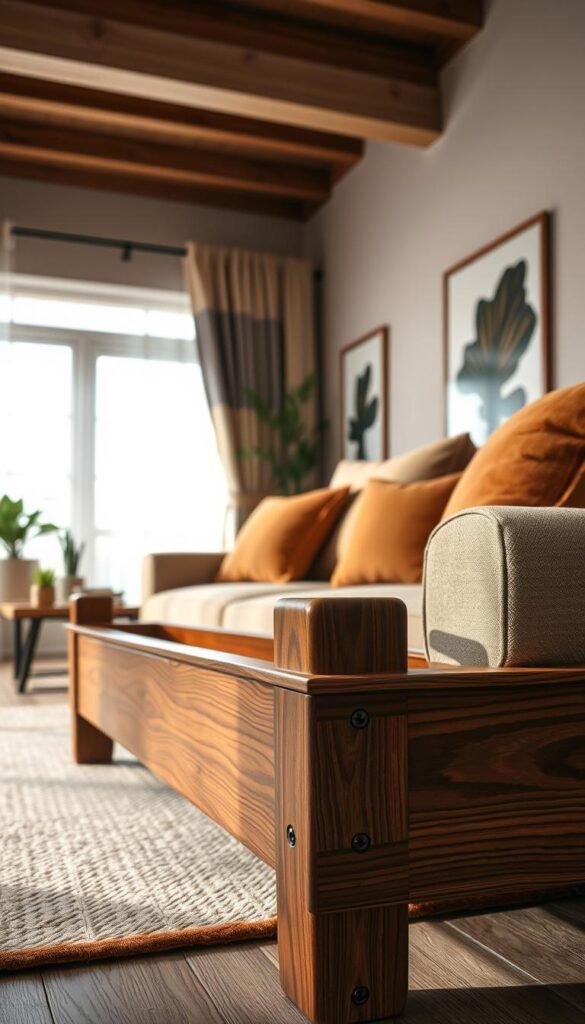
A sofa commonly lasts 7-15 years, but its frame, cushions, upholstery, and daily use all affect where it lands in that range. A budget couch typically lasts 3-5 years, a mid-range sofa 7-12 years, and a high-quality hardwood-frame sofa 12-20 years. Construction can shift the timeline as much as the price tag.
A sturdy frame and resilient cushions support longer use. A hardwood frame can last 15-20 years or more, while particleboard frames often fail within 5-7 years under daily use. Foam density also matters: cushions made with 2.0+ lb/ft³ foam have an expected lifespan of 7-10+ years.
Foam below 1.5 lb/ft³ has an expected lifespan of 1-3 years. The number does not tell you everything about comfort, but it can help explain why some cushions lose their shape sooner. Ask about the frame and foam details when you compare similar sofas.
| Component or material | Expected lifespan |
|---|---|
| Hardwood frame | 15-20 years or more |
| Particleboard frame | Often 5-7 years under daily use |
| Fabric upholstery | 7-12 years |
| Bonded leather | 3-7 years |
| Top-grain leather | 10-20 years |
The typical sofa lifespan of 7-15 years gives you a useful range for planning, not a deadline. Upholstery and use affect the result: fabric typically lasts 7-12 years, while top-grain leather can last 10-20 years. Bonded leather often lasts 3-7 years.
A sofa’s condition may matter more than its age. Permanent sagging can make sitting uncomfortable, and a squeaky or wobbly frame may point to a structural problem. Severe fabric damage or persistent odors can also make a piece difficult to keep in daily use.
Consider replacement when sagging, frame instability, persistent odor, or discomfort makes you avoid using the sofa.
Which Sofa Brands Offer Value?
For value, compare the construction and feel of a specific model rather than assuming every sofa from one brand is built the same way. Cozey’s Ciello XL Sectional is the clearest listed value-oriented modular option, with a fifth-place ranking and a 4.3 score. Model details matter more than a brand label.
Judge quality at the collection and model level. A brand may offer different materials, construction, and comfort across its range. Prices also describe only the listed model and configuration, so compare them alongside the features you need.
| Brand and model | Concrete listed fact |
|---|---|
| Cozey Ciello XL Sectional | Fifth-ranked, score 4.3; value-oriented modular design |
| MidinMod Lewis Velvet Sofa | About $1,049 on sale; tufting and gold-capped legs |
| West Elm Harmony Sofa | About $1,600+; firmness rating 1/5 |
| Burrow Nomad Sofa | Around $1,595+; 22-inch seat depth |
| IKEA Söderhamn | Around $399 per section; around 15-inch seat height |
The listed firmness scale for West Elm’s Harmony Sofa rates 1 as the softest. That detail helps you understand the feel behind the price, while Burrow’s 22-inch seat depth gives you a useful dimension to compare with your posture.
IKEA’s Söderhamn offers pricing by section, which can make the starting cost look different from a complete seating layout. MidinMod’s Lewis uses tufting and gold-capped legs for a more decorative look. Cozey’s Ciello XL stands out as a value-oriented modular option, but your own priorities should guide the comparison.
Ashley Furniture’s sofa and sectional construction and materials vary by collection and model. A brand-wide label of “cheap” or “quality” cannot reliably describe every piece. Check the exact frame, cushions, and upholstery rather than treating the company name as a construction detail.
Check the specifications for the exact model and configuration before deciding whether its price matches your needs.
Sofa Colors and Textures That Set the Mood
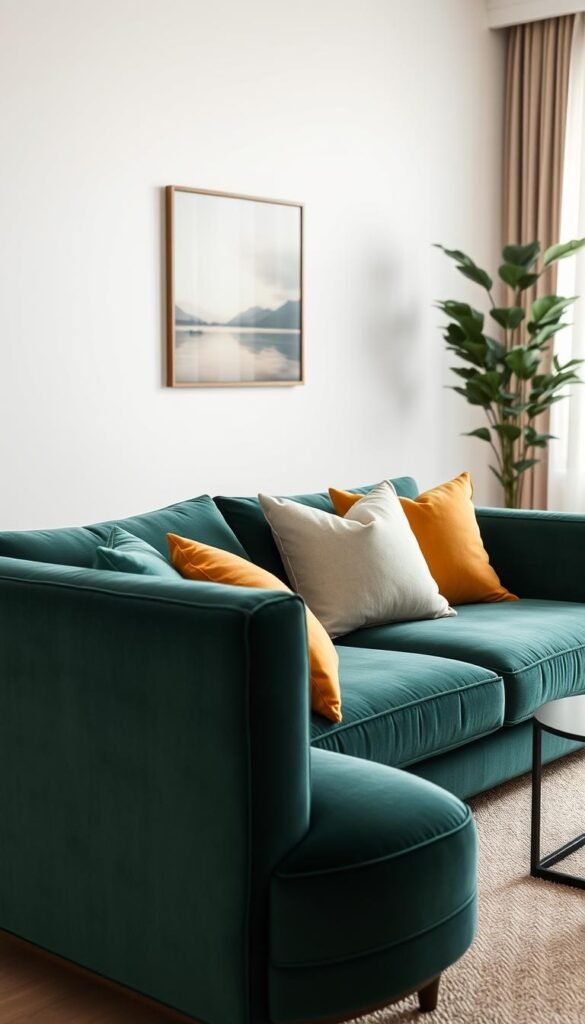
A low-profile shape in matte velvet can feel luxurious without relying on ornate details. A deep seat or rich color can also make a sofa the visual anchor of your living room. One strong element can carry the look, while quieter pieces keep the space from feeling crowded.
Beautiful sofas for the living room can be sculptural or quietly tailored, depending on whether you want a focal point or a flexible foundation. Pick one main visual feature, then give it room to stand out. Shape, upholstery, and color can work together, but they do not all need to demand attention.
Try 2026 Colors and Upholstery Directions
In 2026, sofa design directions include modular layouts, deep seats, and low-profile silhouettes. Deep seats in this trend measure 24-28 inches. That extra depth can make a sofa feel inviting, while a low profile keeps the outline visually light in a room with open sightlines.
Color directions include cocoa, caramel, chocolate, olive, moss, warm khaki, deep teal, burgundy, and oxblood. These shades can bring warmth or depth without needing a busy pattern. Choose a color that works with your floors and larger surfaces, especially if the sofa will stay in place for years.
Upholstery directions include washed organic bouclé, corduroy, and low-sheen matte velvet. Each adds a different texture: bouclé looks softly irregular, corduroy brings visible ribs, and matte velvet gives color a muted depth. For more ideas on combining color and texture, browse modern luxury living room interiors.
Make a Statement Without Overloading the Room
A statement sofa works best when nearby furniture gives it space. Pair a rich color with a simple rug or use a textured fabric against smooth wood and metal. If the sofa already has a strong silhouette, keep the surrounding pieces quieter and avoid adding several competing focal points.
Pattern can make the sofa the room’s lead feature, while a solid-color sofa leaves more room for patterned cushions or curtains. Lighting also changes how a fabric looks through the day, so compare its shade in both natural and evening light. A calmer palette can still feel layered when the textures differ.
Choose one dominant visual feature, such as color, shape, or texture, and let the rest of the room support it.
Modular or Sectional: Which Layout Works Better?
A sectional is a natural fit when you want one defined gathering zone, while modular pieces suit a layout that may need to change. A sectional commonly forms an L- or U-shaped seating arrangement. A modular sofa uses separate units that you can rearrange, expand, or separate.
Choose a fixed sectional for a stable layout and modular pieces for flexibility. The right option depends on how often your living space changes. Room use can shift over time, especially when you move, add a chair, or need to make space for another activity.
Choose a Fixed Sectional for a Defined Seating Zone
A fixed sectional can anchor a conversation area or mark the edge of a living zone in an open-plan room. The L-shape often fits into a corner, while a U-shape gives more people a place to sit facing one another. Keep traffic routes clear when you plan the arrangement.
Use a sectional when you know where the seating will stay and want one connected piece. A low-back design can preserve sightlines between living and dining areas. Explore L-shape sofa layout ideas for corner placement and ways to define an open-plan space.
Use Modular Pieces When Your Layout May Change
Modular units let you change the shape when the room or your needs change. The modular sofa testing and comparisons assess comfort, durability, design, and value, including how pieces work over time in real homes. Unlike a fixed sectional, separate units can be rearranged or used apart.
- L-shape: place the seating along two connected sides.
- U-shape: create a three-sided gathering area.
- Separated seats: divide units for flexible conversation groups.
- Chaise or ottoman combination: add an extended place to lounge.
Lovesac Sactionals offer adjustable seat depth, customizable inserts, and configurable layouts. That gives you several ways to change the feel and shape without replacing the whole sofa. Modular pieces work particularly well if your room has more than one use or your seating needs often shift.
Choose a configuration that leaves the room’s main route open when every seat is in use.
When a Sleeper Sofa Makes Sense
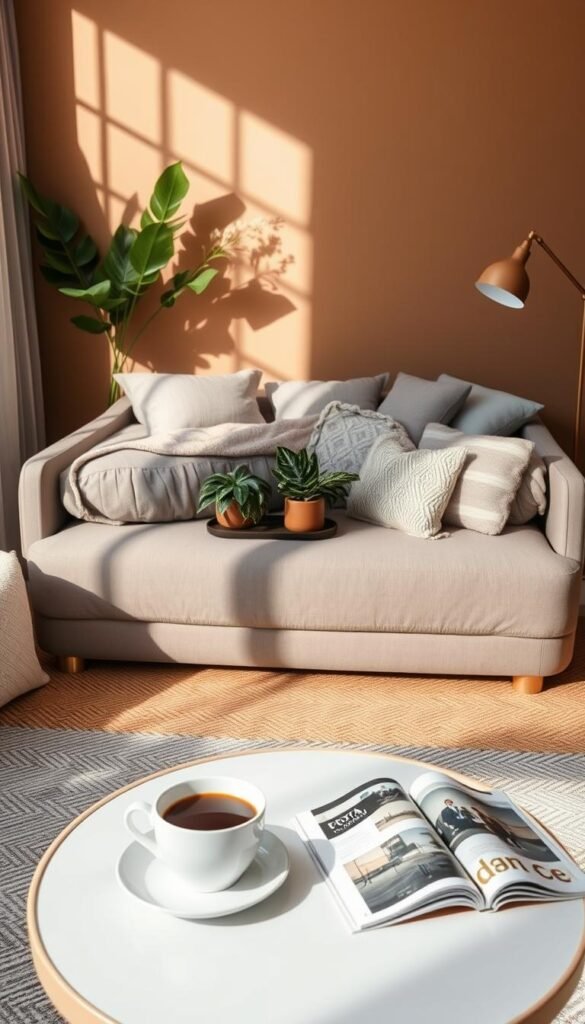
A sleeper sofa makes sense when your living area also needs to host overnight guests. It gives you a bed without requiring a separate guest bed to stay set up in the room. The best fit is a genuinely dual-use space, where everyday seating and occasional sleeping share the same footprint.
The Pottery Barn York Side Sleeper Sofa measures 94.5 by 44 by 36 inches when closed. When open, it measures 94.5 by 61.5 by 19 inches. Its open depth adds 17.5 inches compared with its closed depth.
Measure the Bed Before You Buy
Compare the closed dimensions with the open-bed footprint. The York’s depth changes from 44 inches to 61.5 inches when opened, so the extra room can affect nearby furniture and walking space. Keep the area around the bed in mind, including the path a guest needs to reach it.
Check the mattress size and thickness, then think about how often guests will sleep there. The York mattress has a 5-inch memory-foam base. A thicker mattress may suit frequent guests, while a thinner one can help preserve the sofa’s everyday form.
Check the Mattress and Everyday Seating
A sleeper sofa has two jobs, and the mechanisms and mattress can change how it feels as a regular seat. Sit on it as you would during an ordinary evening. Check whether the cushions feel supportive and whether the back suits the way you usually sit.
A sleeper sofa can be a practical choice for an apartment or living room that needs to welcome visitors. For occasional stays, the convenience may matter most. For frequent overnight use, consider how the mattress will feel after several nights, not only how quickly the bed opens.
Measure the open bed footprint with the room’s doors and walking paths clear.
Style Your Sofa So It Feels At Home
A neutral sofa can feel distinctive when you mix materials and nearby shapes instead of repeating the same shade everywhere. Cream, oatmeal, taupe, and camel create warm-neutral foundations that can work with wood, metal, wool, and linen. Contrast gives a quiet palette character without needing a dramatic color.
Let one element lead, then give the other details a supporting role. A patterned sofa can set the room’s pattern hierarchy, while a neutral piece can take its character from layered materials. English roll-arm and Chesterfield sofas bring traditional lines that can suit either approach.
Build a Calm or Patterned Scheme
For a calm scheme, vary the materials around the sofa rather than matching every surface. A woven throw, a smooth side table, and a softly textured rug create depth without crowding the color palette. You can use nearby shapes to echo the sofa’s arms or soften its straight lines.
If your sofa has a pattern, let it lead. Choose smaller or larger patterns elsewhere so they do not compete at the same scale. Artwork, curtains, and cushions can repeat a color from the sofa, while different pattern sizes keep the room from looking like one continuous print.
Mix Seating and Details With Intention
A room does not need a matching furniture set to feel connected. Pair the sofa with an accent chair in a related material or color, then use a lamp to bring warmth to the seating area. A throw can add texture without disguising the sofa’s shape or covering its strongest detail.
The rule of three offers a simple way to group accessories: arrange three related objects, such as a lamp, a small bowl, and a book stack. Vary their heights or materials so the grouping feels natural. Keep enough open surface nearby for everyday use, not just display.
What can make a sofa look cheap is often the styling around it: mismatched scale, competing patterns without hierarchy, or a room crowded with too many pieces. A patterned sofa can still look polished when the rest of the room gives it a clear role. Leave some breathing room around a strong sofa so its shape and details remain visible.
What to Check Before You Order

Before you commit, make sure the item in your cart matches the exact configuration and finish you chose. A sofa listing can include several sizes, upholstery options, or layouts under one product name. Small differences affect the finished piece, so read the selected details before placing the order.
Do not order until you have confirmed the configuration, finish, cancellation terms, delivery and assembly scope, and care instructions. A clear record can help you catch a mismatch and understand what the purchase includes.
Confirm the Exact Model and Finish
Check the model name, size, upholstery, color, legs, and any chosen configuration. A product page may display a sample combination that differs from your cart. Read the details in the order summary rather than relying on a photo or the headline name.
Make sure any included pieces match your expectations. A sectional listing may describe a configuration with a specific number of seats, while a modular design may show add-on units. Keep a written record of the final selection so you can compare it with the order confirmation.
Read the Order and Delivery Terms
Cancellation terms explain what happens if you change your mind after ordering. Delivery details should state what service is included, such as bringing the sofa inside or assembling it. Check whether packaging removal or extra setup is part of the arrangement before you place the order.
- Record the exact model and finish.
- Read the cancellation terms.
- Confirm delivery and assembly details.
- Save the care paperwork.
Care instructions matter after the sofa arrives, especially when different upholstery options need different cleaning methods. Save the model information and fabric details with the care paperwork. Keep the order confirmation and care instructions together so you can check them when the sofa arrives.
Choose the Sofa You Will Use Every Day
The strongest choice is the sofa that feels right for your routine and works in your actual room. Comfort and style both matter, but neither helps if the piece crowds your home or needs more care than you can give it.
Narrow your shortlist to models whose dimensions and materials meet your needs. A well-made sofa should suit the way you sit, relax, and welcome people into your living space. Keep the details simple and let your daily habits settle the close call.
Before ordering, sit on your final choice if possible and confirm its configuration against your room plan.