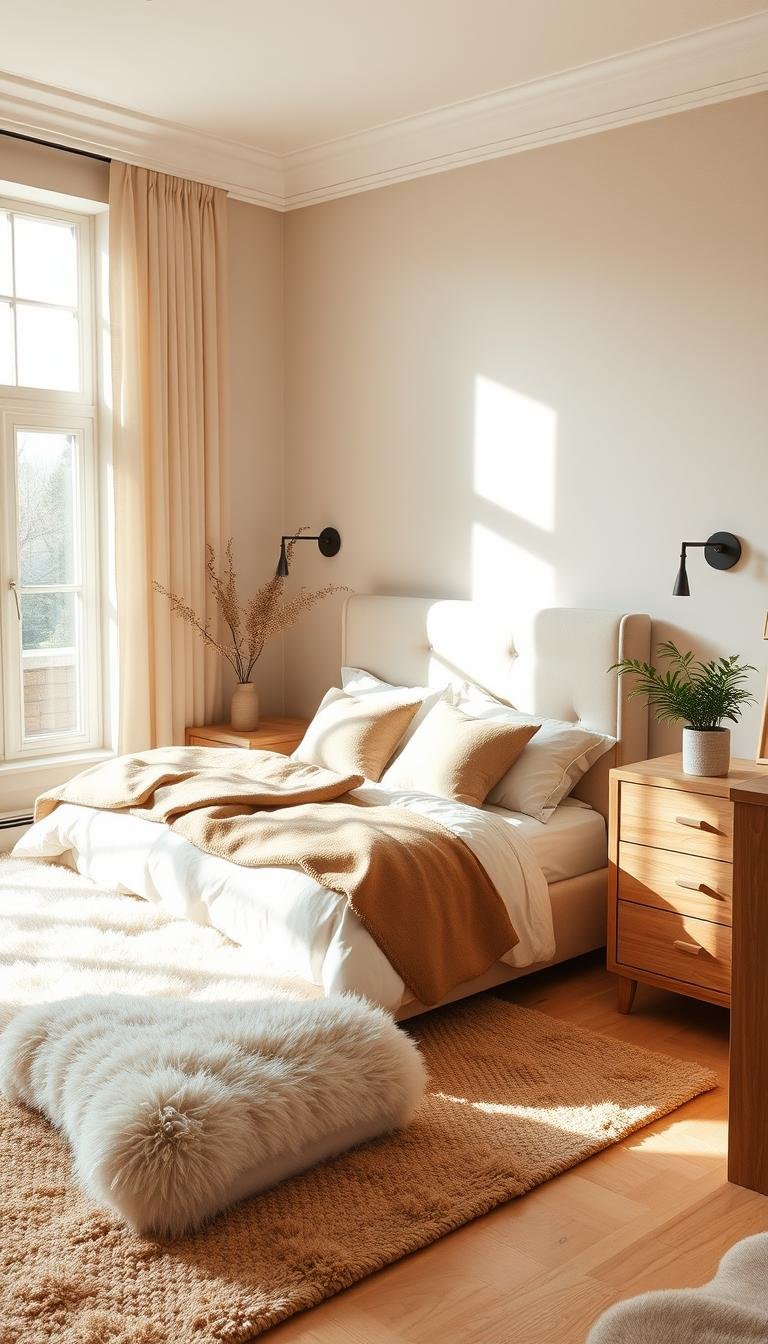
Imagine stepping into your personal sanctuary. A place that feels instantly calming and inviting. This is the power of a thoughtfully designed sleep space.
Using a soft color palette creates a serene atmosphere. Think creamy beiges, soft taupes, and other gentle hues. These tones bring a cozy feeling that always feels fresh.
The right mix of textures and decor is key. It adds depth and personality to your room. This approach works for many styles, from modern to rustic looks.
Your space should reflect your unique taste. Neutral foundations offer incredible versatility. You can add personal touches with subtle accent pieces.
We will guide you through creating this dream retreat. Get ready to transform your interior into a stylish haven. Let’s explore practical tips and inspiring design concepts together.
Why Warm Neutrals Create the Perfect Bedroom Sanctuary
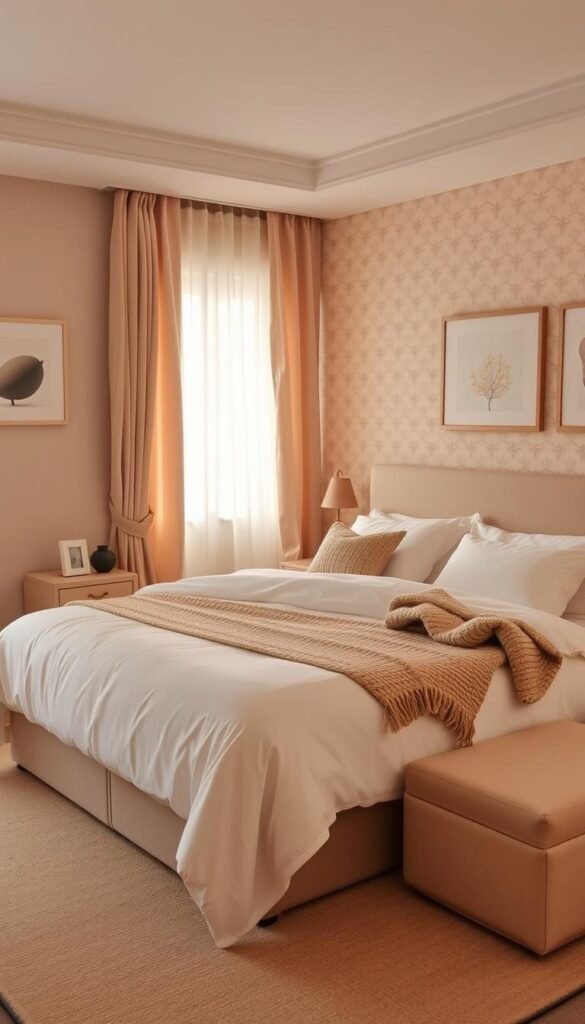
Your sleep environment plays a crucial role in your daily well-being. The right color palette can transform your room into a true retreat.
Colors have a powerful effect on our minds and emotions. Choosing wisely creates a space that supports relaxation and rest.
The Psychology of Neutral Colors in Your Sleep Space
Soft hues work wonders for mental calmness. They help lower stress and prepare your body for sleep.
Research shows these tones reduce stimulation in the brain. This creates ideal conditions for quality rest.
Your interior becomes a peaceful haven. The right shades make you feel safe and comfortable.
How Warm Neutrals Differ From Cool Neutrals
Warm tones like beige and cream bring cozy energy. They evoke feelings of comfort and security.
Cooler shades like gray offer serenity but feel more distant. They lack the inviting quality of warmer palettes.
Your personal preference matters most. Some people find cool colors relaxing, while others prefer warmth.
Consider these differences when planning your decor:
- Warm neutrals create intimate, snug atmospheres
- Cool neutrals provide clean, tranquil backgrounds
- Mixed approaches can balance both effects beautifully
The style you choose should reflect your comfort needs. Test samples at different times of day to see how light affects them.
Pair your main color with complementary elements. Textures and materials enhance the overall ambiance.
Your sleep space should feel uniquely yours. Let your choices create a personal sanctuary that welcomes you every day.
Mastering the Art of Textural Layering
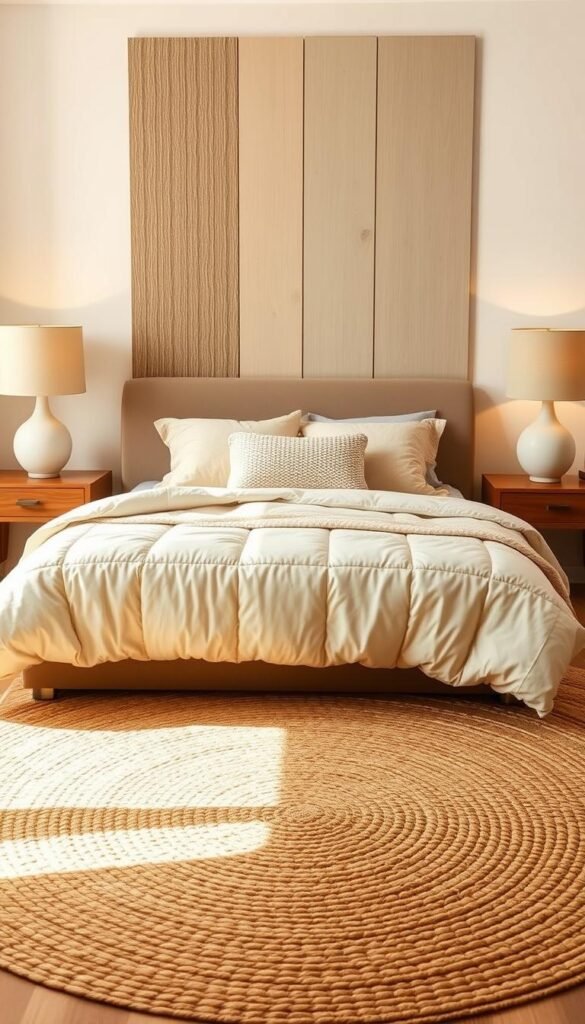
Texture transforms your sleep space from flat to fascinating. It adds depth and dimension that makes your room feel complete.
Layering different materials creates visual interest and physical comfort. This approach turns your bed into a true sanctuary.
Mixing Bedding Materials for Maximum Comfort
Your bedding choices make a huge difference in comfort. Natural fabrics like linen and cotton breathe beautifully.
Combine different weaves and weights for the perfect feel. A linen duvet cover pairs wonderfully with cotton sheets.
Consider these material combinations:
- Linen for temperature regulation and casual elegance
- Cotton for softness and easy care
- Wool for warmth during cooler months
These textiles work together to create a cohesive look. They also provide practical benefits for year-round comfort.
Incorporating Throw Pillows and Blankets Strategically
Throw pillows introduce additional textures without overwhelming your scheme. Vary sizes and fabrics for a balanced appearance.
Choose pillows in complementary cream tones and subtle patterns. Mix a velvet lumbar pillow with larger linen squares.
Blankets add both texture and functionality. A chunky knit throw in oatmeal color provides instant coziness.
Layer these elements to create depth and interest. Your bed becomes more inviting and personally expressive.
Experiment with different combinations until you find your perfect mix. The right textures make your space uniquely yours.
Creating Dimension With Tone-on-Tone Color Schemes
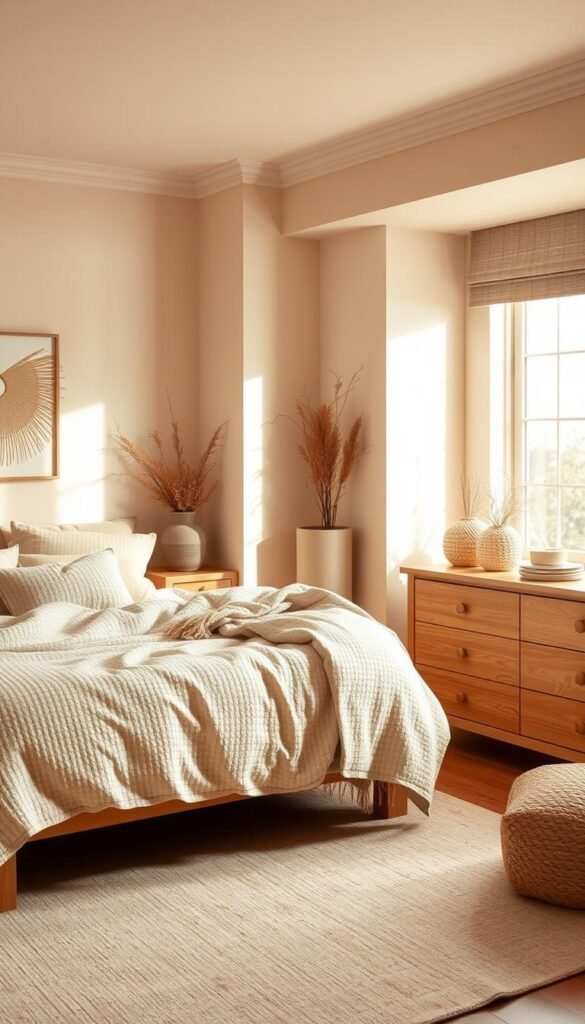
Your sleep sanctuary gains incredible depth through thoughtful color play. Using similar shades creates a sophisticated look that feels both cohesive and interesting.
This approach avoids flat, one-dimensional appearances. Instead, it builds visual richness through subtle variations.
Blending Whites, Creams, and Beiges Beautifully
Start with your lightest shade on the ceiling and walls. Gradually introduce slightly deeper tones through furniture and textiles.
Consider this progression for your space:
- Off-white for ceilings and trim
- Soft cream for wall surfaces
- Deeper beige for larger furniture pieces
This creates natural visual flow throughout your room. The effect feels intentional and professionally designed.
Your bedding offers perfect opportunities for blending. Layer sheets, duvets, and throws in complementary shades.
Adding Subtle Contrast With Earthy Accents
Introduce gentle contrast through natural elements. Earthy tones provide warmth without disrupting your serene palette.
Terracotta pillows look stunning against taupe bedding. They add just enough color variation to prevent monotony.
Textured wallpaper in an earthy hue makes a wonderful feature wall. It creates focal points that draw the eye around your space.
Natural wood elements bring organic warmth to your scheme. A reclaimed wood nightstand or floating shelves add character.
| Element | Suggested Tones | Placement Tips |
|---|---|---|
| Wall Color | Soft cream, light beige | Use on largest surfaces for base tone |
| Textiles | Oatmeal, taupe, warm white | Layer bedding and window treatments |
| Accent Pieces | Terracotta, olive green, mustard | Use sparingly on pillows and decor items |
| Wood Tones | Walnut, oak, light birch | Incorporate through furniture and accessories |
Balance remains crucial for successful execution. Too many accents can overwhelm your peaceful atmosphere.
Too few variations might create a sterile feeling. Aim for three to four complementary shades in your overall scheme.
Your personal style should shine through these choices. Play with different combinations until you find your perfect mix.
These techniques enhance both warmth and elegance in your sanctuary. They create a space that feels both curated and comfortable.
Selecting Furniture That Complements Your Neutral Palette
Your furniture choices bring your color scheme to life. They add structure and function to your beautiful space.
The right pieces enhance your overall design. They create harmony between your walls, floors, and decor.
Choosing Wood Finishes That Enhance Warmth
Wood tones make your room feel inviting. Medium finishes like oak or walnut work beautifully.
These hues add natural richness to your palette. They complement cream walls and beige textiles perfectly.
Reclaimed timber brings character and history. Its variations add visual interest to your interior.
Consider these wood options for your space:
- Oak – golden tones that age gracefully
- Walnut – deeper browns for contrast
- Reclaimed wood – unique grain patterns
Your furniture should feel cohesive yet interesting. Mix wood types carefully for balanced results.
Mixing Modern and Rustic Pieces Harmoniously
Combining styles creates depth in your design. A sleek bed frame pairs wonderfully with rustic nightstands.
This approach adds personality to your room. It prevents your space from feeling too matchy-matchy.
Try a modern platform bed with handmade side tables. The contrast makes both pieces stand out beautifully.
Your furniture should serve both form and function. Storage beds keep your space tidy while looking great.
| Furniture Type | Style Recommendation | Material Suggestions |
|---|---|---|
| Bed Frame | Modern minimalist | Oak, walnut, or upholstered |
| Nightstands | Rustic or industrial | Reclaimed wood, metal accents |
| Dresser | Transitional style | Medium wood tone with clean lines |
| Accent Chair | Modern farmhouse | Natural fiber upholstery, wood frame |
Choose pieces that reflect your personal taste. Your furniture should make you happy every time you enter the room.
Balance is key when mixing different styles. Too much contrast can feel disjointed rather than intentional.
Your space should feel both beautiful and functional. Every piece should serve a purpose while enhancing your design.
Lighting Techniques for a Serene Atmosphere
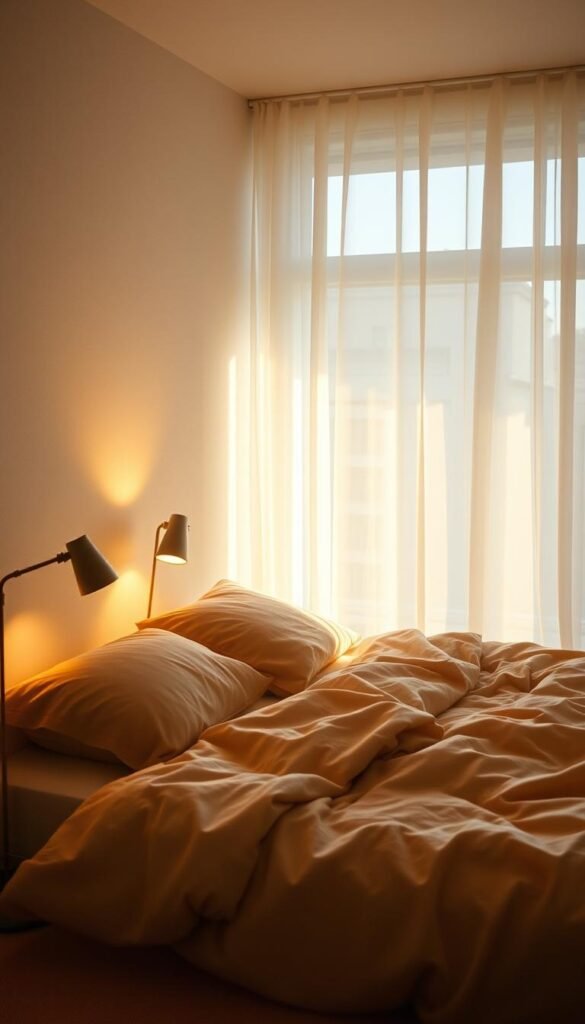
Lighting transforms your space from ordinary to extraordinary. It sets the mood and enhances your entire interior design.
Good lighting makes your room feel welcoming and peaceful. It highlights beautiful elements and creates cozy corners.
Your lighting choices should balance function and beauty. They work with your color scheme to complete the look.
Using Natural Light to Your Advantage
Sunlight brings natural warmth to your space. It makes your room feel bright and cheerful during daytime hours.
Sheer curtains soften harsh sunlight beautifully. They create a gentle glow that feels soft and inviting.
Position your bed to catch morning light. This gentle wake-up feels much nicer than an alarm clock.
Mirrors reflect light around your room. They make small spaces feel larger and brighter.
Keep windows clean for maximum light entry. This simple step makes a big difference in brightness.
Selecting Bedside Lamps and Overhead Fixtures
Table lamps provide perfect reading light. Choose ones with adjustable brightness for flexibility.
Dimmable options offer wonderful mood control. You can create bright light for reading or soft light for relaxing.
Finish choices impact your overall style. Brass and matte black work well with neutral schemes.
An oversized rattan pendant makes a stunning focal point. It adds texture and visual interest overhead.
Position lighting to highlight artwork or textures. This creates depth and shows off your decor choices.
| Lighting Type | Best Uses | Style Recommendations |
|---|---|---|
| Bedside Lamps | Reading, ambient light | Adjustable, dimmable, brass finish |
| Overhead Fixtures | General illumination | Rattan pendant, statement chandelier |
| Accent Lighting | Highlighting decor | Small spotlights, picture lights |
| Natural Light | Daytime ambiance | Sheer curtains, mirror placement |
Layer different light sources for best results. Combine overhead, task, and accent lighting.
This approach gives you flexibility for any occasion. Your space will always feel perfectly lit.
Good lighting enhances textures and patterns beautifully. It makes your room feel complete and carefully designed.
Experiment with different placements and intensities. Find what works best for your daily routine and comfort.
Incorporating Natural Elements for Organic Warmth
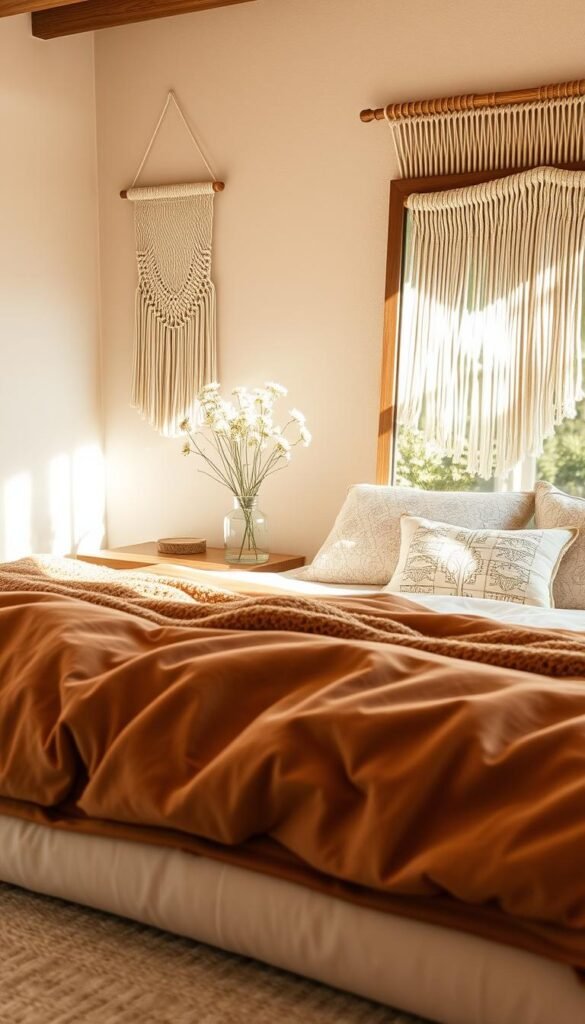
Nature offers the perfect finishing touches for your personal retreat. These organic additions bring life and vitality to your interior.
Natural materials create a grounded, peaceful atmosphere. They connect your space to the outdoors in subtle ways.
Your room gains character through these thoughtful choices. Sustainable options benefit both your health and the environment.
Adding Plants That Purify Your Bedroom Air
Greenery introduces fresh energy and visual interest. Certain plants actually clean the air while you sleep.
Snake plants and peace lilies work beautifully in sleep spaces. They require minimal light and care.
These living elements soften hard edges in your room. They add gentle movement and natural beauty.
Consider these air-purifying options for your space:
- Snake plant filters air and thrives in low light
- Spider plant removes common toxins effectively
- English ivy helps reduce airborne mold
Place plants where they receive appropriate sunlight. Group several together for greater visual impact.
Your health benefits from these natural air filters. They create a fresher environment for restful sleep.
Using Natural Fibers in Rugs and Textiles
Natural textiles add wonderful texture underfoot. They bring earthy warmth to your overall scheme.
Jute and sisal rugs create beautiful foundation layers. Their neutral tones complement any color palette.
Linen curtains soften sunlight while adding movement. They billow gently with breezes from open windows.
These materials age gracefully over time. They develop character that enhances your room’s charm.
Handwoven baskets offer stylish storage solutions. They keep essentials organized while adding texture.
| Natural Material | Best Uses | Care Tips |
|---|---|---|
| Jute | Area rugs, storage baskets | Keep dry, vacuum regularly |
| Linen | Curtains, bedding accents | Machine wash cool, line dry |
| Bamboo | Blinds, decorative accessories | Dust with soft cloth |
| Rattan | Chairs, bedside tables | Wipe with damp cloth |
Layer these elements throughout your space. They work beautifully with wood furniture and neutral walls.
Your room feels both curated and completely comfortable. These sustainable choices make your design timeless.
Warm Neutral Bedroom Ideas That Never Go Out of Style
Your personal space deserves a timeless foundation. Exploring different design philosophies helps you find what truly resonates with your soul.
Each approach offers unique ways to create comfort. They all work beautifully with soft, inviting hues.
You can mix elements from various styles too. This creates a space that feels uniquely yours.
Modern Minimalist Approach to Neutrals
Clean lines and simplicity define this aesthetic. It focuses on function without unnecessary decoration.
Choose a monochromatic scheme with subtle variations. Low contrast creates a serene, uncluttered environment.
Select furniture with sleek profiles and hidden storage. This maintains visual calm throughout your space.
Incorporate a single statement piece of abstract art. It adds visual interest without overwhelming the senses.
Your bedding should feature quality fabrics in solid tones. This approach celebrates simplicity and intentional living.
Bohemian Inspired Textural Combinations
This style embraces layered textures and organic elements. It feels collected rather than perfectly coordinated.
Combine macramé wall hangings with tasseled throws. These elements add movement and handmade charm.
Incorporate wicker or bamboo furniture for natural warmth. Add muted patterned cushions for subtle pattern play.
Hang planters with air-purifying greenery throughout. This creates an effortless, earthy vibe.
Your space becomes a cozy retreat full of character. It tells a story through carefully chosen pieces.
Scandinavian Simplicity With Warm Undertones
This design philosophy balances function with comfort. It creates practical spaces that feel incredibly inviting.
Start with white or light grey walls as your canvas. These shades maximize natural light throughout the day.
Introduce pale wood tones through furniture and accents. This adds warmth without darkening the space.
Choose functional decor that serves dual purposes. Beautiful storage solutions keep your space tidy and stylish.
Layer soft textiles in cream and beige tones. A chunky knit throw provides instant coziness on cooler evenings.
Remember that these styles can beautifully overlap. You might prefer minimalist furniture with bohemian textiles.
Your personal taste should guide final decisions. Create a space that makes you feel completely at home.
Experiment with different combinations until it feels right. Your perfect retreat awaits your creative touch.
Strategic Decor Choices That Add Personality
Your final touches make your space truly yours. Thoughtful decor selections bring character without overwhelming your peaceful palette.
These finishing elements should enhance your overall design. They add personal expression while maintaining harmony.
Choose pieces that speak to your heart. Your room becomes a reflection of your unique taste.
Selecting Artwork That Complements Without Overpowering
Art brings soul to your walls. Choose pieces that enhance rather than dominate your scheme.
Abstract prints work beautifully with soft color palettes. They add visual interest without competing for attention.
Consider minimalist pieces with gentle brush strokes. These create movement while keeping the atmosphere calm.
Framing choices matter as much as the art itself. Light wood frames maintain an airy feeling throughout your room.
Off-white mats create subtle separation from your wall color. This technique adds professional polish to your display.
Place artwork at eye level when standing or sitting. This ensures comfortable viewing from any position.
Group smaller pieces together for greater impact. A collection of three works creates a cohesive focal point.
Using Mirrors to Enhance Light and Space
Mirrors serve both practical and decorative purposes. They amplify natural light throughout your space.
Strategic placement makes your room feel more expansive. A large mirror opposite a window works wonders.
Consider a statement mirror above your console table. This creates a beautiful reflection while adding architectural interest.
Black-framed mirrors offer gentle contrast against light walls. They define spaces without darkening the atmosphere.
Round shapes soften angular furniture arrangements. They introduce organic curves that feel welcoming.
Position mirrors to reflect attractive elements in your room. This doubles the visual impact of your favorite decor pieces.
| Decor Element | Recommended Style | Placement Tips |
|---|---|---|
| Wall Art | Abstract prints, minimalist pieces | Eye level, grouped in odd numbers |
| Mirrors | Large statement, black-framed | Opposite windows, above consoles |
| Functional Decor | Storage baskets, decorative boxes | Nightstands, shelves, under beds |
| Textural Accents | Woven trays, ceramic vases | Surfaces, empty corners, shelves |
Balance remains key when arranging your decor. Too many pieces can feel cluttered rather than curated.
Leave some surfaces empty for visual breathing room. This prevents your space from feeling overwhelming.
Choose decor that serves both beauty and function. Storage solutions keep essentials organized while looking attractive.
Your personal style should shine through every choice. Select pieces that make you smile every time you see them.
Experiment with arrangements until everything feels right. Your perfect balance awaits your creative touch.
Bringing Your Dream Neutral Bedroom to Life
Your journey to a perfect sleep space starts with a clear vision. Focus on two or three similar tones for a cohesive look. This creates harmony throughout your room.
Choose furniture with matching finishes for unity. Layer bedding and pick statement lighting to add depth. These steps bring your design together beautifully.
Consider consulting a designer for personalized advice. They offer tailored ideas that suit your unique style. Professional guidance ensures flawless execution.
Enjoy transforming your space into a serene retreat. Warm tones create a comfortable and inviting atmosphere. Embrace the process and create your personal haven.